
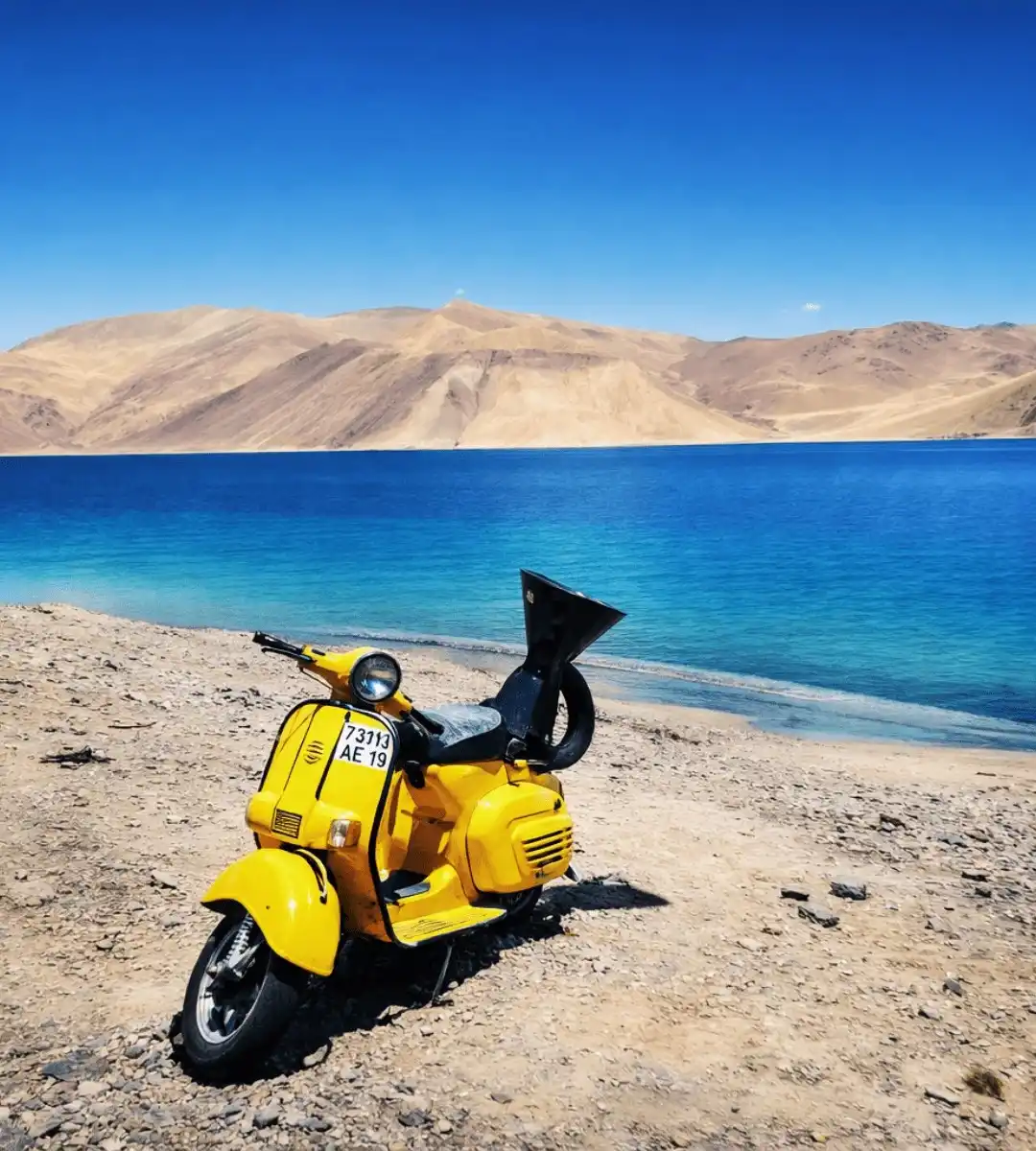
6D/5N
Best Selling Leh Ladakh Tour With Nubra Valley and Pangong Lake
2D Leh•1D Nubra Valley+1
₹23,999₹28,599SAVE ₹4,600/ person
Best Leh Ladakh Family Tour Packages Curated By Experts
2D Leh•1D Nubra Valley+1
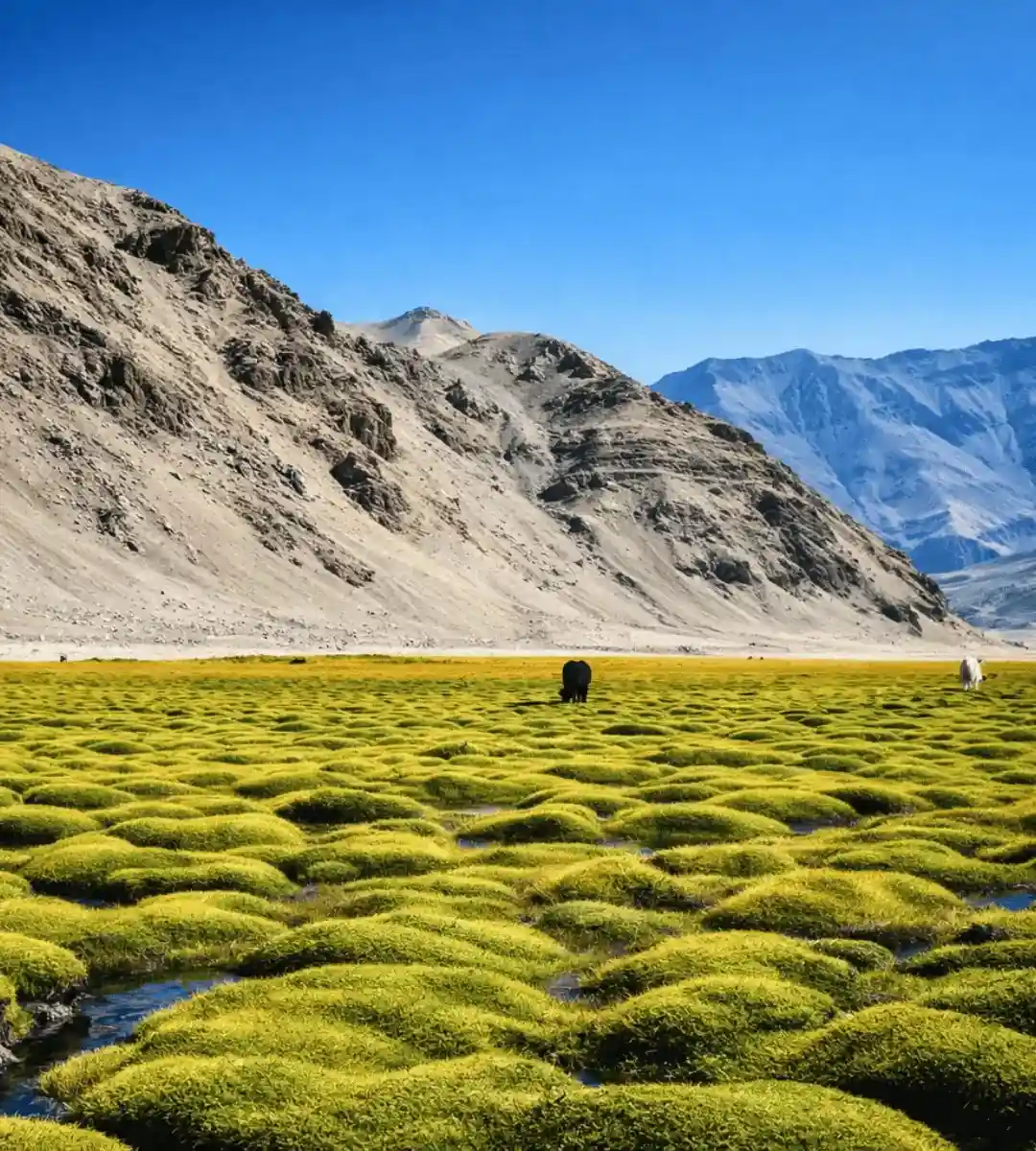
2D Leh•1D Nubra Valley+3
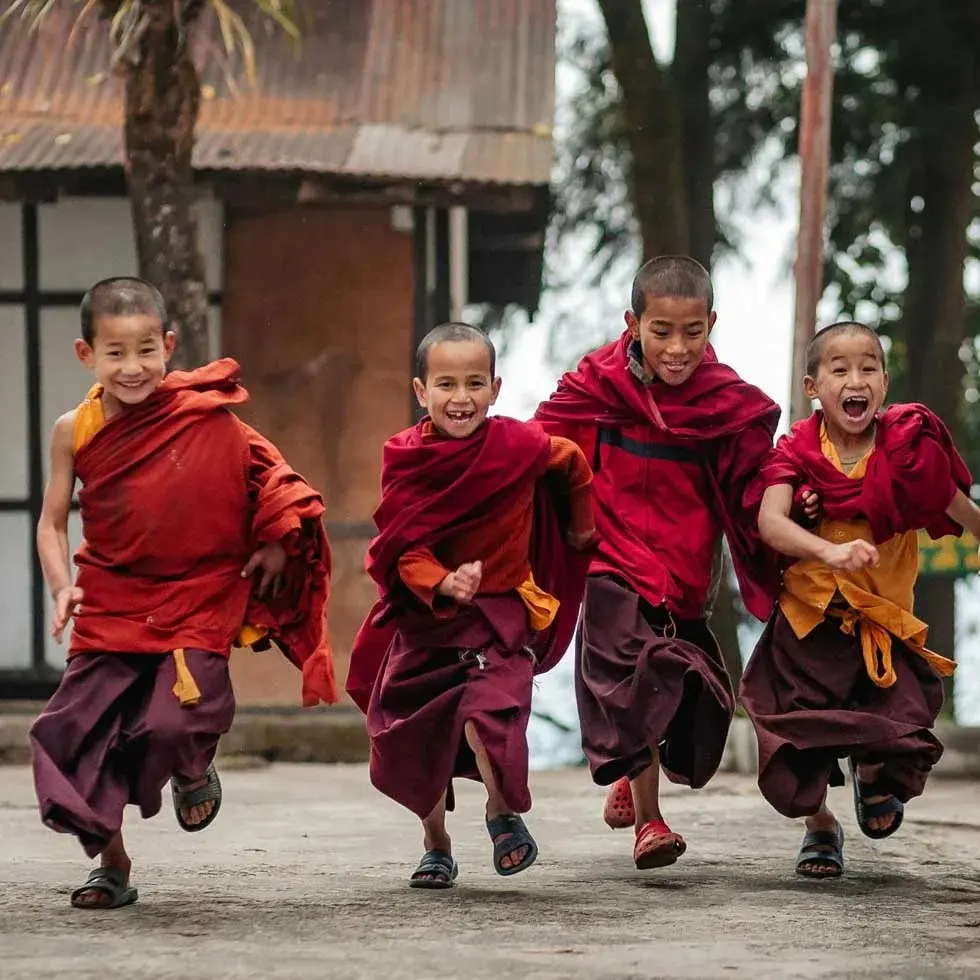
2D Leh•1D Pangong Lake
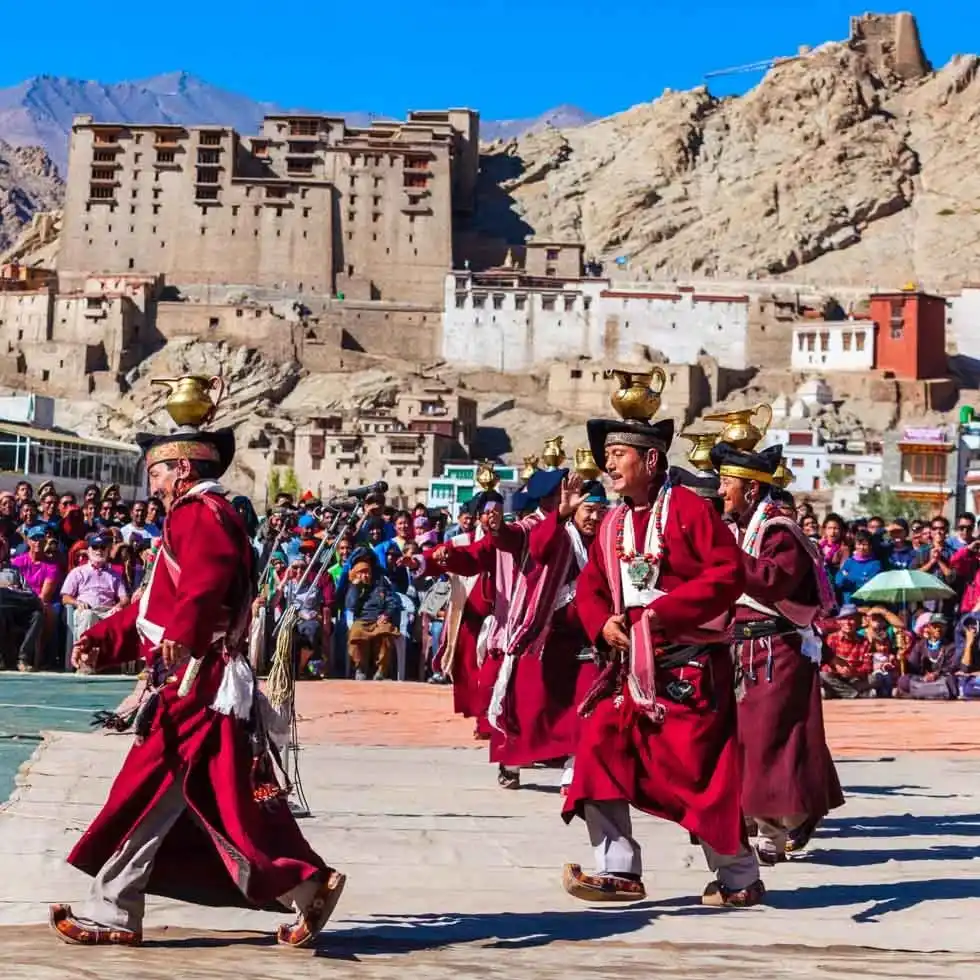
2D Leh•2D Nubra Valley+1
Where Your Child Sees a Lake So Blue They Forget to Talk and Your Family Remembers What Quiet Sounds Like
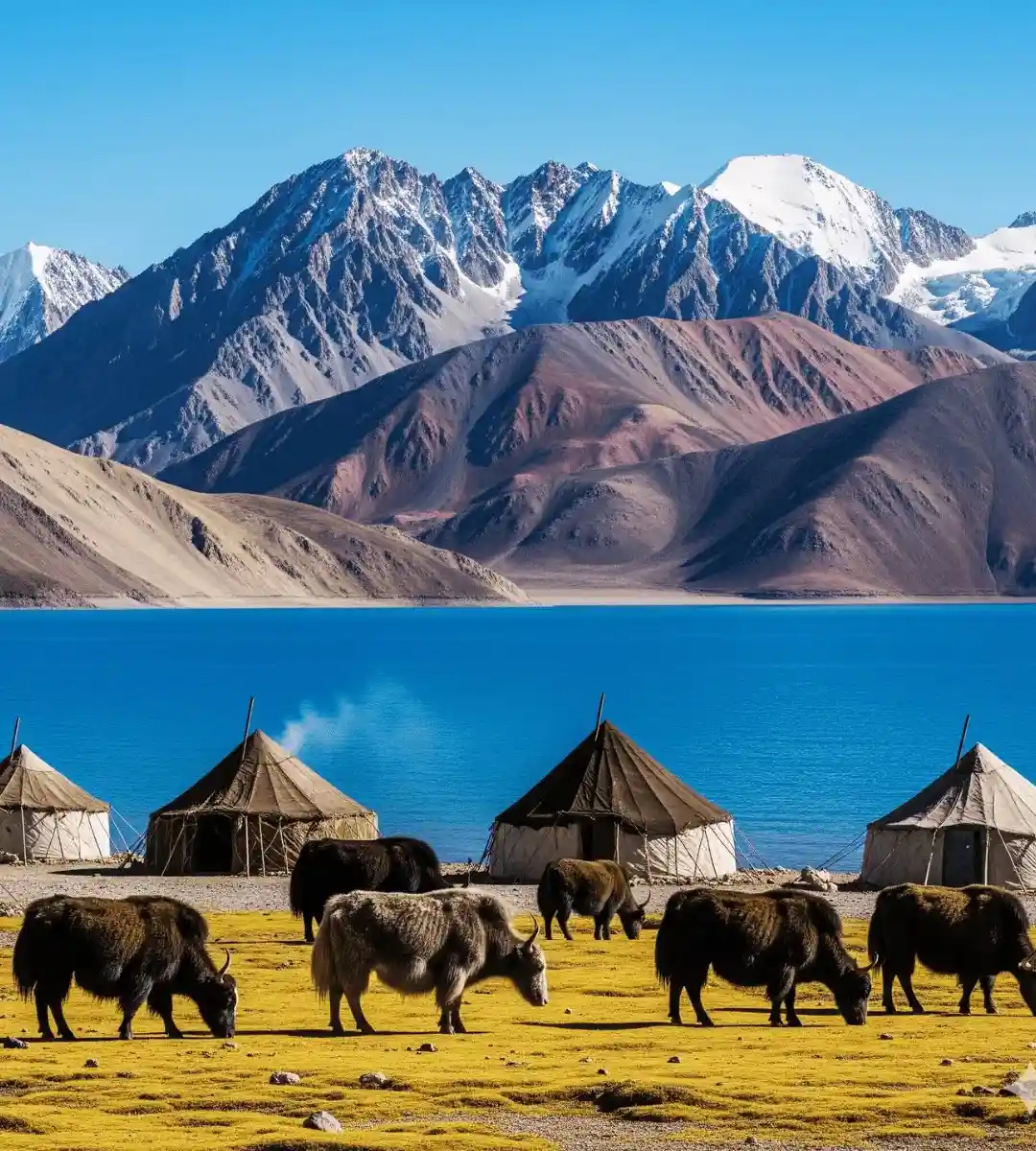
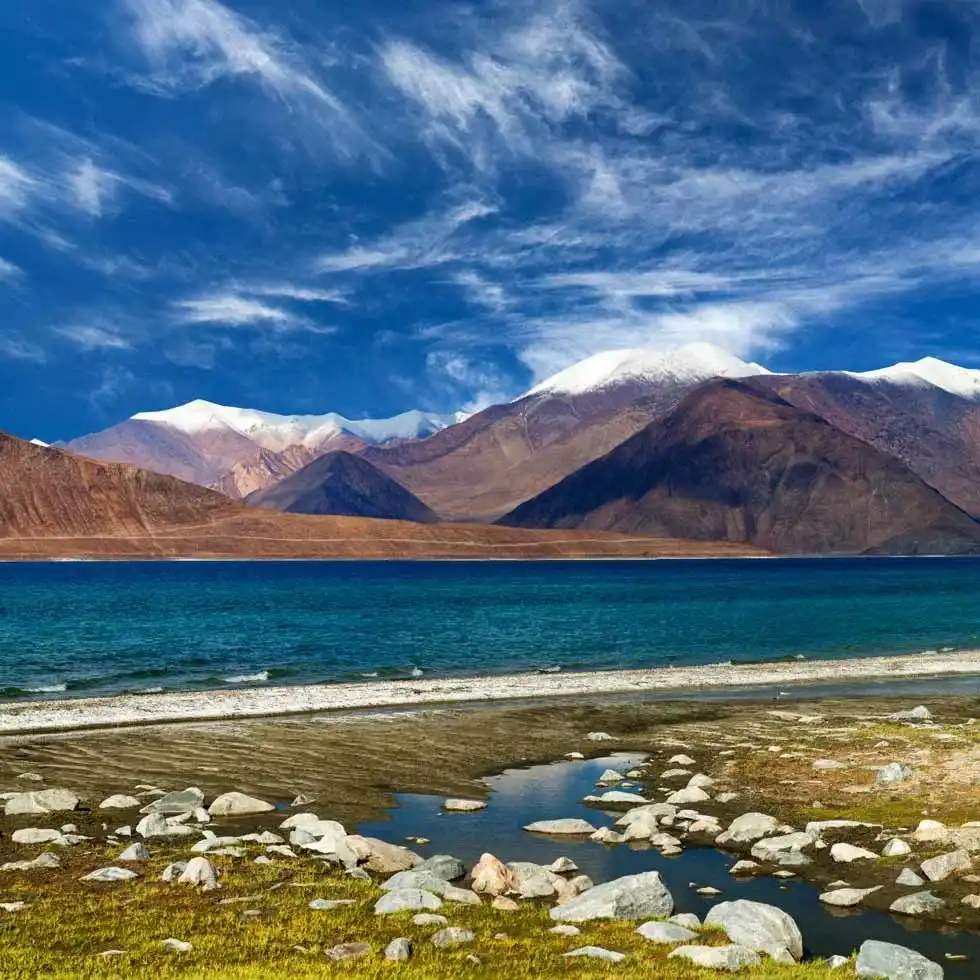
There is a moment at Pangong, usually in the first few seconds, when your child stops moving. The water is a blue that does not exist at sea level. The mountains behind it are bare and enormous. There is no noise except wind. Just your family standing together at 4,350 metres, looking at something so vast and still that everyone goes quiet. That is the moment. That is why families come to Ladakh.
Ladakh is not a simple family holiday. It is a cold desert above 3,500 metres where the air is thin, the roads are long, the sun is sharp, and the nights drop cold even in July. But for families who pace it right, who let the first day in Leh be rest and not a sightseeing race, Ladakh gives you something no resort can: the shared experience of being somewhere genuinely different, genuinely vast, and genuinely unforgettable. A Ladakh family vacation is not about ticking off stops. It is about watching your family experience something together that none of you have words for.
A Leh Ladakh family tour package built well gives your family the right stops at the right pace. Monasteries in the morning. Camel rides in Nubra. Pangong at sunrise. Easy evenings in Leh with momos and market walks. And between all of it, the long mountain roads where your family sits together, watching a world that looks like another planet.
Travel Coffee is a Himachali travel company based in Shimla with years of experience planning Himalayan road journeys and altitude-aware family travel. We have helped families with toddlers, teenagers, and grandparents plan trips that worked for everyone. We know which circuits are too long for kids, which overnights are too basic for elderly parents, and why the first day in Leh must be rest.
When we build a Ladakh family trip, we start with your family's profile. How old are the children? Are grandparents coming? Has anyone been above 3,000 metres? Sometimes that means a classic Leh, Nubra, Pangong circuit. Sometimes it means adding Sham Valley for easier pacing. And sometimes it means suggesting a shorter plan. That honesty is what we are built on.
Family-first route planning that puts pacing and comfort ahead of maximum sightseeing.
Altitude-aware scheduling so your family adjusts before long drives begin.
Thoughtful overnights chosen for real family comfort, not just the cheapest rate.
Drivers who understand mountain timing and know when to stop so kids can stretch and elders can rest.
Honest guidance for families with young children or elderly parents about which sectors suit them.
Better holiday flow, not just more stops crammed into fewer days.
Permit, logistics, and SIM coordination so parents do not spend the trip sorting paperwork.
Most family holidays are familiar. Ladakh is not. The mountains are bare, folded, layered in browns and purples. The valleys are wide and empty. The sky looks painted. Monasteries sit on cliff edges with prayer flags streaming. And the silence that comes from altitude and distance is something your family notices together. Your children hear it. Your parents feel it. And you realise this is an experience your family is sharing at the same time, for the first time.
The best things here are not complicated. A camel ride on sand dunes in Nubra. A monastery visit where your child watches a monk spin prayer wheels. A lakeside pause at Pangong where nobody needs to do anything except look. A sunset at Shanti Stupa where the valley turns gold. These are shared moments. At the right pace, they add up to a family holiday that stays in everyone's memory.
Shared wonder: every generation experiences Ladakh differently. Your child stares at the camels. Your parents stare at the monastery. You stare at the lake. Everyone amazed at the same time.
High altitude calm: monasteries, open roads, and big skies slow everyone down. The pace of Ladakh is the pace your family probably needs.
Kid-friendly adventure: sand dunes, Bactrian camel rides, easy lake stops, and monastery visits keep the trip engaging without forcing hard activity.
Family road trip magic: long drives become bonding time when the pace is right. Snacks, views, shared playlists, and the slow reveal of each new valley.
Cultural depth: monasteries, villages, prayer flags, and Ladakhi food add meaning beyond sightseeing.
Private mountain flow: the right vehicle and pacing make the trip smooth for everyone.
Our classic Leh, Nubra, Pangong family holiday covers six to seven days. Leh sightseeing with acclimatization, Nubra overnight, Pangong Lake. The emotional highlights without over-extending. Best for families with children aged six and above.
Comfort-first Ladakh trips by flight start with a full rest day in Leh, then easy sightseeing before heading to the valleys. Ideal for first-time families and those with elderly parents.
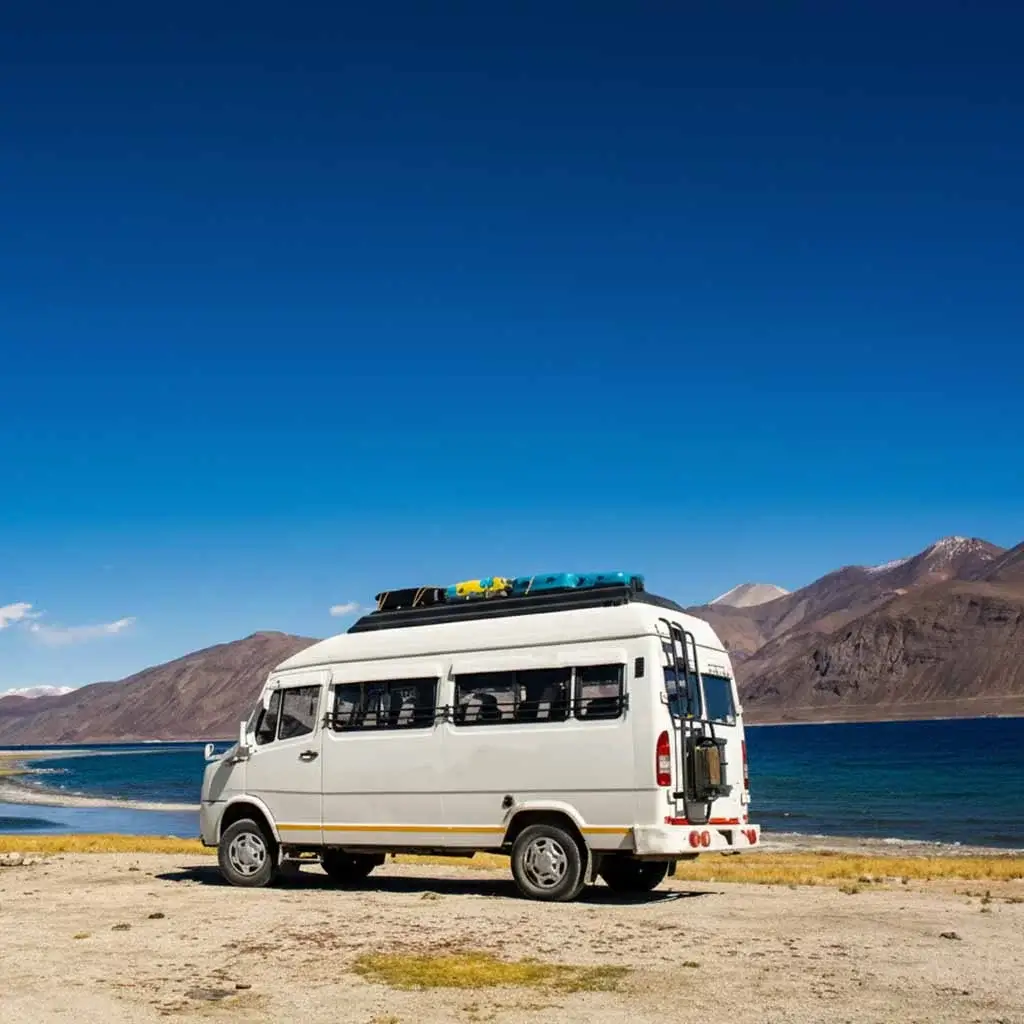
Private SUV family trips give you the most comfort. Your vehicle, your driver, your pace. You stop when kids need a break. For a Ladakh family trip, a private vehicle is how the holiday should work.
Leh with Sham Valley and Nubra plans suit families wanting easier pacing. Sham Valley sits at lower altitude with gentler drives. Combined with Nubra, it gives cultural depth without the harder Pangong drive. Good for very young children or elderly members.
Ladakh family trips with Turtuk add a quieter cultural stop beyond Nubra. A Balti village near the Line of Control with a feel different from the rest of Ladakh. Suits families with older children who enjoy exploration.
Longer circuits with Hanle or Tso Moriri are for families with more time and strong altitude comfort. More remote, longer drives, fewer facilities. Only for families where everyone is healthy and acclimatized.
Most families fly to Leh. Kushok Bakula Rimpochee Airport connects to Delhi with roughly ninety-minute flights. You land at 3,500 metres. The first day must be rest. Families who skip acclimatization pay for it with headaches and fatigue that ruin the trip.
The Srinagar Leh Highway (about 434 km, two days) is gentler in altitude gain, scenic through Sonamarg, Zoji La, and the moonland near Lamayuru. The Manali Leh Highway (about 475 km, two days) is rawer and more dramatic, passing through some of the highest motorable passes in the world. Both routes are seasonal, usually open June to September depending on snow clearance. For most first-time families with kids or elderly members, flying in is simpler and safer. Road entry suits families who enjoy the journey itself and have the time for a longer trip.
A private SUV with an experienced local driver. Kids need stretch stops. Elderly members need rest breaks. A private vehicle gives your family pace control that shared group vehicles cannot.
Time zone: Indian Standard Time (IST), UTC+5:30.
Currency: Indian Rupee (INR). ATMs in Leh only. Carry cash for the entire trip beyond Leh.
Languages: Ladakhi and Tibetan locally. Hindi widely understood. English at tourist establishments.
Permits: Inner Line Permits required for Nubra, Pangong, Tso Moriri, and Hanle. We handle coordination.
Network: Postpaid SIMs (BSNL, Jio) work in Leh. Prepaid generally does not. Network weak or absent in remote sectors.
June to mid-July: roads open, raw and dramatic. Apricot blossoms in places. Colder nights.
Mid-July to September: most stable window for Leh Ladakh family tour packages. Passes open, weather manageable. September has the clearest skies.
Six to seven days for a classic family holiday. Eight to nine with Sham Valley or Turtuk. Under five is too rushed. Ladakh needs time, and so does your family.
Suits families with children aged six and above in good health. Teenagers, school-age kids, and active grandparents enjoy Ladakh enormously with the right route. Very young children under four may struggle with altitude, dry air, and long drives. Elderly members with heart, lung, or blood pressure concerns need medical clearance before booking. Not every family needs to cover the farthest sectors. A classic Leh, Nubra, Pangong plan is often more than enough for a deeply memorable Ladakh family vacation.
Acclimatization is essential at 3,500 metres and above. The first day in Leh must be rest. Altitude sickness affects anyone regardless of fitness. Stay hydrated, avoid alcohol, and do not push through symptoms. Our itineraries always build in adjustment time from day one.
10 packages found
 Group Tour
2D Leh•1D Nubra Valley+1
2D Leh•1D Nubra Valley+1
2D Leh•2D Nubra Valley+1
2D Leh•1D Nubra Valley+2
2D Leh•1D Nubra Valley+3
2D Leh•1D Nubra Valley+2
2D Leh•1D Pangong Lake
1D Leh•1D Leh Local +2
1D Leh•1D Leh Local+2
1D Leh•1D Leh Local+2
Ladakh gives families a world unlike anything at home. Monasteries on cliff edges, lakes that change colour by the hour, sand dunes with double-humped camels, and valleys so wide the sky feels bigger than it should. These are the stops that make a Ladakh family trip unforgettable for every generation.
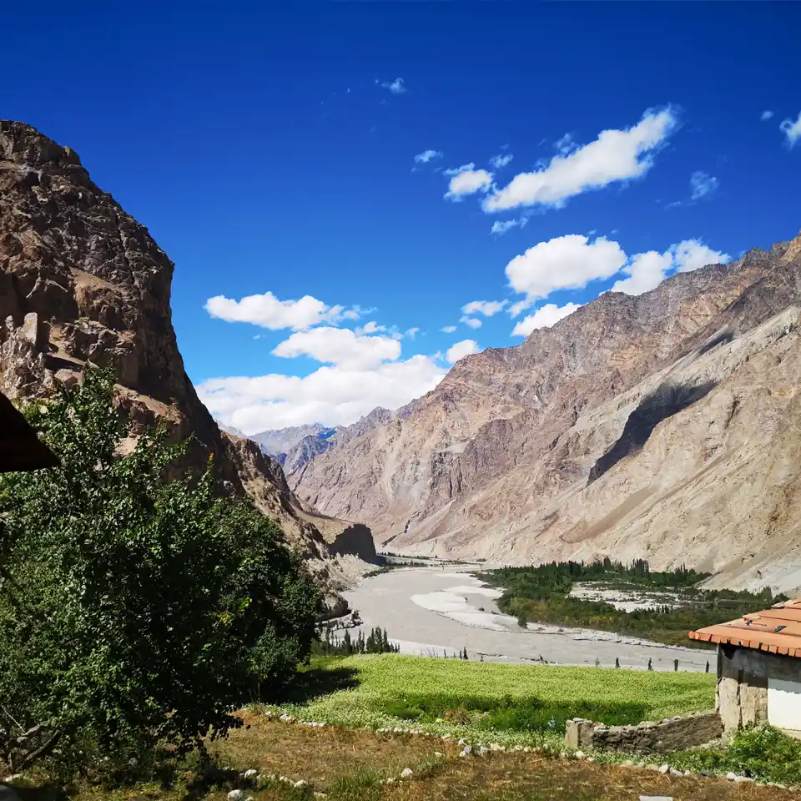
Turtuk is a small Balti village on the Shyok river in the far north of Nubra Valley, about 205 km from Leh. It was part of Pakistan until 1971 and only opened to visitors in 2010. At roughly 9,850 feet, it sits lower than most of Ladakh, which means warmer summers, actual trees, and apricot orchards lining every path. The culture here is Balti Muslim, not Buddhist, with its own language, food, and architecture that feel closer to Baltistan than to Leh. Most travellers add it as an overnight stop on a Nubra Valley circuit.
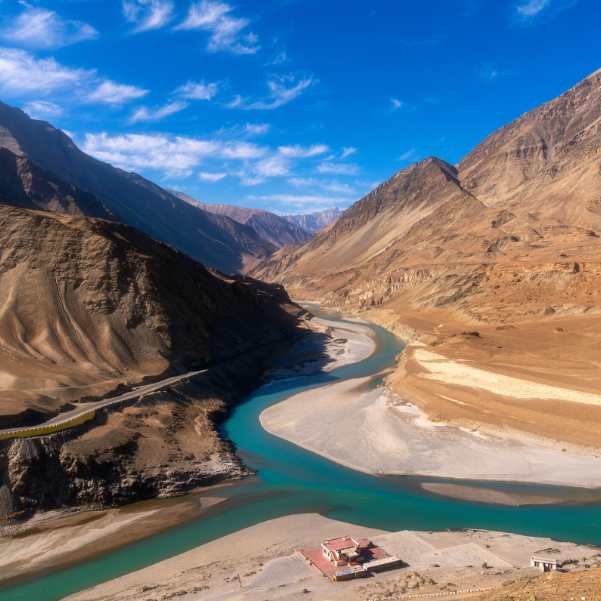
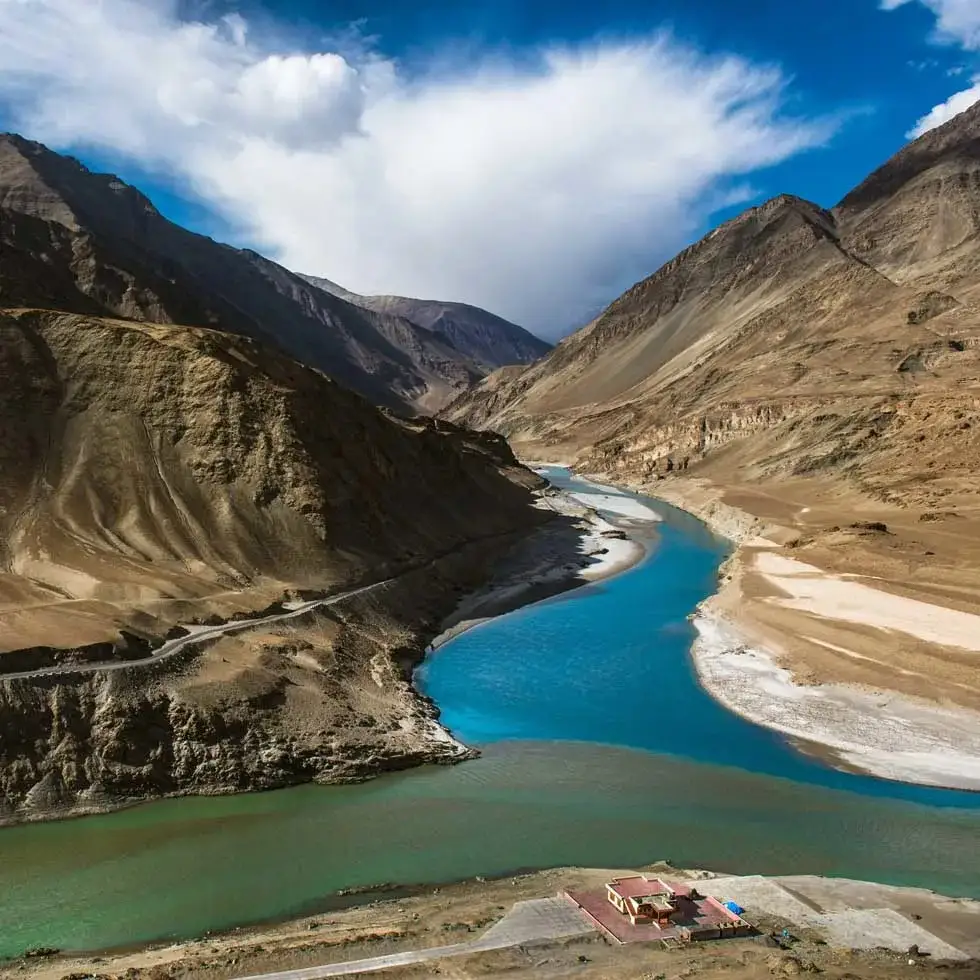
Sangam Point is where the Zanskar river, carrying a milky turquoise, meets the deeper green of the Indus near Nimmo village on the Leh to Srinagar highway. The two rivers run side by side in clearly different colours before slowly blending into one. It sits about 35 km west of Leh at around 10,200 feet. Most travellers visit as part of a Sham Valley half day from Leh, combined with Gurudwara Pathar Sahib and Magnetic Hill. The confluence is also the end point for popular white water rafting trips on the Zanskar, running roughly June to September.
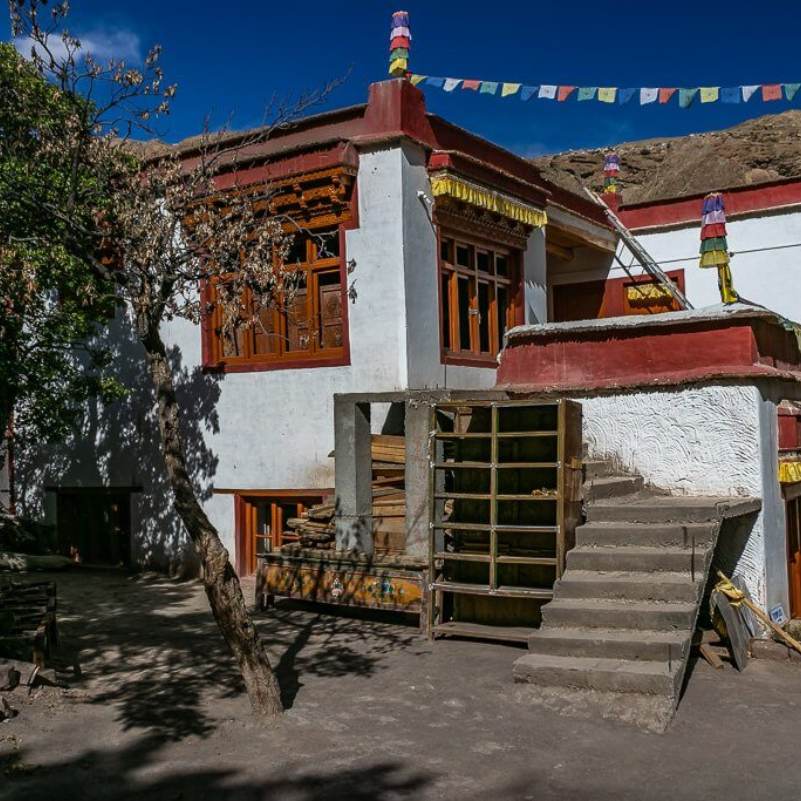
Alchi Monastery (Alchi Choskhor) is an 11th to 13th century Buddhist monastic complex in Alchi village, about 65 km west of Leh on the Srinagar Leh Highway. Unlike every other famous gompa in Ladakh, it sits on flat ground inside a village, not on a cliff. The reason to come is inside: Kashmiri style murals and wood carvings from the 11th and 12th centuries, among the oldest surviving Buddhist art in the region. Six temples, including the three storied Sumtsek with its 4 metre standing Bodhisattvas. Allow 1.5 to 2 hours for the complex, and combine it with the Sham Valley circuit from Leh.
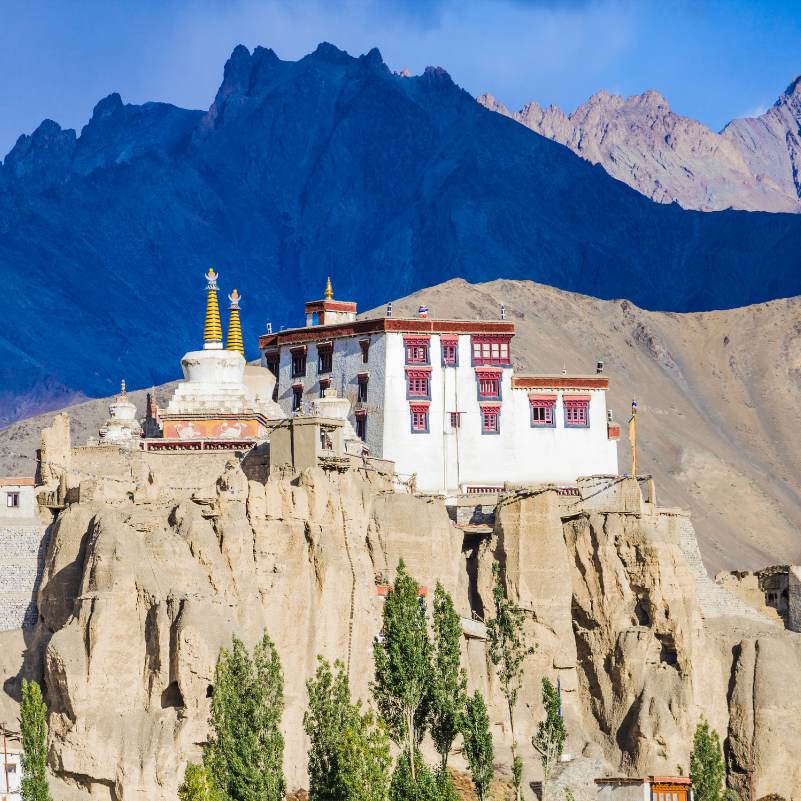
Lamayuru is the oldest monastery in Ladakh, at 3,510 metres on the Srinagar Leh Highway, 125 km from Leh. The monastery and the Moonland, the deeply eroded landscape around it, are the draw. About 50 monks live here now. You can see Naropa's cave, the old wall paintings, and the Yuru Kabgyat masked dance festival. Most people stop for an hour on the Srinagar to Leh drive. It deserves more time.
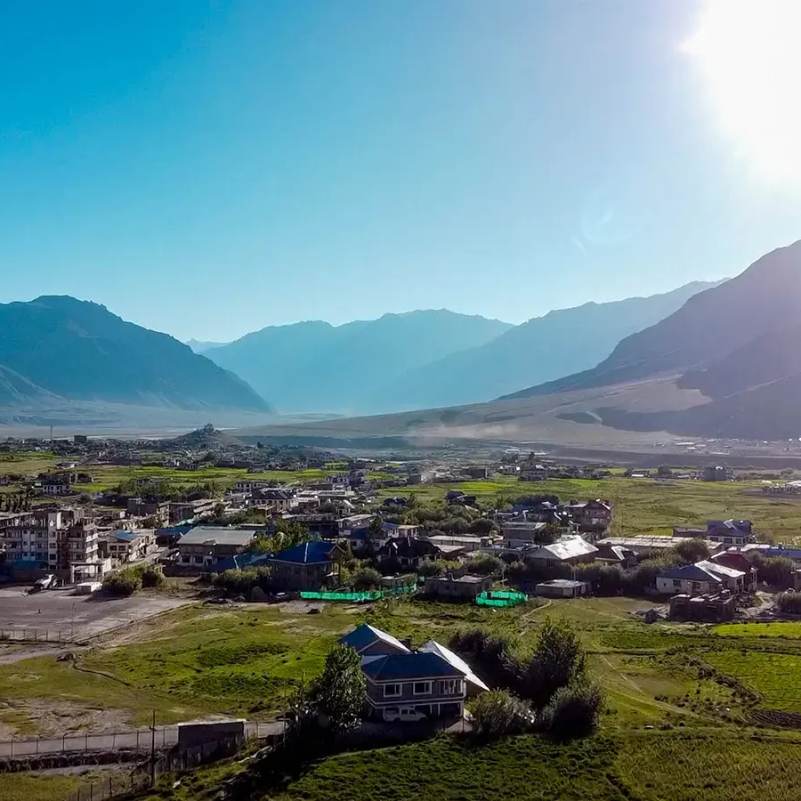
Zanskar Valley sits deep inside Ladakh, south of the main Indus valley, separated by the Zanskar Range. Padum, the capital, is at roughly 3,670 metres. Roads generally open from June to October. Most travellers reach Padum from Kargil via Pensi La (235 km, 8 to 10 hours). The valley is home to ancient Buddhist monasteries, the Drang Drung Glacier, and some of the most committed isolation you will find anywhere in India.
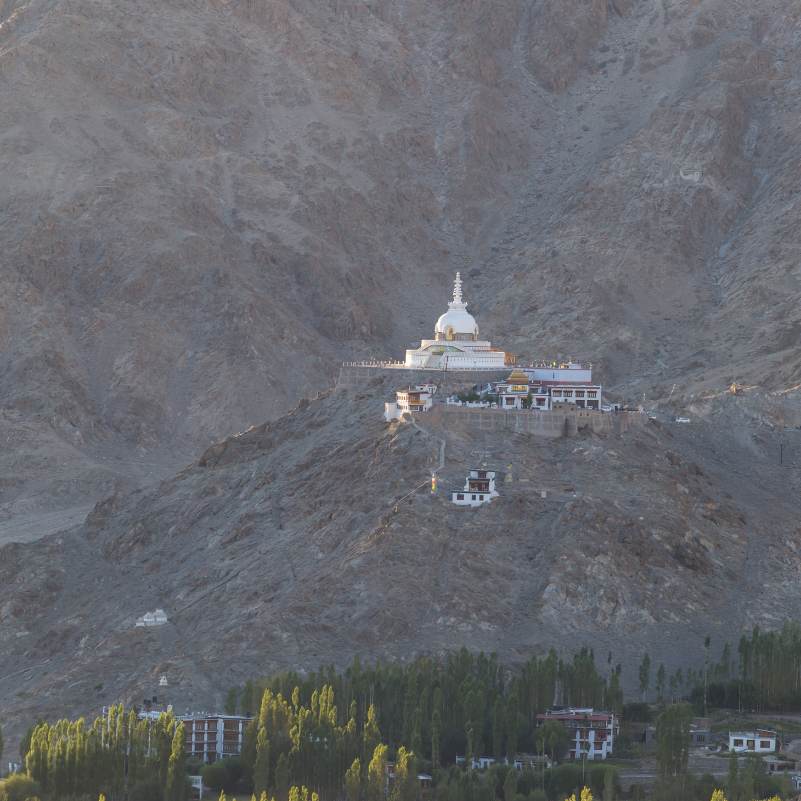
Shanti Stupa sits on a hilltop in Chanspa, about 5 km from central Leh, at roughly 3,600 metres. Built in 1991 by Japanese Buddhist monk Gyomyo Nakamura as part of the global Peace Pagoda mission, it holds relics of the Buddha enshrined by the Dalai Lama. Most people come for the view: Leh town below, Leh Palace and Namgyal Tsemo across the valley, and the Stok range behind. Sunset is the time to be here. Free entry. Forty five minutes to an hour.
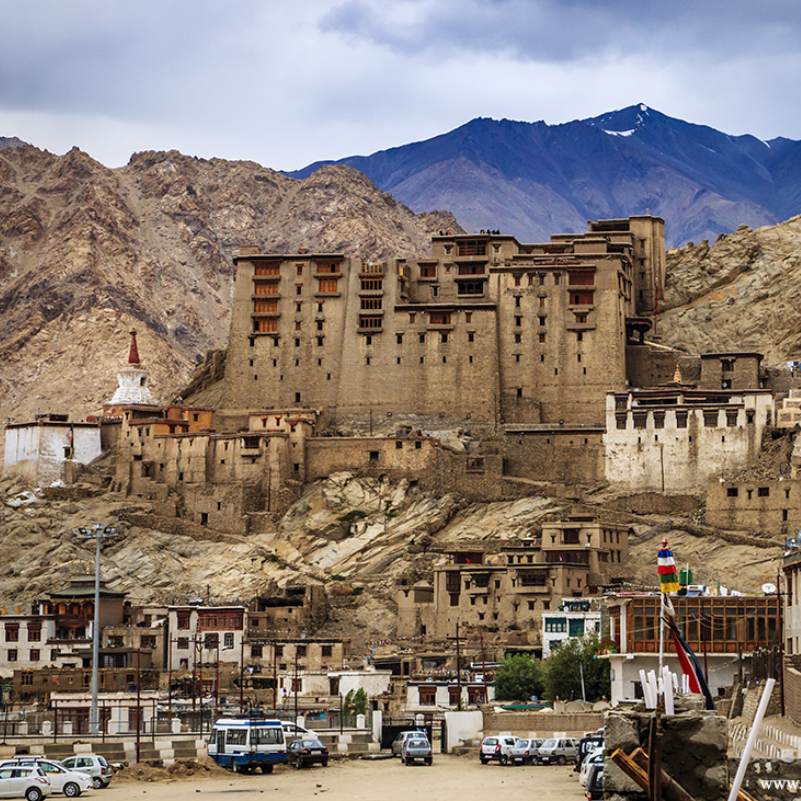
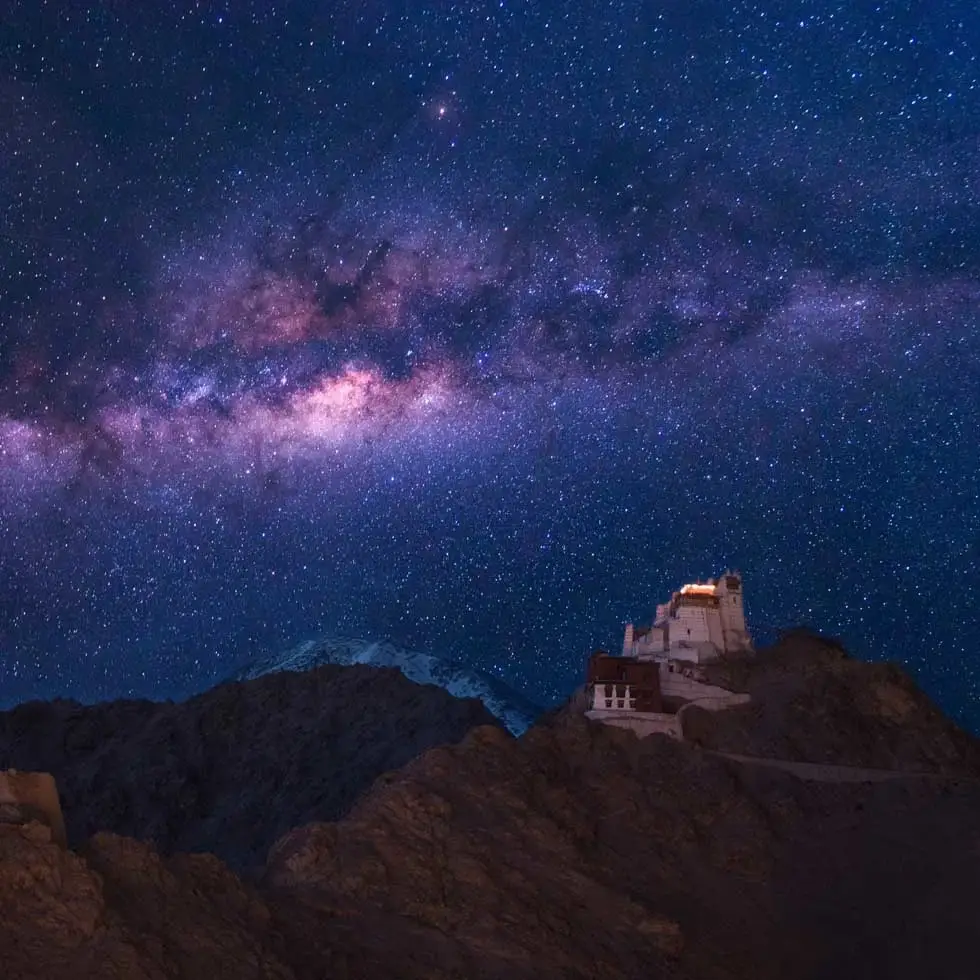
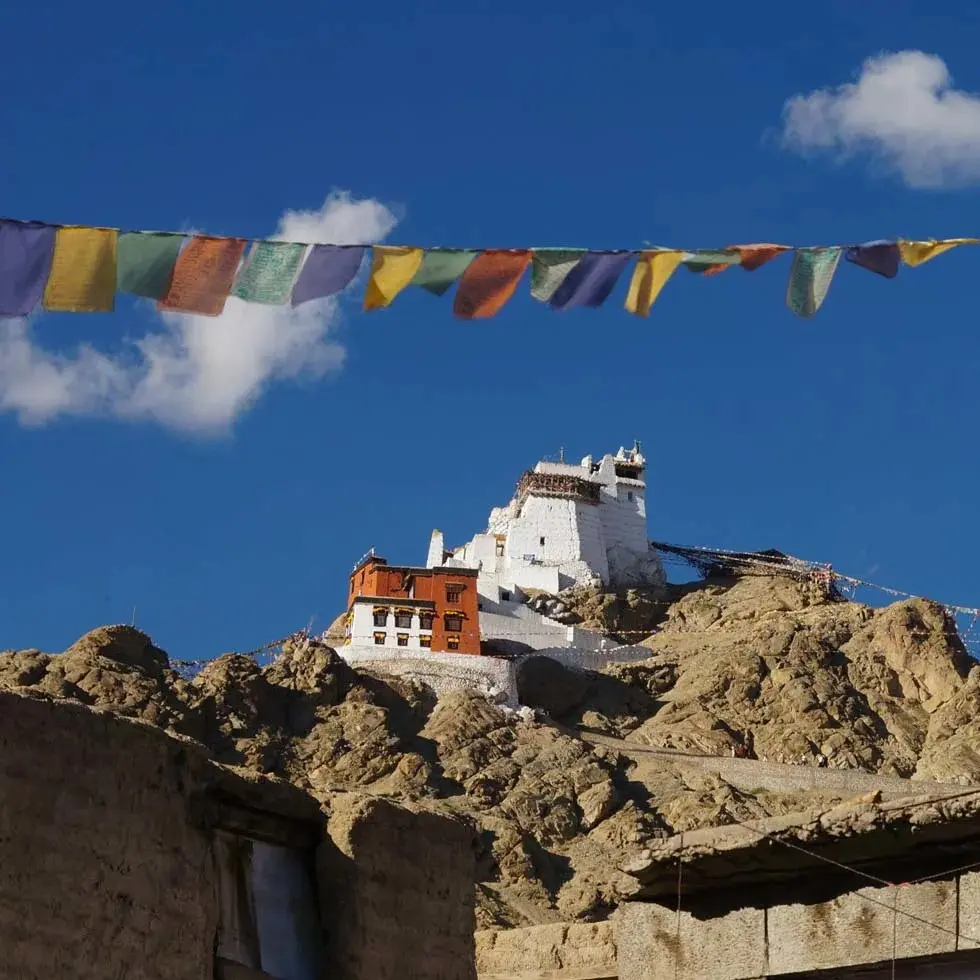
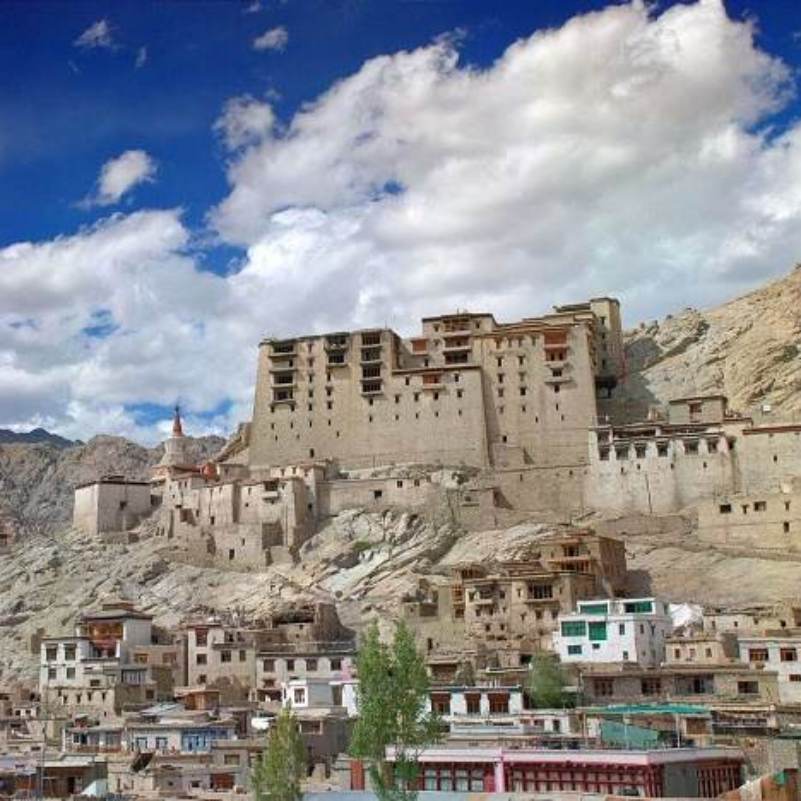
Leh Palace sits on Tsemo Hill above the old town at roughly 3,500 metres. Built around 1630 by King Sengge Namgyal, it served as the Namgyal dynasty's royal residence until the Dogra invasion forced the family to Stok in the 1830s. Nine storeys of stone and mud brick, modelled on the Potala in Lhasa. Most interiors are in ruins, but the rooftop view across Leh, the Indus Valley, and the Stok range is worth the climb. One to two hours, ideally late afternoon.
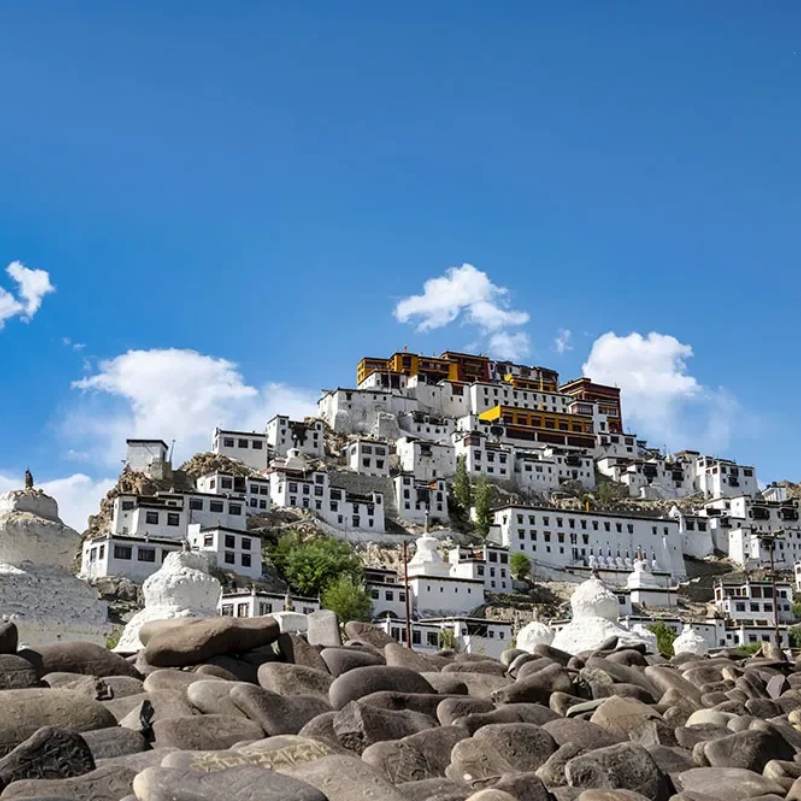
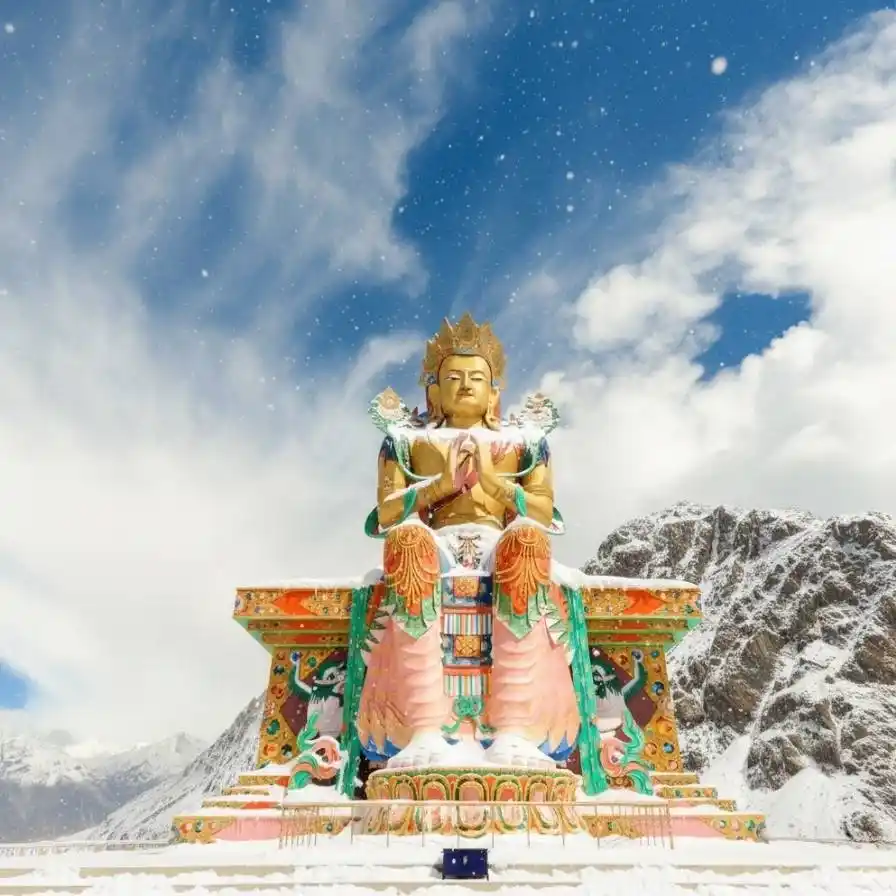
Thiksey Monastery is the largest monastery in central Ladakh, a 12 storey Gelugpa gompa built into a hillock about 19 km south of Leh at around 3,600 metres. Founded in 1433, it is often compared to the Potala Palace in Lhasa for its tiered white and red facade. The 15 metre Maitreya Buddha statue, commissioned in 1970 to mark the 14th Dalai Lama's visit and consecrated in 1980, is the largest indoor Buddha in central Ladakh. The 6:30 AM morning prayer is the cultural experience most Ladakh travellers remember longest. Plan 1 to 1.5 hours for a visit, or more if you catch the dawn prayer.
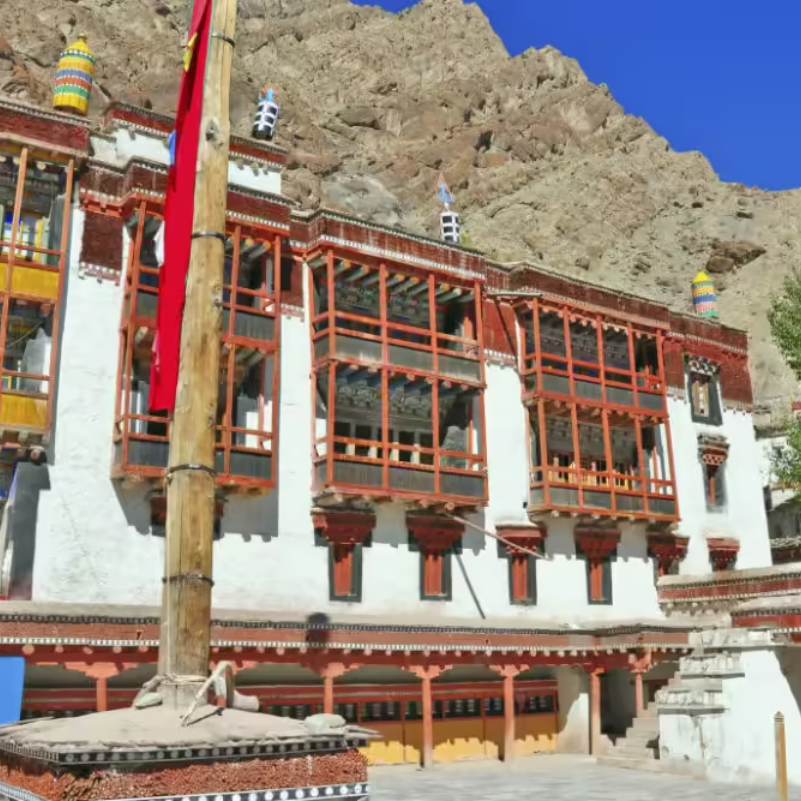
Hemis is the largest and wealthiest Drukpa Kagyu monastery in Ladakh, in a quiet side gorge about 45 km from Leh at ~3,500 m. An ideal gentle half day outing during your first 48 hours of acclimatisation. The annual Hemis Tsechu (June or July) features sacred Cham dances honouring Guru Padmasambhava. Entry ₹50. Combine with Thiksey and Shey Palace on a single day circuit from Leh.
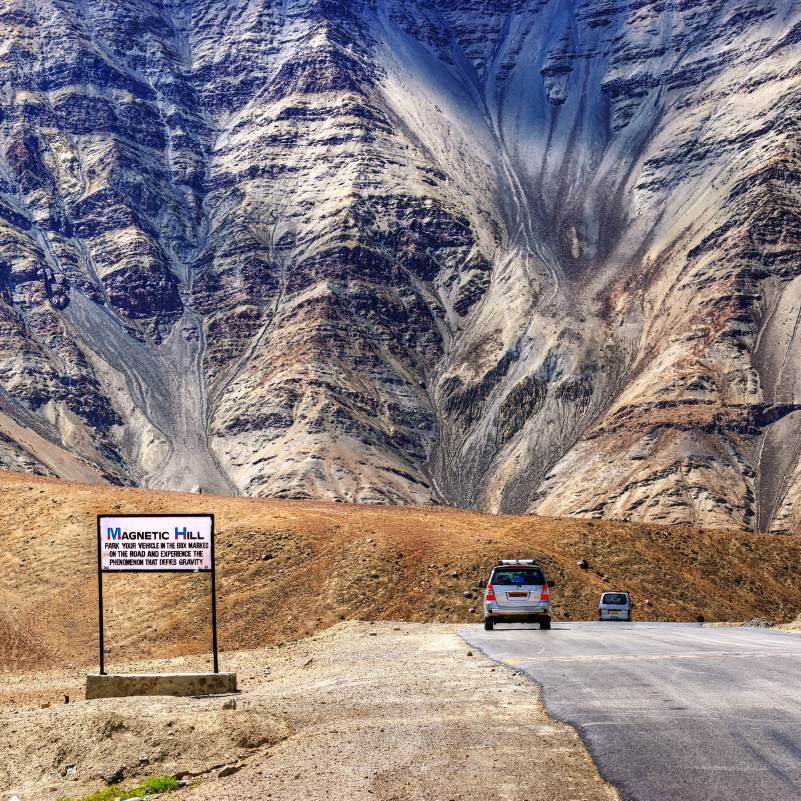
Magnetic Hill is a short stretch of road on the Leh to Kargil highway, about 27 km west of Leh at roughly 11,500 feet. Park your car in the yellow box marked on the road, shift to neutral, release the brakes, and the vehicle appears to roll uphill on its own at about 10 to 15 kmph. It is an optical illusion created by the surrounding terrain and the way the horizon line hides the actual slope of the road. The whole thing takes five minutes. Most travellers do it as part of a Sham Valley half day from Leh, paired with Gurudwara Pathar Sahib and the Indus Zanskar confluence near Nimmo.
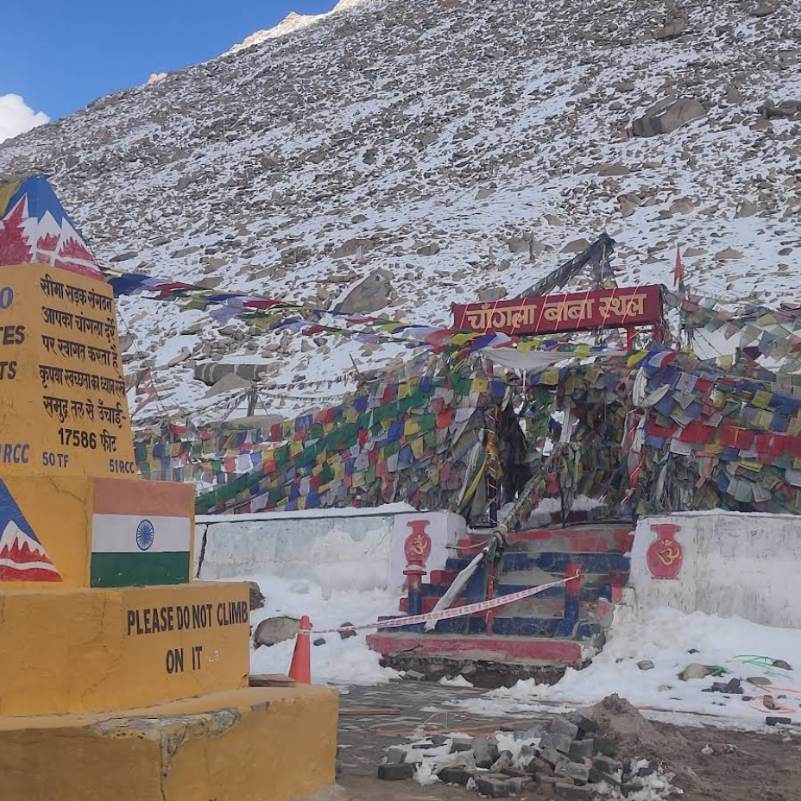
Chang La sits at roughly 5,360 metres on the Leh to Pangong Lake road, about 75 km east of Leh. One of the most iconic high altitude passes in the world, it is not a destination in itself but a 15 minute transit stop where the Indian Army maintains a safety post with hot tea, emergency oxygen, and warmth. The air is thin enough that you feel each breath. Prayer flags snap so hard in the wind they drown out car engines. The Changla Baba temple draws a quiet prayer from every passing driver. Keep your stop short. The altitude is real.
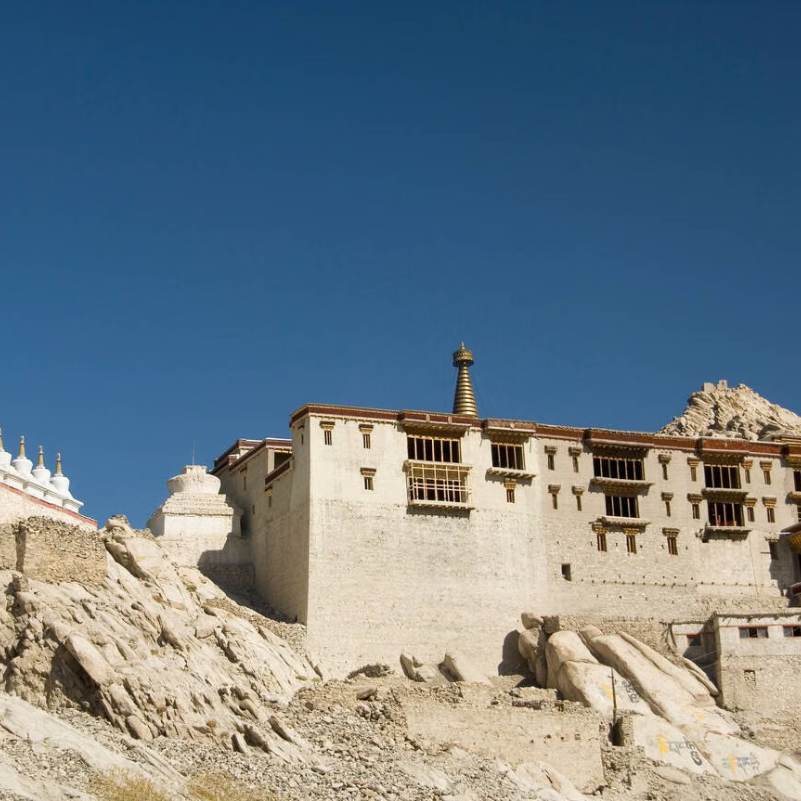
Shey Palace sits on a hill 15 km south of Leh at around 3,415 metres, the former summer capital of the Namgyal kings of Ladakh. The current palace and gompa were built in 1655 by Deldan Namgyal in memory of his father Sengge Namgyal, and the main draw is a 12 metre Shakyamuni Buddha across three floors, the second largest in Ladakh after Thiksey. A 45 to 60 minute stop on the Indus valley monastery loop from Leh, not a destination on its own. Open year round, nominal entry fee generally around Rs 30, confirm on arrival.
The best things to do in Ladakh with your family are not complicated. They are sunsets that turn the valley gold, camel rides on cold desert sand, monastery mornings where your children go still, and lakeside pauses where nobody needs to do anything except look. These are the moments your family will carry home.
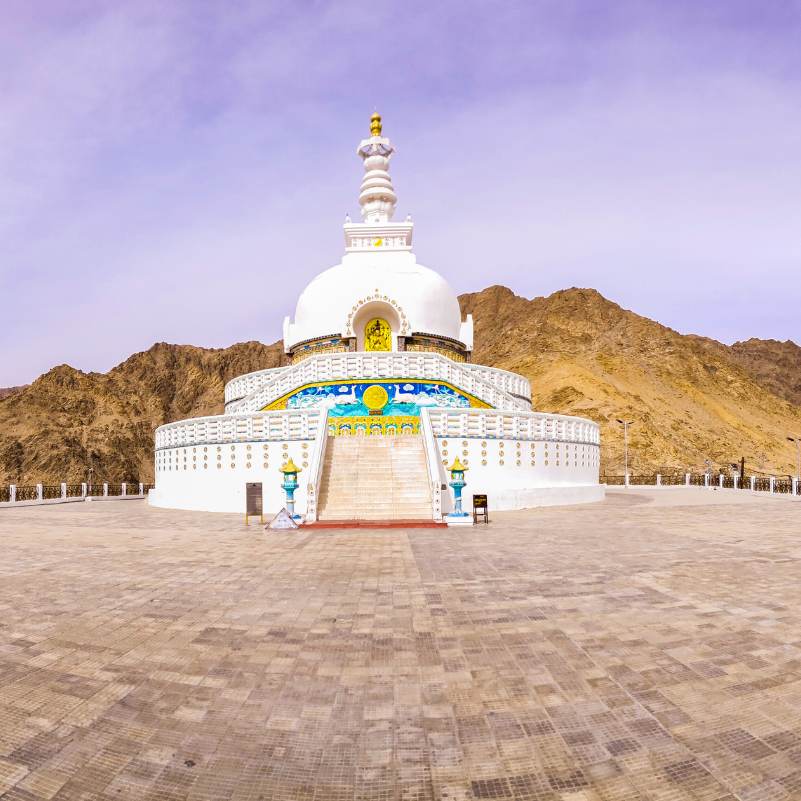
The valley turns gold. The mountains go pink. Your family sits on the steps. No tickets, no rush. Leh's best evening.
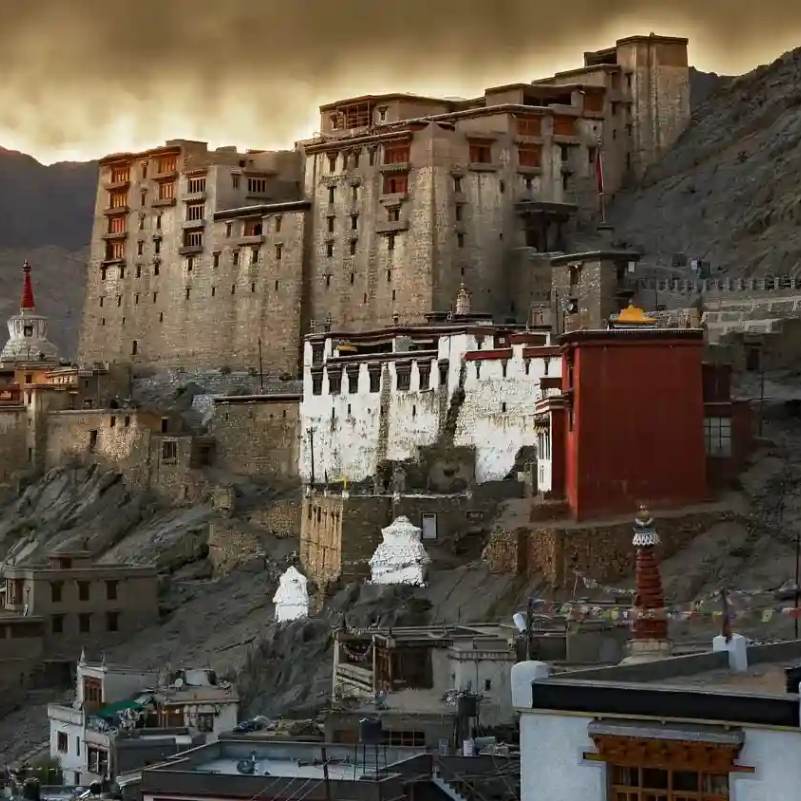
Walk the lanes. Try momos and thukpa. Browse handicrafts. Let the kids pick something. The evening pace is the acclimatization your family needs.
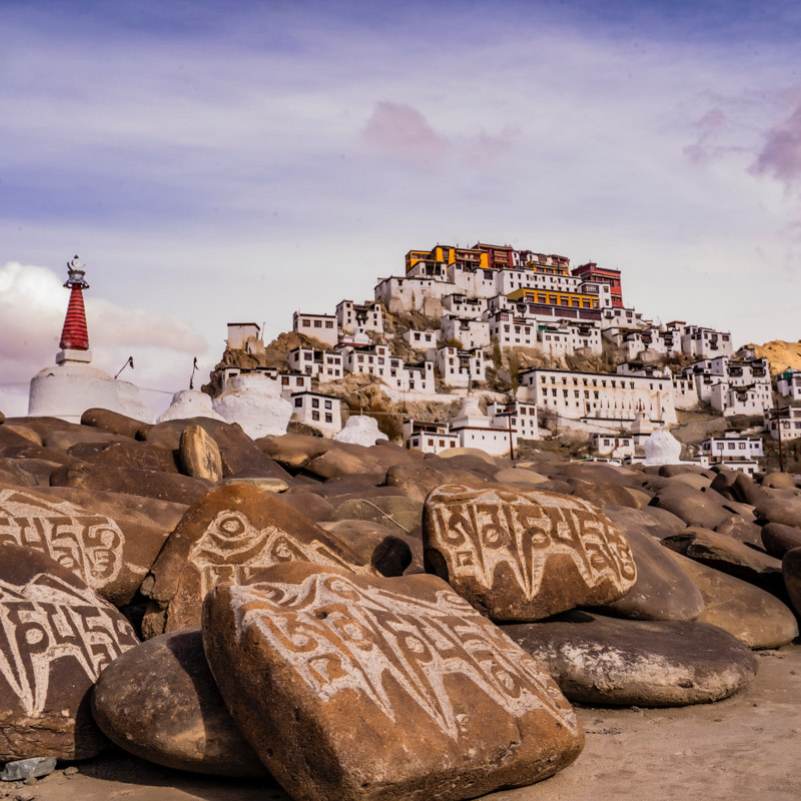
Thiksey at dawn, or Hemis or Likir in soft light. Prayer halls are still. Chanting is low. Children absorb more here than they will tell you.
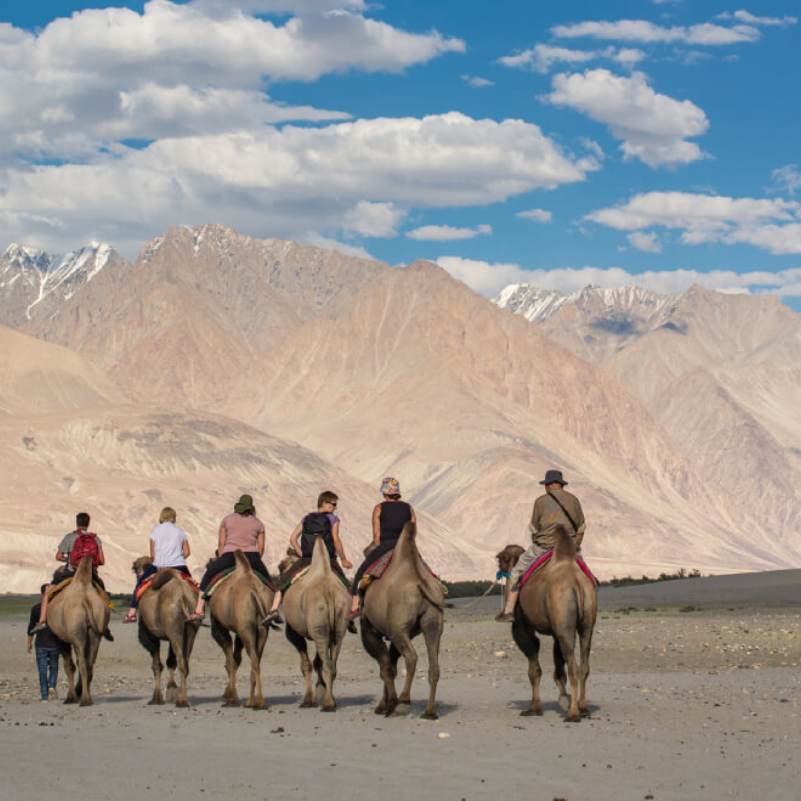
Sand dunes in a cold desert. Double-humped camels. Kids love this. Adults photograph it. Everyone talks about it at dinner.
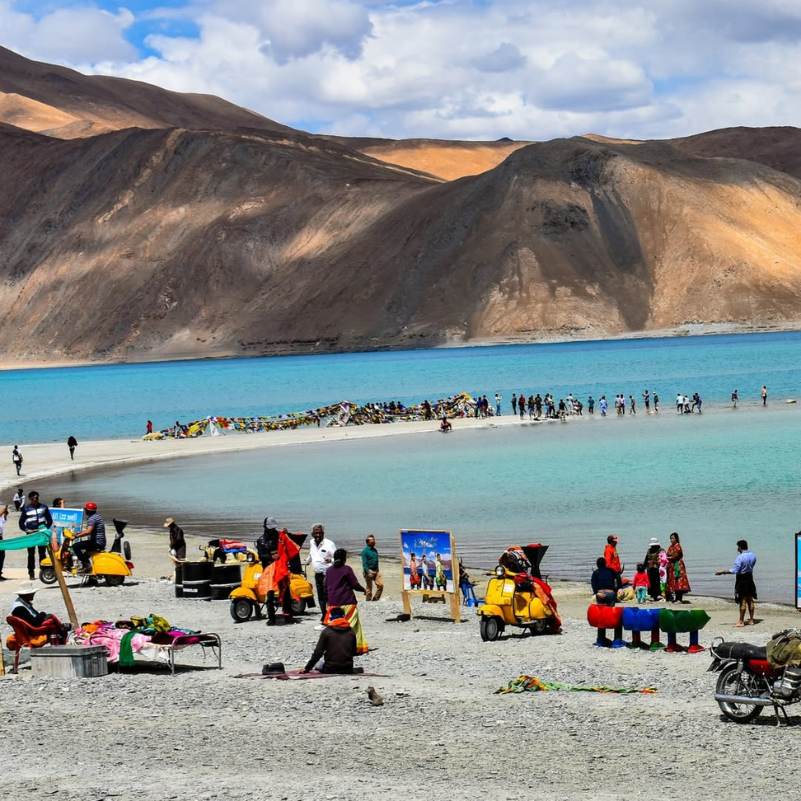
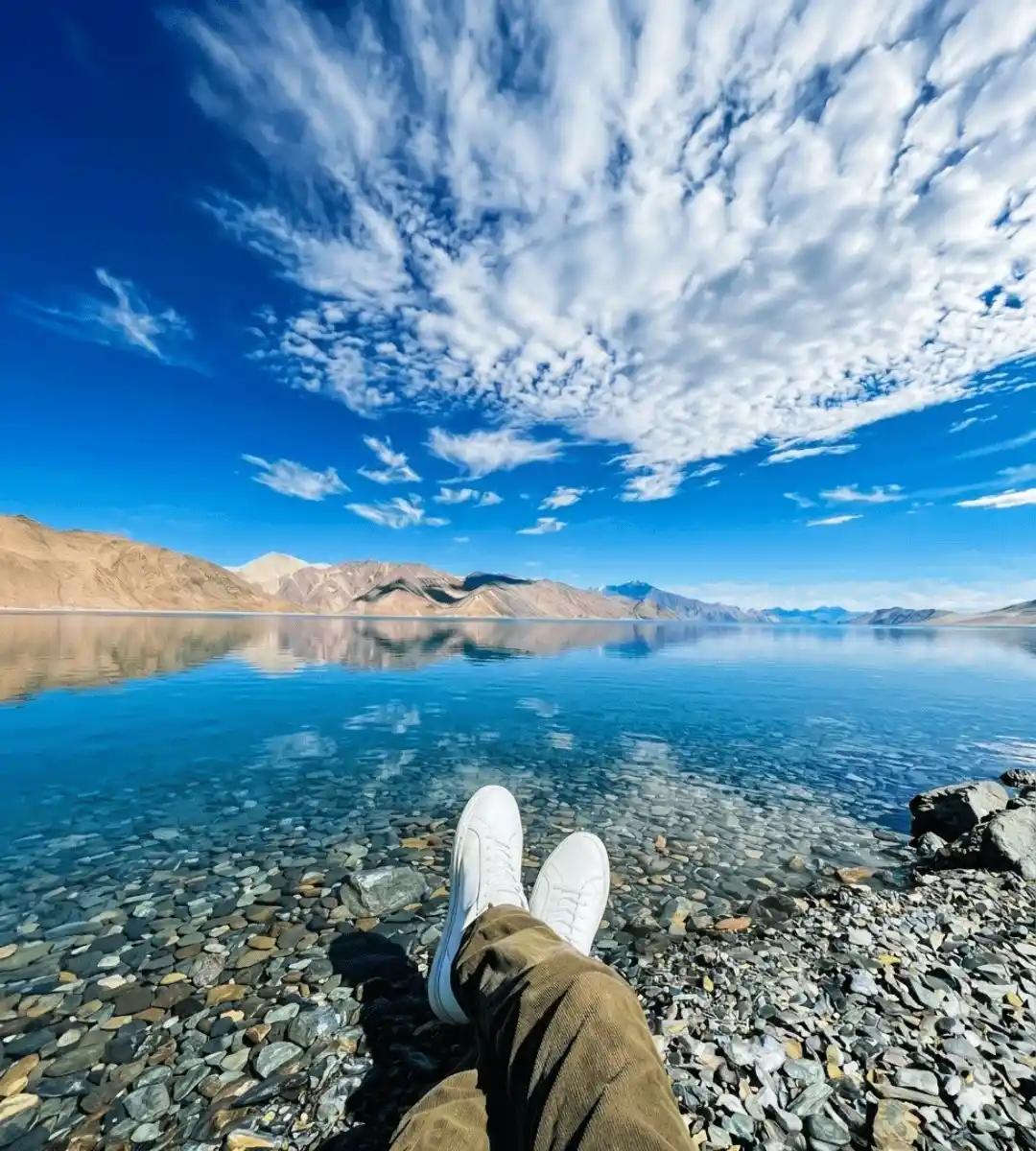
Do not rush the lake. Stay. Sit. Let the colour change. Take a photograph your family will keep for decades.
Thukpa, momos, skyu, butter tea. Apricot jam on fresh bread. Simple food that tastes better at altitude and better when shared.
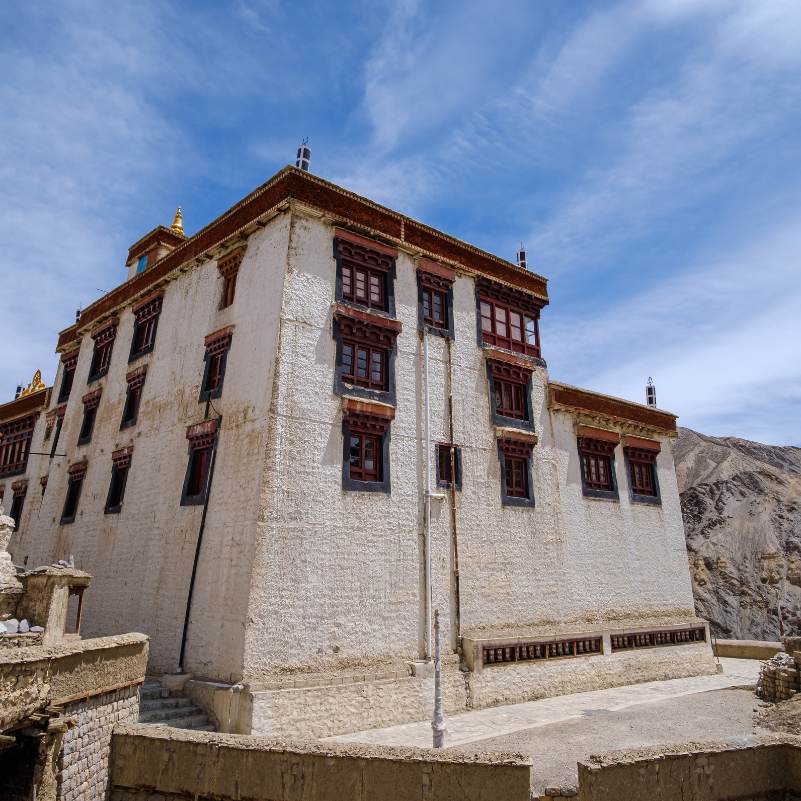
Lower altitude, shorter drives, ancient monasteries. Proof that Ladakh does not have to be hard to be memorable.
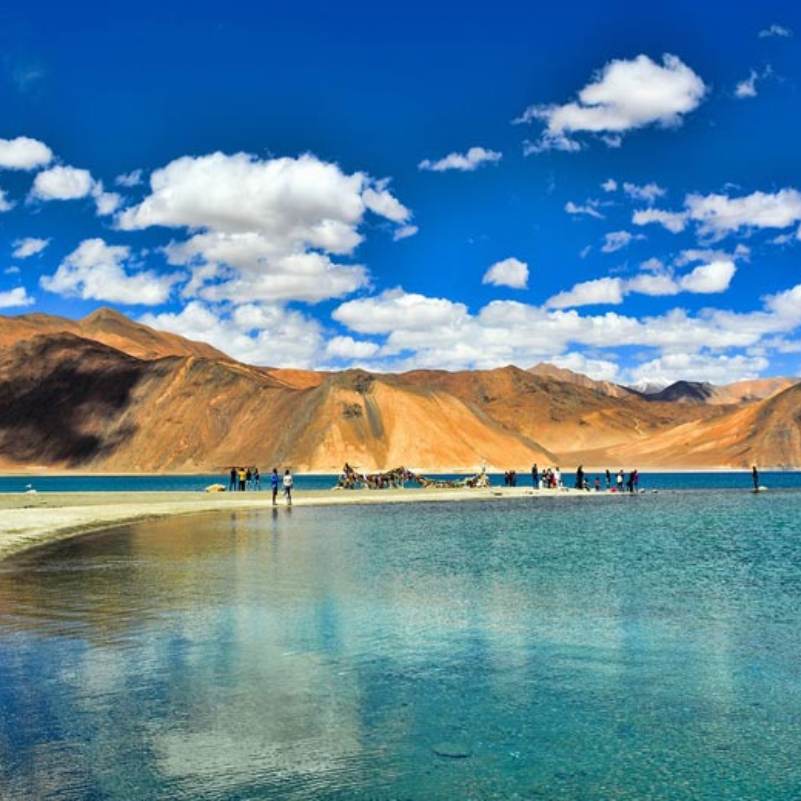
Khardung La or Chang La. Prayer flags. Cold wind. Your family looking out over another world. Stop, get out, take it in together.

“Travel Coffee truly went above and beyond. Even though we booked from Indonesia without meeting them, we always felt secure — their team was available 24/7 and took care of every detail. Shubham personally ensured our comfort throughout the Himachal trip, from hotel checks to small gestures like bringing lotion and altitude pills. Their sincerity and local expertise made the journey unforgettable.”
Andre & Angel
Yes, with the right pacing. Leh Ladakh family tour packages work best when the route matches your family's comfort level. Families with children aged six and above, travelling with a private vehicle and proper acclimatization, consistently love this trip. The key is pace, not ambition.
Children six and above generally handle Ladakh well. Kids under four may struggle with altitude, dry air, and long drives. Between four and six can sometimes work with careful planning and shorter road days. Consult your paediatrician for very young children.
Ladakh is one of the safest destinations in India for families. Communities are peaceful. Tourist infrastructure in Leh is solid. The real risks are altitude-related. With an experienced operator, private vehicle, and well-paced itinerary, families travel safely every season.
Six to seven for a classic Leh, Nubra, Pangong circuit. Eight to nine with Sham Valley or Turtuk. Under five is too rushed, especially with kids or elderly members. Buffer days make the difference between stressful and joyful.
July and September are strongest. July has full access and settled weather. September has clearer skies and fewer tourists. June works but is colder. We help families pick dates around school holidays and comfort with cold.
Yes, and recommended for most families. Delhi to Leh is ninety minutes. First day must be complete rest. Families who respect acclimatization enjoy the trip far more.
Leh for acclimatization. Shanti Stupa for sunset. Nubra for camel rides and dunes. Pangong for the lake. Sham Valley for easier monastery visits. Turtuk for culture. Hall of Fame for older children. A Leh, Nubra, Pangong route covers emotional highlights for most families.
A private SUV with an experienced local driver. Kids need stops. Elderly members need breaks. A private vehicle gives your family pace control that group travel cannot.
Yes, with careful planning and medical clearance. Seniors can enjoy Leh, Sham Valley, and Nubra comfortably. Pangong involves a longer drive. We design routes so easier stops come first and harder sectors are optional.
Layers for everyone: thermals, fleece, windproof jacket, warm jacket. High SPF sunscreen, UV sunglasses, lip balm, moisturizer. Comfortable shoes. Power bank, headlamp. Medications and altitude preventatives (consult doctor). Cash for the trip beyond Leh. Even in July, nights are cold.