
Zanskar Valley
A remote high altitude valley in Kargil district, Ladakh, sitting between 3,500 and 4,000 metres, accessible by road only from roughly June to October. Padum is the base town. The valley draws people who want to see what Ladakh looked like before the tourist wave, and those chasing treks, monasteries, and the winter Chadar on the frozen Zanskar River.
- 3,500 to 4,000 m elevation
- Padum base · ~235 km from Kargil
- June to September best window
- 4 to 7 days recommended
- Remote · limited facilities
What makes it special
Zanskar is the part of Ladakh that even Ladakh considers remote. It sits south of the main Indus valley, walled off by the Zanskar Range on one side and the Great Himalayan range on the other. The only way in by road is over high passes that stay buried under snow for more than half the year. For roughly five months, from June through October, the valley opens up. The rest of the time, the people of Zanskar have historically walked out on the frozen river.
That isolation is the whole point. If Leh is the front door of Ladakh, and Nubra and Pangong are the popular wings, Zanskar is the back room that most travellers never reach. The valley has about 20,000 people, scattered across small villages built around barley fields and Buddhist monasteries. Padum, the capital, has roughly 2,000 people, a handful of guesthouses, a few shops, and no reliable fuel pump. The landscape is enormous, brown, dry, and quiet in a way that makes you realise how noisy even "peaceful" places usually are.
What draws people here depends on who they are. Trekkers come for routes like the Chadar (frozen river walk in winter), the Padum to Darcha trek, and the trek to Phugtal Monastery. Monastery seekers come for Karsha, Phugtal, Sani, and Stongdey, which are among the oldest and most dramatically sited Buddhist institutions in the Himalayas. Rafters come for the Zanskar River gorge, one of the most extreme multi day rafting runs in India. And a growing number of road trippers come for the new Nimmu to Padum to Darcha highway, which was connected in March 2024 and gives Zanskar its first direct link to the Manali side.
Here is the honest framing. Zanskar is not for everyone. If you want comfortable hotels, reliable meals, and phone signal, this is not the place. Accommodation is basic. Homestays run roughly 1,000 to 1,500 rupees a night, and the best hotels in Padum are clean but simple, around 1,500 to 3,000 rupees. The food is limited to what the valley grows and what trucks bring in during the short summer window. Mobile network barely exists beyond Padum, where BSNL postpaid works intermittently. Jio, Airtel, and Vi coverage effectively ends at Kargil or Keylong.
But if you want the Ladakh that existed 30 years ago, before Pangong became a parking lot and Khardung La became a selfie booth, Zanskar is it. The monasteries here still function as living institutions, not tourist stops. The people still depend on the valley for survival. And the landscape, enormous and indifferent and somehow deeply comforting, does something to your sense of scale that the more famous parts of Ladakh no longer manage.
Plan a minimum of four days in the valley, not counting travel days. Seven is better. The roads in and out take a full day each, and the distances between monasteries and landmarks inside Zanskar mean you need time to do anything properly. Rushing Zanskar defeats the entire point of going.
Quick answers
- Is Zanskar Valley worth the effort to reach?
- Yes, if you want the most remote and least commercialised part of Ladakh that is still accessible by road. The journey takes a full day from Kargil (roughly 235 km via Pensi La) or from Manali via Darcha and Shinku La. The valley rewards you with ancient monasteries, genuine isolation, dramatic landscapes, and a pace of life that most of Ladakh has moved past. It is not worth the effort if you want comfort, connectivity, or a quick in and out. Plan at least four days in the valley, seven if you can manage it.
- What is the best time to visit Zanskar Valley?
- July to September is the safest and most comfortable window. Roads from both the Kargil side (via Pensi La) and the Manali side (via Shinku La) are generally open and stable. June is possible but road conditions can be unreliable in the first half. October works but the window is narrowing and early snow can close Pensi La without warning. For the Chadar Trek on the frozen Zanskar River, January to February is the only option.
- How many days do you need for Zanskar Valley?
- A minimum of four days in the valley plus one full day each for travel in and out. With four days you can cover Padum, Karsha Monastery, a day trip toward Phugtal, and the Drang Drung Glacier viewpoint. Seven days lets you explore more comfortably, add the Zangla side, do the Phugtal trek properly, and actually absorb the valley. Rushing defeats the purpose. The valley is vast and the roads inside are slow.
Quick facts
Everything you need to know at a glance.
At a glance
- Altitude
- Padum sits at approximately 3,670 m (12,040 ft). The valley floor ranges from roughly 3,500 to 4,000 m. Passes into the valley exceed 4,400 m.
- Location
- Zanskar tehsil, Kargil district, Union Territory of Ladakh. South of the main Indus valley, separated by the Zanskar Range.
- Nearest base
- Padum is the main town. Kargil (235 km via Pensi La, 8 to 10 hours) is the nearest town with full facilities.
- Road access
- Generally mid June to late October via Pensi La from Kargil. The newer Darcha route via Shinku La usually opens by late June and closes by early October.
- Time needed
- Minimum 4 days in the valley plus travel days. 7 days recommended for a proper visit.
- Known for
- Ancient Buddhist monasteries (Karsha, Phugtal, Sani, Stongdey), the Chadar Trek on the frozen Zanskar River in winter, Drang Drung Glacier, extreme isolation, and multi day river rafting.
- Difficulty
- Moderate to challenging. The drive in is long and tiring. Altitude above 3,500 m throughout. Internal roads are rough. Phugtal Monastery requires a 2 hour trek each way.
On the ground
- Mobile network
- Extremely limited. BSNL postpaid works intermittently in Padum and a few villages. Jio, Airtel, and Vi have no reliable coverage in Zanskar. Plan for days without signal.
- ATMs
- No reliable ATM in Padum. ATMs in Kargil are the last option before entering Zanskar. Carry all the cash you will need for your entire stay.
- Fuel
- No reliable fuel pump in Padum. Last dependable fuel is at Kargil (coming from Srinagar/Leh side) or Tandi near Keylong (coming from Manali side). Carry extra fuel.
- Food
- Basic but genuine. Homestays serve Zanskari meals, typically rice, dal, thukpa, and momos. Padum has a few small restaurants. Do not expect variety. Carry snacks and dry food for travel days between villages.
- Parking
- Informal parking in Padum and at major monasteries. No fees. Roads inside Zanskar are narrow, so park carefully and pull off fully.
- Washrooms
- Basic. Homestays and guesthouses have simple facilities. Western toilets are rare outside the better Padum hotels. Carry toilet paper and sanitiser.
- Permits
- Domestic tourists pay the Environment Development Fee (EDF), approximately Rs 400 one time plus Rs 20 per day wildlife fee and Rs 10 per day Red Cross fee. No separate Inner Line Permit needed. Foreign nationals need a Protected Area Permit (PAP) through a registered agent in Leh. Permit requirements can change, so confirm before your trip.
- Drones
- Ladakh has military sensitivity throughout. Drone use in restricted and border areas requires permissions that are difficult to obtain. Do not fly drones without clearance.
- Photography
- Photography is generally welcome but ask before photographing inside monasteries or shooting portraits of locals. Monastery interiors may restrict photography in certain prayer halls.
- Local transport
- Taxis available in Padum for day trips to monasteries and nearby points. Rates are not standardised like in Leh. Negotiate beforehand. A local driver who knows the roads is genuinely useful here.
Seasonal weather
- Jun to Sep25°5°Summer (Jun to Sep)
- May, Oct15°-5°Shoulder (May, Oct)
- Nov to Apr0°-25°Winter (Nov to Apr)
Suitable for
- Couples — suitable
- Families — with some care
- Seniors — with some care
- Solo — suitable
- First-timers — not suitable
- Pet-friendly — not suitable
How to reach Zanskar Valley
4 approach routes, with seasonal access.
From Kargil via Suru Valley and Pensi La (most common route)
Generally mid June to late October, depending on snowfall at Pensi La (4,400 m)- Distance
- Approximately 235 km
- Time
- 8 to 10 hours
- Road
- Mix of tarred highway and rough stretches. The Suru Valley section is relatively smooth. Pensi La and the descent into Zanskar can be rough with gravel, loose stones, and occasional water crossings.
- Last fuel
- Fill up in Kargil. No reliable fuel between Kargil and Padum.
The classic and most established route. From Kargil, the road follows the Suru River through the green Suru Valley, passing Sankoo, Panikhar, and Parkachik (with views of Nun Kun massif). The landscape transitions from green irrigated fields to increasingly barren and dramatic terrain. Rangdum, a tiny settlement about midway, is the usual lunch stop and sometimes an overnight halt. From Rangdum, the road climbs to Pensi La at 4,400 metres, where you get your first views of the massive Drang Drung Glacier. The descent from Pensi La into Zanskar takes you through the Stod Valley to Padum. Most travellers split the drive with an overnight at Rangdum or push through in one long day. The road is BRO maintained but sections remain rough, especially between Rangdum and Pensi La.
From Leh via Kargil (for travellers already in Leh)
Leh to Kargil is open year round. Kargil to Padum generally mid June to late October.- Distance
- Approximately 450 km (Leh to Kargil to Padum)
- Time
- Two days minimum, with an overnight in Kargil
- Road
- Leh to Kargil highway is well maintained. Kargil to Padum is the same route described above.
- Last fuel
- Leh has multiple pumps. Top up again in Kargil.
If you are already in Leh, drive to Kargil on day one (roughly 220 km, 6 to 8 hours on a well maintained highway via Lamayuru and Mulbekh). Stay overnight in Kargil. On day two, take the Kargil to Padum road via Pensi La. Do not attempt Leh to Padum in a single day. The combined drive is roughly 450 km of mountain roads and you will arrive exhausted and poorly acclimatised.
From Manali via Darcha and Shinku La (newer route, operational since 2024)
Generally late June to early October. Shinku La at roughly 5,091 m (16,700 ft) opens later and closes earlier than Pensi La.- Distance
- Approximately 350 to 380 km (Manali to Padum)
- Time
- Two days minimum, with a halt at Keylong or Jispa
- Road
- Manali to Keylong via Atal Tunnel is comfortable. Keylong to Darcha is decent. Darcha to Shinku La to Padum is rough, narrow, and demanding, with unpaved stretches, water crossings, and high altitude.
- Last fuel
- Fill up at Tandi (between Keylong and the Atal Tunnel). This is the last reliable fuel before Zanskar. Carry extra.
The new route via the Nimmu to Padum to Darcha highway, connected by BRO in March 2024. From Manali, drive through the Atal Tunnel to Sissu, continue to Keylong and Jispa. Halt overnight at Keylong or Jispa for acclimatisation. On day two, drive from Darcha over Shinku La and descend through the Lungnak valley past Kargyak, Purne (access point for Phugtal Monastery), and on to Padum. This route crosses only one major pass but that pass is over 5,000 metres and the road surface beyond Darcha is rough. A 4x4 with good ground clearance is strongly recommended. This route lets you enter Zanskar from one side and exit from the other (via Kargil), making a circuit possible.
From Nimmu via Zanskar Gorge (Nimmu to Padum road, partially operational)
Summer months. Road conditions vary year to year as construction continues.- Distance
- Approximately 156 km
- Time
- 6 to 8 hours (conditions vary, road still being improved)
- Road
- Under improvement. Parts are blacktopped, parts are rough formation cutting along the Zanskar River gorge. BRO is widening and improving this stretch.
- Last fuel
- Fill up in Leh before starting.
The most direct route from Leh, following the Zanskar River gorge upstream from Nimmu (35 km from Leh on the Leh to Kargil highway) all the way to Padum. BRO connected the full route in 2024 and continues widening and blacktopping. As of 2026, the road is passable in summer but remains rough in sections. This route offers dramatic gorge scenery and passes through Chilling (the rafting access point). It is also the route the Chadar Trek follows in winter when the river freezes. As road quality improves, this will likely become the preferred route from Leh, cutting the current two day journey via Kargil to a single day.
Best time to visit
Season by season, so you can plan around the weather rather than hope.
- Recommended
Summer
July to September
The main window. Roads are stable, weather is warm by Zanskar standards, all monasteries and treks are accessible.
- Day temperature
- 15 to 25°C
- Night temperature
- 3 to 10°C
- Roads
- Both Pensi La and Shinku La routes generally open
- Crowds
- Low to moderate by Ladakh standards
- Best for
- Monasteries, trekking, rafting, road trips, photography
This is when most travellers visit, and for good reason. Daytime temperatures in the valley sit between 15 and 25 degrees Celsius, though nights still drop to around 5 degrees. Both the Pensi La route from Kargil and the Shinku La route from Manali are generally open and stable. The barley fields around Padum turn green, the monasteries are active with summer rituals, and trekking routes are accessible. July and August see the most visitors, though Zanskar never gets truly crowded in the Pangong or Nubra sense. September brings crisper air, cleaner light for photography, and thinner traffic, but the window starts narrowing and you should watch for early snowfall at the passes.
Shoulder season
June and October
Roads opening or closing. Possible but less predictable. Be ready to adjust plans.
- Day temperature
- 10 to 20°C
- Night temperature
- -5 to 5°C
- Roads
- Unpredictable. Opening in June, closing risk in October.
- Crowds
- Very low
- Best for
- Experienced travellers comfortable with uncertainty
June is when the snow clears and Zanskar slowly wakes up. The Pensi La road usually opens by mid June, but dates vary each year. Early June can mean waiting in Kargil for the road to clear. Late June is more reliable. Guesthouses and homestays start operating. October is the reverse: the valley is cooling rapidly, tourist infrastructure winds down, and an early snowfall at Pensi La can close the road without warning. Both months reward flexibility and punish rigid schedules. If you go in June, carry extra warm layers and be prepared for the road to be freshly cleared and rough. If October, have a backup plan in case you get extended in the valley by a surprise closure.
- Closed
Winter
November to May
Roads are closed. Valley is cut off. Only the Chadar Trek operates in January to February for experienced winter trekkers.
- Temperature
- -15 to -25°C at night, rarely above 0°C during the day
- Roads
- Closed. Pensi La and Shinku La both buried under snow.
- Access
- Only by walking the frozen Zanskar River (Chadar Trek, Jan to Feb)
- Best for
- Chadar Trek participants only
Zanskar is inaccessible by road for roughly seven months. Snow buries Pensi La and Shinku La completely. The valley drops to minus 15 to minus 25 degrees Celsius. The Zanskar River freezes to form the thick ice sheet that makes the famous Chadar Trek possible, usually in late January to February. This is an organised trek on the frozen river, not a casual visit. It requires proper gear, a registered operator, and serious cold weather preparation. Outside of the Chadar window, there is no practical reason for a tourist to attempt reaching Zanskar in winter.
Things to see & do
7 things worth your time at Zanskar Valley.
Explore Karsha Monastery
2 to 3 hoursThe largest monastic institution in Zanskar, built on a hillside about 9 kilometres from Padum, visible from across the valley. Karsha houses around 100 monks and has multiple temples with old murals and thangka paintings. The annual Gustor Festival (usually in July) brings masked dances and draws villagers from across the valley. The walk up to the monastery gives you a wide view of the Padum plain and the Zanskar River below. This is the single most accessible and rewarding monastery visit from Padum.
Trek to Phugtal Monastery
Full day (4 to 5 hours of trekking round trip, plus time at the monastery)Phugtal is the monastery that ends up on every Zanskar photograph, and when you see it in person you understand why. Built into a massive cave in a cliff face above the Lungnak valley, it looks like a honeycomb of white buildings hanging off the rock. Reaching it requires a roughly 2 hour trek from Purne village (about 53 km south of Padum by road). The trail follows the river through a narrow valley. Budget a full day from Padum: the drive to Purne, the trek in, time at the monastery, the trek out, and the drive back. Phugtal is the highlight of Zanskar for many visitors, but it requires effort. That effort is the filter that keeps it genuine.
Visit Sani Monastery
1 to 1.5 hoursOne of the oldest Buddhist sites in Zanskar, about 7 kilometres before Padum on the Kargil road. Sani is unusual because it is built on flat ground rather than a hilltop. It contains the Kanika Stupa, believed to date to the 2nd century AD, making it one of the oldest stupas in the Himalayan region. The annual Sani Nasjal festival brings the monks together for prayers and cultural events. Quiet, peaceful, and easy to reach, Sani is a good first stop on the way into Padum.
See the Drang Drung Glacier from Pensi La
30 minutes to 1 hour at the viewpointIf you are coming from Kargil via Pensi La, the Drang Drung Glacier is the dramatic welcome committee. One of the largest glaciers in Ladakh, it is visible from the pass itself and from several viewpoints on the descent. The scale is hard to judge until you notice the tiny river emerging from its base. You do not need to trek to the glacier, the views from the road are striking. But the stop is exposed and cold even in summer, so layer up before stepping out of the vehicle.
Rafting on the Zanskar River
Multi day expedition (4 to 7 days for the full Padum to Nimmu run) or shorter sections near ChillingThe Zanskar River gorge between Padum and Nimmu is one of the most dramatic rafting corridors in India. Vertical canyon walls rise hundreds of metres on both sides, and the rapids range from Grade III to Grade V in sections. The full expedition from Padum to the Indus confluence at Nimmu takes 4 to 7 days and requires experienced guides and proper rafting operators. This is not casual rafting. A shorter introduction is available near Chilling, closer to the Leh end of the gorge. The best window is July to September when water levels are suitable and the access roads are open.
Drive the Nimmu to Padum road along the Zanskar Gorge
Full dayThe newly connected Nimmu to Padum road runs along the Zanskar River gorge for much of its 156 kilometre length. As of 2026, BRO continues widening and blacktopping, but the road is passable in summer. The gorge scenery is dramatic, with the turquoise Zanskar River cutting through sheer rock walls. This is also the route the Chadar Trek follows in winter when the river freezes. Driving this road gives you a taste of the gorge without committing to a multi day rafting expedition. A 4x4 is recommended as conditions vary.
Day trip to Zangla Palace and village
Half day from PadumZangla, about 35 kilometres from Padum, was one of the two historical capitals of the Zanskar Kingdom. The ruined palace sits on a hilltop above the village, and the views of the surrounding valley from the ruins are worth the drive. The village itself is tiny and quiet. Combine this with a stop at Stongdey Monastery (18 km from Padum on the Zangla road), perched on a hilltop with 180 degree views of the Zanskar Valley. Stongdey is the second largest monastic institution in Zanskar.
Know before you visit Zanskar Valley
The practical bits, from people who have been.
Getting here takes real planningFull day drive from Kargil. No fuel in the valley. 4x4 recommended. Enter from one side, exit from the other if possible.
The key thing. Zanskar is not a day trip or a quick extension from Leh. Getting to Padum takes a full day of driving from Kargil or two days from Leh (via Kargil) or Manali (via Darcha and Shinku La). The roads are rough, the distances are long, and the passes are high. You need to plan fuel carefully, because there is no reliable pump in the entire valley. Fill up at Kargil or Tandi and carry extra.
Vehicle choice matters. A 4x4 with good ground clearance is strongly recommended, especially for the Darcha route via Shinku La. The Kargil to Padum road via Pensi La is passable in a sturdy sedan in peak summer, but a high clearance vehicle makes the journey significantly more comfortable. Roads inside Zanskar between villages and monasteries are rough.
The circuit option. With the new Darcha route operational, you can enter Zanskar from one side and exit from the other, making a loop. For example: Manali to Darcha to Shinku La to Padum, then Padum to Pensi La to Kargil to Leh. This is the most rewarding way to do it if you have the time.
Road conditions, pass openings, and fuel availability can change. Confirm everything locally within a few days of your departure date.
Altitude and acclimatisationPadum is at ~3,670 m. Acclimatise in Leh or Keylong before entering. Do not rush up from the plains.
The reality. Padum is at roughly 3,670 metres. The passes into Zanskar are above 4,400 metres (Pensi La) and above 5,000 metres (Shinku La). If you are coming from the plains, you must acclimatise before entering the valley.
If coming via Leh and Kargil. Spend at least two days in Leh before heading to Kargil. Kargil sits lower at about 2,700 metres, which helps. From Kargil, the drive to Padum crosses Pensi La at 4,400 metres, so you are briefly higher than Padum before descending into the valley.
If coming via Manali. Spend a night at Keylong or Jispa to adjust to altitude before attempting Shinku La. Going from Manali (around 2,000 metres) to Shinku La (over 5,000 metres) in one day is risky and invites altitude sickness.
Common symptoms. Headache, nausea, dizziness, shortness of breath. Drink plenty of water. Avoid alcohol. If symptoms worsen, descend. Carry basic altitude medication after consulting your doctor.
Who Zanskar suits and who should reconsiderBest for experienced mountain travellers, trekkers, and monastery seekers. Not ideal for first timers, families with young children, or anyone needing medical access.
Ideal for. Experienced mountain travellers. Trekkers and adventure seekers. Photography enthusiasts. Monastery and Buddhist culture enthusiasts. Couples and solo travellers who are comfortable with basic facilities and isolation. Anyone who finds the main Ladakh circuit too crowded.
Think carefully if. You are a first time Ladakh visitor. You are better off doing Leh, Nubra, and Pangong first. Zanskar is not where you learn Ladakh; it is where you go deeper. Families with young children should consider that medical facilities are almost non existent, the journey is long and tiring, and altitude at 3,600+ metres is genuinely concerning for small kids. Seniors in good health with mountain experience can manage, but anyone with heart or respiratory conditions should consult a doctor first.
Pets. Not recommended. The journey is too long, the altitude too high, and veterinary care does not exist in Zanskar.
Cost reality and what to carryNo ATMs, no card payments. Carry all cash. Budget 1,500 to 3,000 rupees per day. Pack warm layers, medication, and snacks.
Cash is essential. There is no reliable ATM in Padum. Card payments do not work. Carry all the cash you will need for your entire Zanskar stay, including accommodation, food, local transport, and monastery donations. Budget roughly 1,500 to 3,000 rupees per day for basic to comfortable spending.
Accommodation. Homestays in villages cost roughly 1,000 to 1,500 rupees per night including meals. Hotels in Padum range from 1,500 to 3,000 rupees. Expect simple, clean rooms. Do not expect hot showers on demand or consistent electricity.
What to carry. Warm layers (nights are cold even in July). Sunscreen and sunglasses (UV is intense at this altitude). A headlamp (power cuts are common). Basic medication including altitude sickness pills (consult your doctor). Toilet paper and hand sanitiser. Dry snacks and energy bars for travel days. A portable charger (limited charging points). Enough fuel for your vehicle to reach the next reliable pump.
The monasteries are the soul of ZanskarKarsha, Phugtal, Sani, Stongdey, and Bardan. Active monasteries, not tourist sites. Be respectful.
Karsha. The largest and most accessible, 9 km from Padum. About 100 monks. Multiple temples, old murals, and the annual Gustor festival with masked dances.
Phugtal. The most dramatic, built into a cave cliff face in the Lungnak valley. Requires a 2 hour trek from Purne. A functioning monastery, not a ruin. The effort to reach it keeps it authentic.
Sani. One of the oldest, 7 km before Padum. Built on flat ground. Houses the 2nd century Kanika Stupa. Quiet and peaceful.
Stongdey. The second largest, 18 km from Padum on the Zangla road. Perched on a hilltop with panoramic views. About 60 monks.
Bardan. 12 km from Padum in the Lungnak valley, dramatically perched on a cliff beside the Zanskar River. 17th century.
These are not museums. They are active religious institutions. Be respectful. Remove shoes before entering prayer halls. Ask before photographing inside. Keep your voice low. A small donation is appreciated.
The Chadar Trek (winter only)Walk on the frozen Zanskar River in January to February. Minus 20 to minus 30 at night. Serious trek for experienced winter trekkers only.
What it is. A multi day trek on the frozen Zanskar River, usually in late January to February, when the river freezes solid enough to walk on. The trek covers roughly 62 kilometres through a deep gorge with vertical canyon walls.
The reality. Temperatures drop to minus 20 to minus 30 degrees Celsius at night. You walk on ice. You sleep in caves or basic camps along the river. The ice can crack, melt in sections, or become impassable, forcing detours up the canyon walls. This is a serious undertaking that requires proper gear, a registered trekking operator, and genuine fitness.
Who should do it. Experienced trekkers with cold weather experience who understand what sustained minus 20 nights feel like. This is not a beginner trek and not a novelty walk on ice.
Booking. Book through registered operators well in advance. The Chadar has gained popularity and slots fill up. Permits and arrangements are handled by the operator.
Nearby attractions
Other places worth the detour.
Rangdum
About 110 km from Padum, midway on the Kargil road
A tiny, almost surreal settlement in a wide open valley between Kargil and Zanskar. Rangdum Monastery sits on a hillock in the middle of the valley, and the landscape around it feels lunar. Most travellers pass through on the way to or from Padum, and it makes a good overnight halt to break the Kargil to Padum drive. Accommodation is very basic.
Suru Valley
Between Kargil and Rangdum, roughly 60 to 140 km from Kargil
The green, irrigated valley you drive through on the way from Kargil to Zanskar. The Suru River runs through it, and views of the Nun Kun massif (the highest peaks in the region at over 7,000 metres) are visible from the road near Parkachik. The valley is far greener and more populated than Zanskar itself and makes for a pleasant contrast on the drive in.
Pensi La and Drang Drung Glacier
About 80 km from Padum on the Kargil road
Pensi La at 4,400 metres is the gateway pass into Zanskar from the Kargil side. The Drang Drung Glacier, one of the largest in Ladakh, is visible from the pass and the approach road. Two small turquoise lakes (Ta Tso and Lang Tso) sit near the pass. A natural stop on the drive in or out, not a separate destination.
Gonbo Rangjon
About 80 km from Padum, on the Darcha route
A striking pyramidal rock spire in the Lungnak valley, considered sacred by local Buddhist communities. Visible from the road on the Darcha route near Kargyak village. One of the most memorable natural landmarks on the Shinku La route into Zanskar.
Purne (access point for Phugtal Monastery)
About 53 km south of Padum
A small village on the Lungnak River where the road currently ends (or nearly ends) for the Phugtal trek. The 2 hour trail to Phugtal Monastery starts from here. Purne is also where the Lungnak and Kargyak rivers meet, a confluence worth a quick look.
Our packages with Zanskar Valley
Curated trips that include a visit to Zanskar Valley.
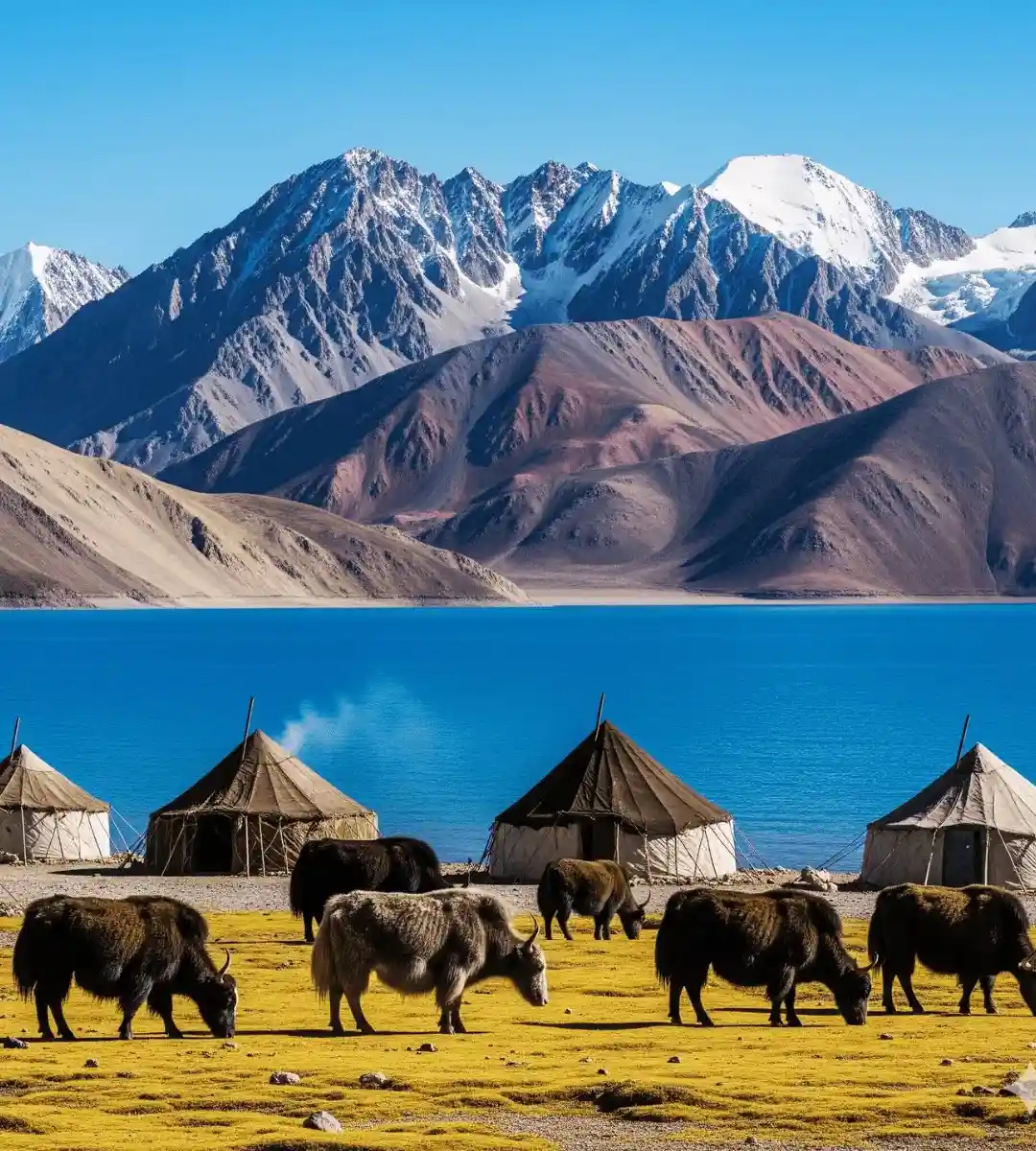 7D/6N
7D/6NBest Leh Ladakh Tour With Nubra Pangong and Tso Moriri
2D Leh•1D Nubra Valley+2
₹29,999₹37,999SAVE INR 8,000/ person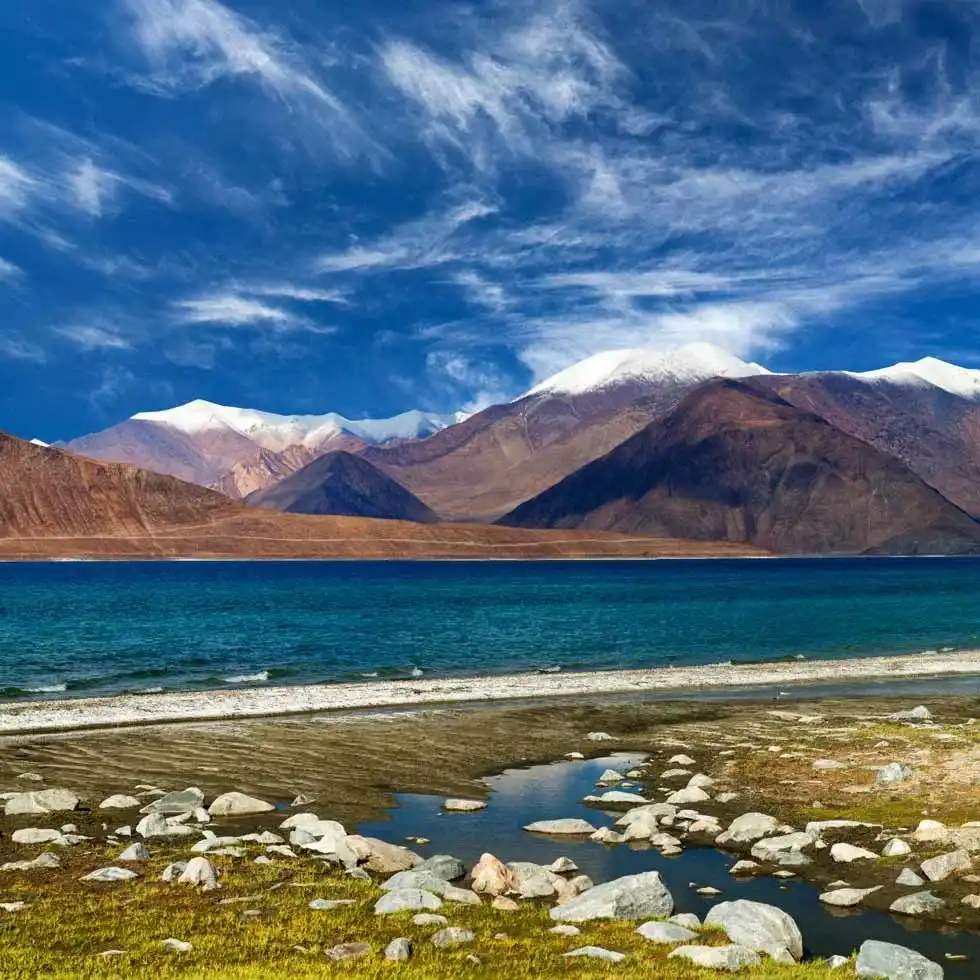 7D/6N
7D/6NLeh Ladakh Tour With Nubra Pangong and Tso Moriri
2D Leh•1D Nubra Valley+2
₹39,999₹47,999SAVE INR 8,000/ person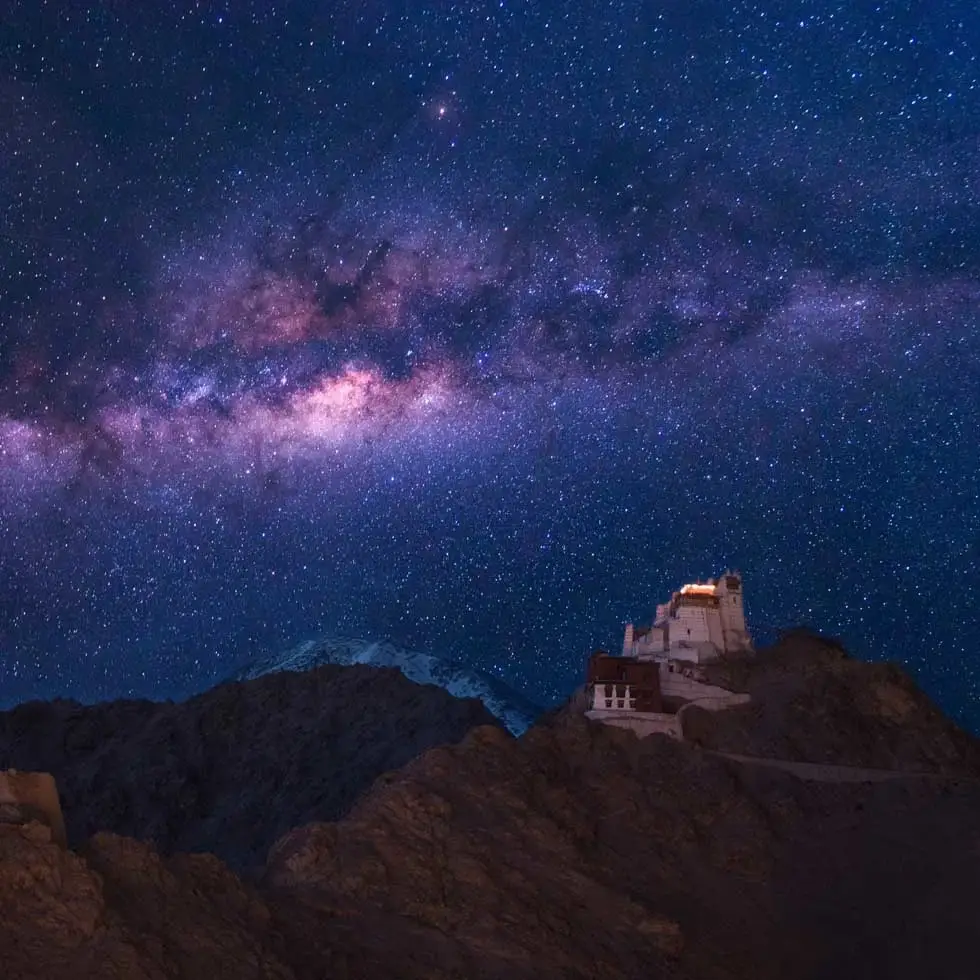 9D/8N
9D/8NExclusive Ladakh Expedition With Hanle Umlingla Puga Valley and Tso Moriri
2D Leh•1D Nubra Valley+3
₹49,999₹57,999SAVE INR 8,000/ person
Common questions about Zanskar Valley
How do I reach Zanskar Valley from Leh?
Drive from Leh to Kargil (about 220 km, 6 to 8 hours), stay overnight, then continue from Kargil to Padum (235 km, 8 to 10 hours) via the Suru Valley and Pensi La pass. The total journey takes two days. A newer route via Nimmu along the Zanskar River gorge (about 156 km) is being improved by BRO and may become a one day option as road quality improves. Do not attempt Leh to Padum in a single day on any route.
What is the best time to visit Zanskar Valley?
July to September for the main tourist window. Roads from both Kargil (via Pensi La) and Manali (via Shinku La) are generally open and stable. Weather is pleasant with daytime temperatures of 15 to 25 degrees Celsius. June and October are possible but less predictable due to road conditions.
Is Zanskar Valley safe for families with children?
Possible but not ideal. The journey is long and tiring, altitude throughout the valley exceeds 3,500 metres (which is a genuine concern for young children), medical facilities are virtually non existent, and accommodation is basic. Families with older children (above 10 to 12) who have some mountain experience can manage. For families with small children, the main Ladakh circuit (Leh, Nubra, Pangong) offers better infrastructure and easier access.
Do I need a permit for Zanskar Valley?
Domestic tourists pay the Environment Development Fee (EDF), which as of recent reports is approximately Rs 400 per person one time plus a daily wildlife fee and Red Cross fee. No separate Inner Line Permit is needed. Foreign nationals require a Protected Area Permit (PAP) arranged through a registered travel agent in Leh. Permit rules can change, so confirm the latest requirements before your trip.
Is there mobile network in Zanskar?
Barely. BSNL postpaid works intermittently in Padum and a few larger villages. Jio, Airtel, and Vi have no reliable coverage anywhere in Zanskar. Plan for extended periods without any phone signal or internet. Inform someone of your itinerary before entering the valley.
Can I visit Zanskar in a normal car?
The Kargil to Padum road via Pensi La is passable in a sturdy sedan during peak summer (July to August) when the road is at its best. However, a high clearance vehicle is strongly recommended for comfort and safety. The Darcha route via Shinku La requires a 4x4. Roads inside Zanskar between villages and monasteries are rough regardless of route.
How much does a Zanskar trip cost?
Budget roughly 1,500 to 3,000 rupees per day for accommodation and food. Homestays cost about 1,000 to 1,500 rupees per night including meals. Hotels in Padum range from 1,500 to 3,000 rupees. Local taxi hire for day trips to monasteries adds to the cost. Fuel for your vehicle is a significant expense given the distances. Carry all cash as there are no reliable ATMs or card payment options.
What is the Chadar Trek?
A winter trek on the frozen Zanskar River, usually in late January to February, covering roughly 62 kilometres through a deep canyon. Temperatures drop to minus 20 to minus 30 degrees Celsius. It is one of the most iconic adventure treks in India but requires serious cold weather preparation, proper gear, and a registered operator. Not a casual winter walk.
How many days do I need for Zanskar?
A minimum of four days in the valley plus one full day each for travel in and out. This gives you time for Padum, Karsha, and one longer day trip. Seven days in the valley lets you explore properly, including the Phugtal trek, Zangla, and the Stongdey and Bardan monasteries. The valley is large and internal roads are slow, so more time always helps.
Is there fuel available in Zanskar?
No reliable fuel pump exists in Padum. The last dependable fuel is at Kargil (from the Kargil side) or Tandi near Keylong (from the Manali side). Always fill up before entering Zanskar and carry extra fuel. Running out of fuel in this valley is a serious problem with no easy solution.
What food is available in Zanskar?
Basic but genuine Zanskari cuisine. Homestays serve rice, dal, thukpa (noodle soup), and momos. Padum has a few small restaurants. Do not expect variety or restaurant style dining. Carry dry snacks, energy bars, and extra food for travel days between villages where nothing may be available.
Is Zanskar better than Nubra or Pangong?
Different, not better or worse. Nubra and Pangong are more accessible, more developed, and part of the standard Ladakh itinerary. Zanskar is far more remote, far less developed, and far less visited. If you have already done the main Ladakh circuit and want something deeper and quieter, Zanskar is the natural next step. If this is your first Ladakh trip, do Nubra and Pangong first and save Zanskar for when you are ready for the commitment it demands.
Related guides
Posts about Ladakh
- Manali to Leh Highway 2026: Every Pass, Stop and Distance
- Umling La Ladakh Guide 2026: Route, Altitude, Permit, Safety & Reality Check
- Turtuk Ladakh Travel Guide 2026: Balti Culture, Apricot Orchards and Why It Is Perfect for Families
- Offbeat Ladakh for Couples in 2026: Quiet Routes Beyond Pangong and Nubra
- Aryan Valley Ladakh Guide 2026: Dah, Hanu, Brokpa Culture, Route and Who Should Visit
- Hanle vs Tso Moriri vs Turtuk: Which Offbeat Ladakh Place Should You Choose in 2026?