
Shey Palace
A 17th century palace and monastery complex on a hill 15 km south of Leh at around 3,415 metres. Home to a 12 metre Shakyamuni Buddha cast in 1655, the second largest in Ladakh after Thiksey. A 45 to 60 minute stop on the Indus valley monastery circuit, not a destination on its own.
- Altitude ~3,415 m / ~11,204 ft
- ~15 km south of Leh on the Leh Manali highway
- 45 to 60 minute stop, not a destination
- Entry fee generally around Rs 30, confirm on arrival
- Pairs naturally with Thiksey, Stakna, and Hemis
What makes it special
Shey is not the sort of place you plan a day around. It is almost always done as a 45 to 60 minute stop on the standard Indus valley monastery loop from Leh, squeezed between Thiksey and Hemis or tagged on as a short pause on the way out to Pangong. The parking sits right beside the Leh Manali highway, you climb a set of stone stairs past whitewashed chortens, and about an hour later you are back in the car.
The short version. Shey is a 17th century palace and monastery complex on a hillock 15 km south of Leh at around 3,415 metres, the former summer capital of the Namgyal dynasty of Ladakh. The original palace was built in the 10th century by Lhachen Palgyigon and sits in ruins above the current structure. After the 1842 Dogra invasion the royal family abandoned Shey and moved across the Indus to Stok. The current palace and its adjoining gompa were built in 1655 by King Deldan Namgyal in memory of his father Sengge Namgyal, and the gompa has quietly kept going ever since, even after the court shifted to Leh.
The main thing you come to see is the Buddha. A 12 metre (about 39 feet) tall seated Shakyamuni Buddha, cast in copper sheets gilded with gold, built alongside the gompa in 1655. It was cast in pieces at a workshop called Zanstil in Leh, the name itself translating roughly as copper hammer, and then hauled up to Shey and assembled across three floors of the monastery. You see the giant feet with their upturned soles and a mural of Shambhunath on the ground floor, murals of Buddha in various postures on the middle level, and the head and crown on the top floor, slightly blackened from centuries of butter lamp soot. It is the second largest Buddha statue in Ladakh, second only to the 15 metre clay Maitreya installed at Thiksey in 1970.
Honest framing on how long to give it. Most travellers are done in 45 to 60 minutes. You climb the stairs, walk through the dukhang, see the Buddha across three levels, step onto the terrace for the wide view over the Indus plain toward Thiksey, Stakna, Matho, and Stok on the far bank, and descend. If you walk up past the current complex to the ruined 10th century fort at the top of the hill, add another half hour. Longer than that and you have either caught a prayer session and want to stay, or the place is genuinely empty and you have decided to let it be.
The inner sanctum note, which matters. Shey is much smaller than Thiksey or Hemis, and only one resident lama lives here. The main shrine room is sometimes locked, opened only when the caretaker is on site. If you show up and the Buddha room is shut, try again around morning prayer, roughly 7 to 8 AM, or ask at the monastery office. This is not a gotcha, it is simply the quiet rhythm of a small working gompa. A bit of flexibility saves disappointment.
One honest note on condition. The palace itself is mostly in ruins. Wooden structures are visibly aged, parts of the walls have settled, and the upper sections are closed off. The gompa around the Buddha is the well maintained part of the complex. If you arrive expecting a restored palace experience, adjust that. This is a working religious site built into the bones of a royal one, and the contrast is part of what makes the visit feel honest.
A useful detail most travellers miss. At the base of the hill, about 50 metres below the monastery right next to the main road, a large rock face has five Buddha figures carved directly into it, each in meditation posture. These carvings predate the 1655 complex and are easy to skip if your taxi pulls in at the upper gate. Worth a five minute stop on the way down. Almost nobody photographs them and they are one of the quietest small things at Shey.
Who this suits. Almost anyone doing the Indus valley monastery circuit from Leh. The altitude at 3,415 m is gentler than Leh itself at 3,500 m, so it works as part of a first or second day of acclimatisation sightseeing. Families with children handle it comfortably, the stairs are modest and kids usually respond well to the scale of the Buddha. Seniors manage the climb at a slow pace, and the upper service gate lets drivers bring the car closer for anyone who cannot walk the main stairs. Pets are not practical inside the monastery complex.
If you are still planning the wider trip, our 21 things to do in Leh Ladakh piece covers the full monastery day and how Shey fits into a 6 to 9 day itinerary.
Quick answers
- Is Shey Palace worth visiting?
- Yes, as a 45 to 60 minute stop on the standard Indus valley monastery circuit from Leh, not as a destination on its own. The main draw is the 12 metre Shakyamuni Buddha built in 1655, the second largest in Ladakh after Thiksey, and the view from the terrace toward the Stok range. If you are already doing Thiksey or Hemis the same day, the stop costs almost no extra time. If you are planning a day specifically around Shey, temper expectations. The palace itself is in ruins, the monastery is small, and the whole thing is done comfortably in under an hour.
- What are the timings and entry fee for Shey Palace?
- Generally open daily, typically from around 7 AM to 1 PM and 2 PM to 6 PM, though hours vary with season and the presence of the resident caretaker. The entry fee is usually around Rs 30 per person, the same for Indian and foreign visitors, paid in cash at the entrance. Inner sanctum access is sometimes limited because only one lama lives here. If the main shrine is closed, try again around morning prayer, roughly 7 to 8 AM. Fees and hours are semi stable, confirm on arrival.
- What is the best time of day to visit Shey Palace?
- Early morning between 7 and 9 AM is the quietest window and your best chance to catch morning prayers in the dukhang. Late afternoon between 4 and 6 PM gives warmer light on the Buddha shrine and on the terrace view over the Indus. Midday between 11 AM and 2 PM is when tour groups from Leh arrive and the parking fills up. If you are doing the full circuit, the local rhythm that works is Thiksey at dawn for morning prayer, Shey around 9 to 10 AM, then Hemis or a return via Stakna.
Quick facts
Everything you need to know at a glance.
At a glance
- Altitude
- Around 3,415 m / ~11,204 ft at the monastery. Slightly lower than Leh itself at 3,500 m, so it sits comfortably within Leh day trip altitude for almost all travellers.
- Location
- Shey village, about 15 km south of Leh on the Leh Manali highway in Leh district of Ladakh. The hillock sits immediately beside the highway, hard to miss if you are watching for whitewashed chortens on the left.
- Built
- Current palace and gompa built in 1655 by King Deldan Namgyal in memory of his father Sengge Namgyal. The original palace, now in ruins above the current structure, dates to the 10th century and was built by Lhachen Palgyigon.
- Nearest base
- Leh, about 30 minutes north. Thiksey, 4 km further south on the same highway, is the nearest neighbouring monastery and the usual pairing for a Shey visit.
- Open season
- Open year round. The main tourist window matches the wider Leh season, roughly April to October. Winter visits are possible because the complex stays open and the highway is kept clear, but most services shut down.
- Visiting timings
- Generally around 7 AM to 1 PM and 2 PM to 6 PM. Some sources note an earlier 6 AM open or a shorter winter schedule. Inner sanctum access depends on whether the resident caretaker is on site. Confirm on arrival, timings are not strict.
- Entry fee
- A small nominal fee, usually around Rs 30 per person, cash only at the entrance. Same for Indian and foreign visitors. Fees are semi stable and can update season to season, confirm locally. No separate Ladakh Environment and Development Fee is required for Shey itself, that permit applies to Nubra, Pangong, and Tso Moriri.
- Time needed
- 45 to 60 minutes for most travellers, covering the stairs up, the Buddha shrine across three floors, the dukhang, and the terrace view. Add 30 to 45 minutes if you want to climb to the ruined 10th century upper fort.
- Known for
- The 12 metre Shakyamuni Buddha statue built in 1655, the second largest in Ladakh after Thiksey. Former summer capital of the Namgyal dynasty. The Shey Doo Lhoo festival in July or August. The five Buddha rock carving at the base of the hill.
- Difficulty
- Easy. A short 5 to 10 minute climb of roughly 80 to 100 metres elevation on stone and wooden stairs from the lower parking to the dukhang. An upper service gate lets drivers bring the car closer for seniors or anyone who cannot manage the stairs.
On the ground
- Mobile network
- Fine. BSNL, Jio, and Airtel all have workable signal on the Leh Manali highway around Shey. Data is slower than in Leh town but mostly usable.
- ATMs
- None at Shey itself. Nearest working ATMs are in Leh, 15 km north. Carry a small amount of cash for the entry fee, the shrine offerings if you want to make one, and any snack at the village dhabas.
- Fuel
- No pump at Shey. Leh town has several working pumps, and Karu about 20 km further south is the next option, useful if you are continuing on to Hemis or to Pangong via Chang La.
- Food
- A couple of small dhabas in Shey village serve tea, Maggi, and simple Ladakhi meals. For a proper lunch, Thiksey has a better spread with a rooftop cafe, and the village dhabas in Karu are the other honest pick. Plan meals around Thiksey or back in Leh rather than Shey.
- Parking
- Open gravel parking at the base of the hill beside the highway, and a smaller parking near the upper service gate. Usually free. Can fill up on July weekends when multiple tour buses arrive at once, in which case some vehicles park along the highway shoulder.
- Washrooms
- Basic and limited. A simple toilet exists near the monastery entrance, but cleaner options are at the Thiksey cafe or back at your stay in Leh. Carry tissue and sanitiser.
- Photography
- Allowed outdoors, in the palace courtyards, and on the terrace. Photography inside the main prayer hall and close ups of the Buddha are generally restricted, ask the caretaker before shooting. Do not photograph monks at close range without permission, and never during an active prayer session. Modest dress expected for any indoor shots.
- Drones
- Discouraged. The Leh Manali highway is a military supply corridor and the Indus valley is monitored, recreational drone use has been flagged by local police in recent seasons. Keep the drone grounded, the photographs are not worth the trouble.
- Walking
- Short. The climb from the lower parking to the gompa takes 5 to 10 minutes on stone stairs. The walk up to the ruined 10th century fort above the monastery adds another 20 to 30 minutes on rougher ground with loose stones, worth it for the terrace view.
- Guided tours
- Not needed. Most travellers arrive on a private taxi running the Indus valley monastery loop, which covers Shey, Thiksey, Stakna, Hemis, and sometimes Matho for a fixed day rate set by the Leh taxi union. The caretaker at Shey will often explain what you are looking at if you slow down and ask, especially in the quiet morning window.
Seasonal weather
- April to May18°2°Spring
- June to August28°10°Summer
- September to early October18°0°Autumn
- November to March5°-15°Winter
Suitable for
- Couples — suitable
- Families — suitable
- Seniors — suitable
- Solo — suitable
- First-timers — suitable
- Pet-friendly — not suitable
How to reach Shey Palace
4 approach routes, with seasonal access.
From Leh to Shey (standard)
Year round. The highway is BRO maintained and clears quickly after winter snow.- Distance
- About 15 km
- Time
- 25 to 35 minutes one way
- Road
- Tarred Leh Manali highway in good condition the whole way.
- Last fuel
- Fill up in Leh if continuing on to Hemis or toward Pangong. No pump at Shey.
The default drive. Head south from Leh on the Leh Manali highway, past Choglamsar and the Sindhu Ghat, and Shey appears as a small hill on the left with whitewashed chortens and the palace visible on top. It is well signposted. You can park at the lower gate beside the highway and climb the main stairs, or take the narrow service road up to the upper gate if you are short on time or have seniors in the car. Most Leh taxis know exactly where to drop off.
From Thiksey to Shey
Year round.- Distance
- About 4 km
- Time
- 10 minutes by road
- Road
- Tarred highway, easy drive.
- Last fuel
- Not needed for this short leg.
Thiksey and Shey are effectively neighbours on the same highway, 4 km apart, and almost everyone on the monastery circuit does them in the same half day. The honest rhythm is Thiksey first for the 6:30 AM morning prayer if you are an early riser, breakfast on the Thiksey rooftop cafe, then Shey around 9 AM when the light is clean and the parking is still empty. You can also walk between the two, the local chorten trail takes about 45 minutes and is a quiet village morning for travellers who want the slower version.
From Leh full Indus valley monastery circuit
Year round, main tourist season April to October.- Distance
- About 75 km round trip
- Time
- 5 to 6 hours including all stops
- Road
- Tarred highway the whole way.
- Last fuel
- Fill up in Leh. Karu has a working pump as backup on the return.
The standard half day to full day plan that covers every major monastery worth doing on the Indus side. Leh to Shey (about 30 minutes, 45 to 60 minute stop), on to Thiksey (4 km further, 1 to 1.5 hour stop for the monastery and breakfast), Stakna if you have time (20 minutes, 30 minute stop), then Hemis (45 minutes further, 1 to 2 hour stop), and back to Leh. Most Leh taxis quote a fixed rate for this exact loop set by the Leh Taxi Operators Union. Our suggestion is to leave Leh by 6 AM to catch the Thiksey morning prayer, take Shey at 9 AM, and be back in Leh for a late lunch around 2 PM.
From En route to Pangong via Chang La
Pangong route via Chang La is practical late May to late September, occasional brief closures after heavy snow.- Distance
- Shey is 15 km south of Leh on the way out, Pangong another 145 km east
- Time
- Add 30 to 45 minutes for a Shey stop on the way out or on the way back
- Road
- Standard Leh Manali highway to Karu, then left for Chang La to Pangong.
- Last fuel
- Fill up in Leh. Karu, 36 km from Leh, is the last reliable pump before Pangong.
If you are driving to Pangong via Chang La, Shey sits right on the route about 15 km out of Leh. Some travellers tick it off on the outbound leg, most prefer the return because you arrive back in Leh with an afternoon to spare after the long drive from Pangong, and a short Shey stop is a gentle way to end the day. Keep the outbound pass to short stops only, the altitude at Chang La is serious and you want to be on the road early. Our Pangong Lake guide has the wider permit and timing context.
Best time to visit
Season by season, so you can plan around the weather rather than hope.
- Recommended
Spring
April to May
The valley greens up, monastery circuit reopens, first tourist traffic but still light
- Day temperature
- 10 to 18 C
- Night temperature
- -2 to 7 C
- Crowds
- Low to moderate
- Access
- Full from mid April once flights pick up
- Light
- Clean, sharp mornings are the best of the year
One of the gentler windows and an honest pick for anyone who wants the Indus valley monasteries without the July queues. The fields around Shey village turn bright green once barley and mustard come up in May, and apricot and almond trees along the highway blossom in the first week of May. Tourist taxis have resumed but crowds are still thin, and morning light on the Buddha shrine is especially clean. A strong window for first time Ladakh travellers who want the culture without peak season logistics.
Summer
June to August
Warmest days, biggest crowds, Shey Doo Lhoo festival falls in this window
- Day temperature
- 18 to 28 C
- Night temperature
- 7 to 12 C
- Crowds
- High, peak in July
- Parking
- Can fill up between 11 AM and 2 PM
- Festival
- Shey Doo Lhoo in July or August, dates shift yearly
The main tourist season. Daytime highs reach the high twenties Celsius, the parking at Shey fills up by late morning, and tour groups dominate the midday window. Our honest suggestion is to arrive before 9 AM or after 4 PM for a quieter visit. The Shey Doo Lhoo festival, held on the 26th and 27th of the first Tibetan lunar month (usually falling in July or August by the Gregorian calendar), is worth timing around if you have the flexibility. Masked dances by the monks, oracle readings, and a gathering of the wider Shey community, one of the better small festivals in Ladakh because the crowd is mostly local.
- Recommended
Autumn
September to early October
Cleanest light of the year, thinning crowds, golden barley and poplars around the hillock
- Day temperature
- 8 to 18 C
- Night temperature
- -3 to 5 C, sub zero by early October
- Crowds
- Dropping after the first week of September
- Access
- Full through mid October
- Light
- The sharpest of the year for photography
Our pick for photographers and anyone who wants the monasteries at their cleanest. The summer haze settles by mid September, skies go crisp, the barley fields below the hillock turn gold, and the poplars along the village lanes take on an unusual light. Late afternoon on the terrace gives the best year round light on the Buddha shrine. Nights cool rapidly, approaching freezing by the first week of October, so carry a real layer. One of the quieter windows to see Shey in a way July travellers never do.
Winter
November to March
Open but cold and quiet, the complex runs a different rhythm, Dosmoche and Losar fall in this window
- Day temperature
- -5 to 5 C
- Night temperature
- -15 to -25 C
- Crowds
- Almost none
- Access
- Generally open, occasional brief closures after heavy snow
- Who it suits
- Travellers already in Leh on a winter trip
Off season for most travellers but worth noting. The monastery stays open through winter, the Buddha still sits in the main hall, and the whole hillside picks up a dusting of snow in January and February. Very few visitors come up in this window, so if you are in Leh on a Chadar trek trip or a winter Ladakh experience, Shey is one of the quieter cultural stops you can fit into a morning. Pack for real cold, the temperature at 3,400 m in January is not like Leh town cold. Losar, the Ladakhi new year, and Dosmoche, the local winter festival, both fall in this window and transform the rhythm of working gompas across the valley.
Things to see & do
8 things worth your time at Shey Palace.
See the 12 metre Shakyamuni Buddha across three floors
20 to 30 minutesThe reason you came. A seated Shakyamuni Buddha, 12 metres tall (39 feet), cast from copper sheets and gilded with gold, built in 1655 by King Deldan Namgyal in memory of his father Sengge Namgyal. The statue occupies three floors of the monastery. The ground floor shows the giant upturned feet and a mural of Shambhunath, the middle floor holds murals of Buddha in various postures, and the top floor shows the head and crown, slightly blackened from centuries of butter lamp smoke. This is the second largest Buddha in Ladakh after the 15 metre Maitreya at Thiksey, and the scale only becomes obvious when you climb to the upper floor. Photography inside is restricted, ask the caretaker before shooting.
Climb to the ruined 10th century upper fort
30 to 45 minutes round tripThe thing most travellers skip, and should not if they have the time. About 20 to 30 minutes above the current monastery, on rough ground with loose stones, sit the ruins of the original 10th century fort built by Lhachen Palgyigon. Not much remains, just old stone walls and foundations, but the climb up gives you a wider view across the Indus plain toward Thiksey and the Stok range. Go in the morning before the sun is strong, carry water, and wear proper footwear, the slope is not hostile but it is not a paved path either.
The five Buddha rock carving at the base of the hill
5 to 10 minutesThe detail almost everyone misses. About 50 metres below the monastery, on a large rock face right beside the main road, five Buddha figures are carved directly into the stone, each seated in meditation posture. They predate the 1655 complex and were probably carved by earlier Buddhist communities passing through the valley. Easy to walk to from the lower parking, completely free, and usually empty. Almost nobody photographs these, so if you stop for five minutes on the way down you will have them to yourself.
The terrace view over the Indus plain
10 to 15 minutesThe other thing the monastery is quietly known for. From the terrace outside the main shrine, you get a wide view over the Indus plain toward Thiksey monastery on its own hillock, Stakna further south, Matho across the river, and the snow capped Stok range rising beyond. This view is the reason the Namgyal kings picked Shey in the first place, it commands the entire upper Ladakh valley. Late afternoon light is especially warm here. Sit on the low wall for ten minutes, it earns a longer pause than most travellers give it.
Catch a prayer session in the dukhang
30 to 45 minutesIf you arrive between 7 and 8 AM you can usually sit quietly at the back of the main prayer hall while the resident lama runs the morning prayer. Butter lamps, a drum, chanting, and the scale of the Buddha looking down. Remove shoes before entering, keep your voice down, do not photograph the prayer session, and do not sit on the monk benches unless invited. A small donation in the offering box on the way out is the usual gesture. This is the quietest and most authentic version of Shey, and it costs nothing.
Time a visit for the Shey Doo Lhoo festival
Half a day, in July or August, dates vary yearlyThe one annual event that transforms Shey from a short stop into a full morning. Shey Doo Lhoo is held on the 26th and 27th days of the first Tibetan lunar month, which typically falls in July or August by the Gregorian calendar. The festival marks the beginning of the sowing season. Monks perform special rituals and masked dances at the gompa, an oracle reader rides a horse between the palace and the monastery to give prophecies for the coming year, and villagers from the surrounding Shey and Thiksey area gather in a way the site never sees on a normal tourist day. Dates shift each year by the lunar calendar, confirm with a Leh operator well ahead if you want to plan around it.
Combine with Thiksey for a half day
Half a dayThe natural pairing, and the default plan for most travellers on a Leh trip. Thiksey first for the 6:30 AM morning prayer on the upper prayer hall (the one most travellers remember), breakfast at the rooftop cafe, then drive 4 km to Shey around 9 AM when the parking is still empty and the light is clean. You can also walk between the two, the chorten trail takes about 45 minutes and is a gentle village morning for travellers who want the slower version of the valley.
Skip the inner sanctum hunt if the caretaker is away
Applies to the whole visitA small piece of practical wisdom. Shey has only one resident lama, so the inner shrine room around the Buddha is sometimes locked when the caretaker is off site. If the door is shut and your time is tight, do not burn an hour trying to find someone to open it. You can still climb the stairs, see the terrace view, walk through the palace courtyards, and visit the five Buddha rock carving at the base. The Buddha shrine is the highlight when it is open, but it is not the only thing worth seeing at Shey. Come back on your next Leh trip, or try again at morning prayer.
Know before you visit Shey Palace
The practical bits, from people who have been.
What Shey Palace actually is17th century palace and small gompa on a hill 15 km south of Leh, former summer capital of the Namgyal kings, built around a 12 metre Buddha cast in 1655. Ruins of an older 10th century fort sit above.
A little context helps the visit land better.
Two sites in one. What you see at Shey today is two things stacked on the same hill. The older, ruined 10th century palace and fort at the top, built by King Lhachen Palgyigon when Shey was the capital of upper Ladakh. And the current palace and gompa below it, built in 1655 by Deldan Namgyal in memory of his father Sengge Namgyal. The current complex is what tourists actually climb to, the older ruins are a short hike above.
Why Shey mattered historically. Shey was the summer capital of the Namgyal dynasty, and even after the Namgyals shifted their court to Leh, custom required every heir of the royal family to be born at Shey. When the Dogras of Jammu invaded Ladakh in 1842, the royal family abandoned Shey and crossed the Indus to make Stok their permanent residence. That is why the palace is in ruins today but the gompa continued.
What you will actually see. A climb of stone stairs past whitewashed chortens. The main monastery courtyard. The dukhang (main prayer hall) with guardian deity murals and ceremonial drums. The three floor Buddha shrine, which is the centrepiece. A terrace with a view over the Indus plain. Optional continuation to the ruined upper fort.
The Buddha story, because it is the reason to comeA 12 metre Shakyamuni Buddha in copper and gold, built in 1655, cast in pieces in Leh and assembled at Shey. Second largest Buddha in Ladakh after Thiksey.
The single most important thing at Shey and worth a minute of context before you climb the stairs.
Dimensions and build. A seated Shakyamuni Buddha, 12 metres tall (about 39 feet), made of copper sheets gilded with gold. The copper was collected from villages in Zanskar, hammered into plates on large rocks, and cast in pieces at a workshop in Leh called Zanstil, a name that translates roughly as copper hammer. More than five kilograms of gold were used to plate the surface. The pieces were transported to Shey and assembled in 1655 by a Nepalese sculptor working with three Ladakhi craftsmen.
Why it is built across three floors. The statue is so tall that it genuinely occupies the whole height of the shrine. You enter on the ground floor and see the enormous feet with upturned soles and a mural of Shambhunath behind them. Climb a narrow wooden staircase to the middle floor and you are level with the torso and hands, surrounded by murals of Buddha in different postures and images of the 16 Arhats on the side walls. Climb again to the upper floor and you are eye level with the face and crown, which sit in a darker room blackened by butter lamp soot. Most travellers underestimate the scale until they see the head from this floor.
The eyes detail. In Tibetan Buddhist tradition, painting the eyes onto a Buddha statue is the moment it becomes conscious. Because no one is supposed to look the Buddha directly in the eye at that moment, the artist or monk paints the pupils over his shoulder, with his back to the idol, using a small mirror to guide the brush. A small detail, but one that changes how you look at the face.
Size context. This was the largest Buddha statue in Ladakh until 1970, when the Thiksey monastery installed its 15 metre clay Maitreya Buddha. Since then Shey has been the second largest. It is still the biggest metal Buddha statue in the region, which is a distinction Thiksey does not hold.
How long to actually give it45 to 60 minutes is enough for most travellers. Add 30 to 45 minutes if you want the ruined upper fort. Plan it as a stop, not a day.
Honest time budget for almost everyone.
The standard 45 to 60 minute visit. 10 minutes for the climb up and a look at the chortens along the way. 20 to 25 minutes for the Buddha shrine across three floors, the main dukhang, and a moment in front of the guardian deity murals. 10 minutes on the terrace for the Indus plain view. 5 minutes at the five Buddha rock carving at the base of the hill on the way back. Total, under an hour for a comfortable pace.
The longer version, 1.5 to 2 hours. Add the 30 to 45 minute round trip up to the ruined 10th century upper fort, and a proper sit on the terrace. Appropriate if you are here in the quiet morning and the place is mostly empty, or if you have caught a prayer session and want to stay for it.
When not to spend longer. If the inner sanctum is locked because the caretaker is off site. If the parking is visibly full and the midday tour group rush is in progress. If you still have Thiksey, Stakna, and Hemis ahead of you on the same day. Shey punches above its weight as a stop, not as a destination.
Smart order for the Indus valley day. Thiksey at dawn for the morning prayer, breakfast on the Thiksey rooftop, Shey around 9 AM, Stakna if you want it around 10:30, Hemis by noon, return to Leh. This sequence gives each site its best light and keeps you ahead of the tour bus crowd almost everywhere.
The inner sanctum and the one lama realityShey is small and has only one resident lama. The main shrine is sometimes locked. Morning prayer time is the most reliable window. Do not stress if it is closed.
A practical detail that catches out travellers who arrive expecting a polished tourist experience.
Why the shrine is sometimes locked. Shey is much smaller than Thiksey or Hemis and has only one resident lama. That lama handles the daily rituals, oversees the butter lamps, and opens the inner sanctum around the Buddha for visitors. When he is away on village duties, off the hill, or simply busy with a prayer elsewhere, the shrine door stays shut.
The most reliable window to get in. Morning prayer, roughly 7 to 8 AM, is when the resident lama is on site and the shrine is open. Late afternoon around 4 to 5 PM is the next best window. Midday tour group rush often coincides with the caretaker's own lunch break, so paradoxically one of the busiest visitor windows is also when the door is most likely to be shut.
If it is closed and you have time. Ask at the monastery office or at the small donation booth near the entry gate. If the lama is on the hill but in a different part of the complex, the caretaker will usually open the shrine for you in five or ten minutes. A small donation in the offering box afterwards is the polite gesture.
If it is closed and you do not have time. Move on. You still get the terrace view, the palace courtyards, the five Buddha rock carving below, and the wider hillside. The Buddha shrine is the highlight, but it is not the only thing. Come back next trip.
Etiquette and photographyModest dress, shoes off in the prayer halls, clockwise circulation, ask before photographing monks or inside shrines. Modest donations welcome, not required.
Small things that keep the visit respectful and easy.
Dress modestly. Long trousers and covered shoulders for men and women, especially in the prayer halls. Shorts and sleeveless tops are inappropriate inside the monastery.
Shoes off in prayer halls. Including the Buddha shrine. Keep socks on if the stone floor feels cold, there are no heaters. Do not step over the low threshold at the door.
Circulate clockwise. Around the Buddha statue, around chortens, around prayer wheels. Spin prayer wheels clockwise only. This is standard Tibetan Buddhist practice and visitors are expected to follow it.
Photography rules. Outdoors and in the palace courtyards, photography is generally welcomed. Inside the prayer halls and especially of the Buddha statue, it is restricted. Ask the caretaker before shooting. Never photograph active prayer sessions. Do not photograph monks at close range without clear permission.
Do not touch. The old murals in the dukhang, the Buddha statue itself, the ceremonial drum, and any ritual objects. Even if a wall looks weathered, do not run your hand along it. The oils from skin accelerate the decay.
Donations. Welcome but not required. Small notes of Rs 10, 20, or 50 placed quietly in the offering box near the Buddha are the usual gesture. The money goes toward butter lamp oil, maintenance, and feeding the resident lama.
Keep voices low. Even outside prayer times, the whole complex is a place of quiet. A loud group conversation in the dukhang carries across the whole monastery.
Small things that save your Shey visitEarly morning beats midday, carry small cash for the entry fee, do not miss the rock carving at the base, and do not plan a full day around this site.
The practical list that turns a rushed tick the box visit into a memorable one.
Go before 9 AM or after 4 PM. The midday tour group rush between 11 and 2 makes the parking hectic, the stairs busy, and the inner sanctum harder to get into. Early or late is always better, both for crowd and for light.
Carry small cash. Rs 100 to 200 per person is plenty for the entry fee, a donation if you make one, and a tea at the village dhaba. No ATMs nearby, and UPI is unreliable at small religious sites.
Combine with Thiksey, not on its own. The single best use of Shey is as the second stop on a Thiksey first morning. Thiksey at 6:30 AM for the prayer, rooftop breakfast, Shey by 9 AM, and you have the quiet version of both sites. Skip this pairing and you are likely to feel Shey is underwhelming.
Do not miss the rock carving. The five Buddha carving at the base of the hill takes five minutes and is the one thing your photos will show that other travellers missed. Park at the lower gate and you will walk right past it.
Confirm timings and fees on arrival. Both are semi stable. Winter hours are shorter, the entry fee has crept up slowly over the years, and inner sanctum access depends on the caretaker. Ask at the gate rather than assuming.
Walk up to the upper fort if you have the energy. The ruined 10th century fort at the top gives you the widest terrace view of the valley and almost no one goes up there. 30 to 45 minutes round trip, rough ground, but worth it if the weather is clean.
Do not plan a day around Shey. It is a stop, not a destination. Plan the day around Thiksey and Hemis, and let Shey be the 45 minute moment in between. That is the framing that works.
Nearby attractions
Other places worth the detour.
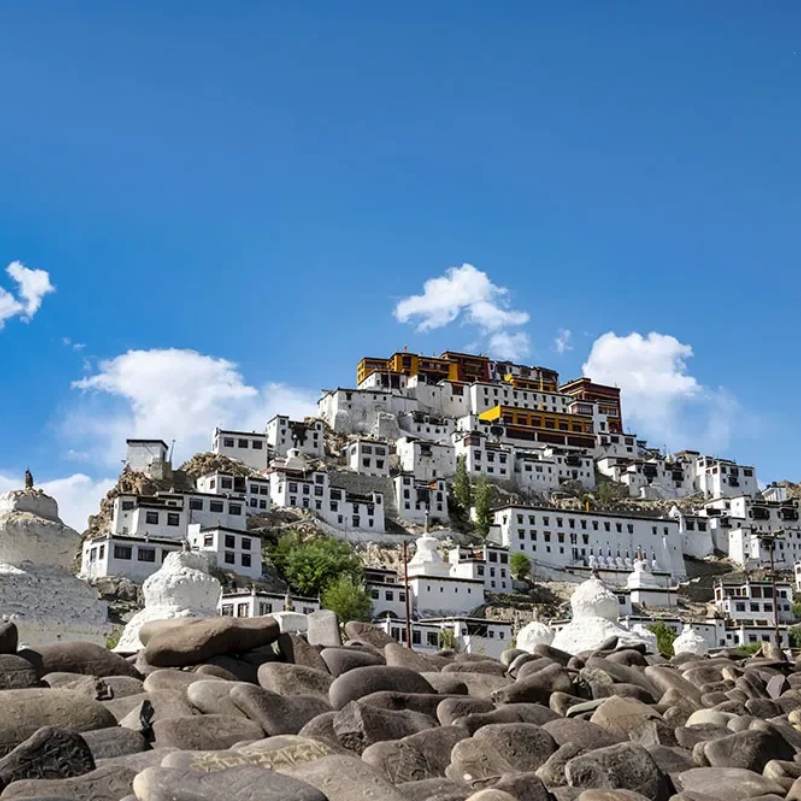
Thiksey Monastery
About 4 km south of Shey on the Leh Manali highway
The natural pairing for Shey, and the single most important cultural stop on the Indus valley side of Leh. A large 12 storey Gelugpa monastery built into a hillside, with a 15 metre Maitreya Buddha that took over Ladakh's largest Buddha title from Shey in 1970. The 6:30 AM morning prayer in the upper dukhang is the signature Ladakh experience most travellers remember longest. Entry fee generally around Rs 40.
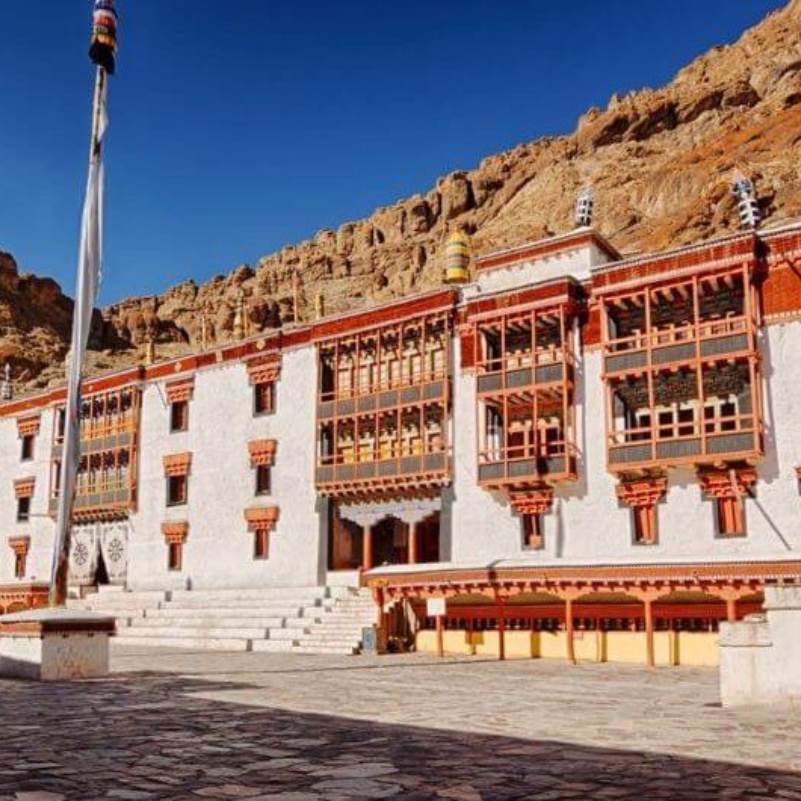
Hemis Monastery
About 30 km south of Shey
The largest and wealthiest Drukpa Kagyu monastery in Ladakh, tucked into a side valley off the main highway. Known for the Hemis festival in late June or July, the 12 metre thangka unveiled every 12 years, and a small museum with centuries old artefacts. Worth 1 to 2 hours if you are doing the full monastery circuit.
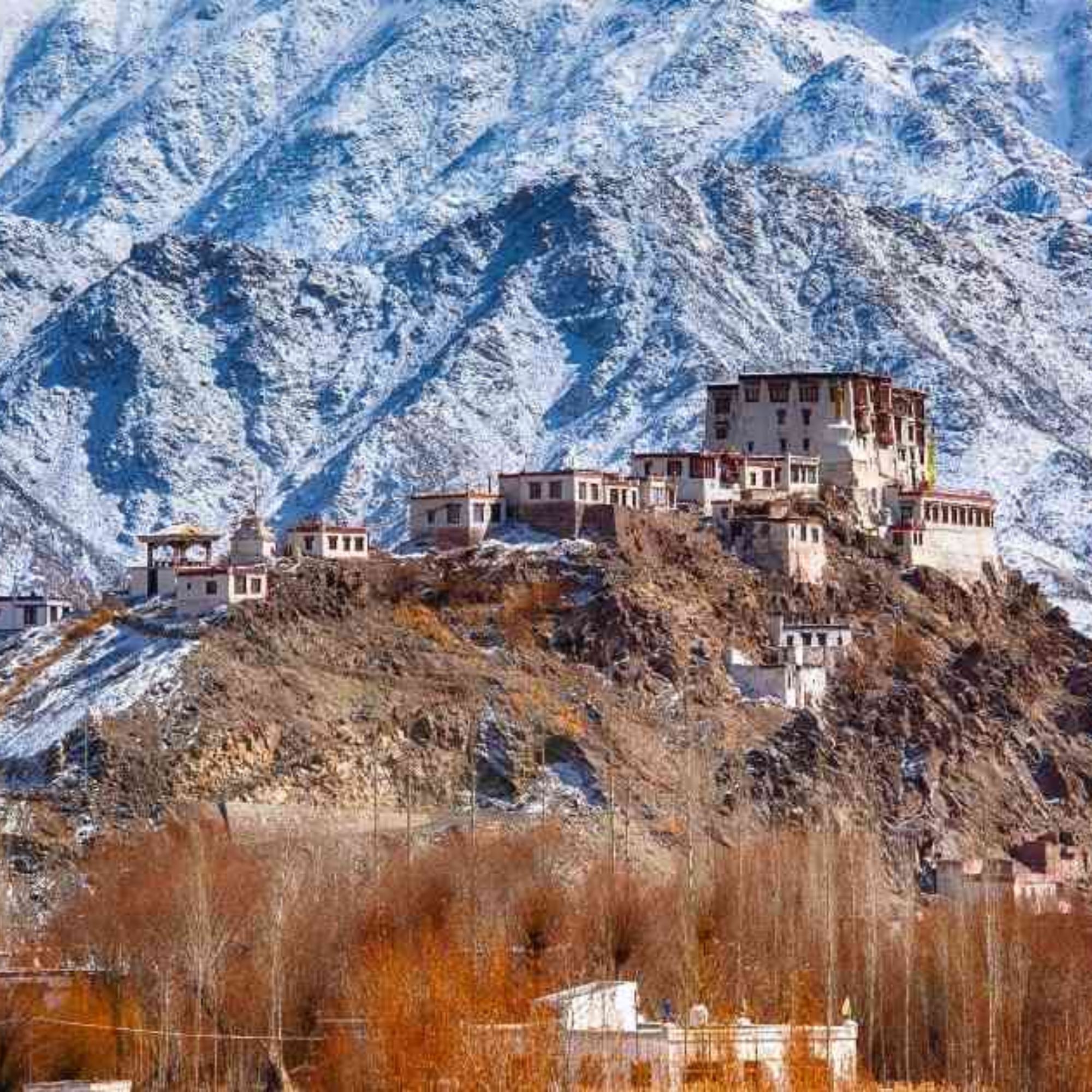
Stakna Monastery
About 15 km south of Shey, across the Indus
A smaller Drukpa monastery perched on a conical hill (the name means tiger's nose in Ladakhi) on the far bank of the Indus. Easy to miss, fewer tourists than Hemis or Thiksey, and one of the quieter working gompas in the valley. Fits naturally into a full Indus valley monastery loop as a 30 minute stop.
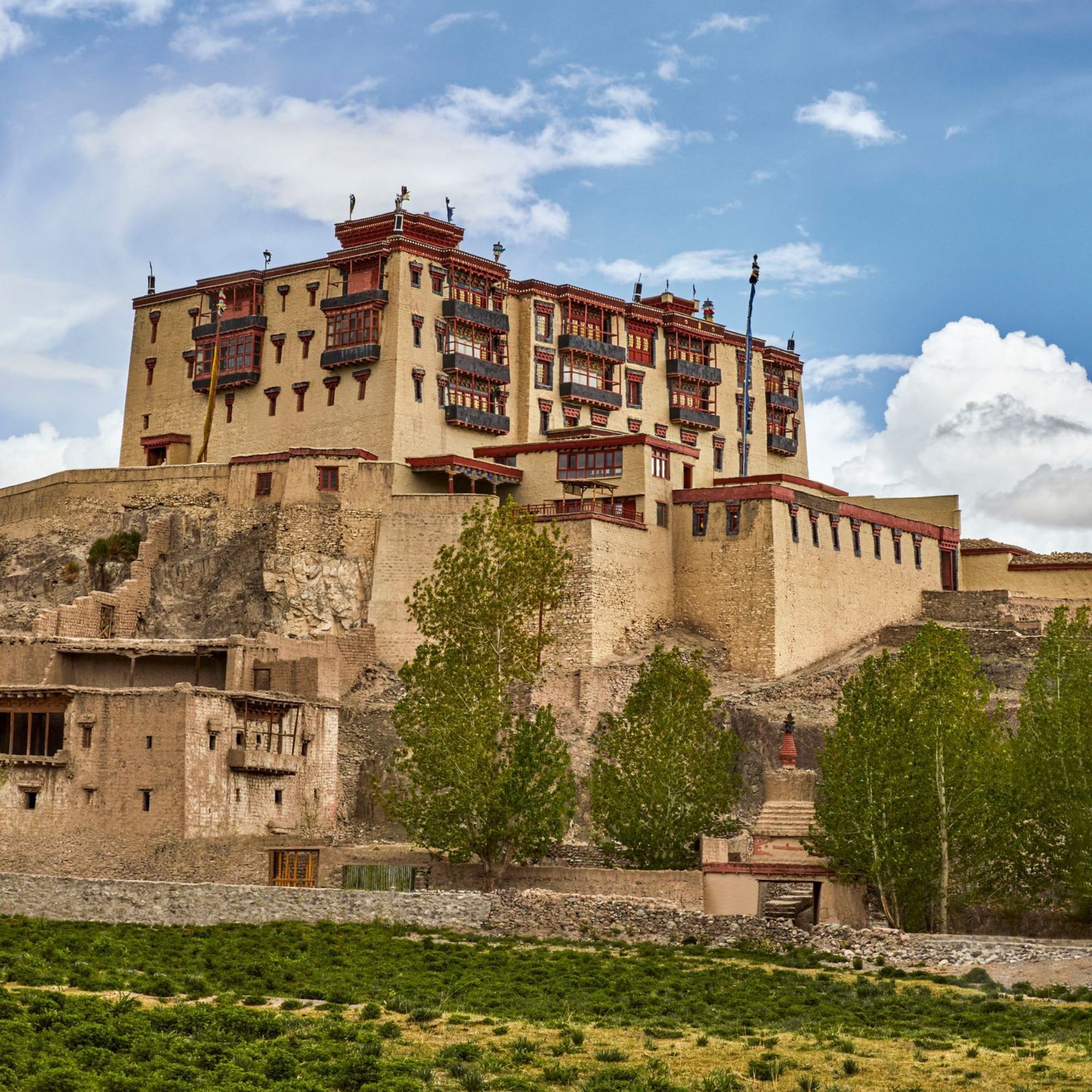
Stok Palace and Village
About 8 km west of Shey, across the Indus
Where the Namgyal royal family moved in 1842 after abandoning Shey during the Dogra invasion. The family still technically owns Stok Palace, which houses a small museum of royal artefacts including old Ladakhi thangkas, jewellery, and ceremonial robes. Part of the palace is now a heritage hotel. A natural companion to Shey if you are interested in the Namgyal story.
Leh Palace
About 15 km north of Shey in Leh town
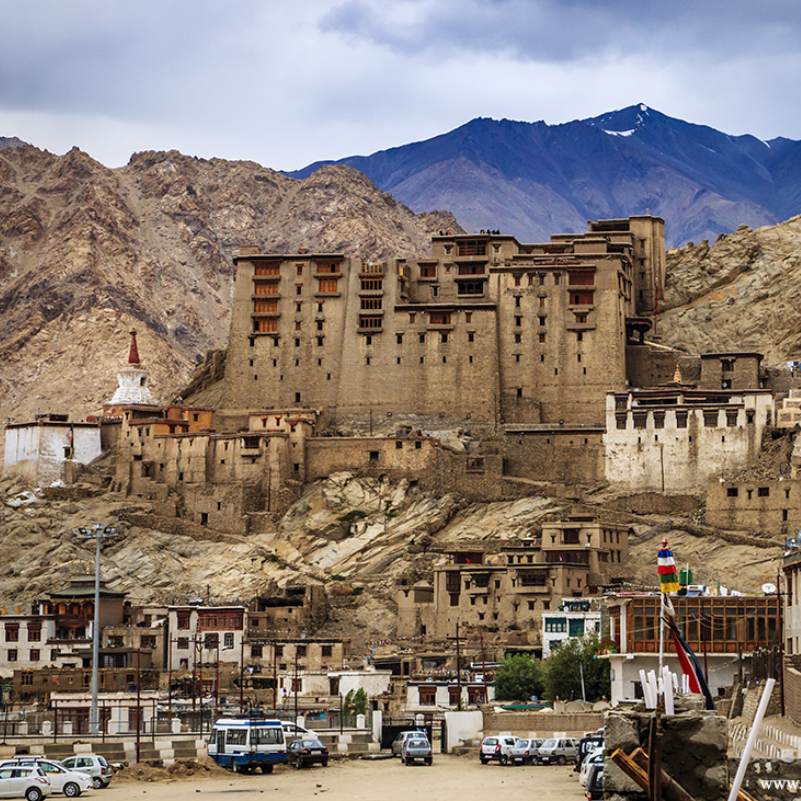
The nine storey royal palace the Namgyals built in Leh after moving their main court from Shey in the 17th century. Modelled loosely on the Potala in Lhasa and much larger than Shey, though it is also in partial ruins today. Most Leh itineraries include Leh Palace on day one or two, and pairing it with Shey later gives you the full Namgyal dynasty story across both of their capitals.
Matho Monastery
About 10 km south of Shey, across the Indus
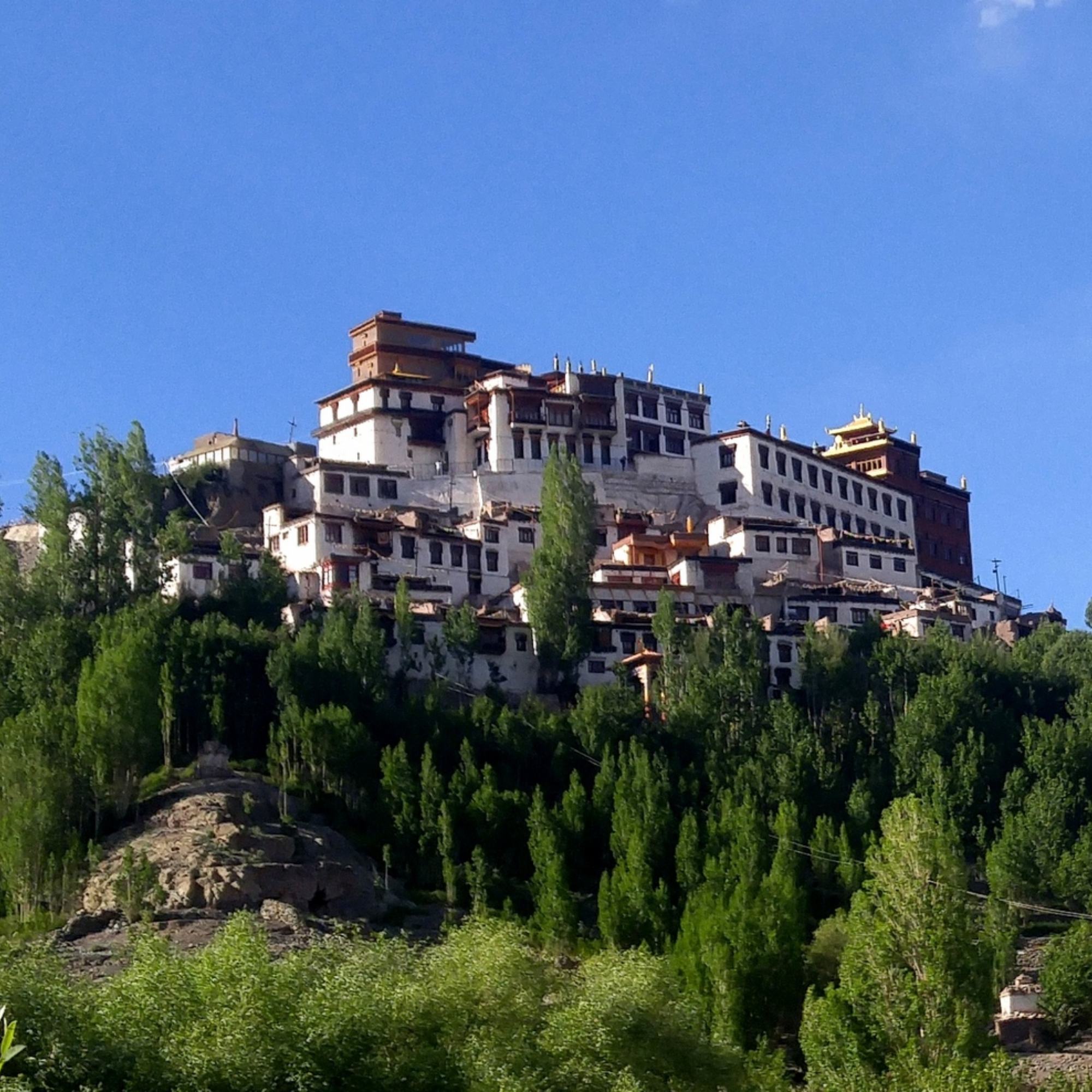
The only Sakya school monastery in Ladakh, on the far bank of the Indus. Best known for the Matho Nagrang festival in late February or early March, when two monks enter oracle trances and give prophecies for the coming year. Quiet outside festival time. Worth a detour if you are doing the full Indus valley loop on a longer trip.
Shey Marshes
A few hundred metres below the palace on the valley floor
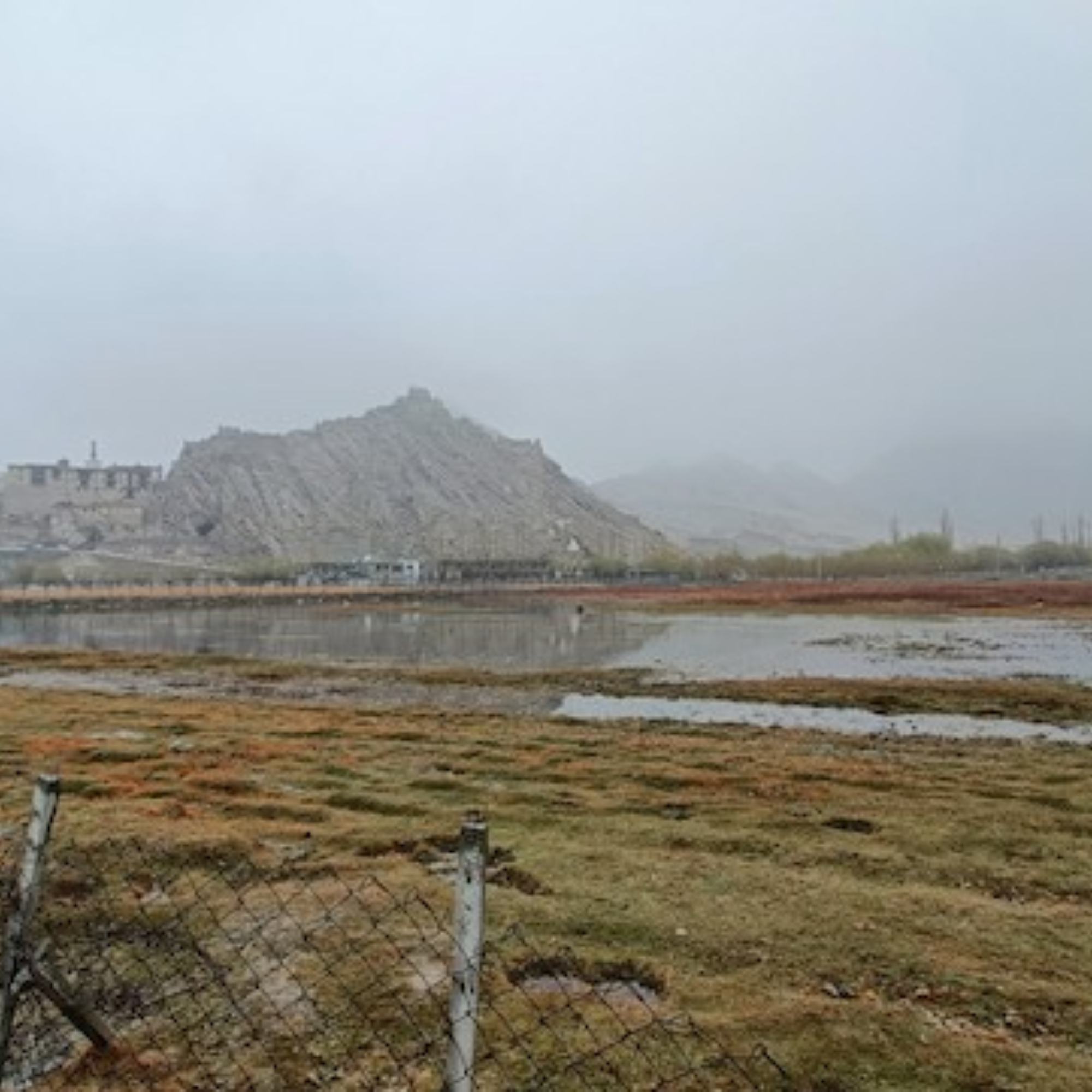
A small wetland area directly below the hill, fed by springs and a good spot for casual bird watching in summer. You can see migratory ducks, occasional black necked cranes, and the usual Ladakhi mountain birds. Not a developed site, just a short walk through the fields below the palace, best in May to September.
Pangong Lake
About 145 km east of Shey via Chang La
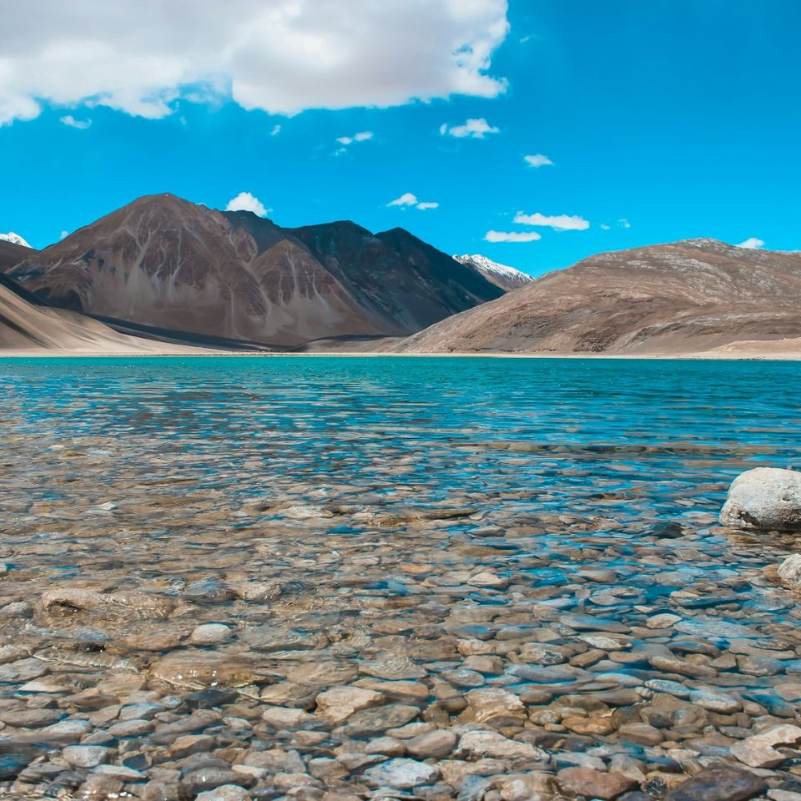
The big high altitude lake on the India China border. Shey sits right on the route from Leh to Pangong, so many travellers stop here on the outbound or return leg. Pangong needs its own overnight at Spangmik or Man, not a day trip from Shey.
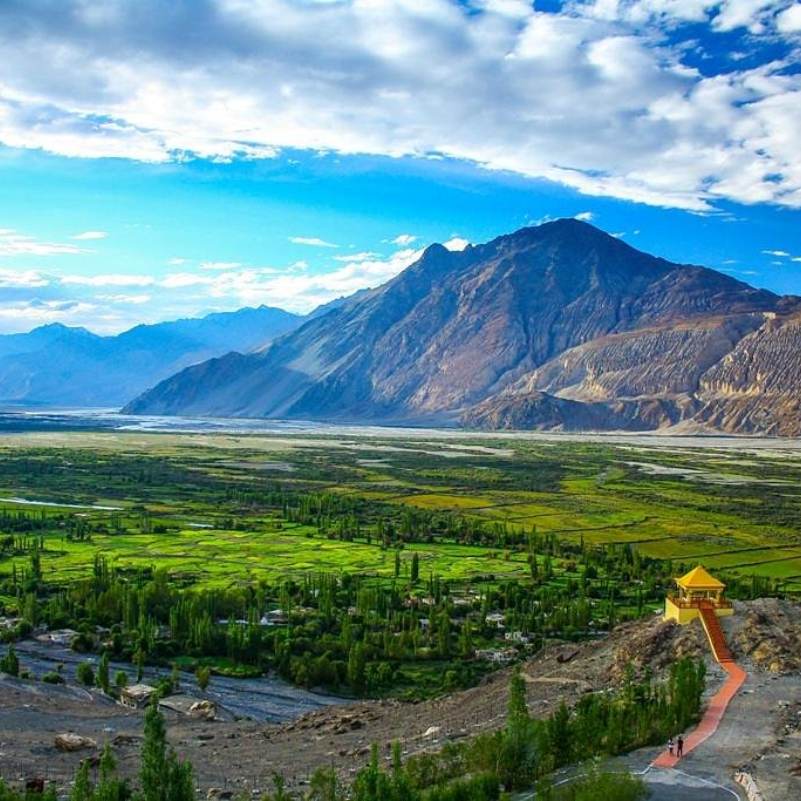
Nubra Valley
About 135 km north of Shey via Leh and Khardung La
The broad desert river valley north of Leh, reached across Khardung La, with the Hunder sand dunes, Bactrian camels, Diskit monastery and its 32 metre Maitreya Buddha, and the Balti village of Turtuk. A completely separate 2 to 4 night leg on any Ladakh itinerary, not connected to a Shey day.
Our packages with Shey Palace
Curated trips that include a visit to Shey Palace.
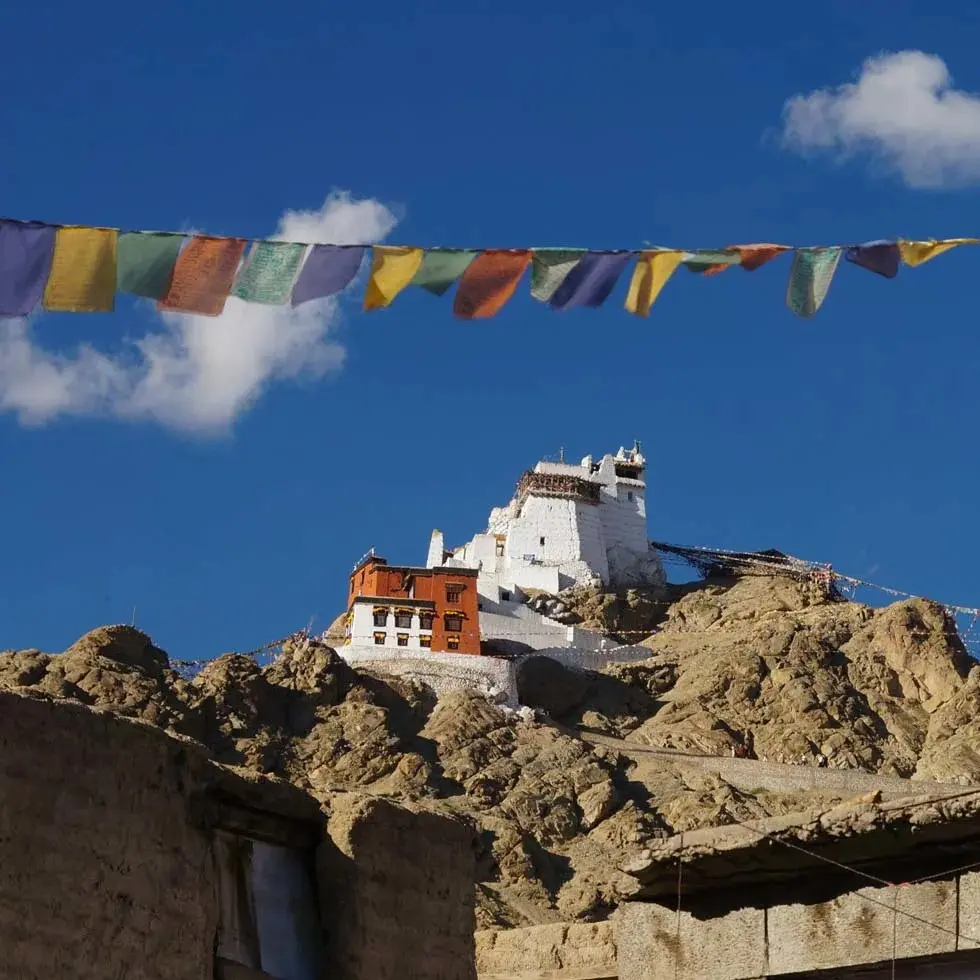 4D/3N
4D/3NLeh Ladakh Quick Escape
2D Leh•1D Pangong Lake
₹20,999₹24,999SAVE INR 4,000/ person Group Tour6D/5N
Leh Ladakh Group Tour With Nubra Valley and Pangong Lake
2D Leh•1D Nubra Valley+1
₹18,999/ person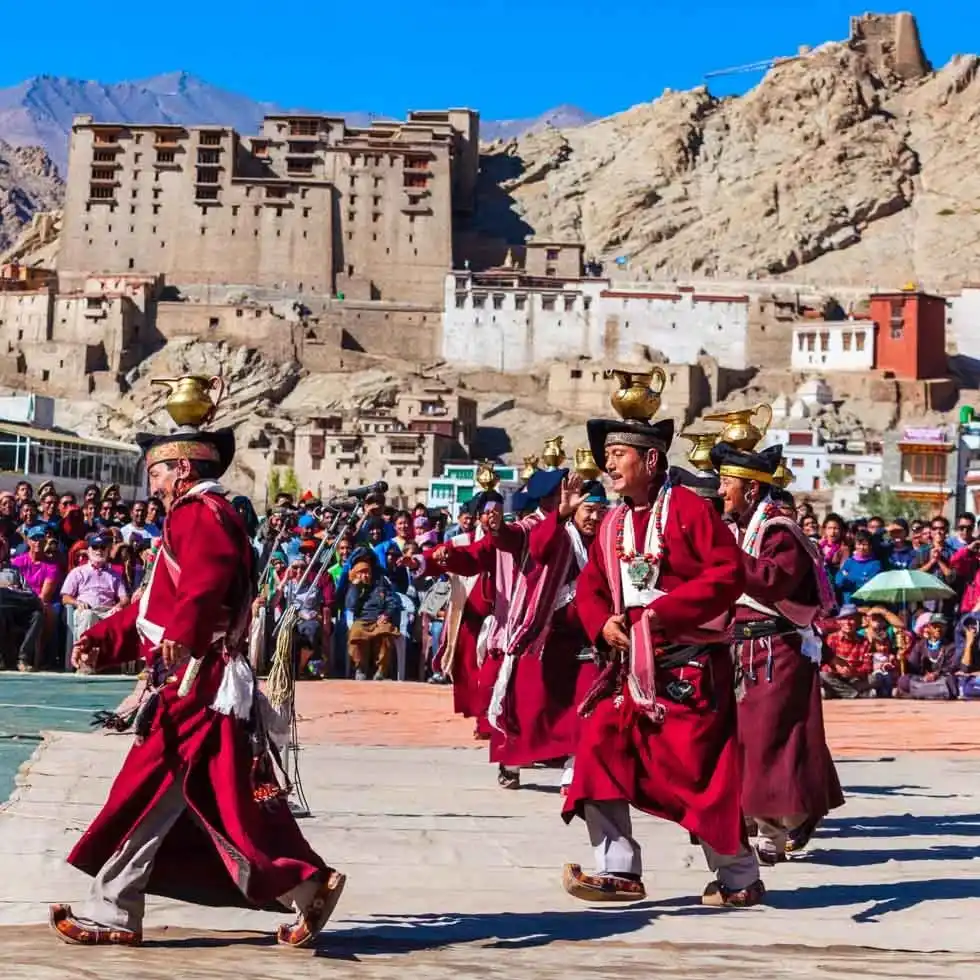 7D/6N
7D/6NLeh Ladakh Tour With Turtuk Village Nubra Valley and Pangong Lake
2D Leh•2D Nubra Valley+1
₹27,999₹33,999SAVE INR 6,000/ person
Frequently Asked Questions about Shey Palace
Is Shey Palace worth visiting?
Yes, as a 45 to 60 minute stop on the standard Indus valley monastery circuit from Leh, not as a destination on its own. The main draw is the 12 metre Shakyamuni Buddha statue built in 1655, the second largest in Ladakh after Thiksey, along with the terrace view over the Indus plain and the small but genuinely useful historical context of Ladakh's former summer capital. If you are already doing Thiksey or Hemis the same day, Shey adds almost no extra time. If you are trying to plan a full day around Shey alone, temper expectations.
What is the altitude of Shey Palace?
Around 3,415 metres (about 11,204 feet) at the monastery. That is slightly lower than Leh itself at 3,500 m, so it comfortably sits within Leh day trip altitude for almost all travellers. The short climb of stone stairs from the parking to the dukhang adds maybe 80 to 100 metres of elevation, gentle by Ladakh standards.
How far is Shey Palace from Leh?
About 15 km south of Leh on the Leh Manali highway. The drive takes 25 to 35 minutes by road, longer if you stop at Choglamsar or Sindhu Ghat on the way. Thiksey is another 4 km further south, and most travellers combine the two in the same half day.
What are the timings and entry fee for Shey Palace in 2026?
Generally open daily, typically around 7 AM to 1 PM and 2 PM to 6 PM, though some sources cite a 6 AM open or a shorter winter schedule. Entry fee is usually around Rs 30 per person, cash only, same for Indian and foreign visitors. Inner sanctum access depends on the resident caretaker being on site, so the main shrine is occasionally locked. Timings and fees are semi stable and can update seasonally, confirm on arrival.
How old is the Shey Buddha statue?
The current Buddha statue was built in 1655, commissioned by King Deldan Namgyal in memory of his father Sengge Namgyal, alongside the gompa that houses it. A Nepalese sculptor worked with three Ladakhi craftsmen, and the statue was cast in pieces at a workshop in Leh called Zanstil (meaning copper hammer), then transported to Shey and assembled. It is therefore about 370 years old. The older original palace at the top of the hill dates to the 10th century, but most of it is now in ruins.
Is Shey Palace the same as Shey Monastery?
They are the same complex, though historically distinct. The site was originally a royal palace, and the gompa was added inside and around it in 1655. After the Namgyal family abandoned Shey in 1842, the palace fell into ruin and the monastery continued as an active religious site. Today the whole hillside complex is loosely called either Shey Palace or Shey Monastery, and visitors see both together, the palace courtyards, the gompa, and the Buddha shrine.
How long should I spend at Shey Palace?
45 to 60 minutes is the honest answer for most travellers, covering the climb, the Buddha shrine across three floors, the main prayer hall, and a moment on the terrace. Add 30 to 45 minutes if you want to hike up to the ruined 10th century fort at the top of the hill. Plan it as a stop on the wider monastery circuit, not a destination. Any longer than 1.5 hours usually means you caught a prayer session and chose to stay.
What is the best time of day to visit Shey Palace?
Early morning between 7 and 9 AM for the quietest window and the best chance to catch morning prayers in the gompa. Late afternoon between 4 and 6 PM for warm light on the Buddha shrine and the terrace view. Midday between 11 AM and 2 PM is when tour groups arrive and the parking fills up, and it is also the flattest light of the day. If you are doing the full circuit, Thiksey first at dawn, Shey at 9 AM, and you stay ahead of the crowd for both.
Is Shey Palace accessible for seniors and families?
Yes, comfortably so. The altitude at 3,415 m is similar to Leh itself, so there is no additional acclimatisation concern. The climb from the lower parking takes 5 to 10 minutes on stone stairs, which most travellers handle easily, and a narrow service road lets drivers bring the car to an upper gate closer to the gompa for seniors or anyone with mobility limitations. Children handle the visit well, and the scale of the Buddha across three floors is usually the moment that holds their attention. Accessibility for wheelchair users is genuinely limited, the stairs and inner staircases of the Buddha shrine are not wheelchair friendly.
Can I take photographs inside Shey Palace?
Photography is fine in the courtyards, on the terrace, and of the outside of the palace buildings. Inside the main prayer hall and close to the Buddha statue, photography is generally restricted, and you should always ask the caretaker before shooting. Never photograph an active prayer session. Do not photograph monks at close range without permission. Drones are discouraged because the Leh Manali highway is a military supply corridor.
What is the Shey Doo Lhoo festival?
The main annual event at Shey, held on the 26th and 27th days of the first month of the Tibetan lunar calendar, which usually falls in July or August by the Gregorian calendar. Dates shift each year because the lunar calendar does not align with the western one. The festival marks the beginning of the sowing season in the Rupshu and Indus valleys. Monks perform special rituals and masked dances at the palace and monastery, an oracle reader rides a horse between the two sites to give prophecies for the coming year, and villagers from the surrounding area gather for two days of ceremonies. Confirm exact dates with a Leh operator well in advance if you want to plan a trip around it.
Do I need a permit to visit Shey Palace?
No separate permit is required for Shey itself. It sits on the main Leh Manali highway inside the Leh district, and you can visit freely with just a normal travel ID. The Ladakh Environment and Development Fee (EDF) that Indian citizens pay online at lahdclehpermit.in is required for Nubra, Pangong, Tso Moriri, and Hanle, but not for the standard Indus valley monastery circuit including Shey, Thiksey, Stakna, and Hemis. Foreign nationals still need the standard entry registration at Leh but do not need a Protected Area Permit for Shey.
What other monasteries should I combine Shey with?
The standard Indus valley circuit covers Shey, Thiksey, Stakna, and Hemis in one half to full day, and this is the default plan for most Leh trips. Thiksey is the most important of the four and always worth the early start for morning prayer. Hemis is the biggest and most atmospheric, especially during the Hemis festival in late June or early July. Stakna is the quiet one, a 30 minute stop across the Indus for travellers who want to skip the tourist centre. Matho across the river is a possible add if you have a full day. A typical rhythm is Thiksey at dawn, Shey by 9 AM, Stakna 10:30 AM, Hemis 11:30 AM to 1:30 PM, and back to Leh by late afternoon.
Related guides
Posts about Ladakh
- Manali to Leh Highway 2026: Every Pass, Stop and Distance
- Umling La Ladakh Guide 2026: Route, Altitude, Permit, Safety & Reality Check
- Turtuk Ladakh Travel Guide 2026: Balti Culture, Apricot Orchards and Why It Is Perfect for Families
- Offbeat Ladakh for Couples in 2026: Quiet Routes Beyond Pangong and Nubra
- Aryan Valley Ladakh Guide 2026: Dah, Hanu, Brokpa Culture, Route and Who Should Visit
- Hanle vs Tso Moriri vs Turtuk: Which Offbeat Ladakh Place Should You Choose in 2026?