
Hemis Monastery
The largest Drukpa Kagyu monastery in Ladakh, tucked in a side gorge off the Indus valley about 45 km from Leh. Home to the annual Hemis Tsechu with its sacred Cham dances and copper trumpets, a museum of centuries old thangkas, an 8 metre copper Guru Rinpoche, and the famous giant thangka unveiled once every 12 years. Worth 1.5 to 2.5 hours on the standard monastery circuit from Leh.
- Altitude ~3,500 m / ~11,500 ft
- ~45 km southeast of Leh, about 1 to 1.5 hours by road
- Entry fee generally around Rs 50, camera fee Rs 100
- Hemis Festival 2026: expected June 24 to 25
- Largest monastery in Ladakh, Drukpa Kagyu lineage
What makes it special
Hemis is the big one. If you are doing the monastery circuit from Leh, and you should be, this is the one that rewards the longest stop. It is not the closest to Leh, not the most photogenic from the outside (Thiksey takes that), and not something you stumble upon. You have to want to come here. But once you walk through the gate into that enclosed courtyard, with painted timber balconies on every side, thick wooden pillars framing the verandahs, and the bare rock walls of the gorge closing in above, you understand why this place has been the spiritual centre of Drukpa Buddhism in Ladakh for centuries.
The short version. Hemis is the largest and wealthiest Buddhist monastery in Ladakh, belonging to the Drukpa Kagyu lineage. It sits in a quiet side gorge off the Indus valley, about 45 km southeast of Leh, at around 3,500 metres (roughly 11,500 feet). You drive south on the highway past Shey and Thiksey, turn right at Karu, cross the Indus over a bridge, and follow a winding road for about 7 km into the gorge. Unlike Thiksey or Shey, which sit visibly on hillocks beside the highway, Hemis stays hidden until you round the last bend. That surprise is part of the experience. And because Hemis sits at practically the same altitude as Leh itself, it makes for an ideal gentle half day outing during your first 48 hours of acclimatisation, before you take on passes like Chang La or Khardung La.
The monastery predates the 11th century in some form, but the current complex was established in the 1630s under the patronage of King Sengge Namgyal of Ladakh, with the first incarnation of Stagsang Raspa Nawang Gyatso as its founding lama. Over the following decades, it grew into the principal seat of Drukpa Kagyu Buddhism in the region, a position it still holds. The royal family of Ladakh has been its patron for nearly four centuries, and that patronage shows in the scale and wealth of what is inside.
What you actually see. You enter through a gate into a large rectangular courtyard, roughly a thousand square metres, with the main assembly hall (Dukhang) at one end and the Lakhang (shrine room) up a short set of steps on the opposite side. Two raised platforms with central flagpoles anchor the space. This is the stage for the annual Hemis Tsechu. Inside the Dukhang, the Rinpoche's throne dominates the seating area, and the walls carry old thangka paintings in heavy brocade frames. The copper gilded statue of Guru Rinpoche (Padmasambhava) stands roughly 8 metres tall, flanked by silver chortens decorated with turquoise and coral. In the Lakhang across the courtyard, a large gilded Shakyamuni Buddha with blue hair sits surrounded by more chortens. On the upper floors, smaller chapels hold murals of the Eighty Four Mahasiddhas painted in ground mineral pigments in the 17th century, and the private quarters of the Rinpoche.
The museum is worth your time. A small building inside the complex houses centuries old thangka paintings (some of the finest brushwork you will see anywhere in Ladakh), gold and silver statues, Tibetan manuscripts, chortens embedded with stones, old ceremonial weapons, traditional robes, and even a stuffed vulture pup. Photography is not allowed inside the museum. Entry to the monastery complex and museum costs ₹50 per person, with an additional camera fee of around ₹100 for courtyard photography. The monastery is not a UNESCO World Heritage Site, despite what some travel blogs claim, but its collection is genuinely one of the most significant in any Himalayan Buddhist institution.
The Hemis Tsechu is what puts this place on most travellers' maps. Held annually on the 10th day of the fifth month of the Tibetan lunar calendar, which usually falls in June or July, the festival celebrates the birth anniversary of Guru Padmasambhava. Monks perform the sacred Cham dance in the courtyard, wearing elaborate hand painted masks and heavy silk robes depicting Buddhist deities, wrathful protectors, and demons. The sound is as important as the spectacle: long copper trumpets (dungchen), heavy drums, and crashing cymbals echoing off the gorge walls. It is the largest Buddhist festival in Ladakh and draws crowds of both locals in traditional dress and travellers from across the world. In 2026, the expected dates are June 24 to 25, but these follow the Tibetan lunar calendar and should be confirmed with a Leh operator before planning around them.
The giant thangka is the other famous draw. Once every 12 years, during the Year of the Monkey, a massive embroidered thangka of Guru Padmasambhava is unfurled for public viewing. It is several metres tall, decorated with pearls, silk, and stones, and seeing it is considered deeply auspicious. The last display was in 2016. The next is expected in 2028, so 2026 visitors will not see the giant thangka, but the annual festival still includes smaller thangka displays and the full Cham programme.
One honest note on the national park. Hemis borders Hemis National Park, the largest national park in South Asia and one of the best places in the world for snow leopard sightings. But snow leopards require specialist deep winter trekking expeditions (December to March), not a quick monastery visit. If you are visiting the monastery on a standard summer or autumn Ladakh trip, the park context is interesting background, not something that changes your day plan.
Honest framing on time. Most travellers spend 1.5 to 2 hours here, which covers the courtyard, the Dukhang, the Lakhang, the upper chapels, and the museum. If you catch a morning prayer session or sit quietly in the courtyard after the tour buses leave, 2.5 hours is comfortable. During the Hemis Tsechu, plan a full morning or a full day. The standard Indus valley monastery circuit from Leh combines Shey Palace and Thiksey with Hemis in a single day: Thiksey at dawn for the 6:30 AM prayer, Shey by 9, Hemis by 11. Give Hemis the longest stop. Arrive before 10 AM on non festival days to beat the tour buses. Our Pangong Lake guide covers the wider permit and timing context for travellers combining this area with the Pangong drive.
One last thing. Hemis is the wealthiest monastery in Ladakh, but it does not look like a polished museum. The complex is a working religious institution. Parts feel aged, with cracked plaster, uneven floors, and dim rooms lit by butter lamps. That is not neglect. That is what four centuries of continuous prayer look like. Remove your shoes in every prayer hall, do not photograph inside the shrine rooms where signs say so, walk clockwise around every chorten and prayer wheel, and keep your voice low inside the Dukhang. This is a living gompa, not an exhibit.
Quick answers
- Is Hemis Monastery worth visiting?
- Yes. It is the largest and wealthiest monastery in Ladakh, with the best museum collection, the most significant annual festival, and a location that makes it an ideal gentle outing during your first 48 hours of acclimatisation in Leh (it sits at roughly the same altitude, around 3,500 m). If you are doing only one monastery near Leh, Thiksey is the stronger pick for its morning prayer and visual impact. But if you have a full day for the circuit, Hemis is the one that rewards the longest stop. Combine it with Thiksey and Shey Palace in a single day. During the Hemis Tsechu in June or July, it is the most atmospheric cultural experience in Ladakh.
- What are the timings and entry fee for Hemis Monastery?
- Generally open from around 8 AM to 1 PM and 2 PM to 6 PM daily, with a lunch break closure. Entry to the monastery complex and museum costs ₹50 per person. An additional camera fee of around ₹100 applies for courtyard photography. Photography inside the prayer halls and the museum is not allowed. Timings and fees can shift seasonally, so confirm on arrival.
- When is the Hemis Festival in 2026?
- The Hemis Tsechu in 2026 is expected on June 24 to 25, based on the Tibetan lunar calendar (10th day of the 5th month), honouring Guru Padmasambhava with sacred Cham (masked) dances. Dates can shift, so confirm with a Leh operator before planning around the festival. The giant thangka, unfurled once every 12 years, was last shown in 2016 and is next expected in 2028.
Quick facts
Everything you need to know at a glance.
At a glance
- Altitude
- Around 3,500 m / ~11,500 ft. Similar altitude to Leh itself. A good gentle outing during your first 48 hours of acclimatisation.
- Location
- In a side gorge off the Indus valley, about 45 km southeast of Leh. Turn right at Karu, cross the Indus, follow the gorge road 7 km. Not visible from the highway.
- Founded
- Predates the 11th century. Current complex established in the 1630s under King Sengge Namgyal. Drukpa Kagyu lineage.
- Nearest base
- Leh, about 45 km northwest. Karu at the highway junction is about 7 km away.
- Open season
- Year round. Main tourist window May to October. Hemis Tsechu in June or July.
- Visiting timings
- Generally 8 AM to 1 PM and 2 PM to 6 PM. Lunch break closure. Festival days run early morning to evening.
- Entry fee
- ₹50 per person for monastery complex and museum. Camera fee ~₹100 for courtyard photography. No photography inside prayer halls or museum.
- Time needed
- 1.5 to 2 hours standard. 2.5 hours if you linger. Half a day or more during Hemis Tsechu.
- Known for
- Largest monastery in Ladakh. Hemis Tsechu with Cham dances. Giant thangka every 12 years (next 2028). Museum with centuries old thangkas. Borders Hemis National Park.
- Difficulty
- Easy. Flat courtyard, some narrow staircases. No significant climbing from the parking area.
On the ground
- Mobile network
- BSNL, Jio, Airtel have signal near Karu. Weakens in the gorge but usually usable.
- ATMs
- None at Hemis. Nearest in Leh. Carry cash.
- Fuel
- No pump at Hemis. Fill up in Leh. Karu has a pump.
- Food
- Small cafe and tea stalls at parking in season. During Hemis Tsechu, food stalls multiply. Thiksey rooftop cafe is the better meal option on the circuit.
- Parking
- Decent lot, short flat walk to gate. Overflows during festival.
- Washrooms
- Basic facilities near entrance. Carry tissue.
- Photography
- Courtyard allowed with ₹100 fee. Strictly no photography inside prayer halls, shrine rooms, or museum. During Tsechu, Cham dances fine but no flash near thangkas.
- Drones
- Discouraged. Security zone. Keep grounded.
- Walking
- Flat to courtyard. Stairs to upper floors. Optional 1 to 1.5 hour hike to Gotsang Gompa at ~3,900 m.
- Guided tours
- Not required. Local guide adds context. Most arrive on taxi circuit at fixed day rate.
Seasonal weather
- April to May18°2°Spring
- June to August28°10°Summer
- September to early October18°0°Autumn
- November to March5°-15°Winter
Suitable for
- Couples — suitable
- Families — suitable
- Seniors — suitable
- Solo — suitable
- First-timers — suitable
- Pet-friendly — not suitable
How to reach Hemis Monastery
3 approach routes, with seasonal access.
From Leh to Hemis (standard)
Year round. The road is maintained and accessible even in winter.- Distance
- About 45 km
- Time
- 1 to 1.5 hours one way
- Road
- Tarred Leh Manali highway to Karu, then a good link road through the gorge.
- Last fuel
- Fill up in Leh. Karu, at the highway junction, has a pump useful if continuing to Pangong.
The standard drive. Head south from Leh on the Leh Manali highway past Shey and Thiksey to the junction at Karu, about 36 km. Turn right at Karu, cross the Indus over a bridge, and follow the gorge road for about 7 km. The monastery appears suddenly as you round the last bend. Well signposted at the Karu junction. Most Leh taxis know the route. Leave Leh by 8 AM if you want a quiet arrival before the tour groups.
From As part of the Indus valley monastery circuit from Leh
Year round, main tourist season May to October.- Distance
- About 75 to 80 km round trip covering Shey, Thiksey, Stakna, and Hemis
- Time
- 5 to 7 hours including all stops
- Road
- Tarred highway and good link roads throughout.
- Last fuel
- Fill up in Leh. Karu has a pump on the highway.
The standard full day plan that covers the major monasteries on the Indus valley side. Thiksey first for morning prayer at around 6:30 AM, breakfast at the rooftop cafe, Shey around 9 AM, Stakna if you have time, then Hemis by 11 AM to noon. Give Hemis the longest stop, 1.5 to 2 hours. Back to Leh by late afternoon. Most Leh taxis quote a fixed rate for this exact loop set by the Leh Taxi Operators Union. This is the circuit that makes sense for most travellers on a Leh trip.
From En route to or from Pangong via Chang La
Pangong route practical late May to late September. Hemis accessible year round.- Distance
- Hemis is about 45 km from Leh, Pangong another 120 km east from Karu
- Time
- Add 1.5 to 2 hours for a Hemis stop
- Road
- Good road from the highway into the gorge. Pangong route via Chang La is a mix of tarred and rough patches.
- Last fuel
- Fill up in Leh. Karu is the last reliable pump before Pangong.
Many travellers combine Hemis with their Pangong drive, stopping on the outbound or return leg since the Karu junction serves both routes. Our honest suggestion is to do Hemis on a separate monastery day rather than squeezing it into the Pangong drive, because the Pangong drive is long and you want to be on the road early for Chang La. If time is tight, a return day Hemis stop works: you arrive back at Karu from Pangong with an afternoon still left, and a 1.5 hour Hemis visit is a gentler way to end a long drive day.
Best time to visit
Season by season, so you can plan around the weather rather than hope.
- Recommended
Spring
May to early June
Warming days, monastery circuit reopens fully, light crowds before festival season
- Day temperature
- 12 to 22 C
- Night temperature
- 0 to 8 C
- Crowds
- Low to moderate
- Access
- Full once flights and roads are running, typically from late April
- Light
- Clean, sharp mornings ideal for photography
A strong window for anyone who wants the monasteries without the June festival crush. The gorge around Hemis greens up by mid May, wildflowers appear on the slopes, and the courtyard catches clean morning light. Tourist taxis are running but the monastery is rarely crowded. If you do not care about catching the Hemis Festival specifically, this is arguably the most pleasant time to visit. The walk up to Gotsang Gompa above the monastery is especially rewarding in this window when the air is still cool.
- Recommended
Summer and Festival
Mid June to August
Hemis Festival window, warmest days, peak crowds especially during festival week
- Day temperature
- 20 to 28 C
- Night temperature
- 8 to 12 C
- Crowds
- High, extreme during festival week
- Festival
- Hemis Festival usually in late June or July, dates shift yearly
- Parking
- Overflows during festival, arrive early
The main season. This is when the Hemis Festival happens, and if you can time your Ladakh trip around it, you should. The Cham Dances in the courtyard, the sound of the long horns echoing off the gorge walls, and the mix of monks, villagers, and travellers in the same space is the single most atmospheric Buddhist event in Ladakh. Outside festival week, the monastery is busy but manageable. Daytime highs reach the high twenties Celsius. Our honest suggestion for non festival visitors is to arrive before 10 AM or after 3 PM to avoid the tour group rush.
- Recommended
Autumn
September to early October
Clearest skies, sharpest light, thinning crowds, the quiet version of Hemis
- Day temperature
- 10 to 20 C
- Night temperature
- -2 to 6 C
- Crowds
- Low after mid September
- Light
- Sharpest of the year, best for photography
- Access
- Full through mid October
Our pick for photographers and travellers who want the monastery almost to themselves. The summer haze clears by mid September, the sky goes deep blue, and the painted woodwork of the courtyard stands out in afternoon light like it does at no other time of year. The monastery is near empty on weekdays. Nights cool fast, approaching zero by early October. A strong choice if you want the contemplative version of Hemis rather than the festival energy.
Winter
November to March
Open but cold and quiet, the monastery runs a minimal rhythm, specialist visits only
- Day temperature
- -5 to 5 C
- Night temperature
- -15 to -25 C
- Crowds
- Almost none
- Access
- Road from Leh stays open. Fly in only, highways closed.
- Who it suits
- Travellers in Leh for winter experiences or snow leopard tracking
Hemis stays open through winter and the road from Leh is maintained, but almost no tourists come in this window. The monastery runs on a quieter rhythm, with fewer monks in residence and shorter visiting hours. If you are in Leh for a Chadar trek or a snow leopard tracking expedition in Hemis National Park (December to March), a morning visit to the monastery is a natural cultural add on. Pack for genuine cold. Losar and Dosmoche, the Ladakhi winter festivals, bring small local celebrations to working gompas across the valley in this window.
Things to see & do
6 things worth your time at Hemis Monastery.
Explore the Dukhang and Lakhang
30 to 45 minutesThe two main buildings that anchor the courtyard. The Dukhang (assembly hall) is where monks gather for prayers, with the Rinpoche's throne, old thangka paintings on the walls, and the low seating rows where butter tea gets poured during morning prayer. Across the courtyard, up a short set of steps, the Lakhang holds a large gilded Shakyamuni Buddha with blue hair, flanked by silver chortens. The walls of the upper gallery around the courtyard carry paintings of the Eighty Four Mahasiddhas, created in the 17th century using ground mineral pigments. These murals alone are worth a slow circuit.
Visit the museum
20 to 30 minutesA small building inside the complex that holds one of the most valuable collections in any Ladakhi monastery. Centuries old thangka paintings, gold and silver statues, Tibetan manuscripts, chortens embedded with stones, old ceremonial weapons, and traditional robes. No photography allowed inside. Take your time. The craftsmanship on the smaller thangkas is extraordinary, and the collection gives genuine context to what Drukpa Buddhism looked like across four centuries. There is also a small souvenir shop near the museum for those who want to take something back.
Attend the Hemis Festival
Half a day to a full day per day of the festivalThe biggest Buddhist celebration in Ladakh. Monks perform the Cham Dance in the courtyard wearing elaborate masks and silk robes representing deities and demons, moving to the rhythm of long Tibetan horns, large drums, and cymbals. The dances depict the victory of good over evil and are a form of tantric worship. Smaller thangkas are displayed for viewing and prayer. The courtyard fills with locals in traditional dress, travellers, and food vendors. In 2026, the expected dates are June 24 to 25, but confirm with a Leh operator since dates follow the Tibetan lunar calendar. Arrive early for a good spot, the courtyard has no fixed seating and fills fast by 9 AM.
Hike up to Gotsang Gompa
1 to 1.5 hours one wayA 13th century hermitage perched on a cliff about 3 km above Hemis at around 3,900 metres, built by Gyalwa Gotsangpa. About a dozen monks still live there. The trail starts behind the main monastery and climbs steeply through the gorge. It is a proper hike, not a stroll, and the altitude makes it feel harder than the distance suggests. But if you have the legs and an extra morning, the solitude and the view back down over the Hemis complex are worth the effort. Carry water, go early before the sun is strong, and wear proper shoes.
Sit in the courtyard and do nothing
30 to 60 minutesThis is the thing most people skip because they feel they should be moving. But the courtyard at Hemis, outside of festival time, is one of the quietest and most enclosed monastery spaces in Ladakh. The mountains rise on every side, the painted balconies catch the light differently as the sun moves, and occasionally a monk crosses the flagstones or a bell sounds from inside the Dukhang. Sit on the low wall or the steps. The enclosed feeling of Hemis, so different from the open hilltop monasteries like Thiksey, is something you notice only when you stop walking.
Combine with Thiksey and Shey on a full monastery day
Full day, 5 to 7 hoursThe standard Indus valley circuit from Leh, and the default plan for most Ladakh trips. Thiksey first at dawn for the 6:30 AM morning prayer, breakfast on the rooftop, Shey Palace around 9 AM, Stakna if you have time, then Hemis by 11 AM to noon. Give Hemis the longest stop of the day. Most Leh taxis quote a fixed rate for this loop. Leave Leh by 6 AM and you are back by late afternoon.
Know before you visit Hemis Monastery
The practical bits, from people who have been.
What Hemis Monastery actually isThe largest and wealthiest Drukpa Kagyu monastery in Ladakh, established before the 11th century and re-established in the 1630s under King Sengge Namgyal. A working monastery, not a museum.
A bit of background that makes the visit land better.
Scale and lineage. Hemis is the largest monastic institution in Ladakh, belonging to the Drukpa Kagyu school (sometimes called the red hat order) of Tibetan Buddhism. The Drukpa lineage connects it historically to similar monasteries in Bhutan and Tibet. The monastery has been under the patronage of the Namgyal royal family of Ladakh for nearly four centuries, and this connection is part of why the collection inside is so rich.
The founding story. The site predates the 11th century, but the current complex was established in the 1630s when the first incarnation of Stagsang Raspa Nawang Gyatso was invited to Ladakh by King Sengge Namgyal. The monastery grew rapidly as the principal Drukpa Kagyu seat in the region. Sources disagree on exact founding dates, with some citing 1630 and others 1672. The safe reading is that the monastery was founded around 1630 and expanded or re-established over the following decades.
The Rinpoche. The spiritual head of Hemis is the Drukpa Rinpoche. After the Chinese takeover of Tibet disrupted communication with the previous Rinpoche, a young reincarnation was recognized in the 1970s. He currently resides in Darjeeling and returns for major events. The monastery is managed day to day by resident monks and a council of lamas.
The Jesus legend. In 1894, a Russian journalist named Nicolas Notovitch claimed that Hemis held a manuscript describing Jesus travelling to India during his lost years. The claim has been widely debated and never independently verified. A follower named Swami Abhedananda claimed to have seen the same manuscript in 1921, but the documents have since reportedly disappeared. This is a footnote in the monastery's history, not its identity, but you will occasionally see it mentioned in guides and it is worth knowing the context.
The Hemis Festival, because this is why most people comeAnnual two day Buddhist festival in June or July with masked Cham Dances, thangka displays, and traditional music. Expected dates in 2026: June 24 to 25.
The Hemis Festival is the single biggest draw for cultural travellers in Ladakh. Here is what you actually need to know.
What it is. A two day celebration held annually on the 10th day of the fifth month of the Tibetan calendar, honouring the birth anniversary of Guru Padmasambhava, the saint credited with spreading Tantric Buddhism across the Himalayas. The festival has been held at Hemis for centuries and is the largest Buddhist festival in Ladakh.
What happens. Monks perform the Cham Dance in the courtyard, a ritualistic masked dance depicting the victory of good over evil. They wear elaborate hand painted masks and heavy silk robes representing Buddhist deities, demons, and protective spirits (Dharmapalas). The dances are performed to the sound of long Tibetan horns (dungchen), large drums, and cymbals. Sacred thangkas are unfurled for public viewing. The courtyard fills with villagers in traditional Ladakhi dress, and food and handicraft stalls spring up around the parking area.
The giant thangka. Every 12 years, in the Tibetan Year of the Monkey, a massive embroidered thangka of Guru Padmasambhava is displayed. It is several metres tall, decorated with pearls, silk, and stones. The last display was in 2016. The next is expected in 2028. The 2026 festival will not include the giant thangka, but smaller thangkas are displayed annually.
2026 dates. The expected dates are June 24 to 25, 2026. These are based on the Tibetan lunar calendar and can shift. Confirm with a Leh operator or the monastery before finalising travel plans.
Practical tips for festival visitors. Arrive by 7:30 to 8 AM for a good spot. The courtyard has no fixed seating, people sit on walls, stand near balconies, or find spots on the upper galleries. Carry water, sunscreen, and a hat. Dress modestly. Flash photography near sacred thangkas is inappropriate. Book Leh accommodation two to three months in advance for festival week, rooms fill fast. The road to Hemis gets congested during the festival, so leave Leh early.
How long to actually give it1.5 to 2 hours on a normal visit. 2.5 hours if you catch a prayer session or linger. Half a day or more during the Hemis Festival.
Honest time budget for different types of visits.
Standard visit, 1.5 to 2 hours. Walk through the courtyard, enter the Dukhang, see the main statues and murals, visit the Lakhang, climb to the upper chapels, do a circuit of the Eighty Four Mahasiddhas gallery, and spend 20 to 30 minutes in the museum. This covers everything a first time visitor needs.
Longer visit, 2.5 to 3 hours. Add a quiet sit in the courtyard, a conversation with a monk if one is available, and a slow second pass through the museum. Appropriate if Hemis is the only monastery you are doing that day or if you arrive in the quiet morning window before 10 AM.
Festival visit, half a day to full day. The Cham Dances run across both festival days from morning to evening. Most travellers stay for at least half a day, watching several dance sequences, exploring the stalls, and soaking in the atmosphere.
With Gotsang Gompa hike, add 2 to 3 hours. The hermitage above is a proper half day addition. Plan the hike for morning, then do the monastery in the afternoon, or vice versa.
Smart sequencing for the circuit day. If you are doing Thiksey, Shey, and Hemis in one day, give Hemis the last and longest slot. Thiksey at 6:30 AM, Shey by 9, Hemis by 11 to noon. This lets you arrive at Hemis after the earliest tour groups and still have 1.5 to 2 hours before heading back to Leh.
Photography and etiquetteCourtyard photography allowed with Rs 100 camera fee. No photography inside prayer halls or museum. Modest dress, shoes off in shrines, clockwise circulation.
The rules at Hemis are straightforward but enforced more consistently than at smaller monasteries.
Camera fee. Rs 100, payable at the entrance, allows photography in the courtyard and external areas. Keep the receipt visible.
Where you cannot photograph. Inside the Dukhang (main prayer hall), the Lakhang (main shrine), the upper chapels, and the museum. Do not try to sneak photographs. The monks notice and it erodes trust for everyone.
Festival photography. The Cham Dances in the courtyard are fine to photograph and video. Turn off flash near thangkas. Do not climb onto the raised platforms reserved for the lamas.
Monk photography. Ask before photographing monks at close range. Most are happy to be photographed casually but not during prayers or rituals.
Dress modestly. Covered shoulders and long trousers for everyone. Shorts and sleeveless tops are not appropriate inside the monastery.
Shoes off. In all prayer halls and shrine rooms. Socks are fine on the cold stone floors.
Clockwise. Walk clockwise around shrines, statues, chortens, and prayer wheels. Spin prayer wheels clockwise only.
Silence. Keep voices low inside the Dukhang and Lakhang. A group conversation carries across these enclosed spaces.
Donations. Welcome but not required. Small notes in the offering boxes near the main statues. The donations support maintenance, butter lamp oil, and the resident monks.
Hemis National Park and snow leopardsThe monastery sits within Hemis National Park, the largest national park in South Asia. Snow leopard tracking expeditions run December to March.
A note for travellers interested in the wider landscape.
The park. Hemis National Park covers roughly 4,400 sq km around and above the monastery, making it the largest national park in South Asia. It sits at elevations ranging from around 3,000 to over 6,000 metres and includes habitat for snow leopards, bharal (blue sheep), Himalayan brown bears, Eurasian lynx, and golden eagles among other species.
Snow leopard tracking. Hemis is one of the best places in the world for snow leopard sightings, with an estimated population of around 200 in the park. Tracking expeditions run from roughly December to March, when the cats follow bharal herds to lower elevations. These trips require special permission from the Chief Wildlife Warden's office and should be booked well in advance through specialist operators. Groups are limited, and it is genuinely competitive.
Entry to the park. A separate entry fee applies for Hemis National Park, generally around Rs 20 for Indian nationals and Rs 100 for foreign visitors. Visiting the monastery alone does not require a park entry ticket unless you are trekking into the park itself.
For casual visitors. If you are visiting only the monastery, the park context is interesting background but does not change your plans. The snow leopard expeditions are a separate, specialist, multi day commitment, not something you add to a monastery day trip.
Small things that will save your visitArrive before 10 AM or after 3 PM, carry cash, do not rush the museum, and plan Hemis as the longest stop on the monastery circuit.
The practical tips that separate a good visit from a rushed one.
Timing. Arrive before 10 AM or after 3 PM for a quieter courtyard. The midday tour group window between 11 and 2 is when the monastery feels most crowded and the parking overflows.
Carry cash. Rs 200 to 300 per person covers the entry fee, camera fee, a donation if you want to make one, and tea at the parking stalls. No ATMs at Hemis, and UPI works unreliably.
Do not rush the museum. It is the single best collection of Buddhist artefacts in any Ladakhi monastery. Most travellers walk through in five minutes. Give it 20 to 30 minutes and you will understand the monastery's history in a way no sign or guide can match.
Festival planning. If you are visiting during the Hemis Festival, book Leh accommodation at least two months ahead. Roads to Hemis get congested on festival mornings. Leave Leh by 6:30 AM. Carry water, snacks, and sunscreen, you may be in the courtyard for hours.
Gotsang Gompa. The hermitage hike above the monastery is a rewarding addition for fit travellers, but the altitude at 3,900 metres makes it harder than it sounds. Go in the morning before the sun is strong. Carry water and go at a steady pace.
Confirm timings and fees. Both are semi stable and can shift seasonally. Check at the gate on arrival rather than relying on what a website said six months ago.
Nearby attractions
Other places worth the detour.
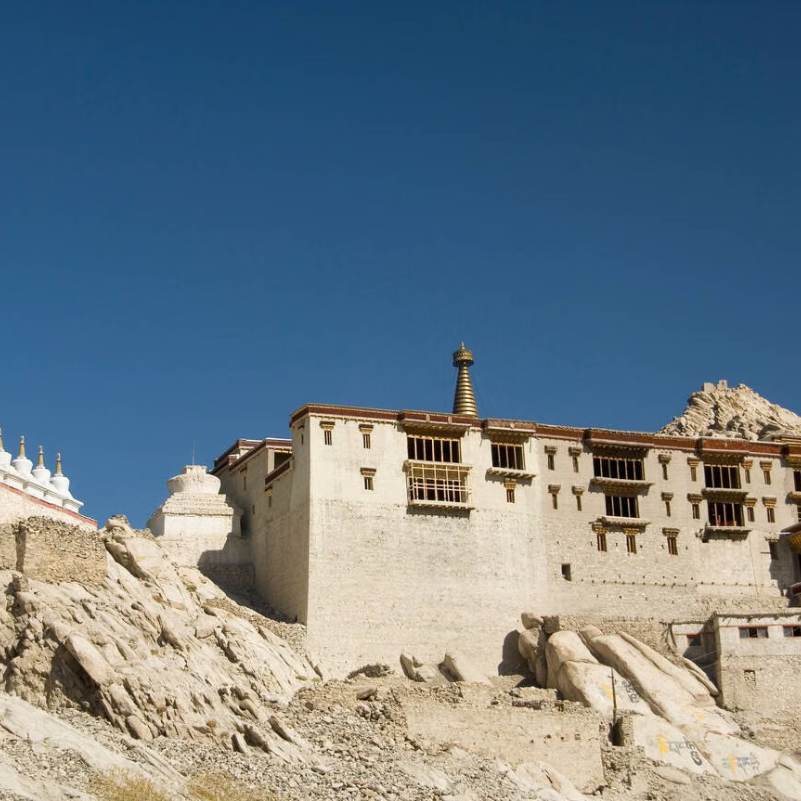
Shey Palace
About 30 km northwest, toward Leh on the highway
The former summer capital of the Namgyal kings, with a 12 metre Shakyamuni Buddha built in 1655, the second largest in Ladakh after Thiksey. A 45 to 60 minute stop on the monastery circuit between Thiksey and Hemis. The palace is in ruins but the gompa is a working shrine.
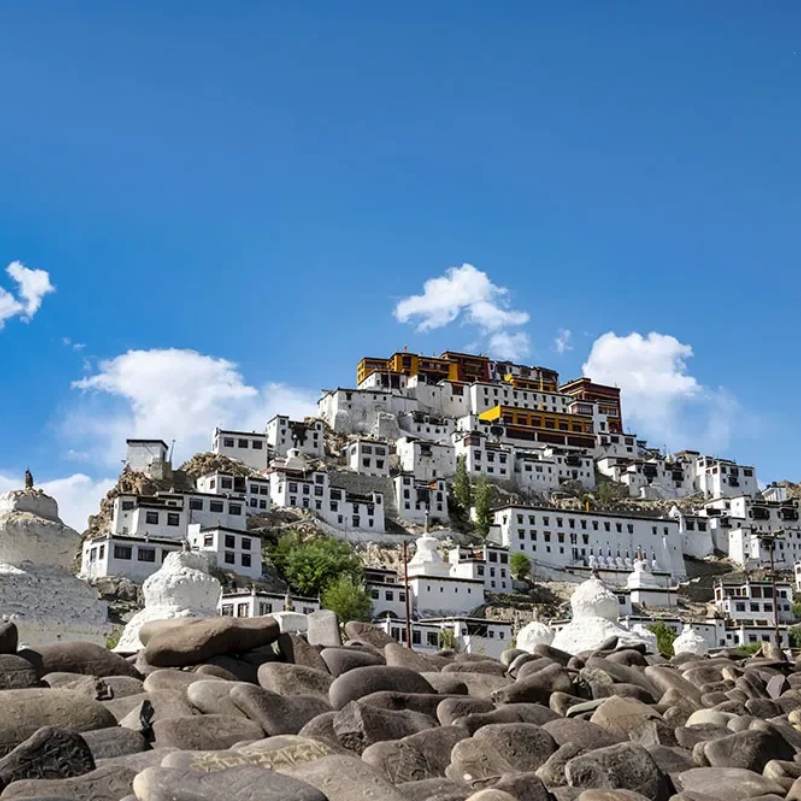
Thiksey Monastery
About 25 km northwest, on the main highway
A large 12 storey Gelugpa monastery built into a hillside, with a 15 metre Maitreya Buddha and the best known morning prayer in Ladakh at 6:30 AM. The usual starting point for the Indus valley monastery circuit. Entry fee generally around Rs 40.
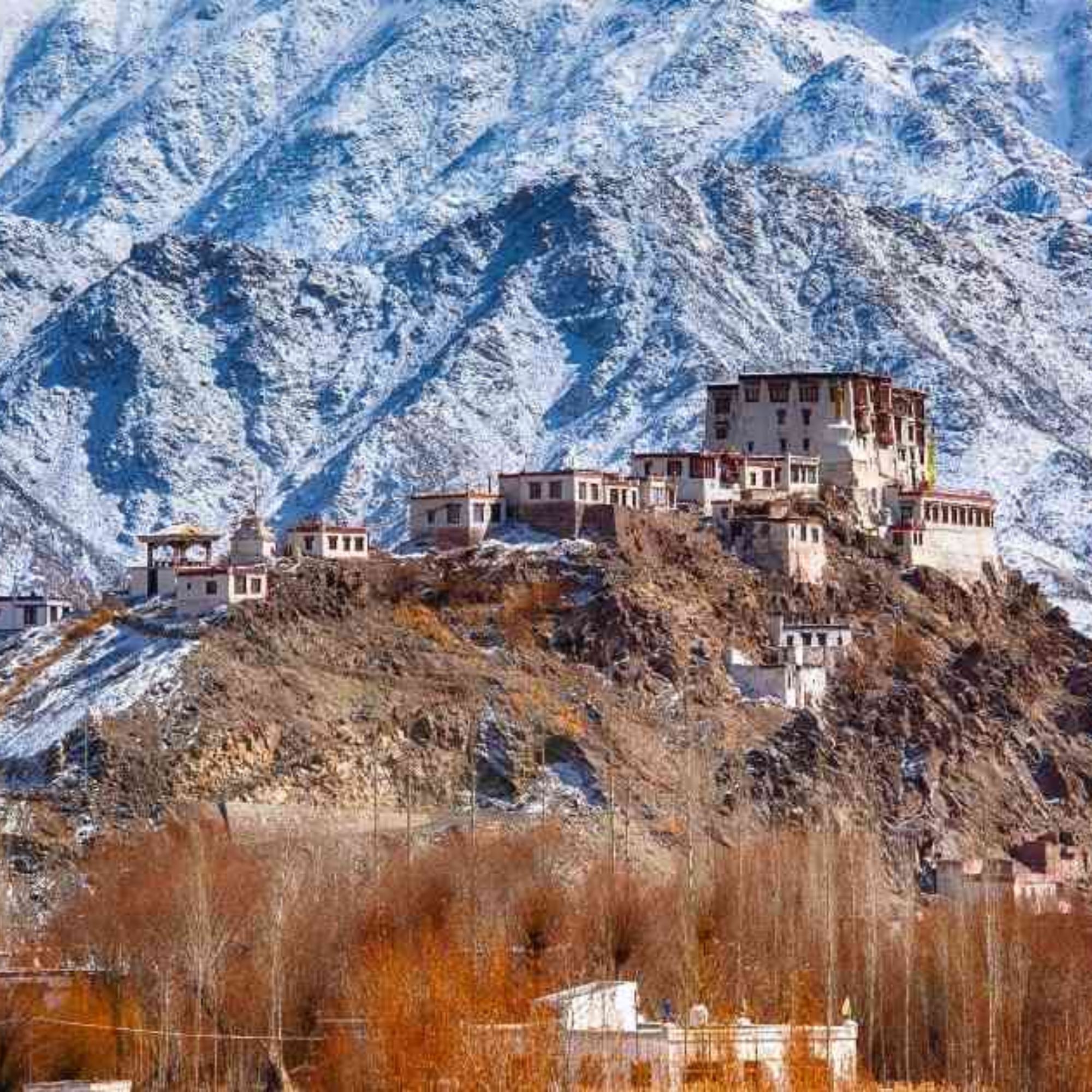
Stakna Monastery
About 15 km northwest, across the Indus near Hemis
A smaller Drukpa monastery perched on a conical hill resembling a tiger's nose, on the far bank of the Indus. Fewer tourists than Hemis or Thiksey, one of the quieter working gompas on the circuit. Fits naturally as a 30 minute stop between Hemis and the highway.
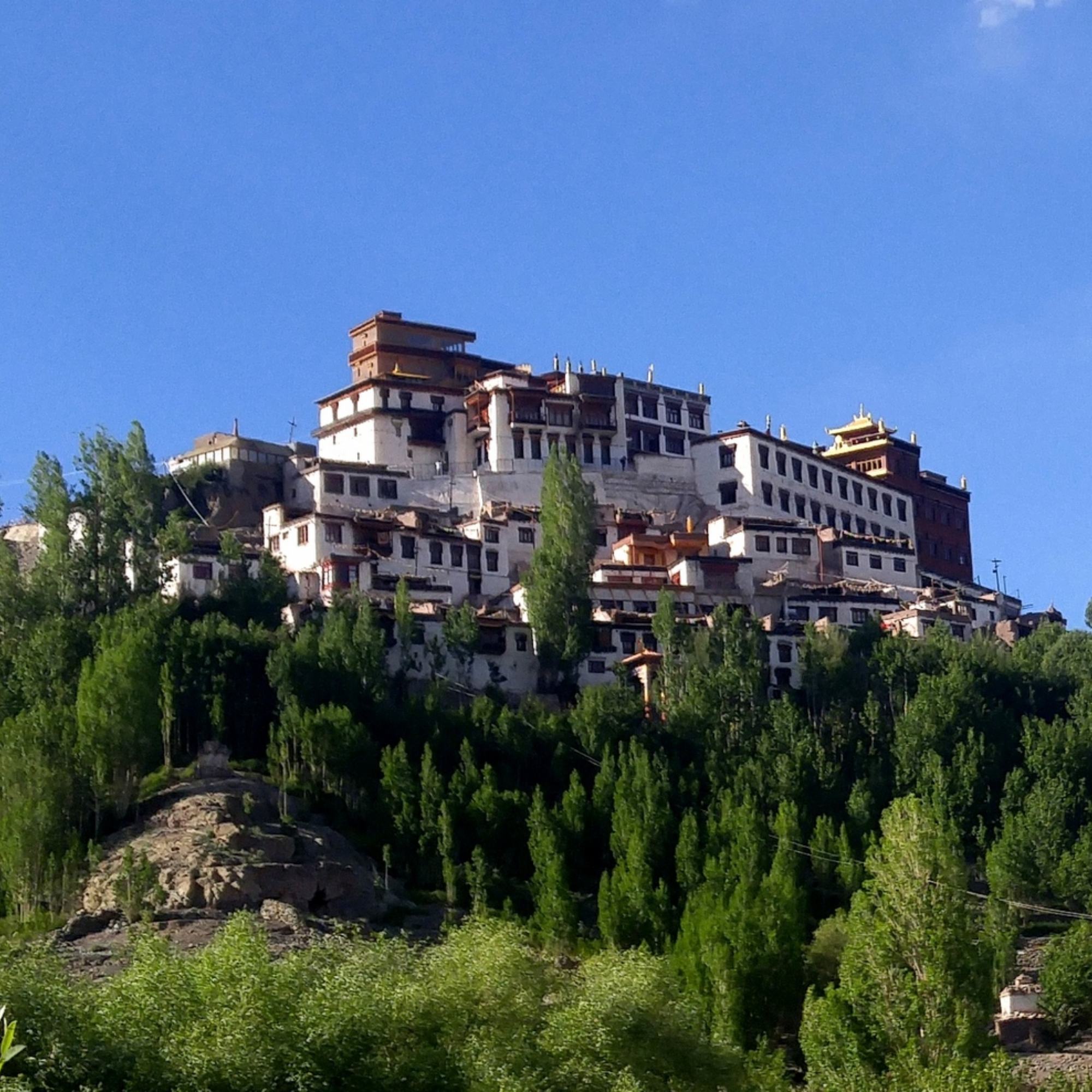
Matho Monastery
About 20 km northwest, across the Indus
The only Sakya school monastery in Ladakh, known for the Matho Nagrang festival in late February or early March when two monks enter oracle trances. Quiet outside festival time. Worth a detour on a longer monastery day.
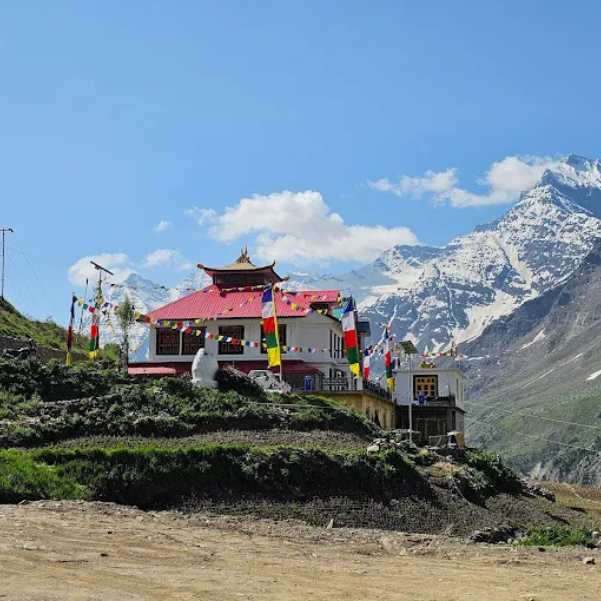
Gotsang Gompa
About 3 km above Hemis, 1 to 1.5 hour hike
A 13th century hermitage at around 3,900 metres, built by Gyalwa Gotsangpa and predating the main Hemis complex. About a dozen monks still live there. A proper uphill hike from behind the monastery, rewarding for its solitude and the view back over the Hemis complex. Not for casual walkers at altitude.
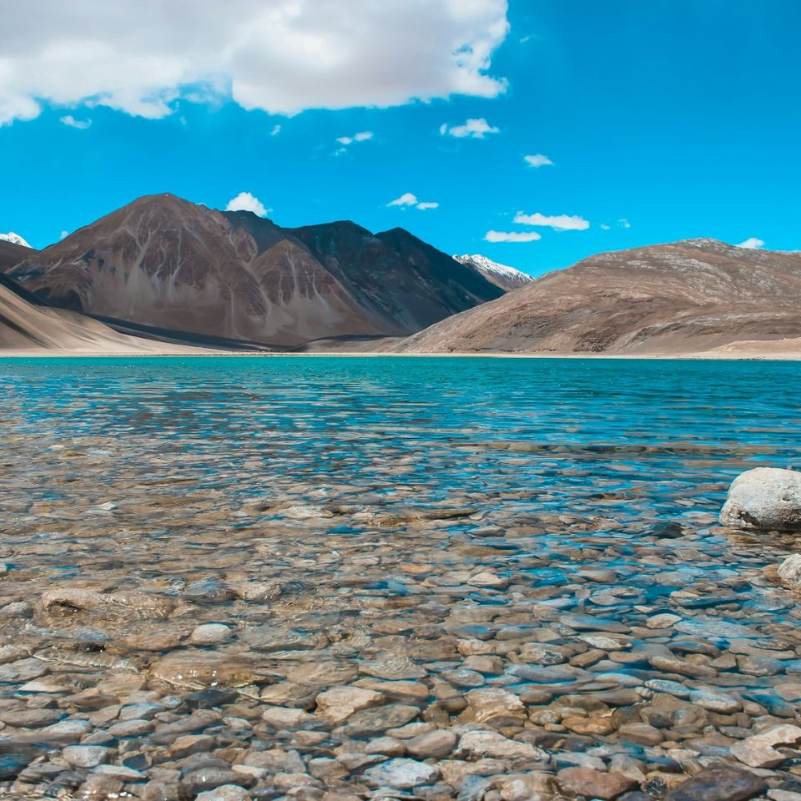
Pangong Lake
About 120 km east from Karu via Chang La
The high altitude saltwater lake on the India China border, reached from Leh over the 5,360 m Chang La pass. The Karu junction serves both the Hemis road and the Pangong road, so travellers often combine the two on different days of a Ladakh trip. Pangong needs its own overnight, not a day trip.
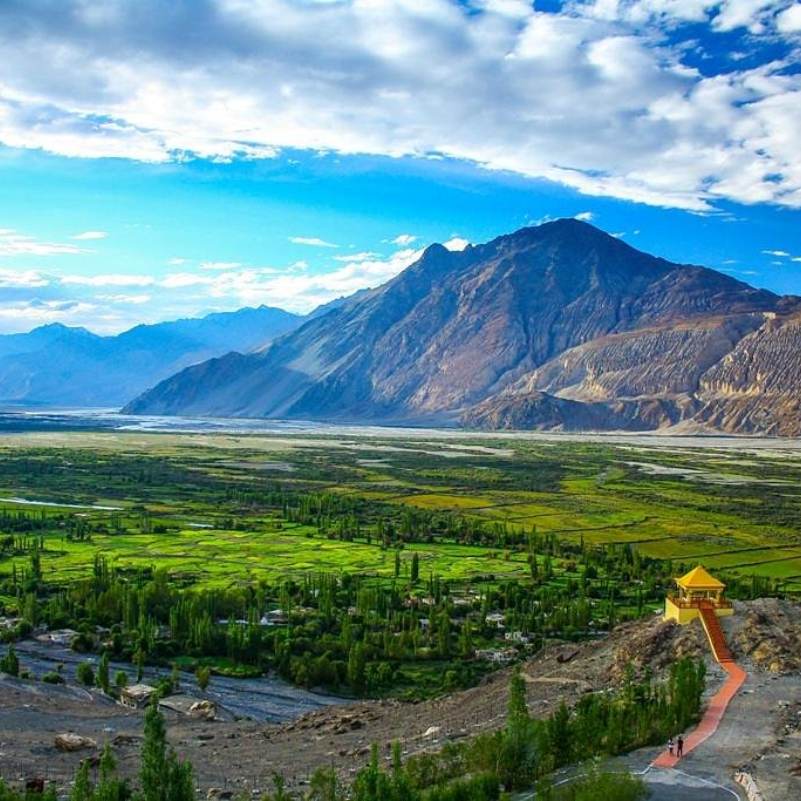
Nubra Valley
About 135 km north of Leh via Khardung La
The broad desert river valley north of Leh, with the Hunder sand dunes, Bactrian camels, Diskit monastery and its 32 metre Maitreya Buddha, and the Balti village of Turtuk. A separate 2 to 4 night leg on any Ladakh itinerary, not connected to a Hemis day.
Our packages with Hemis Monastery
Curated trips that include a visit to Hemis Monastery.
 Group Tour6D/5N
Leh Ladakh Group Tour With Nubra Valley and Pangong Lake
2D Leh•1D Nubra Valley+1
₹18,999/ person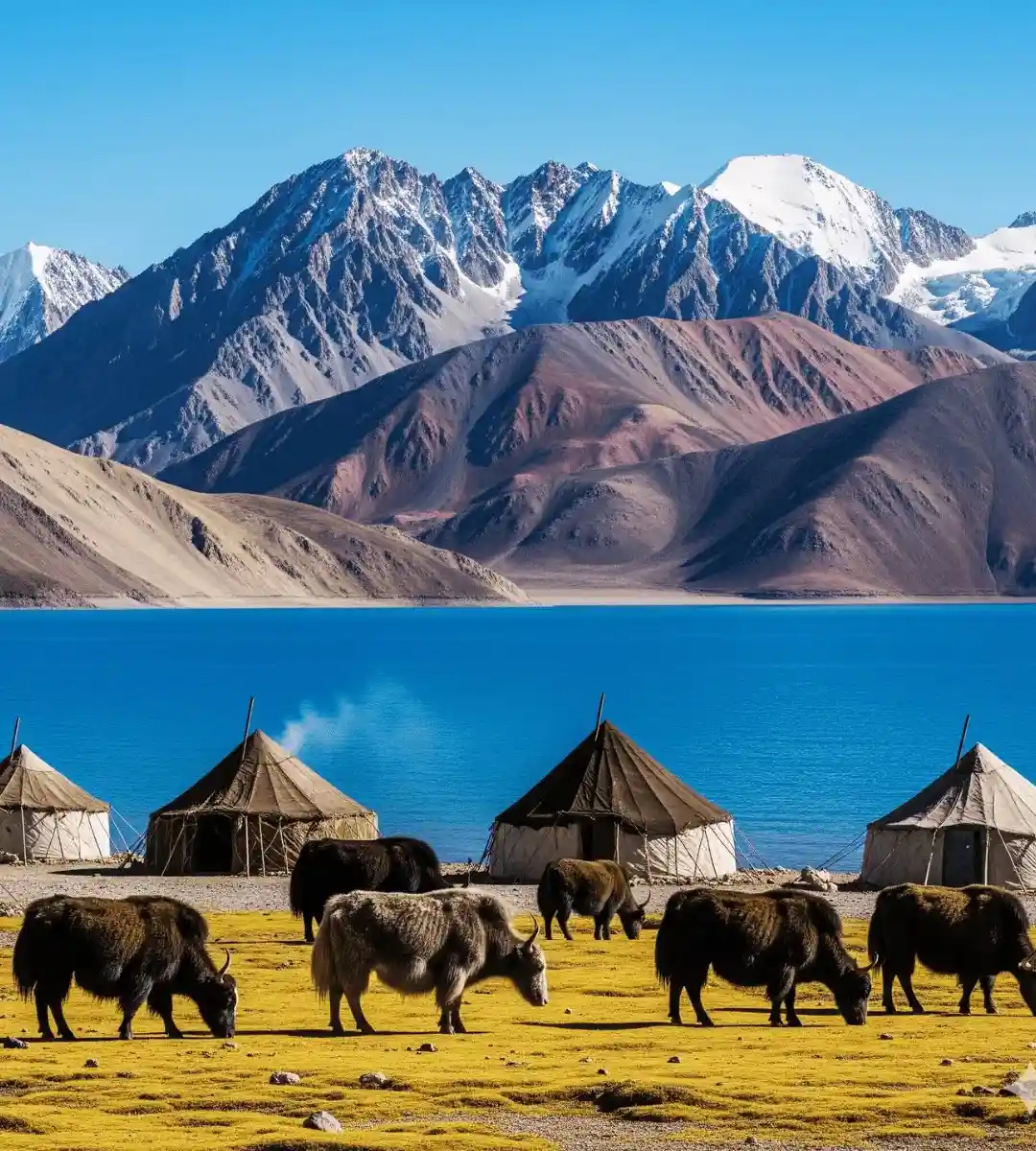 7D/6N
7D/6NBest Leh Ladakh Tour With Nubra Pangong and Tso Moriri
2D Leh•1D Nubra Valley+2
₹29,999₹37,999SAVE INR 8,000/ person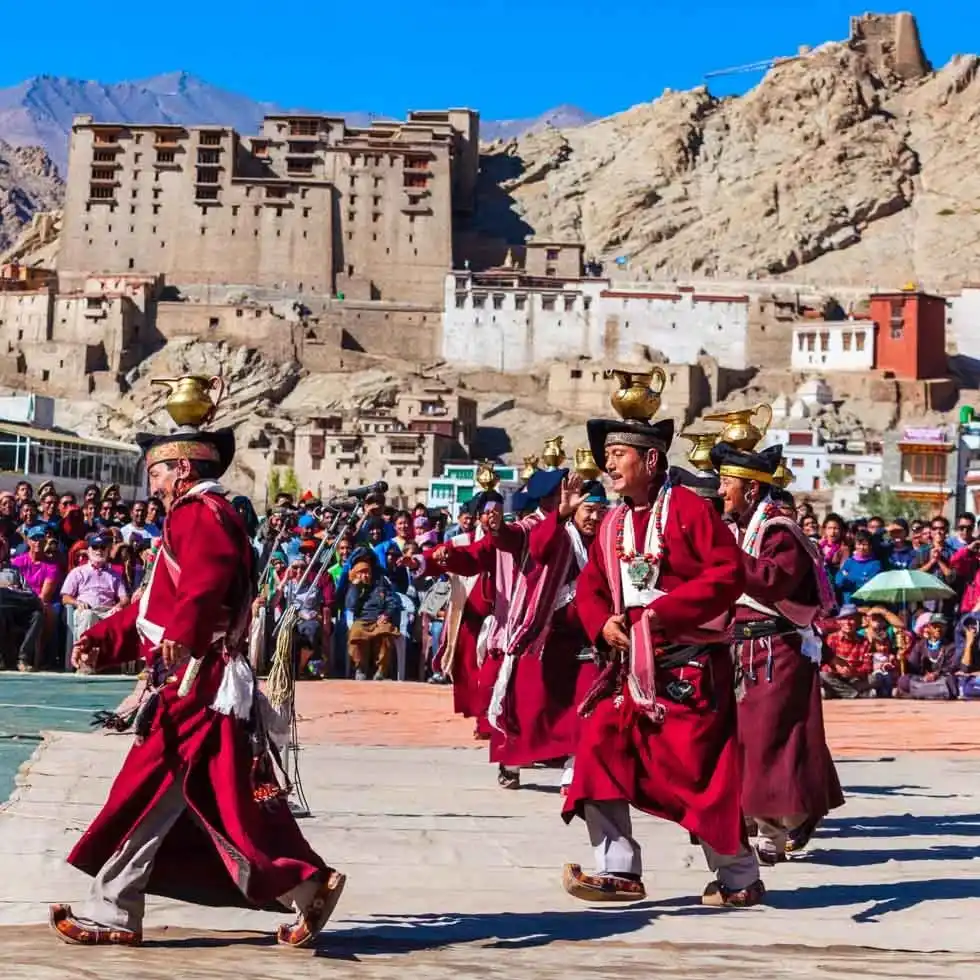 7D/6N
7D/6NLeh Ladakh Tour With Turtuk Village Nubra Valley and Pangong Lake
2D Leh•2D Nubra Valley+1
₹27,999₹33,999SAVE INR 6,000/ person
Frequently Asked Questions about Hemis Monastery
Is Hemis Monastery worth visiting?
Yes. The largest and wealthiest monastery in Ladakh, with the best museum, the Hemis Tsechu festival, and the deepest Buddhist artefact collection on the Indus valley circuit. At ~3,500 m, it is a comfortable outing even during your first couple of days of acclimatisation. Combine with Thiksey and Shey Palace on a single day circuit.
How far is Hemis Monastery from Leh?
About 45 km, roughly 1 to 1.5 hours. Drive south to Karu, turn right, cross the Indus, follow the gorge road 7 km.
What are the timings and entry fee?
Generally 8 AM to 1 PM and 2 PM to 6 PM, with lunch break. ₹50 per person for monastery and museum. ₹100 camera fee for courtyard photography. No photography inside prayer halls or museum. Confirm on arrival.
When is the Hemis Tsechu in 2026?
Expected June 24 to 25, 2026 (10th day of the 5th Tibetan lunar month). Honours Guru Padmasambhava with sacred Cham (masked) dances, copper trumpets, drums, and cymbals. Confirm dates with a Leh operator. Giant thangka next expected in 2028.
What is the altitude?
Around 3,500 m (~11,500 ft). Same altitude as Leh. One of the best gentle half day outings for your first 48 hours of acclimatisation.
Do I need a permit?
No permit needed for the monastery. The Ladakh Environment Fee does not apply to the Indus valley circuit. Separate entry fee only for Hemis National Park trekking.
How long should I spend?
1.5 to 2 hours standard. 2.5 with prayer session. Half a day or more during the Tsechu. Add 2 to 3 hours if hiking to Gotsang Gompa.
Can I visit in winter?
Yes. Road from Leh stays open. Fly in only (highways closed Nov to May). Temperatures below minus 15°C at night. Viable for winter travellers or snow leopard expeditions.
Is it accessible for families and seniors?
Yes. Flat courtyard, narrow stairs inside. Remove shoes in prayer halls, walk clockwise, no photography inside shrine rooms where posted. During the Tsechu, the courtyard gets packed.
What about snow leopards?
The monastery borders Hemis National Park (~200 snow leopards). But tracking requires specialist deep winter trekking (Dec to March) with advance permits. A standard monastery visit does not include snow leopard sightings. Separate, multi day commitment.
What other monasteries to combine with?
Thiksey at dawn (6:30 AM prayer, rooftop breakfast), Shey by 9, Stakna at 10:30, Hemis by noon. Give Hemis the longest stop. Most Leh taxis quote a fixed rate for this circuit.
Photography rules?
Courtyard allowed with ₹100 camera fee. Strictly prohibited inside Dukhang, Lakhang, upper chapels, and museum. During the Tsechu, Cham dances fine but no flash near thangkas.
Related guides
Posts about Ladakh
- Manali to Leh Highway 2026: Every Pass, Stop and Distance
- Umling La Ladakh Guide 2026: Route, Altitude, Permit, Safety & Reality Check
- Turtuk Ladakh Travel Guide 2026: Balti Culture, Apricot Orchards and Why It Is Perfect for Families
- Offbeat Ladakh for Couples in 2026: Quiet Routes Beyond Pangong and Nubra
- Aryan Valley Ladakh Guide 2026: Dah, Hanu, Brokpa Culture, Route and Who Should Visit
- Hanle vs Tso Moriri vs Turtuk: Which Offbeat Ladakh Place Should You Choose in 2026?