
Shanti Stupa
A white domed Buddhist peace pagoda on a hilltop in Chanspa, Leh, built in 1991 by Japanese and Ladakhi Buddhists, with relics of the Buddha enshrined by the 14th Dalai Lama and one of the best sunset viewpoints in all of Ladakh
- Peace Stupa & View
- ~3,600 m
- 5 km from Leh centre
- Apr to Oct
- Ladakh
What makes it special
Shanti Stupa is the white dome you see from every high point in Leh. It sits on a hilltop in Chanspa, about 5 km west of the main market, and it is the one structure that almost every first time visitor to Ladakh photographs without knowing exactly what it is.
What it is: a Japanese style peace pagoda, built between 1983 and 1991 by Japanese Buddhist monk Bhikshu Gyomyo Nakamura, with voluntary labour from Ladakhi Buddhists and financial support from Japan. Construction began in April 1983 under Nakamura's supervision, with help from Kushok Bakula, the head lama of Ladakh. The then Prime Minister Indira Gandhi sanctioned the construction of a motorable road to the hilltop in 1984. The Indian Army provided support during the building phase, and the Jammu and Kashmir state government supplied construction materials. In August 1991, the 14th Dalai Lama inaugurated the completed stupa and enshrined relics of the Buddha at its base.
The stupa was built to commemorate 2,500 years of Buddhism and to promote world peace. It is part of the Peace Pagoda movement started by Japanese Buddhist monk Nichidatsu Fujii, who envisioned peace pagodas and temples across the world as a way of reviving Buddhist practice and fostering harmony. There are similar stupas in other countries, but the one in Leh has become the most photographed of the lot, mostly because of where it sits.
The structure itself is a two level white dome. The first level features a central golden Buddha image on a platform with a Dharmachakra (the wheel of law) flanked by two deer, the classic Buddhist symbol of the first teaching at Sarnath. The second level has relief panels depicting the birth of the Buddha, his victory over temptation during meditation, and his death (Mahaparinirvana). Smaller meditating Buddha figures appear throughout. The architecture is distinctly Japanese Buddhist, different from the Tibetan Ladakhi style you see everywhere else in Leh, which is part of what makes it visually striking.
But honestly, the stupa itself is not why most people climb the hill. The view is. From the terrace around the dome, you get a wide panorama that includes Leh town spread below, Leh Palace and Namgyal Tsemo on their hilltop directly across the valley, the barren ridges of the Ladakh range, and the snow capped Stok range rising beyond the Indus. On a clear evening, the light turns the mountains amber and the stupa glows white against the darkening sky. This is the sunset view that shows up on every Ladakh travel reel, and it is genuinely as good in person as it looks in photographs. Possibly better, because the photographs do not capture the wind and the silence.
The sunrise is good too, but less popular because the light falls differently and the town is still in shadow. Sunset is the one to plan around.
You can reach the stupa two ways. The first is by climbing roughly 500 steep steps from the base of the hill on the Chanspa side. At 3,600 metres, this climb is real work, even for fit people. Budget twenty to thirty minutes if you are acclimatised, longer if you are not. The second is by road. A narrow tarred road winds up the back of the hill, and taxis and bikes can drive right to the parking area near the top. Most travellers drive up and walk down, which is the sensible approach unless you specifically want the stair climb.
The stupa is illuminated at night, and the white dome glowing against the dark hillside is visible from across Leh. Some travellers visit after dark for the lit up view, though most of the town view vanishes into darkness and what you get instead is the stupa itself against the stars. That has its own appeal.
Most people spend thirty to forty five minutes here. Walk around the terrace, photograph the view, sit for a while, circumambulate the stupa clockwise if you feel like it, and head down. An hour at most. This is not a destination that needs a long stay. The entire point is the view, and once you have sat with it for fifteen or twenty minutes, you have the experience. If you arrive for sunset, give yourself thirty minutes before the sun drops behind the ridges, and stay until the light has faded. That full sequence takes about forty five minutes and is the version of Shanti Stupa that sticks.
Quick answers
- Is Shanti Stupa worth visiting?
- Yes, for the view. The stupa itself is a modest white dome, not a grand monastery or temple. What makes it worth the trip is the panorama: Leh town below, Leh Palace directly across the valley, and the Stok range behind. Go at sunset. The light on the mountains is the best you will get anywhere in Leh town. Budget forty five minutes to an hour.
- How do I reach Shanti Stupa?
- Two options. Climb about 500 steep steps from the Chanspa side, which takes twenty to thirty minutes at altitude. Or drive up the narrow road from the other side, which takes about ten minutes by taxi or bike. Most travellers drive up and walk down. The stair climb at 3,600 metres is harder than it sounds, especially in the first couple of days.
- What is the best time to visit Shanti Stupa?
- Sunset, without question. Arrive thirty minutes before the sun goes down and stay until the light has faded. The mountains turn amber, the stupa glows white, and the entire Leh valley spreads below you. Sunrise works too but is less dramatic because the town is still in shadow. Midday is the least rewarding time.
Quick facts
Everything you need to know at a glance.
At a glance
- Altitude
- Roughly 3,600 m / 11,800 ft. Slightly higher than Leh town at 3,500 m.
- Location
- Chanspa hilltop, about 5 km west of Leh main market. Visible from most high points in Leh.
- Built
- Construction 1983 to 1991. Inaugurated by the 14th Dalai Lama in August 1991.
- Nearest base
- Leh town. About 5 km from the main market, 7 km from Leh airport.
- Open season
- Open year round. Main tourist season roughly April to October.
- Visiting timings
- Generally early morning to late evening. Some sources cite 5 AM to 9 PM. Confirm locally as hours may shift seasonally.
- Entry fee
- Generally free. Some recent reports mention a small nominal fee. Confirm on arrival.
- Time needed
- 30 to 45 minutes at the stupa. Add 20 to 30 minutes if climbing the steps.
- Difficulty
- Easy if driving up. Moderate if climbing the 500 steps at 3,600 metres. The altitude makes the stairs harder than expected.
On the ground
- Mobile network
- Good. Jio, Airtel, and BSNL all work in the Chanspa area around the stupa.
- ATMs
- None at the stupa. Nearest ATMs in Leh main market, about 5 km away.
- Food
- A small cafe or snack stall sometimes operates near the parking area. For a proper meal, head to Chanspa or the main market.
- Parking
- Small parking area near the top of the hill, accessible by road. Can fill up during sunset rush in peak season.
- Washrooms
- Basic facilities near the stupa. Carry tissue and sanitiser.
- Photography
- Allowed throughout. The terrace around the dome is the spot for the classic Leh panorama. No restrictions on exterior photography.
- Drones
- Strongly discouraged. Leh is a military zone with active air traffic. Keep the drone grounded.
Seasonal weather
- Apr to May18°0°Spring (Apr to May)
- Jun to Aug28°8°Summer (Jun to Aug)
- Sep to Oct18°-2°Autumn (Sep to Oct)
- Nov to Mar5°-15°Winter (Nov to Mar)
Suitable for
- Couples — suitable
- Families — suitable
- Seniors — with some care
- Solo — suitable
- First-timers — suitable
- Pet-friendly — with some care
How to reach Shanti Stupa
3 approach routes, with seasonal access.
From Leh Main Market (by road)
Year round- Distance
- About 5 km
- Time
- 10 to 15 minutes by taxi or bike
- Road
- Tarred road, narrow and winding near the top
The standard approach. Head west from the main market through Chanspa, follow signs to Shanti Stupa, and the road winds up the back of the hill to a parking area near the top. Most taxis know the route. A short flight of stairs from the parking leads to the stupa terrace. This is the easier option and what most first time visitors do.
From Chanspa base (by stairs)
Year round- Distance
- About 500 steps
- Time
- 20 to 30 minutes climbing
- Road
- Steep concrete staircase from Chanspa village
The stair climb starts from the base of the hill in Chanspa. Roughly 500 steps, steep and unshaded. At 3,600 metres, the thin air makes this harder than the number suggests. Carry water. Go early morning or late afternoon when the sun is not directly overhead. Most travellers drive up and walk down the stairs instead, which is the smarter order.
From Leh Airport
Year round, flights mainly April to October- Distance
- About 7 km
- Time
- 15 to 20 minutes by taxi
- Road
- Tarred road through Leh town
Take a taxi to your hotel in Leh first. Do not visit the stupa straight from the airport. You need at least a day to acclimatise at 3,500 metres before climbing anything.
Best time to visit
Season by season, so you can plan around the weather rather than hope.
- Recommended
Spring
April to May
Clean skies, light crowds, and the valley starts to green up.
- Temperature
- Roughly 10 to 18°C day, minus 2 to 5°C night
- Crowds
- Low to moderate
- Light
- Clean and sharp, excellent for photography
- Access
- Flights resume, roads open gradually
Flights to Leh resume from mid April, and the roads from Manali and Srinagar begin opening. Days are pleasant at 10 to 18 degrees, nights are cold. The stupa terrace is quiet on weekday afternoons, and the air is clear enough for sharp photographs of the Stok range. One of the best windows if you want the view without the crowd.
Summer
June to August
Peak crowds, warm days, the parking fills up at sunset.
- Temperature
- Roughly 18 to 28°C day, 8 to 12°C night
- Crowds
- High, especially at sunset
- Sun
- Intense. Carry sunscreen and water
- Tip
- Arrive early for sunset to get a good spot
The main tourist season. Temperatures reach the high twenties in the day and the sun at altitude is intense. The stupa terrace fills up for sunset, especially on weekends and during July and August. If you want the classic sunset view without jostling for space, arrive thirty to forty minutes early and claim a spot. Early morning is quieter but the light is less dramatic.
- Recommended
Autumn
September to October
The clearest skies of the year. Fewer people. The best light.
- Temperature
- Roughly 8 to 18°C day, minus 3 to 5°C night
- Crowds
- Thinning through the season
- Photography
- Best window of the year
- Note
- Carry warm layers for sunset
Tourist numbers drop from early September, skies get their sharpest, and the poplars around Leh turn gold. The sunset from the stupa in October, with cold clear air and the Stok range razor sharp against deep blue sky, is the version photographers come for. Nights get genuinely cold, approaching freezing by mid October.
Winter
November to March
Open but cold, quiet, and only accessible by flight.
- Temperature
- Minus 5 to 5°C day, minus 15 to minus 25°C night
- Crowds
- Almost nobody
- Access
- Flights only, cancellations common
- Appeal
- Stark beauty, extreme cold
The stupa stays accessible through winter. The white dome against snow dusted mountains and deep blue winter sky is striking, and you will likely be the only visitor. But temperatures drop to minus 15 or lower at night, most services in Leh shut down, and flights are the only way in with frequent cancellations. Visit only if you are already in Leh on a winter trip.
Things to see & do
5 things worth your time at Shanti Stupa.
Watch sunset from the stupa terrace
30 to 45 minutesThis is the reason most people come. Arrive thirty minutes before the sun drops behind the western ridges. Find a spot on the terrace. The light on the Stok range shifts from white to warm gold to deep amber over the course of twenty minutes, and the town of Leh glows below. Leh Palace and Namgyal Tsemo are directly across the valley, catching the same light from a different angle. The stupa itself turns warm cream in the late sun. Stay until the colour fades and the first stars appear. On a clear evening in September or October, this is one of the simplest and most rewarding things you can do in Leh.
Climb the 500 steps from Chanspa
20 to 30 minutes upIf you want to earn the view, take the stairs from the Chanspa side. Roughly 500 steps, steep, unshaded, and at 3,600 metres. Your lungs will remind you of the altitude within the first five minutes. Carry water. Go in the morning or late afternoon when the sun is not overhead. The climb itself is not technical, just relentless. Most travellers who try the stairs wish they had driven up and walked down instead. That is the honest advice.
Walk around the stupa and read the reliefs
15 to 20 minutesThe stupa is a two level structure. The first level has a golden Buddha on a Dharmachakra platform with two deer, the symbol of the first teaching at Sarnath. The second level has relief panels showing the Buddha's birth, his meditation under the Bodhi tree, and his passing into Mahaparinirvana. Smaller meditating Buddhas appear throughout. Most people circle the terrace once, take a photo, and leave. Slow down. The reliefs are well executed and the architectural style, distinctly Japanese rather than Ladakhi, is unusual for this part of the world. Circumambulate clockwise, as is Buddhist practice.
Visit after dark for the illuminated stupa
20 to 30 minutesThe stupa is lit up at night, and the glowing white dome against the dark hillside is visible from across Leh. Some travellers drive up after dinner for the illuminated view. The town view mostly disappears into darkness, but the stupa itself against the stars has a quiet drama. Dress warm. Temperatures drop fast after sunset, and the hilltop is exposed to wind.
Combine with Leh Palace and old town in one afternoon
Half dayA good pattern for your first or second day in Leh. Walk through the old town to Leh Palace in the early afternoon, spend an hour there, then drive or taxi to Shanti Stupa for sunset. The two viewpoints face each other across the valley, and visiting both in the same afternoon gives you Leh from two completely different angles. Namgyal Tsemo above the palace is a possible add if your legs and lungs allow it.
Know before you visit Shanti Stupa
The practical bits, from people who have been.
What Shanti Stupa actually isA Japanese peace pagoda, not a Ladakhi monastery. The draw is the view, not the structure.
What it is. A Japanese style Buddhist peace pagoda, built between 1983 and 1991 as part of the global Peace Pagoda mission started by Nichidatsu Fujii. It was constructed by Japanese Buddhist monk Gyomyo Nakamura with voluntary labour from Ladakhi Buddhists. The 14th Dalai Lama inaugurated it in August 1991 and enshrined relics of the Buddha at its base. The stupa commemorates 2,500 years of Buddhism and symbolises world peace.
What it is not. A Ladakhi monastery with ancient murals and resident monks. The architecture is distinctly Japanese Buddhist, not Tibetan Ladakhi, which is why it looks different from everything else in Leh. There is no prayer hall, no morning chanting session, no resident community. It is a monument and a viewpoint, not a living religious complex.
Why go. For the view. The stupa terrace gives you one of the best panoramas in Leh: the town below, the palace and Tsemo across the valley, the Stok range beyond. At sunset, this is the spot.
Who it suits and who should think twiceWorks for almost everyone. The stair climb is the only physical challenge.
Works well for. First time Leh visitors looking for a gentle sunset stop on acclimatisation day. Couples. Solo travellers. Photographers wanting the classic Leh panorama shot. Families with kids who can manage a short walk from the parking area (not the stairs). Anyone who enjoys a quiet hilltop view.
Might feel underwhelmed. Travellers expecting a significant cultural or religious experience. The stupa is modest in size and detail compared to the major monasteries like Thiksey or Hemis. If your Leh time is limited and you have to choose, the Indus valley monasteries offer more depth.
Seniors. Comfortable if you drive up. The walk from the parking area to the terrace is short and mostly flat. The 500 step climb from Chanspa is not advisable for anyone with knee, heart, or breathing concerns, especially at this altitude.
Families with small kids. Fine if you drive up. The terrace is open and safe, and kids usually enjoy the wide view. Do not attempt the stairs with a toddler on your back at 3,600 metres.
Pets. Possible but check locally. The stupa is a religious site and shoes must be removed near the main structure.
When and how to time your visitSunset is the answer. Arrive 30 minutes early. Day one or two of your Leh stay.
Best time of day. Sunset. Arrive twenty to thirty minutes before the sun drops behind the western ridges. The light changes fast and the show lasts about twenty minutes. If you miss the golden hour, the view is still good but loses the magic.
Second best. Sunrise. The light falls on the Stok range directly, but Leh town below is still in shadow and the overall view is less dramatic than sunset. The stupa is usually empty at dawn, which has its own appeal.
Avoid. Midday. The sun is harsh, the stupa terrace has no shade, and the flat midday light makes the view unremarkable.
How to fit it in. Most travellers do Shanti Stupa on day one or two in Leh, while acclimatising. Pair it with Leh Palace and the old town in the same afternoon: palace first, then drive to the stupa for sunset. Or visit the stupa independently as an evening outing.
Altitude and practical notes3,600 metres. Do not climb the stairs on arrival day. Drive up instead.
The stupa sits at roughly 3,600 metres, about 100 metres higher than Leh town. If you have flown in, do not attempt the stair climb on your first day. Drive up instead and keep the visit gentle. Even the short walk from the parking area to the terrace will feel different at this altitude.
Carry water. The hilltop is exposed and can be windy. In summer, the sun at altitude is strong enough to burn quickly, so sunscreen and a hat are worth having. In autumn and spring, carry a warm layer for sunset because temperatures drop the moment the sun goes down.
Remove your shoes before approaching the main stupa structure. Circumambulate clockwise.
There are no medical facilities at the stupa. The nearest hospital is SNM Hospital in Leh, about 5 km away.
Timings and any entry fee can change with the season. Confirm locally before visiting.
What I would tell a friend before they goDrive up, arrive early for sunset, sit with the view. Do not rush.
Drive up. Walk down the stairs afterward if you want the exercise, but climbing 500 steps at 3,600 metres in the afternoon is not fun, especially in your first few days.
Go for sunset. Arrive thirty minutes before. The parking fills up in peak season, so factor that in.
Do not rush. The entire point is the view, and it takes a few minutes of sitting to actually absorb it. The people who stay ten minutes and leave have a lesser version of the experience than the people who stay thirty.
Pair it with Leh Palace in the same afternoon. Palace first, stupa for sunset. The two viewpoints face each other across the valley and together they give you the full picture of Leh from both sides.
Carry a warm layer. Even in July, the hilltop wind after sunset gets cold fast.
The illuminated stupa at night is worth seeing from across the valley, even if you do not drive up again. Look west from the main market after dark and the dome glows on the hillside.
If you are doing the Indus valley monasteries (Shey, Thiksey, Hemis) on another day, the stupa sunset on day one and the monastery circuit on day two or three is a natural rhythm that works well for most Leh trips.
Nearby attractions
Other places worth the detour.
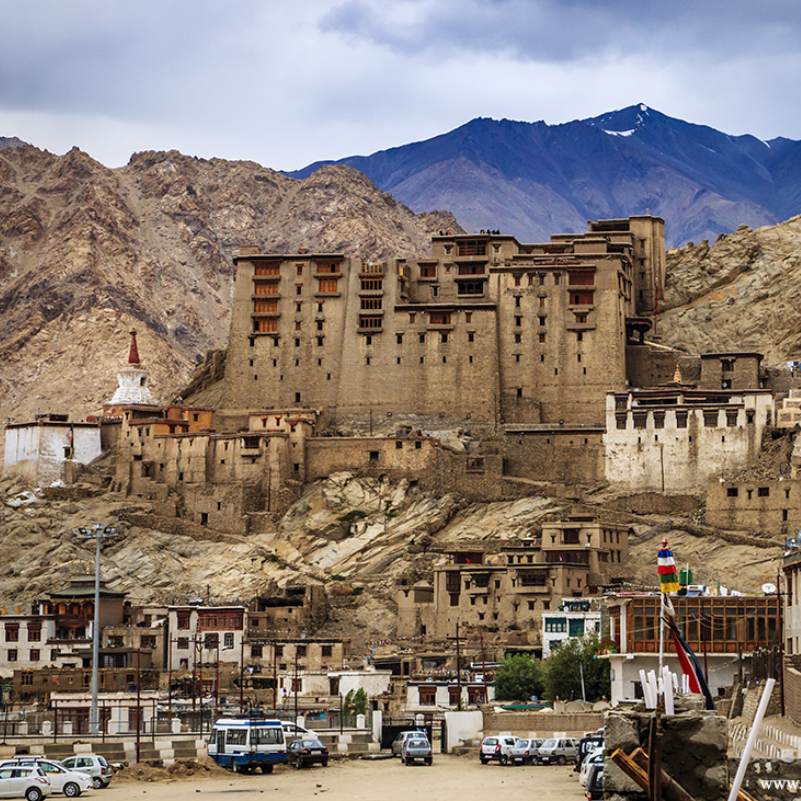
Leh Palace
About 5 km east, directly across the valley
The nine storey 17th century royal palace of the Namgyal dynasty, sitting on Tsemo Hill above the old town. The view from the stupa and the view from the palace rooftop face each other, and doing both in one afternoon is the classic Leh acclimatisation day.
Namgyal Tsemo Gompa and Fort
About 5 km east, above Leh Palace
A monastery with a three storey gold painted Maitreya Buddha and the ruins of a 16th century fort, on the hilltop directly above Leh Palace. Visible from the stupa terrace. If you are doing Leh Palace in the same afternoon, Tsemo is a natural add.
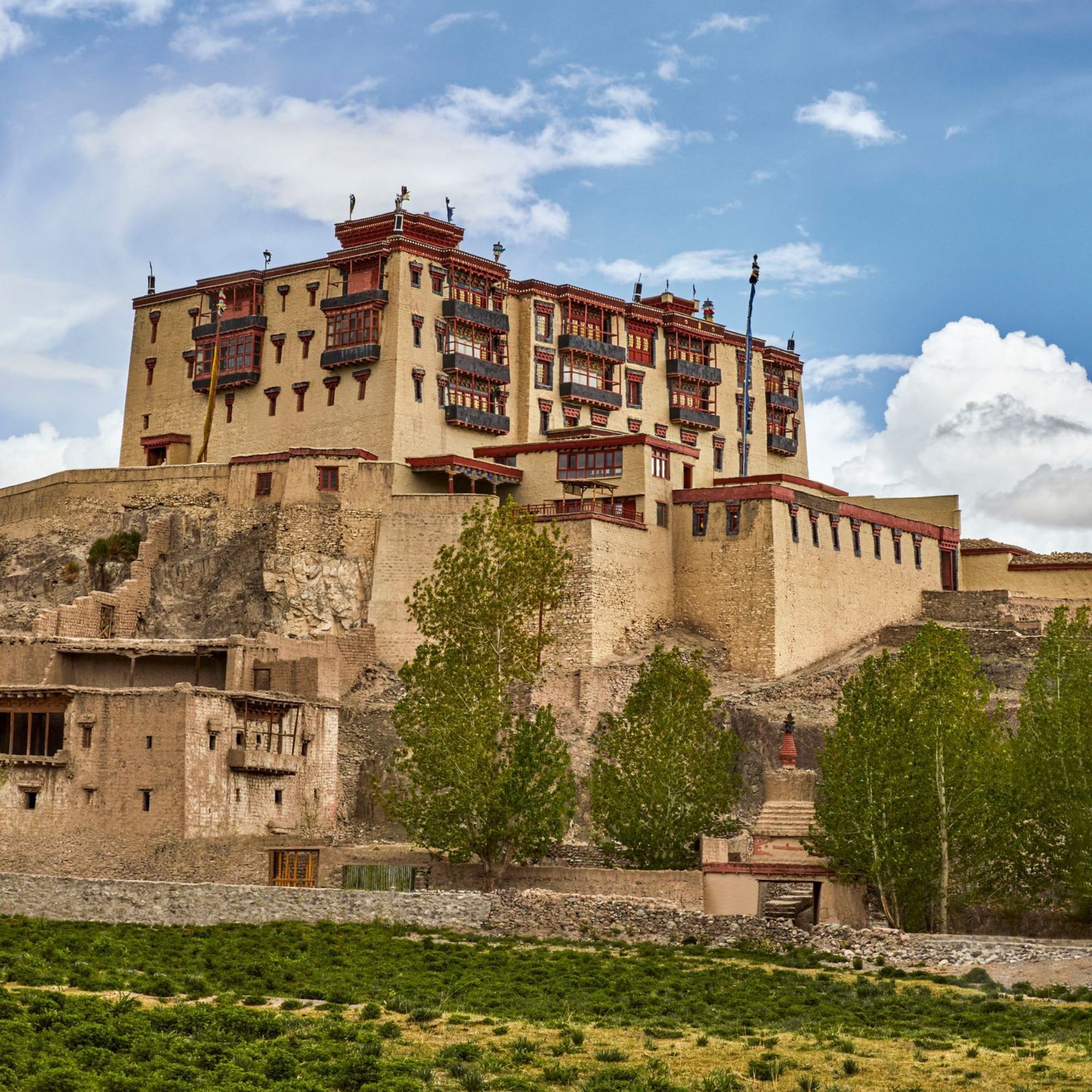
Stok Palace and Museum
About 17 km south, across the Indus
Where the Namgyal royal family moved after the Dogra invasion. A small museum with royal thangkas, jewellery, and ceremonial robes. Part of the building is a heritage hotel.
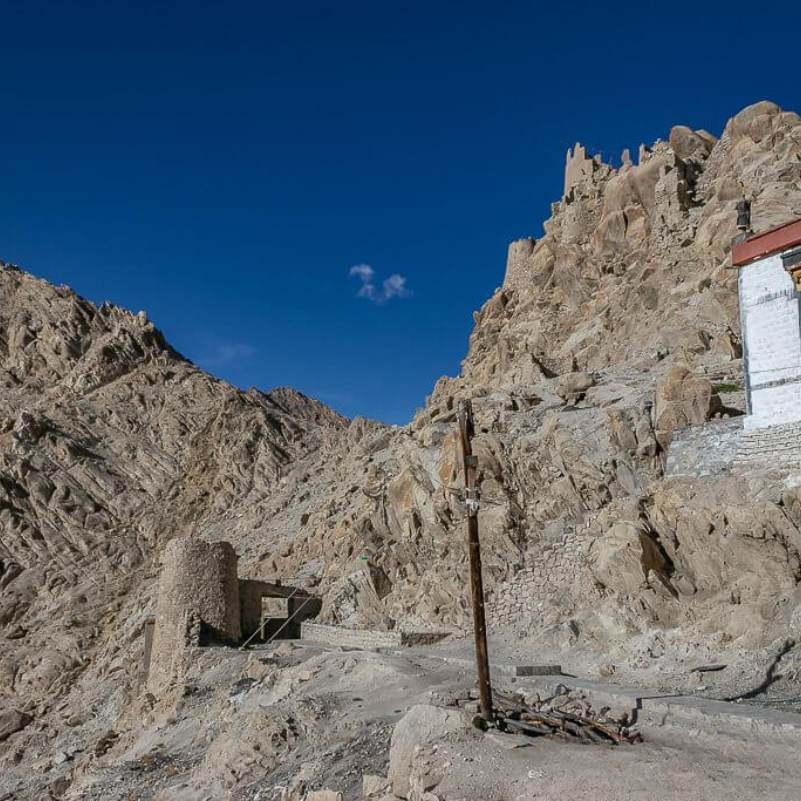
Shey Palace and Monastery
About 15 km south on the Leh Manali highway
The former summer capital of the Namgyal kings, with a 12 metre Shakyamuni Buddha cast in 1655. A 45 to 60 minute stop on the Indus valley monastery circuit.
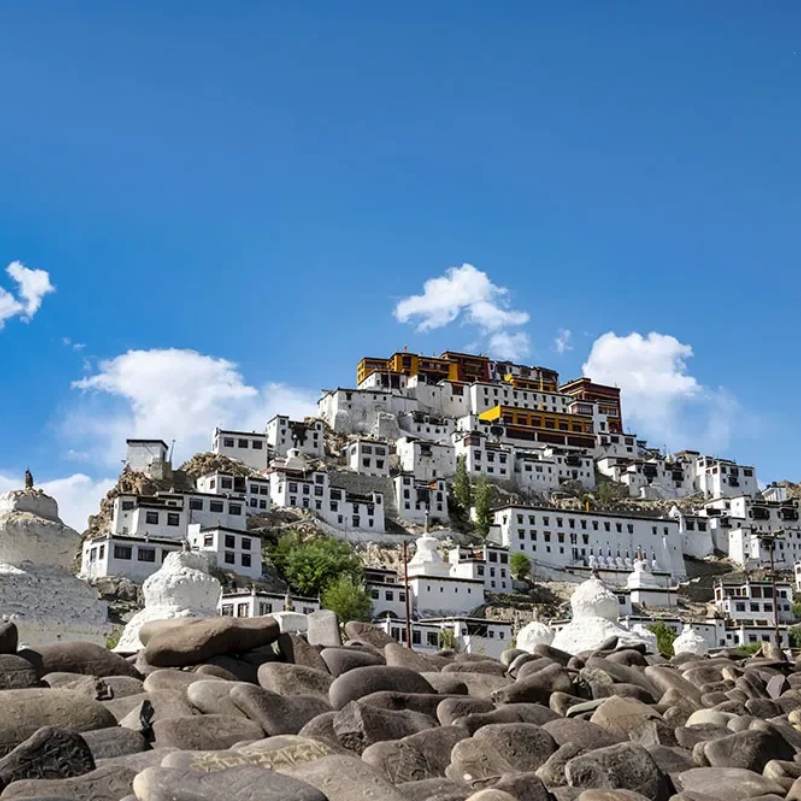
Thiksey Monastery
About 19 km south
A 12 storey Gelugpa monastery with a 15 metre Maitreya Buddha. The 6:30 AM morning prayer is the signature monastery experience in Ladakh. Part of the standard Indus valley monastery day from Leh.
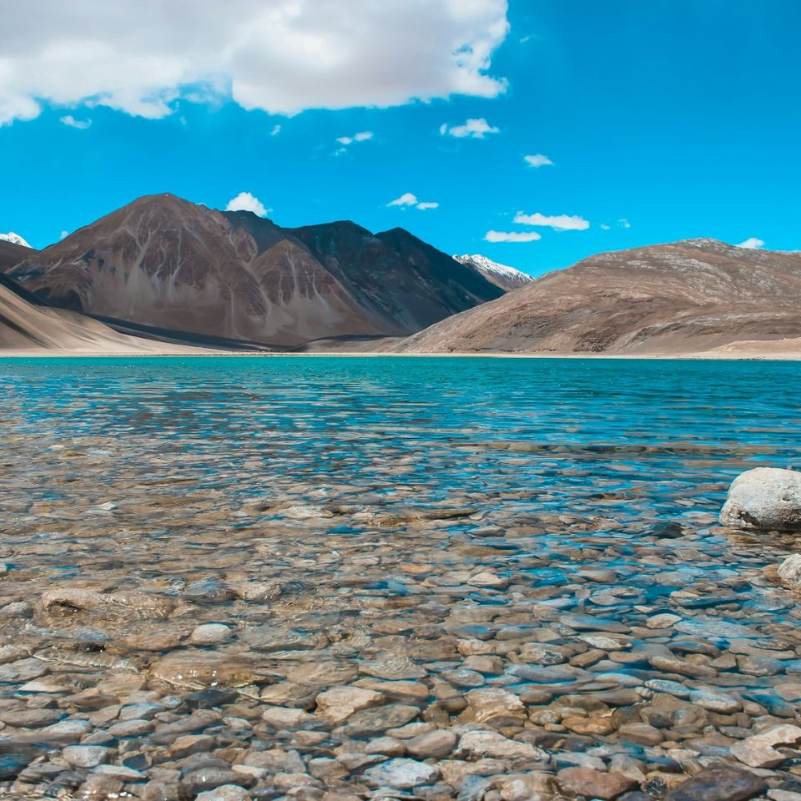
Pangong Lake
About 160 km east via Chang La
The high altitude lake that needs no introduction. A separate overnight trip from Leh requiring a permit.
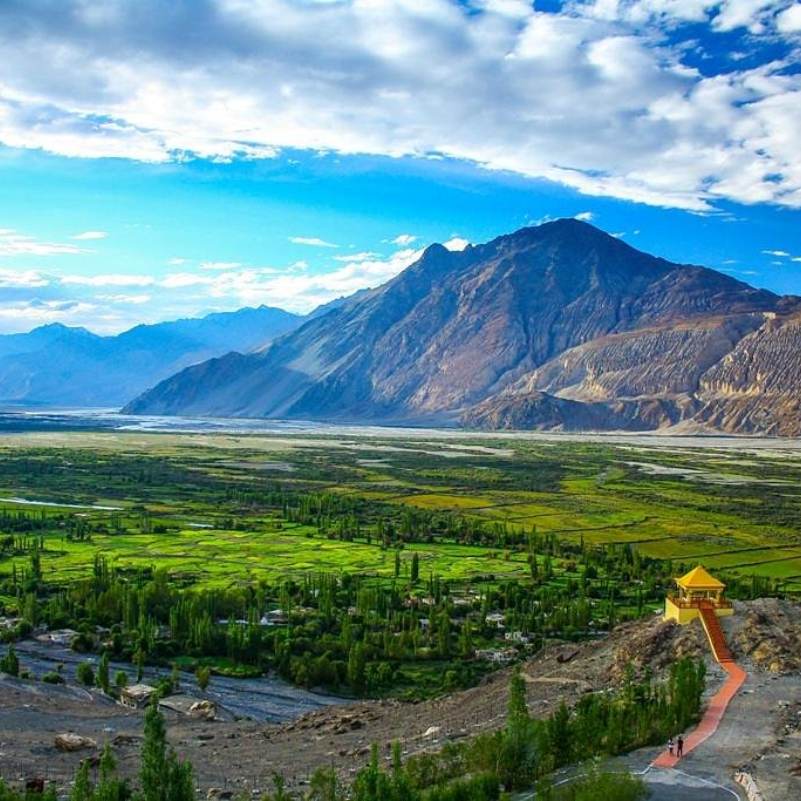
Nubra Valley
About 120 km north via Khardung La
The valley north of Leh with sand dunes at Hunder, Diskit Monastery, and Turtuk village. A separate two to four night leg requiring a permit.
Our packages with Shanti Stupa
Curated trips that include a visit to Shanti Stupa.
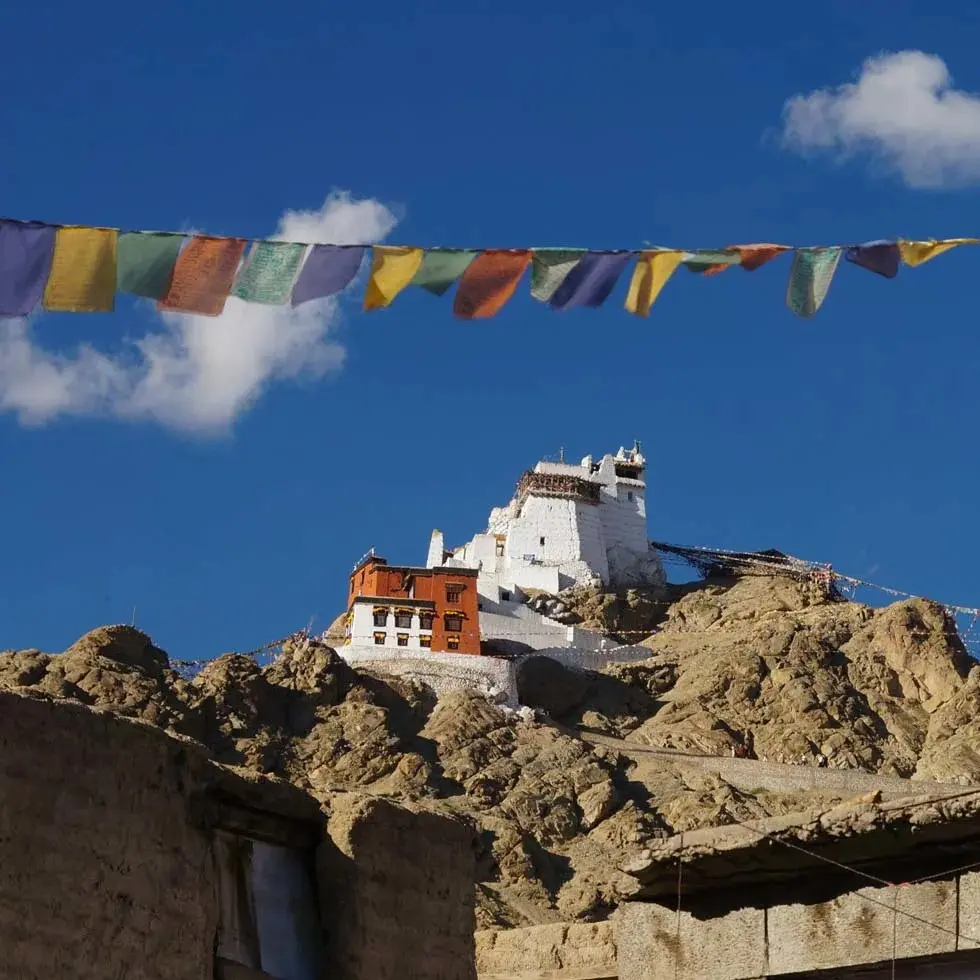 4D/3N
4D/3NLeh Ladakh Quick Escape
2D Leh•1D Pangong Lake
₹20,999₹24,999SAVE INR 4,000/ person Group Tour6D/5N
Leh Ladakh Group Tour With Nubra Valley and Pangong Lake
2D Leh•1D Nubra Valley+1
₹18,999/ person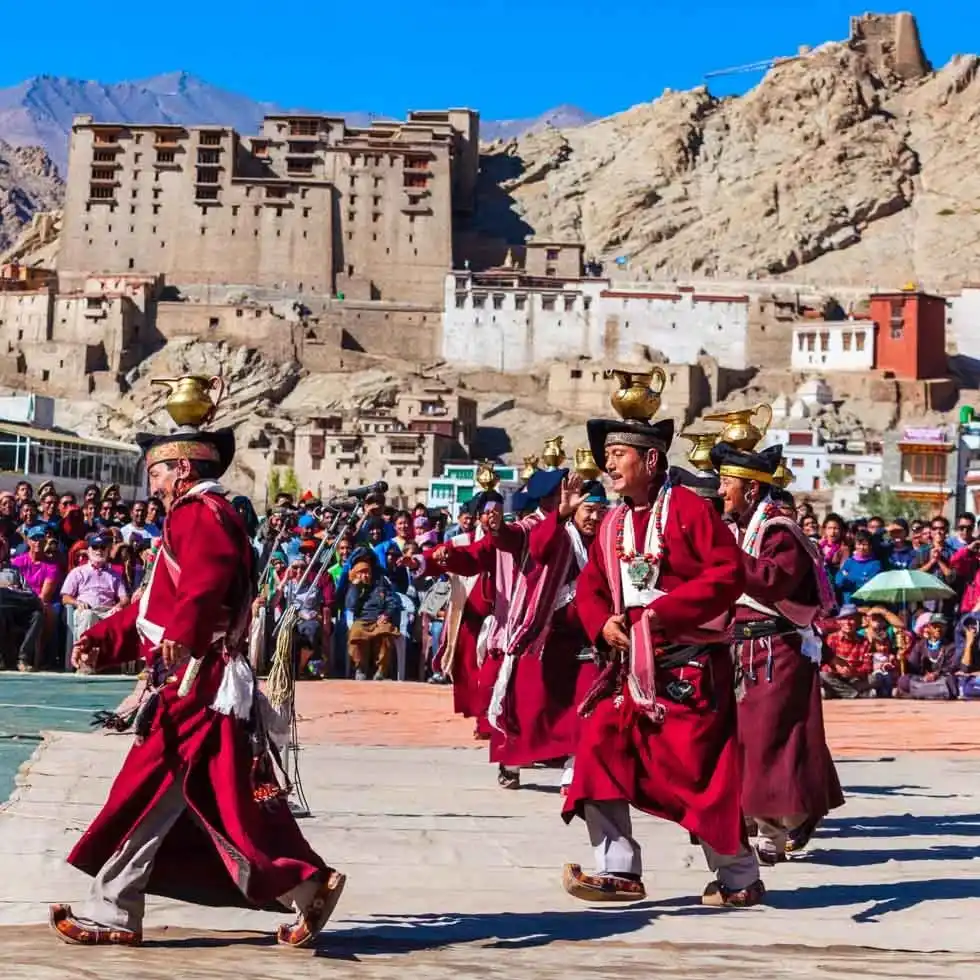 7D/6N
7D/6NLeh Ladakh Tour With Turtuk Village Nubra Valley and Pangong Lake
2D Leh•2D Nubra Valley+1
₹27,999₹33,999SAVE INR 6,000/ person
Common questions about Shanti Stupa
Where exactly is Shanti Stupa?
On a hilltop in Chanspa, about 5 km west of the Leh main market. It faces Leh Palace across the valley and is visible from most high points in Leh. The altitude is roughly 3,600 metres.
Who built Shanti Stupa and why?
Japanese Buddhist monk Bhikshu Gyomyo Nakamura, with support from Ladakhi Buddhists and funding from Japan. Construction ran from 1983 to 1991. It is part of the global Peace Pagoda movement founded by Nichidatsu Fujii to promote world peace. The 14th Dalai Lama inaugurated it in August 1991 and enshrined relics of the Buddha at its base.
Is there an entry fee for Shanti Stupa?
The stupa has generally been free to visit. Some recent reports mention a small nominal fee being introduced. Confirm on arrival. Cash is safer than UPI at the hilltop.
What are the timings for Shanti Stupa?
The stupa is generally accessible from early morning to late evening. Some sources cite 5 AM to 9 PM. Hours may shift with the season. Visit at sunset for the best experience.
How many steps to climb to Shanti Stupa?
About 500 steps from the Chanspa base. Steep, unshaded, and at 3,600 metres. Budget 20 to 30 minutes for the climb. Alternatively, you can drive up a tarred road that leads to a parking area near the top.
Is Shanti Stupa safe for solo women travellers?
Yes. The stupa is a popular, well trafficked tourist spot in the daytime and evening. The road up is used by taxis and bikes regularly. Standard precautions apply if walking down the steps after dark.
Can I visit Shanti Stupa with kids or elderly parents?
Yes, if you drive up. The walk from the parking area to the terrace is short and manageable. Do not attempt the 500 step climb with small children or elderly family members at this altitude.
Is Shanti Stupa the same as a monastery?
No. It is a peace pagoda, built in the Japanese Buddhist style. There are no resident monks, no prayer sessions, and no ancient murals. It is a monument and a viewpoint, not a living monastic community.
What is the best time to visit Shanti Stupa?
Sunset. The light on the Stok range and across Leh valley is at its best in the forty five minutes before and after sunset. Arrive early to get a spot on the terrace in peak season.
Do I need a permit for Shanti Stupa?
No. The stupa is within Leh town limits and does not require any permit. The Ladakh Environment and Development Fee required for Nubra, Pangong, and Tso Moriri does not apply here.
How does Shanti Stupa compare to Leh Palace?
Different experiences. Leh Palace is a ruined 17th century royal palace with a small museum and rooftop view of the Indus valley. Shanti Stupa is a modern peace monument with the best sunset view in Leh. The two face each other across the valley and work well when visited in the same afternoon.
Can I fly a drone at Shanti Stupa?
No. Leh is a military area with active air traffic. Recreational drones have been flagged by local police in recent seasons. Keep it grounded.
Related guides
Posts about Ladakh
- Manali to Leh Highway 2026: Every Pass, Stop and Distance
- Umling La Ladakh Guide 2026: Route, Altitude, Permit, Safety & Reality Check
- Turtuk Ladakh Travel Guide 2026: Balti Culture, Apricot Orchards and Why It Is Perfect for Families
- Offbeat Ladakh for Couples in 2026: Quiet Routes Beyond Pangong and Nubra
- Aryan Valley Ladakh Guide 2026: Dah, Hanu, Brokpa Culture, Route and Who Should Visit
- Hanle vs Tso Moriri vs Turtuk: Which Offbeat Ladakh Place Should You Choose in 2026?