
Sangam Point - Indus Zanskar Confluence
The point near Nimmo village where the turquoise Zanskar meets the darker Indus, about 35 km west of Leh on the Srinagar highway, at roughly 10,200 feet. A 20 to 30 minute stop that most travellers rate as the best single view on the Sham Valley circuit.
- Ladakh · river confluence
- ~10,200 ft / ~3,100 m
- ~35 km from Leh
- 20 to 40 min stop
- Rafting hub · Jun to Sep
What makes it special
Sangam Point is where the Zanskar river, after carving through a long, deep gorge from the Zanskar valley, finally meets the Indus near the village of Nimmo on the Leh to Srinagar highway. The two rivers carry distinctly different colours. The Zanskar typically runs a milky turquoise, while the Indus flows darker, in shades of green or muddy brown depending on the season. Where they meet, the two streams run side by side for a stretch before slowly blending. In good light, particularly mid morning or late afternoon between June and October, the colour contrast is sharp enough to photograph from the highway viewpoint above.
Here is the honest framing most travel pages skip. Sangam Point is a 20 to 40 minute stop on the way between Leh and Alchi or Kargil. There is a viewpoint off the highway with a few prayer flags, a road that drops down to the river bank, and a couple of small dhabas near Nimmo village about a kilometre or two further. That is it. There are no temples, no formal ghats, no entry gates. If you imagined something grand or built up, adjust. If you accept what it actually is, which is one of the cleanest natural colour contrasts you will see anywhere in India, it quietly earns its place as the most rewarding stop on the Sham Valley circuit from Leh.
The confluence also serves as the endpoint for rafting trips on the Zanskar. The most popular route runs from Chilling to Nimmo, roughly 28 to 30 km of Grade III to III+ white water through one of the deepest gorges in the Himalaya. While the rapids are exciting, commercial operators routinely take beginners on this stretch with trained guides and full safety gear. Operators based in Leh run this seasonally from around June to September. Even if you are not rafting, watching the rafts come through the final rapids and splash into the Indus at the sangam is worth the pause. In winter, the Zanskar freezes into the famous Chadar, the ice sheet that connects the isolated Zanskar valley to Nimmo by foot, one of the most talked about treks in the country.
Most travellers visit as part of a Sham Valley half day from Leh. The standard circuit runs Gurudwara Pathar Sahib, then Magnetic Hill, then Sangam Point. Of the three, most people quietly agree that the confluence is the actual highlight. A few make it a longer day by continuing to Alchi Monastery, about 30 km further west, which adds one of the oldest monastic art sites in Ladakh to the same drive.
Quick answers
- Is Sangam Point worth visiting in Ladakh?
- Yes, as a stop on a Sham Valley half day from Leh. The colour contrast between the turquoise Zanskar and the greener Indus is genuinely striking in good light, and most travellers consider it the highlight of the circuit. Twenty to thirty minutes at the viewpoint is enough. Do not plan it as a full day destination. Combine it with Gurudwara Pathar Sahib, Magnetic Hill, and optionally Alchi Monastery for a solid morning or afternoon.
- How much time do you need at Sangam Point?
- Twenty to forty minutes for most people. That covers the highway viewpoint, a walk down to the river bank if you want a closer look, and photos. If you are doing a rafting trip that ends at the confluence, budget the rafting duration separately, usually 1.5 to 3 hours on the water depending on the route. As a standalone viewpoint stop, you are done in under half an hour.
- What is the best time of day to see the colour contrast?
- Mid morning, roughly 10 AM to noon, usually gives the best light for seeing the two river colours clearly. Late afternoon also works well. Midday with the sun directly overhead tends to wash out the difference. The colour contrast is strongest between June and October when both rivers are flowing well. In peak monsoon the Zanskar can turn muddy too, reducing the visual distinction.
Quick facts
Everything you need to know at a glance.
At a glance
- Altitude
- Approximately 10,200 ft / roughly 3,100 m at the confluence. Close to Leh altitude, no additional acclimatisation concern if you have already adjusted to Leh.
- Location
- Near Nimmo village on the Leh to Srinagar highway (NH 1), Leh district, Ladakh. About 35 km west of Leh.
- Nearest base
- Leh, 35 km east. Nimmo village is about 1 to 2 km further west on the highway.
- Open season
- Accessible year round. Highway is BRO maintained. Main tourist window is May to September. Rafting season is generally June to September.
- Visiting hours
- Open viewpoint, no fixed hours. The viewpoint and river bank are accessible at any time. Best light for photos is mid morning, roughly 10 AM to noon.
- Entry fee
- None. Free to visit the viewpoint and walk down to the river bank. No ticket, no gate.
- Time needed
- 20 to 40 minutes for the viewpoint and river bank. If adding a rafting trip, budget the rafting time separately.
- Known for
- The vivid colour contrast between the turquoise Zanskar and the darker Indus, white water rafting, and the Chadar trek starting point in winter.
- Difficulty
- Easy. The highway viewpoint requires no walking. The path down to the river bank is a short descent on a gravel road.
On the ground
- Mobile network
- Jio and Airtel work reasonably well on this stretch of the highway as of 2026. BSNL postpaid also has coverage. Data speeds are adequate for messaging.
- ATMs
- None at the confluence or Nimmo. Nearest ATMs are in Leh, about 35 km east. Carry cash from Leh if you need it for rafting, dhabas, or taxi tips.
- Fuel
- No pump near the confluence. Nearest fuel is in Leh. Fill up before leaving. The Sham Valley circuit is a 60 to 80 km round trip from Leh.
- Food
- A few small dhabas and shops in Nimmo village, about 1 to 2 km from the confluence. Expect chai, momos, Maggi, and some Ladakhi food. Gurudwara Pathar Sahib, about 12 km back towards Leh, serves langar to all visitors.
- Parking
- Informal pullover space near the highway viewpoint. A side road drops down to the river bank with space for a few vehicles. No formal parking fee.
- Washrooms
- None at the confluence itself. Gurudwara Pathar Sahib has the cleanest washrooms on this circuit. Some dhabas in Nimmo may have basic facilities.
- Permits
- None required for Indian nationals. Foreign nationals should carry their passport and check current inner line permit rules for Ladakh.
- Drones
- The Leh to Srinagar highway is a sensitive military corridor. Do not fly drones on or near the highway. Army convoys pass regularly and confiscation is a real risk.
- Photography
- Unrestricted at the viewpoint and river bank. Best shot is from the highway viewpoint looking down at the merging rivers. A polariser cuts water glare. Do not photograph army convoys.
- Guides
- Not needed for the viewpoint. If booking a rafting trip, operators provide trained guides and all equipment. Most Leh taxis cover this as part of a standard Sham Valley or local sightseeing circuit.
Seasonal weather
- Apr to Jun18°2°Spring (Apr to Jun)
- Jul to Sep25°8°Summer (Jul to Sep)
- Sep to Oct18°0°Autumn (Sep to Oct)
- Nov to Mar5°-15°Winter (Nov to Mar)
Suitable for
- Couples — suitable
- Families — suitable
- Seniors — suitable
- Solo — suitable
- First-timers — suitable
- Pet-friendly — with some care
How to reach Sangam Point - Indus Zanskar Confluence
3 approach routes, with seasonal access.
From Leh (standard Sham Valley circuit)
Year round. Highway is BRO maintained.- Distance
- About 35 km
- Time
- 45 minutes to 1 hour one way
- Road
- Tarred Srinagar to Leh highway in good condition throughout
- Last fuel
- Fill up in Leh. No pumps on this stretch.
The standard approach, used by almost every visitor. Head west from Leh on the Srinagar to Leh highway (NH 1), past the airport, Spituk Monastery on the left, and the Hall of Fame museum. About 22 km from Leh you reach Gurudwara Pathar Sahib, the natural first stop. Continue about 5 km further to Magnetic Hill. Another 7 to 8 km past the hill brings you to the Sangam viewpoint on the right side of the highway, just before Nimmo village. A side road drops down to the river bank if you want to get closer. Most Leh taxis run this as a standard half day circuit covering all three stops and returning to Leh by early afternoon. The whole loop is roughly 70 to 80 km round trip.
From Kargil or Srinagar side (en route to Leh)
Generally June to October for the full Srinagar to Leh highway- Distance
- About 200 km from Kargil
- Time
- 7 to 8 hours from Kargil, Sangam Point is about 35 km before Leh
- Road
- Srinagar to Leh highway, mostly tarred with rough sections near Fotu La and Namika La
- Last fuel
- Kargil. No reliable fuel until Leh.
If you are driving from Srinagar or Kargil towards Leh, you pass the Sangam viewpoint on your left before reaching Nimmo. Many travellers make a quick stop here on the drive in, especially if the afternoon light is good and the rivers are running clear. Coming from this direction, you reach Sangam first, then Magnetic Hill, then Gurudwara Pathar Sahib as you continue east towards Leh. If you are tired from the long drive, skip it and return from Leh on a fresh morning.
From Alchi side (continuing west on the highway)
Year round- Distance
- About 30 km further west from Sangam, roughly 65 to 70 km from Leh
- Time
- About 45 minutes from Sangam to Alchi
- Road
- Tarred highway, mostly good condition
- Last fuel
- None between Leh and Alchi. Fill up in Leh.
If you continue west past Sangam and Nimmo on the highway, you reach Alchi Monastery in about 30 km. This makes for a longer but rewarding day trip from Leh. The Sham Valley circuit plus Alchi fills a comfortable full day. Alchi is known for its 10th to 11th century murals, among the oldest surviving examples of Indo Tibetan Buddhist art. Worth at least an hour inside. Return the same way to Leh.
Best time to visit
Season by season, so you can plan around the weather rather than hope.
- Recommended
Summer
May to September
Both rivers running full, colour contrast at its best, rafting season open, this is the main window
- Day temperature
- 15 to 25 C
- Night temperature
- 5 to 10 C (relevant if driving back late)
- River colours
- Most distinct from June to early September, Zanskar turquoise, Indus darker green
- Rafting
- Season open, operators running daily from Leh
- Crowds
- Moderate to high, peak in July
This is when the confluence looks its best. The Zanskar runs turquoise from glacial melt, the Indus carries a darker green, and the colour line between them is sharp and clean in good light. June and September are the sweet spots, warm days, clean light, and slightly less traffic than the July peak. This is also rafting season, with operators running trips from Phey to Nimmo (Grade II to III, good for beginners) and Chilling to Nimmo (Grade III to III+, exciting but beginner friendly with trained guides). Most Leh taxis and tour operators include the Sham Valley circuit in the first or second sightseeing day after acclimatisation.
Autumn
October to early November
Thinner traffic, cleaner air, the colour contrast still shows, rafting season winds down
- Day temperature
- 5 to 15 C
- Crowds
- Low
- River colours
- Both rivers settling, colour difference still visible but fading
- Rafting
- Season ending, fewer operators running
The tourist rush thins out sharply after the first week of October. The air is clearer, the light is sharper, and the colour contrast between the two rivers is still visible though not as strong as in summer. Afternoons get cold quickly. Carry a proper warm layer. Rafting operators wind down through October, confirm availability if you want to raft this late. By mid November, most Leh tourist infrastructure shuts down.
Winter
November to April
The Zanskar freezes, the famous Chadar forms, the landscape transforms completely
- Day temperature
- -5 to 5 C
- Night temperature
- -15 to -5 C
- Zanskar river
- Partially or fully frozen from December to February, forming the Chadar ice sheet
- Tourist infrastructure
- Most of Leh shuts down, limited hotels and restaurants open
Winter transforms the confluence entirely. The Zanskar slows down and begins to freeze from December, while the Indus continues flowing at reduced volume. The colour contrast disappears. What you get instead is the Chadar, the frozen Zanskar that becomes a walkable ice sheet connecting the otherwise isolated Zanskar valley to Nimmo. The Chadar trek, typically done in January or February, ends right here at the confluence. This is serious winter territory. Temperatures drop well below minus 15 at night, flights to Leh are the only access, and most hotels and restaurants shut down. Not a casual visit.
Things to see & do
7 things worth your time at Sangam Point - Indus Zanskar Confluence.
View the confluence from the highway
10 to 20 minutesThe main viewpoint is right off the Srinagar to Leh highway, with a pullover area and prayer flags marking the spot. From here you look down at the two rivers meeting below, the turquoise Zanskar coming in from the south through its gorge, the darker Indus flowing from the east. The colour line between them is visible in most seasons, strongest in mid morning light between June and September. A couple of photographs from this angle is the standard Sangam experience for most travellers. Quick, easy, no walking required.
Walk down to the river bank
20 to 30 minutesA side road drops from the highway viewpoint down to the actual river bank, a short 1 to 1.5 km drive. Down at water level, the scale of the two rivers is more impressive than from above, and the sound changes noticeably where the currents meet. You can sit on the gravel bank and watch rafting groups come through the final stretch if it is rafting season. The stones are slippery near the water, wear proper shoes. Do not wade in, both rivers are glacier fed, very cold, and faster than they look.
Raft the Zanskar (Chilling to Nimmo)
2.5 to 3.5 hours on the water, half day with transportThe most popular rafting route in Ladakh. You drive from Leh to Chilling village (about 60 km, turning off the highway near Sangam and following the Zanskar upstream), then raft roughly 28 to 30 km downstream through Grade III to III+ rapids back to the confluence at Nimmo. The gorge section is dramatic, with walls rising hundreds of metres on both sides. While exciting, commercial operators routinely take beginners on this stretch with trained guides and full safety gear. Season is roughly June to September. Book through a reputable Leh operator the day before. Expect to pay in the range of ₹2,500 to ₹4,500 per person for the Chilling to Nimmo stretch, though prices vary by operator and group size.
Raft the Indus (Phey to Nimmo)
1.5 to 2 hours on the waterA gentler alternative. This route starts at Phey village, about 12 km south of Leh, and follows the Indus downstream through Grade II to III rapids, ending at the Sangam. Suitable for beginners and families with older children. The rapids are milder than the Zanskar stretch, but the landscape is just as good, with old monasteries and barren mountains on both sides. Season is roughly June to September. Most operators in Leh offer this as a half day morning option.
Continue to Alchi Monastery
45 minutes drive from Sangam, 1 to 2 hours at the monasteryIf you have a full day instead of a half day, continue west from Sangam past Nimmo for about 30 km to reach Alchi Monastery. Built between the 10th and 11th centuries, Alchi holds some of the oldest surviving Indo Tibetan murals in Ladakh. It is one of the few monasteries at ground level rather than perched on a hilltop. The murals inside the main temple complex are worth the drive on their own. This extension turns the Sham Valley circuit into a full day trip from Leh.
Full Sham Valley circuit from Leh
Half day, roughly 4 to 5 hoursThe standard circuit that most Leh taxis and tour operators run. Leave Leh by 9 AM. Stop at the Hall of Fame museum (30 to 45 minutes). Continue to Gurudwara Pathar Sahib (langar and a quiet 30 minutes). Five km further, Magnetic Hill for the optical illusion (20 minutes). Seven to eight km beyond, Sangam Point for the confluence view (20 to 30 minutes). Return to Leh by early afternoon. Most Leh taxis quote a fixed rate for this exact loop. Of the four stops, the confluence is usually the favourite.
Photograph the merging rivers
15 to 30 minutesThe clean shot is from the highway viewpoint looking down at the V where the two rivers meet. Mid morning light, roughly 10 AM to noon, gives the best colour contrast. A polarising filter helps cut glare off the water and deepens the turquoise of the Zanskar. A 24 to 70 mm lens covers most angles from the viewpoint. From the river bank below, you can get a low angle showing the two colours running parallel at eye level. Both perspectives work. Do not photograph army convoys on the highway.
Know before you visit Sangam Point - Indus Zanskar Confluence
The practical bits, from people who have been.
What Sangam Point actually isThe meeting of the Indus and Zanskar rivers near Nimmo, a highway viewpoint with no formal infrastructure
The short version. Sangam Point is the meeting place of two of Ladakh's biggest rivers. The Indus, one of the longest rivers in Asia, originates near Mount Kailash in Tibet and flows through the entire length of Ladakh before entering Pakistan. The Zanskar rises from the inner ranges of the Zanskar valley, formed by the Doda and Lungnak rivers, and flows northeast through a deep gorge before joining the Indus near Nimmo. At the confluence, the two rivers carry distinctly different colours. The Zanskar typically runs turquoise or milky blue from glacial sediment, while the Indus runs darker green or brown. The two streams flow side by side for a stretch before gradually mixing.
What you arrive at. A pullover on the Leh to Srinagar highway with prayer flags, a view down to the rivers, and a side road that drops to the bank. Nimmo village, with a few dhabas and shops, is about a kilometre or two further west. No temples, no built up ghats, no tourism infrastructure to speak of. The confluence is also the takeout point for Zanskar river rafting trips and the start or end of the famous Chadar trek in winter. Both of these give the location a significance beyond just the viewpoint.
The colour contrast and when it shows bestBest colour contrast June to early September in mid morning light. Peak monsoon can muddy the Zanskar too.
The colours of the two rivers change through the year, and this matters more than most travel pages mention. From June to early September, the Zanskar runs its strongest turquoise, fed by glacial melt from the Zanskar range. The Indus, carrying its own silt load from Tibet and the Shyok, runs a muddier green or brown. This is when the colour line between them is sharpest and photographs best.
In peak monsoon, roughly late July to August, the Zanskar can also turn muddy after heavy rain upstream, and the colour distinction softens. Late September to October brings both rivers back to cleaner tones, but with lower water levels the visual impact is less dramatic. In winter, the Zanskar slows and freezes while the Indus keeps flowing at reduced volume, and the colour contrast disappears entirely.
Light matters too. Mid morning, roughly 10 AM to noon, with the sun at a good angle and the valley in clear light, gives the strongest colour contrast. Midday sun washes things out. Late afternoon can also work. Overcast days flatten the difference. If you care about the photograph, time your visit.
Rafting at the confluenceChilling to Nimmo on the Zanskar is Grade III to III+, beginner friendly with trained guides. Phey to Nimmo on the Indus is Grade II to III, a gentler option.
The Zanskar route (Chilling to Nimmo). This is the headline rafting experience in Ladakh. You drive from Leh to Chilling, a village about 25 km up the Zanskar gorge from the confluence (accessible via a road that turns off the highway near Sangam). From Chilling, you raft roughly 28 to 30 km downstream through a gorge with walls rising hundreds of metres, finishing at the Sangam. Rapids are Grade III to III+, which is exciting but manageable. Commercial operators routinely take beginners on this stretch with trained guides and full safety gear. Season runs roughly June to September. Most Leh operators offer this as a half day trip, including transport, gear, and a trained guide. Prices generally fall in the range of ₹2,500 to ₹4,500 per person, depending on operator and group size, though this can vary year to year.
The Indus route (Phey to Nimmo). A gentler option. You start at Phey, about 12 km from Leh, and raft about 24 km downstream on the Indus, finishing at the Sangam. Rapids are Grade II to III, suitable for beginners and families with older children. Same season, same booking process, usually a bit cheaper.
A note on safety. All rafting in Ladakh is at altitude, with cold glacier fed water. Operators provide life jackets, helmets, and wetsuits. Listen to the safety briefing. Do not raft independently. The river is stronger and colder than it looks.
The Chadar trek connectionThe Chadar trek on the frozen Zanskar starts or ends at Sangam. January to February, serious cold weather trek.
In winter, the Zanskar freezes over, forming the famous Chadar, a thick sheet of ice that becomes the only walkable route between the Zanskar valley and the outside world. The Chadar trek, typically done in January or February over 7 to 9 days, starts or ends right here at the confluence near Nimmo. Trekkers walk on the frozen river through the same gorge that rafters paddle in summer, sleeping in caves and on the ice.
This is not a casual adventure. Temperatures drop to minus 25 or lower at night. The ice can be unstable. The trek requires serious fitness, cold weather gear, and a reputable operator. It is also increasingly regulated, with the Ladakh administration sometimes imposing caps or temporary bans for safety or environmental reasons. If you are considering the Chadar, check the latest status and permits well before your trip.
Who should stop, and who can skip itA strong stop for most travellers. The highlight of the Sham Valley circuit for many visitors. Skip only if you have seen it already or have just one day for the monasteries.
Most travellers on a Leh trip. Yes. The colour contrast between the two rivers is genuinely striking, and the whole stop takes 20 minutes. If you are doing the Pathar Sahib and Magnetic Hill circuit anyway, not stopping at Sangam would be odd.
Photographers. Plan for mid morning light and bring a polariser. The colour contrast is genuinely photogenic in good conditions. Budget 30 minutes rather than 20.
Rafting enthusiasts. The Zanskar run is one of the best commercially operated white water routes in India. If you raft, the confluence is both your endpoint and a highlight.
Families with kids. Yes, as a viewpoint stop. Children enjoy the visual drama of two different coloured rivers meeting. Do not take young kids down to the river bank, the water is freezing and the current is strong. The Phey to Nimmo Indus rafting route is suitable for older children, generally aged 12 and above, with a responsible operator.
Seniors. Yes for the highway viewpoint, which requires no walking at all. The path down to the river bank is a short descent on a gravel road, manageable for moderately mobile older travellers. Skip it if mobility is a concern and enjoy the view from above.
Skip a dedicated trip if. You have already seen the confluence from the highway on a Kargil to Leh drive and do not want to return. Or if your only free day in Leh is better spent on the monastery circuit (Thiksey, Hemis, Shey), which offers more depth. If you have two sightseeing days, do both.
Photography and what to carryBring a polariser. Shoot mid morning for best colours. No drones on this highway.
The signature shot is from the highway viewpoint looking down at the merging rivers. A 24 to 70 mm zoom covers most of it. Bring a polarising filter to cut glare and deepen the turquoise of the Zanskar. The best light is mid morning, roughly 10 AM to noon, when the sun is at the right angle to light up the colour contrast. Late afternoon also works in some seasons. Avoid midday when the sun flattens the colours. From the river bank below, a wide angle gives a dramatic low perspective with the gorge walls rising on either side.
Do not photograph army convoys on the highway. This is a sensitive military corridor and the army takes it seriously. Drones are a hard no on or near this highway.
Small tips most travellers missVisit in this order: Pathar Sahib, Magnetic Hill, Sangam Point. Nimmo village has dhabas and homestays. Recheck rafting details locally.
The colour contrast between the two rivers changes through the season and even through the day. If you visit and the colours look similar, it is probably the time of day or the season, not that the sangam has changed. Come back in the morning or visit in a different month for a very different view.
If you are planning the Sham Valley circuit, go in this order for the best experience. Gurudwara Pathar Sahib first (use the clean washrooms and eat langar), then Magnetic Hill (the five minute illusion), then Sangam Point (the visual highlight, saved for last). This way you build towards the strongest stop rather than away from it.
Nimmo village, a kilometre or two past the confluence, has a few dhabas serving Ladakhi food, momos, and chai. It is also becoming a small hub for rafting operators and homestays. If you want a quieter overnight base than Leh, a Nimmo homestay is a decent option.
Quick recheck reminder. Rafting seasons, operator rates, and road conditions can shift. Confirm details with your Leh hotel, taxi driver, or tour operator close to your travel date.
Nearby attractions
Other places worth the detour.
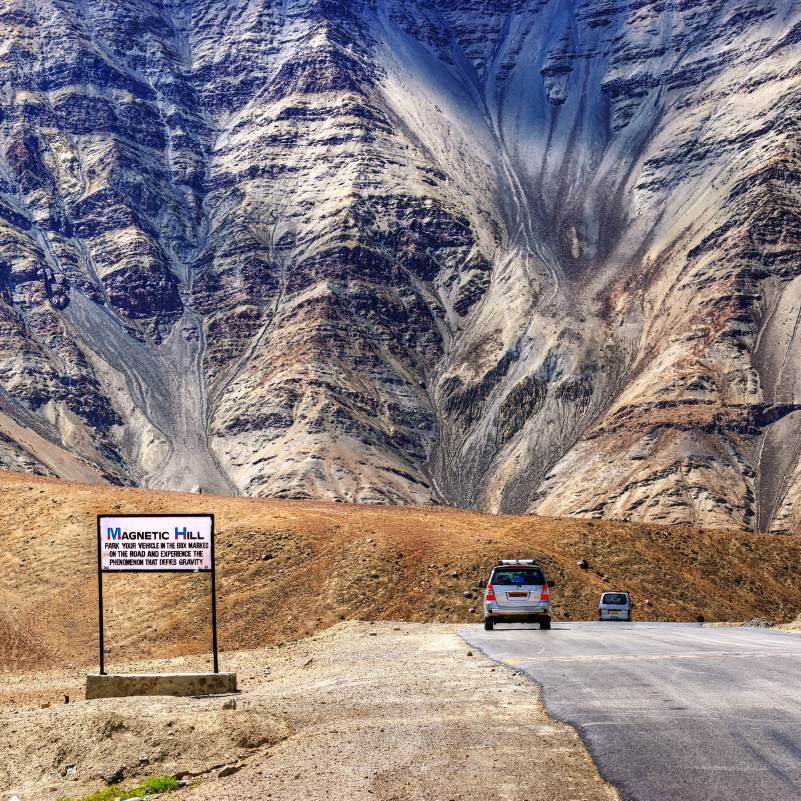
Magnetic Hill
~7 to 8 km towards Leh, 10 to 15 minutes
The famous optical illusion where your car appears to roll uphill on its own. A five minute experience but a fun stop on the same circuit. Most travellers visit it just before reaching Sangam Point.
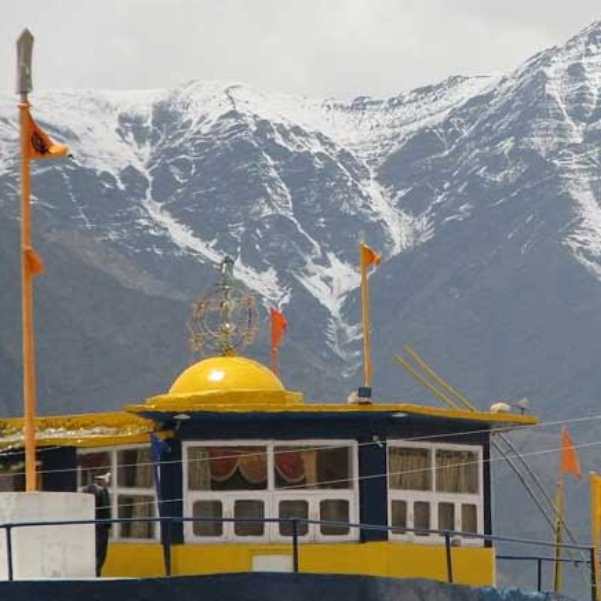
Gurudwara Pathar Sahib
~12 km towards Leh, 20 minutes
A 16th century Sikh shrine maintained by the Indian Army, commemorating Guru Nanak Dev Ji's visit to Ladakh. Langar (community meal) served to all visitors regardless of faith. The cleanest washrooms on the Sham Valley circuit. The natural first stop before Magnetic Hill and Sangam Point.
Alchi Monastery
~30 km further west, 45 minutes
One of the oldest Buddhist monasteries in Ladakh, built between the 10th and 11th centuries, known for its surviving Indo Tibetan murals. Unlike most Ladakhi gompas, it sits inside a village at ground level, not on a hilltop. Worth at least an hour. A strong extension to the Sham Valley circuit if you have a full day.
Nimmo Village
~1 to 2 km further west on the highway
A small Ladakhi village near the confluence, increasingly popular for homestays and rafting operator bases. A few dhabas serve local food, momos, and chai. A quieter overnight alternative to Leh for travellers who want to sleep closer to the Zanskar gorge.
Hall of Fame Museum
~30 km towards Leh, 40 minutes
An Indian Army memorial museum with displays on Siachen, Operation Vijay, and the military history of Ladakh. A 30 to 45 minute visit, usually the first stop on the Sham Valley circuit from Leh.
Likir Monastery
~50 km from Sangam, about 20 km off the main highway
A 15th century Gelugpa monastery known for its large outdoor Maitreya Buddha statue. A detour off the Srinagar to Leh highway if you are continuing past Alchi or want a deeper Sham Valley circuit. Worth an hour.
Spituk Monastery
~27 km towards Leh, on the highway near the airport
A 15th century monastery on a conical hill overlooking the Indus, right beside the Leh airport approach road. Worth a 30 to 45 minute stop on the way out or back. The Gustor festival in January draws local crowds and masked dances.
Our packages with Sangam Point - Indus Zanskar Confluence
Curated trips that include a visit to Sangam Point - Indus Zanskar Confluence.
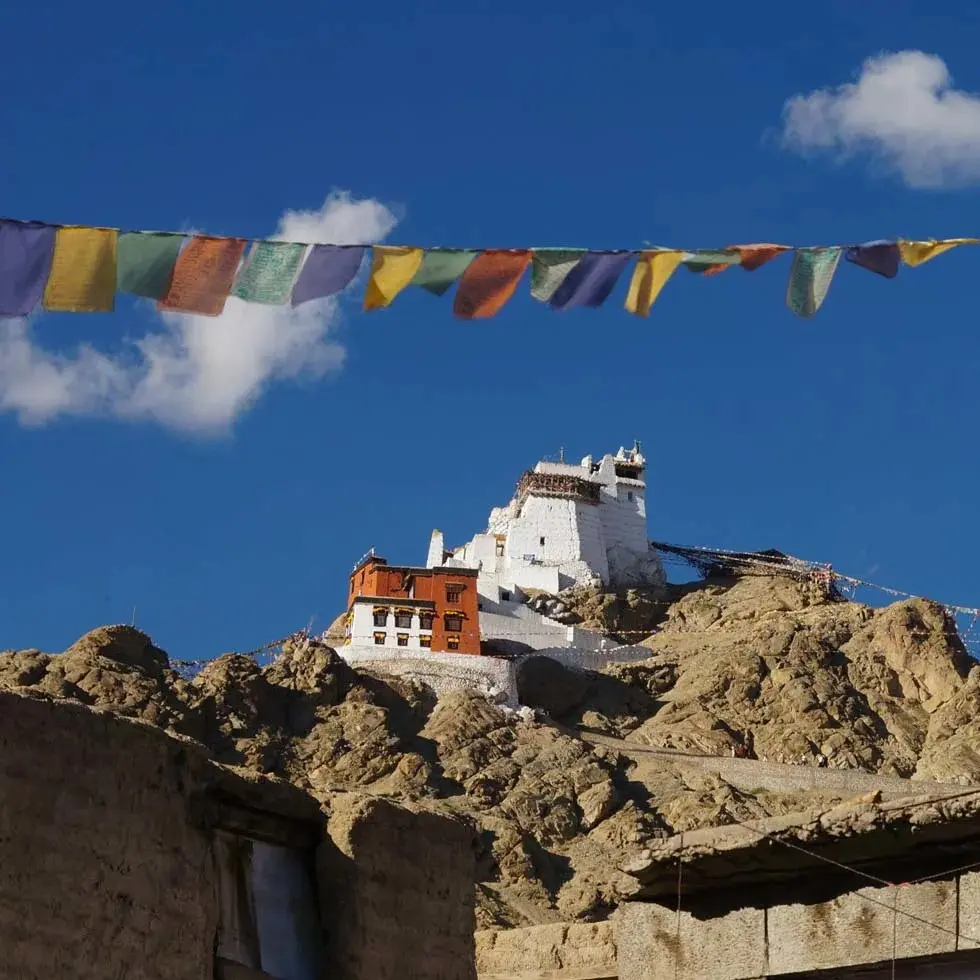 4D/3N
4D/3NLeh Ladakh Quick Escape
2D Leh•1D Pangong Lake
₹20,999₹24,999SAVE INR 4,000/ person Group Tour6D/5N
Leh Ladakh Group Tour With Nubra Valley and Pangong Lake
2D Leh•1D Nubra Valley+1
₹18,999/ person 7D/6N
7D/6NLeh Ladakh Tour With Turtuk Village Nubra Valley and Pangong Lake
2D Leh•2D Nubra Valley+1
₹27,999₹33,999SAVE INR 6,000/ person
Common questions about Sangam Point
Where is Sangam Point in Ladakh?
Near Nimmo village on the Leh to Srinagar highway (NH 1), about 35 km west of Leh. The viewpoint is right off the highway with a pullover area marked by prayer flags. A side road drops down to the river bank below. It is part of the standard Sham Valley sightseeing circuit from Leh.
Which rivers meet at Sangam Point?
The Indus and the Zanskar. The Indus originates near Mount Kailash in Tibet and flows through all of Ladakh. The Zanskar rises from the inner Zanskar valley, formed by the Doda and Lungnak rivers, and flows northeast through a deep gorge before meeting the Indus near Nimmo. The Zanskar is technically the first major tributary of the Indus, roughly equal to the main river in volume.
What is the altitude of Sangam Point?
Approximately 10,200 feet, or roughly 3,100 metres. This is close to Leh altitude, so if you have already acclimatised to Leh over a day or two, you will feel no additional altitude effect here. Do not visit on your first day after flying in from the plains.
What is the best time to visit Sangam Point?
June to September for the strongest colour contrast between the two rivers and for rafting. Late September and October also work for the viewpoint, with cleaner air and fewer crowds but fading colour distinction. Mid morning light, roughly 10 AM to noon, gives the best visual contrast for photographs.
Is there rafting at Sangam Point?
Yes. The confluence is the endpoint for two popular rafting routes. The Chilling to Nimmo route on the Zanskar covers roughly 28 to 30 km of Grade III to III+ rapids (roughly 2.5 to 3.5 hours on the water). While the rapids are exciting, commercial operators routinely take beginners with trained guides and full safety gear. The Phey to Nimmo route on the Indus (Grade II to III, roughly 1.5 to 2 hours) is a gentler option. Season is generally June to September. Book through a Leh operator the day before.
How much does rafting cost at Sangam Point?
Prices for the Chilling to Nimmo Zanskar route generally fall in the range of ₹2,500 to ₹4,500 per person, depending on the operator and group size. The Phey to Nimmo Indus route is usually a bit cheaper. Prices include transport from Leh, all gear, guide, and the raft. Rates can vary year to year, so confirm locally before booking.
How long should I spend at Sangam Point?
Twenty to forty minutes for most visitors. That covers the highway viewpoint, a possible walk down to the river bank, and photographs. If you are rafting, budget the rafting time separately. As part of the Sham Valley half day circuit, the full loop from Leh takes about 4 to 5 hours including driving and all stops.
Can I visit Sangam Point in winter?
Yes, the highway stays open year round. But the colour contrast between the rivers disappears because the Zanskar freezes from December to February while the Indus continues at reduced volume. What you get instead is the Chadar, the frozen Zanskar ice sheet. The Chadar trek, done in January or February, starts or ends right at this confluence. Winter temperatures drop well below freezing. Not a casual visit.
Is Sangam Point safe for families with children?
Yes, as a viewpoint stop from the highway. Children enjoy seeing two rivers of different colours meeting. Do not take young kids down to the river bank, both rivers are glacier fed, very cold, and run faster than they look. For rafting, the Phey to Nimmo Indus route is generally considered suitable for children aged roughly 12 and above, with a responsible operator providing all safety gear.
What is the Chadar trek?
The Chadar is the frozen surface of the Zanskar river in winter. When the river freezes from December to February, it forms a walkable ice sheet that becomes the only connection between the remote Zanskar valley and the outside world at Nimmo. The Chadar trek, typically done over 7 to 9 days in January or February, follows this frozen river through the Zanskar gorge. It is a serious cold weather trek with temperatures dropping to minus 25 or lower at night. Check current regulations and permits before planning.
How far is Sangam Point from Magnetic Hill?
About 7 to 8 km further west on the same highway, roughly 10 to 15 minutes by car. Most Leh taxis and tour circuits cover both stops along with Gurudwara Pathar Sahib in a single half day. The standard order from Leh is Pathar Sahib, Magnetic Hill, then Sangam Point.
Is there food near Sangam Point?
A few small dhabas and shops in Nimmo village, about 1 to 2 km west of the confluence on the highway. Expect chai, momos, Maggi, and some Ladakhi dishes. Gurudwara Pathar Sahib, about 12 km back towards Leh, serves free langar to all visitors. Carry water and a snack from Leh as backup.
Related guides
Posts about Ladakh
- Manali to Leh Highway 2026: Every Pass, Stop and Distance
- Umling La Ladakh Guide 2026: Route, Altitude, Permit, Safety & Reality Check
- Turtuk Ladakh Travel Guide 2026: Balti Culture, Apricot Orchards and Why It Is Perfect for Families
- Offbeat Ladakh for Couples in 2026: Quiet Routes Beyond Pangong and Nubra
- Aryan Valley Ladakh Guide 2026: Dah, Hanu, Brokpa Culture, Route and Who Should Visit
- Hanle vs Tso Moriri vs Turtuk: Which Offbeat Ladakh Place Should You Choose in 2026?