 Group Tour
9D/8N
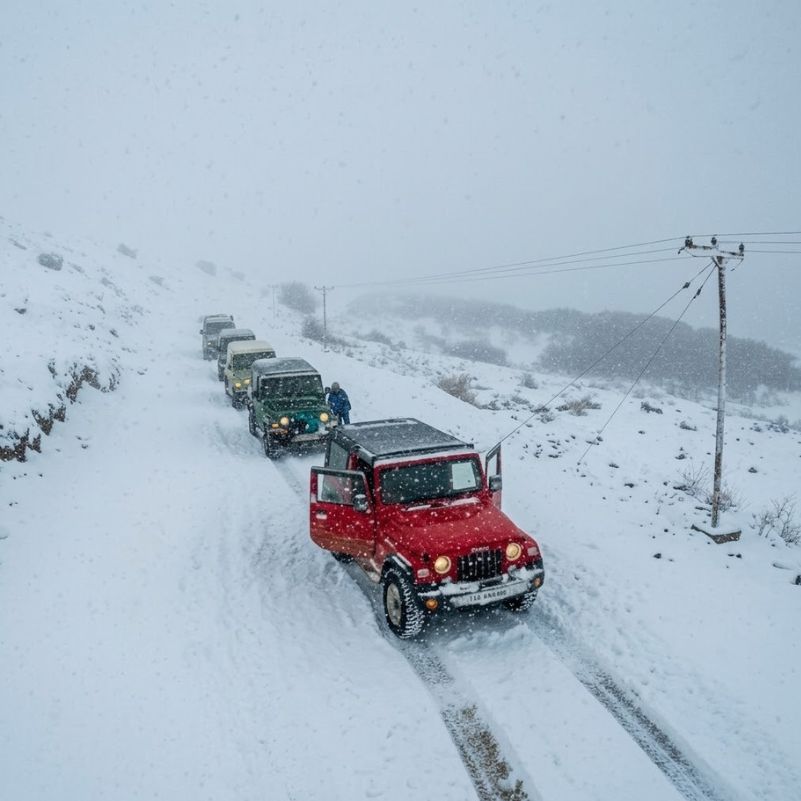
Most Loved 4×4 Winter Spiti Expedition
2D Sangla•1D Tabo+2
₹29,999₹35,999SAVE INR 6,000/ person
Best Winter Spiti Tour Packages Curated By Experts
Group Tour2D Sangla•1D Tabo+2
 Group Tour
2D Sangla•1D Tabo+2
 Group Tour
1D Sangla•1D Nako+2
Travel Coffee runs group tours and 4x4 expeditions to Spiti Valley from December to March, planned and operated by our own team in Himachal.
Every winter trip uses the Shimla and Kinnaur route, the only side of Spiti that stays open through the season. You can choose a group tour in a shared Tempo Traveller or SUV, or a dedicated 4x4 expedition, from 8 to 10 days.
These packages suit travellers who can handle serious cold and long mountain drives, and who want a local team watching the roads and weather for them. Not sure which trip fits? Tell us your dates, group size and comfort preference on WhatsApp and we will help you compare the options.
Winter Spiti packages from Travel Coffee run between 8 and 10 days, always via the Shimla and Kinnaur route, since the Manali side stays closed under snow through the season. All Spiti Valley winter tour packages on this page are operated by our own Himachal team, as group tours or 4x4 expeditions.
A typical trip starts from Delhi, climbs gradually through Shimla or Narkanda, Sangla or Kalpa, then Nako and Tabo, and reaches Kaza. Stays are winter-suitable homestays and hotels, with breakfast and dinner included.
You can travel in a shared Tempo Traveller or SUV with snow chains, or choose a dedicated 4x4 expedition for deeper winter conditions. Both formats include local drivers and on-trip support. Snowfall can change the day's route, and we plan for that rather than pretend otherwise.
Season: December to March, with limited early trips possible in November.
Typical duration: 8 to 10 days.
Main winter route: Delhi, Shimla, Kinnaur (Sangla or Kalpa), Nako, Tabo, Kaza and back.
Starting points: Delhi as standard. Joining at Shimla or Chandigarh can usually be arranged on request.
Major places covered: Sangla, Chitkul, Kalpa, Nako, Tabo, Dhankar, Kaza, Key, Kibber, Chicham, Langza, Hikkim and Komic. High villages are weather dependent.
Vehicle choices: Shared Tempo Traveller or SUV with snow chains, or a dedicated 4x4 (Jimny or Scorpio N class) with snow chains.
Stay type: Verified homestays, guesthouses and hotels with winter heating arrangements.
Meal plan: Breakfast and dinner (MAP). Lunch on your own during drives.
Trip difficulty: Moderate to demanding. Cold and altitude, not trekking.
Chandratal status: Not accessible in winter. The lake road opens only around June.
Best suited for: Travellers who want real winter, can manage basic facilities, and accept weather-led changes.
These are our current Winter Spiti packages, ordered by how most travellers choose. Prices are per person starting prices on sharing basis, inclusive of GST, and every trip includes stays, breakfast and dinner, local drivers and on-trip support. Open any itinerary for the full day-by-day plan.
We run two formats on the same winter route. Group tours travel in a shared Tempo Traveller or SUV with snow chains, and are the more affordable way to do the circuit. 4x4 expeditions travel in a dedicated Jimny or Scorpio N class 4x4 with snow chains, which earns its higher price on fresh snow and the icy high-village climbs. Both climb gradually through Kinnaur and both carry emergency oxygen.
Route: Delhi, Shimla, Sangla with Chitkul, Nako, Tabo, Kaza (2 nights), Kalpa, back via Shimla. Vehicle: Tempo Traveller or SUV with snow chains. From: ₹16,999 per person.
Our shortest and most affordable winter plan, built for tight leave and first budgets. You still travel the full Kinnaur approach and reach Kaza for the high-village day, with an overnight in Nako on the way up. View the 8-day itinerary.
Route: Delhi, Shimla, Sangla (2 nights with a full Chitkul and Baspa valley day), Nako, Tabo, Dhankar, Kaza (2 nights), Kalpa, back via Shimla. Vehicle: Tempo Traveller or SUV with snow chains. From: ₹18,999 per person.
Our most-booked winter group tour. Two nights in Sangla give Chitkul the time it deserves, and the gradual climb through Nako and Tabo suits most first-time winter travellers. View the 9-day itinerary.
Route: Delhi, a rest night in Shimla, Sangla (2 nights with a Chitkul day), Nako, Tabo, Dhankar, Kaza (2 nights), Kalpa, back via Shimla. Vehicle: Tempo Traveller or SUV with snow chains. From: ₹21,999 per person.
The gentlest group start. A full recovery night in Shimla before the mountain drive means you are not on a long road day straight off the overnight Volvo. View the 10-day itinerary.
Route: Delhi, Shimla, Sangla with Chitkul, Nako, Tabo, Dhankar, Kaza (2 nights), Kalpa, back via Shimla. Vehicle: Shared 4x4, Jimny or Scorpio N, with snow chains. From: ₹25,999 per person.
The same eight-day route as the Classic group tour, run in a dedicated 4x4 for stronger traction on snow and ice, with emergency oxygen carried. View the 8-day expedition.
Route: Delhi, Shimla, Sangla with Chitkul and a Roghi viewpoint stop at Kalpa, Kalpa, Tabo, Dhankar, Kaza (2 nights), Kalpa, back via Shimla. Vehicle: Shared 4x4, Jimny or Scorpio N, with snow chains. From: ₹28,999 per person.
Our winter flagship, with emergency oxygen as expedition protocol and small batches. The extra traction matters most on fresh snow and the icy climbs around Kaza, which is why we point January and February travellers here first. View the expedition itinerary.
Route: Delhi, a rest night in Shimla, Sangla with Chitkul and a Roghi viewpoint stop at Kalpa, Kalpa, Tabo, Dhankar, Kaza (2 nights), Kalpa, back via Shimla. Vehicle: Shared 4x4, Jimny or Scorpio N, with snow chains. From: ₹30,999 per person.
The most relaxed 4x4 plan, with a Shimla rest night before the mountains and the gentlest altitude curve of our expeditions. View the 10-day expedition.
Six Winter Spiti tour packages, one honest comparison. The compromise line in each option is usually what decides it.
Full Kinnaur approach and two nights in Kaza at the lowest entry price, in a shared Tempo or SUV. Compromise: an overnight in Nako means a quicker altitude gain and little buffer, so a single snow day can squeeze sightseeing. Choose it if cost and leave length lead.
Two nights in Sangla for Chitkul, a gradual climb, and our most-booked balance of time and price. Compromise: two overnight Volvo journeys bookend the trip. Choose it if you want the complete group experience without expedition pricing.
Adds a Shimla rest night so you do not start a long drive straight off the overnight bus. Compromise: one more day of leave. Choose it if a gentle start matters most.
The eight-day route with the traction and oxygen of a dedicated 4x4. Compromise: costs more than the group tour for the same route, with the same quick Nako altitude gain. Choose it for a short trip in the deep-snow months.
Strongest odds of completing the high-village day in deep winter, with a gentler Kinnaur climb split across Sangla and Kalpa. Compromise: costs more than the SUV circuit for a similar route. Choose it for January and February travel.
A Shimla rest night plus the dedicated 4x4, the gentlest and most comfortable of the expeditions. Compromise: the longest leave and the highest budget. Choose it if comfort and traction both lead.
Still unsure? Tell us your dates, budget, group size and comfort expectations, and we will recommend one trip, not a sales pitch for all six.
Fixed departures run through the 2026 to 2027 winter season across the packages above. Seats per batch are genuinely limited because very few rooms in Spiti operate in winter, and the Christmas and New Year window books earliest.
For the current departure calendar, open any package page above or message us your month on WhatsApp. If a date you want is not listed, ask: we may be able to open a batch or build a private departure.
GST: Listed package prices include all applicable taxes, including 5 percent GST. What you see is what you pay for the package itself.
Occupancy: Prices are on sharing basis. Single occupancy carries a supplement, confirmed with your quote.
Peak dates: Departures overlapping Christmas and New Year may carry a peak surcharge, stated clearly before you book.
Weather changes: Heavy snowfall can delay, reroute or extend a trip. Extra nights or transport caused by closures are payable on actuals and are not padded into the package price.
Snowfall is not guaranteed. We sell the winter route and the experience, not a snow forecast. Some weeks are white, some are dry and brown. Both are Spiti.
Summer Spiti is a road trip. Winter Spiti is closer to visiting a place while it is genuinely living its own life.
The villages go quiet. Most tourists leave by October, so in Kaza you share the lanes with residents, monks and the occasional snow-chasing traveller rather than convoys.
The cold desert turns white. Snow settles on the brown ridgelines and the frozen Spiti river, and familiar viewpoints look like a different valley. Monasteries stay open and calm: Tabo, Key and Dhankar receive a handful of visitors a day.
Winter life is the experience. Bukhari-warmed kitchens, families stocking supplies, long evenings of conversation. And the cold, dry air makes for sharp daylight and dense star fields at night, which is why photographers keep returning in February.
It is also honest work. Winter Spiti asks for tolerance of hard cold, patience with changed plans and comfort with basic facilities. That difficulty is part of why the trip stays with people, and we would rather you know it now than discover it in Kaza.
If any health concern applies to you or someone in your group, please speak to a qualified doctor before booking, and tell us during booking so we can plan around it. We are travel operators, not medical professionals.
Each winter month has its own character. Temperatures below are typical ranges from weather records and our seasons on this route, not promises, and nights routinely feel colder because of wind and altitude.
The valley empties out and early snow dusts the higher ridges, though the valley floor often stays brown. Days sit roughly between 2 and 10 degrees in the sun, and Kaza nights drop to around minus 5 to minus 12.
Disruption risk is the lowest of the season. Suits travellers who want winter quiet without deep-winter logistics; the trade-off is that you may see little or no snow. A regular SUV circuit works well. Full detail in our Spiti in November guide.
Winter settles in properly. Snowfall becomes likely through the month, days sit around minus 2 to 6 degrees, and Kaza nights commonly reach minus 10 to minus 20. Pipelines start freezing and useful light ends by about 5.30 pm.
The Christmas and New Year window is the most social stretch of the season and books earliest. Suits groups and first-timers who want festive winter energy; both the SUV circuit and the 4x4 expedition run well. See our Spiti in December guide for snowfall and what stays open.
The deepest month, and the hardest on the body. Sunny days hover around minus 5 to 5 degrees, and Kaza nights commonly reach minus 15 to minus 25, with cold spells pushing lower.
Snowfall is most likely now, which also means the highest chance of temporary closures and skipped high villages. Suits experienced cold travellers and photographers chasing frozen landscapes. We recommend the 4x4 expedition in January.
Similar depth to January, with snow already banked along the roads and days slowly lengthening. Days around minus 4 to 6 degrees, nights commonly minus 12 to minus 22.
Late February can be the sweet spot: full white landscapes with marginally friendlier logistics, overlapping the best-known window for snow leopard sighting attempts around Kibber, though sightings are never assured. 4x4 recommended; SUV circuits run with flexibility. Our guide on travelling Spiti in February covers the safety side.
The thaw month. Early March usually still looks like full winter, then snow recedes through the weeks. Days climb to roughly 0 to 10 degrees, nights around minus 5 to minus 15, and melting snow can leave slush and black ice in shaded corners.
Disruption risk falls steadily and daylight stretches. Suits first-time winter travellers and families who want white views with easier travel; regular SUV circuits are comfortable now.
In short: first winter trip, late February or March on the Best Selling group tour. Deepest conditions, January on the 4x4 expedition. Easier travel, November or late March. Photographers, late January to late February for snow, any month for skies.
Every winter trip to Spiti uses one road: the old Hindustan Tibet route, NH 5, from the Shimla side through Kinnaur. The sequence is Delhi or Chandigarh, Shimla or Narkanda, Rampur, a halt at Sangla or Kalpa, then Nako, Tabo and finally Kaza.
This side is used in winter for three reasons. It stays open through the season, maintained even after snowfall, with only temporary closures for clearance. Altitude rises gradually over two to three days, from about 2,200 metres at Shimla to 3,650 at Kaza, which is how acclimatisation should work. And there are proper overnight stops with functioning winter stays along the whole route. Our guide to what stays open in Spiti in winter breaks the routes and villages down month by month.
It is still a serious winter road. Expect drive days of 5 to 9 hours, single-lane stretches, black ice after sunset, possible fresh snowfall, occasional shooting stones near Khab, and short holds while machines clear the road. Local administration can restrict movement after heavy snow, and our drivers follow those calls without argument. We confirm road status with our drivers and local contacts before and during every departure.
No. The Manali to Kaza road over Kunzum Pass closes with the first heavy snow, usually by late October or early November, and reopens only around late May or June after clearance by the Border Roads Organisation. The Atal Tunnel keeps Manali connected to Lahaul, but the stretch beyond Gramphu stays buried.
No genuine winter package, from any operator, enters Spiti from Manali. If a plan claims to, question it. For live conditions on that side, see our Manali to Kaza road status guide.
No. Chandratal sits off the Kunzum side of the valley, and its approach road closes with the pass. The lake is normally inaccessible from around October to June, the campsites shut, and the area snowbound and remote. Winter itineraries do not include Chandratal, ours included. If the lake is essential for you, plan a summer trip from our main Spiti Valley tour packages instead.
Each plan below is summarised in brief. Open any package page for the full day-by-day breakdown, or see our detailed winter Spiti itinerary guide.
Delhi to Shimla overnight, then Shimla to Sangla, up the Baspa valley for Rakcham and Chitkul on the way to an overnight in Nako, then Tabo and Dhankar into Kaza for two nights with one full high-village day, returning via Kalpa and an overnight Volvo from Shimla. Available as a group tour or a 4x4 expedition. Main compromise: the Nako overnight is a quicker altitude gain with little buffer.
Delhi to Shimla overnight, then a gradual climb through Kinnaur with a proper Chitkul and Baspa valley day, Tabo and Dhankar, and two nights in Kaza for the high-village circuit, returning via Kalpa. The group tour spends two nights in Sangla, while the 4x4 expedition splits the Kinnaur nights across Sangla and Kalpa. Main compromise: two overnight bus journeys.
The most relaxed plans, adding a rest night in Shimla before the mountain drive so you are not on a long road day straight off the overnight Volvo, then the full Kinnaur and Spiti circuit with two nights in Kaza. Available as a group tour or a 4x4 expedition. Main compromise: the longest leave requirement.
Read this section slowly. It is the most useful thing on this page.
The cold is the headline. Daytime sun feels pleasant, then the temperature falls off a cliff at dusk. Nights in Kaza routinely sit between minus 15 and minus 25 in peak winter, and wind chill makes exposed skin ache within minutes.
Water pipelines freeze. Most stays supply water in buckets, heated on request. Bathing becomes an every-second-or-third-day event, and most travellers stop minding by day three.
Heating is local, not central. Rooms warm up with bukharis or electric heaters where power allows, and some properties charge separately for heater usage, which we flag before your trip. The room is warm while the source burns, cold by morning, and heavy quilts do the overnight work.
Electricity comes and goes. Snowfall regularly interrupts supply for hours, occasionally longer. Charge devices whenever power is on and carry a power bank.
Network is thin. BSNL and Jio work best in Kaza and generally not in smaller villages, while Airtel is weaker on this route. Treat the trip as offline and let people at home know.
Food is home-cooked and warm: dal, rice, sabzi, rotis, thukpa, momos when you are lucky. Many Kaza cafes shut for winter, so lunch on drive days is simple dhaba fare or packed food.
Cash matters. ATMs beyond Reckong Peo are unreliable and UPI dies with the network. Carry more cash than feels necessary, in small notes.
Days are short, with useful light from roughly 8 am to 5.30 pm in midwinter, so sightseeing compresses and evenings are long. And plans move: after fresh snowfall, mornings can start with waiting for the road to clear or the all-clear from the administration. Sometimes a village drops off the day. Sometimes an unplanned stop becomes the best memory of the trip.
None of this is hardship for drama. It is simply how a high-altitude cold desert works in January, and travelling through it with warm clothes, a flexible mind and a good local team is the whole point.
No honest operator calls winter Spiti risk-free. What we can do is stack preparation in your favour.
Gradual routing. Every itinerary climbs over two to three days via Kinnaur before Kaza, the single most important acclimatisation measure on the trip. First days stay light: hydration, no alcohol on arrival days, early nights, and a clear briefing on recognising when a headache is more than a headache.
Drivers and vehicles chosen for winter. Local drivers experienced on this exact route in snow, vehicles fitted with snow chains in season and checked before departure.
Weather and road checks. Forecasts, clearance updates and daily route decisions are part of the operating routine, not an emergency response, and every itinerary has fallback halts so a closure never means the roadside.
First aid and oxygen. Vehicles carry a basic first aid kit, and emergency oxygen is available on our winter departures as part of expedition protocol. Oxygen is a stabilising measure while we act, not a treatment, and never a substitute for descent or professional medical care.
When symptoms appear. Persistent headache, breathlessness at rest, vomiting or confusion at altitude are treated seriously: rest, assessment, and if symptoms continue, descent to lower altitude and the nearest medical facility. Kaza has a civil hospital, and definitive care means driving down, one more reason our route always keeps a way down open.
Extra-night situations. If heavy snowfall holds the group, we arrange the added night and keep everyone informed, with costs on actuals kept as low as we honestly can.
Two requests from our side. Disclose any medical condition, medication or past altitude trouble when booking, confidentially. And if you have heart, lung or blood pressure concerns, are pregnant, or are travelling with young children or elders, please take a doctor's opinion before you book.
Short answer: not always. This choice decides a fair chunk of your budget, so here is the honest version.
Two-wheel drive with snow chains fitted when needed. Handles the winter route fine in normal conditions, since the road is maintained, and keeps circuit prices accessible. Strongest fit for November, December and March. Limitation: after fresh snowfall or on hard ice, chains help but progress slows, and the driver may wait longer for clearance.
Four-wheel drive plus chains, in small convoys of 3 to 4 travellers per vehicle. Meaningfully better on fresh snow, icy climbs and slush, and the strongest setup for the high-village loop and post-snowfall mornings in January and February. Costs more per seat, and part of the joy is the driving itself.
The most important sentence in this section: a 4x4 can improve traction and vehicle control, but it cannot make a closed or unsafe road accessible. When the administration halts traffic, everyone waits, Jimny included. Anyone selling a 4x4 as a guarantee of access is selling wrong.
If the expedition format is your answer, our Most Loved 4x4 Winter Spiti Expedition is built exactly for this, and the Ultimate 4x4 Winter Spiti Expedition extends it with a Shimla rest night and the gentlest pace.
Very few properties in Spiti stay open in winter, and the ones that do are chosen for warmth and reliability rather than star ratings. Here is the honest picture, stop by stop.
Regular hotels, the most conventional night of the trip. Rooms are properly heated or carry heaters, hot water is generally available, and electricity is dependable. This is your last night of normal.
Small hotels and guesthouses that operate through winter. Heaters or bukharis warm the rooms in the evening, hot water usually comes on request, sometimes in buckets after hard freezes, and power can flicker during snowfall. These two stops often serve the best food of the route.
Basic guesthouses and homestays in genuinely cold villages. Bukhari or heater based warmth, bucket hot water, more frequent power interruptions, simple home-cooked meals. The most rustic night of the trip, and often the most memorable kitchen conversations.
Winter-operational homestays and guesthouses, since most hotels shut for the season. Rooms carry heaters or bukharis, some properties charge separately for heater usage, hot water is bucket-based once pipelines freeze, and power interruptions after snowfall are normal. Breakfast and dinner at the stay, with a handful of cafes open in the market by day.
We do not promise continuous hot water, central heating or uninterrupted electricity anywhere on this route in winter, because nobody can honestly promise that. What we do promise is properties we have verified, warm bedding with extra blankets, and hosts who know how to keep guests comfortable at minus 20.
Breakfast and dinner are included through the trip, cooked at the stays: parathas, eggs, poha or porridge in the morning, and dal, rice, seasonal sabzi, rotis, thukpa and momos at night. Vegetarian food is available everywhere and is often the winter default, while non-vegetarian options are limited and irregular.
Lunch is on your own during drive days, at roadside dhabas or open cafes, so we plan sensible stops and suggest carrying snacks. Special dietary requests can be passed to hosts in advance, and we will tell you honestly what a village kitchen can and cannot do.
It is honest mountain food made in home kitchens: warm, fresh and plentiful. It is not restaurant dining, and nobody misses that by night two.
Current group tours start at ₹16,999 per person for the 8-day trip, ₹18,999 for the 9-day, and ₹21,999 for the 10-day with a Shimla rest night. The dedicated 4x4 expeditions run ₹25,999 for the 8-day, ₹28,999 for the 9-day, and ₹30,999 for the 10-day. All prices are per person on sharing, GST included.
What moves the number: duration, group tour versus 4x4 expedition, number of travellers and room occupancy, stay category, peak festive dates, and any customisation such as buffer days.
Accommodation as per itinerary in winter-verified stays. Breakfast and dinner daily. Volvo transfers from Delhi where listed. SUV or 4x4 travel in the mountains with an experienced winter driver and snow chains. Fuel, tolls, parking and driver allowances. Permit and green fee assistance. Basic first aid, with emergency oxygen as per trip protocol. On-trip coordination and support. Taxes including GST.
Flights or trains to and from Delhi. Lunches, snacks, beverages and personal expenses. Monastery entry fees, camera fees and donations. Heater usage where a property charges for it. Travel insurance, which we recommend for winter trips. Anything not listed in the package inclusions.
Extra nights, meals or alternate transport forced by road closures, snowfall or administration restrictions are payable on actuals. They are not built into the package price because they may never occur, and pre-charging everyone for them would be unfair. Full terms sit in our cancellation policy and payment policy.
Solo travellers: a natural fit. Winter groups are largely built of solo travellers and pairs, and they bond fast over shared bukharis. Book on sharing basis to keep costs sane.
Solo women travellers: many of our winter guests are women travelling alone, and the fixed departure format exists precisely so nobody is actually travelling alone: verified stays, known drivers, a coordinator on call and a group around you.
Couples: quietly romantic in a frostbitten sort of way. Group circuits work well, and a 4x4 expedition adds comfort and traction. Agree on the cold tolerance question before booking, not in Kaza. Our honest take on whether winter Spiti works for couples covers the safety side in detail.
Groups of friends: the classic format. Four to six fills an SUV; larger groups can take a bigger batch. Build one buffer day if anyone has a rigid return date.
Families: possible with the right pacing. We suggest the 10-day plan with its Shimla rest-night start, the gradual Kinnaur climb, and rooms confirmed with heating.
Children: we do not recommend deep-winter Spiti for young children. Extreme cold, altitude and distant medical care are a hard combination for small bodies. Older kids who travel well can consider a March trip, after a paediatrician's opinion.
Senior travellers: case by case, honestly. Fit, altitude-experienced seniors have done this route well, usually in the gentler months with buffer days. Start with a doctor's assessment, and share complete health details with us.
First-time Himalayan travellers: yes, with the right expectations. The Kinnaur-side climb is gradual, which helps. Choose the 9 or 10 day plan over the shorter 8-day version, and prepare for cold rather than hoping about it.
Photographers: winter is your season. Clear skies, low sun angles, empty frames and, in late winter, snow leopard territory around Kibber. Batteries die fast in the cold, so carry spares against your body.
Self-drivers: we would rather lose the booking than pretend. Winter self-driving here demands ice experience, a capable vehicle, chains you can fit yourself and comfort with being stuck. If that is not clearly you, take a driver who does this every week.
Pack for minus 20 nights, not for the pleasant afternoon photos. Layering beats one heroic jacket.
Clothing layers: two or three thermal base sets, fleece or woollen mid layers, one insulated down or synthetic jacket, and a windproof, water-resistant outer shell. Warm track pants for evenings.
Footwear: water-resistant, high-ankle winter shoes with grippy soles for ice, four to five pairs of warm socks plus a thick pair for sleeping, and slippers for indoors.
Cold protection: insulated gloves (a thin liner pair plus a warm outer pair), a woollen cap covering the ears, a neck gaiter, and a balaclava for wind.
Skin and eyes: UV-protective sunglasses for snow glare, high SPF sunscreen, thick moisturiser and lip balm. Cold, dry air punishes skin faster than sun does.
Health: your regular prescribed medicines in sufficient quantity, plus basics like paracetamol and ORS. Consult your doctor about altitude preparation before the trip; we do not recommend specific prescription medicines, and neither should a travel website.
Electronics: a 10,000 mAh or larger power bank, cables, a torch or headlamp, and spare camera batteries kept warm in an inner pocket.
Documents and cash: valid government photo ID for checkpost registration (foreign nationals: passport, visa and Inner Line Permit documents), and more cash than you think, in small denominations.
Day essentials: a small day bag, an insulated water bottle so it does not freeze, dry snacks and energy bars for delays, and a written card with emergency contacts, blood group and your trip coordinator's number kept in your jacket, not just your phone.
We would rather show evidence than adjectives.
We are from here. Travel Coffee is operated from Himachal Pradesh, with our operations team in the state and ground presence on the routes we sell. Winter route calls are made by people who drive these roads, not a call centre reading a screen.
Support is a person, not a ticket. One coordinator handles your trip from enquiry to return, and guests regularly name our team members in reviews, which we take as the real KPI.
We watch the weather so you do not have to. Forecast tracking, road status checks and daily route decisions are part of the operating routine on every winter departure.
Stays are verified by us. Winter properties are chosen after our own checks for heating, bedding, food and reliability.
Pricing is transparent. Package prices include GST, the exclusions list above is the honest one, and weather extras are on actuals, never padded.
Travellers say it better. Our winter Spiti trips hold a 4.7 rating across traveller reviews aggregated from Google, TripAdvisor and direct feedback. Read them unfiltered on our reviews page.
We travel responsibly. Local stays, local drivers, local kitchens. The money from these trips winters in the valley, which is the least a travel company owes the place it sells.
Winter is when Spiti is most itself, and most fragile. A few requests from us and, more importantly, from the people hosting you.
You are staying in homes, not hotels. Treat kitchens, prayer rooms and family spaces with the respect you would want in your own house, and follow the host's lead on customs. In monasteries, remove shoes where indicated, ask before photographing, walk clockwise and keep voices down.
Water is melted, carried and heated by hand in winter. Use it like the effort it represents. Bring back what you bring in: wrappers, bottles and packaging return with you, because Spiti has nowhere to put our plastic.
Never pressure a driver. If your driver says a stretch waits until tomorrow, that judgement is protecting you, and the same respect goes for road closures. Give wildlife room, and if you are lucky enough to see blue sheep, foxes or a snow leopard, distance and silence are the only correct responses.
Flying a drone? Check current rules first. This is a border district and restrictions apply in many areas, so ask us or local authorities before launching anything.
Choose local, always: homestay dinners, village-run cafes, local guides. Winter income is scarce here, and your trip can be part of the solution. And keep evenings low, because sound carries across a frozen valley and villages sleep early.
None of this is difficult. It is mostly the manners of a good guest, applied at 3,600 metres.
By now you know what winter Spiti gives and what it asks. If that trade sounds right, pick a fixed departure for the simplest path: set dates, a group around you and everything arranged.
Still weighing regular SUV against 4x4, or December against February? That is a five-minute conversation with our team, and we would genuinely rather talk you into the right trip than the expensive one.
We are a local company from Himachal. Winter Spiti is not a product line for us, it is our home ground in its hardest, most honest season. We Brew Core Memories, Not Coffee.
Share your travel month, starting city, number of travellers and preferred trip style on WhatsApp, and the team will help you shortlist the most suitable option.
6 packages found
Group Tour2D Sangla•1D Tabo+2
 Group Tour
1D Sangla•1D Nako+2
Group Tour1D Sangla•1D Nako+2
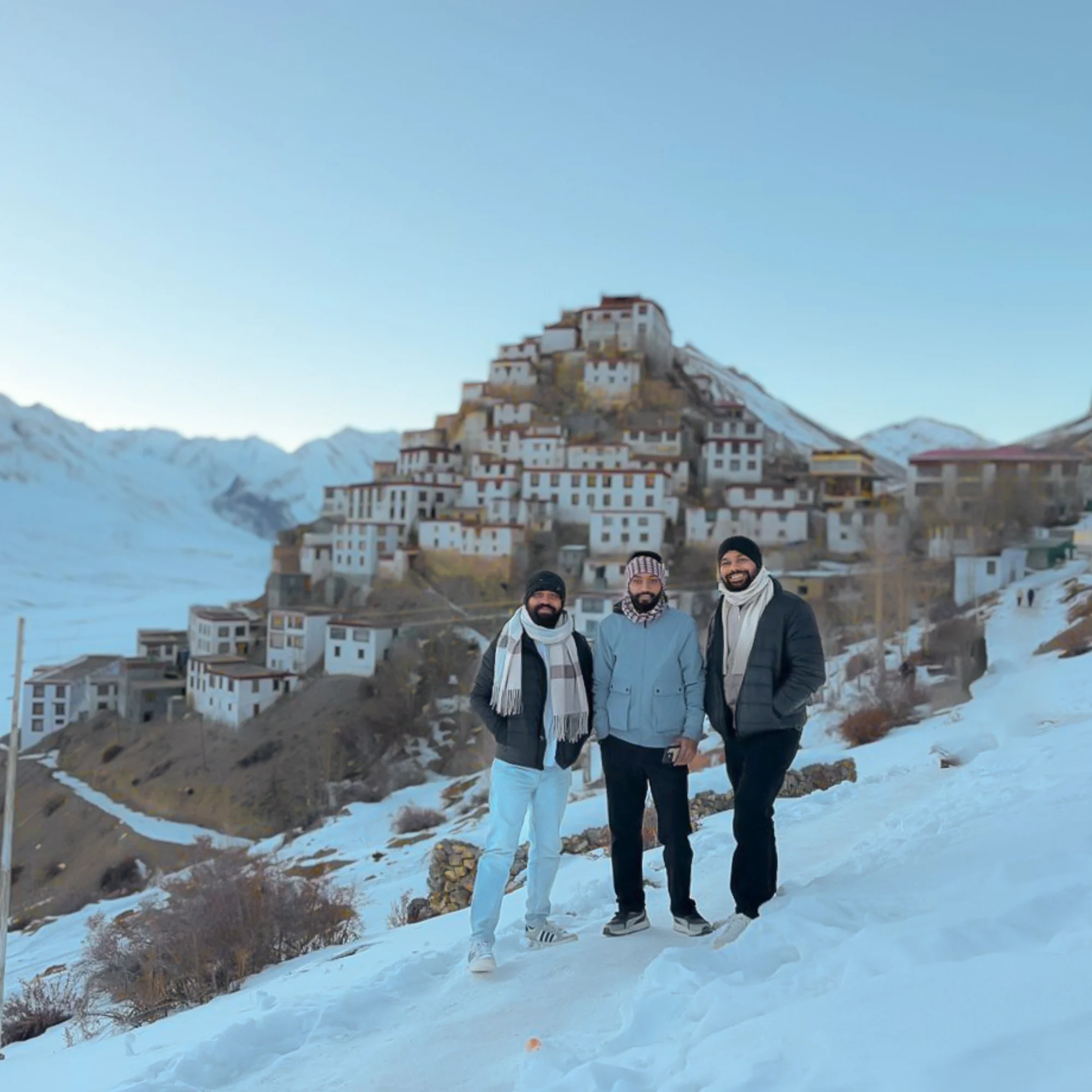 Group Tour
1D Shimla•2D Sangla+3
Group Tour2D Sangla•1D Tabo+2
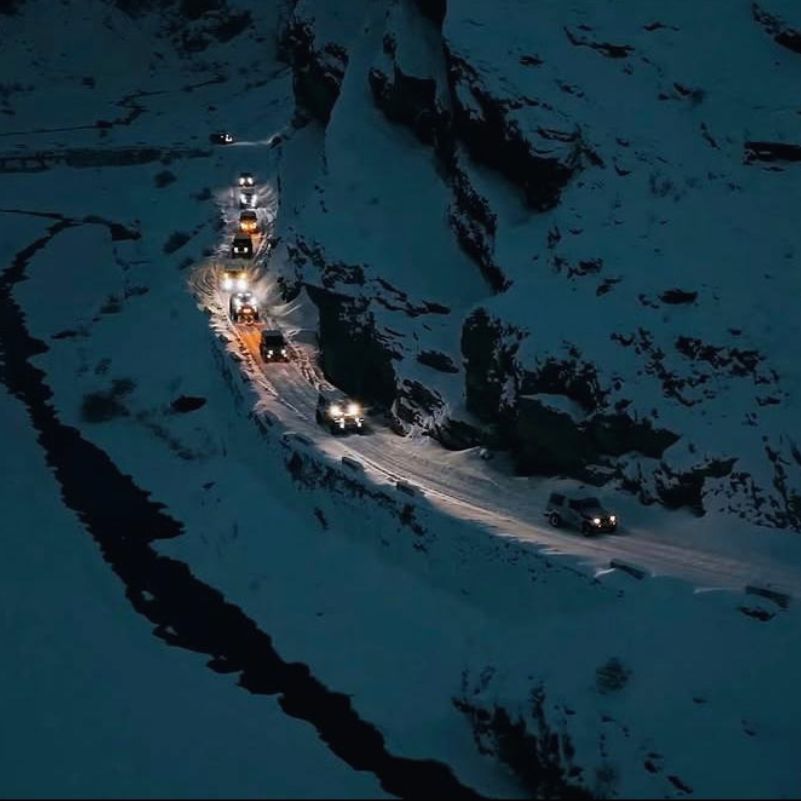 Group Tour
1D Shimla•2D Sangla+3
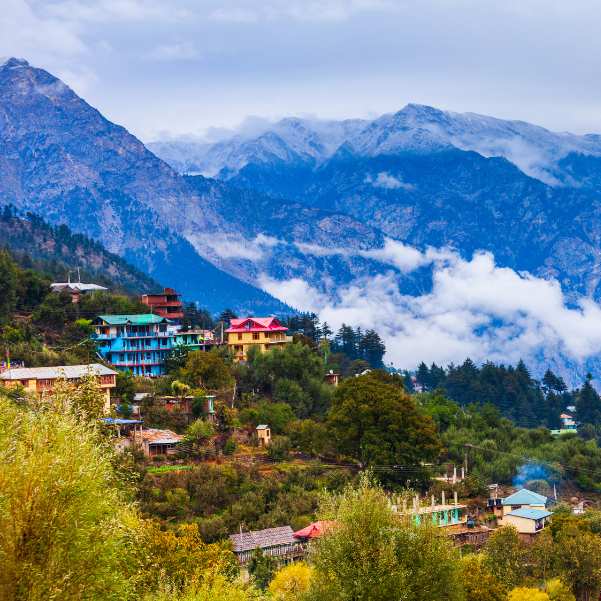
Generally included and normally accessible all winter. Expect apple orchards under snow and the Kinnaur Kailash range in clear light. Main limitation: icy village lanes and occasional short closures on the approach after snowfall. Planned stop on most itineraries.
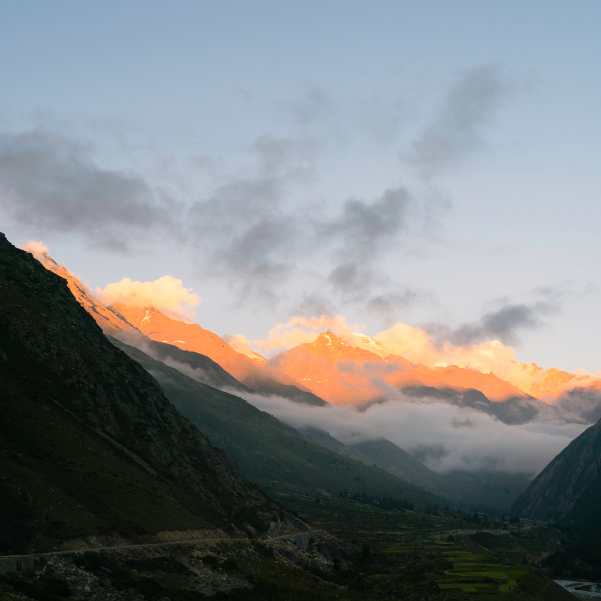
Generally included on the 9 and 10 day trips and normally accessible. A deep river valley that holds snow beautifully. Main limitation: the Karcham to Sangla road can hold ice in shaded sections. Planned stop where listed.
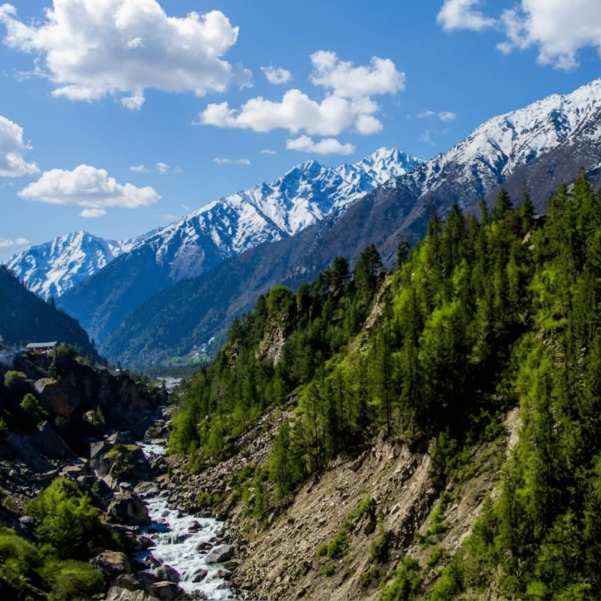
Planned when road conditions permit. The last village on the old India Tibet road often becomes the snowiest point of the whole trip. Main limitation: the final stretch from Sangla closes temporarily after heavy snowfall. Weather-dependent.
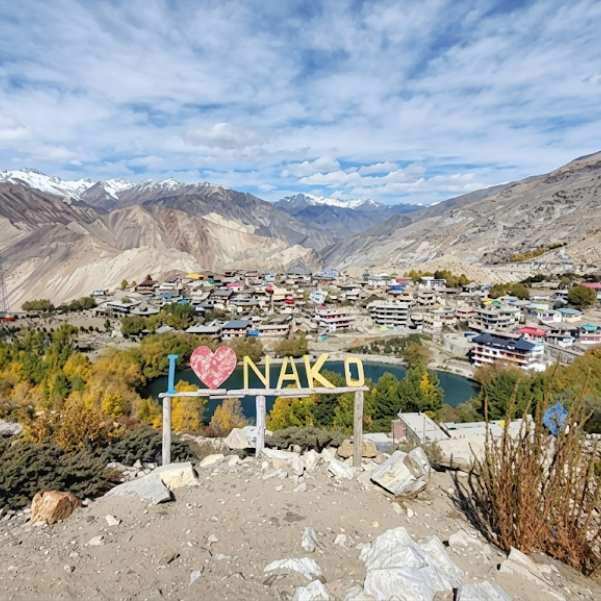
Generally included and normally accessible, either as a halt or a stop. The village lake freezes solid in peak winter. Main limitation: hard cold and very basic facilities. Planned stop.
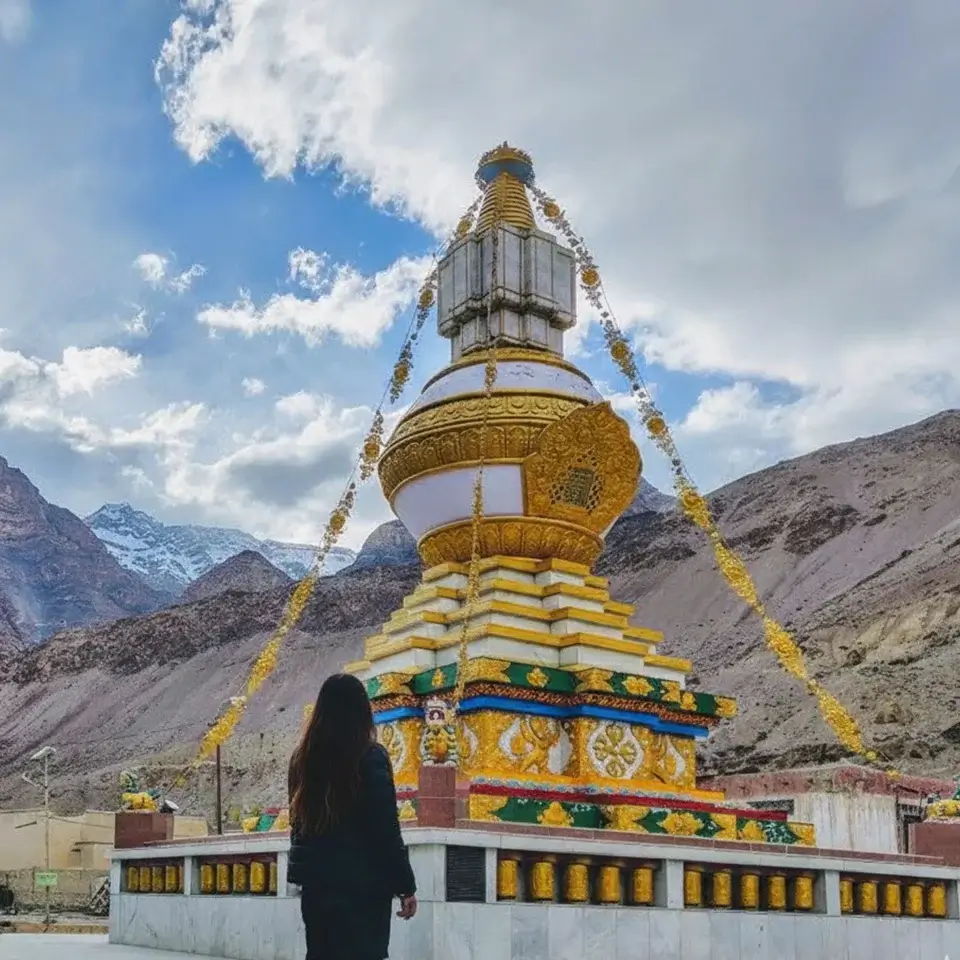
Generally included and normally accessible. The thousand-year-old monastery is the cultural anchor of the route, and winter visits are wonderfully quiet. Main limitation: extremely cold nights if staying over. Planned stop.
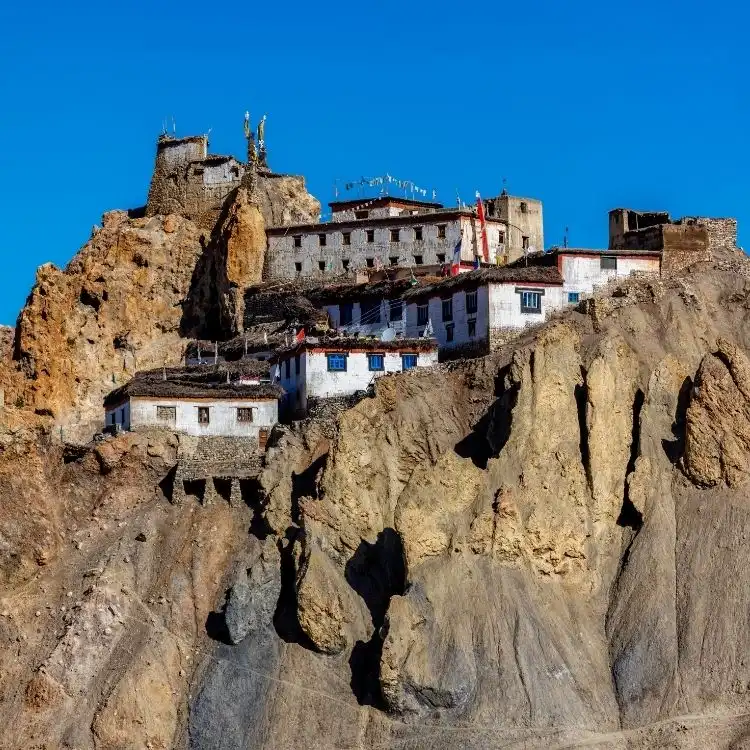
Planned when road conditions permit. The cliff-side monastery and fort are usually reachable, with the short climb icier than it looks. Main limitation: the spur road after fresh snow. Largely dependable, still weather-dependent.
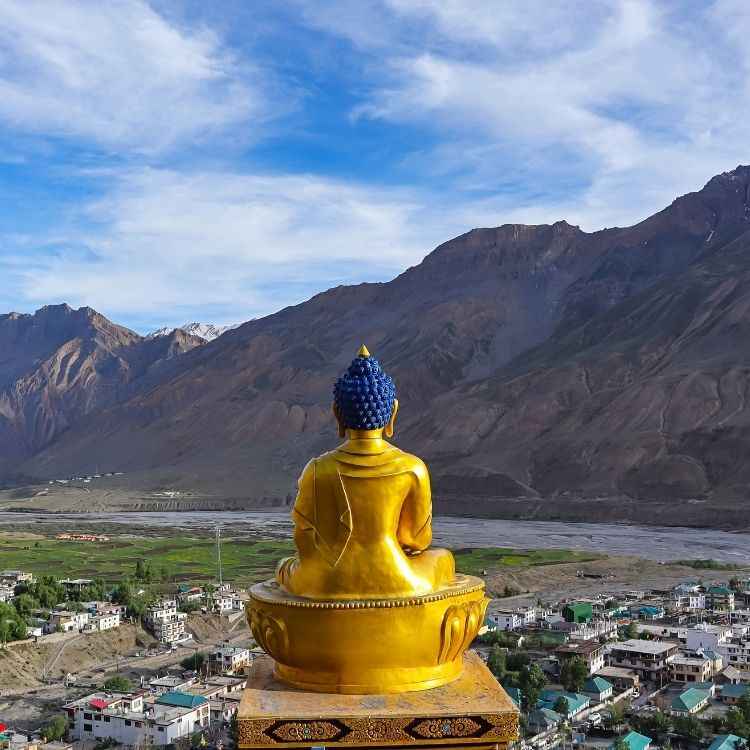
Generally included, normally accessible, and your winter base, with two to three nights here on our trips. Main limitation: frozen pipelines, patchy network and limited open cafes. Planned hub of every itinerary.
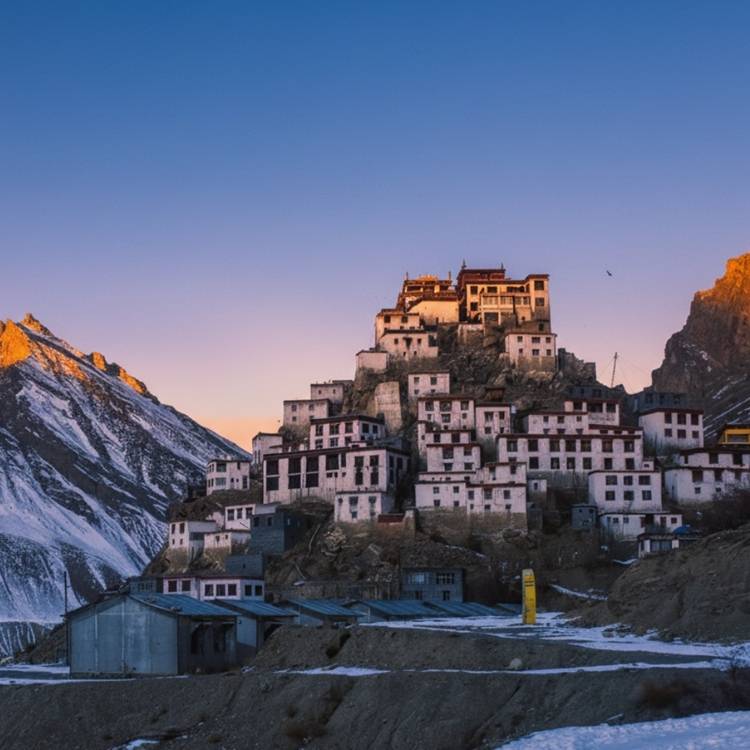
Generally included and normally accessible from Kaza, one of the most reliable winter sights. Main limitation: short holds while the road is cleared after snowfall. Planned.
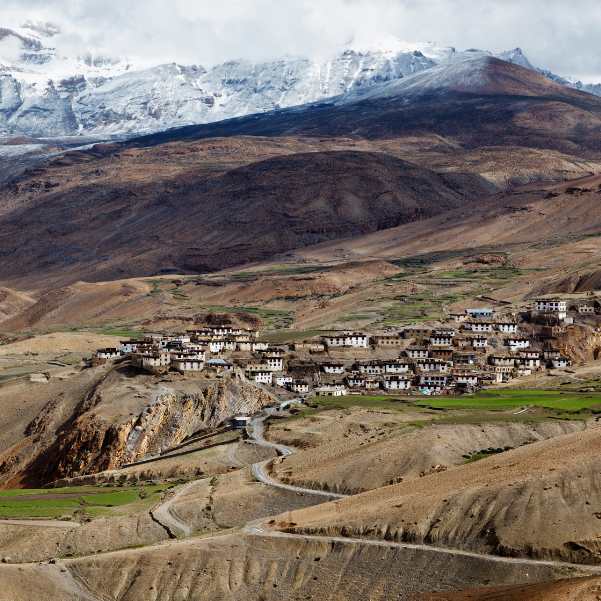
Planned when road conditions permit and usually achievable. In late winter this area is the focus of snow leopard tracking attempts. Main limitation: fresh snow on the climb from Key. Weather-dependent after storms, sightings never assured.
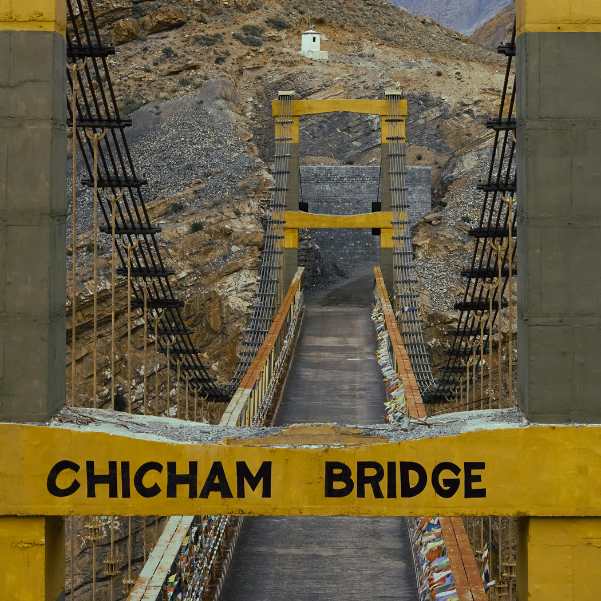
Planned when road conditions permit. Asia's highest suspension bridge, usually combined with Kibber. Main limitation: the same climb, plus strong wind chill at the bridge. Weather-dependent.
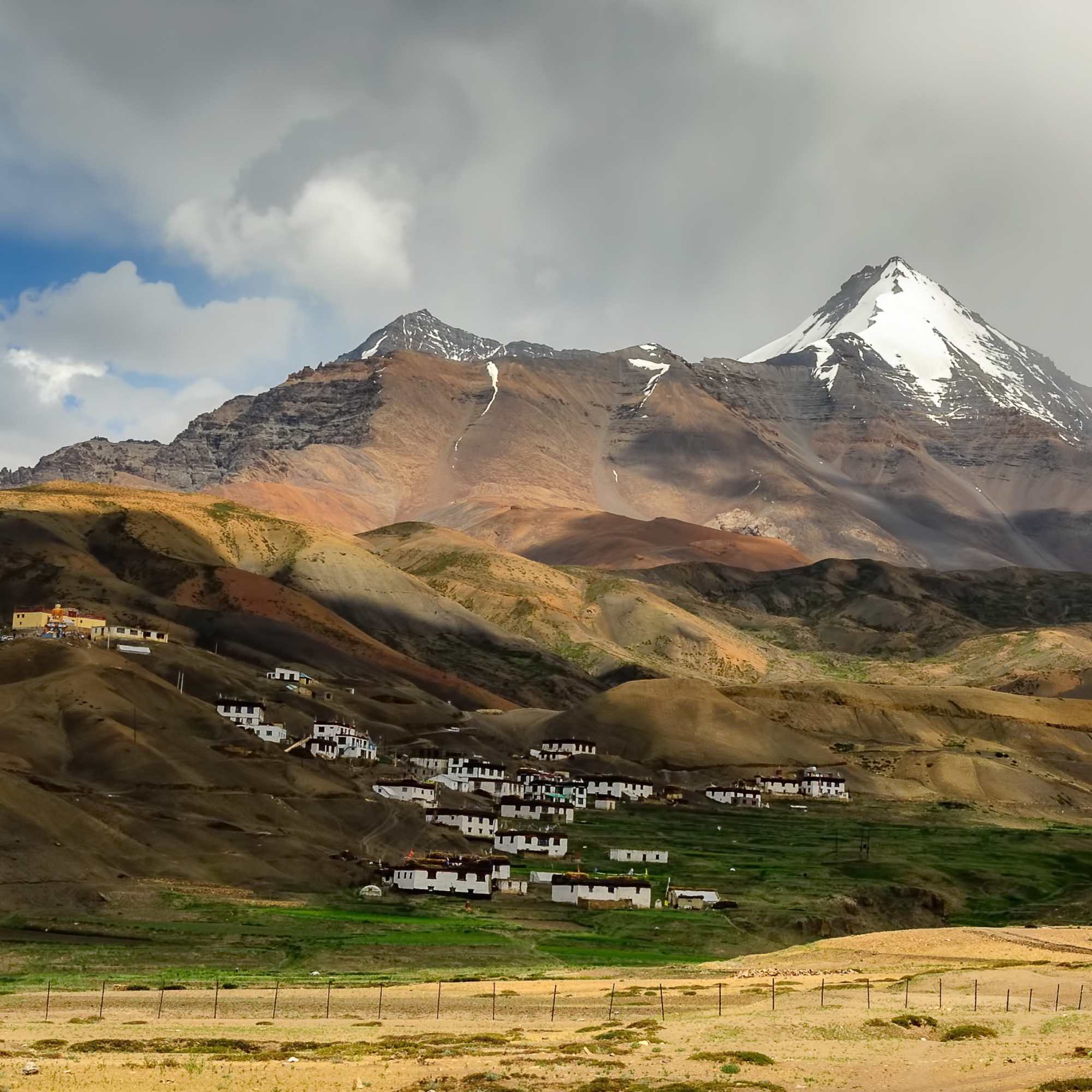
Weather-dependent. The Buddha statue above a white valley is a winter highlight when the road opens. Main limitation: the high-village loop above Kaza is among the first to close and last to clear. Attempted on the dedicated sightseeing day.
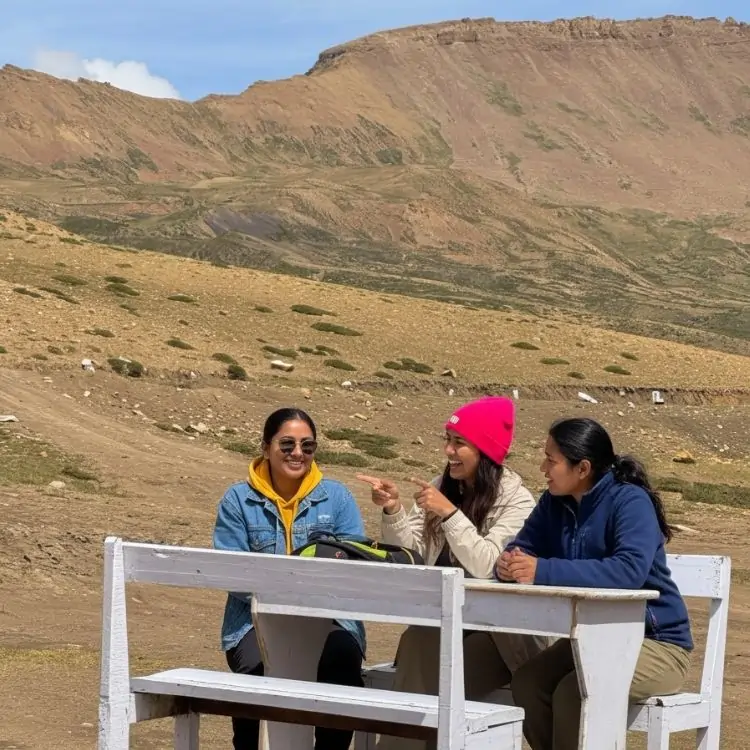
Weather-dependent, same loop as Langza. Sending a postcard from the world's highest post office depends on both the road and the counter being open that day. Main limitation: road status plus post office hours. Attempted, not assured.
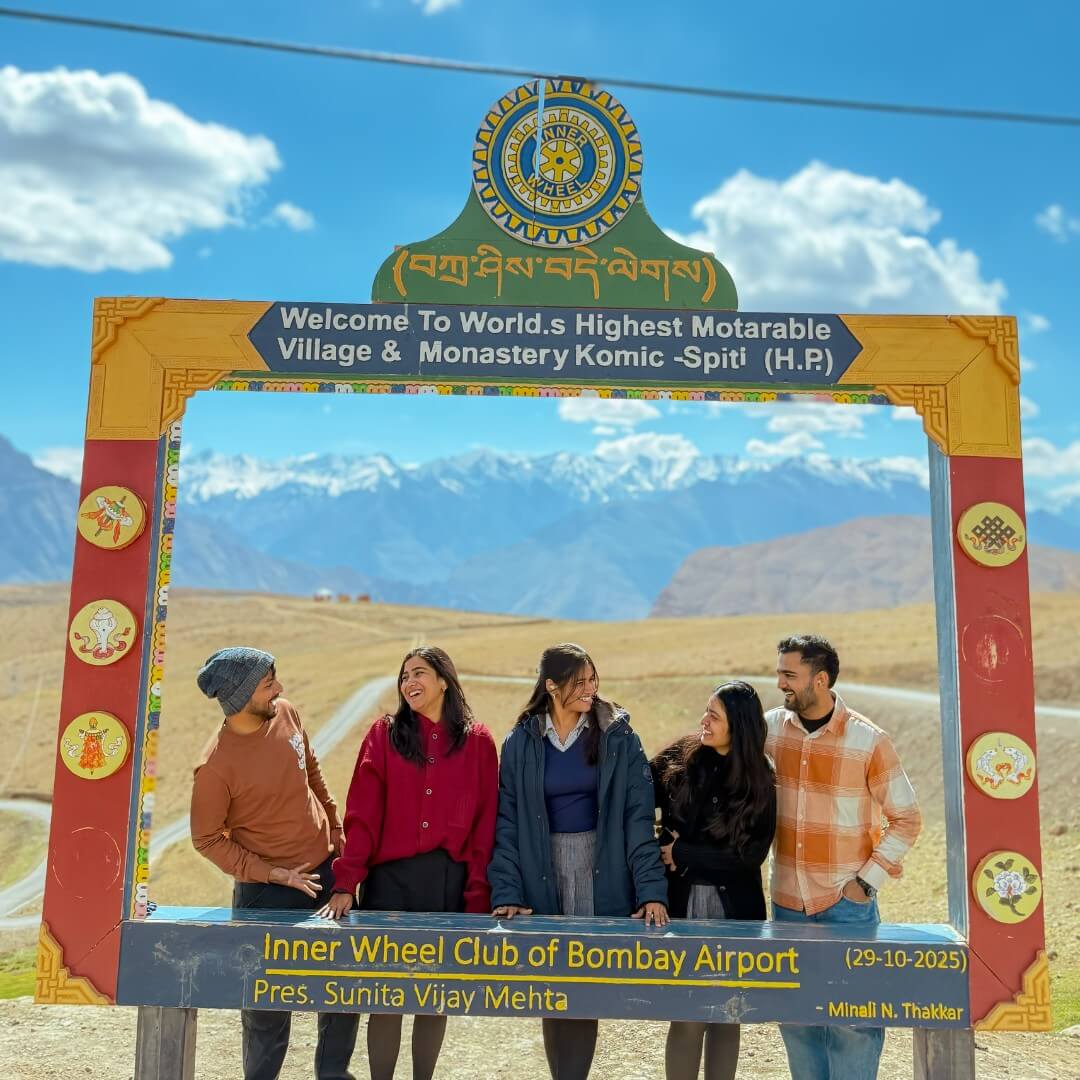
Weather-dependent and the most conditional of the three high villages, sitting around 4,600 metres. Main limitation: snow depth on the top section of the loop. Highly conditional in deep winter.
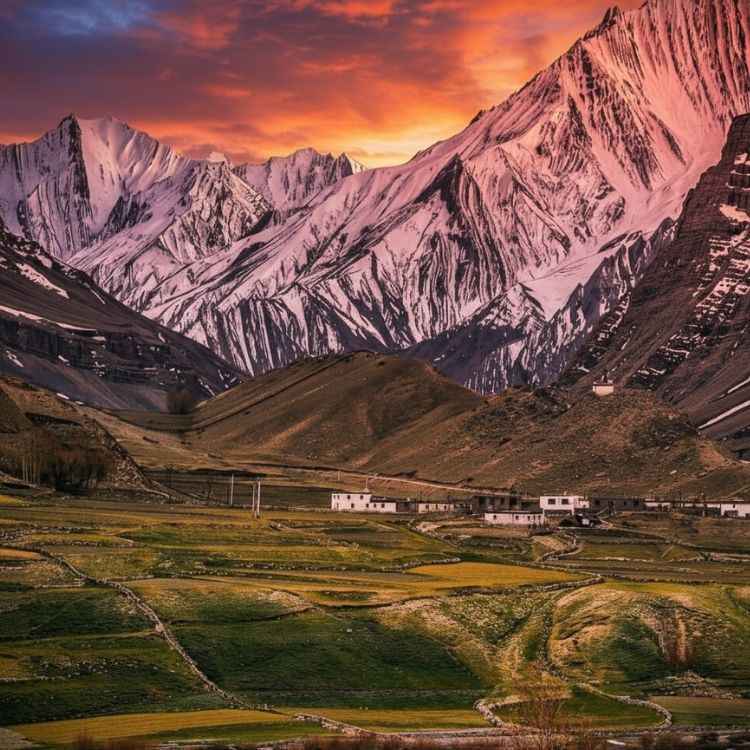
Normally not included in winter itineraries. The valley receives heavy snow and access beyond the early villages is highly conditional. Main limitation: road closure and avalanche-prone terrain. Considered only on private trips when conditions clearly allow.
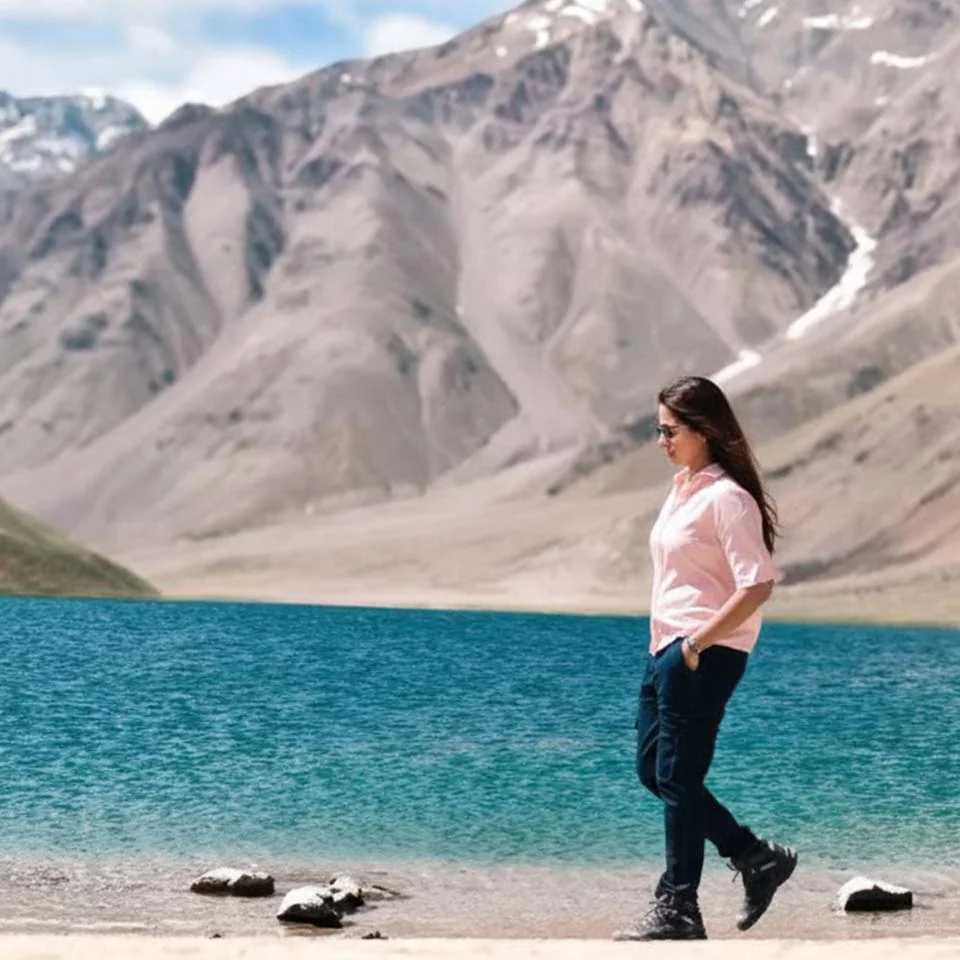
Normally inaccessible during core winter. The approach closes with Kunzum Pass around October and reopens only around June. Main limitation: the road simply does not exist under snow. Not included in any winter package.
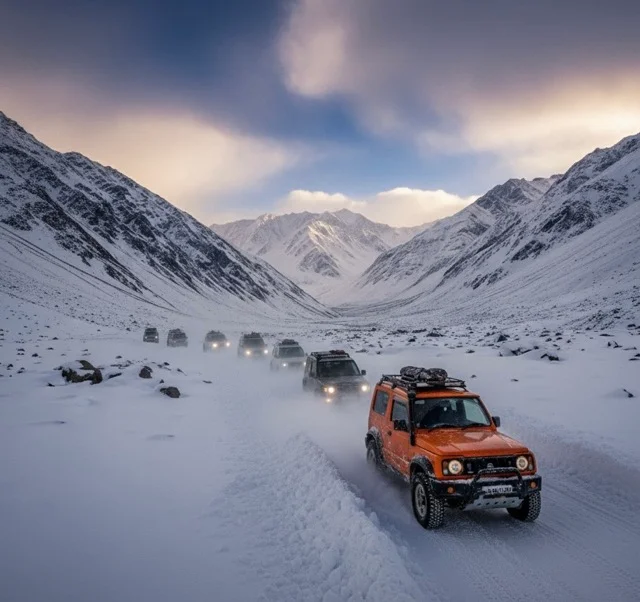
The NH 5 corridor from Shimla to Kaza is an experience in itself in winter: snow cuttings, frozen waterfalls, the Sutlej gorge and the Ka loops. Long days in the vehicle become part of the trip rather than the price of it.
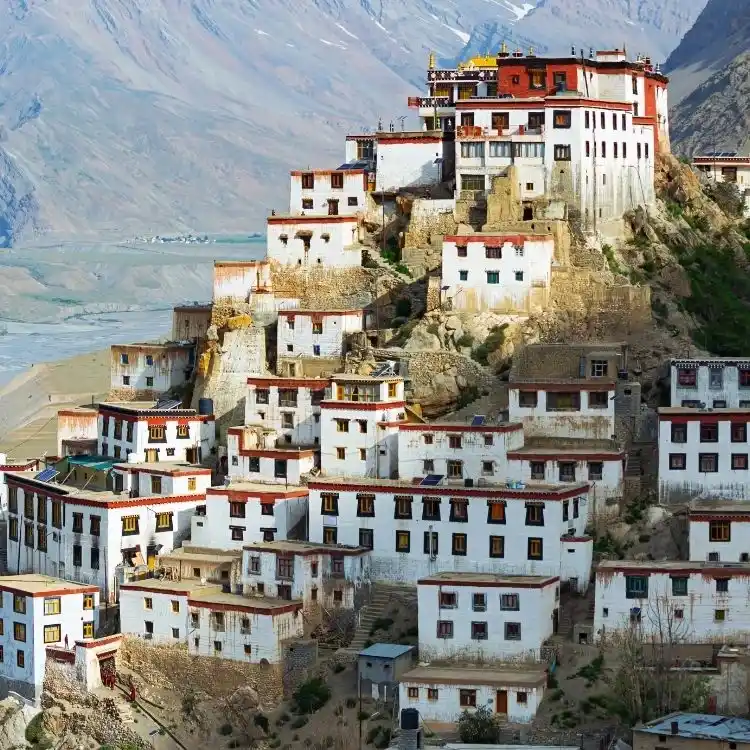
Winter returns the monasteries to themselves. A handful of visitors a day, prayer halls in use, butter tea offered in quiet kitchens. Tabo's thousand-year-old complex under snow is the cultural high point of the season.
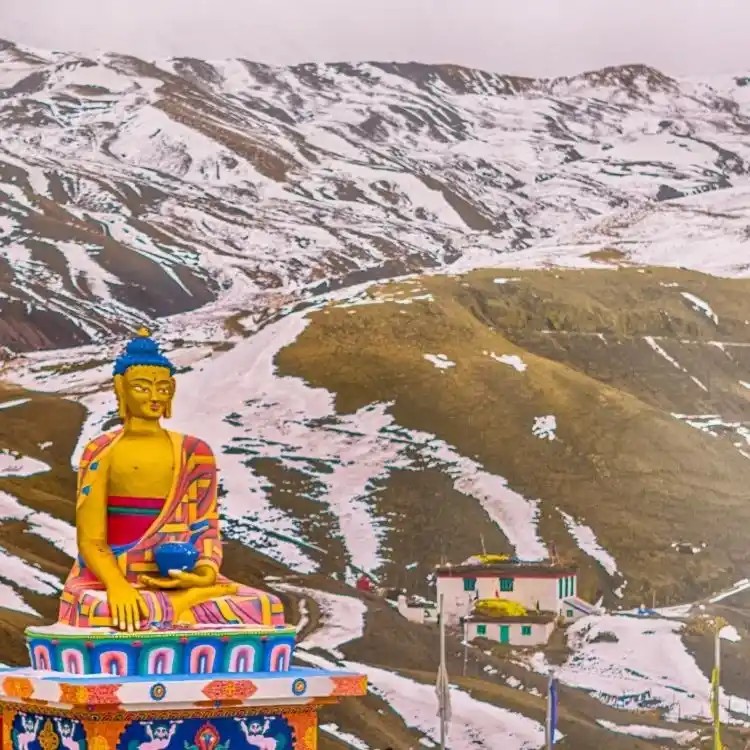
Langza, Hikkim and Komic sit above 4,200 metres and turn fully white in peak winter. The loop is weather-dependent and among the first roads to close after snowfall, which is exactly why completing it feels like an achievement.
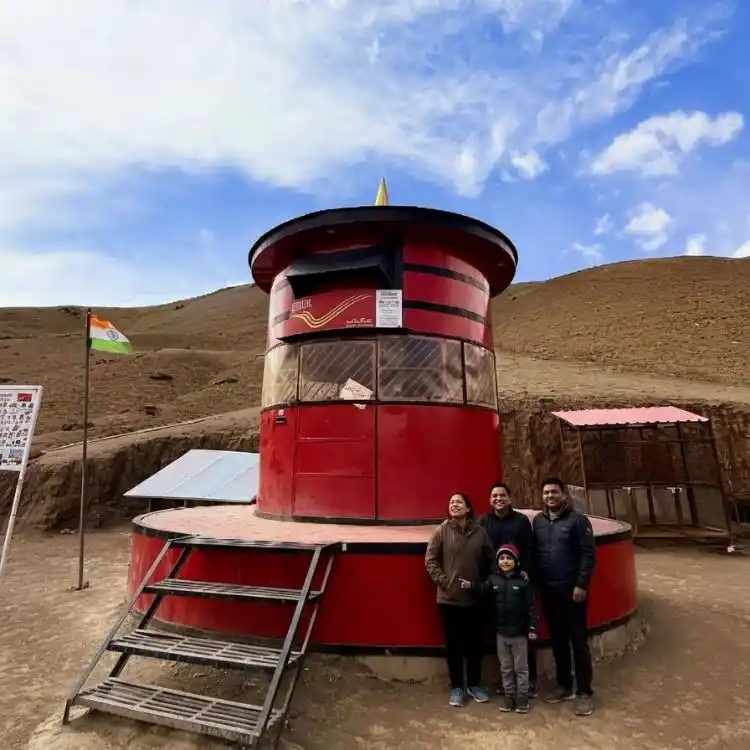
The world's highest post office keeps working through winter, road and counter permitting. Writing a card to yourself from a snowbound village at 4,400 metres is a small ritual most travellers refuse to skip.
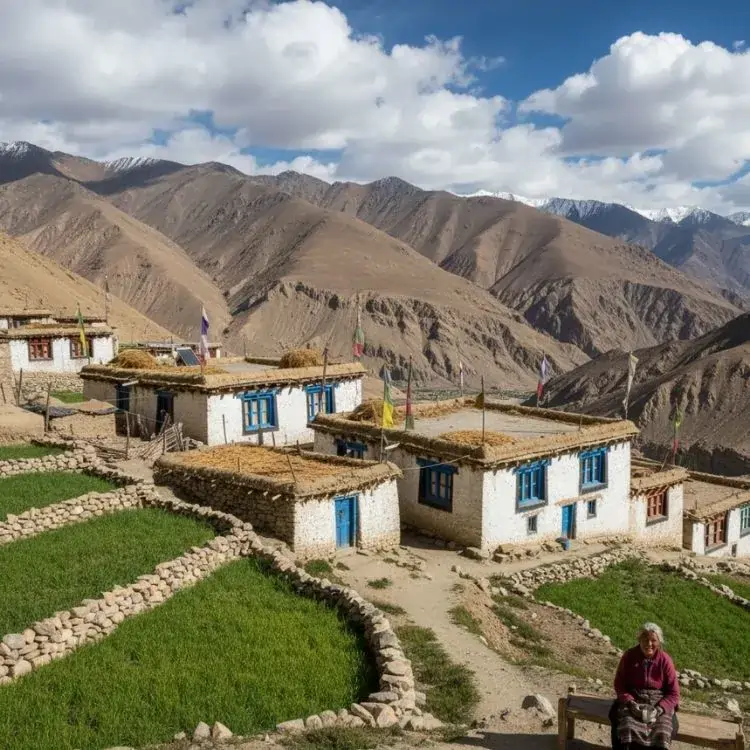
Winter evenings happen in the kitchen: families around the stove, thukpa on the boil, stories moving slowly. This is the part of the trip people talk about longest, and it only exists in this season.
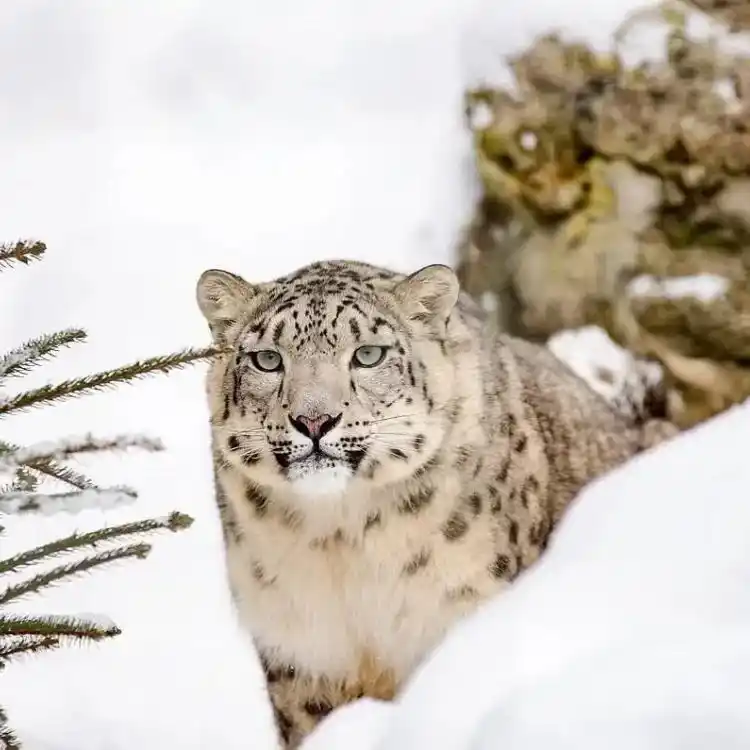
Late winter around Kibber and the Chicham gorge is the best-known window for snow leopard sighting attempts, as the cats follow blue sheep to lower slopes. Go with patience and a local spotter, and treat any sighting as luck, never a promise.
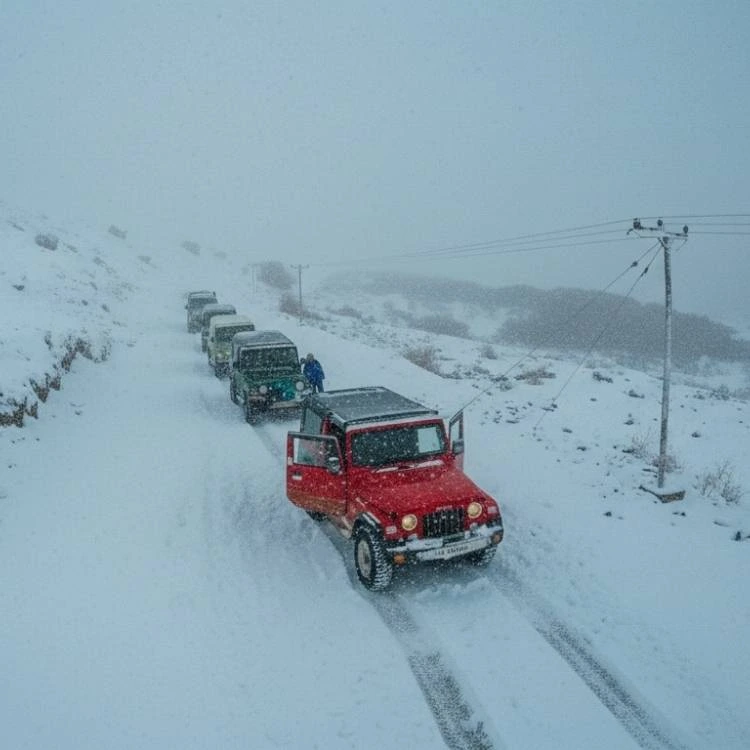
Cold, dry air gives winter Spiti its sharp light and dense star fields. Frozen river bends, prayer flags against snow, and long exposures from a homestay terrace reward anyone who keeps spare batteries warm in an inner pocket.
Stretches of the Spiti river freeze over in peak winter, and short walks along the banks near Kaza show the valley at its stillest. Stay off the ice itself and follow your driver's judgement on where it is safe to stop.

“Travel Coffee truly went above and beyond. Even though we booked from Indonesia without meeting them, we always felt secure — their team was available 24/7 and took care of every detail. Shubham personally ensured our comfort throughout the Himachal trip, from hotel checks to small gestures like bringing lotion and altitude pills. Their sincerity and local expertise made the journey unforgettable.”
Andre & Angel
Yes. Spiti stays inhabited and reachable all winter through the Shimla and Kinnaur side, which is maintained through the season. Kaza, Tabo and the main villages function through the cold months, with reduced facilities. Short closures happen after heavy snowfall while machines clear the road, which is why winter itineraries stay flexible.
The Hindustan Tibet route, NH 5. From Delhi or Chandigarh you climb via Shimla or Narkanda, then Rampur, Sangla or Kalpa in Kinnaur, and onward through Nako and Tabo to Kaza. It takes two to three days each way with overnight halts, which doubles as proper acclimatisation.
No. That road crosses Kunzum Pass, which stays buried in snow from around late October until the Border Roads Organisation clears it, usually in late May or June. The Atal Tunnel keeps Lahaul connected but does not help beyond Gramphu. Every genuine winter package, from any operator, enters Spiti from the Shimla side.
No. Chandratal's approach road closes along with Kunzum Pass and reopens only around June. Through the core winter, the lake is snowbound, the camps are shut and there is no safe or legal access. If Chandratal matters to you, plan a summer Spiti trip instead.
Eight days is our shortest winter plan from Delhi, and it is brisk, with an overnight in Nako. Nine days is what we recommend for most people: two nights in Sangla for Chitkul, two nights in Kaza and room for weather. Ten days adds a Shimla rest night and the gentlest pace. We do not sell anything shorter than eight days on this winter route.
Yes, Delhi is the standard starting point for all our departures. Every trip begins with an overnight Volvo to Shimla, and the mountain sector runs from Shimla in a Tempo Traveller, SUV or 4x4 depending on the package. Delhi to Delhi is also the simplest option for anyone flying in from other cities.
Joining en route at Chandigarh or Shimla can usually be arranged on request for our departures, since the route passes through both, with any fare adjustment confirmed at booking. Please confirm the joining point and revised price before booking connecting travel.
No permit is needed. Indian citizens travel the entire Shimla to Kaza route freely with a valid government photo ID, which is registered at police checkposts on the way, and a district green fee applies for vehicles entering Spiti. Our team handles the checkpost and fee formalities during the trip.
Yes. Foreign passport holders need an Inner Line Permit, also called a Protected Area Permit, for the border-adjacent stretch of the Kinnaur to Spiti route. It is issued offline at district offices in Shimla, Reckong Peo or Kaza and checked at the checkposts. We assist our foreign guests with the process, so flag your nationality at booking.
It depends on what you want. January and February deliver the deepest snow and the hardest conditions. December brings festive energy and rising snow chances. March offers white views with easier logistics. November is quiet and mild. For a first winter trip, we usually suggest late February or March.
Usually, yes. Snowfall becomes increasingly likely through December, and by the last week the higher villages are often white. Early December can still be dry some years. If your trip is built around snow on the ground, later in the winter improves your odds, though nothing makes them certain.
Both sit at the heart of the season. January typically brings the heaviest fresh snowfall and the coldest nights. February starts with deep accumulated snow and gradually gains daylight, and its later weeks overlap with the best-known snow leopard window around Kibber. For fresh falling snow, lean January. For deep settled snow with slightly kinder logistics, lean February.
For many travellers, it is the smartest month. Early March usually still looks like full winter, roads disrupt less often, days are longer and the cold eases to merely serious. Snow cover thins as the month progresses, so book earlier in March if white landscapes are your priority.
In peak winter, daytime readings in sunshine sit roughly between minus 5 and 5 degrees Celsius, and nights commonly fall to minus 15 to minus 25. Cold spells can push lower, and wind chill makes everything feel harsher than the number. December and March are a few degrees kinder at both ends. Pack for the nights, not the afternoons.
No, and be wary of anyone implying otherwise. Snowfall depends entirely on weather systems that week. Peak winter makes snow on the ground very likely and fresh snowfall reasonably likely, but dry spells happen. What the package guarantees is the route, the stays, the support and winter Spiti itself, in whichever mood it chooses.
No. The winter route is a maintained highway, and SUVs with snow chains complete it all season. A 4x4 earns its cost in January and February, on fresh snow mornings and the high-village climbs, where its traction meaningfully improves your odds of completing everything. Outside deep winter, a regular SUV serves most travellers well.
Legally, yes. Practically, only with real ice-driving experience, a capable vehicle, chains you can fit yourself, winter recovery basics and genuine comfort with being stuck. Black ice on this route punishes optimism. If any of that gives you pause, travel with a local driver who does this weekly.
We wait it out sensibly. The group holds at the nearest proper halt, our team coordinates with drivers and local administration on clearance timing, and the itinerary reshuffles around the closure. Most winter closures clear within hours to a day. If a closure forces an extra night, we arrange it, with costs on actuals.
Yes, one buffer day after the trip is smart planning, especially in January and February. Book onward flights or trains with a night's gap after the scheduled return rather than a same-day connection. Most departures return on time, but winter occasionally takes an extra day, and a relaxed buffer beats a missed flight.
Yes. All our winter vehicles carry snow chains in season, and drivers fit them whenever ice or fresh snow demands. Chains are standard winter equipment on this route rather than an add-on, and knowing when to use them is part of what a winter-experienced driver brings.
Group tours run in a Tempo Traveller or SUV such as Ertiga, Innova Crysta, Scorpio or similar, chosen by batch size, with snow chains in winter. The 4x4 expeditions run a shared Jimny or Scorpio N class four-wheel drive with snow chains. Delhi to Shimla transfers use overnight Volvos. Exact vehicles depend on group size and availability.
It can be, with the right trip and mindset. The gradual Kinnaur-side climb, fixed halts, experienced drivers and group support are all built for first-timers. What we cannot remove is the cold, the altitude and weather uncertainty. Choose the 9 or 10 day itinerary, prepare seriously for the cold, and a first winter trip works well.
Our winter groups regularly include women travelling solo, and the fixed departure format exists precisely so nobody is actually travelling alone. Verified stays, known drivers, a coordinator on call and a group around you cover the practical concerns. The route itself has no gender-specific risk pattern; the standard winter precautions apply to everyone equally.
We advise against bringing young children in deep winter. Extreme cold, altitude near 4,000 metres and distant medical care are a poor combination for small children. Older kids who already handle mountains well can consider a March trip, after a paediatrician's opinion. Talk to us honestly about ages and we will advise the same way.
Some do, and do it well, typically fit travellers with prior high-altitude experience, in the gentler months with buffer days. It is a case-by-case call that should start with a doctor's assessment, not a booking. Share complete health details with us and we will tell you plainly whether, and how, it can work.
Prevention first: a two-to-three-day gradual ascent, hydration, light first days and honest briefings on symptoms. If someone develops persistent headache, breathlessness at rest, vomiting or confusion, the response is rest, assessment, and descent to lower altitude and medical care if symptoms continue. We take symptoms seriously and never push a struggling traveller higher.
Yes, emergency oxygen is carried on our winter departures as part of the trip protocol. It exists to stabilise someone while we act, usually while descending, and it is not a treatment for altitude sickness nor a substitute for descent or professional medical care. Anyone needing oxygen is moved towards lower altitude and medical attention.
Mostly, in buckets. Once pipelines freeze, running hot water disappears across the valley, and hosts heat water on request instead. Expect a bucket bath every day or two rather than a morning shower ritual. Shimla and the Kinnaur halts are usually more generous than Kaza and Tabo on this front.
Yes, in the local way: bukharis or electric heaters that warm the room in the evening, with heavy quilts doing the overnight work. Some properties charge separately for heater use, which we flag before your trip. Rooms are liveable and cosy by mountain standards, not centrally heated by city standards.
Patchily at best. BSNL and Jio give the most usable coverage, mainly in Kaza and the bigger halts, while smaller villages and long road stretches are dead zones. Airtel is weak on this route. Data speeds, where present, suit messages more than calls. Plan the trip as offline and treat any signal as a bonus.
It is available but interruptible. Snowfall routinely knocks out supply for hours in Spiti, occasionally longer, and village grids are modest at the best of times. Charge everything whenever power is on and carry a power bank, and the interruptions become part of the atmosphere.
Fresh, warm, home-style food. Breakfast and dinner come from the stay's kitchen: parathas, eggs and porridge in the mornings, dal, rice, sabzi, rotis, thukpa and momos at night. Vegetarian is the winter default and always available. Lunch on drive days is at dhabas or from your snack bag. Simple and sustaining, exactly what the cold asks for.
Group tours currently start at ₹16,999 per person for 8 days, ₹18,999 for 9 days, and ₹21,999 for 10 days with a Shimla rest night. The dedicated 4x4 expeditions run ₹25,999 for 8 days, ₹28,999 for 9 days, and ₹30,999 for 10 days. All quoted prices are per person on sharing, GST included.
Stays as per itinerary, daily breakfast and dinner, listed transfers, mountain travel in an SUV or 4x4 with a winter-experienced driver and snow chains, fuel and tolls, permit assistance, first aid with emergency oxygen per protocol, on-trip support and GST. Lunches, personal spends, entry fees, insurance and weather-forced extras stay outside.
Our departures run in bands from micro groups of 3 to 5 travellers up to full batches of 16 to 20, with vehicles allocated accordingly. Winter batches tend towards the smaller end because room inventory in Spiti is genuinely limited in season. Your booking confirmation states the expected batch size for your date.
A booking amount reserves your seat, with the balance due before departure as per our payment policy. The exact structure for your departure is shared with your quote, and the full policy is published on the Travel Coffee payment policy page.
The plan bends rather than breaks. Sightseeing reshuffles around closures, a blocked village gets swapped or dropped, and where snowfall holds the group, we arrange the extra night with costs on actuals. Nobody is pushed onto a road that our drivers or the administration consider unsafe. Refunds for weather-skipped elements follow our cancellation policy.
Yes, and in winter you should expect the possibility. Route conditions, administration advisories or stay availability can force adjustments before or during the trip. Any pre-departure change is communicated to you promptly, and on-trip changes are decided with the group's safety first. The itinerary is a plan, and winter always keeps a vote.
The 9-day Best Selling group tour, for most people. It gives the gradual climb, two nights in Sangla for Chitkul, two nights in Kaza and enough slack for weather, at a sensible price. If budget or leave leads, the 8-day Classic group tour works with tighter margins. If comfort leads, the 10-day plans add a Shimla rest night, and the 4x4 expeditions add stronger traction. Tell us your dates and we will confirm the fit.
Real experiences shared by Travel Coffee travellers in Winter Spiti.
55 traveller reviews
Based on Google reviews.
Real photos and videos shared by travellers from recent trips.
Had an absolutely incredible trip exploring Manali, Solang, Sethan, Khokhsar, Sissu, and Darcha, all the way up to Shinkula Pass and Shinkula Top, thanks to Travel Coffee! A huge shoutout to Preeti Jasyal, who helped us a lot throughout the process. She is an amazing person and went above and beyond to help us create the perfect booking. The entire service was seamless and highly effective, and the hotels she selected for us were absolutely amazing with great comfort and views. Driving through those massive mountain terrains can be daunting, but their flawless coordination made the entire journey stress-free. If you're planning a trip to Leh, Ladakh, Spiti, or any of these mountain regions, Travel Coffee is the way to go!
I, being a senior citizen travelled solo with Travel Coffee for Spiti Valley and Chandratal Lake for 8N/9D. It was an amazing trip, well organised with decent hotels. Vanshika from Travel Coffee supported me, took great care of me till the very end. I enjoyed a lot and am looking forward to join any upcoming trips in future
We had an amazing experience on our Spiti Valley trip organised by Travel Coffee. Everything was well organized, from the itinerary and accommodations to transportation. The entire journey was smooth and hassle-free, allowing us to truly enjoy the breathtaking beauty of Spiti. A special thanks to Preeti Jaysal and the team for their constant support before and during the trip. They were always available to help and ensured that everything went as planned. Our driver was experienced, friendly, and made us feel safe on the challenging mountain roads. We made unforgettable memories, visited stunning places, and had an incredible overall experience. I would definitely recommend them to anyone planning a Spiti trip. Thank you for making our journey so special!
Our Delhi to Kaza round-trip with Travel Coffee was incredible! Huge thanks to Manju ma'am (Manju Mehta) for her flawless management and organization throughout. Special gratitude to our driver, Negi bhai (Prakash Negi), whose expert driving skills kept us completely safe on the challenging Spiti roads. Highly recommend them for a seamless, unforgettable adventure!
Lovely and nice experience with travel coffee During my recent trip of spiti valley tour, nice arrangements done from their side in every aspect, thanks to travel coffee for arranging such a nice trip
We did a spiti bike trip with travel coffee this early June. We had a very new experience this time as we travelled with travel coffee for the first time. We booked 7 bikes, a Bolero Camper to travel as backup vehicle …
Thanks to Travel Coffee team for making such wonderful Spiti Circuit tour. We enjoyed this tour thoroughly 🙏🙏 …
Ms Manju of Travel coffee helped with arranging everything on our Kinnaur Spiti trip in May 2026 . We had nice home stay, food and vehicle services for the entire trip. Destination covered Shimla,Fagu,Bhima Kali temple Sarahan, Sangla,Chitkul,Kaza,Tabo,Nako,Kalpa in 7N/8D. Special mention of Ms Vipasa Negi of Hotel Kamru Sangla that she arranged Birthday cake for me on my Birthday during the trip, that was so special
Very good experience with travel coffee during trip to spiti Very well organized trip by travel coffee Hotel rooms,food, vehicle and driver very well arranged
The tour management of travel coffee was great during my spiti valley trip. The hotels were superb. The facilities and services provided in the hotels were too good. The food served was tasty. The travel service provided were great ad did not face any problems during my trip
Very nice arrangement by travel coffee Excellent rooms,food and driver during trip to Spiti Valley
We recently completed our Spiti Valley trip, and it was an amazing experience. A big thanks to Travel Coffee for organizing everything so smoothly, and special appreciation to our driver Ravi for guiding us throughout the journey. We truly had the best time