
Key Monastery, Spiti Valley
Spiti's largest monastery, stacked like a fort on a hill above the river at roughly 4,166 metres
- Monastery
- ~4,166 m
- Kaza · 12 km
- Jun to Sep
- Free entry
What makes it special
Key Monastery, also spelled Kye or Ki, is the largest Buddhist monastery in Spiti and the one almost every traveller ends up stopping at on the Kaza to Kibber stretch. It sits at roughly 4,166 metres on a conical hill above the Spiti River, with white washed buildings stacked on top of each other in a way that looks more like a small hill fort than a monastery. It belongs to the Gelug order, the same school as the Dalai Lama. Traditional accounts place its founding somewhere around the 11th century, though the exact date, the age, and even the identity of the founder are debated across sources. What matters more on the ground is that it is a working monastery with a community of monks, a school for young lamas, and a daily rhythm of prayers that visitors can sometimes sit in on if the timing works out. Honestly, the outside is the famous part. The photograph most people have seen is taken from the road just below, with Key stacked against bare brown mountains. But if you only look at it from the road and drive off, you are missing the quieter half of the place, which is inside.
Quick answers
- Is Key Monastery worth visiting?
- Yes, if you are already in Spiti it is worth the stop. It is the most striking gompa in the valley and the drive from Kaza takes about 30 minutes. The view from the road is worth a pause even before you go inside.
- How much time do you need?
- Plan one to two hours for a normal visit. If you want to try and sit in on morning prayers, aim to arrive around 6.30 to 7 am, though exact timings can shift, so confirm locally the evening before.
- Can you stay overnight?
- Possibly. The monastery is understood to run a simple guest house with basic rooms and home style meals, but availability is informal, varies by season, and cannot be guaranteed. Most travellers end up staying in Kaza. If you really want to try the guest house, call ahead through a local contact or a trusted operator.
Quick facts
Everything you need to know at a glance.
At a glance
- Altitude
- ~4,166 m / 13,668 ft
- Location
- Spiti Valley, Himachal Pradesh
- Nearest town
- Kaza, about 12 km
- Best season
- June to September, generally
- Visiting hours
- Approximate, roughly sunrise to sunset. Morning prayers usually around 6.30 to 8 am, please confirm locally before planning around them
- Entry
- Free, donations welcome
- Time needed
- 1 to 2 hours, half a day if attending prayers
- Effort
- Easy, some stairs inside
On the ground
- Mobile network
- Patchy. Jio and BSNL work best in the area, often weak inside the monastery
- ATM
- Nearest reliable ATM is in Kaza, carry cash
- Washroom
- Basic washrooms at the guest house, nothing at the viewpoint
- Food
- Simple meals at the monastery kitchen when available for guests, a couple of small dhabas on the way up
- Parking
- Small paved area below the monastery, tight on weekends in peak season
- Permits
- Permit requirements vary by route and nationality and can change. Please verify current rules for your specific route with a local operator or an official source before travelling.
- Drones
- Follow current civil aviation rules and take explicit permission from the monastery office before flying anywhere near the premises.
- Walk inside
- Narrow stairs and low doorways, watch your head
Seasonal weather
- Jun to Aug22°8°Summer
- Sep to Oct15°2°Autumn
- Nov to Mar2°-20°Winter
- Apr to May12°0°Spring
Suitable for
- Couples — suitable
- Families — with some care
- Seniors — with some care
- Solo — suitable
- First-timers — suitable
How to reach Key Monastery, Spiti Valley
3 approach routes, with seasonal access.
From Kaza
Motorable most of the year, occasional closures in heavy winter snow- Distance
- About 12 km
- Time
- 30 to 40 minutes
- Road
- Tarred for most of the way, last stretch narrow
- Last fuel
- Kaza petrol pump, the highest retail pump in the region
Easiest approach. Drive north on the Kaza to Kibber road, the monastery appears on your left after about 20 minutes. You cannot miss it, it is literally stacked on a hill. The stretch itself is usable outside peak winter, the bigger question is whether you can reach Kaza in that season.
From Manali
Typically open late May or June to October- Distance
- About 200 km
- Time
- 9 to 11 hours
- Road
- Mountain road, rough in stretches near Kunzum
- Last fuel
- Manali, then next reliable pump is Kaza. Carry a spare jerrycan
Most popular summer route. Goes over Atal Tunnel, Gramphu, Batal, Kunzum La, Losar, then Kaza. Do this in two days if you are not acclimatised, it is a tough push in one.
From Shimla
Open year round in theory, closures possible in winter- Distance
- About 430 km
- Time
- 2 days, ideally 3
- Road
- Mix of highway and high mountain road
- Last fuel
- Reckong Peo, Pooh, then Kaza
The slow, smarter route for first timers. You gain altitude gradually, which helps with acclimatisation. Night halts at Sarahan or Sangla, then Nako or Tabo, then Kaza.
Best time to visit
Season by season, so you can plan around the weather rather than hope.
- Recommended
Summer
June to August
The window most travellers actually come for
- Temperature
- About 8 to 22 C
- Roads
- Manali side generally open by late May or June
- Crowds
- Moderate to high, peaks in July
- Photography
- Clean light early morning and just before sunset
Days are bright and long, the Manali side of the road is generally open, and Spiti feels alive. July can get crowded in the middle of the day, so arrive early.
- Recommended
Autumn
September to October
The quieter, cleaner version of Spiti
- Temperature
- About 2 to 15 C
- Roads
- Generally open through October, check before the end of the month
- Crowds
- Low
- Photography
- Clean, low light, especially early morning and late afternoon
Fewer people, deep blue skies, and surprisingly warm afternoons. The valley starts turning yellow around Kaza. Nights get cold quickly, so pack a proper jacket.
Winter
November to March
Snowbound, only for well prepared travellers
- Temperature
- Often well below zero, down to about minus 20 at night
- Roads
- Kinnaur route only, subject to closures
- Crowds
- Very low, mostly winter expedition travellers
- Photography
- Dramatic, if you can tolerate the cold
The Manali road is closed, and the valley is accessed only through Kinnaur. The monastery stays active but visits are tough. Come only if you are ready for deep cold and very basic facilities.
Spring
April to May
Awkward shoulder season, plan carefully
The Manali road is usually still closed, so you come via Shimla and Kinnaur. The valley is brown, not green, and weather can swing fast. Good for solitude if you do not mind the longer drive.
Things to see & do
7 things worth your time at Key Monastery, Spiti Valley.
Sit in on morning prayers
45 to 60 minutesMorning prayers are the quieter side of a Key visit. They generally start around 6.30 to 7 am, though exact timings can shift and are not fixed, so confirm at the guest house the evening before. Whether visitors can sit in on a given day depends on the monks and the schedule. If allowed in, walk in quietly, take a seat at the back, keep your phone away. Butter tea is sometimes offered afterwards, not always.
Walk through the prayer halls
30 to 45 minutesMultiple small halls stacked across floors, each with thangkas, old manuscripts, and statues. Access to individual halls can vary by day and by who is around. If a monk happens to be free and willing, a short walkthrough is sometimes possible, but it is not something to count on.
Climb to the rooftop viewpoint
15 to 20 minutesThe view over the Spiti River from the top is the one worth the climb. Early morning and late afternoon are calmer than midday.
Photograph the monastery from the road
15 minutesThe famous shot is taken from the approach road below, not from inside. Walk down 5 minutes from the parking and frame the whole stack against the mountains.
Try for a night at the monastery guest house
OvernightThe monastery is understood to run a simple guest house with basic rooms, heavy blankets, shared washrooms, and vegetarian meals. Availability is informal, varies by season, and cannot be guaranteed, especially in peak July and August. Have a Kaza backup booked before heading up, and reconfirm locally.
Guitor Religious Ceremony and Chaam dances
1 to 2 daysAn annual masked dance ceremony, often called Guitor or Gutor, usually held in June or July. Exact dates follow the Tibetan calendar and shift each year, so confirm the current year's schedule with the monastery or a local operator before planning around it.
Short drive up to Kibber
1 to 2 hours round tripKibber village sits about 7 km beyond Key at around 4,270 metres. Easy add on if you already have the car.
Know before you visit Key Monastery, Spiti Valley
The practical bits, from people who have been.
History in briefPer its own history, established in the early 15th century, Gelugpa affiliation in the 17th century, earlier origins debated
Key Monastery is described on its own history page as having been established in the early 15th century, and as having become part of the Gelugpa school in the 17th century. Some other accounts trace its origins further back, often citing an 11th century founding under Dromton, a pupil of Atisha, so the exact founding date and the full age remain debated across sources. What is clearer is that Key has survived multiple attacks, fires, and earthquakes over the centuries, which is why the architecture looks patched together. That messiness is part of the story.
Photography guideBest light is early morning and late afternoon
The classic wide shot is from the road below the monastery, not from inside. Early morning light hits the front face of the buildings and softens the mountains behind. After 11 am the light goes flat. Inside the prayer halls, photography is usually not allowed during prayers and sometimes not at all. Always ask first. Drone rules change often and vary by zone and season, so follow current civil aviation rules and take explicit written permission from the monastery office before flying anywhere near the premises.
Who should visitFine for most travellers if acclimatised, altitude is the real filter for families and seniors
Works well for couples and solo travellers who are reasonably acclimatised. Families can enjoy Key, but the altitude is the real filter. At over 4,100 metres, small kids, anyone with heart or breathing issues, and seniors who have come up fast may feel it. Give yourself a night or two in Kaza first, then come up. Kids under 5 will be fine for a short visit but likely bored beyond an hour. The stairs inside are steep. The monastery is a living place of worship, please leave pets in Kaza rather than bringing them to the premises.
Plan your visitPair with Kibber or Komic on the same morning
If you are based in Kaza, leave by 6 am and try for morning prayers at Key, then continue to Kibber. If the guest house happens to be open for breakfast that morning and has space, you can ask, otherwise plan on breakfast back in Kaza. You are back in Kaza by lunch. If you are only passing through on the way to Kaza, plan a quick 45 minute stop and come back properly the next morning. Quick reality check before you go, reconfirm current visiting hours, prayer timings, overnight availability, permit rules for your route, and winter road status locally or with a trusted operator, these details shift from season to season.
Where to stay and eatKaza is the reliable base, monastery guest house is a bonus if it works out
The monastery is understood to run a basic guest house with a limited number of beds, though availability is informal and varies by season, so it should not be counted on. Meals, when available, are simple vegetarian fare, usually dal, rice, and a seasonal vegetable. For reliable comfort, book in Kaza, about 30 minutes away, which has proper homestays and a few hotels. There are no real restaurants on the Key road itself, just a couple of small dhabas.
Safety and healthAltitude is the real risk, not the climb
You are at over 4,100 metres. If you came up fast from Manali, you may feel the altitude here. Walk slowly, drink water, skip alcohol the first night, and do not rush up the monastery stairs. If you have a headache that does not settle, descend to Kaza. Carry Diamox only on a doctor's advice. The nearest hospital is the community health centre in Kaza.
Do's and don'tsQuiet, respectful, no photography during prayers
Do remove your shoes before entering prayer halls. Do walk clockwise around shrines and stupas. Do speak softly. Do ask before photographing monks or interiors. Do not touch statues or ritual objects. Do not sit with your feet pointing at the altar. Do not smoke or drink on the premises. Dress modestly, shoulders and knees covered.
Local tipsMorning light, butter tea, and the road shot
Bring a small cash donation, around 100 to 500 rupees is normal and welcomed. If butter tea is offered, try it, even if you do not finish it, the gesture matters. The best photograph of the monastery is from the road below, not from inside. One last nudge, reconfirm prayer timings, stay availability, and permit rules close to your travel date.
Nearby attractions
Other places worth the detour.
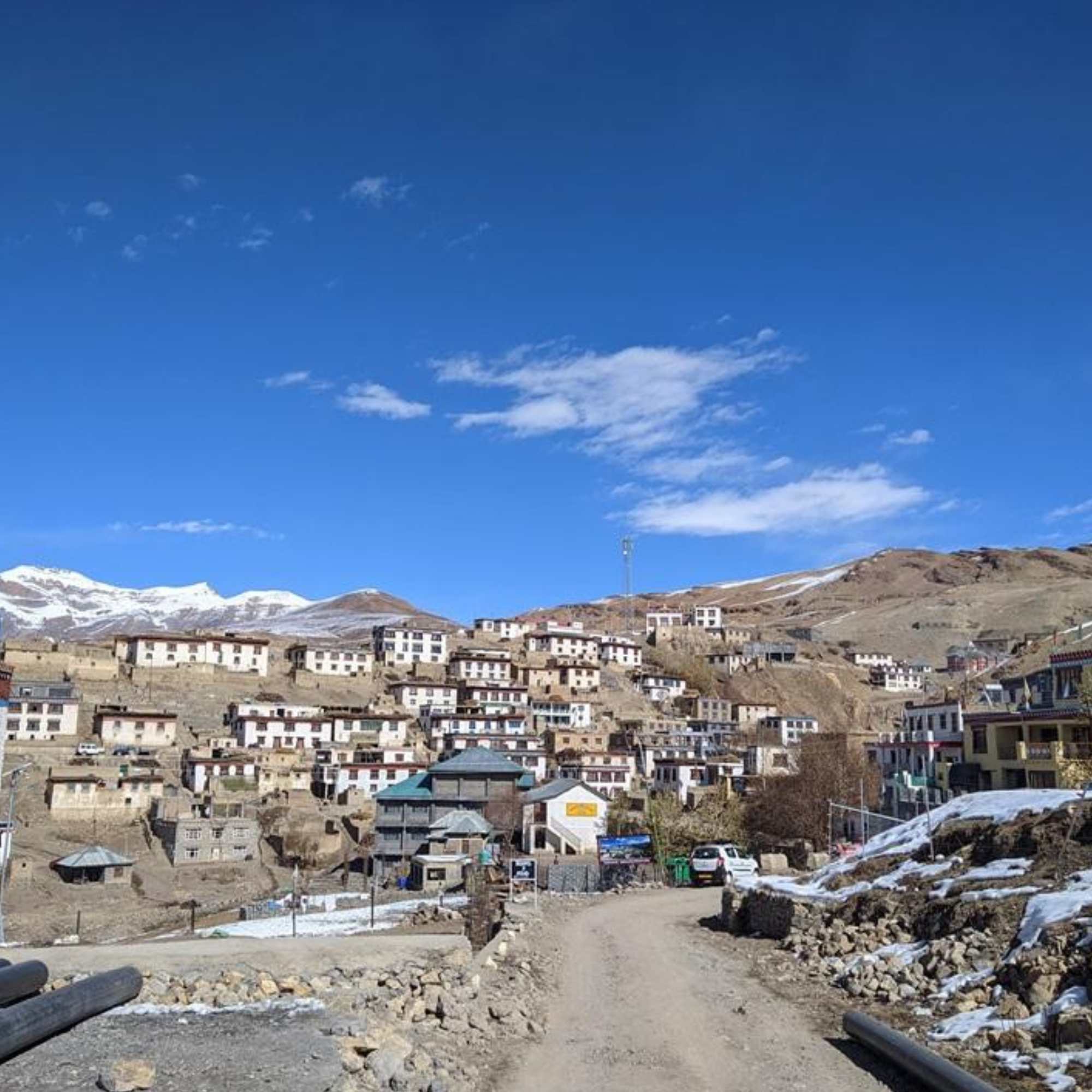
Kibber Village
About 7 km from Key, 20 minutes
One of the highest motorable villages in the region at around 4,270 metres. Great short add on after a Key visit.
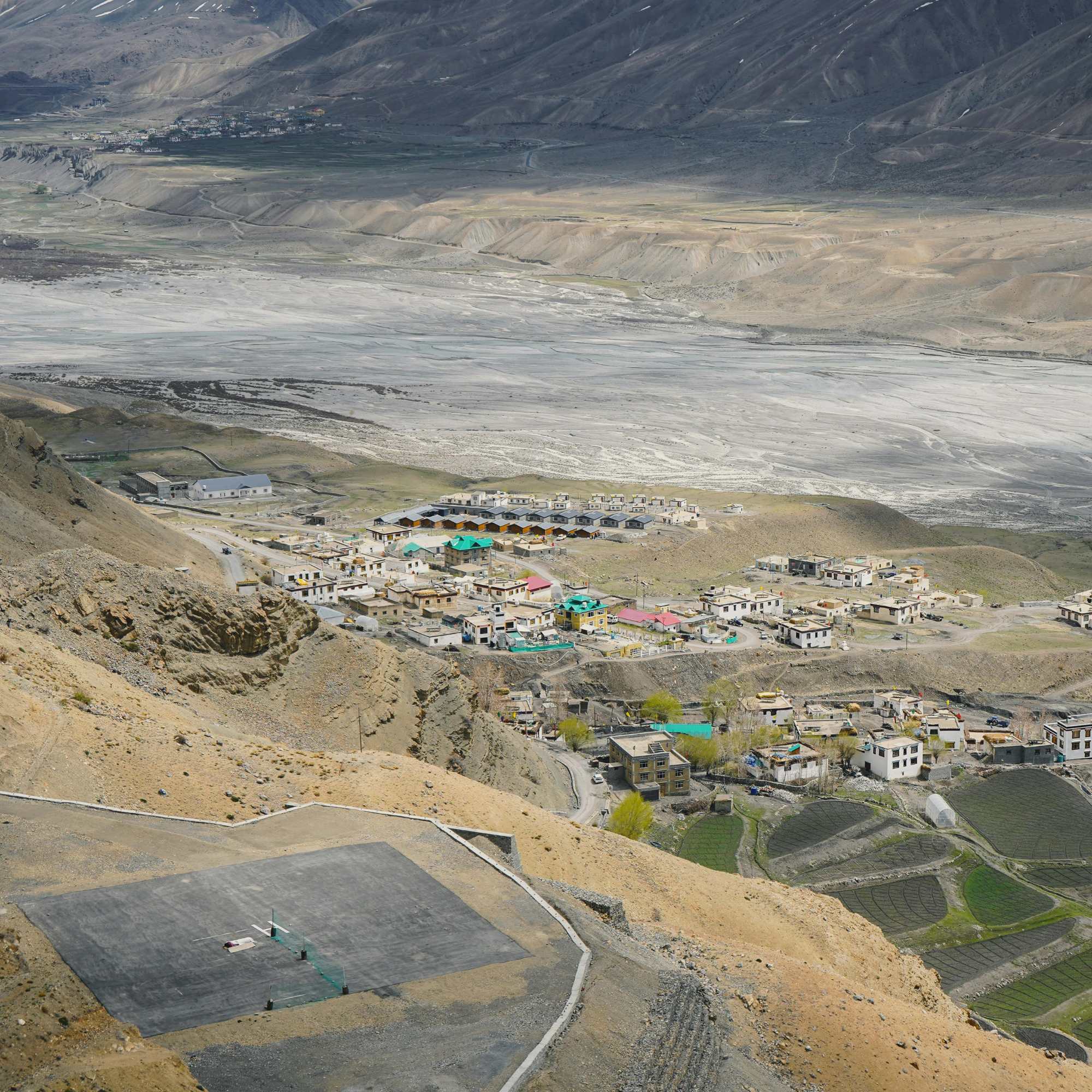
Kaza
About 12 km from Key, 30 to 40 minutes
The main town and base for most Spiti trips. Markets, cafes, petrol pump, ATMs, and most of the valley's homestays.
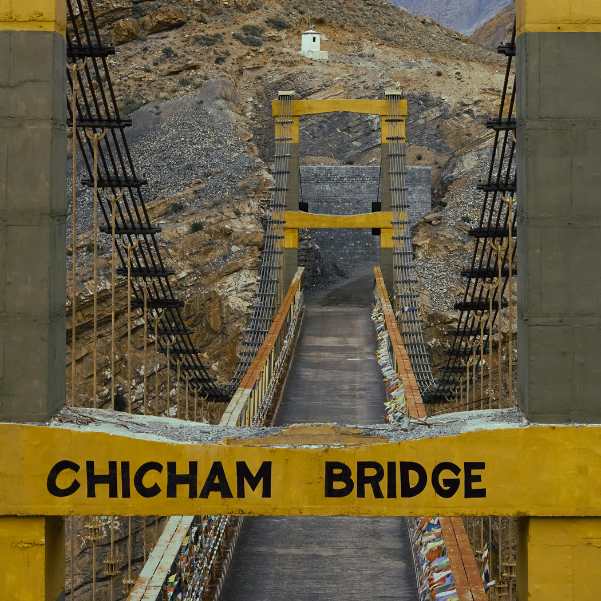
Chicham Bridge
About 15 km from Key, 45 minutes
Often described as Asia's highest suspension bridge. Dramatic gorge views, quick 15 minute stop.
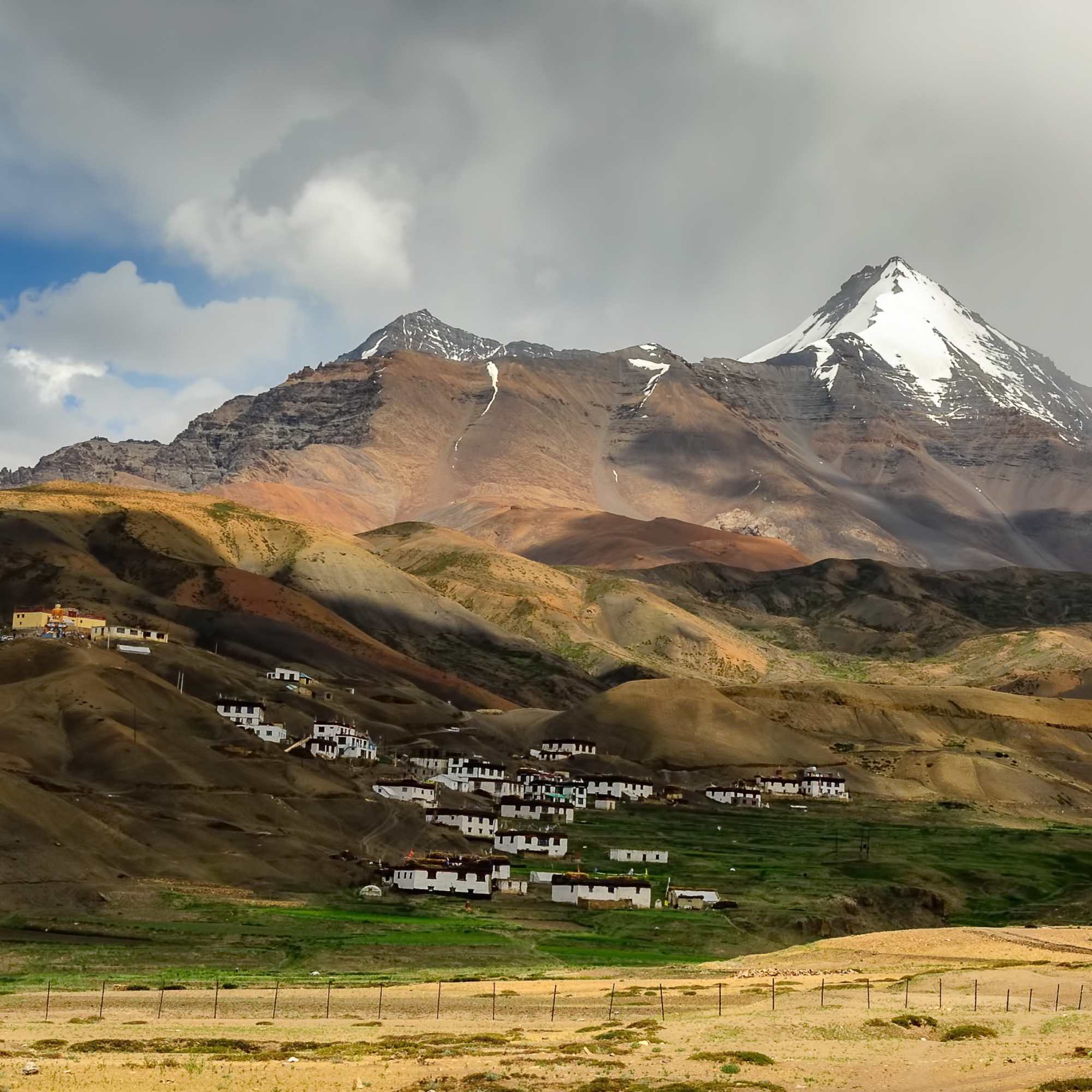
Langza
About 37 km from Key, 1.5 hours
Fossil village at around 4,400 metres, known for the large Buddha statue overlooking the valley.
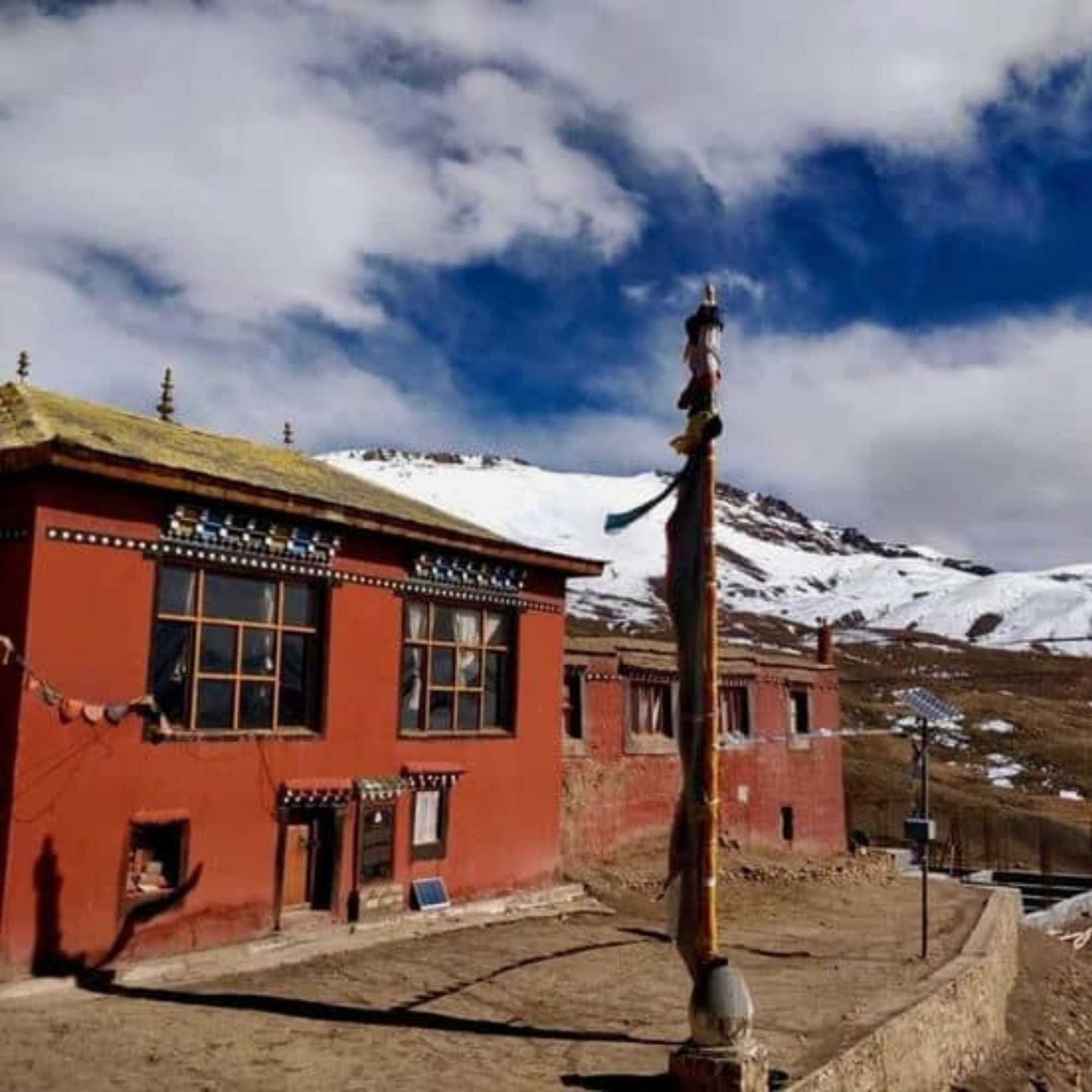
Hikkim
About 40 km from Key, 1.5 to 2 hours
Home to a post office that is often called the highest in the world. People come just to send a postcard.
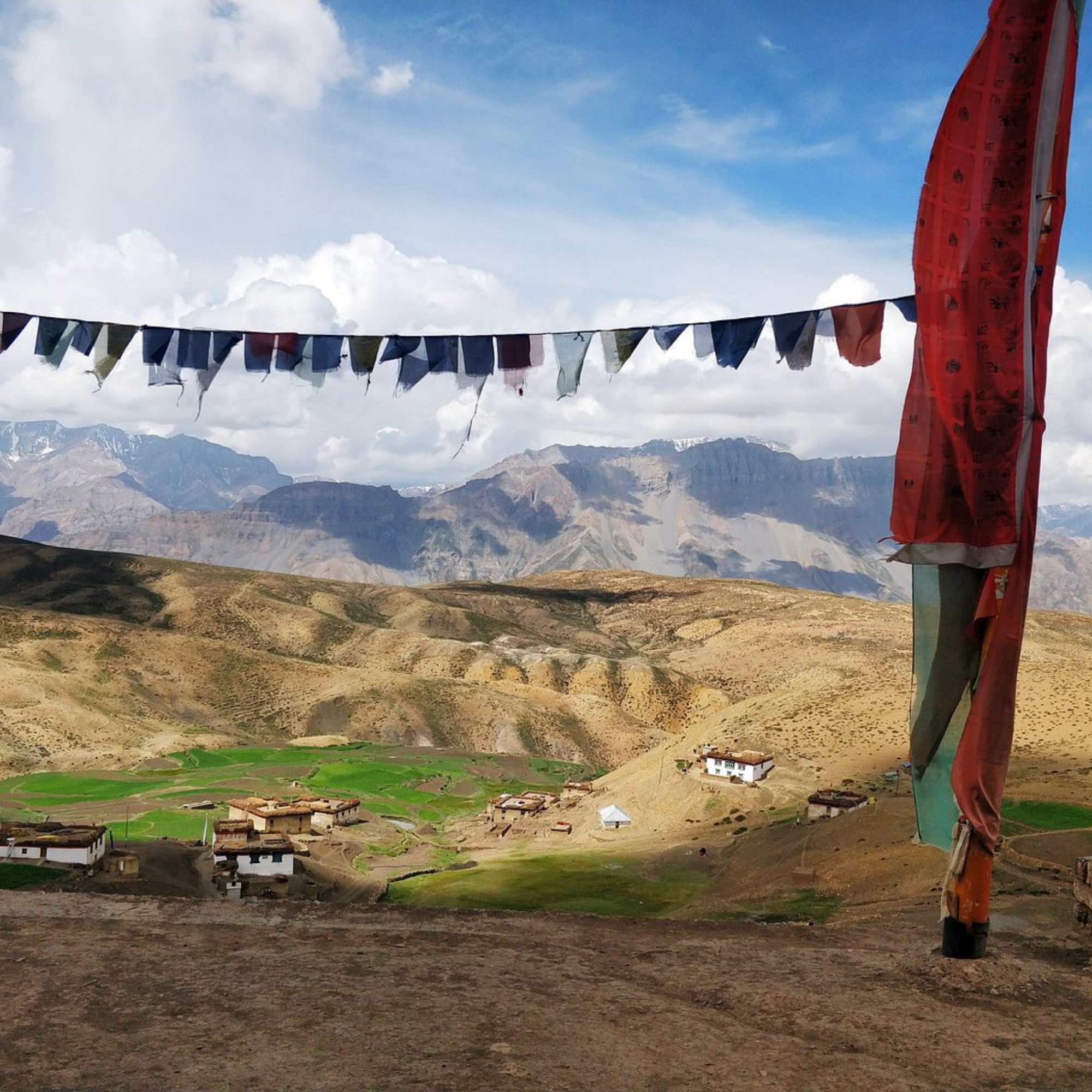
Komic
About 42 km from Key, 1.5 to 2 hours
Claimed to be among the highest villages connected by motorable road in the world. Small monastery, wide views.
Our packages with Key Monastery, Spiti Valley
Curated trips that include a visit to Key Monastery, Spiti Valley.
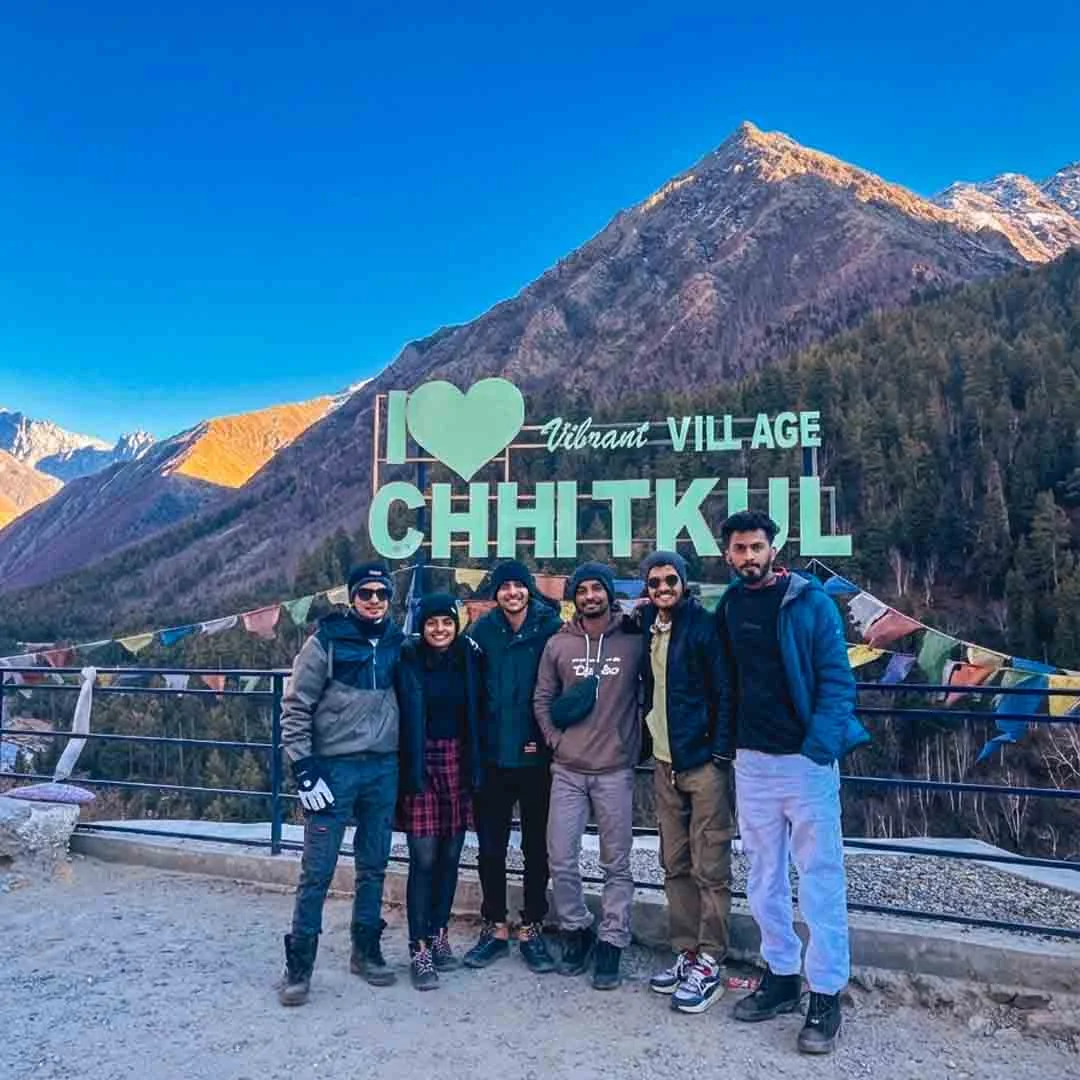 Group Tour9D/8N
Best Selling Winter Spiti Valley Group Tour
2D Sangla•1D Tabo+2
₹18,999₹23,999SAVE INR 5,000/ person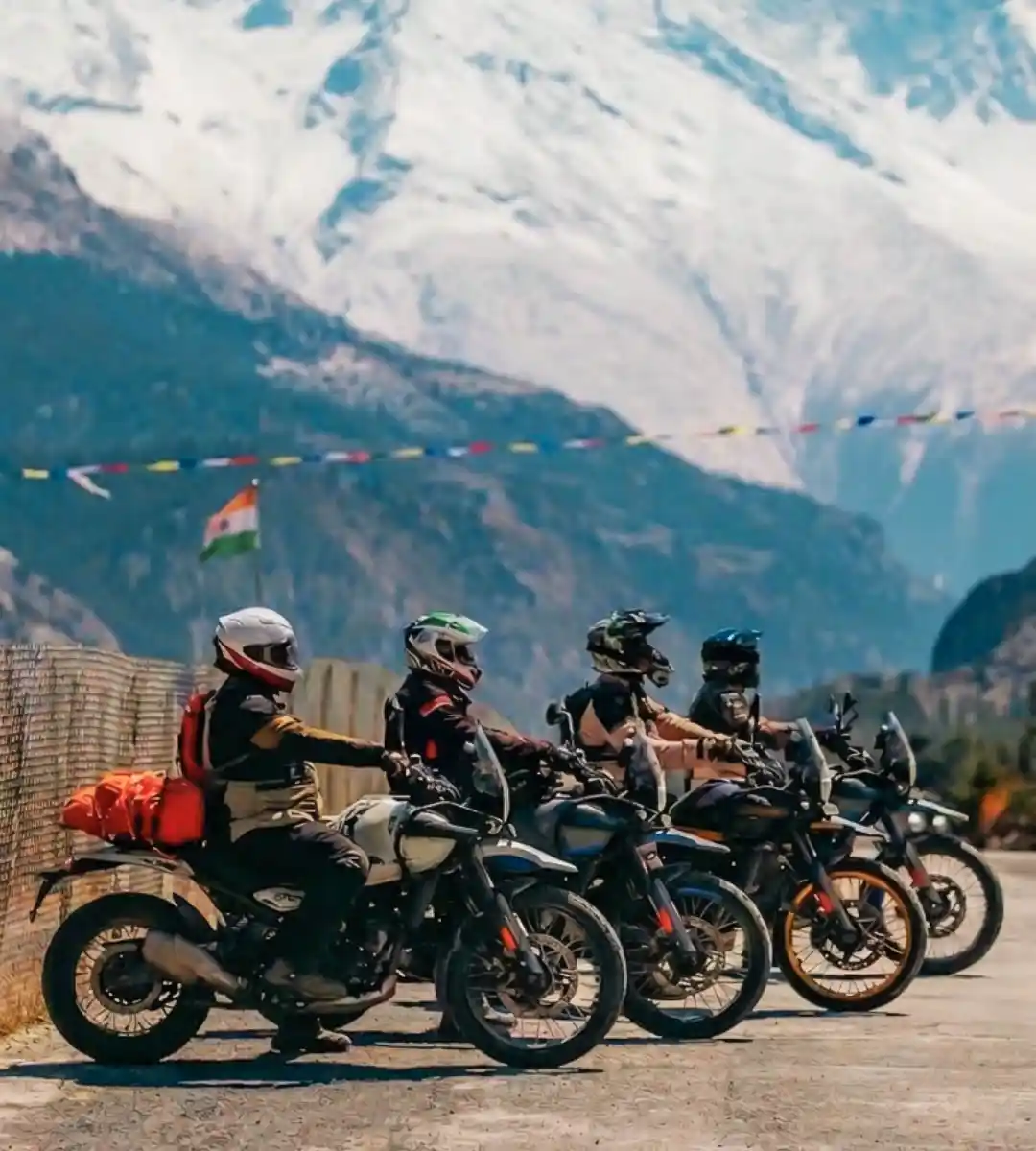 Group Tour10D/9N
Most Loved Spiti Valley Bike Expedition With Chandratal
1D Jibhi•1D Sangla+4
₹34,999₹41,999SAVE INR 7,000/ person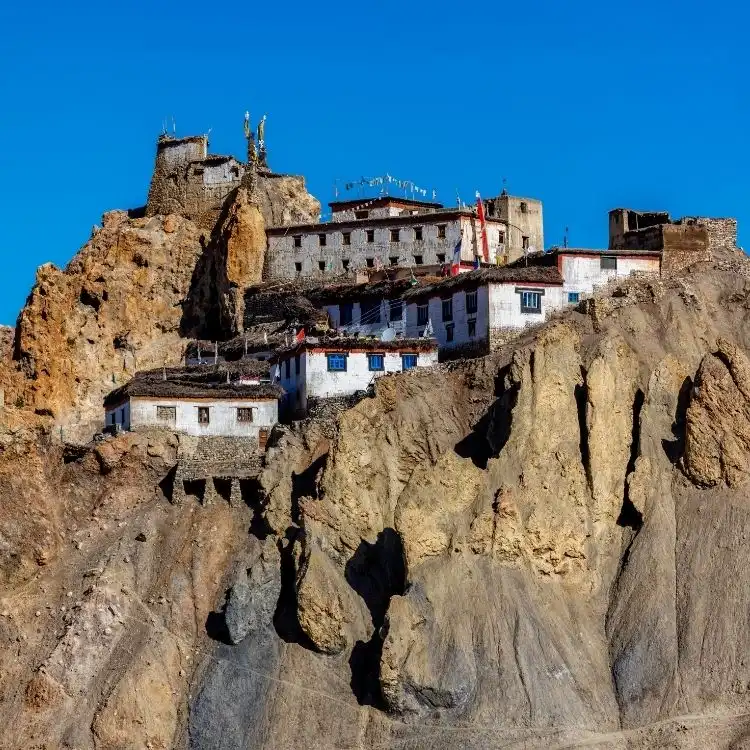 Group Tour10D/9N
Full Spiti Valley Circuit With Chandratal
1D Narkanda•1D Sangla+5
₹29,999₹32,999SAVE INR 3,000/ person
Frequently Asked Questions
What is the altitude of Key Monastery?
Key Monastery sits at roughly 4,166 metres, or about 13,668 feet. Different sources quote slightly different figures, so treat this as a close approximation.
How old is Key Monastery?
Key Monastery's own history page describes it as having been established in the early 15th century, and as having become part of the Gelugpa school in the 17th century. Some other accounts trace its origins further back, often citing an 11th century founding under Dromton. Exact dates, the true age of the monastery, and even the identity of the founder are debated across sources, so it is safer to think of Key as centuries old than to quote a single settled number.
Is there an entry fee?
No, entry is free. A small donation is customary, usually a few hundred rupees, and it goes toward the running of the monastery and the monk school.
Can you stay overnight at Key Monastery?
The monastery is understood to run a simple guest house with basic rooms and shared washrooms, with meals sometimes included. Availability is informal, varies by season, and is not something to count on, especially in peak July and August. Have a Kaza backup booked and confirm locally before heading up.
What are the prayer timings?
Morning prayers generally run around 6.30 to 8 am, with evening prayers shorter and less predictable. These timings are approximate and can shift on festival days or for internal reasons, so reconfirm at the guest house or through a local contact on arrival.
When is the best time to visit?
June to September is the safest window, with clear roads from Manali. Late September and October are quieter and photographically the best, but nights get cold.
Is Key Monastery open in winter?
The monastery stays active year round for the monks, but visiting in winter is tough. The Manali road is closed and access is only via Kinnaur, which is a long journey, with minimal facilities in deep winter.
Do you need a permit to visit Key Monastery?
Indian travellers generally do not need a permit for a normal Key Monastery visit. Some foreign nationals may need a Protected Area Permit for parts of the Kinnaur and Spiti route, and rules can change, so confirm the current requirements for your nationality and route with a local operator or an official source before travel.
Is it suitable for kids and seniors?
It can be, but altitude is the real filter. Kids above 5 and healthy seniors often manage fine if they have acclimatised properly. Anyone with heart or breathing issues, very young children, or travellers who have come up fast from the plains should spend a night or two in Kaza before coming up, take it slow on the stairs, and listen to the body.
Is there mobile network at Key?
Patchy. Jio and BSNL are the most reliable in Spiti. Signal is often weaker inside the monastery walls. Do not plan on being online while you are there.
Is photography allowed inside Key Monastery?
Outside and in the courtyards, generally yes. Inside the prayer halls it varies. During actual prayers, assume no. Always ask a monk first.
How do I get from Kaza to Key Monastery?
Shared taxis run in peak season for about 100 to 200 rupees per seat. A private taxi for a round trip costs roughly 1,500 to 2,500 rupees depending on waiting time. Self drive is also easy, the road is generally in decent condition outside peak winter.
What festivals happen at Key Monastery?
The main annual event is the Guitor Religious Ceremony, featuring Chaam masked dances, usually held in June or July. Exact dates follow the Tibetan calendar and shift each year, so confirm current year dates with the monastery or a local operator before planning around it.
Related guides
Posts about Lahaul and Spiti
- Winter Spiti from Bangalore in 2026-27: Flights, Leave Days & Delhi 4x4 Departures
- What Does a Winter Spiti 4x4 Trip Really Cost in 2026-27? Package Price vs Total Holiday Budget
- How Many Leave Days Do You Need for a 9-Day Winter Spiti Trip in 2026-27?
- Winter Spiti for 4 to 6 Friends: Private 4x4 Quote vs Shared Group Seats (2026-27)
- Winter Spiti from Mumbai in 2026-27: Delhi or Chandigarh, Total Budget and Return Planning
- Is Winter Spiti a Trek? Walking, Stairs and Driving Effort on a 9-Day Trip (2026-27)