
Chitkul
The last Indian village on the old Hindustan Tibet road, where the Baspa River ends, the motorable road stops, and a small Kinnauri settlement sits quietly at around 3,450 metres with nothing beyond it but the border
- Last Village
- ~3,450 m
- Sangla · ~25 km
- May to Oct
- Baspa Valley, Kinnaur
What makes it special
Chitkul is not a destination in the way most travel websites frame it. There is no viewpoint with a railing. No ticket counter. No curated experience. It is a small Kinnauri village at the end of a valley road, where the Baspa River runs grey and fast below terraced potato fields, and the mountains close in on three sides. The Indian road ends here. Beyond the ITBP checkpost, there is nothing but the border.
What people actually come for is harder to explain than it should be. The drive up from Sangla is half the point, 25 km along the Baspa with the terrain getting starker and the air getting thinner as you climb. Rakcham, a small hamlet at the midpoint, is worth a stop. After Rakcham, the orchards thin out, the valley narrows, and then you see Chitkul: a cluster of slate and timber houses on a slope, prayer flags pulling in the wind, and the river below.
The village has two temples that matter. The Mathi Devi temple complex sits in the centre, built in the Kathkuni style with walnut wood. It is believed to be roughly 500 years old and houses an ark of walnut wood covered with cloth and a tuft of yak tail, carried on poles during local ceremonies. The goddess Mathi is the presiding deity of Chitkul, and the villagers take her seriously. Then there is the Kagyupa Buddhist temple, smaller and quieter, with an old image of Shakyamuni Buddha and carved directional kings on the doors. Hindu and Buddhist traditions sit next to each other here, as they do across Kinnaur, without anyone finding it unusual.
The Hindustan Ka Akhri Dhaba is exactly what it sounds like: a small food stall near the edge of the village with a hand painted signboard that has become one of the most photographed things in the Baspa Valley. The food is basic, rajma chawal, maggi, tea, but people queue for a photo with the signboard more than for the food. That is the honest truth.
An IIT Delhi study found that Chitkul has the cleanest air in India. You will not need a study to confirm this. The air at 3,450 metres, with no industry and almost no traffic, is the kind of sharp and clean that you physically notice after the dusty drive in.
Most travellers spend two to three hours here and drive back to Sangla. That is enough if Chitkul is a stop on a bigger Kinnaur trip. If you stay the night, the village empties of day trippers by late afternoon, and what remains is a quiet you do not get in Sangla or Kalpa. The Baspa sounds louder at night. The stars are better. And in the morning, before the tourist vehicles start arriving, Chitkul actually feels like the remote village it is.
Quick answers
- Is Chitkul worth visiting?
- Yes, but manage what you expect. Chitkul is a small village, not a scenic attraction. There is no viewpoint ticket or curated experience. What you get is the end of the Indian road, a genuine Kinnauri settlement, two old temples, the Baspa River, and air that an IIT Delhi study found to be the cleanest in India. If that sounds like your kind of place, you will remember it. If you need things to do, you may feel you have seen it in an hour.
- Should I day trip from Sangla or stay overnight?
- Day trip if Chitkul is one stop on a bigger Kinnaur itinerary. Stay overnight if you want to experience the village after the tourist traffic leaves. By late afternoon, Chitkul gets very quiet, and the morning before the day trippers arrive is a completely different place. One night is enough. Two is stretching it.
- How much time do you need at Chitkul?
- Two to three hours covers the village walk, the Mathi Devi temple, the Kagyupa temple, the river, and the Akhri Dhaba signboard photo. Add a couple of hours if you walk down to the river or toward the ITBP checkpost. If you are staying overnight, an evening and a morning is the right rhythm.
Quick facts
Everything you need to know at a glance.
At a glance
- Altitude
- Approx 3,450 m / 11,320 ft
- Location
- End of Baspa Valley, Kinnaur district, Himachal Pradesh
- Nearest town
- Sangla, approx 25 km downvalley
- Open season
- Generally May to October; road can close in winter
- Time needed
- 2 to 3 hours as a day trip; one night if staying
- Entry fee
- No entry fee
- Effort level
- Easy village walk; real altitude at 3,450 m
On the ground
- Mobile network
- Only BSNL works with any reliability, and even that is intermittent. Jio and Airtel are mostly dead. Download offline maps before you come.
- ATM
- None in Chitkul. Carry cash from Reckong Peo or Rampur. UPI works only when the network cooperates, which is rarely.
- Fuel
- No fuel pump in Chitkul or anywhere in the Baspa Valley. Fill up at Reckong Peo or Rampur.
- Food
- A few small dhabas and homestay kitchens. Rajma chawal, maggi, thukpa, momos, tea. Do not expect variety.
- Stay
- A handful of homestays, guesthouses, and one or two camps. Simple rooms, bucket hot water. Book ahead in peak season.
- Permits
- No permit needed for Indian travellers. Foreign nationals may need an Inner Line Permit for parts of Kinnaur. Confirm current rules before travelling.
- Drone
- Sensitive border area. Do not fly drones without explicit permission. ITBP presence is active.
Seasonal weather
- May to Jun20°5°Summer (May to Jun)
- Jul to Sep18°8°Monsoon (Jul to Sep)
- Oct to Nov14°-2°Autumn (Oct to Nov)
- Dec to Apr6°-12°Winter (Dec to Apr)
Suitable for
- Couples — suitable
- Families — with some care
- Seniors — with some care
- Solo — suitable
- First-timers — suitable
- Pet-friendly — with some care
How to reach Chitkul
3 approach routes, with seasonal access.
From Sangla
Generally May to October- Distance
- Approx 25 to 28 km
- Time
- About 1 to 1.5 hours
- Road
- Narrow mountain road, mostly surfaced, rough in patches after Rakcham
The standard approach and the one most people take. The road follows the Baspa River upstream, climbing gradually. It is narrow and has stretches without guardrails, so if you are driving yourself, go slowly. The section between Rakcham and Chitkul is the roughest. BRO road construction on the Karcham to Harshil road is ongoing in this stretch, so expect occasional delays and diversions.
From Shimla
Generally May to October- Distance
- Approx 245 to 260 km
- Time
- 9 to 11 hours; best split over 2 days
- Road
- NH 5 mountain highway, then valley road
- Last fuel
- Rampur, Reckong Peo
Shimla to Rampur to Karcham on NH 5, then turn left into the Baspa Valley. Sangla is 17 km from the Karcham junction, and Chitkul is another 25 km beyond. Do not attempt this in one day unless you start very early and are comfortable with mountain driving. A night at Narkanda, Sarahan, or Sangla breaks the journey sensibly.
From Delhi
Generally May to October- Distance
- Approx 570 to 600 km
- Time
- 2 to 3 days by road
- Road
- Highway then mountain roads
- Last fuel
- Chandigarh area, Rampur, Reckong Peo
The long haul. Drive or bus to Shimla or Rampur, then continue to the Baspa Valley. Three days of driving with nights at Narkanda or Sarahan and then Sangla is the comfortable way. Trying to do it in two days means long, tiring mountain drives.
Best time to visit
Season by season, so you can plan around the weather rather than hope.
- Recommended
Summer
May to June
The main window. Roads clear, valley green, days warm, nights cold enough for a proper jacket.
- Temperature
- Roughly 12 to 20°C day, 5 to 10°C night
- Crowds
- Moderate to high, peaks on long weekends
- Roads
- Generally open; construction delays possible
- Photography
- Clean light, snow on upper peaks, green valley floor
This is when most people visit. The road from Karcham is generally clear, the valley is at its greenest, and daytime temperatures are comfortable for walking. Nights at 3,450 metres are genuinely cold, even in June. Long weekends in May and June bring tourist traffic, and day trippers from Sangla can make the village feel crowded by midday. If you are staying overnight, the evenings are all yours.
Monsoon
July to September
The valley turns deep green but the highway to Karcham is landslide country.
- Temperature
- Roughly 12 to 18°C day, 8 to 12°C night
- Crowds
- Lower than summer
- Roads
- Valley road usually fine; highway landslide risk
- Rain
- Intermittent, heavier July and August
The Baspa Valley gets more rain than upper Kinnaur, and the valley is lush. But the real problem is the Kinnaur highway between Rampur and Karcham, which is landslide prone in monsoon. Road closures can strand you for hours or days. Inside the valley, the Sangla to Chitkul road is usually fine. If you go, keep buffer days and check road status before leaving Sangla.
- Recommended
Autumn
October to early November
Harvest light, thin crowds, cold evenings. Quietly the best time if you pack properly.
- Temperature
- Roughly 8 to 14°C day, minus 2 to 4°C night
- Crowds
- Low
- Roads
- Generally good; watch for early snow late in the season
- Photography
- The best light of the year
October is when the Baspa Valley is at its most photogenic. The light is warm and clean, potato harvest is in progress, and the crowds have thinned out. Evenings get cold fast, and by late October nights can drop below freezing. The road from Karcham is generally past the worst of the monsoon. If you can handle the cold, this is the month.
Winter
Late November to April
Snow, silence, and a road that can close for weeks. Only for committed winter travellers.
- Temperature
- Roughly minus 5 to 6°C day, minus 12 to minus 5°C night
- Crowds
- Almost nobody
- Roads
- Frequent closures; snow cover common
- What stays open
- A few homestays; most shut for winter
Chitkul receives heavy snowfall in winter, and the village largely empties out. Many residents move to lower elevations. The road from Sangla can be blocked for days or weeks after heavy snow. A few homestays stay open for the rare winter visitor, but facilities are minimal. Do not attempt a winter visit without a reliable 4x4, proper cold weather gear, and complete flexibility in your schedule.
Things to see & do
6 things worth your time at Chitkul.
Walk through the village and visit the Mathi Devi temple
1 to 1.5 hoursThe village is small enough to walk end to end in twenty minutes, but go slowly. The Mathi Devi temple complex sits in the centre, built in Kathkuni style with walnut wood and stone. The temple is believed to be roughly 500 years old. Three shrines share the complex, with the oldest one attributed to a Garhwal resident. The carved walnut wood ark, covered in cloth with a tuft of yak tail, is central to the village's ceremonies. Remove your shoes. Do not photograph without asking. The locals take their temple seriously, and the quiet respect of the place is part of what makes Chitkul feel different from a tourist stop.
Visit the Kagyupa Buddhist temple
20 to 30 minSmaller and quieter than the Mathi temple, the Kagyupa temple sits a short walk away. Inside is an old idol of Shakyamuni Buddha, and the doors carry carvings of the four directional kings. Kagyupa is one of the six main schools of Tibetan Buddhism, and finding a temple of this lineage in a Hindu majority village says something real about how religion works in Kinnaur. Take your shoes off. Keep your voice down.
Walk down to the Baspa River
30 to 45 minThe river runs below the village, grey green and fast from glacier melt. The walk down to the banks is short but the climb back up at 3,450 metres will remind you of the altitude. The water is ice cold. Some people dip their hands in. Nobody swims. Sit for ten minutes and listen. The sound of the Baspa at close range, with nothing else around, is one of those things that travel writing cannot actually capture.
Eat at Hindustan Ka Akhri Dhaba
30 min to 1 hourThe food is simple: rajma chawal, maggi, omelette, and tea. The signboard reading Hindustan Ka Akhri Dhaba, hand painted in Hindi, is what draws the crowd. You will wait for a photo with it. Everyone does. The actual food is unremarkable but the location makes it memorable. Eat here because it exists, not because the food will change your life.
Walk toward the ITBP checkpost
30 to 45 min one wayAbout 2 to 4 km beyond the village, the road reaches the ITBP checkpost. You cannot go beyond it, and photography near the post is not a good idea. But the walk itself, along the narrowing valley with the mountains pressing in, gives you a real sense of what 'last village' actually means. Go in the morning when the light is direct and the tourist traffic has not started.
Sit somewhere and do nothing
As long as you needThis is not a joke activity. Chitkul does not have a list of things that fill a day. What it has is altitude, river sound, clean air, and a sense of being somewhere genuinely remote. Find a spot above the village or by the river and sit. If you stayed overnight, the morning before day trippers arrive is the time. You will not regret the silence.
Know before you visit Chitkul
The practical bits, from people who have been.
Day trip or overnight: which is right for youDay trip covers the basics; overnight gives you the real Chitkul
Day trip from Sangla. This is what 80% of visitors do. Drive up in the morning, walk the village, see the temples, photo at the dhaba signboard, walk to the river, drive back by afternoon. It works. You see Chitkul. You tick it off.
Overnight. Stay if you want to understand why people care about this place. The village transforms after 4 PM when the day trip vehicles leave. Evenings are quiet in a way that Sangla and Kalpa never are. Mornings before the tourist traffic starts are even better. One night is enough for most people. Two nights and you will start feeling like there is not much left to do, which, depending on your personality, is either the problem or the whole point.
Where to stay. A handful of homestays and small guesthouses. Rooms are basic: concrete walls, one or two heavy blankets, bucket hot water on request. Expect Rs 800 to 2,000 for most options. A couple of camps operate in season. Book ahead if you are visiting between May and October, especially on weekends. Showing up without a booking is risky because the village is small and beds run out.
Who Chitkul suits and who should reconsiderGreat for quiet seekers and road trippers. Less so for families with small kids or those wanting activities.
Loves it. Solo travellers who value quiet. Couples who want a night away from tourist infrastructure. Road trip groups doing the Kinnaur circuit who want to reach the literal end of the road. Photographers who work with morning light and mountain textures. People who find satisfaction in reaching remote places.
Will be underwhelmed. Travellers expecting a packed itinerary. Chitkul is a small village, not an activity destination. If you need things to do for a full day, you will run out by lunch. Also, the 'last village of India' tag sets up expectations that the village itself cannot always meet, especially when crowded with day trippers in peak season.
Families with small kids. Possible but think carefully. The drive from Sangla is bumpy, the altitude is real at 3,450 metres, and there are no medical facilities in the village. Older kids who are used to road trips handle it fine. Toddlers and the altitude do not mix well.
Senior travellers. The village walk is flat and easy. The altitude is the concern. Healthy seniors who have acclimatised at Sangla for a day or two can manage comfortably. Anyone with heart, lung, or blood pressure issues should consult a doctor before going above 3,000 metres.
Pets. Some homestays may accept pets, but check in advance. The temple areas do not allow animals. The ITBP presence means you should keep pets on a leash and visible.
Safety, altitude, and health notesReal altitude, no medical facilities, border area rules
Chitkul is at approximately 3,450 metres. That is not extreme, but it is high enough that altitude symptoms are possible, especially if you have driven up from the plains in two days. A dull headache, mild nausea, and poor sleep on the first night are common. Drink plenty of water. Skip alcohol. Do not rush the walk to the river or the ITBP post on arrival day.
There is no clinic, no hospital, and no pharmacy in Chitkul. The nearest medical facility is in Sangla, and the nearest proper hospital is at Reckong Peo. Carry your own kit: prescription medicines, painkillers, ORS, band aids, and basic first aid.
This is a sensitive border area. ITBP personnel are present. Carry valid ID at all times. Do not wander off the main village area or trail toward the checkpost without being aware of your surroundings. Drone flying is effectively banned. Photography near the ITBP post or military installations is not permitted.
The road from Sangla to Chitkul is narrow with drops on one side. BRO construction on the Karcham to Harshil road is currently underway in this stretch, so conditions may change between seasons. Drive carefully, especially after Rakcham.
How to fit Chitkul into a Kinnaur tripBest as part of the Sangla Valley leg, combined with Kalpa and optionally Spiti
The most common pattern: two nights in Sangla, with a Chitkul day trip on one of those days. Then move to Kalpa for one to two nights. That covers the best of lower Kinnaur.
If you are doing the full Kinnaur to Spiti circuit: Shimla, Sarahan (one night), Sangla (two nights with a Chitkul day trip), Kalpa (one to two nights), Nako (one night), Tabo, Kaza, Chandratal area, and out via Manali. That is roughly 10 to 12 days done properly.
If you want to stay overnight in Chitkul instead of day tripping, replace one Sangla night with a Chitkul night. Drive Sangla to Chitkul in the afternoon, sleep there, explore the morning, and either return to Sangla or drive directly to Karcham and onward to Kalpa.
Road access, permit rules, and local conditions can change with the season. Always reconfirm details with your operator or a recent local source a few days before your trip.
What I would tell a friend before they goGo early, carry cash, eat local, and lower your expectations just enough
Drive to Chitkul early in the morning. The road is narrow and gets busy with tourist vehicles by mid morning. The village at 8 AM is a completely different place from the village at noon when the day trip buses arrive.
Carry cash. There is no ATM in the Baspa Valley. UPI works when the network works, which in Chitkul means rarely. Most homestays and dhabas operate on cash only.
Do not bring expectations shaped by Instagram. The 'last village of India' tag sounds dramatic, but the village itself is small and simple. If you arrive expecting something grand, you will be disappointed. If you arrive expecting a quiet settlement at the end of a beautiful valley drive, you will love it.
If you are staying overnight, ask your homestay to cook local food. Siddu, thukpa, and rajma chawal made in a village kitchen are better than anything on the dhaba menu.
The walk toward the ITBP checkpost is worth doing for the sense of reaching the actual edge. Go in the morning. Do not take photos near the military post.
And bring a proper jacket. Even in July, the temperature drops sharply once the sun goes behind the ridge. Most people underpack for Chitkul because they think it is just a day trip. The cold at 3,450 metres after sunset is not casual.
Nearby attractions
Other places worth the detour.
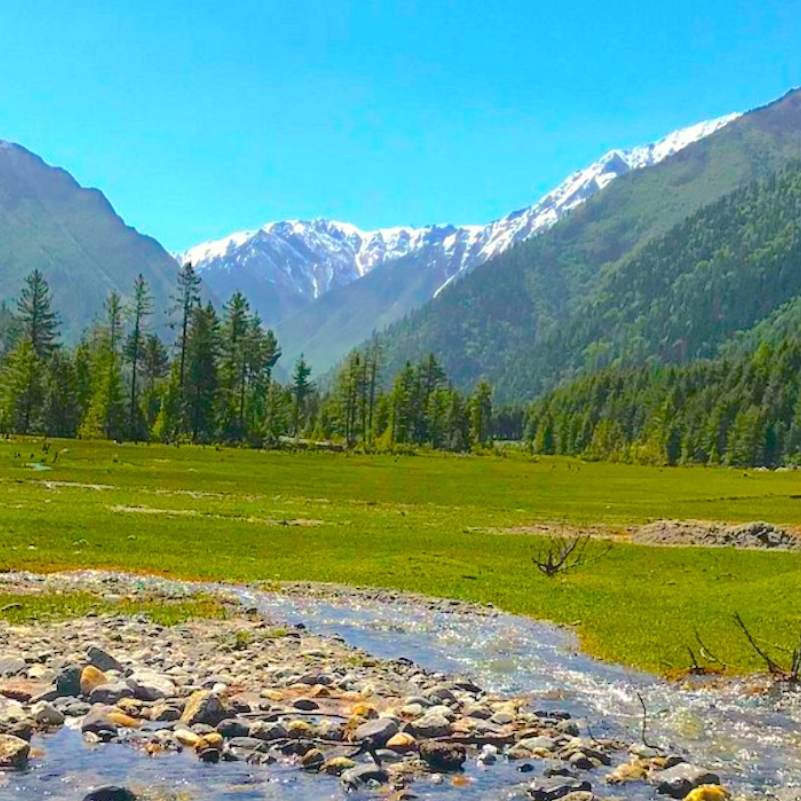
Rakcham
13 km from Chitkul, on the road from Sangla
A small, quiet hamlet roughly halfway between Sangla and Chitkul. A few homestays and a riverside setting. Good for a lunch stop on the drive, or for travellers who want isolation without going all the way to Chitkul.
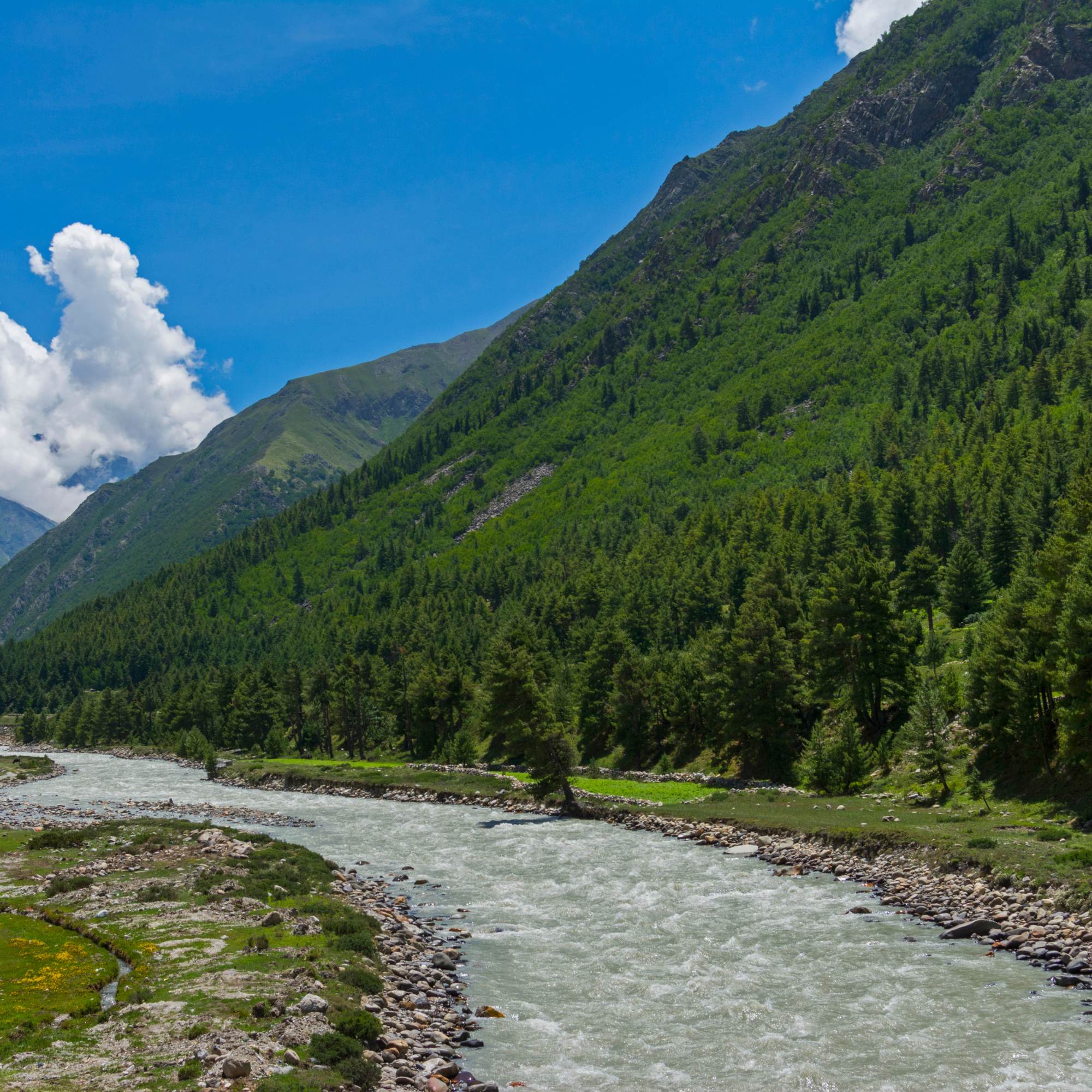
Sangla town and Baspa riverside
25 km from Chitkul
The main town in the Baspa Valley and the base for most Chitkul trips. Hotels, homestays, a market, and evening walks along the river. Two to three nights here covers both the Chitkul day trip and the rest of the valley.
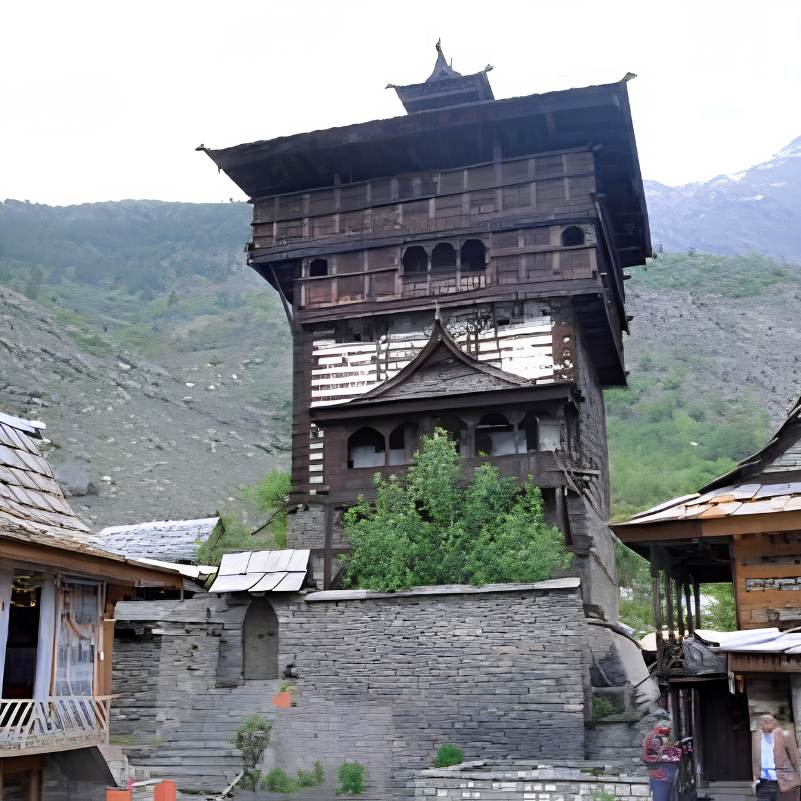
Kamru Fort
27 km (2 km above Sangla town)
A five storey Kathkuni wooden tower and living temple complex on a rocky spur above Sangla. The best single stop in the Baspa Valley for architecture, history, and the valley view. Worth a morning visit before or after your Chitkul trip.
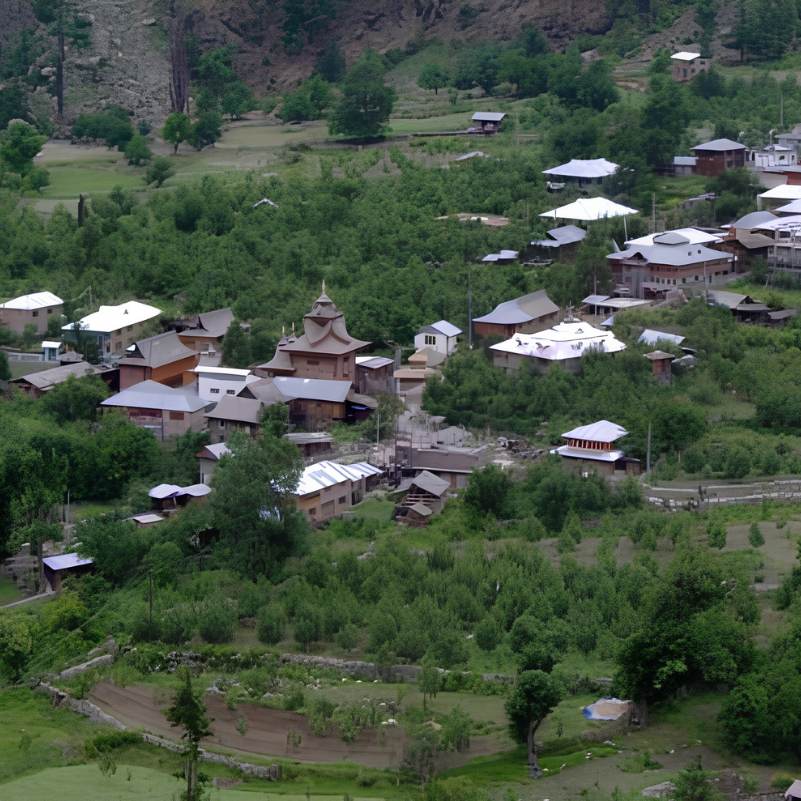
Batseri village
28 km from Chitkul (3 km from Sangla)
A traditional Kinnauri village with stone paved lanes, old wooden houses, and a Badri Narayan temple. Less visited than Kamru, flatter and easier to walk. Some of the valley's best riverside camps are near Batseri.
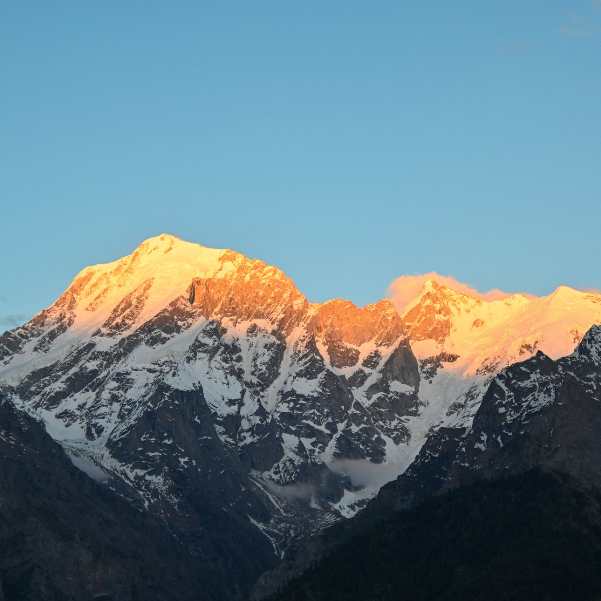
Kalpa and Kinner Kailash viewpoint
65 km from Chitkul via Karcham
The other major stop in lower Kinnaur, higher and drier than the Baspa Valley, known for its direct views of the Kinner Kailash range. Most travellers combine Sangla (with Chitkul) and Kalpa in a single Kinnaur trip.
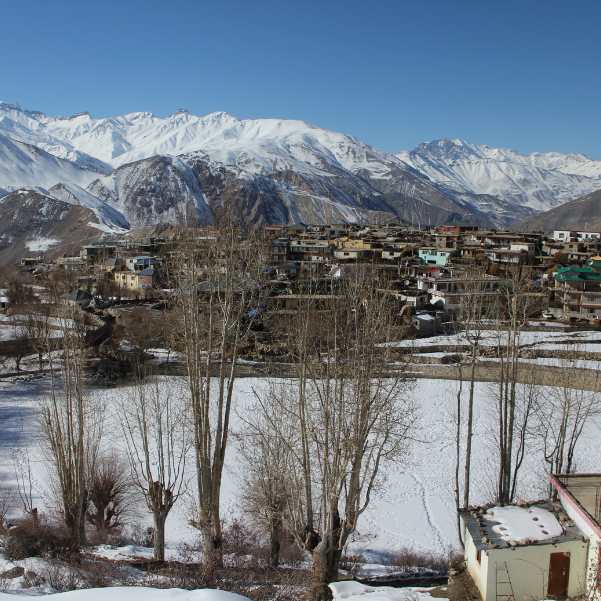
Nako Lake and Village
190 km from Chitkul
A Buddhist village around a sacred high altitude lake in upper Kinnaur, on the road toward Spiti. Worth a night if you are continuing the Kinnaur to Spiti circuit.
Our packages with Chitkul
Curated trips that include a visit to Chitkul.
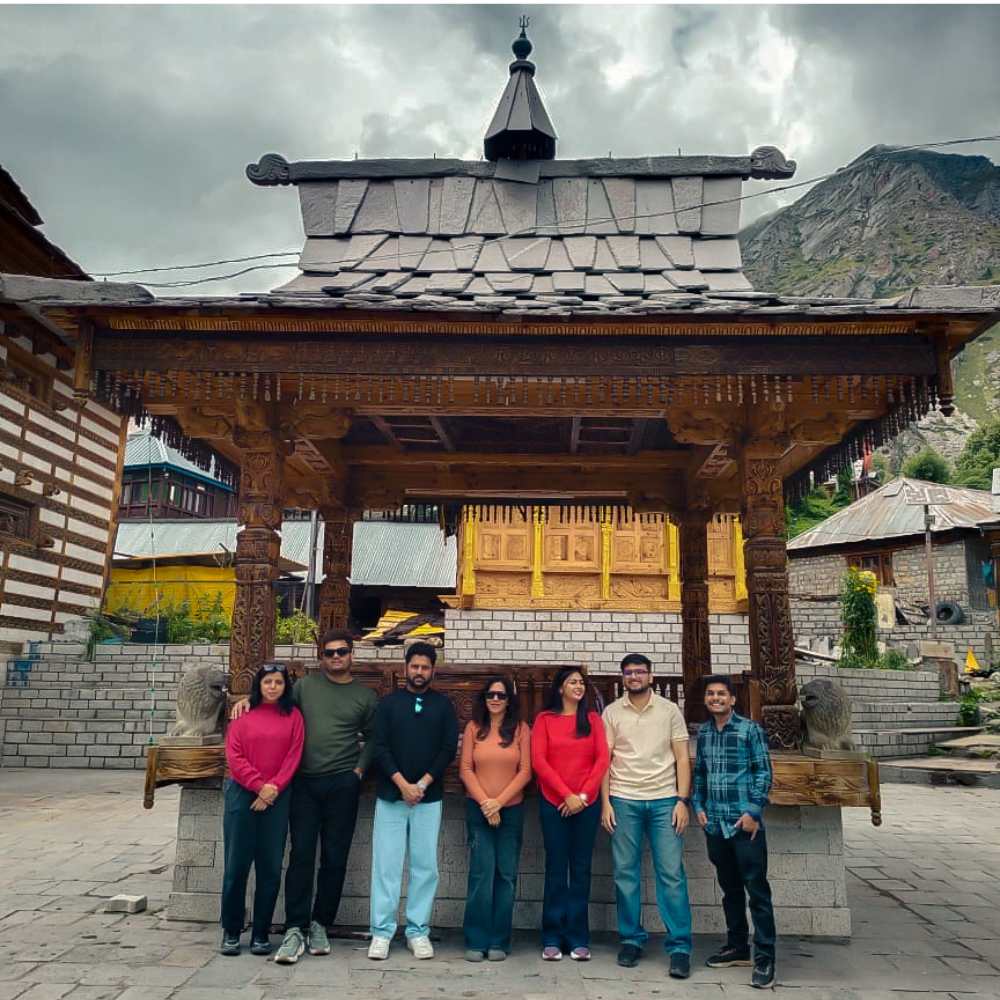 Group Tour5D/4N
Kinnaur Valley Weekend Group Trip With Sangla Chitkul and Kalpa
1D Sangla•1D Kalpa
₹7,999₹9,999SAVE INR 2,000/ person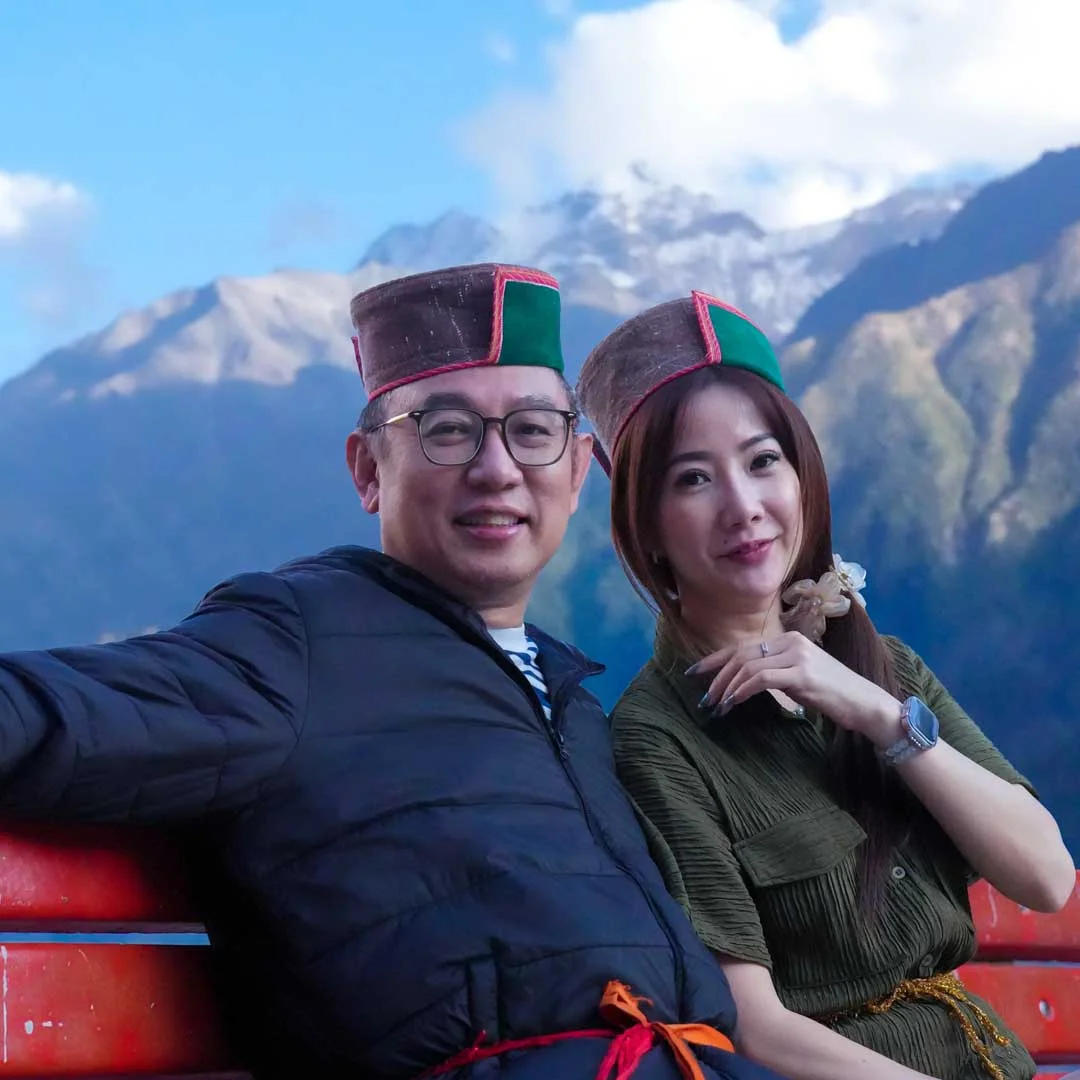 4D/3N
4D/3NKinnaur Valley Scenic Circuit With Sangla Chitkul and Kalpa
1D Shimla•1D Sangla+1
₹16,999₹17,999SAVE INR 1,000/ person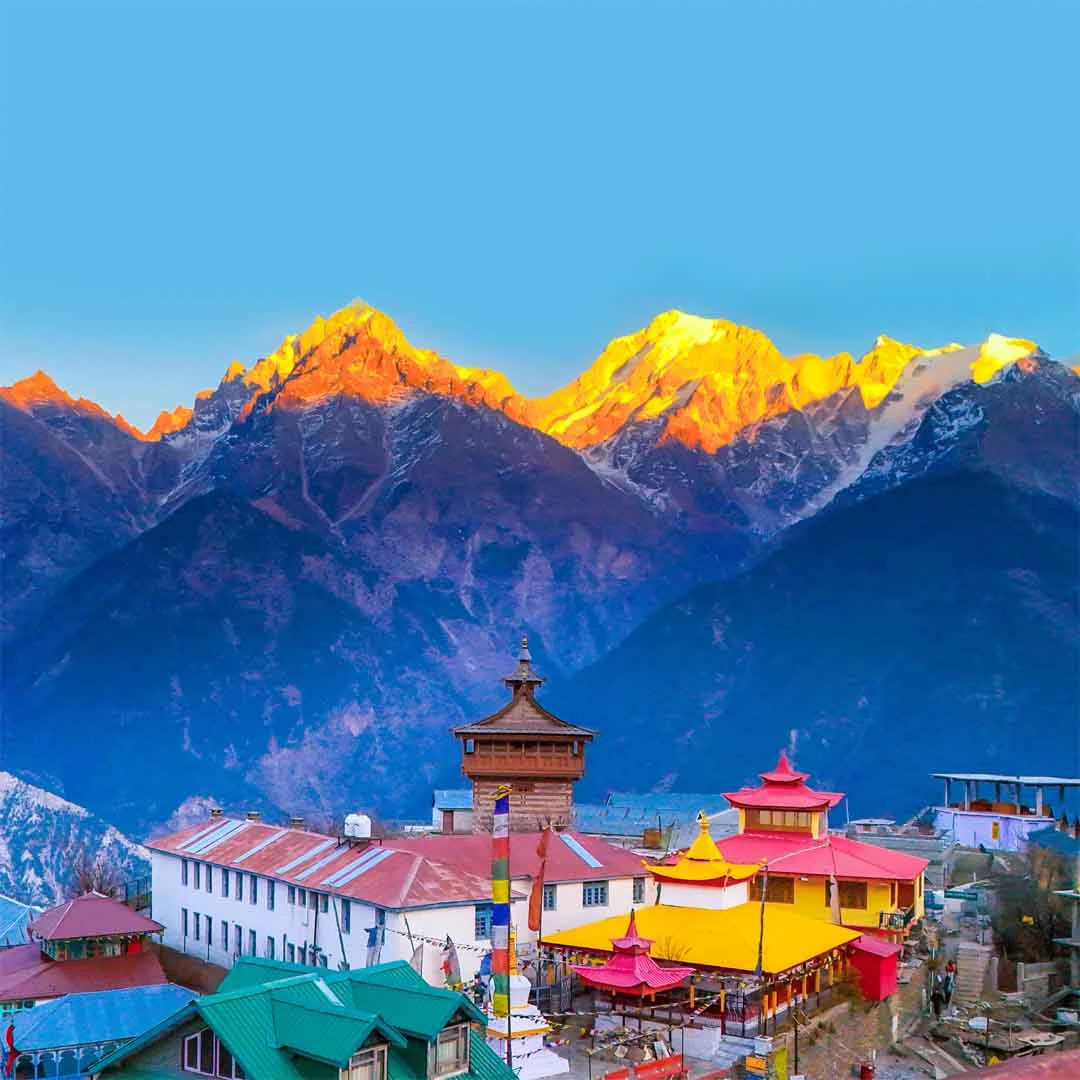 5D/4N
5D/4NClassic Kinnaur Valley Circuit With Sarahan Sangla Chitkul and Kalpa
1D Shimla•1D Sarahan+2
₹19,999₹21,999SAVE INR 2,000/ person
Common questions about Chitkul
Where exactly is Chitkul?
Chitkul is in the Baspa Valley, Kinnaur district, Himachal Pradesh. It sits at around 3,450 metres on the right bank of the Baspa River, roughly 25 km from Sangla and about 40 km from the Karcham junction on NH 5. It is the last village on the old Hindustan Tibet road where you can go without a permit.
What is the altitude of Chitkul?
Approximately 3,450 metres, or about 11,320 feet. That is high enough for altitude effects if you have come up from the plains quickly. Acclimatise at a lower elevation like Sangla for a day before heading up.
What is the best time to visit Chitkul?
May to June for clear roads and green valley. October for harvest light, thin crowds, and the best photography conditions. July to September is possible but the Kinnaur highway is landslide prone. Winter is harsh and the road can close for weeks.
Do I need a permit for Chitkul?
Indian travellers do not need a permit for Chitkul. Foreign nationals may need an Inner Line Permit for parts of Kinnaur. Rules can change, so confirm current requirements with your operator or the local SDM office before travelling.
Is there mobile network in Chitkul?
Only BSNL works with any reliability, and even that is intermittent. Jio and Airtel are mostly dead. Download offline maps, carry cash, and tell people at home that you may be unreachable for a day.
Is there an ATM or petrol pump in Chitkul?
No to both. There is no ATM and no fuel pump anywhere in the Baspa Valley. Carry enough cash and fill fuel at Reckong Peo or Rampur before entering the valley.
Can I stay overnight in Chitkul?
Yes. The village has a handful of homestays, guesthouses, and camps. Rooms are simple, hot water is by bucket, and the food is basic. Book ahead in peak season because the village is small and beds run out. Expect to pay Rs 800 to 2,000 per night for most options.
Is Chitkul safe for solo women travellers?
Yes. The community is small, conservative, and respectful. ITBP presence adds a layer of security. Standard precautions apply, especially after dark. Most solo women travellers report feeling comfortable and welcome.
Can I visit Chitkul with kids?
Possible with older kids who are used to road trips. The altitude at 3,450 metres is the main concern. Toddlers and young children may struggle with the thin air, and there are no medical facilities in the village. Acclimatise at Sangla first.
What is Hindustan Ka Akhri Dhaba?
A small food stall near the edge of Chitkul with a hand painted signboard that has become one of the most photographed things in the Baspa Valley. The food is basic: rajma chawal, maggi, and tea. The signboard photo is what most people come for.
Is Chitkul really the last village of India?
Chitkul is the last Indian village on the old Hindustan Tibet trade route, and the last point where you can travel without a permit. The Indo Tibet border is roughly 90 km beyond. Whether it is technically the 'last village of India' depends on how you define the term, as other remote border villages in other states could make the same claim. But the tag has stuck, and it is what most people know Chitkul for.
What treks start from Chitkul?
Chitkul is the starting point for the Lamkhaga Pass trek and the Borasu Pass trek, both serious high altitude crossings into Uttarakhand. These are not casual hikes. They require proper gear, guides, and permits. The Lamkhaga Pass reaches over 5,200 metres. Only attempt these with experienced operators.
Related guides
Posts about Kinnaur
- Yulla Kanda Trek Guide 2026: Route, Best Time, Cost and Planning
- Kinnaur Snowfall Guide 2026: When & Where to Look for Snow
- Christmas & New Year in Kinnaur: A 2026-27 Winter Trip Guide
- Kinnaur in November 2026: Weather, Snow Chances & 7-Day Trip Plan
- Yulla Kanda Trek Distance and Route 2026: Yulla Khas to the Lake
- Yulla Kanda Krishna Temple in 2026: Location, Beliefs & Visiting Etiquette