
Langza Village
A small Spitian village at roughly 4,400 metres above Kaza, known for its giant seated Buddha overlooking the valley and the marine fossils scattered across its slopes
- Village
- ~4,400 m
- Kaza · ~15 km
- May to Oct
- Fossils & Buddha
What makes it special
Langza is a small Spitian village in the Spiti sub division of Lahaul and Spiti district, sitting at roughly 4,400 metres on a wide green shelf above Kaza. The village is split loosely into Langza Yongma, the lower cluster, and Langza Gongma, the upper cluster, with somewhere around 33 to 50 households between them and a population of roughly 137 people. The first thing you see as you climb up from Kaza is the giant seated Maitreya Buddha statue at the edge of the upper village, its golden face turned toward the white pyramid of the Chau Chau Kang Nilda peak across the valley, also called the Princess Mountain. The statue itself is a modern construction, widely reported to date to around 2005, and the genuine centuries of heritage at this site sit a little behind it, in the small Lang Temple (Langza Gompa) that is widely cited as several hundred years old. That nuance matters, because most travel writing on Langza accidentally hands the temple's age to the statue. The statue is still the photograph everyone leaves with, and it is fair to say it deserves the attention. Behind the village, the slopes are scattered with ammonite fossils, the spiral shaped remains of marine animals from the ancient Tethys Sea era. Spiti was sea floor once. The fossils are how you know. Most day trippers from Kaza do Langza, Komic, and Hikkim in one fast morning, photograph the Buddha, eat a thukpa, and leave by 1 PM. That version is completely fine if a day is all you have. The version worth talking about is the one where you stay a night with a local family, walk the slopes after the cars are gone, and sit at the Buddha at first light when the wind has not yet started. That is the trip people actually remember.
Quick answers
- Is Langza worth visiting?
- Yes, if you are already doing the high villages loop from Kaza. The Buddha statue and the fossil slopes are the genuine reasons to stop, the views toward Chau Chau Kang Nilda are the bonus. Skip it only if you have severe altitude symptoms or are short on time.
- How much time do you need at Langza?
- An hour and a half covers the Buddha, a short walk in the village, and a quick look at the fossil slopes. Stay one night if you can, sunrise from the Buddha and the night sky here are a different experience from the day visit.
- Can you stay overnight at Langza?
- Yes. There are around 8 to 12 basic homestays in the village run by local families. Expect mud walled rooms, heavy blankets, shared or basic attached washrooms, and home cooked meals. Pre book in July and August.
Quick facts
Everything you need to know at a glance.
At a glance
- Altitude
- Around 4,400 m / 14,500 ft (sources vary slightly between 4,330 and 4,420 m)
- Location
- Spiti sub division, Lahaul and Spiti district, Himachal Pradesh
- Nearest town
- Kaza, around 15 km
- Best season
- Mid May to early October, generally
- Entry
- No fee for the village or the Buddha. Donations welcome at the Lang temple
- Time needed
- 1.5 to 2 hours from Kaza, one night to do it justice
- Famous for
- Giant seated Buddha statue and ammonite fossils from the Tethys Sea era
- Backdrop peak
- Chau Chau Kang Nilda, around 6,303 m
- Population
- Around 33 to 50 households, roughly 150 people
- Effort
- No real walking, altitude is the genuine factor
On the ground
- Mobile network
- BSNL and Jio occasionally flicker, often nothing usable. Treat it as offline
- ATM
- None at Langza. Nearest reliable ATMs are at Kaza
- Fuel
- No fuel at Langza. Tank up at Kaza, the only reliable pump for a long way
- Food
- A couple of small cafes near the Buddha in season, plus homestay kitchens. Thukpa, momos, simple Indian meals
- Washrooms
- Basic facilities at the cafes and homestays. Nothing along the road up
- Parking
- Open ground near the Buddha statue, easy on weekdays, tighter midday in July
- Permits
- Indian travellers do not need a permit. Foreign nationals should check current Inner Line Permit rules for the wider Spiti and Kinnaur route, rules can change
- Drones
- Sensitive border zone. Do not fly near the Buddha statue or the village without explicit permission
- Walking inside
- Flat to gently sloped, but the altitude makes even a short walk feel longer
Seasonal weather
- May to mid Jun16°0°Late spring
- Jun to Aug18°5°Summer
- Sep to mid Oct12°-3°Autumn
- Nov to Apr-2°-25°Winter
Suitable for
- Couples — suitable
- Families — with some care
- Seniors — with some care
- Solo — suitable
- First-timers — suitable
- Pet-friendly — not suitable
How to reach Langza Village
4 approach routes, with seasonal access.
From Kaza
Generally motorable mid May to October. Snow can shut the upper road for days in winter- Distance
- Around 15 km
- Time
- Around 45 minutes to 1 hour
- Road
- Tarred for most of the way, narrow uphill stretches near the village
- Last fuel
- Tank up at Kaza, no fuel anywhere on the loop
The standard direct approach. Drive out of Kaza past the Sakya Tangyud monastery, climb the switchbacks for around 14 km, and the giant Buddha appears on your right before you enter the village. Most travellers do not visit Langza alone, they fold it into the Langza, Komic, Hikkim loop, which takes around 5 to 6 hours total with stops. A small car manages in dry conditions, an SUV makes the climb easier on the engine.
From Kaza, via the Langza Komic Hikkim loop
Mid May to October- Distance
- Around 35 to 40 km loop
- Time
- 5 to 6 hours including stops
- Road
- Mostly tarred and narrow, some rough sections
- Last fuel
- Kaza only
The version most day visitors actually do. Drive Kaza to Langza first, around 14 km, photograph the Buddha and the fossil slopes, then continue 10 km on to [Komic](/places-to-visit/komic-village) for the monastery and lunch, then drop 4 km down to [Hikkim](/places-to-visit/hikkim) for the post office, then back to Kaza. Counter clockwise also works and is sometimes better for crowd timing.
From Manali via Kunzum and Kaza
Late May to early October- Distance
- Around 215 km from Manali
- Time
- 10 to 12 hours, do it across two days
- Road
- Mountain road with rough patches and two high passes
- Last fuel
- Manali, then Kaza. Long stretch in between with no reliable fuel
This route crosses the Atal Tunnel, drops into Lahaul, climbs over [Kunzum Pass](/places-to-visit/kunzum-pass), then enters Spiti via Losar and Kaza. Sleeping a night at [Kaza](/places-to-visit/kaza) before driving up to Langza is non negotiable. Going from Manali to Langza in one shot is how people end up with bad altitude sickness.
From Shimla via Kinnaur
Generally open year round, with weather based closures- Distance
- Around 445 km
- Time
- 2 to 3 days, with overnight halts
- Road
- Mostly tarred, narrow and exposed in stretches through Kinnaur
- Last fuel
- Shimla, Rampur, Reckong Peo, Powari. Last reliable fuel before Kaza is at Powari
The longer approach that allows for gradual acclimatization. Shimla to Narkanda or Sarahan, then Kalpa, Nako, [Tabo](/places-to-visit/tabo-monastery), then Kaza. Spend at least one night each at lower altitude stops. Visit Langza on day 4 or 5 once your body has adjusted. This is the route we recommend for first time Spiti travellers.
Best time to visit
Season by season, so you can plan around the weather rather than hope.
- Recommended
Late spring
Mid May to Jun
Roads open, village wakes up after winter
- Temperature
- Around 10 to 16°C day, 0 to 5°C night
- Roads
- Manali side opens late May to June, Shimla side usually open
- Crowds
- Low to moderate
- Fields
- Meadows greening up, peas and barley sown
Roads from both Shimla and Manali open up by late May to early June. Homestays restart, the cafes near the Buddha reopen, and the high villages loop is in good shape. Mornings are still cold, nights well below 5 degrees. Solid window for first time Spiti visitors.
Summer
Jul to Aug
Busiest stretch, midday traffic on the loop
- Temperature
- Around 12 to 18°C day, 5 to 8°C night
- Roads
- Both sides usually open, watch for landslide closures on approaches
- Crowds
- High between 10 AM and 1 PM
- Fields
- Green meadows, peas and barley in full growth
Spiti sits in a rain shadow, but the roads in from Kinnaur and Manali can be hit by landslides during the plains monsoon. Langza itself stays mostly dry and the meadows are at their greenest. Day trippers fill the loop between 10 AM and 1 PM. Arrive before 10 AM if you want the Buddha quiet, or stay overnight.
- Recommended
Autumn
Sep to mid Oct
Cleanest light, fewest people on the loop
- Temperature
- Around 8 to 12°C day, minus 3 to 3°C night
- Roads
- Generally open through September, Manali side may close mid October
- Crowds
- Low
- Fields
- Harvest done, slopes turning pale gold
If you care about photography or quiet, this is the window. Crowds drop, the air gets sharper, and the Buddha glows in the slanted light from late afternoon. Nights start dropping below freezing by late September. A proper down jacket is not optional. Roads from Manali side may close suddenly with early snow in mid October.
Winter
Nov to Apr
Snowbound, most homestays shut
- Temperature
- Around minus 5 to 0°C day, minus 20 to minus 25°C night
- Roads
- Only via Shimla and Kinnaur, frequent blockages, upper road to Langza often shut after snow
- Crowds
- Almost none
- Fields
- Buried under snow
The Manali approach via Kunzum closes for the year. The Shimla side stays open with frequent disruptions. Langza itself is often cut off after heavy snowfall, the upper road can be impassable for days. Most homestays shut. Temperatures drop to minus 25 at night. Only for properly equipped winter travellers.
Things to see & do
7 things worth your time at Langza Village.
Sit at the giant Maitreya Buddha statue
30 to 45 minutes including the short walkThe seated figure at the edge of upper Langza is widely identified as Maitreya, the future Buddha, finished in gold paint over sandstone and concrete. Worth knowing, the statue itself is a modern construction, commonly reported to date to around 2005. The widely repeated claim that it is 1,000 years old is almost certainly a mix up with the small Lang Temple tucked behind it, which is the genuinely old structure here. None of that takes anything away from the visit. The statue faces the Chau Chau Kang Nilda peak across the valley, and locals say it watches over the village against the harsh climate. Park at the small open ground near the base, then walk up the path for around 8 to 10 minutes to reach the platform. Best light is early morning and the half hour before sunset. Walk clockwise around the platform, do not climb on the statue itself.
Look for ammonite fossils on the slopes
45 to 60 minutesSpiti was once part of the Tethys Sea. Hundreds of millions of years later, the spiral shaped ammonite fossils, locally called chaudua, are still scattered across the slopes around the village. Local kids will sometimes show you a small collection at their houses, and there is a small fossil display point in the village you can ask about. Look at them, photograph them, hold one if a kid hands it to you, then put it back. Possession and collection of fossils is illegal in India, the slope they came from is geological heritage, and the village ecosystem is depleted every time a traveller pockets one. If you want a souvenir, the village makes mud replicas of fossils that are a far better thing to take home.
Visit Lang Temple, the village gompa
20 minutesThe small village temple sits right next to the Buddha statue and is dedicated to the local deity Lang Chenmo. Locals consider it a spiritual centre of Spiti, with the deities of the valley believed to reside here. This, not the big statue in front of it, is where the real historical depth of the site lives. Sources describe it as several centuries old, with many putting it at over 500 years. It is a quiet, working hall, not a tourist monastery. Walk in slowly, keep your voice down, ask before stepping into the inner room. No photography inside the prayer hall.
Combine with Komic and Hikkim on the standard loop
5 to 6 hours from KazaThe most logical route for the day. Kaza to Langza for the Buddha and the fossil ground, up to [Komic](/places-to-visit/komic-village) for the Tangyud monastery and lunch, down to [Hikkim](/places-to-visit/hikkim) for the post office, back to Kaza. Counter clockwise, with Hikkim first, often has fewer queues at the post office counter. Most groups do this in roughly 5 to 6 hours including stops.
Watch sunrise at the Buddha
45 minutesThe version of Langza that day visitors never see. Set an alarm for 30 minutes before sunrise, walk up to the Buddha while the village is still asleep, and watch the first light catch the Chau Chau Kang Nilda peak before it reaches the statue itself. Carry a flask of tea and a heavy jacket, sunrise winds at this altitude are sharper than they look on a forecast.
Stargaze from outside the homestay
1 to 2 hours after darkAlmost zero light pollution, almost no humidity, and almost no people once the day vehicles leave. The Milky Way is visible from July to September. You will need a proper jacket, a torch with a red light setting, and patience for your eyes to adjust. Cameras on tripods at 15 to 25 second exposures pull out the band easily. Most homestays will lend you a stool or a thick blanket to sit on.
Try Zama pottery if a workshop is open
30 to 45 minutesLangza has a long tradition of Zama pottery, made from the local yellow and black clay using techniques that go back centuries. A small handful of families still practise it. Workshops open and shut seasonally and depend on whether the potter is around, so this one is hit or miss. Ask at your homestay. If it is on, it is one of the more genuine craft experiences in Spiti.
Know before you visit Langza Village
The practical bits, from people who have been.
What Langza actually isA high Spitian village at roughly 4,400 m, famous for its Maitreya Buddha statue and marine fossils
Langza is a small village in the Spiti sub division of Lahaul and Spiti district, Himachal Pradesh. It sits at roughly 4,400 metres, with figures across sources varying between about 4,330 and 4,435 metres. Treat the altitude as a close approximation. The settlement is split loosely into Langza Yongma, the lower cluster, and Langza Gongma, the upper cluster, with around 33 to 35 households between them and a population most commonly cited at around 137 people. Langza Gongma holds the iconic Buddha statue and the Lang temple. The two reasons most travellers come are the giant seated Maitreya Buddha statue and the ammonite fossils scattered across the surrounding slopes, remains of marine life from when this entire region sat under the ancient Tethys Sea. The Chau Chau Kang Nilda peak, at around 6,303 metres and locally called the Princess Mountain, dominates the view across the valley.
The Buddha statue, brieflyModern statue from around 2005. The centuries old heritage lives in the small temple behind it
The Buddha is the visual signature of Langza, and a piece of context most writing on the village gets wrong. The statue itself is a modern construction, widely reported to date to around 2005, built in sandstone and concrete and finished in gold paint. It is identified as a seated Maitreya, the future Buddha, and commonly cited at around 20 to 35 feet tall depending on the source. It sits on a small rise at the upper edge of the village, facing the snow line of Chau Chau Kang Nilda across the valley. The claim you will read everywhere that the statue is 1,000 years old is almost certainly a mix up with the small Lang Temple (Langza Gompa) directly behind it, which is the genuinely historic structure and is widely cited as several hundred years old. Locals believe the Buddha protects the village from the harsh climate of the high Spiti winter. Reach it on a short 8 to 10 minute walk from the parking ground at the base. Walk clockwise around the platform, do not climb on the statue, and keep voices low if anyone is praying.
Why fossils are everywhere hereSpiti was sea floor, the ammonites are the proof, taking them is illegal
Hundreds of millions of years ago, the area now occupied by Spiti sat under the ancient Tethys Sea. When the Indian plate collided with the Asian plate and pushed up the Himalayas, the old sea floor was lifted thousands of metres into the sky, taking its marine life with it. What you see scattered on the slopes around Langza, mostly spiral shaped ammonites locally called chaudua, are the fossilised remains of those animals. Important to know, possession and collection of fossils is illegal in India and they are treated as protected geological heritage. Look at them, photograph them, hold one if a local kid hands it to you, but please do not pocket them and please do not buy them. Every fossil that leaves Langza depletes the slope for everyone after you. There is also a small fossil display point in the village, called the chaudua centre locally, that you can ask about. The village makes mud replicas of fossils that are the appropriate souvenir.
Photography guideBest light early and late, no flash near the temple
Three frames worth planning for. First, the Maitreya Buddha statue with the Chau Chau Kang Nilda peak as the backdrop, shot from a few steps below the platform, best around 6.30 to 7 AM and again from 4.30 PM onwards. Second, the wide village shot from a low ridge above the houses, late afternoon when the slopes cast long shadows. Third, the night sky from outside your homestay, July to September for Milky Way work. No photography inside the Lang temple's prayer hall. Drones are not appropriate near a working monastery in a sensitive border region, do not fly. Always ask before photographing villagers, monks, or interiors.
Who should visit and who should reconsiderFine for most acclimatised adults, careful for kids under 8, seniors with health issues, and pets
Langza suits solo travellers, couples, and small groups who have already spent a night or two in Kaza. The village visit itself is gentle, no real walking required beyond the short climb to the Buddha. The altitude at around 4,400 metres is the filter, not the terrain. Honest version below.
- **Families with kids under 8**, the altitude is hard on small children. A short visit on a clear day is fine, an overnight is harder. Watch for headaches and unusual sleepiness.
- **Seniors**, most healthy seniors who have acclimatised in Kaza for two nights manage Langza well. Anyone with heart, lung, or BP issues should not push to 4,400 metres on the same trip.
- **Travellers coming straight from Manali**, do not visit Langza on day one or even day two. Sleep two nights at Kaza first.
- **Pets**, this is a working village and a fragile alpine settlement. Leave dogs at your Kaza stay rather than bringing them up.
Plan your visitHalf day from Kaza for the loop, one night for the version worth talking about
The simplest plan is to fold Langza into the Langza, Komic, Hikkim loop from Kaza. Leave by 8 AM, do the loop with stops, and be back at Kaza by lunch or early afternoon. Aim for early morning, the light at the Buddha and the silence are both better. The plan we actually recommend if you have an extra day is to stay one night in a Langza homestay. Reach by mid afternoon, rest, walk the village and the fossil slopes at dusk, dinner with your hosts, sleep early under heavy blankets, watch sunrise at the Buddha, and drive back to Kaza by mid morning. Always acclimatise in [Kaza](/places-to-visit/kaza) for at least two nights before sleeping at Langza, especially if you came up from Manali.
Where to stay and eatA handful of homestays and one or two small cafes, no hotels
Langza has around 8 to 12 homestays, often run by the same families that farm the surrounding plots. Rooms are simple, mud walled, with a bukhari stove for heat in the cold months, heavy blankets, and shared or basic attached toilets. Hot water comes by bucket on request. Expect to pay roughly 1,000 to 1,800 rupees per person per night including dinner and breakfast in summer. Confirm rates when you book. A couple of small cafes near the Buddha statue serve maggi, thukpa, momos, tea, and slow coffee in season. Carry your own snacks for backup. There is no shop in the village. For more variety and better cafes, eat at [Kaza](/places-to-visit/kaza).
Safety and altitudeAMS is the only real risk here, the rest is gentle
At around 4,400 metres, altitude sickness is a real possibility if you have not acclimatised. Symptoms to watch for are persistent headache, nausea, breathlessness at rest, loss of appetite, and confused thinking. If symptoms worsen, descend to Kaza, do not wait it out at Langza. Anyone planning to sleep at Langza should have already slept two nights in Kaza or done the slower Kinnaur side approach. There is no medical facility in the village. The nearest is the community health centre at Kaza, around an hour away. Carry your own basic medical kit, including paracetamol, ORS, and any prescription medication. Diamox is commonly used for altitude prevention, talk to your doctor before the trip. Skip alcohol the first evening you sleep at high altitude. Drink water steadily through the day. The UV at this altitude is intense even on cool days, sunscreen and sunglasses are not optional.
Do's and don'tsRespect the Buddha, the village, and the fossils
- Walk clockwise around the Buddha statue, prayer wheels, and chortens.
- Do not climb on the Buddha or the platform for photographs.
- Speak softly inside the Lang temple. No photographs inside the prayer hall.
- Ask before photographing villagers, especially children.
- Look at fossils, do not take them and do not buy them. Possession is illegal in India.
- Carry every wrapper, bottle, and tissue back down to Kaza. There is no waste handling at Langza.
- Do not pluck flowers or pull stones from the slopes, the alpine vegetation is fragile.
- Keep your voice down across the village, sound carries here in a way it does not down in Kaza.
- Do not honk on the village lanes.
- Tip your homestay family if the meal was generous, they run on small margins.
Local tips that matterThings travellers wish they had known
- Carry small change and at least 1,500 to 2,000 rupees in cash per person per day. No UPI, no card, no ATM.
- Order food at the cafes the moment you arrive. Cooking takes time at this altitude.
- If you only have a half day, do the Langza Komic Hikkim loop counter clockwise. You hit Hikkim first, before the day trip vehicles climb up from Kaza.
- The Buddha is dramatic at any time, but the half hour around sunrise and sunset is when the photograph actually works.
- If a local kid offers to show you a fossil, it is fine to look. Do not buy it and do not pocket it. Possession of fossils is illegal in India and the slopes are depleted by every traveller who takes one. The mud replicas the village makes are the right souvenir.
- Keep your phone on flight mode, the network is unreliable enough that constant reconnection drains the battery fast.
- If you sleep over, set an alarm for an hour before sunrise. The first light on the Chau Chau Kang Nilda peak is the best frame Langza gives you.
- Reconfirm road status, homestay availability, and the upper Langza road condition with your Kaza contact close to your travel date. These details shift season to season.
Nearby attractions
Other places worth the detour.
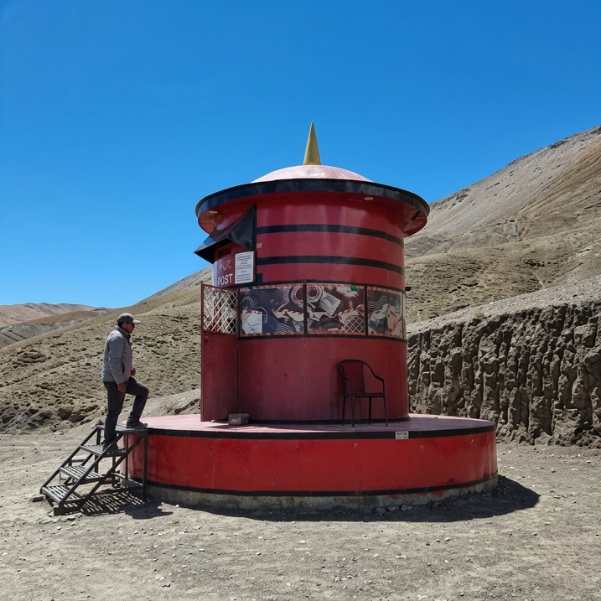
Hikkim
Around 7 km · 25 min
Home to what is widely advertised as one of the highest post offices in the world, in operation since 1983. Buy postcards at Kaza first, post them from Hikkim. Pairs naturally with Langza and Komic on the standard high villages loop.
Komic Village
Around 10 km · 30 min
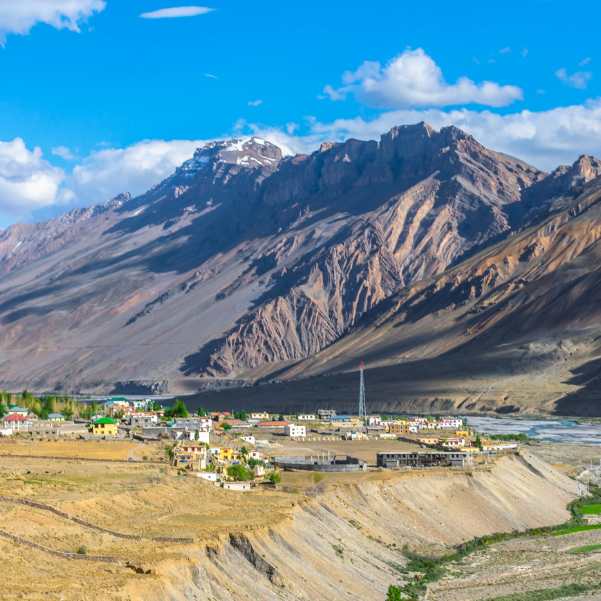
A small Spitian hamlet at roughly 4,587 metres, often promoted as the highest motorable village in the world, with a fortress style Sakya monastery on the canyon edge. Always done as part of the same loop with Langza.
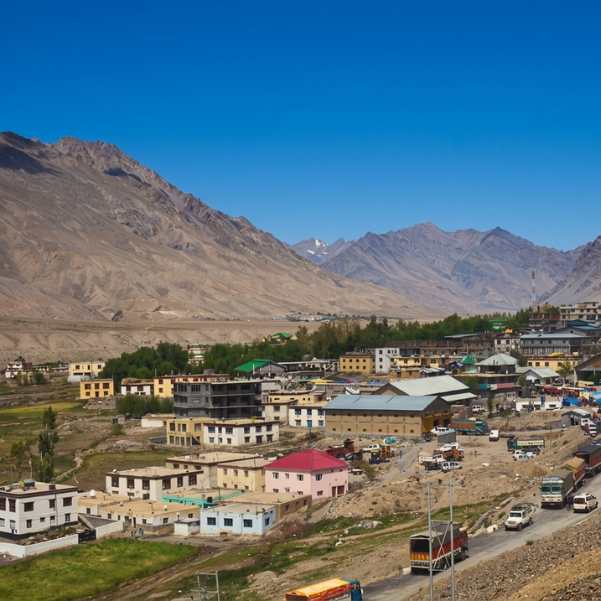
Kaza
Around 15 km · 45 min to 1 hour
The main town of Spiti and the most practical base for visiting Langza. ATMs, fuel, cafes, homestays, and the only proper medical care for a long way around.
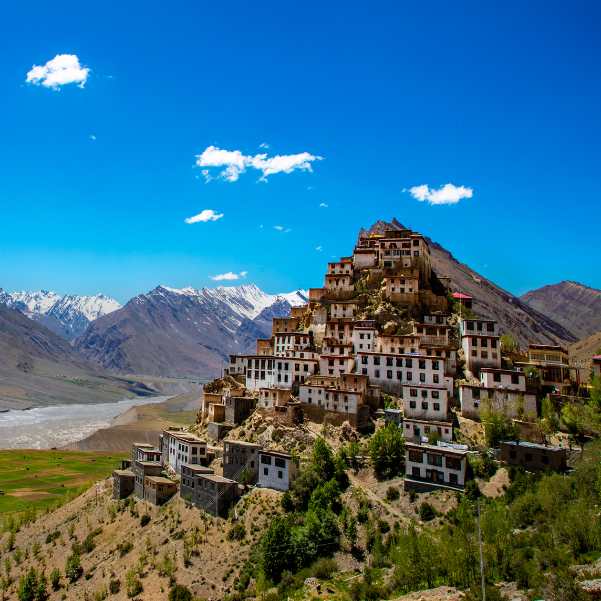
Key Monastery
Around 25 km · 1 hour from Langza via Kaza
Spiti's largest and most photographed gompa, stacked on a hill above the Spiti River at roughly 4,166 metres. Usually visited on a separate morning from Kaza.
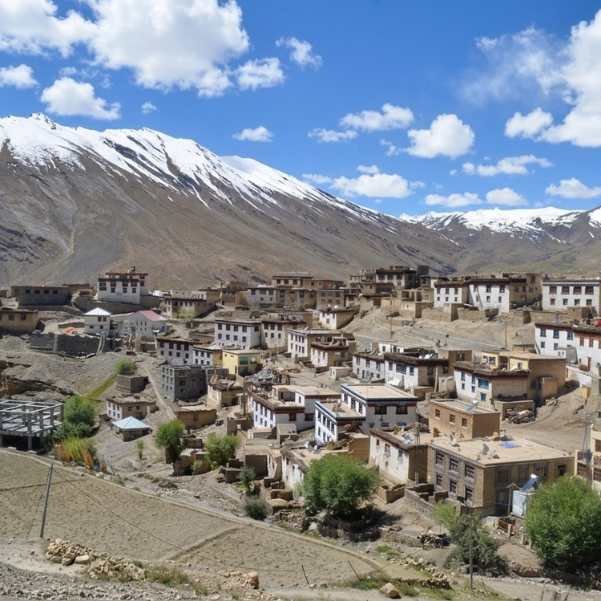
Kibber Village
Around 28 km · 1.25 hours via Kaza
Another high Spitian village at around 4,270 metres, known as a snow leopard spotting base in winter. Often combined with Key Monastery on a separate day from the Langza loop.
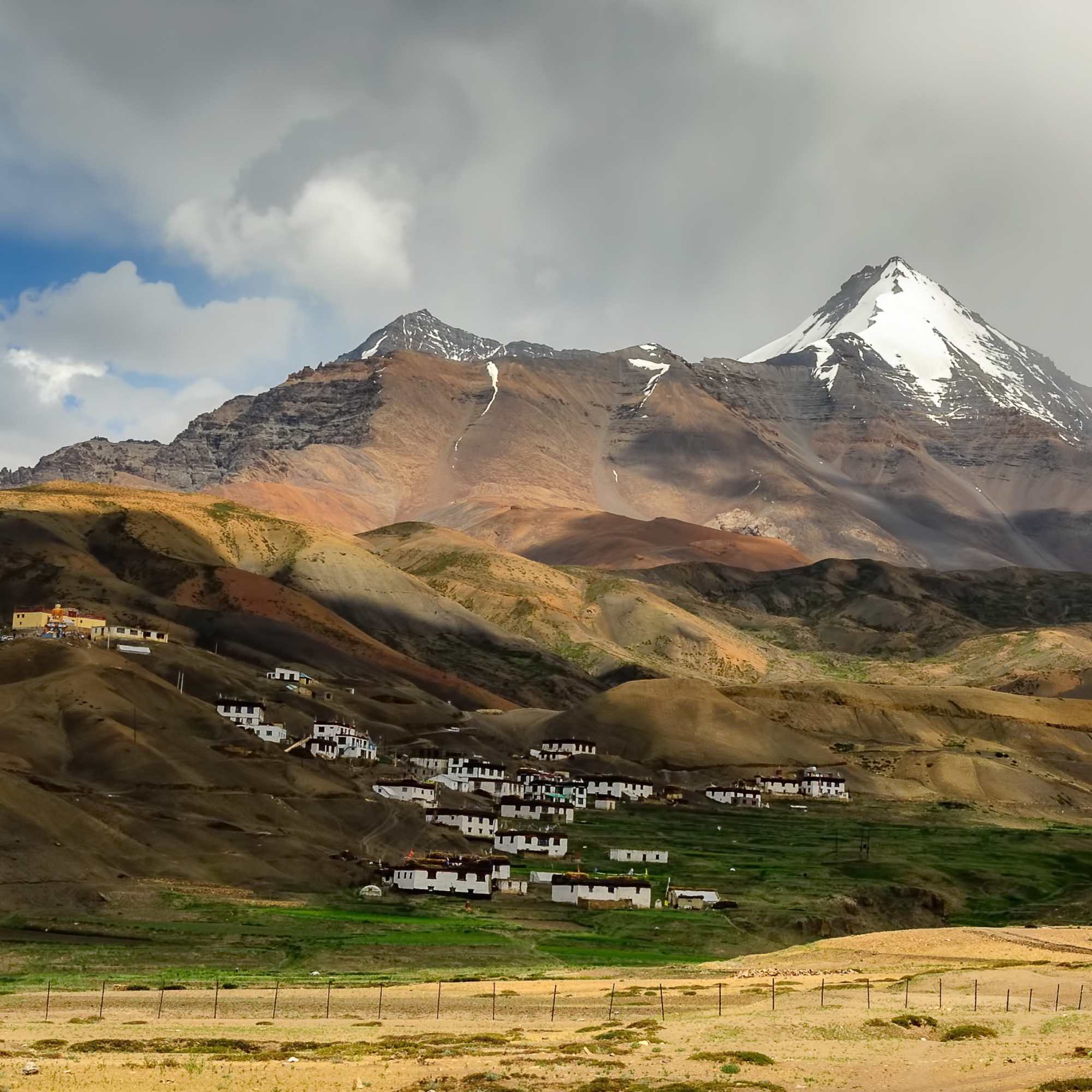
Chau Chau Kang Nilda peak
Visible across the valley from Langza
Locally called the Princess Mountain, often cited as the highest peak in Spiti at around 6,303 metres, the white pyramid that the Maitreya Buddha statue faces. No casual access, the climb is a multi day expedition that needs trained guides and porters.
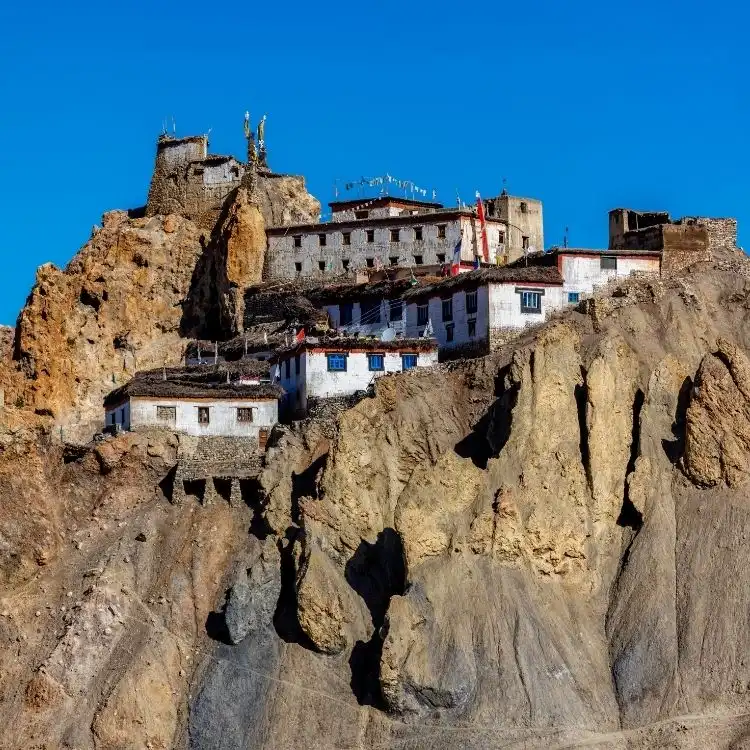
Dhankar Monastery and Lake
Around 50 km · 2 hours via Kaza
A thousand year old fort gompa clinging to a cliff above the confluence of the Spiti and Pin rivers, with a small alpine lake an hour's climb above. A separate half day from Kaza.
Our packages with Langza Village
Curated trips that include a visit to Langza Village.
 Group Tour9D/8N
Best Selling Winter Spiti Valley Group Tour
2D Sangla•1D Tabo+2
₹18,999₹23,999SAVE INR 5,000/ person
Frequently asked questions about Langza
How high is Langza village?
Langza sits at roughly 4,400 metres, about 14,500 feet, though figures across sources vary between 4,330 and 4,435 metres. Treat any specific number as a close approximation. Either way, it is one of the higher inhabited villages in India that is reachable by road.
What is Langza famous for?
Two things. The giant seated Maitreya Buddha statue at the edge of the upper village, facing the Chau Chau Kang Nilda peak (the Princess Mountain) across the valley. And the ammonite fossils scattered across the surrounding slopes, remains of marine life from when this area sat under the ancient Tethys Sea. The wide views and the night sky are the bonus.
How far is Langza from Kaza?
Around 15 km, roughly 45 minutes to 1 hour by road. The drive climbs through the high desert and connects with the Langza Komic Hikkim loop, which is how most travellers visit.
Which Buddha is the Langza statue?
It is a seated Maitreya, the future Buddha in Tibetan Buddhism. The statue is finished in gold paint over sandstone and concrete, and is commonly cited as around 20 to 35 feet tall. It faces the Chau Chau Kang Nilda peak across the valley. Locals believe it protects the village from the harsh climate.
How old is the Buddha statue at Langza?
The statue itself is a modern construction, widely reported to date to around 2005. The claim that it is 1,000 years old, which appears on many travel sites, is almost certainly a mix up with the small Lang Temple (Langza Gompa) directly behind it. That temple is the genuinely historic structure at the site, widely cited as several hundred years old, with some sources putting it at over 500 years.
Is there anything actually old at Langza, or is it all recent?
The Lang Temple (Langza Gompa) set just behind the giant Buddha statue is the old piece. Multiple sources describe it as several centuries old, often cited at over 500 years. The village itself is ancient in the way Spitian settlements tend to be, and the geology under your feet, the Tethys Sea fossils, is hundreds of millions of years older than any of it. The big golden statue is the modern layer on top.
Can I take fossils home from Langza?
No. Possession and collection of fossils is illegal in India, and they are treated as protected geological heritage. Look at them, photograph them, hold one if a local kid hands it to you, and put it back. Do not buy them either, that simply funds further removal from the slopes. The village makes mud replicas of fossils, those are the appropriate souvenir.
When is the best time to visit Langza?
Mid May to early October is the easy window. June and September are the most comfortable months. The Manali approach over Kunzum closes by late October. The Shimla side stays open in winter but the upper road to Langza can be shut for days at a time after snow, and most homestays close.
Do I need a permit for Langza?
Indian travellers do not need a permit to visit Langza. Foreign nationals should check current Inner Line Permit requirements for the wider Spiti and Kinnaur route, rules can change. Reconfirm before your trip.
Can I stay overnight at Langza?
Yes. The village has around 8 to 12 homestays with simple mud walled rooms, heavy blankets, and home cooked meals. Pre book in July and August. Make sure you have already acclimatised in Kaza for at least two nights before sleeping at this altitude.
Is Langza safe for kids and seniors?
A short day visit on a clear day is generally fine for healthy children and acclimatised seniors. Sleeping at 4,400 metres is harder. Children under 8 and anyone with heart, lung, or BP issues should think carefully about an overnight, and ideally not visit at all on day one or two of a Spiti trip from Manali.
Is altitude sickness a real risk at Langza?
Yes. Langza sits high enough that AMS is a genuine possibility for travellers who have not acclimatised. Sleep two nights at Kaza before coming up. Skip alcohol the first night you sleep at high altitude. If you get a persistent headache, nausea, or breathlessness at rest, descend to Kaza.
Is there mobile network at Langza?
Treat it as offline. BSNL and Jio occasionally flicker, mostly nothing usable. Tell people back home you may be off grid for the duration of your visit, especially if you are staying overnight.
Can I drive to Langza in my own car?
Yes, the road is paved most of the way and a small car can manage in dry conditions. The last few kilometres are narrow and steep with switchbacks, an SUV or higher ground clearance hatchback is more comfortable. After heavy rain or snow the upper stretch can be tricky, ask at Kaza before driving up.
What is the Chau Chau Kang Nilda peak?
The white pyramidal peak that dominates the view from Langza, also known as the Princess Mountain, often cited as the highest peak in Spiti at around 6,303 metres. The Buddha statue faces it directly. Climbing it is a multi day mountaineering expedition that needs trained guides and porters, not a casual trek.
How do you do the Langza Komic Hikkim loop?
The standard direction is Kaza to Langza first, around 14 km, then 10 km on to Komic for the monastery and lunch, then 4 km down to Hikkim for the post office, then back to Kaza. Counter clockwise also works and is sometimes better for crowd timing at the post office. The full loop takes around 5 to 6 hours including stops.
Related guides
Posts about Lahaul and Spiti
- Winter Spiti from Bangalore in 2026-27: Flights, Leave Days & Delhi 4x4 Departures
- What Does a Winter Spiti 4x4 Trip Really Cost in 2026-27? Package Price vs Total Holiday Budget
- How Many Leave Days Do You Need for a 9-Day Winter Spiti Trip in 2026-27?
- Winter Spiti for 4 to 6 Friends: Private 4x4 Quote vs Shared Group Seats (2026-27)
- Winter Spiti from Mumbai in 2026-27: Delhi or Chandigarh, Total Budget and Return Planning
- Is Winter Spiti a Trek? Walking, Stairs and Driving Effort on a 9-Day Trip (2026-27)