 Group Tour
9D/8N
Best Selling Summer Spiti Circuit With Chandratal
1D Sangla•1D Kalpa+3
₹18,999₹19,999SAVE INR 1,000/ person
Best Shimla To Chandratal Tour Packages Curated By Experts
Group Tour1D Sangla•1D Kalpa+3
 Group Tour
1D Shimla•1D Sangla+4
 Group Tour
1D Narkanda•1D Sangla+5
Chandratal does not come first on this route. It comes last. And that is what makes it feel so different.
When you start from Shimla, Chandratal is not a rushed weekend destination. It is the final chapter of a longer, slower, more layered journey through Kinnaur, Spiti, and some of the quietest, most powerful landscapes in the Indian Himalayas.
You begin in the green hills of Shimla. You drive through apple orchards and river valleys in Kinnaur. You spend days in the cold desert of Spiti, among monasteries, fossil villages, and wide open silence.
And then, after your body and mind have had time to adjust, you arrive at Chandratal at 4,300 metres. Not gasping, but ready.
This is not a quick lake trip. This is a full Spiti circuit with Chandratal as the emotional high point, and Manali as your exit.
Starting Point: Shimla, Himachal Pradesh
Route Type: Shimla entry, Manali exit. A one way Spiti circuit through Kinnaur, Kaza, Kunzum Pass, and Chandratal.
Ideal Duration: 8 to 10 nights for most travellers. 7 nights for a compact trip. Up to 12 nights for a slower pace.
Best Season: Late June to early October for the full circuit with Chandratal. The Shimla to Spiti stretch opens earlier, around April.
Ideal For: First time Spiti travellers, couples, groups of friends, photography enthusiasts, and anyone who wants a complete Himalayan road trip rather than a rushed weekend.
Trip Style: Gradual altitude gain through Kinnaur and Spiti. Cultural immersion across monasteries and high villages. Chandratal camping as the climax. Manali descent as a smooth exit.
Why People Choose This Route: Better acclimatisation. Richer variety in landscape and culture. The feeling that you have actually travelled through something, not just driven to a lake and back.
For travellers who want the full arc of this route but have limited leave. You move at a steady pace through Kinnaur and Spiti, spend one or two nights in Kaza, and reach Chandratal before exiting to Manali.
This itinerary covers the essentials without lingering. It works well for people who travel light, adapt quickly, and do not need a rest day. Not rushed, but purposeful.
The most popular format and the one we recommend for most first timers. You get proper time in Kinnaur, a comfortable stretch in Spiti with Kaza as your base, a night camping near Chandratal, and a relaxed exit to Manali.
There is room to explore high villages, visit monasteries, and actually sit with the landscape. This is the version most travellers look back on and feel they got the balance right.
For travellers who want to go deeper. You spend more time in Kinnaur, have a rest day in Kaza, explore Pin Valley or additional high villages, and arrive at Chandratal without any time pressure.
This is the trip you take when you want to slow down properly. Best for families, older travellers, photographers, and anyone who does not want to feel like they are chasing a checklist.
If none of the above fit your dates or pace, we build custom itineraries for private groups. You choose the duration, the stops, the vehicle, and the level of stays. We handle the planning, the logistics, and the road decisions.
Every route we plan is shaped by the season, the conditions, and the people travelling. Not by a fixed template.
Most people hear "Chandratal" and think of a quick camping trip from Manali. Drive in, camp one night, drive back. And that works if the lake is all you want.
But when you approach Chandratal from Shimla, the experience is fundamentally different.
You do not just visit a lake. You travel through an entire world that changes around you, day by day. Green valleys in Kinnaur. Terraced orchards along the Sutlej. The stark beauty of Nako and Tabo.
The wide, open cold desert around Kaza. Ancient monasteries perched on cliffs. And then, after a week of this, Chandratal.
By the time you walk to the shore, you have context. You have earned it. The lake does not feel like a photo stop. It feels like a destination you arrived at gradually, through one of the most beautiful road corridors in India.
That is the difference between a trip to Chandratal and a journey that includes Chandratal.
Shimla sits at about 2,200 metres. From there, you climb slowly. Narkanda at 2,700. Sangla at 2,600. Kalpa at 2,960. Nako at 3,600. Tabo at 3,280. Kaza at 3,800.
By the time you reach Chandratal, your body has had six or seven days to adjust. That changes everything about how you feel at the lake and on the walk to the shore.
The Shimla entry takes you through the Sutlej Valley, the apple belt, and the stunning cliff roads of Kinnaur. You see temples, villages, and a landscape that is completely different from what awaits in Spiti. This diversity makes the trip feel layered and complete.
The slower pace, lower starting altitude, and more comfortable initial stays make this route forgiving for people who have not been to extreme high altitude before. Families with older children, couples on their first mountain road trip, and anyone cautious about altitude will appreciate the difference.
When you have spent a week travelling through Kinnaur and Spiti, Chandratal is not just another stop. It is the culmination. The lake feels different when you arrive at it gradually, after days of shifting landscapes and quiet mountain nights.
Planning a Shimla to Chandratal Spiti circuit is not the same as booking a weekend getaway. The route is long, conditions shift through the season, and the difference between a well planned trip and a poorly timed one shows up on every driving day.
Route Awareness: We know which stretches are smooth in June and which are risky. We know when Kunzum is likely to open and when a backup plan matters. This route changes character every few weeks.
Experienced Drivers: The narrow cliff sections near Sangla, the switchbacks above Nako, the rough terrain near Batal. Every driver on our Spiti circuits has driven this route multiple times across seasons.
Curated Stays: Clean rooms in Kinnaur. Comfortable hotels in Kaza. Warm camps at Chandratal. We have vetted each stay personally. We do not book blindly from a listing.
Honest Planning: If we think Chandratal is unlikely to be accessible during your dates, we will tell you before you book. If we think you need 10 days instead of 8, we will explain why. We plan around reality, not optimism.
Flexibility When It Matters: Roads close. Weather shifts. Landslides happen. When the plan needs to change, we adapt on the ground with local knowledge and calm communication. On a 10 day mountain trip, that is not a bonus. It is essential.
This is the full arc of the journey. Each stop is listed with enough detail that you know what to expect, what to look forward to, and what to plan for.
The drive out of Shimla takes you through pine forests and along the historic Hindustan Tibet Road. Narkanda is a small, quiet halt at about 2,700 metres, surrounded by apple orchards and cedar forests. It works well as a first night stop, especially if you arrive in Shimla late.
Sarahan, a bit further along, is home to the Bhimakali Temple, a remarkable wooden temple with intricate carvings and a commanding valley setting. A more culturally rich overnight option.
The descent into the Sangla Valley is dramatic. The road drops into a deep river gorge surrounded by green mountains and terraced orchards. Sangla is warm, lush, and a welcome contrast to what lies ahead. The village has a beautiful fort, orchards, and walking trails along the river.
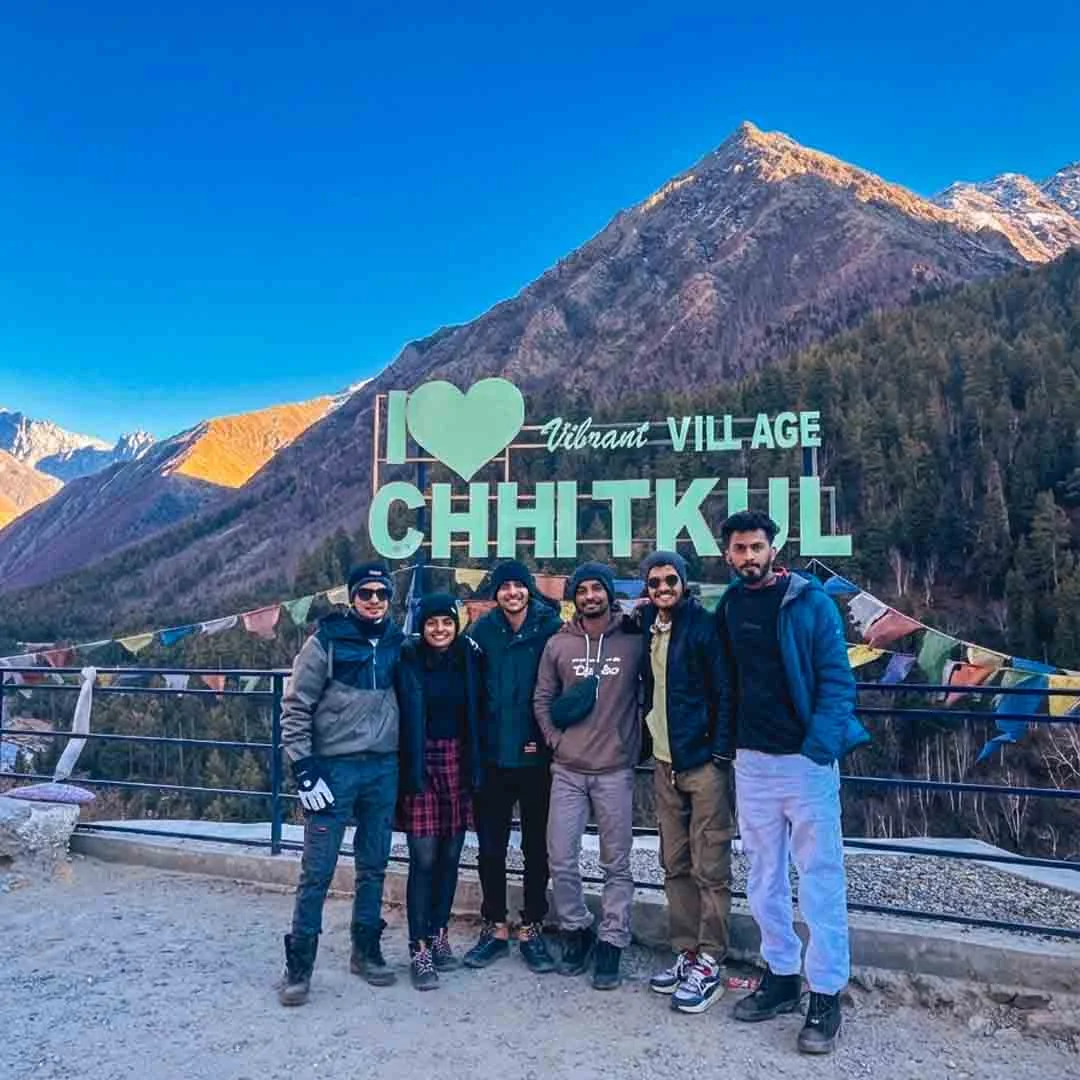
Some itineraries include a visit to Chitkul, the last inhabited village before the Indo Tibet border. Chitkul has a raw, quiet beauty and an end of the road feeling that many travellers find deeply moving. It is a short detour and worth the extra hours if your schedule allows.
Perched on a ridge overlooking the Kinner Kailash range, Kalpa offers a mountain view that stops most travellers mid sentence. On a clear morning, the sunrise here, with snow peaks turning gold above the valley, is worth the entire drive through Kinnaur.
The town has a calm, unhurried energy and a handful of comfortable stays.
A high altitude lake village at about 3,600 metres. Nako is where you begin to feel the shift from Kinnaur into Spiti. The air is drier, the vegetation thins out, and the monastery and lake give the village a quiet, almost timeless quality. An important stop for letting your body adjust before the days ahead.
A small, dusty town, but the monastery complex here is extraordinary. Tabo is one of the oldest continuously operating Buddhist monasteries in the Himalayas. Ancient murals, clay sculptures, and cave temples that date back over a thousand years. It is one of those places that stays with you long after you leave.
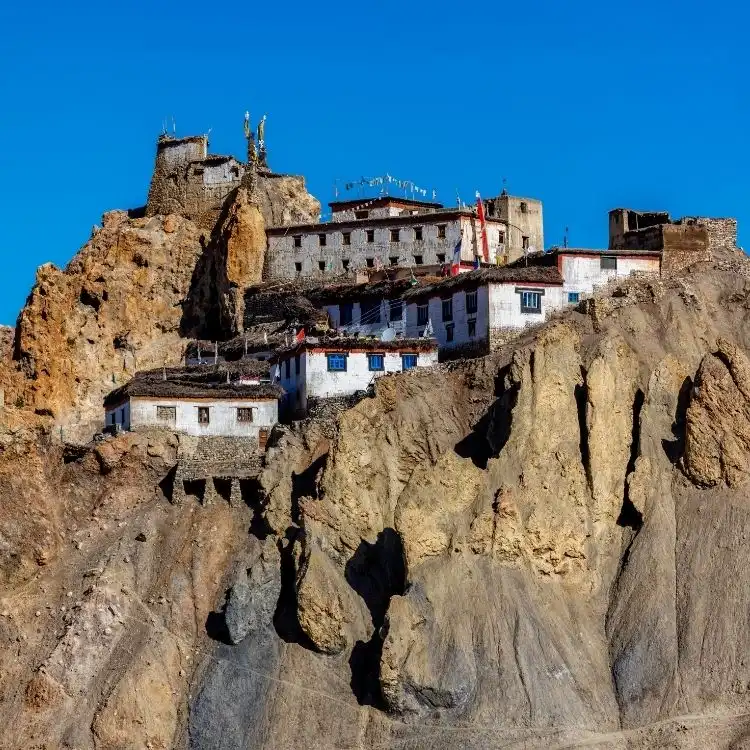
A fortress monastery perched on a crumbling cliff above the confluence of the Spiti and Pin rivers. The view from Dhankar is iconic and widely photographed. It can be visited as a stop between Tabo and Kaza, and is well worth the detour for the visual alone.
The heart of Spiti. Kaza is the largest town in the valley and serves as your base for exploring the high villages. It has proper hotels, restaurants, cafes, ATMs, and a fuel station. After days of remote driving, Kaza feels like a small oasis.
Most itineraries include two nights here, giving you a full day to explore the surrounding villages without driving to the next destination.
This is where Spiti reveals its most extraordinary side. Each village has its own character, and a day spent visiting three or four of them is a highlight of the entire trip.
Key Monastery: The largest and most iconic monastery in Spiti. Perched on a conical hilltop above the river, Key is visually stunning and spiritually significant. About 12 km from Kaza.
Kibber: A high altitude village at about 4,200 metres. Known for its stone houses, wide views, and proximity to snow leopard habitat in winter. In summer, it is a peaceful place to walk and look out at the valley.
Chicham Bridge: One of the highest suspension bridges in Asia, connecting Kibber to Chicham village. The bridge itself is a dramatic sight, spanning a deep gorge with the river far below.
Langza: Famous for its enormous golden Buddha statue overlooking the valley and marine fossils scattered across the hillside. Langza feels like standing on the roof of an ancient seabed, which it literally is.
Hikkim: Home to the world's highest post office. You can send a postcard from 4,400 metres. The village is tiny, remote, and surrounded by wide open sky.
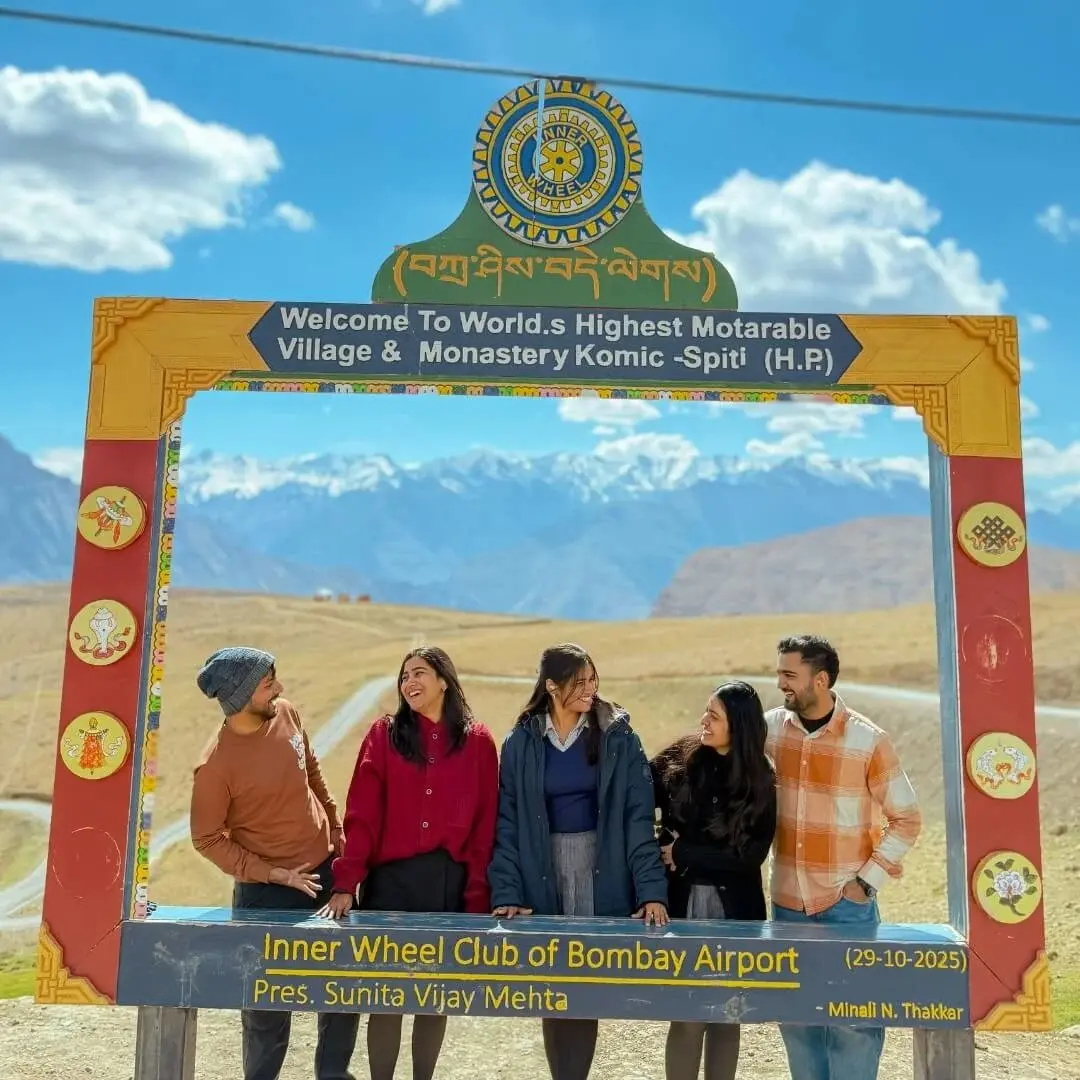
Komic: One of the highest inhabited villages in the world, with a small monastery and an overwhelming sense of openness.
Losar: A quiet village on the Spiti side of Kunzum Pass. Losar marks the transition from Spiti into Lahaul and is often the last stop before the climb to Kunzum and the descent toward Chandratal.
Kunzum Pass: At approximately 4,590 metres, Kunzum Pass is the gateway between Spiti and Lahaul. There is a small temple at the top, prayer flags in every direction, and a sense of standing on a threshold between two worlds.
Crossing Kunzum feels like a turning point. Behind you, the cold desert. Ahead, Chandratal and eventually Manali.
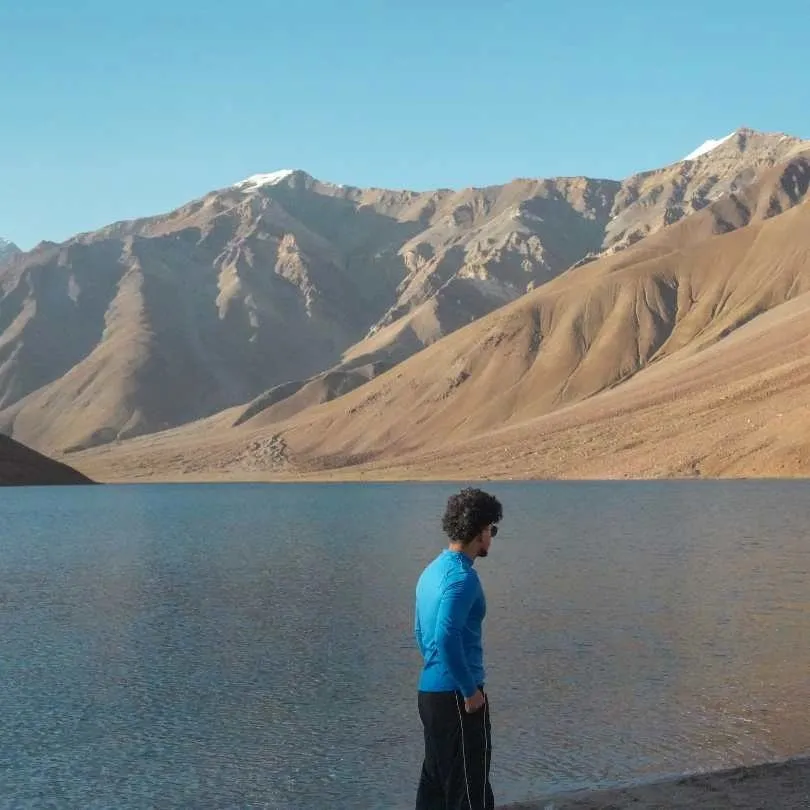
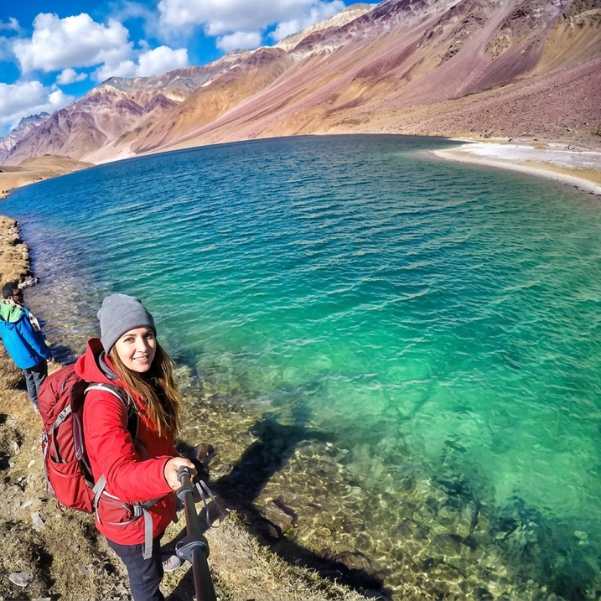
Chandratal: The crescent shaped glacial lake at 4,300 metres. After a week of travelling through Kinnaur and Spiti, arriving here feels like reaching a quiet climax. The water colour shifts between turquoise and deep green depending on the light. The campsite zone sits about 2 km from the shore.
You camp for one night. Walk to the lake at sunrise. Let the silence and the altitude do their work.
Manali Exit: From Chandratal, the road descends through Batal and Gramphu, passes through the Atal Tunnel, and brings you into the green Kullu Valley. After the stark landscapes of Spiti, the lush forests around Manali feel like arriving in a different season. The circuit is complete.
Covers the route from Shimla to Manali with stops in Kinnaur and Spiti. Very limited time at each point. No rest days.
We generally do not recommend this version unless your dates genuinely do not allow more time. It can feel more like a transfer than a trip.
A workable version that includes Kinnaur highlights, 1 to 2 nights in Kaza, and a Chandratal halt before exiting to Manali. It moves steadily and covers the important stops without much room for spontaneous exploration.
Good for travellers with limited leave who still want the full Shimla to Manali arc.
The one we recommend most. You have time for Sangla or Chitkul, a proper Kaza exploration day, a visit to the high villages, a comfortable Chandratal night, and an easy Manali exit.
This version does not feel rushed. You arrive at each place with time to settle in and look around.
For travellers who want to go slow. You might add a rest day in Kaza, an extra night in Kinnaur, or include Pin Valley. Chandratal feels even more relaxed because you are not compressing two stops into one day.
Best for families, older travellers, photographers, and anyone who values depth over distance.
There is no other road trip in India that moves through so many distinct worlds in a single journey.
You start in the green, terraced hills of Shimla and Kinnaur, where apple trees line the roads and rivers run fast and green. Over a few days, the forests thin out. The air dries. The mountains grow taller and more bare.
By the time you reach Spiti, you are in a cold desert. Monasteries sit on rocky hilltops. Villages look like they were carved from the mountain itself. The sky feels closer. The silence is louder.
And then, just when you think you have seen the best of it, you cross Kunzum Pass and walk to Chandratal. A lake that sits in a basin of scree and ridges, its colour changing with every passing cloud.
The exit through Manali brings you back to green forests, waterfalls, and the familiar sound of a valley town. The loop is complete.
No two days on this route look the same. That is what makes it stay with you.
The Shimla to Spiti route is accessible in parts during these months, but Kunzum Pass and the road to Chandratal are usually still under snow. You can do a Spiti circuit from Shimla via Kinnaur, but the trip may need to loop back the same way without reaching the lake.
Still a beautiful journey. Just a different one.
The full circuit begins opening up. Kunzum Pass is usually cleared by late June. Chandratal camps start operating. Road conditions can be unpredictable in early June, especially on the Chandratal stretch.
A good window for flexible travellers comfortable with some uncertainty.
The classic window for the complete Shimla to Chandratal to Manali circuit. Roads are at their most accessible. Camps at Chandratal are fully running. Rain is possible, especially in August, but the route is at its most reliable during this period.
Many experienced travellers consider September the finest month for this circuit. The monsoon recedes. Skies clear. Light turns golden. Chandratal's colours are at their most vivid. The landscape across Spiti takes on a warm, amber tone.
Camps begin winding down toward late September. Plan for the first two to three weeks if you can.
The end of the season. Kunzum Pass may close any day. Chandratal camps may already be packed up. Beautiful if the weather cooperates, but unpredictable. Only suitable for travellers with flexible dates and proper cold weather gear.
This is something we address upfront because it matters.
Chandratal access depends on Kunzum Pass being cleared and the camp road being passable. In early season and late season, this is not always the case. And even in peak months, a sudden weather event can temporarily close the stretch.
If Chandratal is not accessible during your dates, the Spiti circuit from Shimla remains one of the most rewarding road trips you can do in India. Kinnaur, the monasteries, the high villages, Kaza, the cold desert, the fossils, the night sky. The trip does not lose its heart.
In these situations, the route may exit via the same Shimla side, or we may adjust based on conditions. What we will not do is push you toward a risky road just to tick the lake off a list.
We plan around what is actually possible, and we communicate that clearly before you travel.
Hotels and guesthouses with proper rooms, hot water, and home cooked meals. Kinnaur stays are among the most comfortable on this route. Clean, simple, and set in beautiful surroundings.
The most comfortable base on the trip. Kaza has hotels ranging from budget to mid range, restaurants serving everything from Tibetan momos to Italian pasta, and reliable electricity. Two nights here give you time to rest, explore, and recharge before the Chandratal stretch.
Simple guesthouses with basic facilities. Tabo has a few comfortable options. Dhankar stays are more rustic. Both are worth it for the proximity to the monasteries.
Camping in designated zones about 2 km from the lake. You do not camp on the shore. Tents are dome or alpine style with mattresses and sleeping bags. Meals are cooked at the campsite. Toilets are basic and shared.
Expect cold nights. Even in peak summer, temperatures drop to 2 to 5 degrees Celsius after sunset. Come prepared for simplicity, not comfort.
Your exit night. After a week of basic stays and cold camps, a proper hotel room with hot water in Manali feels like a small luxury. We usually recommend one night here to decompress before onward travel.
Group tours typically use tempo travellers or shared SUVs. These keep costs down and work well on the highway stretches. On rougher roads near Chandratal, smaller vehicles are sometimes arranged for the final section.
The preferred option for couples, families, and small groups. A private SUV gives you control over stops, pace, and timing. On a route this long, that flexibility is not a luxury. It is the difference between a trip that feels like yours and one that feels like a schedule.
For travellers who want extra comfort on rough roads. Vehicles like the Toyota Fortuner or Innova Crysta offer better suspension, more space, and a smoother ride on the longer driving days. Worth considering if your group includes older travellers or anyone who feels fatigue on mountain roads.
This is a 10 day road trip through narrow cliff roads in Kinnaur, unpaved stretches near Nako and Batal, and water crossings before Chandratal. An experienced mountain driver does not just get you from point to point. They know when to push, when to pause, and how to read the road in real time.
Every driver on our Spiti circuits has driven this route across seasons. That familiarity is not something you can replace with GPS.
Every trip on this route is different, so we do not list fixed prices. But here is what shapes the number so you can plan with clarity.
Number of Days: More days mean more stays, more meals, and more fuel. An 8 day circuit naturally costs less than a 10 day one.
Private vs Shared: A private vehicle with a dedicated itinerary costs more than a group departure. You get flexibility in return. Groups get savings.
Vehicle Type: A compact SUV for a couple costs differently from a Fortuner for a family or a tempo traveller for a group of ten.
Stay Category: Budget guesthouses across the route cost differently from mid range hotels with better amenities. Kaza stays, in particular, range widely.
Chandratal Camping: Whether camping is included, and the camp quality, affects the total.
Start and Exit Logistics: A Shimla to Manali one way trip involves different planning than a round trip. Pickup from Delhi or Chandigarh before Shimla adds to the overall cost.
Share your dates, group size, and preferences with us. We will share a transparent, detailed quote. No hidden costs, no vague "starting from" numbers.
Your phone will work in Shimla, Narkanda, and parts of Kinnaur. Signal gets patchy around Nako and mostly vanishes in Spiti. Kaza has some connectivity. Chandratal has none.
Download offline maps before you leave Shimla. Let your family know about the connectivity gaps so they do not panic when you go quiet for a few days.
Withdraw cash in Shimla. The next ATM you might trust is in Kaza, and even that can be out of service. Homestays, dhabas, and camp operators on this route rarely accept UPI or cards. Carry enough cash for the full trip.
Fill your tank in Shimla. The next reliable fuel station is in Kaza, which is several days into the route. Self drivers should plan fuel stops carefully and consider a spare canister.
Shimla might be 20 degrees. Chandratal might be below freezing at night. The temperature range across this route is enormous. Pack for both extremes. A rain jacket is essential, especially during July and August when sudden showers are common.
Thermals, a fleece, and a windproof jacket. A warm cap and gloves for Chandratal and the high villages. Sturdy shoes with good grip for the walk to the lake and the monastery trails.
Sunscreen and UV protective sunglasses because the sun at altitude is deceptively strong. A headlamp, a reusable water bottle, and a small personal medical kit.
Drink more water than you think you need, especially above 3,500 metres. Avoid alcohol in the first few days of altitude gain. If you feel headachy or breathless, slow down. Your body is adjusting. Give it time.
Carry your own prescription medicines, basic first aid supplies, and altitude sickness medication if your doctor recommends it. There is very limited medical help between Shimla and Kaza, and none on the Chandratal stretch.
Long driving days work best when you leave early. Morning roads are quieter, the light is better for both driving and photography, and you arrive at your next halt with daylight to spare.
Do not assume every stretch will be smooth. The roads between Nako and Tabo, around Batal, and on the Chandratal approach are often rough and unpredictable. This is mountain terrain. A good vehicle and an experienced driver handle it confidently.
This is not a trip you rush into. It is not a weekend escape or a bucket list checkbox.
It is a 9 or 10 day journey through green valleys, cold deserts, ancient monasteries, fossil villages, and a glacial lake at the edge of everything. From Shimla's pine forests to Chandratal's frozen silence to Manali's warm valley floor.
Every trip we plan is built around real conditions, real roads, and real people. We will not sell you a circuit that does not suit your pace, and we will not push you toward Chandratal if the road says otherwise.
Send us a message on WhatsApp with your travel dates, group size, and any questions. We will put together a trip that fits your time, your comfort, and the season.
Travel Coffee. Real mountain trips, made with care.
8 packages found
Group Tour1D Shimla•1D Sangla+4
Group Tour1D Sangla•1D Kalpa+3
 Group Tour
1D Sangla•1D Kalpa+3
Group Tour1D Narkanda•1D Sangla+5
1D Narkanda•1D Sangla+5
 Group Tour
2D Sangla•1D Tabo+2
1D Narkanda•1D Sangla+5
 Group Tour
1D Sangla•1D Kalpa+3
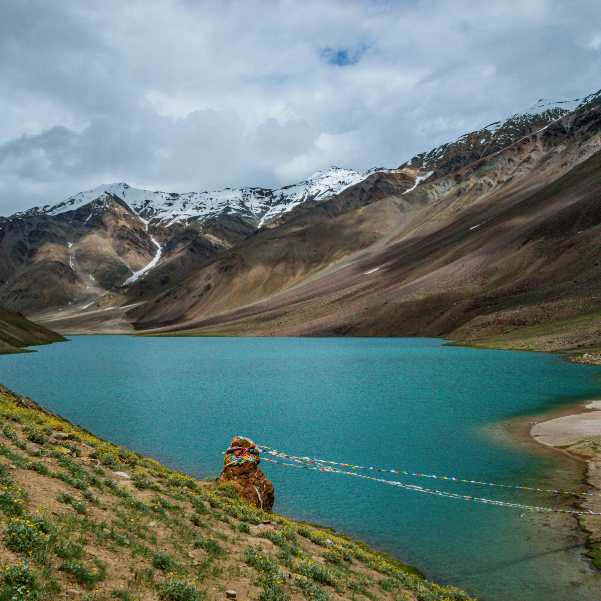
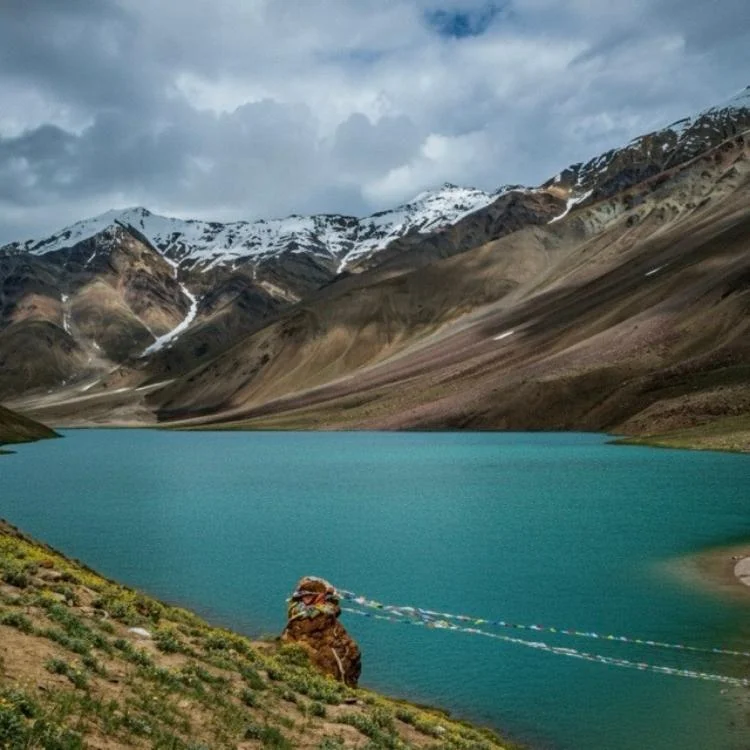
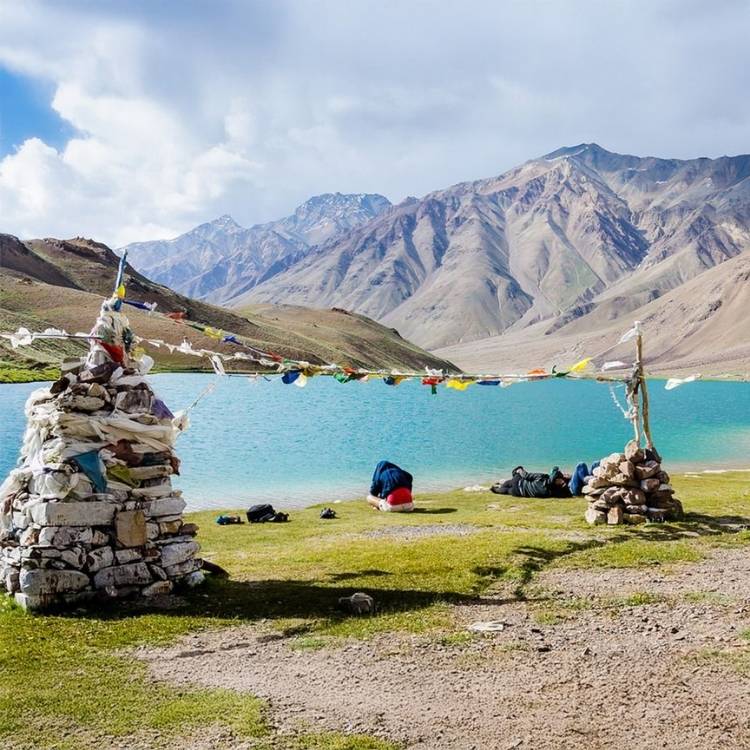
At 4,300 metres, Chandratal sits in a natural amphitheatre of barren ridges. The lake is roughly one kilometre around, crescent-shaped, and changes colour through the day. Mornings are usually still, with near-perfect reflections. The walk from camp is short but memorable, the lake appearing suddenly as you crest the final rise.
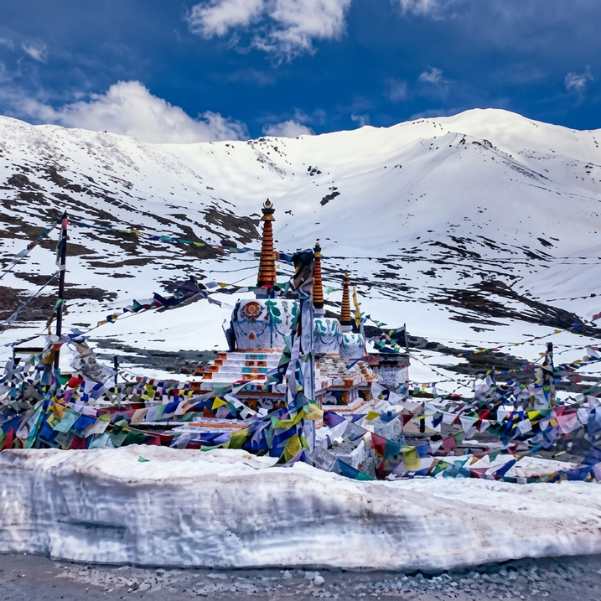
At roughly 4,590 metres, Kunzum La connects Lahaul to Spiti. A small temple marks the top. The pass offers wide views of snow-covered ranges and valley systems on either side. Crossing Kunzum is a defining moment in any Chandratal itinerary.
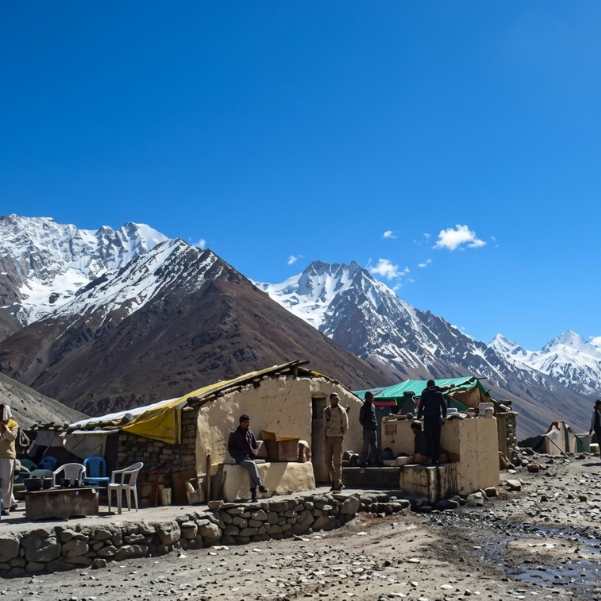
Not a village so much as a collection of roadside shelters where travellers stop for tea. It sits at the junction between the Chandratal turnoff and the Kunzum route. The landscape is raw and glacial. Batal gives you a real sense of how remote this territory is.
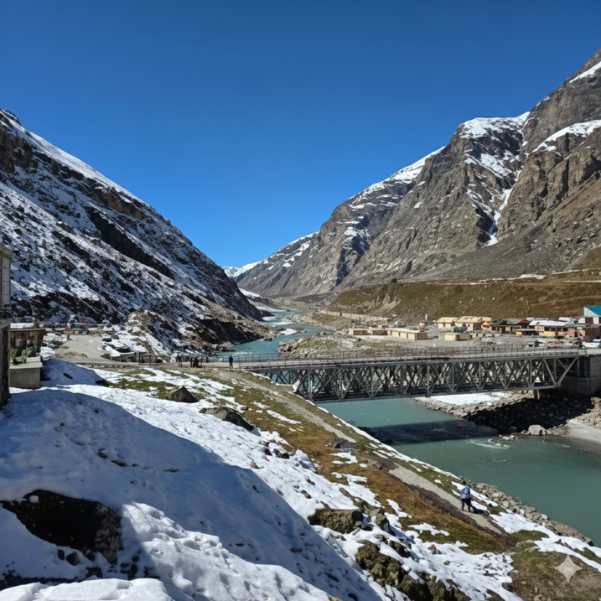
A green, relatively mild village in Lahaul Valley. Waterfalls, riverside views, and clean guesthouses make it a welcome rest point and a good acclimatization stop before pushing higher.
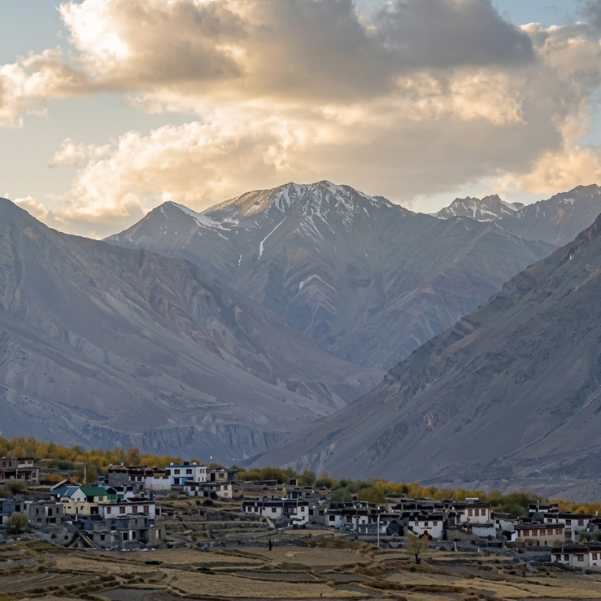
The first village on the Spiti side after crossing Kunzum. The valley opens up, the terrain shifts from grey rock to sandy brown, and the distinct character of Spiti begins. For combined Chandratal and Spiti trips, Losar is the gateway.
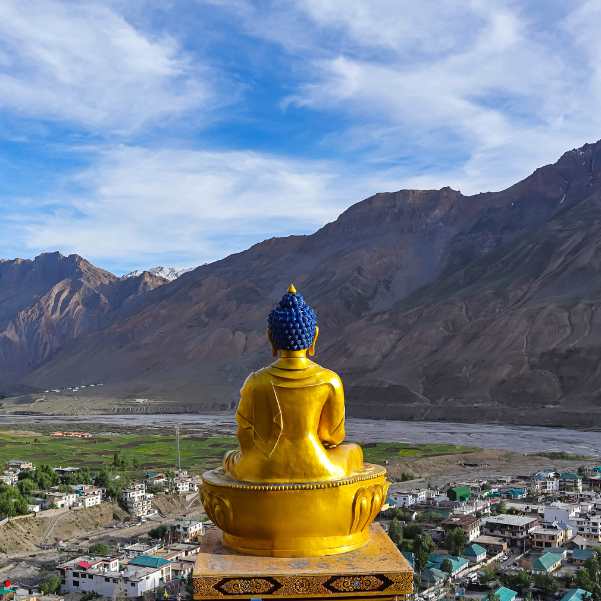
The administrative centre of Spiti Valley, offering fuel, ATMs, basic medical support, and guesthouses. Also a base for visiting Key Monastery, Pin Valley, and Hikkim. Kaza adds cultural depth to the journey.
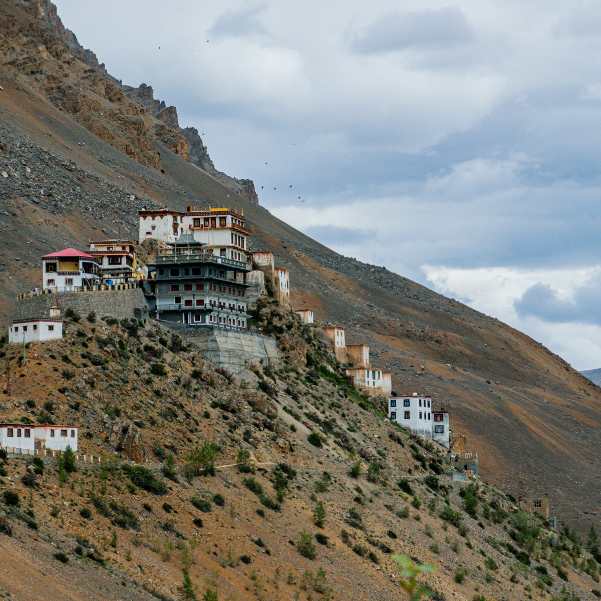
Perched on a hilltop above the Spiti River, Key is the largest monastery in Spiti. The layered white and ochre structure against bare mountains is unforgettable. A visit brings spiritual and cultural texture to a Chandratal road trip.
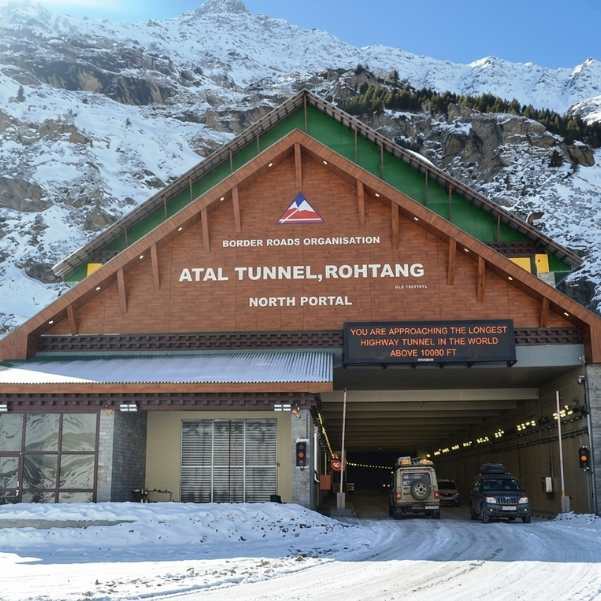
This 9.02-kilometre tunnel below Rohtang connects Manali to Lahaul year-round, saving hours of driving. For Chandratal-bound travellers, this is where the mountain journey truly begins.
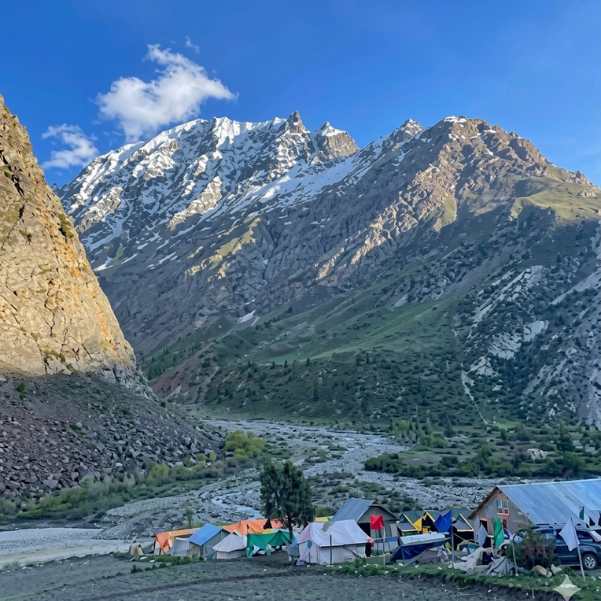
A small settlement along the Bhaga River in Lahaul. Jispa works well as an overnight stop, with simple and pleasant riverside camps.
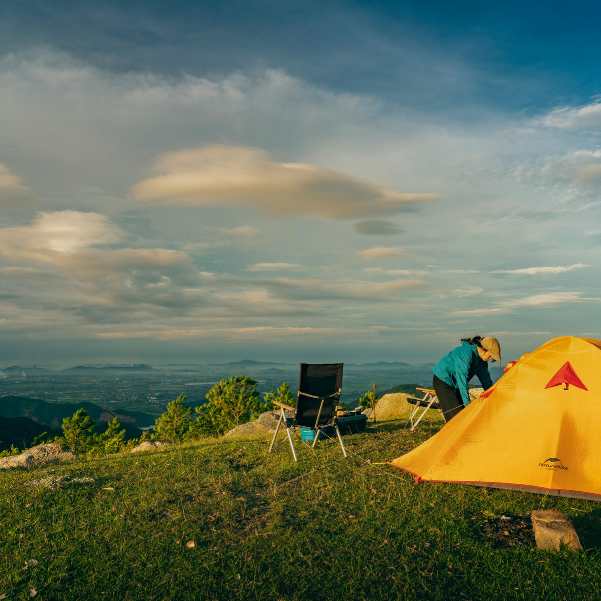
A night at over 4,200 metres with nothing between you and a canopy of stars is the highlight of most trips.
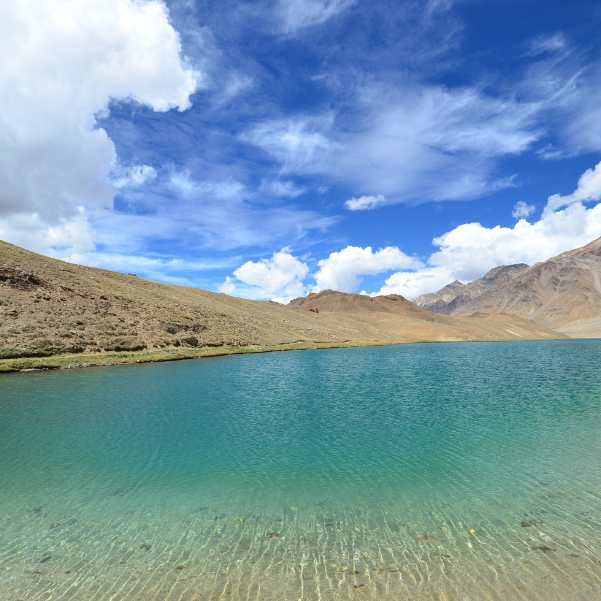
Reaching before dawn, when the water is perfectly still, gives you a view that few places on earth can match. The colour shifts as sunlight touches the ridges are slow and extraordinary.
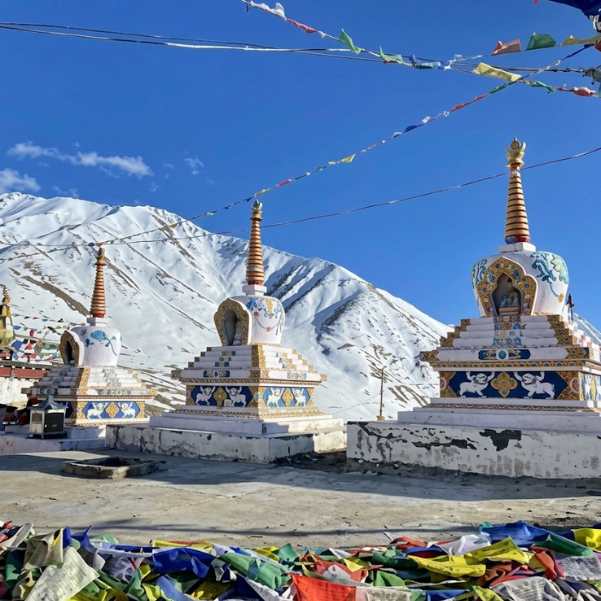
Whether by car or bike, Kunzum is one of the most exhilarating stretches in Himalayan travel. The unpaved road, the altitude, and the vast emptiness make it genuinely thrilling.
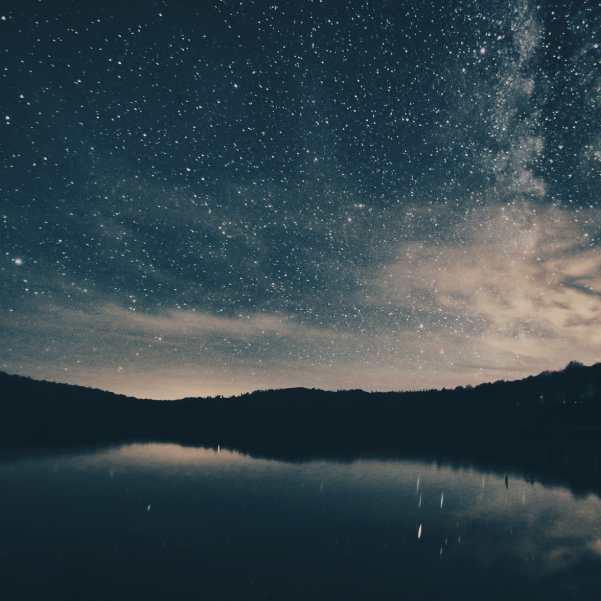
With zero light pollution and thin atmosphere, Chandratal is one of the finest astrophotography locations in India. The Milky Way is visible to the naked eye on clear nights.
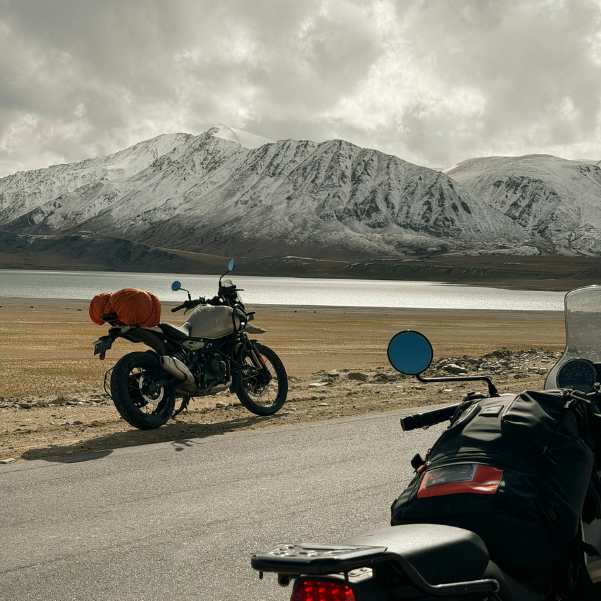
Adding Chandratal to a Spiti circuit creates one of the most complete high altitude road trips in India.

“Travel Coffee truly went above and beyond. Even though we booked from Indonesia without meeting them, we always felt secure — their team was available 24/7 and took care of every detail. Shubham personally ensured our comfort throughout the Himachal trip, from hotel checks to small gestures like bringing lotion and altitude pills. Their sincerity and local expertise made the journey unforgettable.”
Andre & Angel
Yes. On the classic full circuit, Chandratal comes near the end. You enter from Shimla, travel through Kinnaur and Spiti, cross Kunzum Pass, camp at Chandratal, and exit to Manali. The lake is one of the final highlights, not the starting point.
Seven days, but we rarely recommend it. You end up driving long hours every day with no time to explore or rest. Eight days is the realistic minimum. Nine to ten days is the range where the trip actually feels enjoyable.
The altitude gain is gentler. You spend days at moderate elevation in Kinnaur before reaching Spiti. Manali entry puts you at high altitude on day one. For first timers and families, the Shimla side reduces the risk of altitude sickness and adds the entire Kinnaur experience to the trip.
You can do the Shimla to Kaza portion. But Kunzum Pass and Chandratal are typically still under snow until late June. If the lake is not accessible, the trip adjusts. You still get Kinnaur and Spiti, just without the Chandratal finish and Manali exit.
July and August are the most reliable months. September is widely considered the most beautiful, with clear skies, golden light, and vivid lake colours. Late June works if you are flexible about conditions.
The Spiti circuit continues with adjusted routing. You still get Kinnaur, Kaza, the monasteries, and the high villages. The exit changes, usually looping back via the Shimla side. We always have a contingency plan, and we communicate it clearly before departure.
For most travellers, yes. One night gives you an evening at the campsite, a walk to the lake at sunrise, and time to absorb the setting before moving on. The circuit is long, and one well paced night at the lake is more rewarding than rushing two nights and cutting time elsewhere.
Usually in Kaza or Losar. From Kaza, the drive to Chandratal crosses Kunzum Pass and passes through Losar and Batal. It is a long day, so some itineraries include an overnight at Losar to break the drive.
Very much so. Many couples choose this circuit for its mix of landscapes, quiet moments, and shared adventure. A private vehicle with curated stays makes it comfortable and personal.
Families with older children (above 10 to 12 years) manage well, especially on a 10 day itinerary. Younger children may struggle with the altitude, cold nights, and basic camping at Chandratal. Consider whether everyone in the family is comfortable with those conditions.
A high clearance SUV. The roads through Kinnaur are narrow and winding, and the stretch from Batal to Chandratal is rough and unpredictable. Tempo travellers work for highway sections but may struggle on the final stretches.
Yes, if your route passes through Gue village between Nako and Tabo. The naturally preserved 500 year old mummy of a Buddhist monk is a genuinely unusual sight and only takes a short detour.
Layers are everything. Thermals, fleece, windproof jacket, warm cap, gloves, sturdy shoes, sunscreen, sunglasses, a headlamp, personal medicines, a water bottle, and cash. The temperature range across this route is extreme, from warm afternoons in Kinnaur to freezing nights at Chandratal.
Regularly 2 to 5 degrees Celsius in peak summer. Colder in September. A proper sleeping bag, thermals, and warm layers are not optional. The camps provide sleeping bags, but having your own thermal base layers makes a real difference.
Yes. Pin Valley is accessible from Dhankar or Kaza and adds a day to the itinerary. It is less visited than the main Spiti stops and has a wilder, more remote character. Worth it if your schedule allows and you want to go beyond the standard circuit.
Indian nationals do not need special permits. Foreign nationals may require an Inner Line Permit depending on the route, particularly in areas near the Indo Tibet border. We will advise you on this during planning.
Real experiences shared by Travel Coffee travellers in Shimla To Chandratal.
5 traveller reviews
Based on Google reviews.
Real photos and videos shared by travellers from recent trips.
I, being a senior citizen travelled solo with Travel Coffee for Spiti Valley and Chandratal Lake for 8N/9D. It was an amazing trip, well organised with decent hotels. Vanshika from Travel Coffee supported me, took great care of me till the very end. I enjoyed a lot and am looking forward to join any upcoming trips in future
I recently completed the Spiti Valley - Chandratal Lake Tour, ending in Manali, organized by Travel Coffee. Overall, it was a memorable and enjoyable experience. The accommodations throughout the trip were comfortable, the food arrangements were good, and the bikes provided were well-maintained and reliable for the challenging terrain. The route itself was breathtaking, and the overall trip execution was satisfactory. There was some minor mismanagement on Day 1, primarily related to the coordination by the tour guide, which caused a bit of confusion at the start of the journey. Even when we were heading to Chandratal the backup can was never with us we completed the toughest terrain by ourselves. However, the team managed things better as the trip progressed. One area where there is definitely scope for improvement is the daily rider briefing and overall coordination among participants. A short briefing each morning covering the day's route, terrain conditions, expected riding challenges, fuel stops, road conditions, and possible traffic bottlenecks would greatly enhance the riding experience and help riders prepare better. That said, these were relatively minor issues in an otherwise well-organized adventure. The stunning landscapes, good arrangements, and overall experience made the trip worthwhile. Thank you to the Travel Coffee team for helping create some wonderful memories in Spiti Valley.
My first trip to Himachal was awesome! Thank you Travel Coffee, our captain Anil Sharma, and our driver Beenu sharma for making this trip memorable. My dream of seeing the Milky Way Galaxy and snow-covered Chandratal came true because of you. The team was amazing, and all the fellow travelers were very friendly. Thank you so much for the wonderful memories! ❤️🏔️🌌
We completed our Spiti Valley bike trip with Travel Coffee and it was an unforgettable adventure. Ishita coordinated everything very well before the trip and helped us understand the route, riding conditions, packing list and safety points. The journey was challenging, but the planning was strong. The support team was helpful, the bikes were in good condition, and the route through Kinnaur, Kaza and Chandratal was absolutely stunning. Every day had a different kind of landscape. Spiti on a bike is not easy, but with the right team it becomes a lifetime memory. Thank you Travel Coffee for making it happen
We had booked a customised Kinnaur and Spiti trip with Travel Coffee and the experience was wonderful from start to finish. Preeti helped us plan the itinerary in a very practical way, covering Narkanda, Sangla, Chitkul, Kalpa, Kaza and Chandratal without making the journey too hectic. She explained the route clearly before the trip and was always available during the journey. The hotels selected for us were comfortable and had beautiful views, especially in Kalpa and Kaza. Our driver was polite, punctual and very confident on the difficult mountain roads. Overall, it was a beautifully managed Himalayan trip. We came back with lifetime memories and would definitely recommend Travel Coffee for Spiti and Kinnaur.