
Raja Ghepan Temple
The only temple of Lord Ghepan, presiding deity of the Lahaul valley, in Sissu village on the right bank of the Chandra river, known for the grand Rath Yatra held every three years
- Presiding deity of Lahaul
- Sissu village, ~3,130 m
- Only temple to Lord Ghepan
- Rath Yatra every ~3 years
- Outer darshan only
What makes it special
Raja Ghepan Temple in Sissu village is the only temple dedicated to Lord Ghepan, the presiding deity of the entire Lahaul valley. Locally the deity is also called Ghepan, Gyephang, or Gyephang Raja, and he is treated by the people of Lahaul as their foremost guardian and king figure. The reverence is centuries old, though the current temple structure itself is relatively modern. For outsiders, this is the main religious site in Lahaul, the place drivers traditionally stop at to pay respects on the way through to Keylong and beyond.
The temple is small and architecturally modest. It looks like a single storey concrete house with a small vihara or shrine attached, not a grand Himalayan monastery. A short flight of steps leads to a grille at the main sanctum, and behind the grille sits a tall wooden post covered in colourful fabrics, the traditional representation of the deity in Lahauli tradition. There is no large idol in the usual Hindu temple sense. Fresh butter and milk from local livestock are left as offerings, and a small oil lamp usually burns inside. Do not come expecting carved pillars and frescoes. Come for the weight of the tradition.
Access is the part most travel pages get wrong. You can stop outside, climb the steps, and view the sanctum through the grille. That is the customary way outsiders pay respects here, same as the passing vehicles that slow down and bow. Direct entry into the inner sanctum is generally restricted to locals and priests, especially during oracle days and festivals. Some sources overstate this and say tourists cannot visit at all, which is inaccurate, and others understate it and suggest you can walk right in, which is also wrong. The honest version sits in the middle. Respectful outsiders are welcome at the grille, the inner ritual space is not a tourist zone, and rules can tighten on festival or oracle days. Confirm locally if you visit during a ceremony.
The living tradition is what makes this temple different from every other Himalayan shrine. Every three years Lord Ghepan is taken out on a Rath Yatra chariot procession that moves through the villages of Lahaul for about two months, and during that time the whole valley reorganises around the deity's route. Oracle ceremonies run on Mondays, Wednesdays, and Fridays in June, led by a traditional Gur who speaks as the deity's medium. The villages of Shashin and Gompathang, adjacent to Sissu, have kept this practice alive for generations. You are not going to see anything dramatic on a normal day, the temple is usually quiet. But if your dates happen to overlap with a Yatra year or an oracle Friday, this place has a different feel entirely.
Honest verdict. Come for 20 to 30 minutes if you are already in Sissu. It adds cultural weight to a trip built around the tunnel, the waterfall, and the lake. Do not come to Lahaul specifically for the temple. If you want architectural grandeur from a Himalayan religious site, drive another 45 minutes to Kardang Monastery above Keylong. If you want the deity who holds Lahaul together, this is where he sits.
Quick answers
- Can tourists visit Raja Ghepan Temple?
- Yes, for outer darshan. You can stop at the temple, climb the steps, and pay respects at the sanctum grille. Indian and foreign visitors are welcome in the outer area, which is what the passing vehicles that slow down at the temple do on a daily basis. Entry into the inner ritual space is generally reserved for locals and priests. Some older tourism pages wrongly claim the temple is fully closed to outsiders, which is not accurate. Dress modestly, remove shoes at the steps, and you will be welcome.
- Who is Raja Ghepan?
- Raja Ghepan, locally Lord Gyephang, is the presiding deity of the entire Lahaul valley. In local belief he was a powerful king who once ruled the region and became the spiritual guardian of the valley. The 5,870 metre Gyephang Goh peak east of Sissu is considered his mountain seat. Vehicles passing through Sissu traditionally slow down or stop to pay respects, a practice that is unusual in the Himalayas and specific to this deity.
- What festivals happen at the temple?
- The deity's Rath Yatra chariot procession runs every three years, lasts around two months, and is the single biggest religious event in Lahaul. Oracle ceremonies are held on Mondays, Wednesdays, and Fridays in June, led by the traditional Gur. Chaam dance performances and the broader Lahaul festival calendar bring the temple to life in summer and early autumn. Exact dates shift year to year, confirm locally before planning a trip around any specific festival.
Quick facts
Everything you need to know at a glance.
At a glance
- Altitude
- Around 3,130 m / ~10,270 ft, same as Sissu village on the right bank of the Chandra
- Location
- Sissu village, near the hamlets of Shashin and Gompathang, Lahaul valley, Lahaul and Spiti district, Himachal Pradesh
- Nearest base
- Sissu village (the temple is in the village itself). Manali ~42 km via Atal Tunnel. Keylong ~32 km west.
- Access
- Year round. Sissu stays connected through winter via the Atal Tunnel.
- Timings
- Informal. Mornings around 8 to 11 AM and late afternoons around 4 to 6 PM are usually when the door is open. Oracle days (Mon, Wed, Fri in June) have different rhythms.
- Entry fee
- None. Small donation in the box, typically 20 to 100 rupees, is customary.
- Time needed
- 20 to 30 minutes for a normal visit. Longer during oracle ceremonies or Rath Yatra periods.
- Known for
- The only temple dedicated to Raja Ghepan, presiding deity of Lahaul. Centuries old Rath Yatra tradition and June oracle days.
- Access difficulty
- Easy. A few steps up to the sanctum. Compound is at Sissu village altitude, moderate.
On the ground
- Mobile network
- BSNL most reliable. Jio and Airtel patchy in and around the temple. Data is slow.
- ATMs
- None at the temple or in Sissu. Nearest ATMs in Manali or Keylong. Carry cash for the donation box.
- Fuel
- No pump at Sissu. Nearest is Tandi, about 25 km west towards Keylong. Fill up in Manali.
- Food
- Small dhabas and tea shops in Sissu village, a short walk from the temple. Nothing inside the compound.
- Parking
- Informal parking along the road near the temple. Usually free, a few vehicles at a time.
- Washrooms
- None at the temple. Use facilities at your homestay or at Sissu Lake before the visit.
- Photography
- Allowed outside and in the compound. Through the grille into the sanctum only with permission, no flash. Restricted during oracle ceremonies and festivals.
- Drones
- Inappropriate at a religious site, and Sissu helipad restrictions apply. Keep drones grounded.
- Walking surface
- Short gravel and concrete walk from the road to the sanctum. Flat compound, a few steps up to the grille.
- Guided tours
- None operate. The priest or a local villager may explain the tradition informally if you ask in simple Hindi.
Seasonal weather
- May to June22°8°Spring
- July to August25°12°Summer monsoon
- September to October20°4°Autumn
- November to March5°-15°Winter
Suitable for
- Couples — suitable
- Families — suitable
- Seniors — suitable
- Solo — suitable
- First-timers — suitable
- Pet-friendly — not suitable
How to reach Raja Ghepan Temple
5 approach routes, with seasonal access.
From Sissu village
Year round- Distance
- ~500 m to 1 km
- Time
- 5 to 10 minutes on foot
- Road
- Village road and compound path
- Last fuel
- Not relevant on foot
The easiest approach. From any Sissu homestay or the lake area, the temple is a 5 to 10 minute walk along the village road. It is set slightly back from the highway, with a small compound and a few steps up to the sanctum. Locals will point you to it if you ask for Raja Ghepan Mandir or Gyephang Mandir. A gentle flat walk through the village lanes.
From Manali via Atal Tunnel
Year round via the tunnel- Distance
- About 42 km
- Time
- 1 to 1.5 hours
- Road
- Tarred highway, then a short village road
- Last fuel
- Fill up in Manali. No pump at Sissu. Nearest onward is Tandi, 25 km west.
The standard drive from Manali. Take NH 3 north through the Atal Tunnel (about 25 km to the south portal, 15 to 20 minutes through the tunnel), exit at the north portal at Teling, continue 5 km to the Sissu turn off, and follow signs for the temple in Sissu village. In peak summer weekends, allow 30 to 60 extra minutes for the south portal queue. Park along the village road near the compound.
From Keylong
Year round- Distance
- About 32 km east
- Time
- 45 minutes to 1 hour
- Road
- Tarred highway along the Chandra, then a short village road
- Last fuel
- Tandi petrol pump between Keylong and Sissu
If you are staying in Keylong and doing a lower Lahaul circuit, the temple works well as a halt. Drive east on NH 3 through Tandi and Gondhla, reach Sissu in about an hour, visit the temple for 20 to 30 minutes, then continue to the waterfall viewpoint and lake. Combine with Gondhla Fort on the way back to Keylong for a good cultural day.
From By bus from Manali
Year round via the tunnel, fewer services in winter- Distance
- About 42 km from Manali
- Time
- 2 to 3 hours including stops
- Road
- Highway through the tunnel, then village approach on foot
- Last fuel
- Not applicable
HRTC buses from Manali towards Keylong or Udaipur pass through Sissu and the bus stops on the highway near the village. The temple is a 10 to 15 minute walk from the bus stop. Frequency varies by season, a few services a day in summer, fewer in winter. A useful option if you are budget travelling and do not want to hire a taxi.
From Delhi via Manali
Year round to Manali, then year round via the tunnel- Distance
- About 540 km to Manali, then 42 km to Sissu
- Time
- 14 to 16 hours to Manali, then 1.5 hours onward
- Road
- NH 44 and NH 3 to Manali, then the Atal Tunnel and Sissu approach
- Last fuel
- Chandigarh, Sundernagar, Mandi, Manali
Most travellers take an overnight Volvo from Delhi to Manali, reach around 8 to 10 AM, and push through the tunnel to Sissu the same day or the next morning. A temple visit is easy to add to a Sissu overnight. From Delhi in one stretch is tiring, an overnight in Manali before Sissu is much better for altitude and comfort.
Best time to visit
Season by season, so you can plan around the weather rather than hope.
- Recommended
Spring
May to June
Path clear of snow, priest usually around, oracle days start in late June
- Day temperature
- 15 to 22 C
- Night temperature
- 5 to 8 C
- Temple activity
- Regular. Oracle days in June.
- Crowds
- Low to moderate
A comfortable window. Snow clears from the approach road and the compound by early May in most years, villagers are active again, and the priest is generally around for morning darshan. Late June is particularly interesting because the oracle tradition brings Gur ceremonies on Mondays, Wednesdays, and Fridays. A gentle recheck reminder, oracle day timing and whether ceremonies are public facing depends on the villagers, confirm locally if you want to observe one.
- Recommended
Summer monsoon
July to August
Festival season in Lahaul, temple stays quiet even while the rest of Sissu gets busy
- Day temperature
- 18 to 25 C
- Night temperature
- 10 to 12 C
- Temple activity
- Regular, festival cycle active
- Crowds
- Low at the temple, high at waterfall and lake
Summer monsoon brings peak tourist traffic to Sissu, but the temple itself stays relatively quiet even on busy waterfall days. The compound is generally open, morning darshan is the best time, and Chaam dance performances and local festivals cluster in July and August. Lahaul gets less direct rain than Manali due to the partial rain shadow, but the tunnel approach on the Kullu side can see landslides after heavy monsoon spells.
- Recommended
Autumn
September to October
Cleanest light, quietest crowds, reliable mornings at the temple
- Day temperature
- 12 to 20 C
- Night temperature
- 2 to 5 C
- Temple activity
- Regular
- Crowds
- Low
The best overall window for this visit. The air sharpens after the monsoon clears in September, the poplars turn yellow around Sissu, and tunnel traffic drops noticeably after the first week. The priest is reliably around, village life is in full harvest rhythm, and the light is the cleanest of the year for photographs at the compound and the Gyephang Goh peak view. Nights cool fast into October, carry layers.
Winter
November to March
Accessible year round but priest harder to find, plan for a simple exterior visit in deep winter
- Day temperature
- -2 to 5 C
- Night temperature
- -10 to -15 C
- Temple activity
- Low, no oracle cycles
- Crowds
- Very low
Open but low key. The temple stays accessible year round thanks to the Atal Tunnel keeping Sissu connected in winter. The priest may be harder to find in deep winter, many families retreat indoors, and the approach can be icy especially early morning. Oracle ceremonies do not run in the winter months in the usual cycle. Carry proper cold weather gear, plan the visit for late morning when the sun has been on the village, and be prepared for a purely exterior visit if the sanctum is not open.
Things to see & do
7 things worth your time at Raja Ghepan Temple.
Pay respects at the sanctum grille
10 to 15 minutesThe standard visit, takes about 10 to 15 minutes. Park outside the temple compound, remove your shoes, climb the few steps to the sanctum door, and pay respects at the grille. The tall wooden post wrapped in colourful fabrics inside is the representation of Lord Ghepan. Keep voices low, do not photograph through the grille unless someone gives explicit permission. A small donation in the box outside, 20 to 100 rupees, is appreciated.
Step into the small museum opposite (if open)
15 to 20 minutesA small museum sits roughly across from the temple, housing traditional Lahauli artefacts, old ritual items, and photographs related to the deity's Rath Yatra. Opening is informal and it may or may not be staffed on any given day, but if you find it open it adds useful context to the temple visit. About 15 to 20 minutes to walk through. Ask at the temple or a village dhaba if you cannot find the door open.
See Gyephang Goh, the deity's mountain, from Sissu
10 to 15 minutes at a viewpointThe 5,870 metre peak east of Sissu is named after the deity and is considered his mountain seat in local belief. You do not climb it, that is a technical mountaineering objective, but you can see it clearly from the highway east of Sissu village on a clear morning. A short walk up to the Sissu helipad above the lake gives a clean view. Morning light before 10 AM is best, clouds often cover the peak from midday onwards.
Witness the Rath Yatra (every ~3 years)
Ceremonies run for days during the YatraThe biggest cultural event at the temple, held every three years, is a chariot procession lasting about two months. Dates vary but the Yatra tradition places the last major one in recent years and the next is typically looked forward to around 2027, travellers should confirm the current cycle before planning a trip around it. If you are in Lahaul during a Yatra, expect the temple to be busy, the deity to be absent for periods as the procession moves, and villages along the route to host ceremonies. Not a spectacle designed for tourists, but a working religious procession you can witness respectfully from the sidelines.
Respectfully observe an oracle day in June
2 to 3 hours if a ceremony is onOracle ceremonies at the shrine are traditionally held on Mondays, Wednesdays, and Fridays in June, led by the Gur, the traditional priest and medium. The Gur enters a trance and delivers messages attributed to the deity, followed by procession, drums, and trumpets. These are living rituals, not performances for visitors. If you happen to be in Sissu on an oracle day in June, watch from a respectful distance, do not film without asking, and follow any guidance from the villagers. Access to the sanctum is often restricted on these days.
Stop on the way to Keylong
20 to 30 minutes as a haltThe temple is on the way to or from several key stops in lower Lahaul, and traditionally vehicles passing through slow down or briefly stop as a mark of respect. On a day drive from Manali, the natural route is tunnel then temple then waterfall then lake then Gondhla Fort on the way to Keylong. Keep the temple stop short and the drive rhythm intact, 20 to 30 minutes is right.
Dress and behave modestly at the temple
Before the visitThere is no special dress code, but given that this is an active religious site with oracle traditions, modest clothing is the right choice. Shoulders and knees covered, clean and plain. Remove shoes at the steps, no loud music or loud phone conversations, no alcohol or tobacco near the sanctum, no pets inside the compound. A simple respectful posture, hands folded, head slightly bowed, is the etiquette most local visitors follow.
Know before you visit Raja Ghepan Temple
The practical bits, from people who have been.
What this temple actually isFolk deity of Lahaul, represented by a wooden post wrapped in fabrics, connected to the Gyephang Goh peak east of Sissu
Raja Ghepan Temple is a folk religious shrine, not a Buddhist gompa. Two things to understand before you arrive.
Lord Ghepan is a folk deity, not a standard Hindu god. Local belief treats him as a historical king of Lahaul who became the protector of the valley. The worship form is older than and distinct from mainstream Hinduism, rooted in pre Buddhist Lahauli tradition. You will not see the usual statues of Vishnu or Shiva.
The deity's representation is a wooden post, not an idol. Inside the sanctum, behind the grille, you see a tall wooden post wrapped in colourful fabrics. That is the god. The absence of a standard idol throws off first time visitors who are expecting a typical temple interior.
The Gyephang Goh mountain is part of the same belief. The 5,870 metre peak east of Sissu is considered the deity's mountain seat. Seeing the temple and the mountain in one visit, ideally on a clear morning, links the religious site with its natural anchor.
Approach it as a living folk tradition rather than a standard temple tour, and the place makes sense.
What access actually meansOuter darshan is open to everyone, inner sanctum generally reserved for locals. Respect the line, you will be welcome.
Access rules here get misreported a lot online. The honest version.
Outer darshan is open to everyone. You can walk up to the temple, climb the steps, pay respects at the sanctum grille, leave a donation, and receive blessings if the priest is around. Indian and foreign visitors are welcome in this outer area. This is what almost every passing vehicle does on a normal day.
Inner sanctum access is generally limited. Direct entry to the inner ritual space is usually reserved for locals, priests, and villagers from Shashin and Gompathang who hold the deity's tradition. This is not a general rule against tourists, it is a working ritual space with its own protocol.
Some pages overstate the restriction. A few tourism listings claim the temple is completely closed to non residents of Lahaul. This is inaccurate for the outer darshan area. The rules can tighten on oracle days and during festivals, in which case you should wait, ask, or visit on another day.
How to behave to keep access smooth. Dress modestly, remove shoes, do not photograph through the grille without permission, do not step over offerings on the ground, keep voices low. Respectful visitors are treated graciously here.
The living tradition, festivals, and oracle daysRath Yatra every three years, oracle days on Mondays, Wednesdays, Fridays in June. Confirm dates locally.
This is the one thing that would genuinely change how you plan a visit if the timing lines up.
Rath Yatra, every three years. The deity is taken out on a chariot procession through the villages of Lahaul for roughly two months. During a Yatra, the temple is busier than usual and the deity may be absent for stretches as the procession moves. The last several Yatras have run in the recent decade, and the next cycle is generally looked forward to around the mid decade window. Confirm the current year locally, not from old blogs.
Oracle ceremonies on summer days. Traditionally held at the shrine on Mondays, Wednesdays, and Fridays in June, led by the Gur, the traditional priest who speaks as the deity's medium. Drums, trumpets, a decorated chariot symbolising the deity, a procession to a fixed spot, and a prophetic message. These are not tourist performances. Watch from a respectful distance if you happen to be present, and do not film without explicit permission.
Festivals. Chaam dance performances and the broader Lahaul festival calendar bring the temple to life at specific times of year. These usually cluster in summer and early autumn. Ask at your Sissu homestay for the current season's calendar, it shifts year to year.
A gentle recheck reminder, festival and oracle dates are set by local tradition and can move. Confirm on the ground before you plan a trip around them.
How to plan the visitPair with Sissu Lake, Sissu Waterfall, and Labrang Gompa for a half day that covers both belief traditions of Lahaul
The temple is in Sissu village, and it pairs naturally with several other stops for a full day in Lahaul. Here is how to structure it.
Half day from Sissu (easiest): walk or drive to the temple first thing in the morning, 20 to 30 minutes. Continue to Sissu Lake and the helipad for the Sissu Waterfall viewpoint. Then a short walk up to Labrang Gompa for the Buddhist half of the local religious landscape. That single half day covers both belief systems of Lahaul.
Full day from Manali (doable): 7 to 8 AM start, through the Atal Tunnel, reach the temple by 10 AM, combine with the waterfall, the lake, and the monastery, lunch in Sissu village, return via Manali by sunset.
Wider Lahaul day: add Gondhla Fort for Kathkuni architecture 25 km further west. This becomes a longer day but shows three different layers of Lahaul, folk religion, village life, and old tower fort architecture, all inside a 30 km stretch.
Festival or Yatra visit: plan at least two nights in Sissu so your schedule can flex with whatever is happening at the temple on the day.
Etiquette that keeps the visit graciousModest dress, shoes off, low voices, no flash photography, donations in the box, follow local protocol
Treat Raja Ghepan Temple as an active religious site, not a photo stop.
Dress. Modest clothing, shoulders and knees covered, nothing loud. Traditional wear is not required.
Shoes. Off at the steps leading into the sanctum area. There is usually a spot to leave them.
Phones. On silent. No loud calls, no music, no video calls inside the compound.
Photography. Outside fine, inside through the grille only with permission, no flash, and no photography of the priest or Gur during rituals without asking.
Movement. Walk clockwise if there is room to circle. Do not step over offerings, cloths, or ritual items on the ground.
Donations. 20 to 100 rupees in the box is appropriate. Do not press cash into anyone's hand, use the box.
Do not offer. Alcohol, meat, tobacco, or non traditional items. The offerings here are milk, butter, and fabrics, and outsiders are not expected to bring these.
During oracle days. Stay at the back or outside the compound unless you are invited inside. Do not interrupt the Gur in trance, do not ask for your own fortune, do not film.
Who should visit, who should skipWorth 20 to 30 minutes as part of a Sissu half day. Not worth a dedicated day trip. Skip if you want ancient architecture.
Come if you are already in Sissu. The temple is ten minutes off the main road and adds genuine cultural weight to a trip otherwise built around the tunnel, waterfall, and lake. This covers almost everyone.
Come if you are interested in folk religion and living tradition. The Gyephang belief system is one of the most intact non Buddhist village religions in the western Himalayas, and visiting the temple, mountain, and festival cycle together is a real insight into Lahauli culture.
Come on festival days if your timing allows. Oracle Fridays in June, Chaam dance performances, and the Rath Yatra are when the temple's living side is visible. Plan accordingly if you can.
Skip a dedicated trip from Manali. The temple alone does not justify a day trip, it is small, modest looking, and 20 minutes of content for most non devotee visitors. Plan a wider day in Lahaul or skip.
Skip if you want ancient architecture. Kardang Monastery, Guru Ghantal Gompa, and Gondhla Fort are the visually rich historical sites of Lahaul. This temple is important but not photogenic in the usual way.
Families with kids: fine, keep voices low, prep them on the quiet rules beforehand.
Seniors: easy access, a few steps up to the sanctum. Fine at moderate altitude.
Pets: not inside the compound. Leave them in the car or at your homestay.
Nearby attractions
Other places worth the detour.
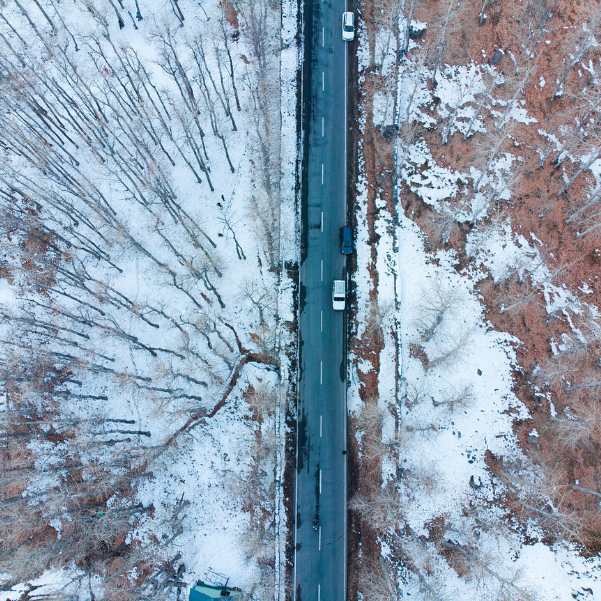
Sissu Village
Walking distance · the temple is in the village
The village where the temple stands, on the right bank of the Chandra river. Homestays, dhabas, and the lake and helipad area are all within walking distance, making Sissu the natural base for the temple visit and anything in lower Lahaul.
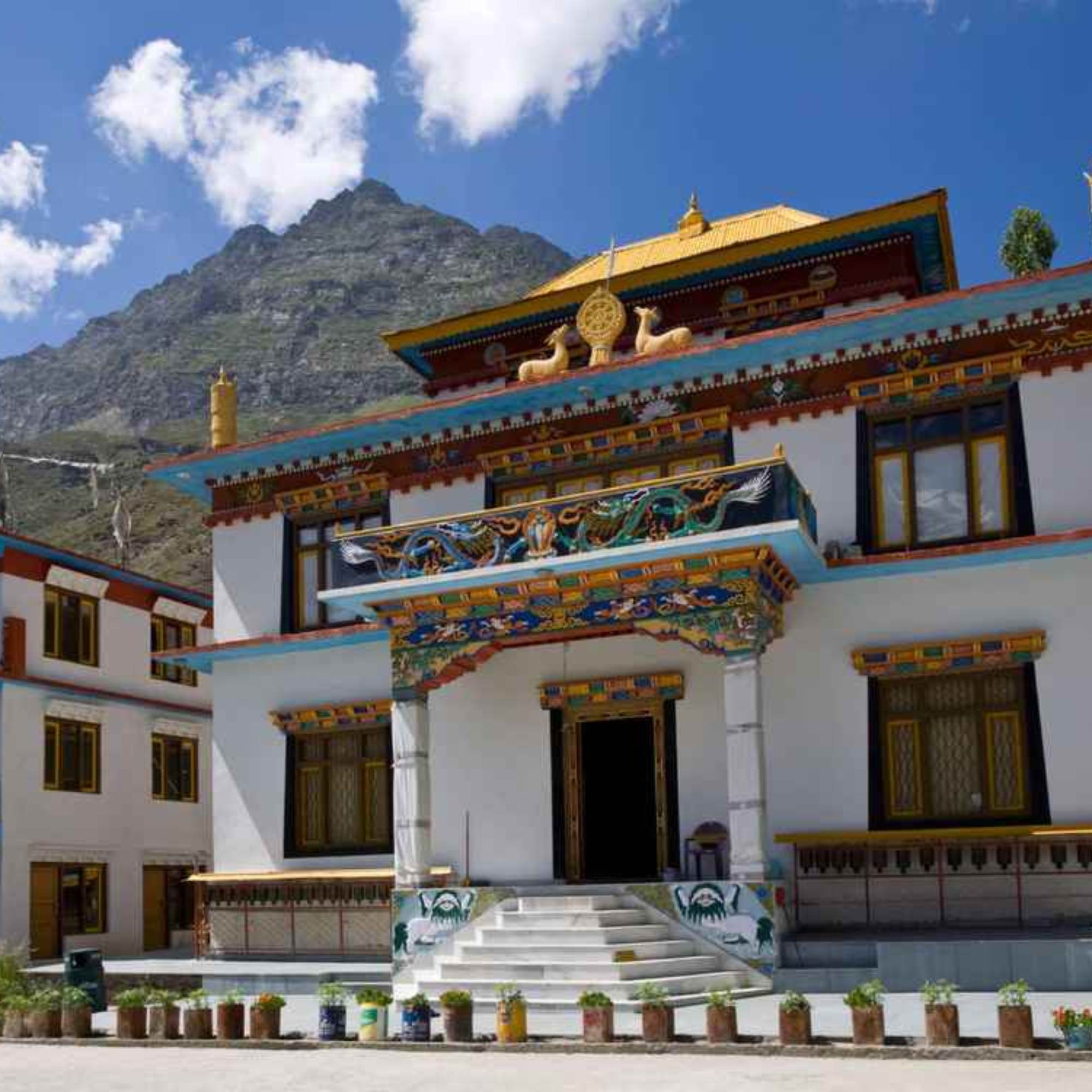
Sissu Monastery (Labrang Gompa)
~1 to 2 km uphill · 10 to 20 min walk
The Buddhist monastery in Labrang village above Sissu, dedicated to Palden Lhamo. The two religious sites together cover the folk Hindu and Tibetan Buddhist traditions of Lahaul, a natural pairing on a half day in Sissu.
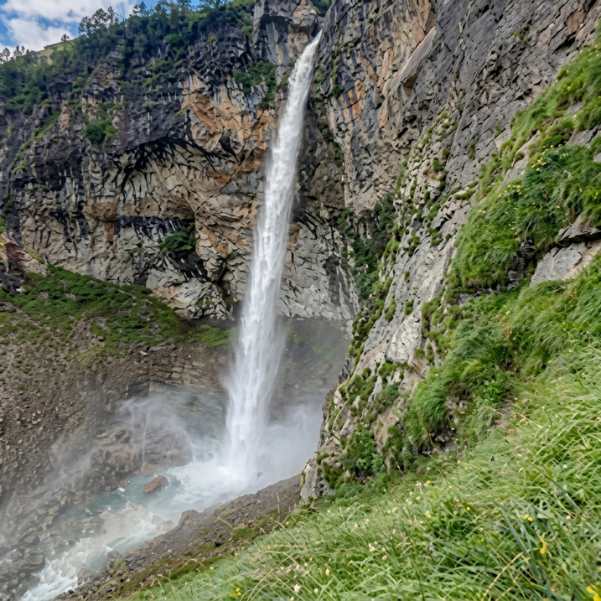
Sissu Waterfall
~2 km · visible from the village and the helipad
The tall Palden Lhamo Dhar waterfall across the Chandra river from Sissu village, named after the protector deity of the Buddhist monastery above. Visible from the helipad viewpoint near the temple area.
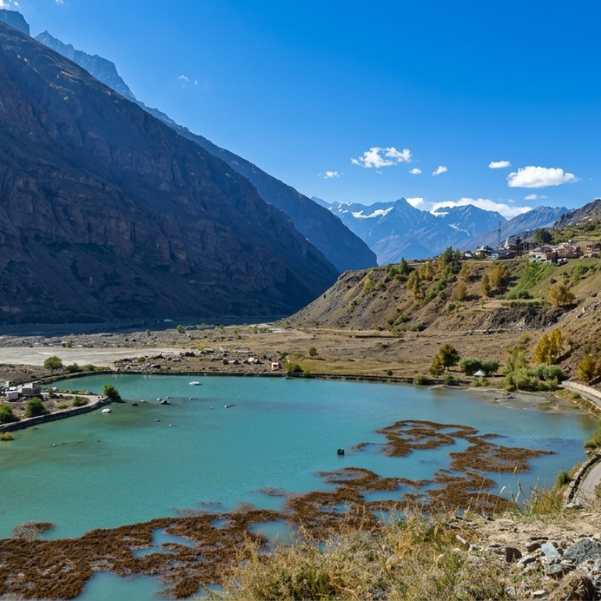
Sissu Lake
~1 km · 10 min walk from the temple
A small man made lake near the Sissu helipad, a short walk from the temple area. Good reflection of the waterfall cliff on still mornings. Pair with the temple visit for a quiet half day.
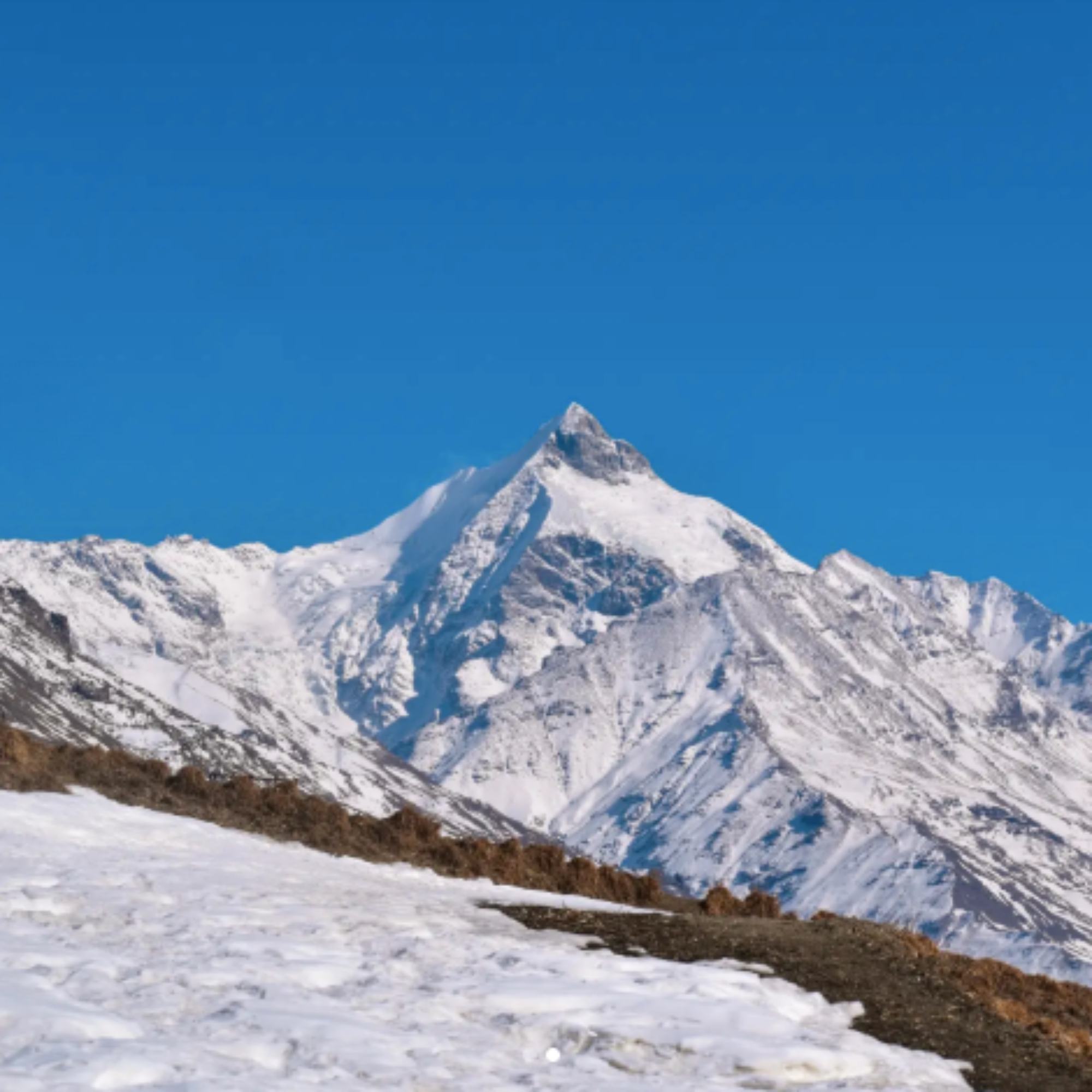
Gyephang Goh peak
East of Sissu · visible on clear mornings
The 5,870 metre peak east of Sissu, named after Raja Ghepan and considered the deity's mountain seat in local belief. You see it from the highway and the helipad viewpoint on a clear morning. Not a climb, a viewing subject.
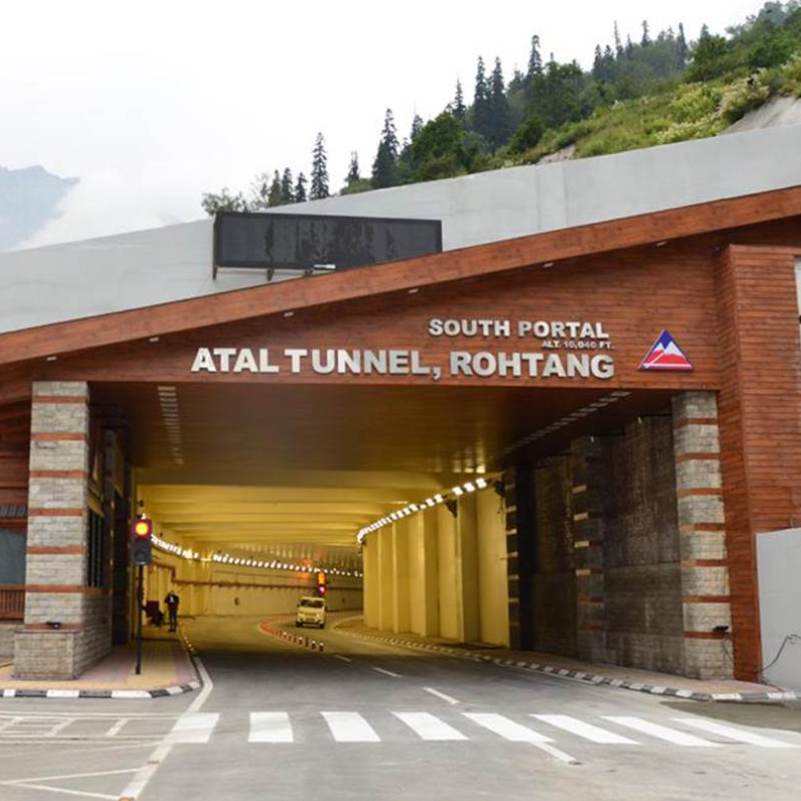
Atal Tunnel
~5 km south · 10 min drive
The 9.02 km highway tunnel on NH 3 that makes year round access to the temple possible from Manali. About 5 km south of Sissu, a 10 minute drive.
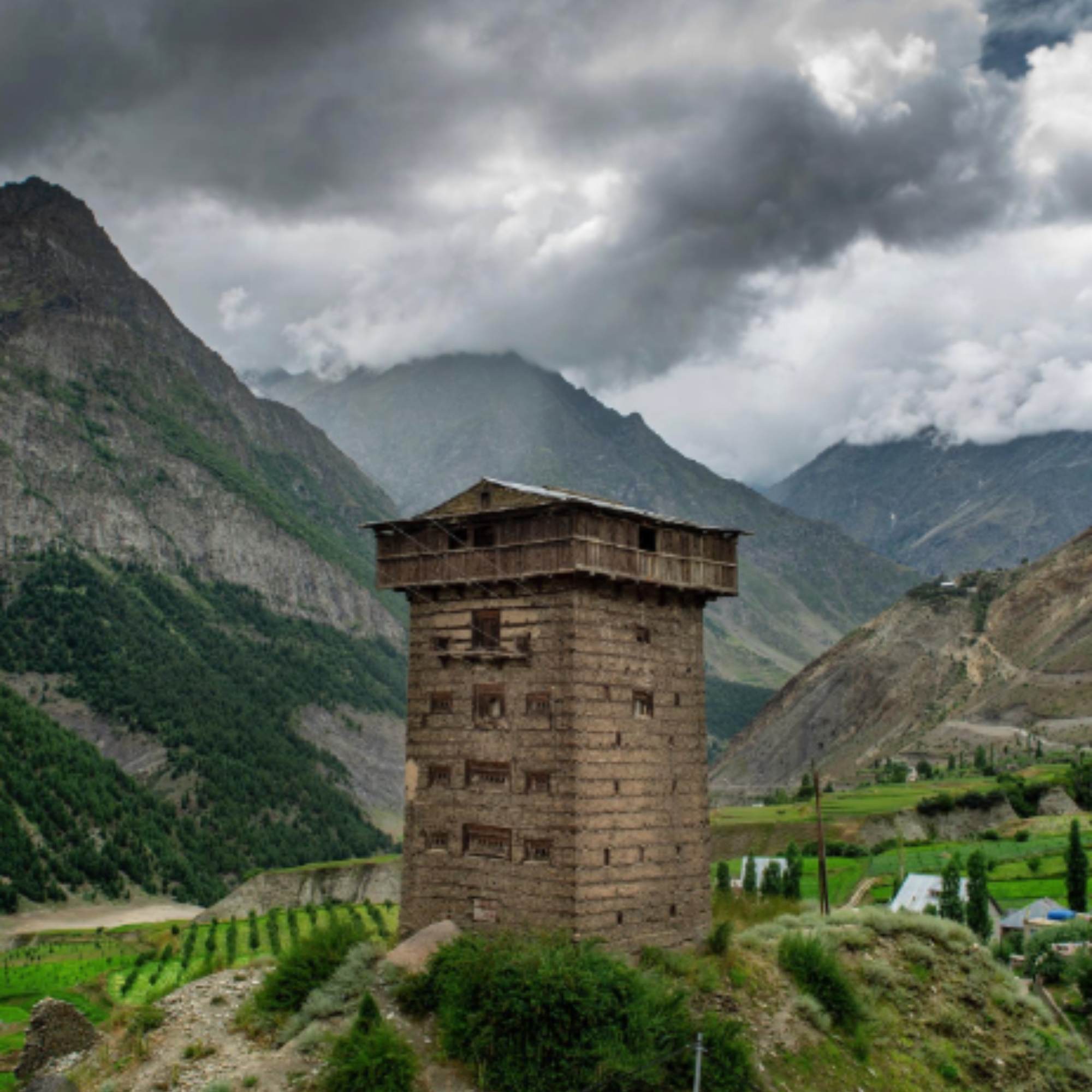
Gondhla Fort
~11 km west · 20 min drive
The only seven storey Kathkuni tower fort in Lahaul, about 25 minutes west of Sissu on the road to Keylong. A useful architectural contrast, old Lahauli construction next to the modern temple building at Sissu.
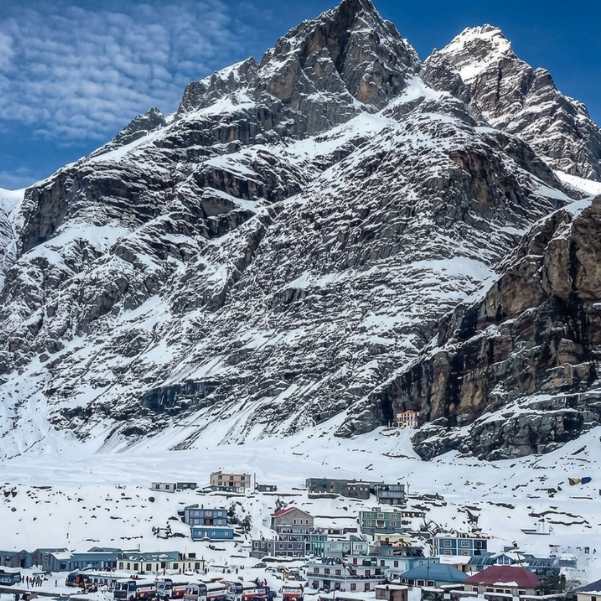
Koksar Village
~14 km east · 25 min drive
The small Lahauli village 14 km east on the Chandra, the main police check post for Spiti bound vehicles via Gramphu. Natural pairing on a wider Lahaul day from the temple.
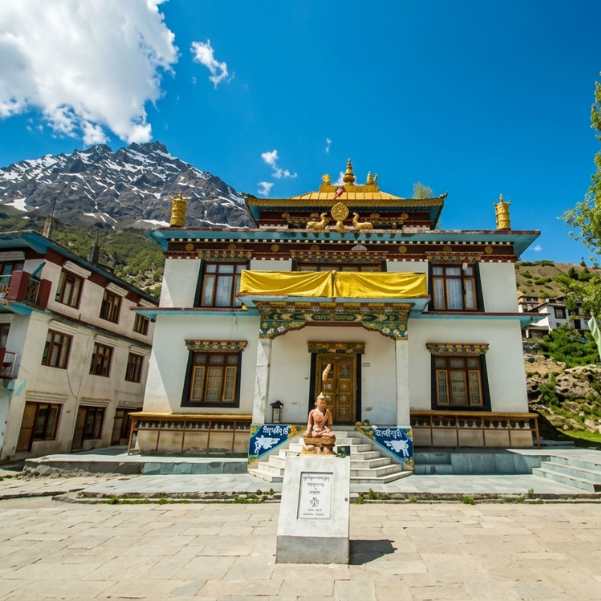
Kardang Monastery
~35 km west · 1 hour drive
One of the oldest and largest Buddhist monasteries in Lahaul, above Keylong across the Bhaga river. Attributed to the Drukpa Kagyu tradition and several centuries old. The architectural contrast to the modest Raja Ghepan temple is instructive.
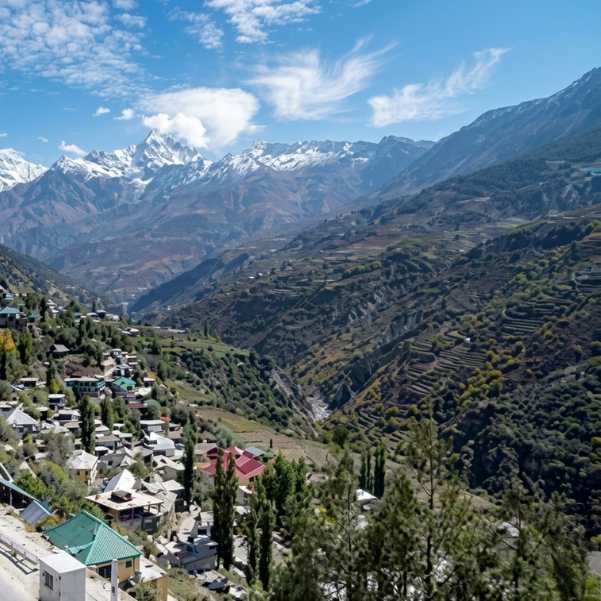
Keylong
~32 km west · 1 hour drive
The district headquarters of Lahaul and Spiti. The natural base for a deeper two night Lahaul trip that combines the temple at Sissu with the monasteries around Keylong.
Our packages with Raja Ghepan Temple
Curated trips that include a visit to Raja Ghepan Temple.
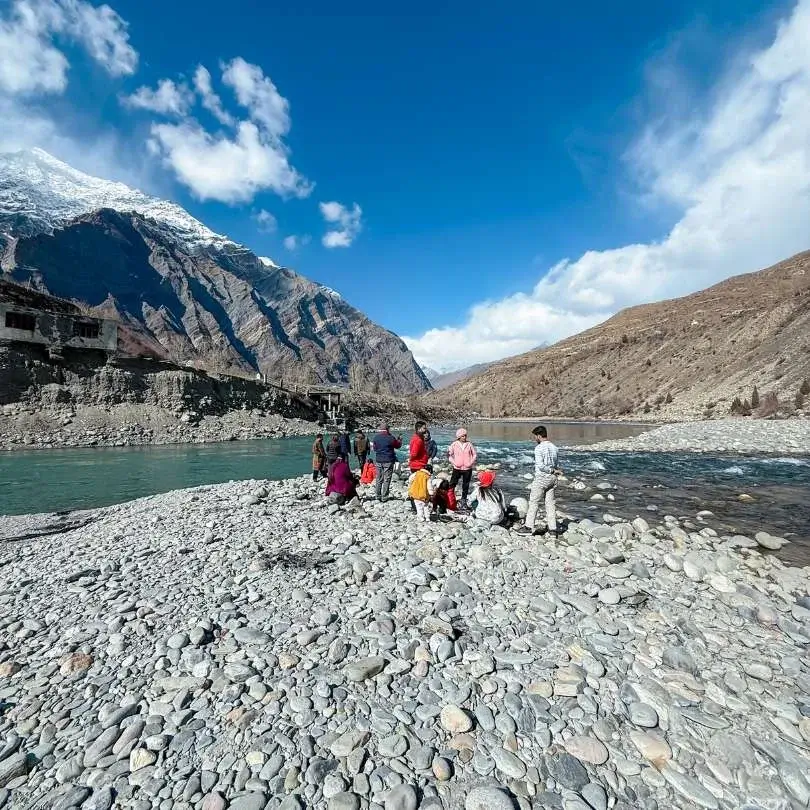 6D/5N
6D/5NMost Loved Sissu Valley Escape With Jispa Riverside Stay
2D Sissu•1D Jispa
₹15,999₹19,999SAVE INR 4,000/ person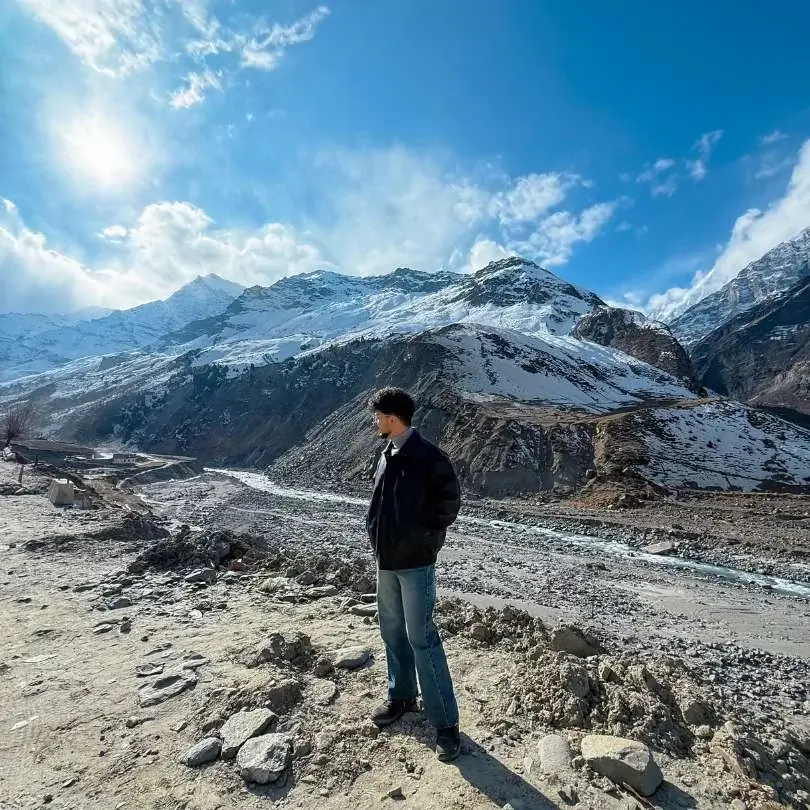 5D/4N
5D/4NClassic Sissu Valley Trip
2D Sissu•1D Manali
₹12,799/ person 6D/5N
6D/5NManali Solang Sissu & Snow Village Sethan Budget Trip
1D Delhi•3D Manali+2
₹12,999₹19,999SAVE INR 7,000/ person
Frequently Asked Questions about Raja Ghepan Temple
Where is Raja Ghepan Temple located?
Raja Ghepan Temple is in Sissu village, on the right bank of the Chandra river in the Lahaul valley, close to the village hamlets of Shashin and Gompathang which have kept the deity's tradition alive for generations. It is about 5 km from the north portal of the Atal Tunnel and roughly 42 km from Manali via NH 3.
Who is Raja Ghepan?
Raja Ghepan, locally Lord Gyephang or Ghepan, is the presiding deity of the Lahaul valley. Local belief holds that he was a powerful king who once ruled Lahaul and protected the people from evil forces. He is considered the spiritual guardian of the valley, and vehicles passing through Sissu traditionally slow down or stop to pay respects. The 5,870 metre Gyephang Goh peak east of Sissu is named after him and is considered his mountain seat.
Can tourists visit the temple?
Yes, in a limited and respectful way. You can stop outside, climb the steps, and pay respects at the grille of the sanctum, which is the customary outsider visit. You can also leave a small donation, receive blessings from the priest if he is around, and spend a quiet few minutes in the temple compound. Entry into the inner ritual space is generally reserved for locals and priests. Some older tourism pages incorrectly say the temple is completely closed to outsiders, this is not accurate, but the inner sanctum is indeed not a tourist zone.
Is the temple architecturally impressive?
No. The structure itself is relatively modern and modest, a concrete building resembling a small house with a shrine attached. The reverence for Raja Ghepan goes back centuries, but the current building does not show that history architecturally. If you are looking for old Himalayan religious architecture, Kardang and Guru Ghantal monasteries in Lahaul are the richer options. Come here for the deity and the living tradition, not for the building.
What offerings are made at the temple?
Fresh butter and milk from local livestock are the traditional offerings, placed at the sanctum as a mark of respect. Colourful cloths are also offered to drape on the tall wooden post that represents the deity. Outsiders are not expected to bring butter or milk, a simple cash donation in the box, usually 20 to 100 rupees, is appropriate. Do not offer alcohol, meat, or tobacco.
What is the Rath Yatra at Raja Ghepan Temple?
Every three years Lord Ghepan is taken out on a Rath Yatra, a chariot procession that moves through the villages of Lahaul for roughly two months. Devotees believe the deity creates a protective circle around the valley during the Yatra. Exact dates shift and should be confirmed locally, the tradition is ongoing and a Yatra is generally expected around the mid decade cycle. If your visit overlaps, the temple will be busier than usual and the deity may be away on the procession for stretches.
When are the oracle ceremonies held?
Yes, oracle ceremonies are traditionally held at the shrine on Mondays, Wednesdays, and Fridays in June, led by the Gur, the traditional priest who speaks as the medium of Lord Ghepan. These are working religious rituals, not performances for visitors. If you are in Sissu on one of these days, watch from a respectful distance, do not film without explicit permission, and follow any guidance from villagers. Access to the sanctum is often restricted on oracle days.
Is there an entry fee?
There is no entry fee and no ticket. The temple is a living village religious site, not a paid monument. A small donation in the box, typically 20 to 100 rupees, is customary and appreciated. The Gur and lamas do not charge for darshan.
Can I take photographs?
Yes in the outer compound, generally no in the sanctum. You can take photographs of the temple building, the surrounding mountains, and the compound. Do not photograph through the grille into the sanctum unless someone specifically gives permission. No flash photography near the altar. On oracle days and during the Rath Yatra, photography rules tighten further and you should ask before filming.
How is this different from Sissu Monastery (Labrang Gompa)?
They are two different places and two different traditions. Raja Ghepan Temple is a folk Hindu shrine to Lord Ghepan, the presiding deity of Lahaul valley. Labrang Gompa, commonly called Sissu Monastery, is a Buddhist monastery in Labrang village above Sissu, dedicated to Palden Lhamo. Both are in the Sissu area, roughly a kilometre apart. A thorough Sissu visit ideally covers both, since they represent the two main religious strands of Lahaul, the older folk tradition and Tibetan Buddhism.
Is there a dress code or etiquette?
Modest clothing is the right choice. Shoulders and knees covered, nothing loud or flashy. Remove shoes at the steps, keep voices low, no loud phone calls, no alcohol or tobacco in the compound, no pets inside. Do not step over or on any cloths, offerings, or ritual items on the ground. Walk clockwise around the sanctum if there is space. Treat it as you would any small active temple.
How much time should I spend here?
20 to 30 minutes is enough for most travellers. Ten minutes at the sanctum, a short walk around the compound, five minutes at the small museum opposite if it is open, and you are done. Stretch to an hour if you happen to be there during an oracle ceremony or festival, and half a day if you are visiting during the Rath Yatra.
Can I visit in winter?
Yes, the temple and Sissu village stay accessible year round via the Atal Tunnel, even in deep winter. The temple door may be closed outside prayer hours in winter, when the priest is harder to find and fewer rituals happen. Carry proper cold weather gear, the approach can be icy, and do not count on ceremonies. A summer or autumn visit is a richer experience.
Related guides
Posts about Sissu
- Where to Stay in Sissu in 2026: Best Hotels, Homestays & Areas for Every Budget
- Sissu in October 2026: Weather, Snow Chances, Road Status & Autumn Travel Guide
- Sissu in December 2026: Snowfall, Weather, Road Status & Winter Travel Guide
- Sissu in November 2026: Weather, First Snow, Road Status & Travel Guide
- Best Time To Visit Sissu in 2026: Month Wise Weather, Snow and Road Guide
- Manali To Sissu Road Trip Guide 2026: Route, Distance, Road Status, Cost And Local Tips