
Gondhla Fort
A seven storey Kath Kuni tower from around 1700 AD in a village in Lahaul, 18 km before Keylong on the Manali to Leh highway, mostly locked up today but worth a 20 to 30 minute roadside halt for the architecture alone
- Lahauli fort · ~3,160 m
- Kath Kuni · ~1700 AD
- Keylong · ~18 km
- Manali · ~53 km via Atal Tunnel
- 20 to 30 min halt
What makes it special
Gondhla Fort is a tall Kath Kuni tower in the village of Gondhla, in the Tinan stretch of the Lahaul valley, sitting at around 3,160 metres on the right bank of the Chandra river. It is on the Manali to Leh highway (NH3), roughly 18 km south of Keylong, about 11 km east of Sissu, and about 53 km from Manali via the Atal Tunnel. Most travellers drive past it without realising what they have missed, because the fort sits slightly below the road level and is briefly visible from the left hand window on the way towards Keylong. Slow down at Gondhla village, park, and the tower reveals itself in a way that no photograph really prepares you for.
Two things make this building unusual. First, it is generally described as a seven storey wood and stone tower, built around 1700 AD, which makes it the only standing tower fort of its type in Lahaul and Spiti. Second, it is built in the Kath Kuni style, alternating layers of cedar beams and dry stone, which is the earthquake aware building tradition of lower Kullu, Mandi, and Shimla. Seeing that style at 3,160 metres in a valley otherwise shaped by Tibetan Buddhist architecture is genuinely strange, and it is the visual detail most travellers remember. The cedar is said to have been sourced from the forests of Dhungri in Manali and hauled over the Rohtang Pass, which tells you how much effort went into building it and how tied the Gondhla Thakurs were to the Kullu Rajas across the range.
Honest framing most travel pages skip. The fort is privately owned by the descendants of the Thakurs of Gondhla. It is largely unoccupied, often locked, and in genuinely dilapidated condition. The timbers hold but the walls sag, the shutters are broken in places, and animals wander through parts of what was once the seat of a local ruler. A conservation study by INTACH, commissioned by the local area council, has reportedly been completed and the idea of turning the fort into a museum and cultural hub is on the table, but as of early 2026 no full restoration has begun. What this means in practice is simple. You can nearly always see the exterior, you rarely get inside, and when you do, it is with informal permission from a caretaker or family member if someone happens to be around. Plan your visit accordingly. Twenty to thirty minutes on the roadside is enough for most travellers. An hour if you walk around the base and sit with the architecture for a while.
Quick answers
- Is Gondhla Fort worth stopping for?
- Yes, as a 20 to 30 minute halt on a Lahaul drive. The seven storey Kath Kuni tower is the only building of its kind in the district and worth a pause for the architecture alone, even from outside. Skip it as a dedicated trip from Manali, the fort does not justify the whole day. Pair it with Tandi Sangam, Tupchiling Gompa, or a Sissu to Keylong drive.
- Can you go inside Gondhla Fort?
- Usually not. The fort is privately owned by the descendants of the Thakurs of Gondhla, largely unoccupied, and generally kept locked. A few travellers over the years have reported being able to enter with informal permission from a caretaker or family member if someone was around, but this is not reliable and should not be planned around. Expect to view it from outside.
- How old is Gondhla Fort and who built it?
- Generally dated around 1700 AD, built by Raja Man Singh of Kullu, who ruled from roughly 1688 to 1719 and married into the family of the local Thakur of Gondhla. Some local traditions, recorded by the writer M.S. Randhawa, suggest the tower may have been raised earlier by Thakur Rattan Pal, who is said to have migrated from Bir in Kangra. Both accounts exist in the record, the 1700 AD Kullu dating is the one most Himachal sources use.
Quick facts
Everything you need to know at a glance.
At a glance
- Altitude
- Around 3,160 m / ~10,370 ft
- Location
- Gondhla village, Tinan area of Lahaul, Lahaul and Spiti district, Himachal Pradesh, on the Manali to Leh highway (NH3)
- Nearest towns
- Keylong ~18 km north, Tandi ~11 km north, Sissu ~11 km south, Manali ~53 km via Atal Tunnel
- Best season
- May to October for clear viewing. Accessible year round via the Atal Tunnel, winter halts are possible but services are limited.
- Visiting hours
- No formal timings. Exterior is viewable 24 hours. Interior access is informal and depends on whether a caretaker is available, generally daylight hours only. Confirm locally.
- Entry fee
- No formal ticket. A small voluntary offering to the caretaker family is appropriate if you are allowed inside.
- Time needed
- 20 to 30 minutes for most travellers. Up to an hour if you walk around the base and the village. Add half a day if combining with the Guru Ghantal Monastery trek from Tupchiling.
- Known for
- The only seven storey Kath Kuni tower fort in Lahaul and Spiti, historic seat of the Thakurs of Gondhla, painted by the Russian artist Nicholas Roerich in the early 1930s
- Access difficulty
- Easy roadside stop. The fort sits slightly below the highway, short walk down. Interior stairs are steep wooden ladders, relevant only if you are allowed inside.
On the ground
- Mobile network
- BSNL is the most reliable. Jio and Airtel work in patches. Data speeds are slow. Plan for limited connectivity.
- ATMs
- None in Gondhla. Nearest ATMs in Keylong. Those can run dry on busy days. Carry cash from Manali.
- Fuel
- No pump in Gondhla. Nearest is Tandi, about 11 km north towards Keylong. Fill up in Manali before the tunnel.
- Washrooms
- No formal public facilities. Use the washroom at a dhaba in Sissu or Tandi on the drive. A couple of small eateries at Gondhla may allow use with a tea order.
- Food
- Two or three small dhabas and tea stalls in Gondhla village. Simple fare, chai, Maggi, dal rice, sometimes momos. Options are steadier at Sissu or in Keylong.
- Parking
- Informal roadside parking near the village bazaar above the fort. No formal charges. Keep to one side, the highway runs right past.
- Permits
- None for Indian nationals. Foreign nationals should carry ID and check current Lahaul and Spiti rules. No entry permit required for the fort itself, since it is not a protected monument.
- Drones
- Use strong discretion. The fort is private property and the surrounding village is a living settlement. Ask at the caretaker house before flying. Do not fly if anyone present is uncomfortable.
- Walking surface
- Short walk from the highway down to the fort base on a rough village path. Uneven underfoot, fine in dry conditions, slippery after rain or snow.
- Guides
- No formal guide service. If you are lucky enough to get inside, the caretaker or a family member will walk you through. Tip appropriately. A Keylong based driver familiar with the area can help arrange access.
Seasonal weather
- May to June20°4°Spring
- July to August22°10°Summer monsoon
- September to October18°0°Autumn
- November to March4°-14°Winter
Suitable for
- Couples — suitable
- Families — suitable
- Seniors — suitable
- Solo — suitable
- First-timers — suitable
- Pet-friendly — with some care
How to reach Gondhla Fort
6 approach routes, with seasonal access.
From Manali (via Atal Tunnel)
Year round via the tunnel. Road conditions after heavy rain or snow can vary.- Distance
- About 53 km
- Time
- 1.5 to 2 hours
- Road
- Tarred highway through the Atal Tunnel, then a steady run via Sissu and Gondhla on NH3. Generally in decent shape, some patched sections after monsoon.
- Last fuel
- Fill up in Manali. Next pump is at Tandi, 11 km past Gondhla.
The standard approach. From Manali, take NH3 south to the Atal Tunnel south portal at Dhundi, about 25 km from town. The tunnel is about 9 km long and generally takes 15 to 20 minutes to cross at the posted speed. Exit the north portal, continue through Sissu, then a little over 10 km along the Chandra river to Gondhla village. The fort is on the left as you head towards Keylong, below the road level. Many older pages still cite 110 km for Manali to Keylong via the Rohtang Pass, that is the pre tunnel figure. The current drive to Gondhla via the tunnel is about 53 km and comfortably shorter. In peak season and on weekends, traffic can queue at the south portal for 30 to 60 minutes, leave Manali by 8 or 9 AM.
From Keylong
Year round- Distance
- About 18 km
- Time
- 30 to 40 minutes
- Road
- Tarred highway, generally in decent shape.
- Last fuel
- Tandi pump is between Keylong and Gondhla, about 11 km north of the fort
The short hop if you are already based in Lahaul. Leave Keylong heading south, cross the Tandi bridge at the Chandra Bhaga confluence, then continue along the Chandra through farmland and willow stands for 11 km more to Gondhla. A comfortable morning out from a Keylong base, with time in hand to also stop at Tandi Sangam and Tupchiling Gompa on the same loop.
From Sissu
Year round- Distance
- About 11 km
- Time
- 20 to 25 minutes
- Road
- Tarred highway along the Chandra river
- Last fuel
- Tandi, about 22 km north of Sissu
The most common pairing. From a Sissu overnight, drive east along the Chandra through a quiet valley with views of the high Lahauli peaks on the left and the river below on the right. The landscape opens up just before you reach Gondhla. A natural morning halt if you are continuing towards Keylong or Jispa, or a quick return loop if you are based in Sissu.
From Tandi Sangam
Year round- Distance
- About 11 km
- Time
- 20 minutes
- Road
- Tarred highway along the Chandra
- Last fuel
- Tandi itself
The best pairing for a short Lahaul heritage morning. From Tandi Sangam, drive south along the Chandra for about 11 km to reach Gondhla. The two sites complement each other, Tandi gives you the confluence and the religious weight of the valley, Gondhla gives you the architecture and the feudal history. Together they make a comfortable two to three hour loop from a Keylong base.
From Jispa
Year round- Distance
- About 39 km
- Time
- 1 to 1.25 hours
- Road
- Tarred highway through Keylong and Tandi
- Last fuel
- Tandi pump between Keylong and Gondhla
If you are based in Jispa for the riverside camping, Gondhla is an easy morning trip on the way back towards the tunnel. Drive south through Keylong, cross the Tandi bridge, and continue along the Chandra for about 11 km more to the fort. Combine it with a Tandi halt and you have a half day out before returning to Jispa for the evening.
From By bus from Manali or Keylong
Year round, fewer services in winter- Distance
- About 53 km from Manali, 18 km from Keylong
- Time
- 2 to 2.5 hours from Manali, 30 to 45 minutes from Keylong
- Road
- Highway through the Atal Tunnel and onward
- Last fuel
- Not applicable
HRTC buses running between Manali and Keylong, Udaipur, or Leh pass through Gondhla. Frequency varies by season, generally a few buses a day in summer, fewer in winter. Confirm timings at the Manali or Keylong bus stand on the day. The bus drops you on the highway at Gondhla village, the fort is a short walk from the road. Return buses towards either side pass through every hour or two during daylight, though evening frequency drops off.
Best time to visit
Season by season, so you can plan around the weather rather than hope.
- Recommended
Spring
May to June
The cleanest window, warm enough to walk the village, and the timber photographs well in the afternoon light
- Day temperature
- 14 to 20 C
- Night temperature
- 4 to 7 C
- Light on the fort
- Clean morning sun, strong afternoon light
- Crowds
- Low, some Leh bound traffic builds through June
A good time to visit. The snow has cleared from the village lanes, the willows and poplars around the fort start leafing out, and the afternoon sun warms the old cedar to a red brown that photographs much better than the flat grey of winter. The Gondhla village walk is pleasant at this temperature. Days are warm enough for a t-shirt, nights still need a proper jacket. June is the single best month, warm days, clear light, and the fields around the village start to turn green.
Summer monsoon
July to August
Green valley, diffused light, and the approach road can see landslides
- Day temperature
- 18 to 22 C
- Night temperature
- 10 to 12 C
- Light on the fort
- Softer, more overcast days
- Crowds
- Moderate, Leh bound traffic at its peak on the highway
The valley is at its greenest. Gondhla itself sits in a partial rain shadow so direct rain is less frequent than in Manali, but the highway approach through Sissu and the Atal Tunnel area can see landslides and debris flows, especially in the last week of July and through August. Keep a buffer day in your plan. Cloud cover is common by afternoon, cutting into the mountain views that frame the fort. This is peak Leh traffic season so the highway stays busy, but the village itself remains quiet since most convoys do not stop here.
- Recommended
Autumn
September to October
The sharpest light of the year and the cleanest photograph of the tower
- Day temperature
- 10 to 18 C
- Night temperature
- 0 to 3 C
- Light on the fort
- Sharpest of the year, gold on the timbers in late afternoon
- Crowds
- Low, especially after the first week of September
If you can time it, late September to mid October is the best window for Gondhla. The monsoon settles, the air sharpens, and the late afternoon light turns the cedar of the tower a deep red gold that does not happen at any other time of year. Leh traffic thins after the first week of September. Poplars around the village start to turn yellow. Nights get cold by October, carry a proper warm layer. The Baralacha La stretch towards Leh generally stays open through September and sometimes into October.
Winter
November to March
Snow on the roofs, genuine cold, and access that depends on the day
- Day temperature
- -5 to 4 C
- Night temperature
- -10 to -14 C
- Light on the fort
- Bright midday, short daylight
- Crowds
- Almost none
The Atal Tunnel keeps the road to Keylong accessible year round, which means Gondhla is technically reachable in winter. In practice, the highway between Tandi and Sissu can get blocked or icy after heavy snowfall, most dhabas shut from November through April, and the caretaker family is less likely to be around to open up. Temperatures drop well below freezing at night. Winter visits are only practical for experienced Himalayan travellers with proper gear and flexible plans. That said, the fort covered in fresh snow is a different kind of image, and if you pass through on a winter Lahaul trip anyway, twenty minutes at the roadside viewpoint is worth it.
Things to see & do
8 things worth your time at Gondhla Fort.
Walk around the base of the tower
20 to 30 minutesThe honest main activity at Gondhla. Park near the village bazaar, walk down the short path, and spend twenty minutes circling the fort at ground level. The alternating stone and timber construction is the detail to look for, the thick cedar beams laid like rails between courses of dry stone, with notched corner joints that lock the whole tower against shake. Try to count the floors from outside, you will get between six and eight depending on how you count the balcony level. Seven is the generally accepted number. Photograph from the downhill side in the afternoon to get the full height with the mountains behind.
Try your luck for an interior visit
30 to 60 minutes if successfulAsk in the village for the caretaker of the fort. If someone is around and willing, you may be walked through parts of the interior, up the steep wooden ladder style staircases to the upper floors. Reports over the years describe old weaponry, furniture, thangkas, and family deities of the Thakurs still stored on the upper levels, along with a small prayer room believed to have been the Thakur's personal chapel. This access is informal, unreliable, and depends entirely on whether the family representative is present that day. Do not plan around it. If you do get in, tip appropriately, remove shoes before the prayer spaces, and do not photograph inside without explicit permission.
Pair with Tandi Sangam and Tupchiling Gompa
Half dayThe best way to spend your Lahaul morning. From a Keylong or Sissu base, drive to Gondhla for the fort, continue 11 km north to Tandi Sangam for the confluence viewpoint, then visit the small Tupchiling Gompa which sits just above the confluence. This is the caretaker monastery for the historically significant Guru Ghantal gompa above. Most of the older Buddhist relics from Guru Ghantal have been moved down to Tupchiling for safekeeping, including some wooden idols. Plan a three to four hour loop back to base.
Trek up to Guru Ghantal Monastery
Half day to full dayThe other historical site linked to Gondhla village, Guru Ghantal or Gandhola Gompa, sits on a ridge above Tupchiling near the Tandi confluence, not next to the fort itself. Local tradition variously credits Padmasambhava, Rinchen Zangpo, or a lama named Guru Ghantapa with its founding, and it is believed to be among the oldest Buddhist monasteries in Lahaul. Visitor reports generally describe a steep 3 to 4 hour climb from Tupchiling on a trail that is not always well marked, shorter on the way down. Ask at Tupchiling for the key before setting out, the gompa is often locked and a wasted climb is a real risk. Not a casual add on to a fort stop. Plan a full half day, carry water, snacks, and proper shoes.
Photograph the tower in afternoon light
30 to 45 minutesThe signature photograph is from the downhill side, with the full height of the fort in frame and the Lahauli peaks behind. Late afternoon light from around 3 to 5 PM in summer and autumn is the best window, when the sun warms the west face of the cedar timbers to a deep red brown. A 24 to 70 mm zoom covers most of it. The morning side is shaded against the slope so the fort photographs flat before noon. In winter, midday is the only usable window because the days are short. Do not photograph inside a caretaker's home or interior of the fort without explicit permission.
Walk through Gondhla village
30 to 45 minutesThe village around the fort is a small working Lahauli settlement with traditional slate roofed houses, kitchen gardens, a scatter of small shops, and willow and poplar lined lanes. Walk slowly, greet people with a namaste or julley, and do not photograph without asking. Several older houses in the lanes show the same Kath Kuni construction as the fort, at one or two storeys, which gives you a sense of what the regional tradition looks like in domestic scale. The village is especially alive in the morning when people are working in the fields.
Sit with the architecture, or catch the July fair if your timing is right
An hour, or a full day at the fairIf you have an hour to spare and a soft spot for old buildings, find a flat rock or a step near the fort base, sit quietly, and look. Watch how the timber lines break across the stone, how the slight lean in the upper floors shifts with the light. Not every stop on a Lahaul trip needs an activity attached. If you happen to be in the area in July, the small Gondhla fair at the village gompa is the one day of the year when the place is not quiet, with the Chham masked dance traditionally performed and visitors from other Lahaul villages arriving. Dates shift year to year with the lunar calendar, confirm locally before travelling for it.
Know the Nicholas Roerich connection
Context, not an activityBetween 1929 and 1932, the Russian painter and Himalayan traveller Nicholas Roerich spent his summers in the Kullu and Lahaul valleys, and among his many canvases are paintings of the Gondhla tower set against the Lahauli peaks. It is a small piece of trivia, but for travellers interested in how outsiders saw this valley before it had roads, a visit to Naggar Castle and the Roerich estate in Kullu on the same Himachal trip pairs well with a stop at the fort. You are looking at the same building he painted nearly a century ago, now in a far more weathered state, which is a reflective way to spend ten minutes.
Know before you visit Gondhla Fort
The practical bits, from people who have been.
What Gondhla Fort actually isA seven storey Kath Kuni tower from around 1700 AD, the only standing tower fort of its kind in Lahaul and Spiti
The fort is a tall wood and stone tower in the village of Gondhla, at around 3,160 metres in the Tinan stretch of the Lahaul valley. The generally cited figure is seven storeys, though you will find older sources saying six or eight depending on how they count the balconies and the ground level. The building is made in the Kath Kuni style, with alternating layers of dry stacked stone and cedar beams, a traditional earthquake aware technique from lower Kullu, Mandi, and Shimla.
The timber was reportedly sourced from the deodar forests of Dhungri in Manali and hauled over the Rohtang Pass, a serious undertaking three centuries ago. The staircases inside are notched logs rather than modern steps, there is a verandah running around the upper level, and the fort was designed to function as a residence, a prayer space, a stronghold, and a store all at once. You will read different descriptions of what is on each floor, but the broad picture holds up, kitchen on the top for heat retention, personal prayer space on the fifth or sixth, weapons stores lower down, and the Thakur's audience space around the middle where he listened to villagers and pronounced judgement from the verandah.
A reality check most travel pages skip. As a visitor today, what you see is mostly the exterior, slightly leaning, weathered, animals wandering through the lower level, shutters broken in places. What the interior once held, old weaponry, thangkas, family deities, is still inside but locked up. Plan for the exterior experience, anything inside is a bonus you cannot rely on.
The history in plain termsBuilt around 1700 AD by Raja Man Singh of Kullu, seat of the Thakurs of Gondhla who ruled the Chandra river valley for the Kullu Rajas
The accepted account, recorded in the District Gazetteer of Lahaul and Spiti, is that the fort was built around 1700 AD by Raja Man Singh of Kullu, who ruled from roughly 1688 to 1719. Man Singh married into the family of the local Thakur of Gondhla, a political alliance typical of the time, and the fort grew out of that tie. Legend holds that he stayed in the fort in 1720 AD on his way to the Trilokinath temple at Udaipur in the Pattan valley, and local oral tradition still points out the room on the upper floor where he is said to have lodged.
A second, older account, recorded by the writer and botanist M.S. Randhawa, says the tower was raised earlier by Thakur Rattan Pal, who is said to have migrated from Bir in Kangra and become the feudal lord of the area. Both versions are in the record. Himachal sources generally go with the 1700 AD Kullu dating, but the Thakurs of Gondhla themselves have historically held that their line is much older than that.
What is not in dispute is the political role of the family. For nearly two centuries, the Thakurs of Gondhla were viceroys of the Kullu Rajas in the Tinan valley of Lahaul, a region locally known as the Rangloi ilaqa, which covered all villages from Khoksar down to Tandi at the Chandra Bhaga confluence. Four main Thakur families held Lahaul together, Gondhla the closest to Kullu in geography and allegiance. When the British took over this stretch in the 1860s, they appointed the Thakurs of Keylong as their administrative nominee and Gondhla lost its formal political status, though the family stayed on the land and the fort has remained in their descendants' hands ever since.
What Kath Kuni is, and why it is unusual hereA lower Kullu and Mandi earthquake aware building style, rare in Buddhist Lahaul, which is what makes Gondhla Fort visually distinct
Kath Kuni is the traditional building system of the hill valleys of Kullu, Mandi, Shimla, and parts of Kinnaur and Uttarakhand. The name comes from the local Pahari dialect, where Kath means wood and Kuni means a notched corner. The basic idea is alternating courses of dry laid stone and long cedar or deodar beams, with interlocked notched joints at the corners so the whole structure flexes in an earthquake rather than cracking. Old temples like Parashar, houses in Naggar and Old Manali, and the towers at Chehni Kothi and Naggar Castle are all examples of the same tradition, scaled from small homes up to seven storey forts.
What makes Gondhla unusual is that this style is a Hindu Pahari tradition from the other side of the Rohtang Pass, not native to Lahaul. Lahaul is a Buddhist valley with architectural roots in the Tibetan plateau, compact stone walls, flat mud roofs, whitewashed finishes. A seven storey timber and stone tower in this landscape is a deliberate cultural statement, a direct visual link between the Kullu Rajas and their viceroys in Gondhla. You can read the building as a statement of allegiance in three dimensions. Conservation architects who have studied it note that this is the only large Kath Kuni tower sitting at this altitude in a Buddhist region, which is why the loss of the building would be more significant than its dilapidated state suggests.
Can you go inside? The honest answerUsually not. The fort is private, locked, and dilapidated. Interior access is informal, unreliable, and depends on a caretaker being present
This is the single most asked question about Gondhla Fort online, and most travel pages dodge it with soft language. The straight answer is that the fort is privately owned by the descendants of the Thakurs of Gondhla, is largely unoccupied, and is generally kept locked. It is not a ticketed heritage site, not an ASI protected monument, and not under the Archaeological Survey's regular access system. Some tourism pages list it as open 10 AM to 5 PM on weekdays with weekend closures. That listing is not backed by any official source and recent visitor reports often describe finding no one around regardless of timing. Treat those timings as unreliable.
In practice, what happens is this. You arrive in the village, walk down to the fort, and try to find someone from the caretaker or Thakur family. If they are around and willing, they may walk you through parts of the interior informally, perhaps in exchange for a small offering as a mark of respect. If nobody is around, you view the exterior and move on. Some travellers have reported being taken through the upper floors, shown the prayer chamber, the old weapons, and the alleged Kulu Vase niche. Others have been turned away politely. Both outcomes are legitimate, neither can be guaranteed.
Practical suggestion. If interior access is important to you, travel with a Keylong based driver who has local contacts in Gondhla village, or ask your homestay in Sissu or Keylong to call ahead. Early to mid morning on a weekday, in the May to October season, is the most likely window for someone to be around. Even then, keep expectations low and treat any access as a privilege rather than a right.
The Nicholas Roerich and Kulu Vase connectionsThe Russian painter Nicholas Roerich painted the fort during his summers in Lahaul in 1929 to 1932, and the first century BCE Kulu Vase found near Gondhla now sits in the British Museum
Two pieces of trivia that lift Gondhla out of the category of a regional fort into something with wider art and archaeology weight.
Between 1929 and 1932, the Russian painter, writer, and Inner Asian traveller Nicholas Roerich spent his summers in Lahaul while based at Naggar in the Kullu valley. He painted a number of Himalayan subjects in those years, and among them are canvases of the Gondhla tower set against the Lahauli peaks. For anyone interested in how outsiders saw this valley before the road network existed, a visit to the Roerich estate and gallery at Naggar Castle in Kullu pairs naturally with a stop at Gondhla. You are looking at the same building he painted nearly a century ago, in a distinctly more weathered state today.
The second piece is older and stranger. In 1857, a British officer named Major Hay discovered a chased copper goblet near the Guru Ghantal monastery just down the valley at Tandi. The goblet is dated to around the first century BCE and is considered one of the oldest examples of decorated metalwork from the Indian subcontinent. It is now held at the British Museum in London under the name Kulu Vase. The story links Gondhla, the monastery above Tupchiling, and the valley's pre Buddhist past to an object sitting in a European museum, which is a reminder that this quiet bend in the Chandra river has been a cultural crossroads far longer than the tower you came to see.
The restoration questionA conservation study by INTACH has been done, plans for a museum and cultural hub are on the table, but no full restoration has begun as of early 2026
The state of the fort has become a minor public conversation in Himachal over the last few years, particularly after the Atal Tunnel opened in 2020 and brought year round attention to Lahaul. The local area council (LAC) reportedly engaged the Indian National Trust for Art and Cultural Heritage (INTACH) to study the building and suggest a restoration plan, with the idea of redeveloping it as a heritage museum and cultural hub. A team of conservation architects, led by the Shimla historian Raaja Bhasin as the state convenor of INTACH, camped at Gondhla to prepare a draft report, which was described by those involved as in its final stages in early 2025.
As of early 2026, the situation on the ground has not visibly changed. Some token repairs have been made over the years, a few doors patched to keep cattle out of the lower level, but no comprehensive restoration has begun. The conservation architects involved have been direct about the state of the building, describing it as in a dilapidated form, with broken windows, damaged shutters, and cracks in the wood and stone. The core timber structure appears to be holding, and the Kath Kuni design continues to give the tower a measure of protection against seismic activity, but the clock is ticking on the ornamental and interior elements.
A gentle recheck reminder. The restoration status, access rules, and any future ticketing or opening arrangements are all likely to shift over the next few years. Check recent Tripoto or YouTube reports from the same month you plan to travel, or ask your homestay in Keylong to call a local contact. What is true in April 2026 may not be true in 2027.
Who should stop, and who should drive onWorth 20 to 30 minutes for most Lahaul travellers, an hour for architecture or heritage enthusiasts, skip as a standalone trip
Most travellers on the Manali to Keylong or Spiti drive: Yes, stop for 20 to 30 minutes. The fort sits directly on your route, the village is small and quick to walk, and the architecture is genuinely unusual for the region. Treat it as a halt between Sissu and Tandi, not a destination.
Heritage and architecture enthusiasts: Plan an hour or more. Walk the base slowly, try for interior access, pair with Tandi, Tupchiling Gompa, and if you have the stamina, the Guru Ghantal trek. A morning well spent. Travellers who already loved Naggar Castle, Chehni Kothi, or the traditional towers of Kinnaur will find this one fits cleanly into the same mental category.
Families with kids: Yes as a short halt. The walk down to the fort is easy, there is space for kids to move around, and the architecture is a good talking point. Keep kids off the internal stairs if you do get inside, they are steep notched logs rather than modern steps. The nearby highway is busy at times, supervise.
Seniors: Fine at the exterior level. The altitude of 3,160 m is moderate by Lahaul standards, lower than Keylong and much lower than Kaza or Leh. The walk from the roadside parking to the fort base is short and fairly level. Interior access, if offered, involves very steep wooden ladders, not advisable for older travellers with any knee or balance issue.
Pets: Generally fine at the exterior. Keep them leashed near the highway. Not appropriate inside if you do get access, out of respect for the family.
Skip a dedicated trip if: you are considering driving from Manali specifically for the fort. It is not worth the day by itself, especially with the uncertainty around interior access. Build it into a larger Lahaul or Spiti itinerary. If you are doing a Manali day trip and only have time for one Lahaul halt, Sissu delivers more for the time.
Altitude, weather, and safetyModerate altitude by Lahaul standards, winter access via the tunnel works but conditions vary, keep interior stairs in mind if you get inside
At around 3,160 m, Gondhla is lower than Keylong, Sissu, or Jispa, and well below Spiti altitudes. Most travellers handle the altitude fine. Mild breathlessness on the first afternoon is normal, especially after a long drive up from the plains. It usually settles in an hour.
Winter specific: The Atal Tunnel keeps access open year round, but the highway between Tandi and Sissu, and the access road into Gondhla village, can be icy or snow covered in December to February. Carry chains for your tyres if self driving. Services in the village shrink, dhabas mostly shut, and the caretaker family is less likely to be present for interior access. Temperatures drop well below freezing at night. Dress for serious cold, thermals and a heavy jacket at minimum even for a daytime halt.
Monsoon specific: Gondhla sits in a partial rain shadow but the approach through the Atal Tunnel area and onwards to Sissu can see landslides and debris flows in July and August. Check road status on the day before you leave Manali.
Interior stairs: If you are lucky enough to get inside, know that the staircases are steep notched wooden logs rather than modern steps. They require a careful three point grip, especially coming back down. Not advisable for anyone with knee, hip, or balance issues, or for small kids without adult supervision.
Nearest medical help: Keylong, about 18 km north. The primary health centre there handles basic issues. Anything serious means back through the Atal Tunnel to Manali.
Photography and village etiquetteLate afternoon light on the cedar face is the best window, ask before photographing villagers, and leave drones grounded
The signature photograph of Gondhla Fort is from the downhill side in late afternoon, ideally between 3 and 5 PM in summer and autumn, when the west face of the cedar timbers warms to a deep red brown. The full height of the tower and the Lahauli peaks behind can be framed with a 24 to 70 mm lens from about 15 to 25 metres back. Morning light is flatter because the slope shades the fort. In winter, midday is the only usable window because the days are short and the light angle is low.
Etiquette matters here more than at most Lahaul stops. The fort is private property and the village is a living settlement, not a monument complex. Do not photograph interiors of homes, caretaker rooms, or the fort itself without explicit permission. If you are shown the prayer chamber or the family deities during an informal interior visit, the camera should stay in the bag unless the caretaker specifically allows it. Ask before photographing villagers at work, a namaste and a smile goes further than a raised lens.
Drones: Leave them grounded. The fort is on private land, the village is small enough that drone noise carries badly, and asking the caretaker family is only a courtesy if you have already decided not to fly unless refused. Ground photography gets you everything you actually need.
Local tips most travellers missUse the right name, ask at a village tea stall for the caretaker, carry cash, and combine with Tandi for a full morning
If you are asking for directions, ask for Gondhla Killa or Gondhla Char rather than Gondhla Fort. Both names are in use locally and the Pahari word Char for a tower fort is what older residents recognise instantly. Younger villagers know Fort too.
For a realistic shot at interior access, stop at one of the two small tea stalls in the village bazaar before heading down to the fort. Order a chai, ask quietly if the caretaker or a family member is around today, and the answer you get over the second cup is more reliable than any online tourism listing. If the answer is no, thank the shopkeeper, walk down for the exterior, and move on.
Carry cash. There is no ATM in Gondhla, UPI is patchy because of weak signal, and any informal offering for interior access or for the caretaker family should be in cash. Small notes of 100 and 200 rupees are ideal. A voluntary 100 to 200 rupees is appropriate for a walk through if you are offered one, more if you are shown the upper floors and the prayer spaces.
Build the stop into a larger Lahaul loop rather than a standalone trip. The natural plan from a Keylong base is Gondhla Fort, Tandi Sangam, and Tupchiling Gompa over a two to three hour morning. From a Sissu base, pair the fort with a drive on to Keylong or Jispa for the evening. As part of a longer trip continuing into Spiti via Kunzum Pass towards Chandratal, Gondhla fits as a morning pause on the way out of Lahaul.
A small recheck reminder. The fort's access, restoration status, and any timings or entry arrangements are all liable to shift over the next few years as the INTACH plan moves forward. Check recent visitor reports close to your travel date, or call a Keylong based tour operator to ask. What is true in 2026 may not be true by the time you read this.
Nearby attractions
Other places worth the detour.
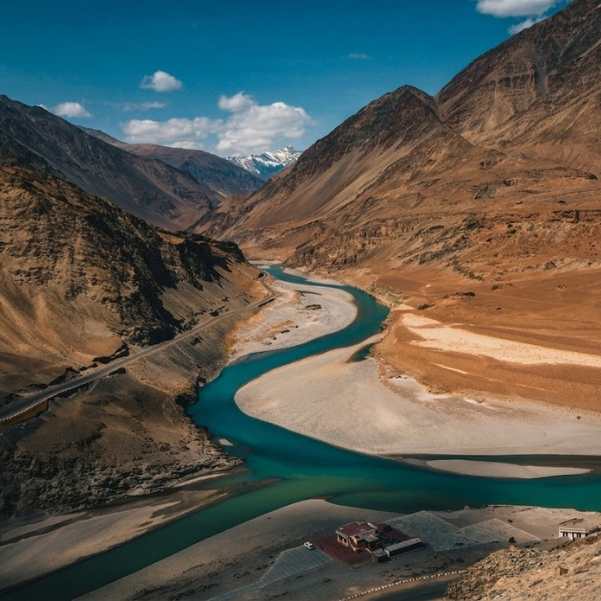
Tandi Sangam
~11 km · 20 min drive
The confluence of the Chandra and Bhaga rivers, the source of the Chandrabhaga that becomes the Chenab. One of the eight Mahashamshans of India and the last reliable fuel halt before Keylong. The natural pair with Gondhla for a short Lahaul heritage morning.
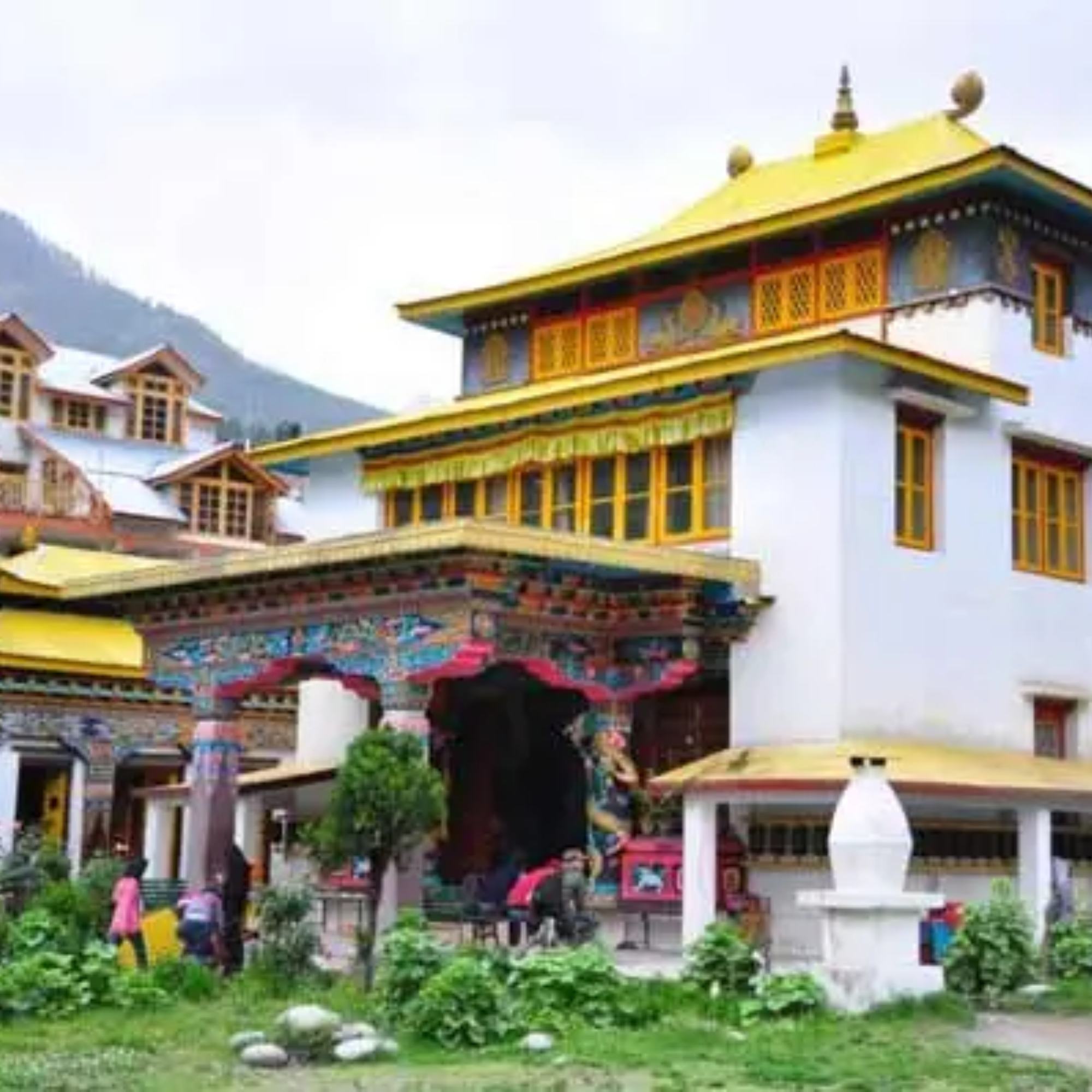
Tupchiling Gompa and Guru Ghantal Monastery
Tupchiling is a short walk from the Tandi bridge, Guru Ghantal is a 3 to 4 hour uphill trek from there
Tupchiling is the small working caretaker gompa just above the Tandi confluence, where most of the sacred relics of Guru Ghantal have been moved for safekeeping. Guru Ghantal, also called Gandhola Gompa, sits on a ridge above and is believed to be among the oldest Buddhist monasteries in Lahaul, with wooden idols unusual for the region. The trek up from Tupchiling is steep and the gompa is often locked, ask for the key before climbing.
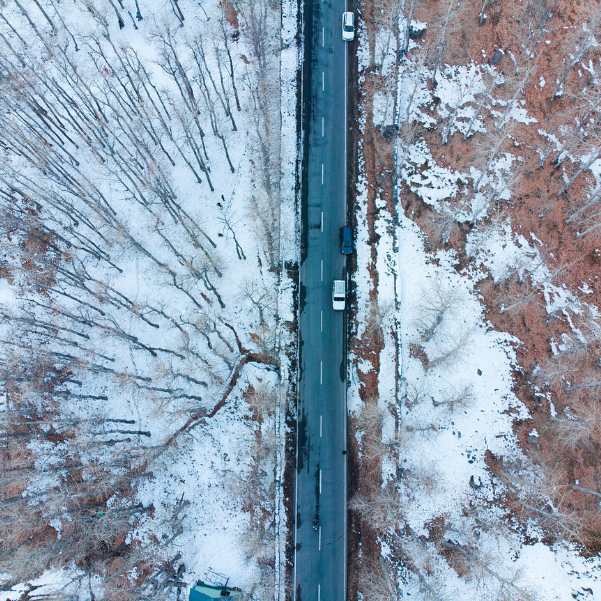
Sissu Village
~11 km · 20 min drive towards Manali
The first village past the Atal Tunnel, with a waterfall visible from the highway, a small lake, and a helipad sunset viewpoint. The most popular Lahaul base from Manali for a quick one or two night trip.
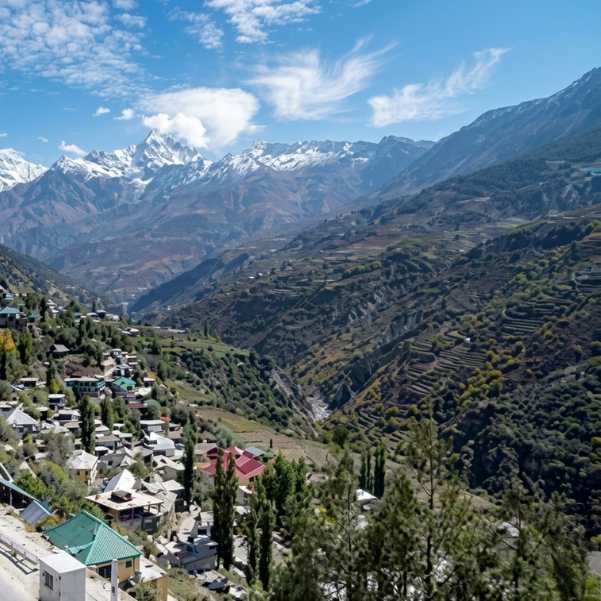
Keylong
~18 km · 30 to 40 min drive
The district headquarters of Lahaul and Spiti, with the only proper market in the valley, an ATM, the Kardang, Shashur, and Tayul monasteries, and the natural logistical base for exploring Gondhla, Tandi, and the surrounding area.
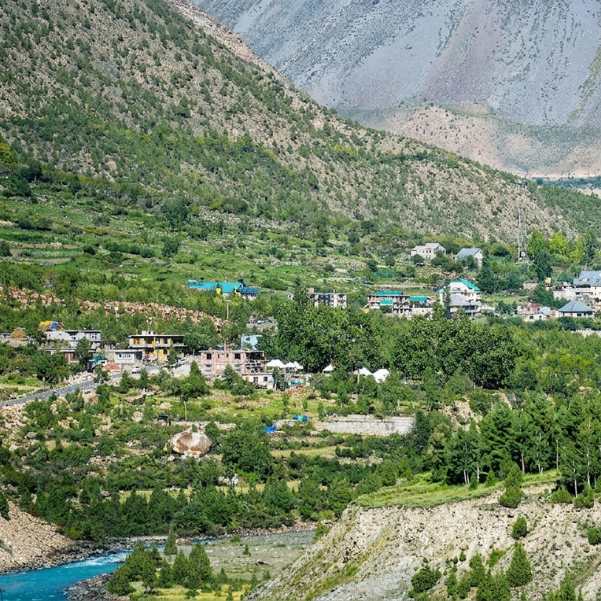
Jispa
~39 km · 1 to 1.25 hours drive
A quiet Lahauli hamlet on the Bhaga river with riverside campsites and a small monastery. Popular as an overnight halt for travellers heading towards Ladakh and a softer alternative to Keylong.
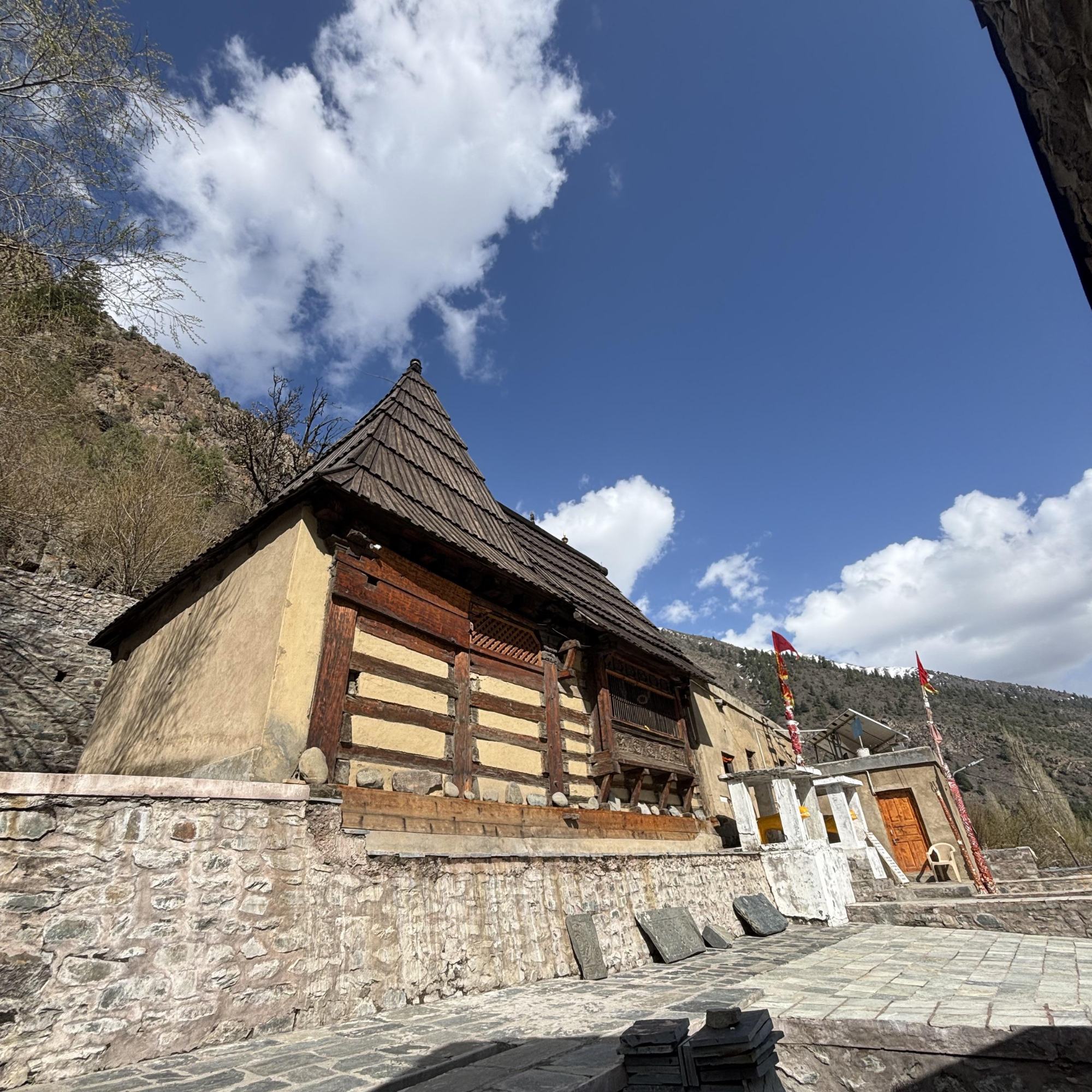
Mrikula Devi Temple at Udaipur
~65 km via Tandi · 2.5 hours drive
An 11th or 12th century wooden temple in the Pattan valley, known for its deodar wood carvings and as one of the most important shrines in Lahaul. Reached by branching off the Manali to Leh highway near the Tandi bridge. A separate half day trip from a Keylong base, not a spontaneous add on to a fort halt.
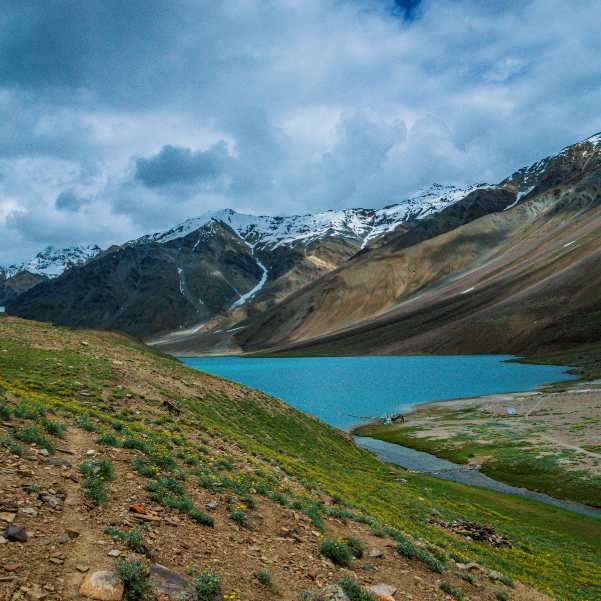
Chandratal Lake
~120 km via Gramphu and Batal · 5 to 6 hours
A natural crescent moon glacial lake at around 4,300 m, source of the Chandra river. Not a day trip from Gondhla. Plan it as part of a Lahaul to Spiti circuit via Kunzum Pass.
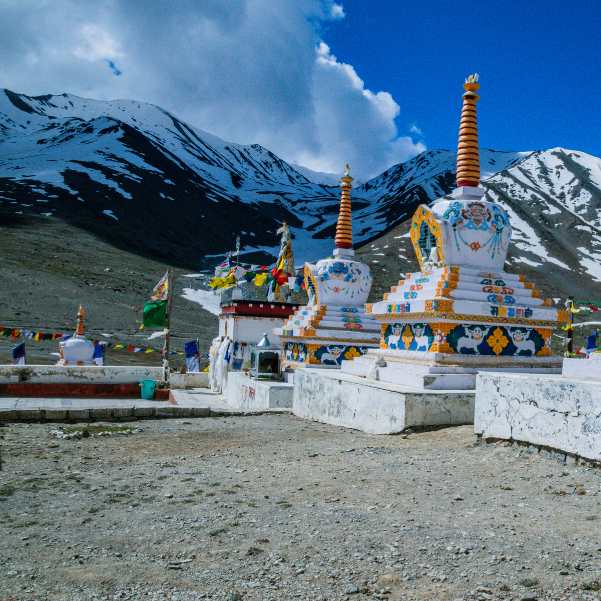
Kunzum Pass
~135 km via Gramphu and Batal · 6 to 7 hours
The high pass at around 4,551 m connecting Lahaul to Spiti, generally open June to October. On the way out of Lahaul towards Kaza. Not a day trip, plan as part of a multi day Spiti circuit.
Our packages with Gondhla Fort
Curated trips that include a visit to Gondhla Fort.
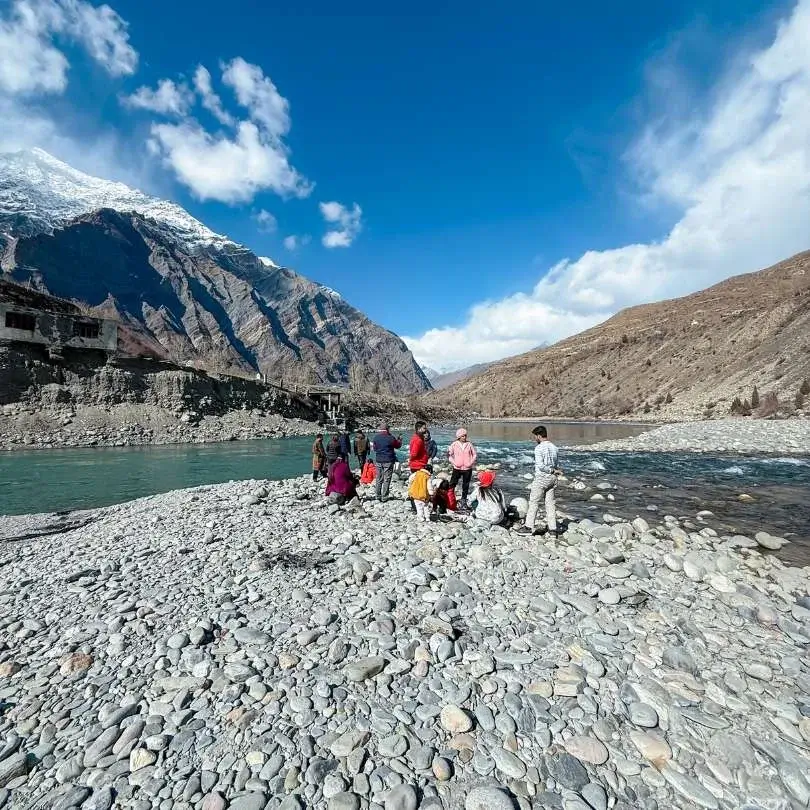 6D/5N
6D/5NMost Loved Sissu Valley Escape With Jispa Riverside Stay
2D Sissu•1D Jispa
₹15,999₹19,999SAVE INR 4,000/ person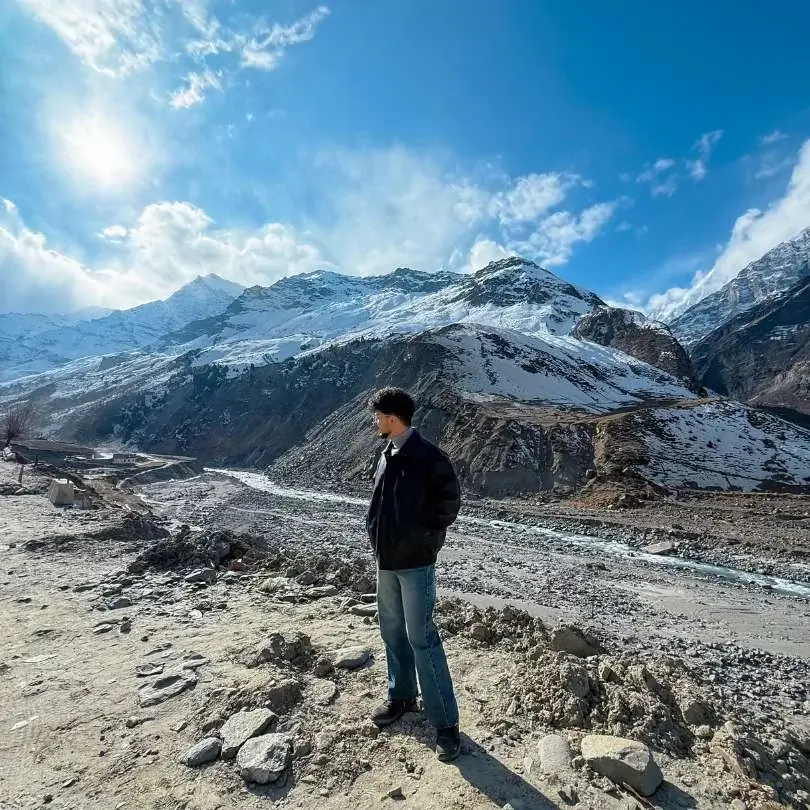 5D/4N
5D/4NClassic Sissu Valley Trip
2D Sissu•1D Manali
₹12,799/ person
Frequently Asked Questions
Where is Gondhla Fort?
Gondhla Fort is in the village of Gondhla, in the Tinan area of Lahaul, Lahaul and Spiti district, Himachal Pradesh. It sits at around 3,160 metres on the Manali to Leh highway (NH3), about 18 km south of Keylong, 11 km east of Sissu, and roughly 53 km from Manali via the Atal Tunnel.
How old is Gondhla Fort and who built it?
The generally accepted dating from the District Gazetteer of Lahaul and Spiti puts the fort at around 1700 AD, built by Raja Man Singh of Kullu, who ruled from 1688 to 1719. He married into the family of the Thakur of Gondhla and the fort grew out of that alliance. A parallel account recorded by the writer M.S. Randhawa suggests an earlier date under Thakur Rattan Pal, who is said to have migrated from Bir in Kangra. Both accounts are in the record, the Kullu dating is the one most sources use.
Why is Gondhla Fort called a seven storey fort?
Because it is a tall, narrow tower rising to what is generally described as seven floors, though you will find older sources saying six or eight depending on how they count the ground level and the balconied upper deck. The local guidebook tradition has settled on seven storeys. Each floor had a distinct function, kitchen on the top for heat retention, prayer space on the upper middle, weapons storage lower down, and the Thakur's audience space in the middle level with a verandah running around it.
What is Kath Kuni architecture?
Kath Kuni is the traditional earthquake aware building style of lower Kullu, Mandi, and Shimla, using alternating courses of dry stacked stone and long cedar or deodar beams with notched corner joints. Kath means wood and Kuni means a notched corner in the local Pahari dialect. The system flexes in a tremor rather than cracking, which is why Kath Kuni buildings often survive earthquakes that flatten newer concrete construction. Seeing this style at Gondhla, high in Buddhist Lahaul, is the visual detail that makes the fort unusual.
How do I reach Gondhla Fort from Manali?
Drive through the Atal Tunnel on the Manali to Leh highway. The tunnel is about 9 km long, the total drive from Manali to Gondhla is roughly 53 km and takes about 1.5 to 2 hours including the tunnel transit. HRTC buses heading towards Keylong, Udaipur, or Leh pass through Gondhla and can drop you at the village bazaar. The fort is a short walk from the roadside.
Can you go inside Gondhla Fort?
Usually not. The fort is private property of the descendants of the Thakurs of Gondhla, largely unoccupied, and generally kept locked. There is no ticket counter and no formal opening hours. A few visitors have been shown the interior informally by a caretaker or family member if someone was around, but this is unreliable and cannot be planned around. Expect to view the exterior, anything inside is a bonus.
Is there an entry fee at Gondhla Fort?
No formal entry fee. The fort is not an ASI protected monument or a ticketed heritage site. If you are shown the interior informally by a caretaker or family member, a voluntary offering of around 100 to 200 rupees is appropriate as a mark of respect, more if you are shown the upper floors and the prayer space.
What timings does Gondhla Fort follow?
There are no official timings. Some tourism pages list 10 AM to 5 PM on weekdays with weekend closures, but this is not backed by any official source and recent visitor reports often find no one around regardless. The exterior is viewable any time during daylight. Interior access, if offered, is generally during morning hours when a caretaker may be present. Treat any online timing as unreliable, confirm locally the day you visit.
What is the altitude of Gondhla Fort?
Around 3,160 metres, roughly 10,370 feet. This is moderate altitude by Lahaul standards, lower than Keylong (3,080 m is the town, the fort sits slightly higher), Jispa (around 3,200 m), and well below Spiti altitudes like Kaza or Chandratal. Most travellers handle it fine.
When is the best time to visit Gondhla Fort?
Late September to mid October for the sharpest light on the cedar timbers and the thinnest crowds. May and June are also good, with warmer days and greening fields. July and August are usable but the approach through the Atal Tunnel can see landslides. The fort is technically accessible year round via the tunnel, but winter halts are only practical for experienced Himalayan travellers with proper gear and flexible plans.
How much time do I need at Gondhla Fort?
20 to 30 minutes for most travellers, covering the walk down from the road, a lap around the exterior, and a few photographs. An hour if you walk the village and try for interior access. Add a half day if you plan to combine with Tandi Sangam, Tupchiling Gompa, and the Guru Ghantal trek. As a standalone trip from Manali it is not worth the drive, treat it as a halt on a larger Lahaul or Spiti itinerary.
What was the connection with Nicholas Roerich?
The Russian painter and Himalayan traveller Nicholas Roerich spent his summers in Lahaul between 1929 and 1932 while based at Naggar in the Kullu valley. Among his Himalayan canvases are paintings of the Gondhla tower set against the Lahauli peaks. Visitors interested in the connection can pair a stop at Gondhla with a visit to the Roerich estate and gallery at Naggar Castle on the same Himachal trip.
What is the Kulu Vase and why is it connected to Gondhla?
The Kulu Vase is a chased copper goblet from around the first century BCE, discovered near the Guru Ghantal monastery just above Tandi in 1857 by a British officer named Major Hay. It is considered one of the oldest examples of decorated metalwork from the Indian subcontinent. It now sits at the British Museum in London. The find links the Gondhla area to a pre Buddhist cultural past and suggests the valley was a crossroads far earlier than the fort itself dates from.
Is Gondhla Fort being restored?
A conservation study by INTACH, the Indian National Trust for Art and Cultural Heritage, has reportedly been completed with an idea of restoring the fort and redeveloping it as a museum and cultural hub. Some token repairs have been made over the years. As of early 2026, no comprehensive restoration has begun. The status may shift over the coming years, confirm close to your travel date through a Keylong based operator or a recent visitor report.
Is Gondhla Fort safe for families and seniors?
Yes at the exterior level. The altitude is moderate, the walk from the roadside parking to the fort base is short and fairly level, and the village is small and walkable. Interior access, if offered, involves very steep notched wooden ladders, not advisable for older travellers with any knee or balance issue or for small kids without adult supervision.
Where should I stay to visit Gondhla Fort?
Keylong is the most natural base, with a proper market, ATM, and the widest range of stays. Sissu is closer to the Atal Tunnel and a good option if you want a shorter Lahaul trip from Manali. Jispa works if you want a riverside camp and are happy with a longer drive to the fort. There are very few stays in Gondhla village itself, and most travellers do not overnight here.
Related guides
Posts about Sissu
- Where to Stay in Sissu in 2026: Best Hotels, Homestays & Areas for Every Budget
- Sissu in October 2026: Weather, Snow Chances, Road Status & Autumn Travel Guide
- Sissu in December 2026: Snowfall, Weather, Road Status & Winter Travel Guide
- Sissu in November 2026: Weather, First Snow, Road Status & Travel Guide
- Best Time To Visit Sissu in 2026: Month Wise Weather, Snow and Road Guide
- Manali To Sissu Road Trip Guide 2026: Route, Distance, Road Status, Cost And Local Tips