
Koksar Village
The first Lahauli village on the old Rohtang route, now a tea and check post halt 7 km east of the Atal Tunnel exit, sitting at around 3,140 metres on the Chandra river
- Lahaul village · ~3,140 m
- Atal Tunnel · ~7 km east
- Manali · ~42 km via tunnel
- Check post · tea halt
- Gateway to Gramphu and Spiti
What makes it special
Koksar is a small Lahauli village on the right bank of the Chandra river at around 3,140 metres, roughly 7 km east of the Atal Tunnel north portal. Historically it was the first settlement travellers reached after crossing Rohtang Pass, and it sat on the old trade route that connected the Indian plains to West Asia through Lahaul and Ladakh. Since the Atal Tunnel opened in 2020, the valley's main traffic has shifted towards Sissu, and most of what Koksar was before has quieted down. What remains is useful, just not in a showy way.
The practical reality for today's traveller. Koksar is a tea and dhaba halt, a police check post where the Lahaul and Spiti administration logs vehicles heading towards Chandratal and Spiti via the Gramphu junction, and a small cluster of homestays for people who want to avoid the Sissu crowd for a night. On most summer days the stop takes 20 to 40 minutes, enough time for chai, a short walk along the river, registration at the check post if you are going deeper, and a look at the Chandra running wide and blue below the highway. The Gramphu junction, which is where the old road to Rohtang and the diversion to Kaza and Chandratal branches off, is about 5 km further east.
Koksar's more interesting claim is the weather. It is generally described as the coldest inhabited place in Lahaul, the stretch of valley where winter settles in hardest and lasts the longest. The Chandra freezes here in deep winter, and older residents still talk about using the ice as a crossing in the days before bridges. The surrounding slopes are avalanche prone and blocks of old avalanche debris can be seen near the river bed through much of spring. The state PWD rest house across the river on the left bank is an old landmark from the pre tunnel era, when this was the natural halt for anyone crossing Rohtang.
Short verdict. If you are driving through, stop for tea and a river walk. If you are heading to Chandratal or Spiti via Gramphu, make the check post registration your first priority so you do not lose time later. Stay a night only if Sissu is full, you specifically want a quieter village, or you are chasing a winter snow experience and the road is safe on the day. For everyone else, 30 minutes is the right length of relationship with this place.
Quick answers
- Is Koksar worth stopping at?
- Yes as a short tea stop and a logistical halt, not as a destination on its own. The dhabas are no-nonsense, the river walk is a pleasant leg stretch, and if you are continuing towards Chandratal, Kunzum Pass, or Spiti, the police check post here is where you register. For most travellers, 20 to 40 minutes is the right length of stop. If you want a Lahaul village to spend real time in, Sissu, Keylong, or Jispa work better.
- Do I need to register at the Koksar check post?
- Usually yes if you are continuing east towards Gramphu, Chandratal, Kunzum Pass, or Spiti. A seasonal Lahaul and Spiti police check post operates here and generally asks vehicles to register, especially through May to October. Keep ID, vehicle papers, and a pen ready and build in 10 to 20 minutes. Foreign travellers are asked to register passport details. Exact rules shift year to year, confirm locally on the day.
- Can you stay a night in Koksar?
- Yes, a few small homestays and the state PWD rest house operate in the warmer months, roughly April to October. This is a thinner option than Sissu or Keylong. Stay here if Sissu is full, you want a quieter village, or you are chasing the coldest inhabited place in Lahaul experience. Confirm availability in writing before you drive up, especially in winter when most stays shut or run on reduced services.
Quick facts
Everything you need to know at a glance.
At a glance
- Altitude
- Around 3,140 m / ~10,300 ft
- Location
- Lahaul tehsil, Lahaul and Spiti district, Himachal Pradesh, on the right bank of the Chandra river
- Nearest towns
- Sissu ~14 km west, Keylong ~44 km west, Manali ~42 km via Atal Tunnel, Rohtang Pass ~19 km east via old road
- Best season
- May to October for a comfortable stop. Accessible year round via the Atal Tunnel via Sissu, but winter halts are only practical for experienced travellers.
- Time needed
- 20 to 40 minutes for most travellers. Overnight only if Sissu is full or you specifically want a quieter village.
- Entry fee
- None for the village. Check post registration is free but usually mandatory for vehicles continuing east.
- Known for
- The first village on the old Rohtang road into Lahaul, a check post halt on the way to Spiti, generally the coldest inhabited place in Lahaul
- Access difficulty
- Very easy via the Atal Tunnel and Sissu in summer. Moderate in winter, slopes are avalanche prone.
On the ground
- Mobile network
- BSNL is the most reliable. Jio works in patches since 2019. Airtel is weak. Expect slow or no data.
- ATMs
- None in Koksar. Nearest are in Keylong or back in Manali. Carry cash.
- Fuel
- No pump in Koksar. Nearest is Tandi, about 40 km west via Sissu. Fill up in Manali before the tunnel.
- Food
- About half a dozen small highway dhabas, mostly open April to October. Simple fare, chai, Maggi, dal rice, omelettes, thukpa. Limited in winter.
- Parking
- Informal roadside parking at the dhabas and along the highway. No formal charges.
- Permits
- None for Indian nationals for Koksar itself. Foreign nationals register at the check post. Inner Line Permits apply only for restricted areas further on, not Koksar.
- Drones
- Discouraged. The area is close to military routes and the check post. Do not fly without checking locally.
- Walking surface
- Highway adjacent, a short path down to the river, village lanes are rough but short. Easy terrain, watch for traffic on the highway.
Seasonal weather
- May to June15°3°Spring
- July to August20°8°Summer monsoon
- September to October13°-1°Autumn
- November to March-1°-18°Winter
Suitable for
- Couples — with some care
- Families — with some care
- Seniors — with some care
- Solo — suitable
- First-timers — suitable
- Pet-friendly — with some care
How to reach Koksar Village
6 approach routes, with seasonal access.
From Manali (via Atal Tunnel)
Year round via the Atal Tunnel. Road beyond the tunnel can be icy or snow blocked in deep winter.- Distance
- About 42 km
- Time
- 1.5 to 2 hours
- Road
- Tarred highway through the Atal Tunnel, then a mix of tar and patched road from the exit to Koksar.
- Last fuel
- Fill up in Manali. Next pump is at Tandi, about 40 km west via Sissu.
The year round standard approach. From Manali, take NH3 south to the Atal Tunnel south portal at Dhundi, which is about 25 km out. The tunnel is roughly 9 km and takes 15 to 20 minutes at the posted speed. Exit the north portal, head east towards Koksar, and reach it in about 7 km along the highway. Total drive from Manali is around 42 km and 1.5 to 2 hours with normal traffic. In peak summer and on weekends, the tunnel can queue for 30 to 60 minutes at the south portal. Leave Manali by 7 or 8 AM.
From Manali (via Rohtang Pass, old road)
Roughly late May to October, weather dependent, and subject to permit rules. Often closed in monsoon.- Distance
- About 70 km
- Time
- 3 to 4 hours
- Road
- Steep mountain road with switchbacks up to Rohtang, rough sections on the descent to Koksar, generally single lane in places.
- Last fuel
- Fill up in Manali, next is at Tandi via Sissu side.
The old seasonal route over Rohtang Pass itself, only open in summer, roughly late May to October. Requires a Rohtang Pass permit if coming from the Manali side, booked in advance through the official portal. Drive time is much longer and more tiring than the tunnel route. Only worth it if you specifically want the old road, you have a permit, and the pass is open on the day. Most travellers use the tunnel.
From Sissu
Year round- Distance
- About 14 km
- Time
- 25 to 35 minutes
- Road
- Tarred highway, generally decent shape with some patched sections.
- Last fuel
- No pumps on this stretch. Fill up at Tandi or in Manali.
A short drive east along the Chandra river from Sissu to Koksar. If you are overnighting at Sissu and want a shorter Lahaul day, this is the drive. Follow the highway past the tunnel exit junction and continue east along the river. Road is mostly in decent shape but can be patchy after monsoon.
From Keylong
Year round- Distance
- About 44 km
- Time
- 1.5 hours
- Road
- Tarred highway along the Chandra river valley
- Last fuel
- Tandi petrol pump between Keylong and Sissu, about 30 km from Koksar
The reverse direction if you are coming back from Spiti, Chandratal, or Baralacha La. From Keylong, drive west to Tandi, continue through Gondhla and Sissu, and pass the tunnel exit junction to reach Koksar. A comfortable drive, mostly tar, with the Chandra river alongside for most of it.
From Chandratal
Roughly June to October, weather dependent- Distance
- About 70 km via Batal and Gramphu
- Time
- 5 to 6 hours
- Road
- Rough mountain road with stream crossings, narrow in places, tarred only in short patches
- Last fuel
- No pumps on this stretch. Fill up in Kaza before heading back.
The hard drive from the Spiti side. From Chandratal, backtrack through Batal and Kunzum Pass to Gramphu, then down the short 5 km stretch to Koksar. The road between Batal and Gramphu is among the roughest in Himachal, narrow, with multiple stream crossings, and open only roughly June to October. Build in 5 to 6 hours at minimum, sometimes longer. Not recommended for first time mountain drivers or any vehicle with low ground clearance.
From By bus from Manali
Year round via tunnel, summer only via old road- Distance
- About 42 km via tunnel, or about 70 km via old Rohtang route
- Time
- 2 to 3 hours via tunnel, 4 to 5 hours via old road
- Road
- Highway through the Atal Tunnel, or old mountain road via Rohtang Pass
- Last fuel
- Not applicable
HRTC buses running from Manali towards Keylong or Leh use the tunnel route and pass through Koksar via the Sissu side. Frequency varies by season, generally a few services a day in summer, fewer in winter. Old Rohtang route buses run only in the summer window when the pass is open, and those were the traditional way to reach Koksar before the tunnel. Confirm timings at the Manali bus stand on the day of travel. The bus drops you on the highway at Koksar, dhabas and homestays are short walks from the road.
Best time to visit
Season by season, so you can plan around the weather rather than hope.
- Recommended
Spring
May to June
Clearest window for a comfortable stop, and the road to Spiti generally opens in this period
- Day temperature
- 10 to 15 C
- Night temperature
- 3 to 6 C
- Crowds
- Low to moderate, builds through June
- Road to Spiti
- Gramphu to Batal generally opens late May to early June
The best window for a Koksar halt. Snow has cleared from the village and most of the approach, dhabas open up through May, and the Chandra runs clear and strong with fresh snowmelt. Days are warm enough for a t-shirt at the dhaba, nights still need a jacket. Late May to mid June is when the Gramphu to Batal road opens for Chandratal and Spiti, so if you are doing a circuit, this is the window. Book ahead if you plan to overnight, there are not many rooms in Koksar to start with.
Summer monsoon
July to August
Green and wet, the valley looks good but roads can play up
- Day temperature
- 14 to 20 C
- Night temperature
- 8 to 10 C
- Crowds
- Moderate on the tunnel, mixed at Koksar itself
- Road risk
- Real, monitor daily on the Kullu side
Green valley, full Chandra, peak traffic on the tunnel, and the real monsoon risk. Koksar sits in a partial rain shadow so direct rain is less than in Manali, but the approach to the Atal Tunnel on the Kullu side can see landslides and debris flows, and the Gramphu to Batal road becomes unreliable. Keep a buffer day in your plan. Afternoon cloud cover is common, cutting into views. If you are continuing to Chandratal, travel in the morning, not after lunch.
- Recommended
Autumn
September to October
Sharpest light, thinnest crowds, and the last window for the Spiti circuit
- Day temperature
- 8 to 13 C
- Night temperature
- -1 to 3 C
- Crowds
- Low
- Road to Spiti
- Open through September, closing typically in October
If you can time it, late September to mid October is the sharpest Koksar experience. Air clears, the high peaks stand out, the crowds drop off, and the morning light on the Chandra valley is the best of the year for photographs. Nights get cold quickly by October, carry a proper warm layer. This is also the last reliable window for the Chandratal and Kunzum Pass road, which generally starts to close in October with the first snow.
Winter
November to March
The coldest pocket of Lahaul, worth a visit only for experienced travellers with flexible plans
- Day temperature
- -3 to 0 C
- Night temperature
- -10 to -18 C
- Crowds
- Very low
- Services
- Limited, confirm everything in writing before driving up
The reason some travellers specifically come, and the reason most others do not. Koksar is generally the coldest inhabited place in Lahaul, with night temperatures commonly below minus 10 and sometimes into the minus 20s on the coldest nights per local accounts. The Chandra freezes in large stretches, the slopes are avalanche prone, and heavy snowfall can block the road for days. Most dhabas shut or run limited hours, and most homestays either close or run on reduced services. The Atal Tunnel keeps access open, but the short stretch from the tunnel exit to Koksar via Sissu can be icy. Carry chains, proper layers, and a flexible plan. Not a casual season.
Things to see & do
7 things worth your time at Koksar Village.
Tea and a simple meal at a highway dhaba
20 to 40 minutesThe most common reason to pull over in Koksar. A handful of small dhabas and tea stalls run along the highway through the village, generally open from around April through October, with a couple staying open into winter on and off. Order a chai and something basic like Maggi, dal rice, or an omelette. The food is straightforward, cheap, and fine. Use the break to stretch, breathe, and check on the Chandra river below. This is also where you will casually pick up real time road information from truck drivers and taxis, which is often more useful than any app.
Register at the police check post if you are going deeper
10 to 20 minutesIf you are continuing from Koksar towards the Gramphu junction and onwards to Chandratal, Kunzum Pass, or Kaza, a seasonal Lahaul and Spiti police check post operates here and generally asks vehicles to register. Keep your ID, vehicle papers, and a pen ready, and build in 10 to 20 minutes for the entry. Timings and requirements vary by year and by season, so treat this as a moving target and ask your driver or homestay before you leave. Foreign travellers are asked to register passport details.
A short walk down to the Chandra river
15 to 30 minutesA short walk down from the highway gets you to the edge of the Chandra, running wide and milky blue over gravel banks. Find a flat rock, sit for ten minutes, watch the water. In deep winter the surface freezes over large stretches and you can see the ice where the flow slowed. Do not wade in. The current is stronger than it looks and the water is glacial.
Visit the village monastery and chorten
15 to 20 minutesThere is a small monastery and a roadside chorten at Koksar that most travellers drive straight past. The scale is modest, nothing like Kardang or Key, but walking up takes five minutes and gives you a quiet pause that the tea stalls do not. If a lama is around, a small offering is the usual convention. Keep voices down, remove shoes at the door, do not photograph interiors without permission.
Snow and frozen river experience in winter
1 to 2 hoursIf you are in Koksar between December and February, and the road is safe on the day, the frozen Chandra river, the avalanche debris along the slopes, and the snowbound village are the reason to be here. Most dhabas shut or run limited hours, so plan for a short halt rather than a full day. Carry chains for your tyres, proper thermals, and a backup plan to turn around if conditions change. Winter Lahaul beyond Sissu is not a casual day trip.
Drive to Gramphu junction for the road split
30 to 45 minutes round tripAbout 5 km east of Koksar the road forks. Left continues on the old Rohtang pass route that takes you over the top towards Manali. Right climbs into the high Spiti basin via Chhatru, Batal, and Kunzum Pass. The Gramphu junction is a genuinely dramatic geography lesson in one spot, the Chandra valley opens up, Bara Shigri glacier is visible in the distance on clear days, and the road surface changes from tarred to rough within a few hundred metres. Worth the short drive to stand there and look, even if you are not continuing onward.
Photograph the Chandra valley and the village
30 to 60 minutesEarly to mid morning light on the Chandra river, with Koksar's slate roofs and the Lahauli peaks behind, is the cleanest photographic window. In winter, midday is the only usable window because the sun clears the ridge late. Do not photograph villagers or inside homes without asking. The PWD rest house across the river and the old bridge are small but genuine pieces of pre tunnel Lahaul that photograph well.
Know before you visit Koksar Village
The practical bits, from people who have been.
What Koksar actually isA small Lahauli village on the Chandra river at around 3,140 m, the first village on the old Rohtang road, now a tea and check post halt
Koksar is a small Lahauli village on the right bank of the Chandra river at around 3,140 metres, about 7 km east of the Atal Tunnel north portal. It has a scatter of traditional houses, a handful of dhabas along the highway, a few homestays, a modest village monastery and chorten, a state PWD rest house across the river on the left bank, and a seasonal Lahaul and Spiti police check post. Population is small, around 80 to 100 residents per recent census counts.
Historically, Koksar was the first village travellers reached after crossing Rohtang Pass, the old gateway into Lahaul, and it sat on a trade route that ran from the Indian plains through Lahaul towards Ladakh and Central Asia. That history still shapes the village today, though most of its earlier relevance has shifted to Sissu since the Atal Tunnel opened in 2020.
In one line, Koksar is a working Lahauli village and a route halt, not a tourist destination. Expectations set correctly, it is a pleasant 30 minute stop.
Why most travellers actually stop hereA tea halt, a police check post, and the last comfortable stop before the rough Gramphu to Batal road
The short answer. A few people already pass through without noticing. Most others stop here because of one of three reasons.
First, the highway dhabas. After crossing the tunnel or the old Rohtang pass, Koksar is a natural tea break. Roughly half a dozen small dhabas operate along the highway in the summer months, serving chai, Maggi, dal rice, omelettes, and sometimes thukpa or momos. Food is simple and honest, and this is often where you pick up current road condition gossip from truck drivers and taxi operators, which is often more reliable than any app.
Second, the police check post. If you are continuing deeper into Lahaul towards Keylong, or turning east towards Gramphu, Chandratal, Kunzum Pass, and Spiti, the Lahaul and Spiti authorities generally operate a check post here where vehicles are logged. Build in 10 to 20 minutes for registration. Exact rules shift year to year, confirm with your driver or homestay.
Third, the road junction. The Gramphu junction, where the old Rohtang road meets the diversion to Batal and Kunzum Pass, is about 5 km east of Koksar. Many Spiti circuits use Koksar as the last civilised halt before the rough road begins, filling fuel tanks, water bottles, and stomachs here before pushing on.
The winter reality and why Koksar gets coldGenerally the coldest inhabited spot in Lahaul, with a frozen Chandra and avalanche prone slopes in deep winter
Koksar is generally described as the coldest inhabited place in Lahaul, and the winter here is the real reason some travellers bother coming specifically to see it. The village sits in a pocket of the Chandra valley that catches less winter sun than Sissu or Keylong, and winter settles in earlier and stays longer. Night temperatures from December to February commonly drop well below freezing, sometimes into the minus 20s on the coldest nights according to local accounts.
The Chandra river freezes over in stretches during the deepest cold, and the slopes around the village are avalanche prone, with old debris visible near the river bed through spring. The PWD rest house on the left bank and the older wooden houses in the village have a visible layering of snow on roofs and slopes that is rarer in Sissu.
If you are planning a winter visit, the honest considerations. The Atal Tunnel keeps access open, but the short stretch between the tunnel exit and Koksar can be icy or snow blocked on the day. Carry chains for your tyres. Most dhabas shut or run limited hours from November to March. Most homestays either close for the season or operate on reduced services. Confirm before you drive up. A winter Koksar trip is for experienced Himalayan travellers with flexible plans, not a casual weekend visit.
Koksar as the gateway to Chandratal and SpitiKoksar is the last comfortable halt before the rough Gramphu to Batal road towards Chandratal and Spiti
If you are doing the Manali to Kaza drive via the Spiti route, Koksar is the last reliable stop before the road gets rough. Here is the practical sequence most travellers follow.
From Manali to Koksar. Drive through the Atal Tunnel, exit on the Lahaul side, and continue east on the highway. You will reach a junction near Sissu. Koksar sits to the east along the Chandra, about 14 km past Sissu. Total drive from Manali is around 42 km and 1.5 to 2 hours with normal traffic. In peak summer the tunnel can queue at the south portal for 30 to 60 minutes, leave by 7 or 8 AM.
At Koksar. Register at the police check post if required, fill water bottles, use the dhaba for chai and a plate of food, top up any last supplies. There is no fuel pump in Koksar, Tandi is the nearest at about 40 km the other way, so plan your tank at Manali. A reasonable halt here is 30 to 40 minutes.
From Koksar to Chandratal. About 5 km east is the Gramphu junction. Turn right towards Chhatru, Batal, and Kunzum Pass. Chandratal is roughly 110 km from Koksar on this route, 5 to 6 hours of mostly rough road on a good day, often longer. The road beyond Gramphu is narrow, with multiple stream crossings, and is open only roughly June to October. Check road status on the day. Koksar is your last chance to turn back comfortably.
A gentle recheck reminder. Gramphu to Batal is one of the most condition dependent road stretches in Himachal. Status changes with every rain. Do not trust information older than a week, ask at the Koksar check post or a Manali taxi stand on the day.
Who should stop and who should skip the overnightA 30 minute halt for most, a logistical stop for Chandratal bound travellers, an overnight only for specific reasons
Drive through stops: Yes, 20 to 40 minutes is the right length. A tea, a river walk, a quick leg stretch, check post registration if needed. This is most people.
Chandratal and Spiti bound travellers: Yes, essential. This is your logistical halt before the rough section. Use it for registration, fuel and food, and a realistic weather check with local drivers.
One night stayers: Yes if you want a quieter Lahaul village than Sissu, are doing photography at dawn on the Chandra valley, or specifically want the coldest inhabited place in Lahaul experience. Not yes for a standard Lahaul holiday, Sissu, Keylong, and Jispa deliver more for the same effort.
Families with small kids: A brief stop is fine, an overnight is not recommended in most seasons. Options are limited, the terrain around the dhabas is highway adjacent, and the village does not have the infrastructure for a standard family trip.
Seniors: A brief stop is fine. An overnight works only with a comfortable homestay confirmed in advance and in the warmer months. The altitude is manageable, the cold in winter is not, for older travellers with any existing conditions.
Pets: Generally fine on the highway outside the dhabas, confirm with your homestay if you plan to overnight.
Skip Koksar for an overnight if: you want infrastructure, a market, cafes, or evening activities. Those things are not here, and they are not coming any time soon.
Altitude, avalanches, and basic safetyModerate altitude, real cold and avalanche concerns in winter, nearest proper medical help is at Keylong or Manali
At 3,140 metres, Koksar is lower than Leh, Kaza, Jispa (just barely), or Chandratal. Most travellers handle the altitude fine, especially coming up through the tunnel from Manali where the gain is gradual.
Mild breathlessness on the first afternoon is normal. Headache or nausea that does not ease after a rest means you should not push higher the next day. Treat Chandratal, Kunzum Pass, and deeper Spiti as separate altitude commitments that begin with Koksar as your first night above 3,000 metres.
Avalanche awareness. The slopes around Koksar are avalanche prone and the road on both sides has had blockages over the years. In winter and early spring, do not walk up slopes off trail. If the road is freshly blocked or there is fresh snow on the hillsides above the road, wait it out rather than push through. Local drivers take this seriously, and so should you.
Water safety. Do not wade into the Chandra. The water is glacial, the current is stronger than it looks, and hypothermia risk is real in minutes.
Nearest proper medical help. Keylong, about 44 km via Sissu and Tandi. Anything serious means back through the tunnel to Manali. Carry basic medications, a small first aid kit, and any personal prescriptions, do not assume anything beyond paracetamol is available at a Koksar dhaba.
Where to stay and eat in KoksarA few small homestays and a PWD rest house, mostly summer operation, simple dhaba food along the highway
If you do decide to stay overnight, a few small homestays and the state PWD rest house generally operate in the warmer months, roughly April to October. Options are fewer than in Sissu, simpler than in Keylong, and quality varies more than you would expect. Read recent reviews before booking, not reviews from two years ago.
Typical rates run from around 1,500 to 2,500 rupees per room per night with basic meals included, though this shifts with season and demand. Confirm whether meals are included up front, and whether hot water runs in your room, it is not guaranteed in the cheaper setups.
Food is mostly at your homestay and at the half dozen dhabas along the highway. Expect dal, rice, roti, rajma, Maggi, momos, chai, sometimes thukpa. Vegetarians are well served, non vegetarian options are limited and not always fresh, default to vegetarian here. Carry a packet or two of dry snacks for the road onwards, especially if heading to Chandratal.
Book ahead if you are planning an overnight in May to June. Walk ins usually work in September and October. Winter stays need to be confirmed in writing, do not drive up expecting to find a room open.
Local tips most travellers missFill fuel in Manali, carry cash, register early, ask drivers for road updates, use BSNL for signal
A few practical notes that make the difference between a smooth halt and a mess.
Fill fuel at Manali, not Koksar. There is no pump in Koksar, and the nearest is at Tandi, about 40 km the other way through Sissu. A full tank from Manali comfortably covers a return drive, or a push to Kaza via Gramphu if you are joining a Spiti circuit.
Carry cash. No ATM in Koksar. UPI works in patches where there is network, but often not at the highway dhabas. Small notes of 50 and 100 rupees are what you actually use.
Use BSNL for reliable signal. Jio has started working in parts of the valley since 2019 but is patchy. Airtel is weak. Download maps offline before you leave Manali.
Register early at the check post. If you are continuing to Chandratal or Spiti, do the check post registration as the first thing you do when you reach Koksar, before tea. The queues get longer through the day in peak season.
Ask local drivers about the road. A 30 second conversation at a dhaba with a truck driver or a taxi operator who has just come from Gramphu is worth more than any online status update. Road conditions in this valley shift fast.
A small recheck reminder. Rules for check post registration, road access past Gramphu, and winter access to Koksar all shift from year to year. Confirm close to your travel date, do not rely on a blog older than a few months.
Nearby attractions
Other places worth the detour.
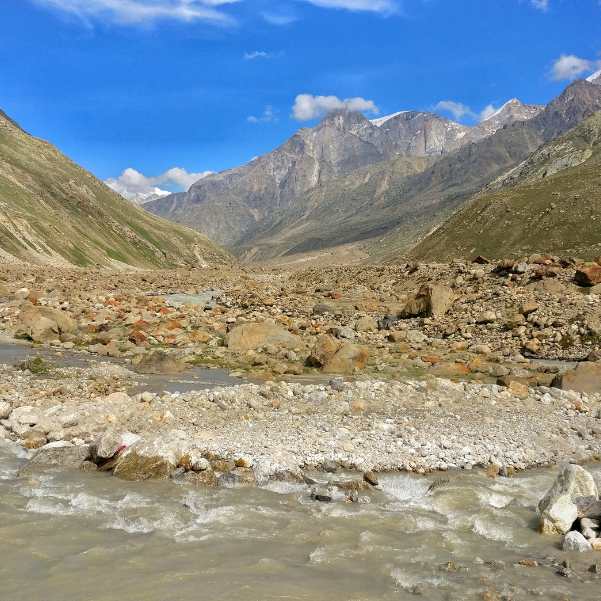
Gramphu Junction
~5 km · 10 min drive east
The road junction 5 km east of Koksar where the old Rohtang road splits from the Spiti diversion towards Chhatru, Batal, and Kunzum Pass. Worth a short drive just to stand at the split and see the Chandra valley open up. The road beyond Gramphu towards Chandratal is among the roughest in Himachal, check status before continuing.
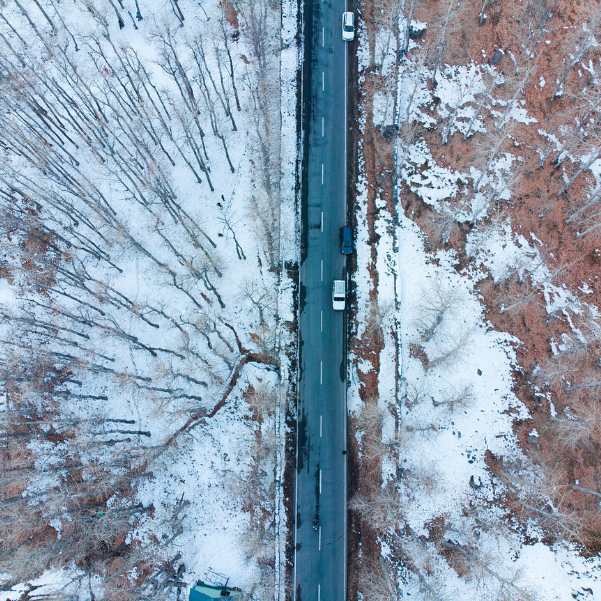
Sissu Village
~14 km · 25 min drive towards the tunnel exit
The first village past the Atal Tunnel on the other side of the exit junction, with a roadside waterfall, a small lake, a helipad sunset viewpoint, and a growing collection of homestays. The natural pair with Koksar on a Lahaul day from Manali.
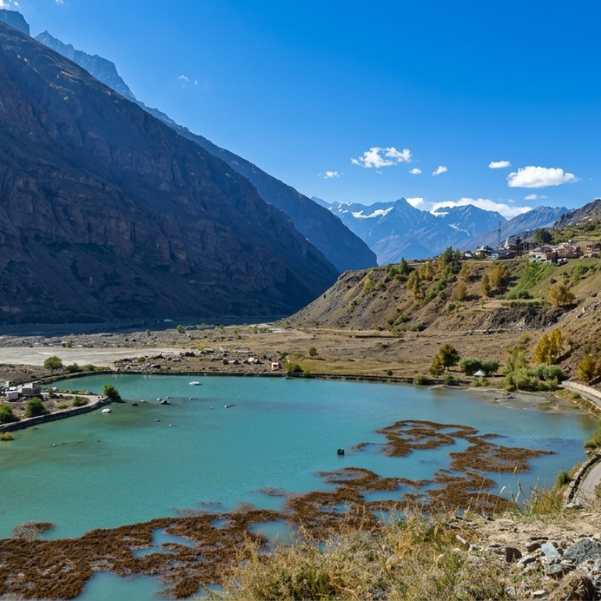
Sissu Lake
~14 km · 25 min drive
A small man made lake at the edge of Sissu village near the helipad, 20 minutes west of Koksar. Works as a quick morning or afternoon pairing if you are overnighting at Koksar or passing through on a Lahaul day trip.
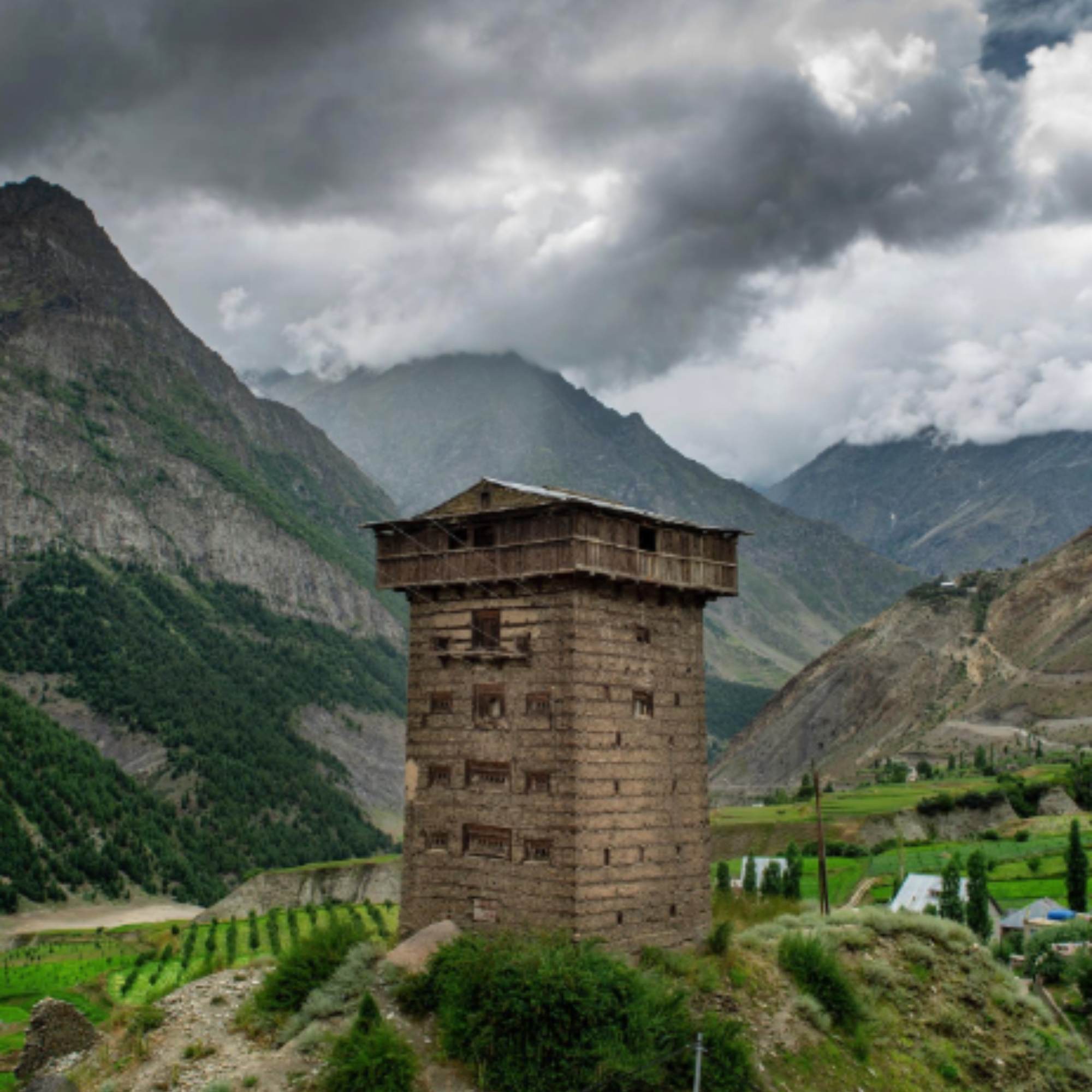
Gondhla Fort
~25 km · 45 min drive west
A seven storey Kathkuni tower from around 1700 AD, the only fort of its kind in Lahaul and Spiti, sitting above the Chandra river about an hour west of Koksar on the way to Keylong. Mostly an exterior visit since the fort is locked up, but worth 20 to 30 minutes.
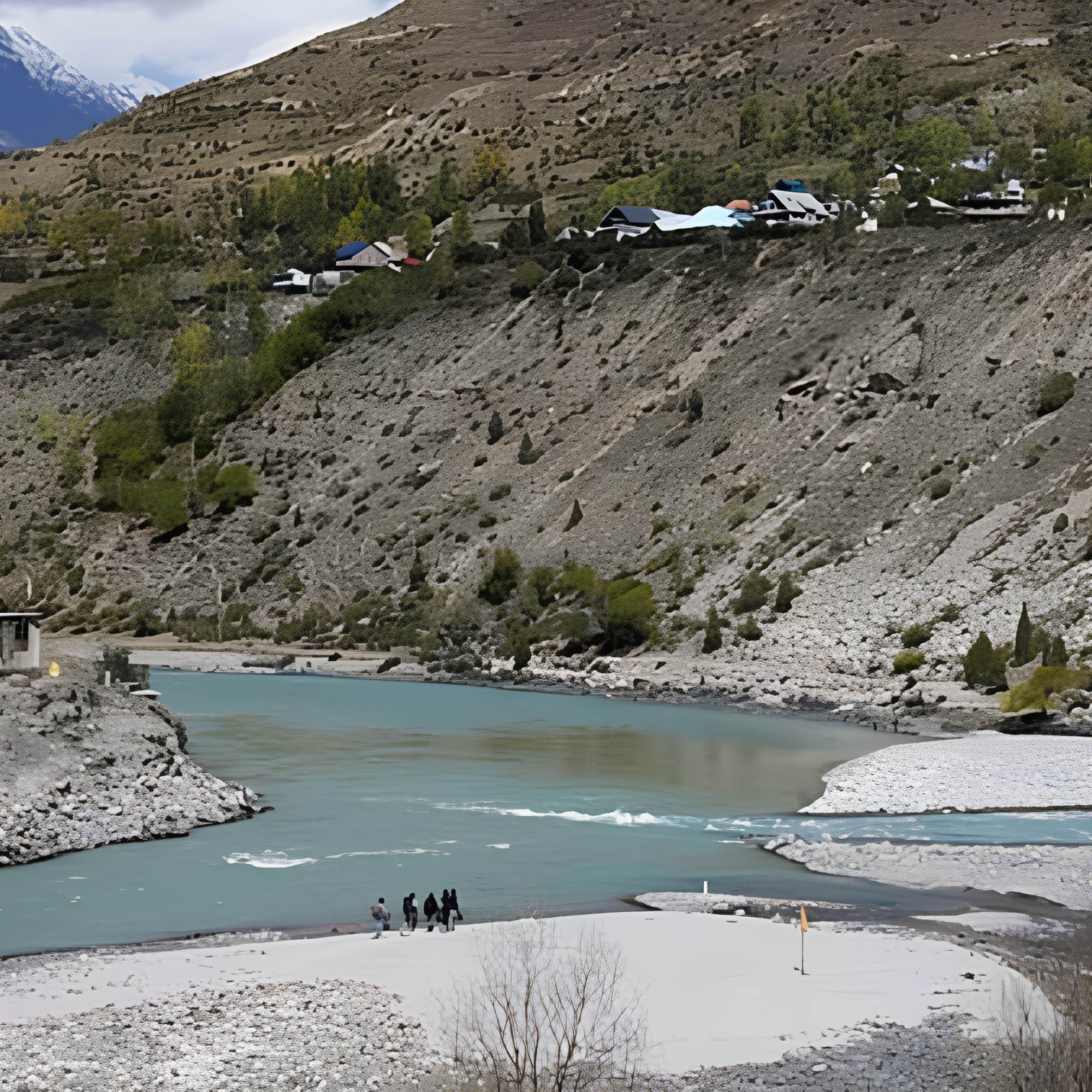
Tandi Sangam
~35 km · 1 hour drive west
The confluence of the Chandra and Bhaga rivers where they meet to form the Chenab, roughly 11 km west of Gondhla Fort and another natural pairing on the drive towards Keylong. A 15 minute halt for the viewpoint and a short walk.
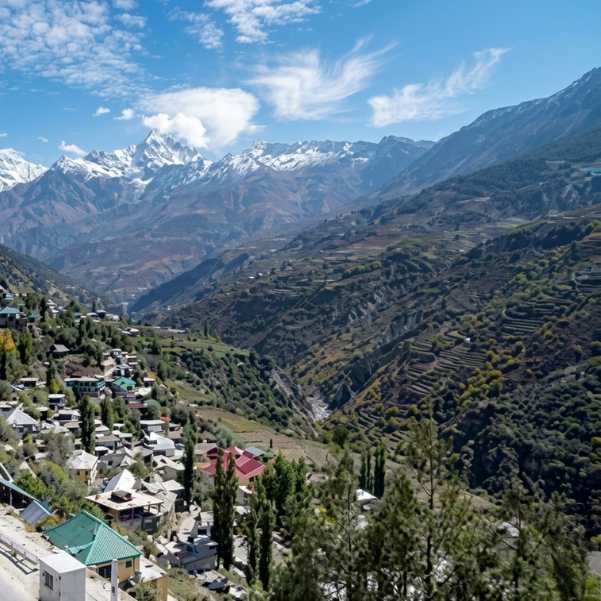
Keylong
~44 km · 1.5 hours drive west
The district headquarters of Lahaul and Spiti, with the only proper market in the valley, an ATM, fuel, a hospital, and the Kardang Monastery above the town. The natural base if you are doing a longer Lahaul itinerary that includes Koksar.
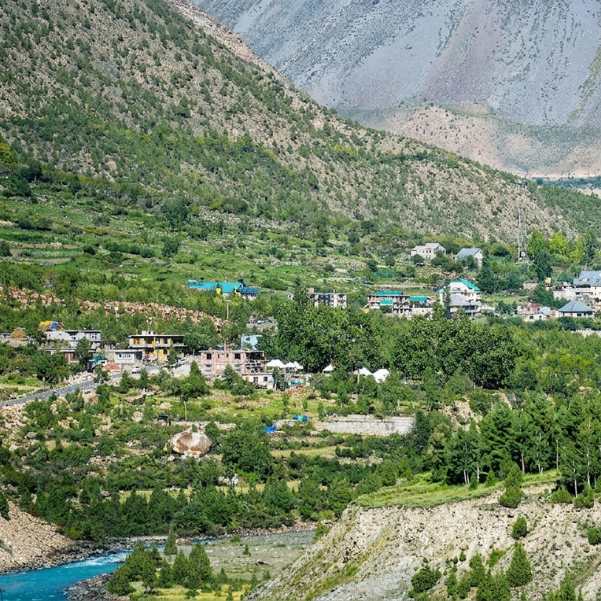
Jispa
~63 km · 2 hours drive
A quiet Lahauli village on the Bhaga river at around 3,200 metres with riverside camping. The standard overnight halt for travellers heading deeper towards Baralacha La and Ladakh.
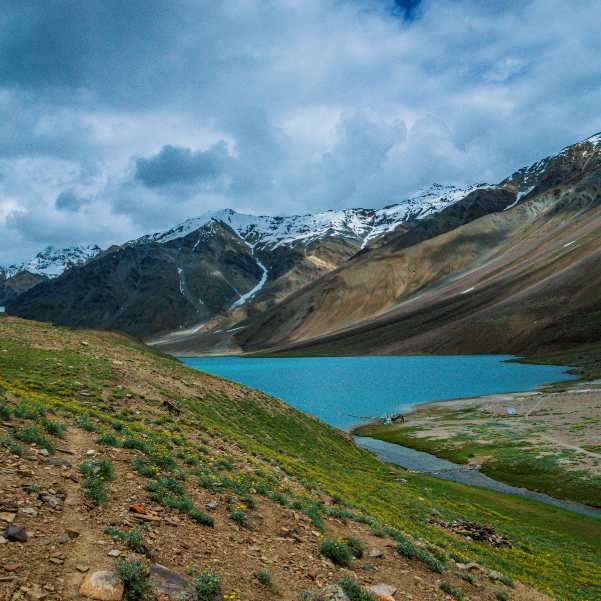
Chandratal Lake
~110 km via Gramphu and Batal · 5 to 6 hours drive
The natural crescent moon glacial lake at around 4,300 metres, the usual reason to turn east from Koksar into the Gramphu to Batal road. Not a day trip, plan an overnight at a camp or as part of a Spiti circuit.
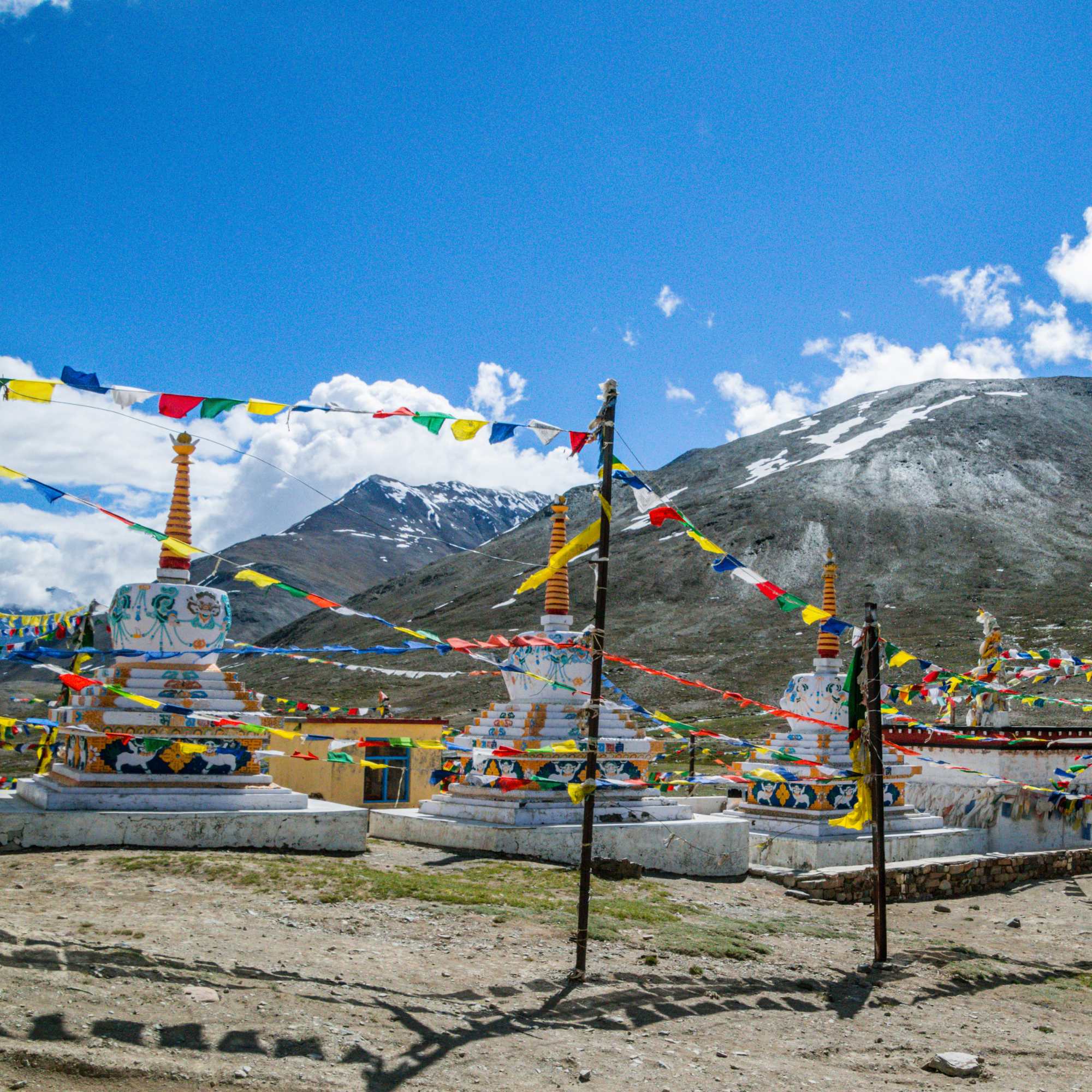
Kunzum Pass
~125 km via Gramphu and Batal · 6 to 7 hours drive
The high pass at around 4,551 metres that connects Lahaul to Spiti, generally open June to October. Reached from Koksar via Gramphu and Batal. Part of any Manali to Spiti circuit that uses the Lahaul route.
Our packages with Koksar Village
Curated trips that include a visit to Koksar Village.
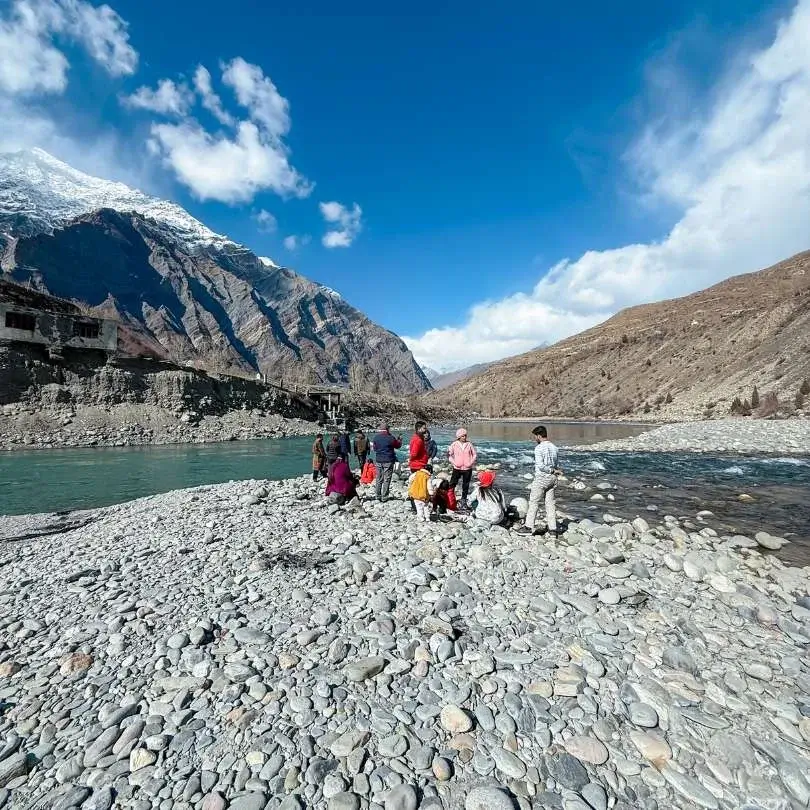 6D/5N
6D/5NMost Loved Sissu Valley Escape With Jispa Riverside Stay
2D Sissu•1D Jispa
₹15,999₹19,999SAVE INR 4,000/ person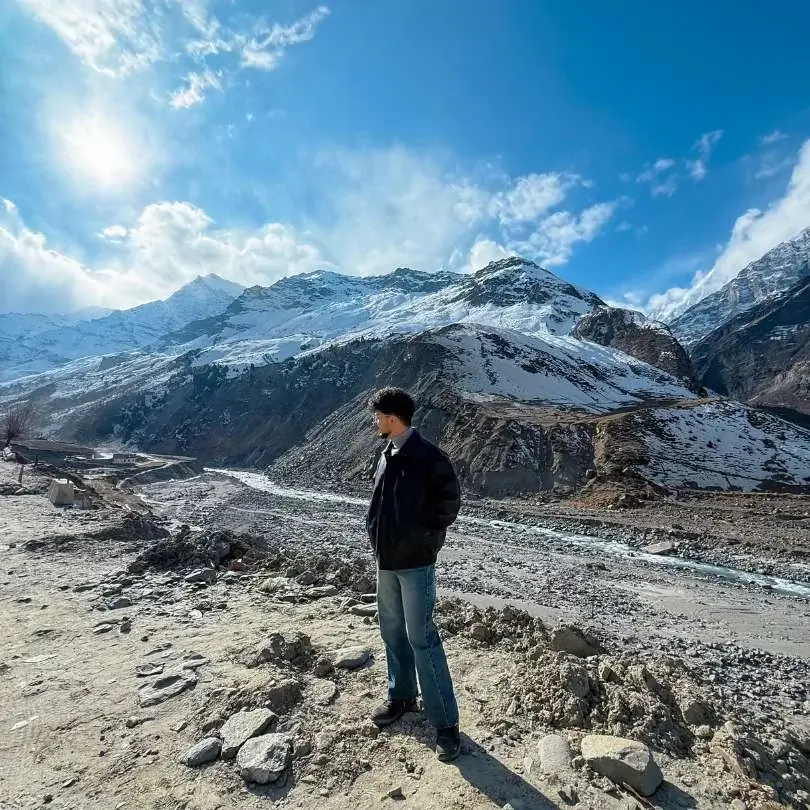 5D/4N
5D/4NClassic Sissu Valley Trip
2D Sissu•1D Manali
₹12,799/ person
Frequently Asked Questions about Koksar
Where is Koksar village located?
Koksar is a village in the Lahaul tehsil of Lahaul and Spiti district, Himachal Pradesh, on the right bank of the Chandra river at around 3,140 metres. It sits about 7 km east of the Atal Tunnel north portal, roughly 42 km from Manali via the tunnel, and historically 19 km from the top of Rohtang Pass on the old road. The Manali to Leh highway (NH3) runs through it.
What is the altitude of Koksar?
Koksar is around 3,140 metres, roughly 10,300 feet. This is moderate altitude by Lahaul standards, slightly higher than Sissu (3,120 m) and lower than Keylong, Jispa, or any Spiti destination. Most travellers handle it fine, though some feel mild breathlessness on the first evening if they have driven up quickly from the plains.
How far is Koksar from Manali?
About 42 km and roughly 1.5 hours via the Atal Tunnel in normal traffic. The old road over Rohtang Pass is closer to 70 km and is seasonal, opening only in summer. Most travellers now use the tunnel year round. Taxis and shared cabs run from Manali regularly, and HRTC buses heading towards Keylong or Leh pass through Koksar on the old road when it is open, while the regular year round buses use the tunnel and reach Koksar by backtracking from the Sissu side.
Is Koksar worth stopping at?
Yes, as a short tea stop and a logistical halt, not as a destination in itself. The dhabas are honest, the river walk is a nice leg stretch, and if you are driving further into Spiti or towards Chandratal, the police check post here is where you register. If you are chasing a Lahaul village to spend time in, Sissu, Keylong, or Jispa give you more to do. For most travellers, 20 to 40 minutes is the right length of stop at Koksar.
Is there a check post at Koksar and do I need to register?
Usually yes if you are continuing eastward past Koksar towards Gramphu, Chhatru, Batal, Chandratal, Kunzum Pass, or Kaza. A seasonal Lahaul and Spiti police check post operates in Koksar and generally asks vehicles to register, especially in the May to October window. Keep ID and vehicle papers ready. Exact rules and timings shift year to year, confirm with your driver or homestay the day you travel.
Can you stay a night in Koksar?
A few small homestays and a state PWD rest house operate in Koksar, generally in the May to October window. Options are more limited than in Sissu or Keylong, and quality varies. This is where you stay if Sissu is full, you specifically want quieter surroundings, or you are breaking the Manali to Chandratal drive into shorter legs. Book ahead in peak summer. Confirm that your stay is open in winter before you commit, most shut down or run on minimal services from November to March.
Is Koksar open in winter?
The Atal Tunnel keeps the Manali to Koksar stretch technically accessible year round, and Koksar is reachable via Sissu from the tunnel exit. However, Koksar is generally described as the coldest inhabited place in Lahaul, the slopes are avalanche prone, and heavy snowfall can block the road on the day. Most homestays and dhabas shut or run on reduced hours from November to March. Treat winter Koksar as an experienced traveller's trip with flexible plans, chains on the tyres, and a backup if conditions change.
Is Koksar really the coldest place in Lahaul?
Koksar is often cited as the coldest inhabited place in Lahaul. The valley here holds winter longer than Sissu or Keylong, temperatures drop well below freezing from December to February, and the Chandra river freezes over in large stretches during the deepest cold. Older residents still talk about using the frozen river as a pedestrian and mule crossing in the days before proper bridges.
Is Koksar on the way to Spiti?
The Manali to Spiti drive via Gramphu, Batal, Kunzum Pass, and Losar passes directly through Koksar. The Gramphu junction, which is where the road forks to the old Rohtang route on one side and the Spiti road on the other, is about 5 km east of Koksar. Most Spiti circuits from Manali stop at Koksar for tea and check post registration before pushing on to Chhatru or Chandratal.
How far is Chandratal from Koksar?
Roughly 110 km from Koksar to Chandratal via Gramphu and Batal, usually a 5 to 6 hour drive one way on mixed tarred and rough road. Not a day trip. Most travellers combine Chandratal with a wider Spiti circuit, or at minimum plan a night at a Chandratal camp. The Gramphu to Batal stretch is among the roughest sections of road you will drive in Himachal, check status and weather the day you travel.
Is Koksar good for photography?
Yes, and better than Sissu for certain angles. The morning light on the Chandra valley, the old PWD rest house on the left bank, the frozen river in winter, and the Gramphu junction 5 km east are all photogenic. The village itself is small, so ask before photographing residents. Drones are discouraged near the check post and the highway, keep them in the bag.
Is there mobile network, ATM, or fuel in Koksar?
BSNL is the most reliable network in the Lahaul valley. Jio has started working in patches since 2019. Airtel signal is weak. There is no ATM in Koksar or anywhere close, the nearest is in Keylong or back in Manali, and the nearest fuel pump is at Tandi, about 40 km from Koksar via Sissu. Carry cash and fill up in Manali before you drive in.
Do I need a permit for Koksar?
Indian nationals do not need a special permit for Koksar. Foreign travellers are asked to carry ID and register at the police check post if continuing deeper into Lahaul or towards Spiti. Current Inner Line Permit rules apply only if you are continuing into restricted areas further on. Rules for Lahaul and Spiti have shifted over the years, confirm current requirements close to your travel date.
What is there to do in Koksar?
A tea stop, a river walk to the Chandra, a short visit to the village monastery and chorten, a drive to the Gramphu junction 5 km east to see the road split, and in winter, a short snow experience if the road is safe. Most travellers spend 20 to 40 minutes here and move on. If you are overnighting, pair it with a morning walk and maybe a short drive back towards the tunnel at Sissu.
Related guides
Posts about Sissu
- Where to Stay in Sissu in 2026: Best Hotels, Homestays & Areas for Every Budget
- Sissu in October 2026: Weather, Snow Chances, Road Status & Autumn Travel Guide
- Sissu in December 2026: Snowfall, Weather, Road Status & Winter Travel Guide
- Sissu in November 2026: Weather, First Snow, Road Status & Travel Guide
- Best Time To Visit Sissu in 2026: Month Wise Weather, Snow and Road Guide
- Manali To Sissu Road Trip Guide 2026: Route, Distance, Road Status, Cost And Local Tips