
Gushaini
A small village on the Tirthan, with the Falachan joining just upstream, the standard riverside base for a Great Himalayan National Park visit and the road end on the Tirthan side
- Riverside village
- ~1,500 m at the river
- GHNP road head
- Aut · ~30 km
- Best Mar to Jun, Sep to Nov
What makes it special
Gushaini is a small village in Banjar tehsil of Kullu district, sitting at around 1,500 metres on the Tirthan river, with the Falachan nala joining the Tirthan just upstream of the village. A single lane road, a trolley bridge across the water, two clusters of houses climbing up either bank, a handful of riverside homestays, a tiny market with three or four shops and a couple of dhabas. That is the whole village. The road from Banjar ends a short way past Gushaini, and beyond that point it is foot access only into the Great Himalayan National Park.
What gets people here is not the village itself, it is what the village gives you access to. The Tirthan runs bright green right outside most stays, the GHNP gate at Ropa is roughly 3 to 4 km of flat forest walk past the village, the trout season opens on this stretch in spring, and the walking distance from your homestay to a proper river bank is under five minutes. Gushaini is the most convenient base for a GHNP visit and one of the better homestay belts in Kullu district.
Honest framing most websites miss. The village is not a destination in the way Kasol or Manali are. There are no cafes to drift between, no market street, no evening scene, and no attractions inside the village beyond the river itself. That is the point. Travellers who come expecting entertainment leave restless. Travellers who come for two or three slow nights of the river, the walk to the gate, and whatever the homestay cooks for dinner leave rested. Pick Gushaini if that sounds like your trip. Pick Jibhi or Shoja if you want cafes and options.
Quick answers
- Is Gushaini worth visiting?
- Yes, if you want a quiet riverside base, the shortest walk to the Great Himalayan National Park gate in Tirthan, and homestays built for slow mornings. Skip it if you came looking for cafes, nightlife, or a packed sightseeing day. The village gives back to travellers who plan nothing, and gives very little to travellers who want a schedule.
- How much time do you need?
- Two nights minimum, three is the sweet spot. One night is rushed because the drive in and out eats most of each travel day. Three nights lets you walk to the GHNP gate on one day, fish or do Chhoie Waterfall on another, and keep one full day by the river with no plan. Longer than four nights starts to drag unless you are working remotely or planning a multi day trek inside the park.
- Where should I stay, Gushaini or one of the other Tirthan villages?
- Stay at Gushaini if you want the shortest walk to the GHNP gate and the most homestay choice along the river. Pick Nagini 3 km back if you want slightly easier road access and the Chhoie Waterfall trail on your doorstep. Pick Sai Ropa if you specifically want the Tourist Centre and permit office close by. All three sit on the same road within 10 km of each other.
Quick facts
Everything you need to know at a glance.
At a glance
- Altitude
- Around 1,500 m at the river (sources quote between about 1,460 and 1,530 m)
- Location
- Banjar tehsil, Kullu district, Himachal Pradesh; on the Tirthan river, with the Falachan joining just upstream
- Nearest towns
- Banjar ~10 km at the valley head, Aut ~30 km at the highway turn off
- Open season
- Year round. Best Mar to Jun and Sep to early Nov.
- Best stay length
- Two to three nights
- Entry fee
- None to enter the village. Fishing needs a Fisheries Department permit, GHNP core zone entry needs a permit and a registered guide.
- Time needed
- Two nights minimum, three is the sweet spot, four if you plan a full day at Jalori as well
- Access difficulty
- Easy by road. Last 10 km from Banjar is narrow and slow but tarred.
On the ground
- Mobile network
- Patchy. BSNL is the most reliable. Jio catches a signal in parts of the village, Airtel is weak. Assume near zero signal past the village on any walk.
- ATMs
- None reliable in Gushaini itself. The nearest usable ATMs are at Banjar, and those are often out of cash. Withdraw enough for your whole stay at Aut or Mandi on the way in.
- Fuel
- No fuel at Gushaini. Banjar has the last reliable pump in the area. Tank up before you drive in, with a small reserve for Jalori day trips.
- Food
- Mostly homestay home cooking. Two or three small dhabas and riverside cafes in the village, hours are inconsistent. The homestay meal is consistently the best food on the trip.
- Parking
- Most homestays have informal parking at the door or a short walk from it. A small open area in the main village works for day visitors. No fees.
- Permits
- None to enter the village. Fishing permits are issued at the Fisheries Department office in Banjar or arranged through your homestay. GHNP core zone permits come from the Sai Ropa range office or Shamshi HQ and require a registered guide.
- Drones
- Not welcome anywhere near the GHNP boundary, which begins a short walk past the village. Treat the answer as no for this trip.
- Walking surface
- Tarred road through the village, dirt paths to the river bank, a mostly flat forest track from the village to the GHNP gate at Ropa.
- Guides
- Trek and naturalist guides live in the village. Most homestays can put you in touch, or book through the Sai Ropa Tourist Centre. Day walks to the gate usually go without a formal guide, anything past the first buffer camping point needs one.
Seasonal weather
- March to early June24°8°Spring
- July to August28°16°Summer monsoon
- September to early November22°6°Autumn
- Mid November to February14°-2°Winter
Suitable for
- Couples — suitable
- Families — suitable
- Seniors — suitable
- Solo — suitable
- First-timers — suitable
- Pet-friendly — with some care
How to reach Gushaini
6 approach routes, with seasonal access.
From Aut (the primary turn off)
Year round. Occasional monsoon delays between Mandi and Aut.- Distance
- About 30 to 35 km
- Time
- 1 to 1.5 hours
- Road
- Tarred NH 305 from Aut to Banjar, then a narrower tarred valley road following the Tirthan up to Gushaini
- Last fuel
- Aut and Banjar
The standard approach. From the Aut tunnel on the Manali highway, take the right turn just before the tunnel onto NH 305. Banjar is 24 km in. Shortly past Banjar the road forks, the left fork climbs to Jibhi and Shoja, the right fork follows the river into the Tirthan Valley villages and ends at Gushaini. The last 10 km from Banjar are narrow with occasional blind turns, drive at a calm pace and use the horn on bends. Watch the signage at the fork past Banjar, it is small and easy to miss.From Delhi
Year round on the approach- Distance
- About 500 km to Aut, then 30 km onwards
- Time
- 12 to 14 hours door to door
- Road
- NH 44 to Chandigarh, NH 3 to Aut, NH 305 onwards. Mostly decent tar, slower in monsoon because of landslide risk between Mandi and Aut.
- Last fuel
- Chandigarh, Swarghat, Bilaspur, Sundernagar, Aut, Banjar
Most travellers do this as an overnight Volvo to Aut and a taxi onwards. The Volvo drops you at the Aut junction somewhere between 5 and 7 AM. Pre book a taxi from Aut to Gushaini, around 1,500 to 2,500 rupees one way. Self drive runs 12 to 14 hours with a stop in Mandi, plan an overnight somewhere along the way if you are driving with kids. Arriving at a homestay by lunch gives you the whole first afternoon at the river, aim for that rather than trying to do anything on day one.From Chandigarh
Year round- Distance
- About 270 km
- Time
- 8 to 9 hours
- Road
- NH 3 through Swarghat, Bilaspur, Sundernagar, Mandi, Aut. Mostly tarred, slower in monsoon.
- Last fuel
- Swarghat, Bilaspur, Sundernagar, Aut, Banjar
The easier driving day. Leave Chandigarh by 7 AM, expect to reach Gushaini by mid afternoon with a proper lunch stop at Sundernagar or Mandi. The Chandigarh to Mandi stretch is fast highway, the Mandi to Aut section is slower, and the final 30 km from Aut to Gushaini is narrow valley road. Self drive is the usual choice from Chandigarh, buses are less direct.From Bhuntar Airport (Kullu Manali)
Year round by road. Flights to Bhuntar are weather sensitive, cancellations are not rare in winter and peak monsoon.- Distance
- About 60 km
- Time
- 2 to 2.5 hours
- Road
- NH 3 through the Aut tunnel, then NH 305 to Banjar and on to Gushaini
- Last fuel
- Bhuntar, Aut, Banjar
Hire a taxi from Bhuntar airport, around 2,500 to 4,000 rupees one way. Allow 2 to 2.5 hours. The route heads south on NH 3 through the Aut tunnel, then NH 305 to Banjar and on to Gushaini. Most homestays can pre book a driver if you share your flight details.From Manali
Year round- Distance
- About 80 km
- Time
- 2.5 to 3 hours
- Road
- NH 3 south to Aut, then NH 305 into Banjar Valley
- Last fuel
- Kullu, Bhuntar, Aut, Banjar
Drive south on NH 3 from Manali to Aut, take the left turn just past the Aut tunnel onto NH 305, and follow the road through Banjar to Gushaini. A natural pairing if you are doing a Manali plus Tirthan combination, total around 3 hours of actual driving. Leave Manali by 9 AM for a relaxed lunch at your homestay.From Banjar (by bus or shared jeep)
Year round, less frequent in winter- Distance
- About 10 km
- Time
- 30 to 45 minutes
- Road
- Narrow tarred valley road
- Last fuel
- Banjar
If you are travelling by public transport, take a bus or shared cab from Aut to Banjar, then a local bus or shared jeep from Banjar to Gushaini. The first Banjar to Gushaini bus is generally around 7 AM, the last one around 5 PM (confirm locally, schedules shift with season). Fares are small, under 50 rupees. If the bus has left, shared jeeps run through the afternoon and a private taxi from Banjar to Gushaini runs around 500 to 800 rupees.
Best time to visit
Season by season, so you can plan around the weather rather than hope.
- Recommended
Spring
March to early June
The cleanest window for the river, the orchards, and the GHNP gate walks
- Day temperature
- 14 to 24 C
- Night temperature
- 8 to 12 C
- Trail
- Dry and easy underfoot
- Crowds
- Light to moderate, busier on May and June weekends
Usually the best window. The Tirthan runs full but clear with snowmelt, apple and apricot blossom hits the village orchards through April, and the buffer trails dry out by early May. Trout fishing season generally opens in early March. Mornings are crisp, days warm enough to sit by the river in a single layer. Weekends from May get busy with travellers from Delhi and Chandigarh, weekdays stay calm. Book ahead for weekends in May and June, especially at the popular riverside stays. Summer monsoon
July to August
Skippable, landslides on the approach, slick trails, and a muddy river
- Day temperature
- 18 to 28 C
- Night temperature
- 16 to 18 C
- Trail
- Slippery, river runs high and muddy
- Crowds
- Low
The most skippable window. The road from Mandi to Aut sees regular landslides through July and August, the trails turn slick, leeches appear in the lower forest, and the river runs muddy enough that fishing is suspended at the official level for breeding season. Many homestays drop rates in monsoon for a reason. If you do come in August, plan around weather, carry a rain shell and fast drying shoes, and accept that the photos will be about mist rather than peaks. Book a vehicle with ground clearance if you are self driving in.- Recommended
Autumn
September to early November
Sharpest air of the year, apple harvest in the orchards, the right window for longer walks
- Day temperature
- 12 to 22 C
- Night temperature
- 6 to 10 C
- Trail
- Dry and bright, the easiest underfoot of any season
- Crowds
- Moderate, drops sharply after mid October
If you can time it, late September to mid October is the cleanest window of the year. Post monsoon air clears the views across to the GHNP ridges, the apple harvest fills the orchards above the village, and the Tirthan settles back to clear running water. The trout fishing season reopens in September for the final stretch before winter closure. Weekends in October pull crowds, weekdays stay quiet. Nights start to bite by November, pack a proper warm layer. Winter
Mid November to February
Quiet riverside days, cold bright mornings, and the road up to Jalori closes
- Day temperature
- 6 to 14 C
- Night temperature
- -2 to 4 C
- Trail
- Cold, rare ice on shaded patches
- Crowds
- Low, slightly busier around Christmas and New Year
Gushaini itself rarely gets heavy snow at the river level around 1,500 m, a dusting once or twice a season is more usual. The slopes above the village and the road to Jalori Pass do get snowed in from December to February. The riverside experience continues all winter, with cold bright days and very few other travellers. Trout fishing is generally closed for breeding in this window. Pack a heavy layer, expect bucket hot water at some homestays, and check road conditions to Jibhi and Shoja before planning a day trip up.
Things to see & do
10 things worth your time at Gushaini.
Walk to the GHNP gate at Ropa
4 to 6 hours round trip (to the gate and back is shorter, about 2 hours)The signature walk from the village. Follow the road past Gushaini along the Tirthan, cross the forest department bridge, and continue on a mostly flat forest track to the Ropa gate. The gate is about 3 to 4 km from the village centre, usually a 45 minute to one hour walk at a calm pace. Most walkers continue a short way past the gate into the immediate buffer, and if you walk all the way towards Rolla, the first proper camping point, the total one way distance is closer to 6 to 7 km. No permit needed up to the gate and the immediate buffer. The first hour of light is the only time worth doing this in, leave the homestay by 6 AM for the clean version. Carry water and snacks, there are no shops past the village. Fuller context in our Great Himalayan National Park guide.A slow riverside morning at your homestay
Half a day, by designPick a flat rock on the Tirthan right outside your stay, take a book, sleep, eat, repeat. Most Gushaini homestays sit directly on or above the river with terraces or steps down to the water. This is honestly the main reason most travellers come to the village. Two of these mornings in a row resets you in a way a busier holiday cannot.Trout fishing on the Tirthan
3 to 5 hours, early morning or just before sunsetThe Tirthan holds naturally breeding rainbow trout, which is rare in India, and the stretch below Gushaini is one of the better beats. The experience is not a guaranteed catch. It is a slow morning on the river bank with a local guide, a borrowed rod, and a paper permit. Permits come from the Fisheries Department office at Banjar or through your homestay, generally a modest per rod per day fee that is subject to change. Catch and release is the rule on most of the upper river. Hire a local guide for the first morning, around 800 to 1,500 rupees, they know which pools are holding fish that week. Season is broadly spring and autumn, closed for breeding in midsummer and winter, confirm current dates with the Fisheries office.Short walk to Chhoie Waterfall from Nagini
2 to 3 hours round tripA short forest walk to a 40 to 50 foot waterfall that drops into a rock pool. The trailhead is at Nagini village, about 3 km back towards Banjar from Gushaini. The walk is roughly 1.5 km each way through pine and oak forest, easy enough for older kids. Best done before 10 AM, the path gets busier on weekends. A half day out from Gushaini by scooter or a short taxi.Dawn birdwatching with a naturalist
2 to 4 hours starting at 5.30 AMGushaini sits on the GHNP buffer, which means more than 200 bird species pass through the area. Himalayan monal, several other pheasants, eagles, and forest songbirds are the realistic sightings. Western tragopan is recorded in the area but sightings are rare even for regular spotters. Arrange a naturalist through your homestay the night before, around 1,000 to 2,000 rupees per morning. Dawn is the only window worth showing up for, midday is a waste.Walk up the Falachan nala side
Half dayThe side of Gushaini most travellers ignore. The Falachan drops out of the park and meets the Tirthan just upstream of the village, and a rough path climbs a little way along it into quieter forest. Shorter and less groomed than the Ropa side walk. Useful if you already did the gate walk on day one and want a different stretch of river for day two. Ask your homestay which side the trail is open on, it shifts with monsoon damage.Drive up to the higher villages: Pekhri, Sharchi, Bathad
Half dayIf you want to see the valley from above rather than from the river, drive up through the orchards to Pekhri or Sharchi above Banjar, or out to Bathad at the far end of the Tirthan road past Gushaini. The climb is sharp, the views open out, and the apple orchards are the whole show in late September and early October. Roads are dusty and rough in places, doable in a small car in dry weather. About 1 to 2 hours each way depending on which village you pick.Day trip up to Jalori Pass
Full day from GushainiDrive 30 to 40 minutes back to Banjar, then up the Jibhi road to Jalori Pass at around 3,100 m. Either a short stop at the 360 Viewpoint or a longer day walk to Serolsar Lake or the Raghupur Fort ridge. A full day from a Gushaini base because the drive each way eats time, leave by 8 AM if you plan to trek. Our Jalori Pass guide covers the day walk options.Half day to Chehni Kothi
Half dayDrive about 30 minutes back through Banjar towards Jibhi and turn off at the Bagi signboard. A short uphill walk through orchards leads to a several centuries old Kath Kuni stone and wood tower. Worth the trip for travellers interested in heritage architecture. Read our Chehni Kothi guide for the climb and history.Eat trout and Himachali food at your homestay
Across your stayThe food is a meal to plan your day around, not a side experience. In fishing season, ask the host to source a trout and cook it the local way, pan fried with masala. Otherwise order siddu (steamed wheat buns, often filled with poppy seed paste or dal), madra (chickpea or rajma curry in a yoghurt base), and rajma chawal done the Himachali way. Tell your hosts at check in what you cannot eat, alcohol is not always served and vegetarian is the default at many stays, and let them suggest the rest. Special requests outside their plan rarely improve the meal.
Know before you visit Gushaini
The practical bits, from people who have been.
What Gushaini actually isA small riverside village, the road end on the Tirthan side of the Great Himalayan National Park
Gushaini is the last real village on the Tirthan road before the GHNP boundary. It sits at around 1,500 metres on the Tirthan river, with the Falachan nala, which drains a side valley inside the park, joining the Tirthan just upstream of the village. The village has two sides. One cluster of homes and homestays sits on the lower bank of the Tirthan along the road, the other climbs the opposite slope, reached across a small iron trolley bridge and a few footbridges. Between them runs bright green water on most days of the year.
The village is small by any standard. Three or four shops in the main market, two or three dhabas, a primary school, and a scatter of homestays spread along the river and the slopes above. The road ends a short distance past the village, and beyond that it is foot access only into the GHNP buffer. For geographic and administrative context the village sits inside Banjar tehsil, which is part of Kullu district.
The full valley context sits in our Tirthan Valley guide. This page is specifically the village page, which means the stay by stay differences, the practical village logistics, and the short walks you can start from your homestay door.
Which village to base in: Gushaini vs Nagini vs Sai RopaGushaini for GHNP access, Nagini for easy road and the Chhoie trail, Sai Ropa for the permit office
The three village choices in the Tirthan Valley sit on the same road within 10 km of each other, and each suits a slightly different trip.
Pick Gushaini if: you want the shortest walking approach to the GHNP gate, the widest spread of riverside homestays, and the quietest end of the valley road. Best for a first GHNP visit, for families who want the river as a permanent activity, and for anyone who specifically wants to fish the beats below the village.
Pick Nagini if: you want a slightly easier road access than Gushaini, the Chhoie Waterfall trail starting from your door, and a small cluster of established homestays with reliable food. Nagini is a middle ground, closer to the road than Gushaini but further from the park gate.
Pick Sai Ropa if: you specifically need the GHNP Range Office and Tourist Centre close by for permits or planning. Fewer riverside stays, a more spread out village, and the best for people organising a multi day trek who will need permit help.
A pragmatic plan. Most travellers pick Gushaini for the first visit, enjoy it, and return to try Nagini or Sai Ropa the second time. You do not have to choose cleverly, all three work well.
Where to stay in Gushaini and what to expectRiverside homestays, rates around 2,500 to 5,000 rupees per night with meals, book ahead in peak season
Most Gushaini homestays sit directly on the river bank or a short walk above it. Rates broadly run 2,500 to 5,000 rupees per night for two, with meals included. A few well known properties are heritage names that have been here for two decades, and they need booking three to four weeks ahead in peak May, June, and October. Newer stays have opened in the last five years and the choice is now wider than it was a decade ago.
What you typically get is a clean room with a heavy blanket, a hot water bucket or a functioning geyser, and a shared or private bathroom depending on price. The better stays have balconies over the river, a small library of books, a woodstove in the common room, and hosts who will sit and talk through your day plan. The simpler stays are basic rooms in family homes with shared meals at the family table.
The honest framing. Quality varies property to property faster than any web page can keep up with. Read recent guest reviews from the last six months before booking, not from two or three years ago. Confirm at booking whether you need to carry cash (most stays prefer cash, UPI signal is unreliable), whether meals are included or extra, and whether the stay has vehicle access at the door or a walk down from the road.
A small recheck reminder. Peak weekends in May, June, and October book out early. If you can, plan your stay on weekdays for the calmer version of the village.
Trout fishing from Gushaini, the honest versionA Fisheries Department permit, a local guide, an early morning, and a catch and release expectation
The Tirthan is genuinely one of the better trout rivers in India and one of the few where rainbow trout breed naturally. The stretch below Gushaini is among the most productive beats. A few points most travellers get wrong on arrival.
Permits: Issued by the Himachal Pradesh Fisheries Department at Banjar, or arranged through your homestay. It is a paper permit, modest per rod per day fee, but rates and rules change season to season. Confirm with your host at booking, do not assume prices from a blog.
Season: Broadly spring and autumn. The Fisheries Department generally closes the river for breeding through peak summer and winter. Dates shift a little each year depending on water levels and the department's call. Reconfirm the current window with your homestay close to your travel date.
Catch and release: The rule on most of the upper river. Kill fishing is allowed on lower stretches with a separate licence. Do not catch a fish to eat unless you have arranged it with your homestay ahead of time and your permit specifically allows it.
The actual experience: Dawn start, 5 to 8 AM on the water. A local guide walks you to two or three pools they know are holding fish that week. Expect more casting than catching. Even skilled guides have blank mornings. The experience is the river and the quiet, the fish is a bonus.
The walk to the GHNP gate, step by stepAbout 3 to 4 km of flat forest track from the village to the Ropa gate, plus an optional walk deeper into the buffer towards Rolla
The GHNP gate at Ropa is the closest any traveller can get to the park interior without a permit and a guide, and the walk to it is why most people base in Gushaini.
The route: From the village, walk the road past the last homestays, across the main Tirthan bridge, and continue on the forest track that runs along the right bank. The track is mostly level, flanked by pine and deodar, with the river on your left the whole way. The Ropa gate is about 3 to 4 km from the village centre, usually a 45 minute to one hour walk at a calm pace. The gate is a simple forest department check post with a board.
How far you can go without a permit: You can walk to the gate and a short way beyond into the immediate buffer without a permit. The first proper camping point inside, Rolla, is further in, roughly 6 to 7 km from the village one way, and reaching it involves a real walk through the park interior. Rolla and beyond need a permit, ideally a guide, and an early start.
When to go: First hour of light. The forest is alive at dawn in a way it just is not at midday. Leave the homestay at 6 AM in spring and autumn, slightly later in winter. You will be back for breakfast at 9.
What to carry: Water, a warm layer, sturdy shoes. No shops past the village so whatever you carry is what you have. A rain shell is worth its weight even on a clear morning, afternoon storms build fast above the tree line and can sweep down.
Who should visit, and who should reconsiderGood for slow travellers, families, and first time Tirthan visitors; harder for cafe seekers and travellers who need a schedule
Honest framing for who this village suits.
Couples and slow travellers: Yes, probably the best fit. The village is built for two to three night stays where you wake up to the river, walk a little, eat what your host cooked, and let the day take its shape.
Solo travellers: Yes. Most stays are family style, you may be the only solo guest at the table, usually a feature not a bug. Ask your host to introduce you to other guests on the first night.
Families with kids: Generally yes. The river is a permanent activity, homestays have space to run around, and short walks to Chhoie Waterfall or into the buffer work for most kids. Kids 6 and above do well, under that the slow pace can test patience. Pack books and games, there is no screen time rescue here.
Seniors: Yes in the more accessible homestays. Pick a property where parking is at the door and the river is reached by a short level walk, not by 50 stairs. Confirm with the host about steps, walking distance, and whether the room has an attached bathroom before booking.
Pets: Many homestays welcome dogs but not all, confirm before booking. The village road has very light traffic so dogs usually do well off leash on the quieter stretches. Dogs are not allowed past the GHNP gate into the park.
Skip Gushaini if: you want a packed schedule of attractions, cafes, or nightlife, you are travelling for just one night, or you have small children who need other kids around and a full menu. Manali or Kasol are better fits. Within the Tirthan belt, Jibhi offers more options if that is what you want.
Safety, altitude, and the ground realityLow altitude village, real rescue limits past the GHNP gate, weather shifts quickly on buffer walks
At around 1,500 m the village itself is low altitude by Himachal standards, and altitude sickness is not a concern for a Gushaini stay. The risks are different and practical.
The river: The Tirthan is fast and cold year round. It looks calm at the surface and runs strong underneath. Do not swim across the current, do not let kids wade in unsupervised, and do not try to cross side channels on wet rock. Most water related accidents in the valley are from underestimating the current.
Past the GHNP gate: Mobile signal effectively disappears past the village. There is no road inside the park, so any medical evacuation involves walking out, which can mean hours. Tell your homestay your route and your expected return time every time you head in, even for a short walk. Carry a small first aid kit with blister tape.
Weather: Even in May or September, afternoon thunderstorms build fast above the tree line. Carry a rain shell and one warm layer on any walk past the gate, even on a clear morning. If you see a storm building, drop into the forest line for shelter and wait it out.
Medical: The nearest proper hospital is at Kullu, around 2 to 3 hours by road. A community health centre at Banjar handles basic issues. Carry your own regular medicines, blister tape, sunscreen, sunglasses, and a headlamp. There is no pharmacy in the village itself.
Local tips most travellers missCarry cash, tell your homestay the night before, eat what they cook, and leave the day loose
Carry enough cash for your whole stay. The village has no reliable ATM, and Banjar's lone machine is often out of cash. UPI works in patches at best. Withdraw at Aut or Mandi on the way in, in small notes for the homestay settling and any shared cab fares.
Tell your homestay your rough plan the night before. They can arrange a guide for the GHNP walk, a fishing permit and a rod, a taxi to Jalori, and will know whether the Chhoie trail is muddy. Homestays here are far better planners than any web page, including this one. Local advice always wins over an itinerary built from blogs.
Eat what your homestay cooks. The food in Gushaini is mostly home cooking by the host family, and the quality is consistently good. Tell them at check in what you cannot eat (alcohol is not always served, vegetarian is the default at many stays) and let them suggest the rest. Special requests outside their plan rarely improve the meal.
Leave the schedule loose. The village does not reward optimisation. The best days here are the ones where you intended to do one thing and ended up doing nothing because the river was too good to leave. Plan one fixed thing per day, leave the rest open.
A small recheck reminder. Road status from Mandi to Aut can shift after monsoon, Fisheries Department permit rules and fees are reviewed seasonally, and GHNP office hours at Sai Ropa can change with the season. Reconfirm anything time sensitive with your homestay or the Range Office close to your travel date.
Nearby attractions
Other places worth the detour.
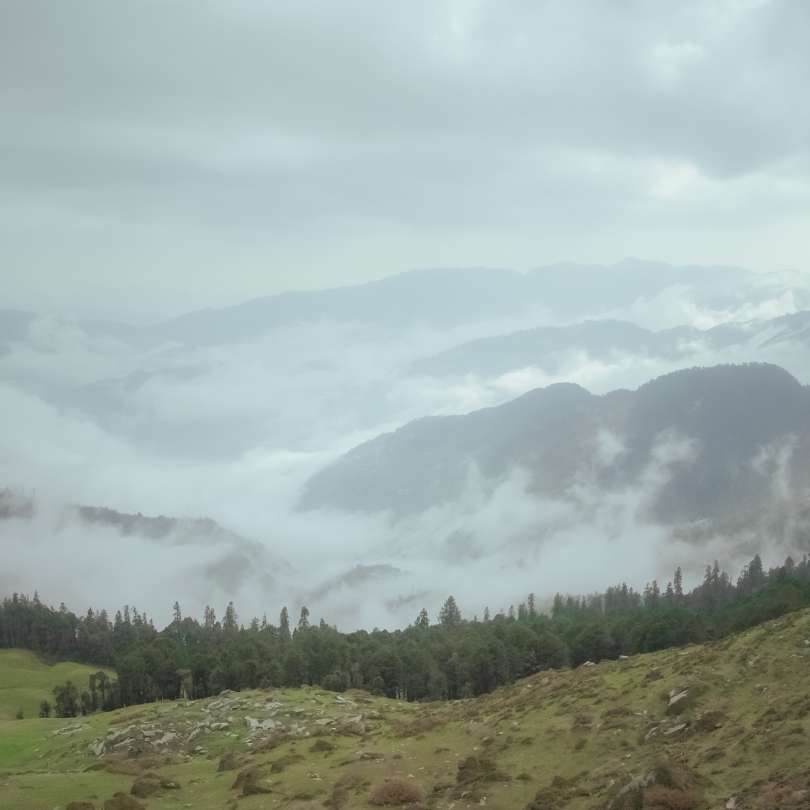
Great Himalayan National Park
Ropa gate ~3 to 4 km past Gushaini
UNESCO World Heritage protected area covering more than 1,000 sq km of high Himalayan wilderness, with the Ropa gate about 3 to 4 km past the village.
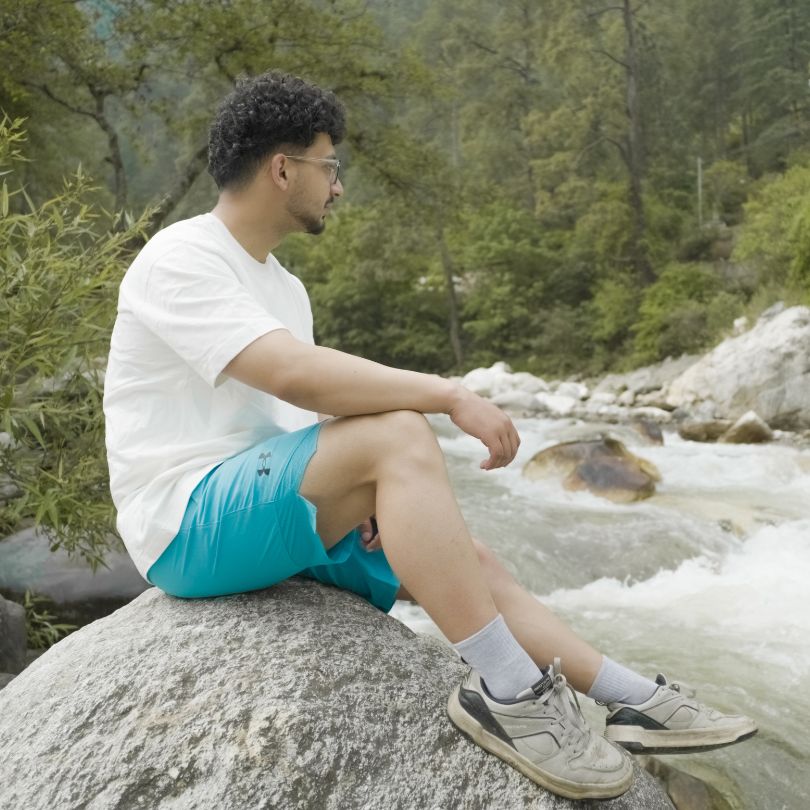
Tirthan Valley (the broader valley Gushaini sits in)
Gushaini is the road end village of the valley
The full 25 to 30 km valley from Banjar at the head to Bathad at the park edge, with villages strung along the river.
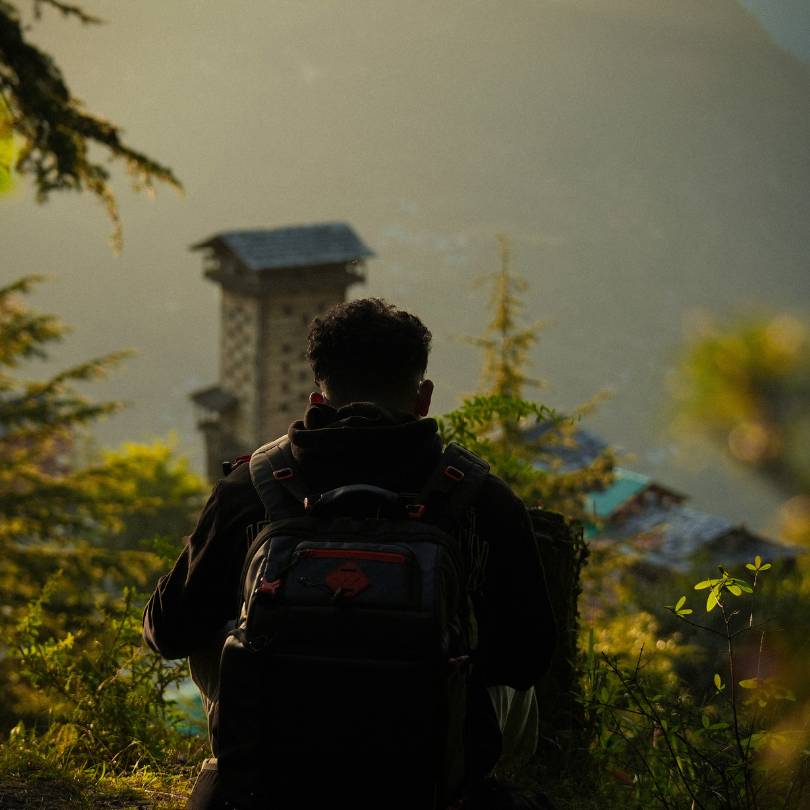
Chehni Kothi
~25 km · 1 hour drive from Gushaini
A several centuries old Kath Kuni stone and wood tower above Banjar, reached by a short uphill walk through orchards.
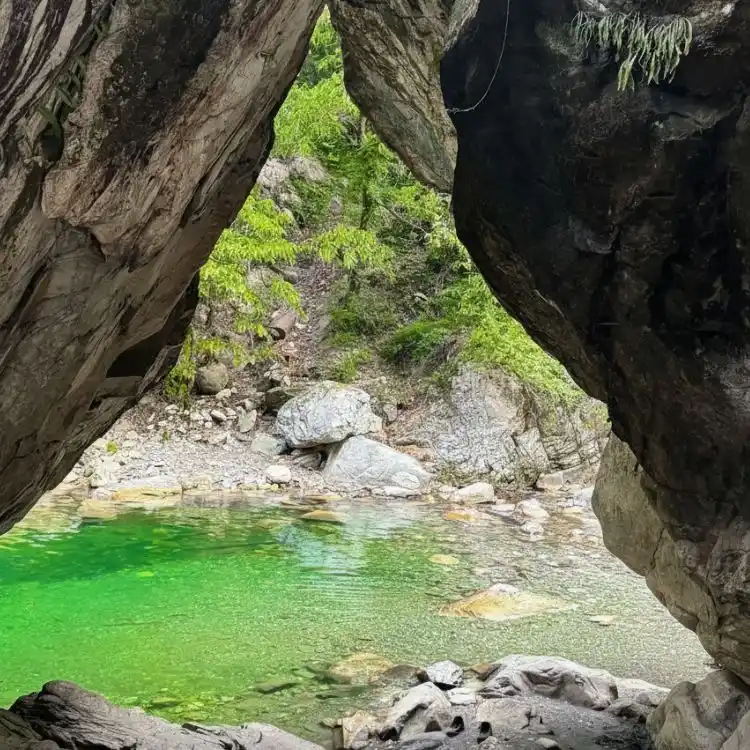
Mini Thailand Jibhi
~25 km · 1 hour drive
A small forest stream spot on the Jibhi to Jalori road, with two boulders forming a natural arch over a clear pool.
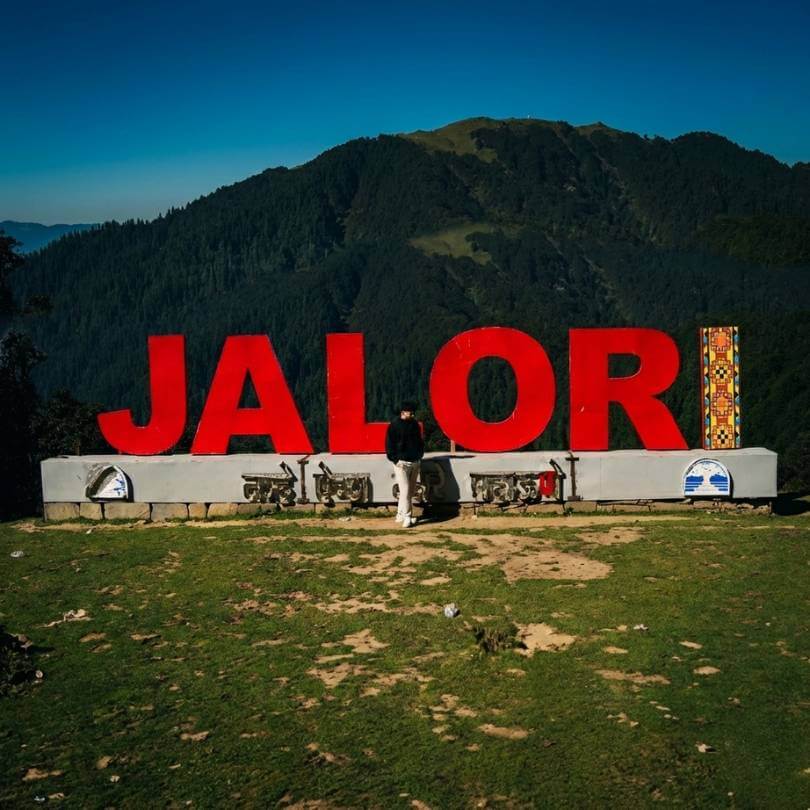
Jalori Pass
~30 km · 1.5 hours drive from Gushaini
The mountain pass on NH 305 above Jibhi and Shoja at around 3,100 m, the trailhead for the area's classic day walks.
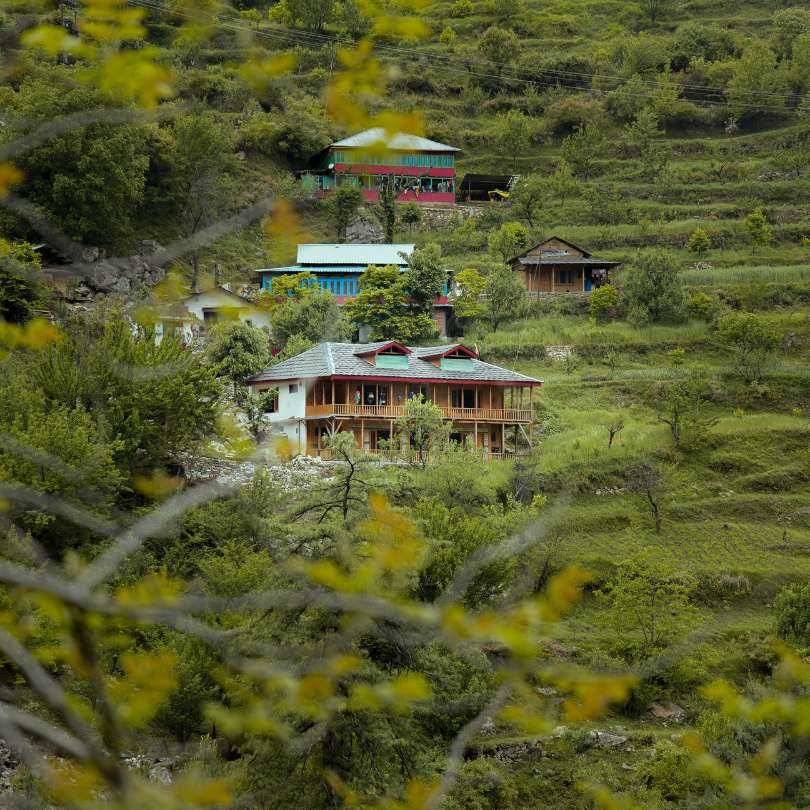
Shoja
~30 km · 1.5 hours drive uphill
A small forest village at around 2,700 m, quieter and higher than the Tirthan villages and the closest stay to Jalori Pass.
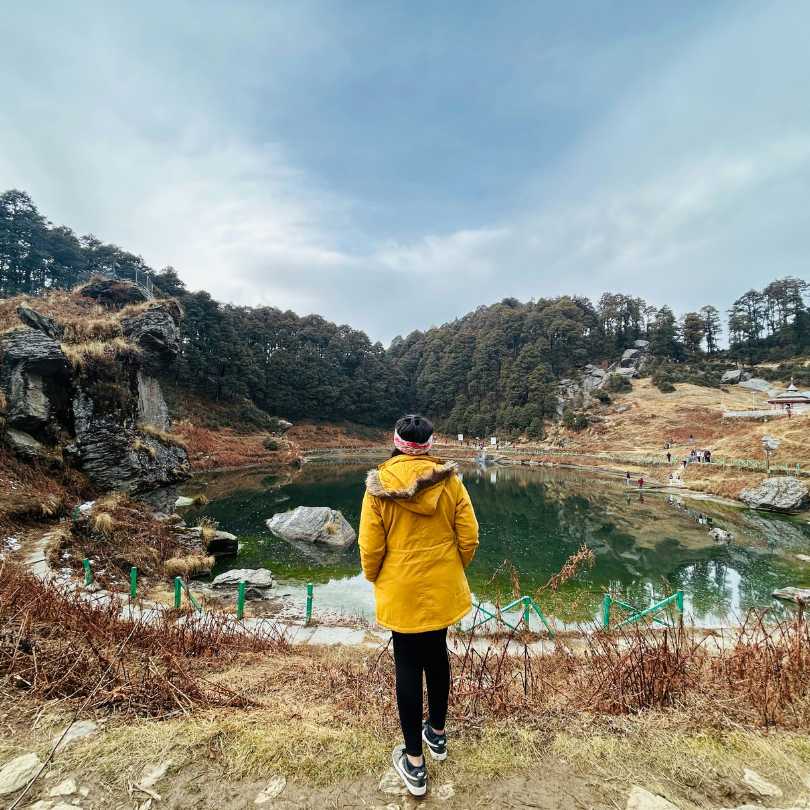
Serolsar Lake
From Jalori Pass, 5 km trek each way
A small sacred alpine lake reached by an easy 5 km forest walk from Jalori Pass.
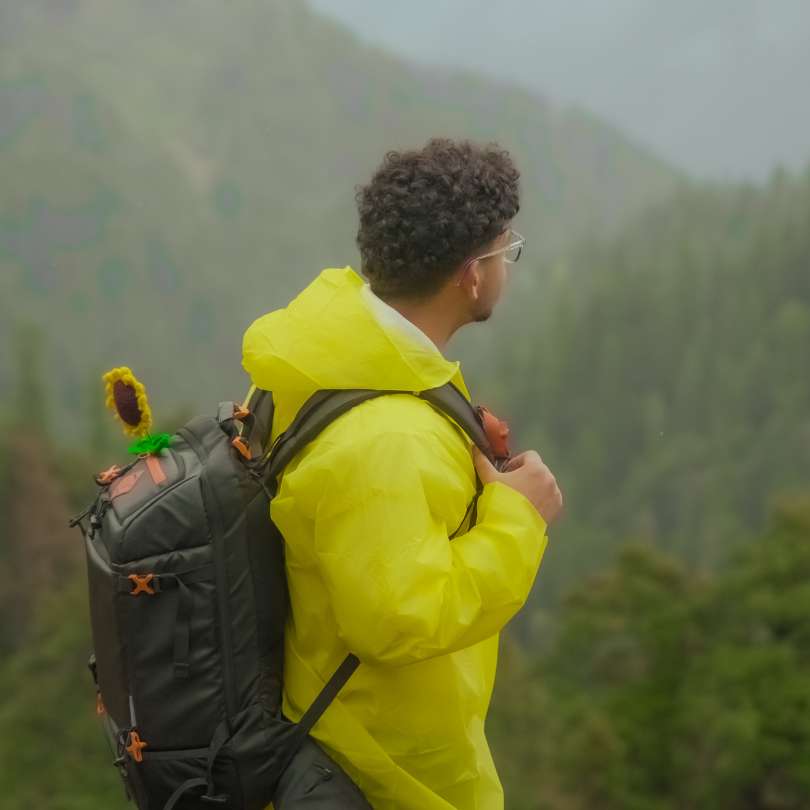
Raghupur Fort Trek
From Jalori Pass, 3 km trek each way
A short steep day hike from Jalori Pass to a meadow ridge with old fort walls and a wide panorama.
Our packages with Gushaini
Curated trips that include a visit to Gushaini.
 5D/4N
5D/4NWeekend Jibhi & Tirthan Valley Riverside Escape
1D Delhi •2D Jibhi / Tirthan Valley+1
₹12,900₹19,999SAVE INR 7,099/ person Group Tour5D/4N
Best Jibhi Tirthan Valley & Jalori Pass Weekend Tour From Delhi
1D Delhi •2D Tirthan Valley+1
₹5,999₹6,599SAVE INR 600/ person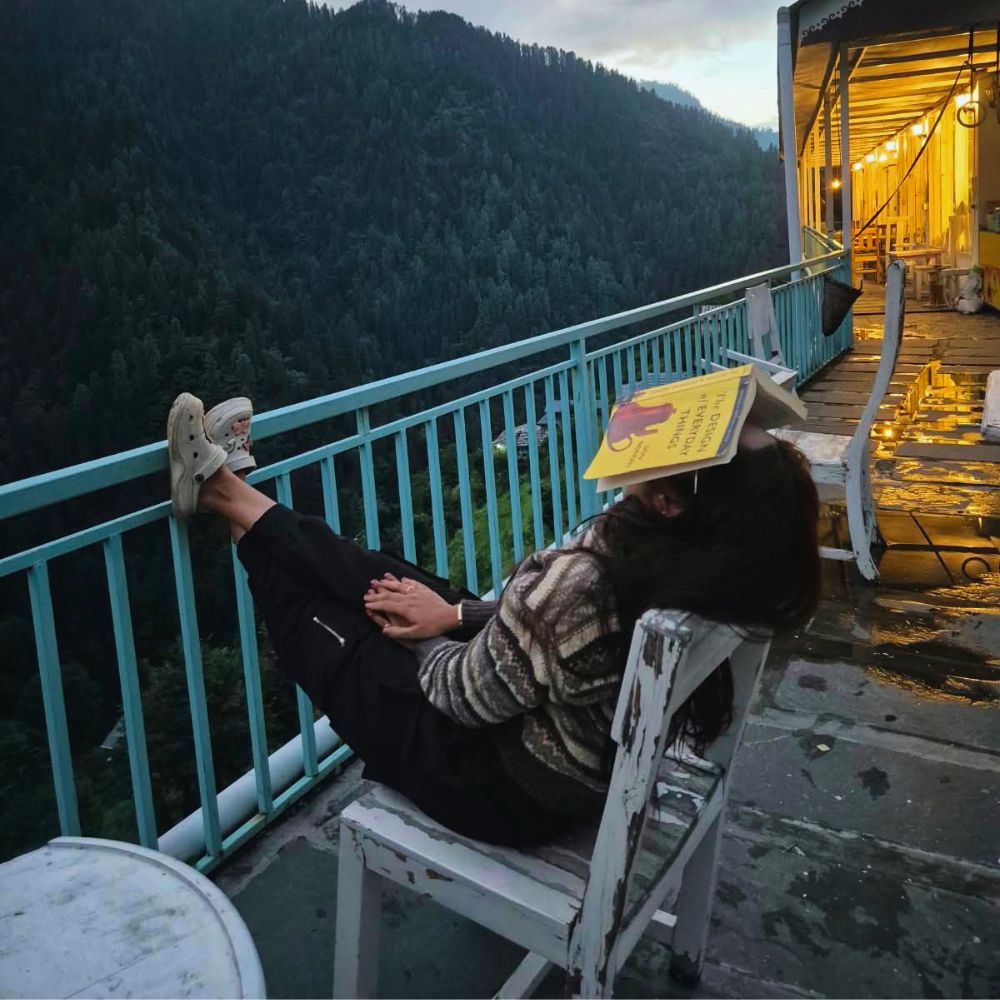 6D/5N
6D/5NBest Jibhi Tirthan Valley & Shangarh Meadows Trip
1D Delhi •2D Tirthan Valley+2
₹15,999₹19,999SAVE INR 4,000/ person
Frequently Asked Questions
Where is Gushaini?
Gushaini is a small village in Banjar tehsil of Kullu district, Himachal Pradesh. It sits at around 1,500 metres on the Tirthan river, with the Falachan nala joining just upstream, roughly 10 km from Banjar town and about 30 km from the Aut tunnel on the Manali highway. It is the last real village on the Tirthan road before the Great Himalayan National Park boundary.
What is Gushaini famous for?
Three things. It is the road end and the most convenient base for a Great Himalayan National Park visit from the Tirthan side, with the Ropa park gate about 3 to 4 km past the village on a flat forest walk. It is one of the better spots on the Tirthan for natural rainbow trout fishing, in season. And it is the most popular riverside homestay belt in the Tirthan Valley, with most stays sitting directly on the river bank.
How do I reach Gushaini from Delhi?
Take an overnight Volvo from Delhi to Aut on the Manali highway, around 12 to 14 hours, arriving between 5 and 7 AM. Pre book a taxi from Aut to Gushaini, roughly 30 km and 1 to 1.5 hours, around 1,500 to 2,500 rupees. Self drive is the same total time with stops. By public transport, take a local bus from Aut to Banjar, then a Banjar to Gushaini bus or shared jeep, the last Banjar bus generally leaves around 5 PM (confirm locally).
What is the altitude of Gushaini?
Around 1,500 metres at the river. Different sources quote figures between about 1,460 and 1,530 metres, so treat the number as a close approximation. The altitude is low enough that acclimatisation is not a concern. If you walk into the GHNP buffer or drive up to Jalori Pass (around 3,100 m), altitude matters more, but not at the village itself.
How many days do I need at Gushaini?
Two nights minimum, three is the sweet spot. One night is rushed because the drive in and out eats most of each travel day. Three nights lets you walk to the GHNP gate on one day, do Chhoie Waterfall or a fishing morning on another, and keep one full day by the river with no plan. Longer than four nights starts to drag unless you are working remotely or planning a multi day trek inside the park.
When is the best time to visit Gushaini?
March to early June and September to early November. Spring brings clear water, orchard blossom, and the fishing season opening. Autumn brings the sharpest air of the year and the apple harvest. Skip July and August, monsoon brings landslides on the approach road and the river runs muddy. Winter is quiet and open at the river but the higher trails are snowed in.
Where should I stay in Gushaini?
Riverside homestays in the main village are the standard choice, with rates broadly 2,500 to 5,000 rupees per night for two with meals included. A few well known heritage properties need booking three to four weeks ahead in peak May, June, and October. Read recent guest reviews from the last six months before booking, quality shifts faster than any web page can keep up with. Confirm parking, steps down to the river, and whether meals are included at the time of booking.
Can I go inside the Great Himalayan National Park from Gushaini?
You can walk to the GHNP gate at Ropa, about 3 to 4 km past the village on a flat forest track, and a short way into the immediate buffer without a permit. Going past the Rolla camping point and into the park core zone needs a permit issued at the Sai Ropa Range Office (or the Shamshi HQ) and a registered guide. Multi day treks like Rolla and Shilt or the longer Tirath route need full camping gear, porters, and a licensed operator.
Is trout fishing available at Gushaini and when?
Yes. The Tirthan holds naturally breeding rainbow trout and the stretch below Gushaini is one of the better beats. You need a permit from the Himachal Pradesh Fisheries Department (arranged at Banjar or through your homestay) and most of the upper river is catch and release only. The fishing season broadly covers spring and autumn, with the river closed for breeding through peak summer and winter. Dates shift year to year, reconfirm with your homestay close to travel.
Is Gushaini good for families with kids?
Generally yes. The river is a permanent activity, homestays have space, and short walks to the GHNP gate or Chhoie Waterfall work for most kids. Kids 6 and above do well, under that the slow pace and limited entertainment can test patience. Pack books and games. Be cautious around the river, the Tirthan looks calm but runs strong, do not let small kids wade without close supervision.
Is there mobile network and ATM in Gushaini?
Mobile network is patchy, BSNL is the most reliable, Jio catches a signal in parts of the village, Airtel is weak. Assume near zero signal past the village. There is no reliable ATM in Gushaini, the nearest machines are at Banjar (often out of cash) and Aut. Withdraw enough cash for the full stay on your way in.
How is Gushaini different from Jibhi?
Genuinely different. Gushaini is a small riverside village at the GHNP road end, with homestays, a tiny market, and almost no cafe or evening scene. Jibhi is a more developed village on a parallel road towards Jalori Pass, with more cafes, more travellers, and a livelier feel. Pick Gushaini for the river and a slower pace, Jibhi for variety and options, or split a longer trip between both. They are about 30 minutes apart by road.
Does Gushaini get snow in winter?
Not usually heavy snow at the river, which sits at around 1,500 m. A dusting once or twice through winter is more typical. The slopes above the village and the road up to Jalori Pass do get snowed in from December to February. If you specifically want snow, base higher at Shoja or plan a February trip with a guide who knows current road conditions.
Are there cafes or restaurants in Gushaini?
Very few. Two or three small dhabas and riverside cafes operate in the village, hours are inconsistent and menus are short. The best food is at your homestay, where dinner is whatever the host family has cooked. Tell them at check in what you cannot eat and let them suggest the rest. If you specifically want cafe variety, day trip to Jibhi (about 30 to 40 minutes away).
Related guides
Posts about Jibhi
- Jibhi in December 2026: Snowfall, Weather, Road Status and Winter Guide
- Jibhi in October 2026: Weather, Road Conditions, Places and Trip Plan
- Jibhi in August 2026: Weather, Road Safety, Itinerary and Honest Advice
- Jibhi for Honeymoon in 2026: Why Couples Choose It Over Manali
- Best Things to Do in Jibhi for Couples in 2026: Romantic Places, Walks and Hidden Gems
- Jibhi or Kasol — Which Is Better? An Honest, No-Fluff Comparison