
Serolsar Lake
A small sacred alpine lake above Jalori Pass at around 3,100 metres, reached by an easy 5 km walk through oak and deodar forest
- Alpine lake
- ~3,100 m
- Jalori Pass · 5 km trek
- Jibhi · 12 km
- Apr to Jun, Sep to Nov
What makes it special
Serolsar is a small round lake sitting at roughly 3,100 metres in the Seraj Valley of Kullu district, reached by a 5 km walk from Jalori Pass through oak and deodar forest. A simple Budhi Nagin temple stands on its bank, and local belief has it that a small black bird keeps the water clean by picking out any fallen leaf. It is the most popular day walk from the Jibhi and Shoja area, and the reason most travellers drive up to the pass in the first place.
The trail is gentler than it looks on a map. Jalori Pass and the lake sit at nearly the same altitude, so the walk is mostly flat with small ups and downs rather than a serious climb. About 2 hours each way at a relaxed pace, less if you push. Shaded almost the whole way. Clear, marked path.
Here is what most pages skip. There are three main day walks from Jalori Pass, and they are not interchangeable. Raghupur Fort is shorter and steeper, ending at a meadow with ruined walls and a wide panorama. The 360 Viewpoint is the steepest short climb and has the best single view. Serolsar is the longest but easiest, and the only one that ends at a real destination, a small lake with dhabas serving rajma chawal. Pick by mood, not by default.
Quick answers
- Is Serolsar Lake worth the trek?
- Yes if you are already in Jibhi or Shoja and the Jalori Pass road is open. The walk itself is the point more than the lake. Gentle forest trail, shaded, beginner friendly, ending at a calm alpine lake and a small temple. Skip it during peak monsoon when the trail is slippery and leech prone.
- How long does the trek take?
- Plan 5 to 6 hours end to end from Jalori Pass. Roughly 2 hours of walking each way, plus an hour at the lake for tea and a loop around the water. Start from the pass by 10 or 11 AM at the latest so you are off the trail before afternoon mist rolls in.
- Can you stay or camp at the lake?
- No stays at the lake itself, and camping is not permitted right at the lakeshore for religious reasons. About 30 minutes further up there is a clearing where camping is allowed, but most travellers do it as a day trek and sleep in Jibhi or Shoja. A few dhabas near the lake serve food in season but not beds.
Quick facts
Everything you need to know at a glance.
At a glance
- Altitude
- ~3,100 m / ~10,170 ft
- Location
- Seraj Valley, Kullu district, Himachal Pradesh
- Nearest town
- Jibhi, 12 km drive to Jalori Pass + 5 km trek
- Open season
- Generally Apr to Jun and Sep to early Nov
- Time needed
- 5 to 6 hours for the round trip from Jalori Pass
- Difficulty
- Easy to moderate. 5 km each way on a mostly gentle, shaded trail.
- Entry fee
- None. No permits required for Indian trekkers.
- Best start time
- From Jalori Pass by 10 AM at the latest
On the ground
- Mobile network
- Patchy. BSNL and Jio sometimes work at Jalori Pass and near the lake, nothing reliable in between. Tell someone your plan before you head up.
- ATMs
- None on the trek or at the pass. Nearest ATMs are at Banjar and Aut. Withdraw cash before you head into Jibhi.
- Fuel
- No fuel at the pass, Jibhi, or Shoja. Last reliable pump is at Banjar. Tank up on the way in.
- Food
- Dhabas at Jalori Pass serve rajma chawal, Maggi, omelettes and chai year round in season. A couple of stalls at the lake operate from roughly May to October.
- Parking
- Limited parking at Jalori Pass where the trek starts. Arrive by 10 AM in peak season to get a spot.
- Permits
- None required. Camping is not permitted at the lake itself for religious reasons.
- Drones
- Not welcome. The site is sacred and the forest is a sensitive habitat. Avoid.
- Walking
- Gentle. 5 km each way with small ups and downs. Good trekking or running shoes recommended because of pine needles and small root sections.
- Guides
- Not needed, the trail is clear and well used. Homestays in Jibhi and Shoja can arrange a local guide if you want one.
Seasonal weather
- April to early June14°3°Late spring
- July to August17°9°Summer monsoon
- September to early November13°0°Autumn
- Late November to March-2°-12°Winter
Suitable for
- Couples — suitable
- Families — suitable
- Seniors — with some care
- Solo — suitable
- First-timers — suitable
- Pet-friendly — suitable
How to reach Serolsar Lake
3 approach routes, with seasonal access.
From Jibhi
Jalori Pass road is generally open Apr to Nov. Closes with heavy snow, usually Dec to March.- Distance
- ~12 km drive to Jalori Pass, then 5 km trek each way
- Time
- ~45 min drive, 5 to 6 hours total trek
- Road
- Narrow tarred road from Jibhi climbing steadily to Jalori Pass. Tight hairpins and a few blind corners, not great for large vehicles. Taxis and small SUVs manage fine.
- Last fuel
- Tank up in Aut or Banjar on the way into the valley. No fuel at Jibhi or beyond.
The standard base. Most Jibhi homestays either arrange a shared taxi to Jalori Pass early morning, or help you flag the local bus that runs Jibhi to Banjar via the pass in season. Leave Jibhi by 8 or 9 AM, reach Jalori by 9 or 10 AM, start the trek, and be back at your homestay by late afternoon. Shared taxis are cheaper per head, private hires are faster and more flexible.
From Shoja
Same as Jibhi. Jalori Pass road closes with heavy snow, typically Dec to March.- Distance
- ~5 km drive to Jalori Pass, then 5 km trek each way
- Time
- ~20 min drive, 5 to 6 hours total trek
- Road
- Short, steep tarred road from Shoja to Jalori Pass. The closest base to the trailhead.
- Last fuel
- Tank up in Aut or Banjar on the way in. No fuel beyond.
If you want to be close to the trailhead without fuss, base at Shoja. The pass is visible from parts of the village. Most Shoja homestays arrange a local taxi for the morning run, or you can walk up from the village itself if you want to add another hour of climbing before the Serolsar trail.
From Delhi or Chandigarh
The drive into Jibhi and Banjar is open year round. The Jalori Pass road above Jibhi closes in winter.- Distance
- ~500 km from Delhi to Jibhi, ~270 km from Chandigarh
- Time
- 12 to 14 hours from Delhi, 8 to 9 hours from Chandigarh
- Road
- NH 3 from Chandigarh towards Manali up to Aut, then a right turn into the Tirthan and Banjar valley on a narrower road to Jibhi. Road quality Aut to Jibhi is generally decent but slow in monsoon.
- Last fuel
- Chandigarh, Swarghat, Bilaspur, Sundernagar, Aut, Banjar. Last reliable pump is at Banjar.
Most travellers do this as an overnight drive or a Volvo to Aut and a taxi onwards. Aut is the key turnoff, about 450 km from Delhi. Do not miss the left turn just before the Aut tunnel, it is easy to sail past at night. From Aut, Jibhi is another 30 km of steady climbing.
Best time to visit
Season by season, so you can plan around the weather rather than hope.
- Recommended
Late spring
April to early June
The best window most years, once the pass road fully opens
- Day temperature
- 10 to 15 C
- Night temperature
- 2 to 6 C
- Trail
- Dry and clear, last snow patches only in early April
- Crowds
- Moderate, climbing toward June
Usually the cleanest window. The Jalori Pass road clears some time in April, though some years it stays patchy till early May. Days are crisp, the forest smells like resin, and the lake water is cold and clear. Weekends in May and June get busy, weekdays stay calm. Carry a warm layer, mornings at the pass still drop close to zero.
Monsoon
July to August
Avoid unless you actively enjoy forest in rain
- Day temperature
- 14 to 18 C
- Night temperature
- 9 to 12 C
- Trail
- Slippery, muddy, leeches common
- Crowds
- Low
Most travellers skip this window. The trail is pretty in rain but leeches are real, the forest floor turns slick, and the pass road sees occasional landslide closures. If you do come in August, carry gaiters, a proper rain shell, and salt for leeches. Do not attempt in a thunderstorm, the forest has lightning risk.
- Recommended
Autumn
September to early November
The quiet sweet spot, gold in the oak leaves
- Day temperature
- 10 to 15 C
- Night temperature
- 0 to 5 C
- Trail
- Dry, bright, clear skies
- Crowds
- Moderate, drops after mid October
If you can time it, late September to mid October is the best of the year. Monsoon clouds clear, the oak forest starts to turn, and the sky goes sharp blue over the Pir Panjal. Nights get cold fast by late October. First snow at the pass usually falls some time in the first half of November, and the road closes soon after.
- Closed
Winter
Mid November to March
Pass road closes, the trek becomes a serious snow walk
- Day temperature
- -5 to 0 C
- Night temperature
- -12 to -20 C
- Trail
- Snow bound, can be waist deep in Jan and Feb
- Crowds
- Almost none, a few guided snow treks
Jalori Pass road generally shuts some time in mid to late November after the first heavy snowfall, and does not reopen till some time in April. Local operators from Jibhi and Shoja run snow treks in December, January and February by walking up to the pass from lower villages, but this needs proper boots, gaiters, poles, and a guide. Not something to wing on your own.
Things to see & do
8 things worth your time at Serolsar Lake.
The main walk to the lake
~2 hours one wayThe whole point. Start from the tea stalls at Jalori Pass, follow the clearly marked trail opposite the Mata Jalori temple, and you are inside the forest within a minute. Mostly flat, with one or two short climbs, one of them right before the lake. The path is wide enough that two people can walk side by side.
Parikrama and the Budhi Nagin temple
20 to 30 minutesA narrow fenced path runs around the lake. Walking it clockwise is the local custom and part of the pilgrimage. The temple on the bank is simple Himachali stone and wood. Remove shoes and caps before going up to the shrine steps, and do not touch the water or throw anything in. A small ghee offering is traditional if you want to participate.
Lunch at the lake dhabas
30 to 45 minutesIn season, usually May to October, two small dhabas operate near the lake. Rajma chawal, Maggi, omelettes and chai are the reliable orders. Prices are marked up for how far supplies have to be carried, which is fair. Carry your own trash back out, waste management up here is basic.
The 360 Viewpoint detour
~1 hour extraAbout 500 metres into the trek, a steep spur trail climbs off to the right and tops out at the 360 Viewpoint after roughly 300 metres of climbing. On a clear morning you get the Pir Panjal on one side and the Great Himalayan Range on the other. Do it on the way in, early, before clouds build. Thirty to forty minutes extra each way.
Bird watching in the forest
Through the walkThe forest is old oak and deodar, mixed with kharsu and fir higher up. Himalayan monal, cheer pheasant, and several thrushes are possible sightings if you walk quietly. Dawn is much better than midday. Carry small binoculars if you have them, the canopy is dense and most birds are heard before they are seen.
Raghupur Fort as a combo option
2 to 3 hours, separate from SerolsarThe other classic day walk from Jalori Pass, about 3 km each way on the opposite side. Shorter and steeper than Serolsar, ending in a grassy plateau with the ruined walls of an old Thakur fort and a small temple. Doing both in one day from the pass is ambitious, most travellers pick one.
Snow walk in late winter
Half day by arrangementBetween mid November and late March, the standard trek is off the table because the pass road is shut by snow. A few local operators from Jibhi and Shoja run guided snow treks by walking up from lower villages to the pass, and onwards to the lake if snow depth allows. Serious snow, serious cold, go with a guide and proper gear.
Sunrise photography at the lake
Half day with a very early startFor the best photo of the lake, sleep at Jibhi or Shoja, leave by 5 AM, reach Jalori Pass at first light and walk in. Morning mist lifts off the water by around 7 AM and the surface goes glassy before the day hikers arrive. Afternoon light is flatter and usually busier. Worth the early alarm.
Know before you visit Serolsar Lake
The practical bits, from people who have been.
What makes Serolsar differentThe easiest of the three Jalori Pass day walks, and the only one with a real destination.
Most travellers reach Jalori Pass and face a choice between three walks. Raghupur Fort climbs in about one and a half hours to a meadow with ruined walls and a wide panorama. The 360 Viewpoint is the steepest short climb and the best single sunrise spot. Serolsar is the longest but easiest, and the only one that ends at a real destination rather than a view.
If you are walking with kids, a first time trekker, or anyone who wants a shaded trail rather than an open climb, this is the pick. If you have only two hours at the pass and want a panorama, head to the 360 Viewpoint instead. If you want altitude and old stone, Raghupur Fort.
One small detail most pages skip. The lake is considered protected by Budhi Nagin, a serpent goddess in the Nag cult of Kullu. Locals believe a small black bird lives here whose job is to keep the water clean. Whether or not you find that charming, the water is in fact unusually clear, and the site is treated with quiet reverence. Do not wash, swim, or throw anything in.
Photography guideMorning mist at the lake, 360 Viewpoint for the big panoramas, no drones.
The lake photographs best in the first two hours after sunrise. Mist sits on the water in a soft layer, the forest reflections are glassy, and there is almost nobody around. By 11 AM, light goes flat and the day hikers have arrived. Stay overnight at Jibhi or Shoja and leave by 5 AM to catch this.
For the big mountain panoramas, take the detour to the 360 Viewpoint on the way in. On a clear October morning you see the Pir Panjal to the north and peaks near Kinnaur to the east. A 24 to 35 mm lens covers it. A polariser helps cut surface glare at the lake if you have one.
Photography rules around the temple are simple. Photograph the exterior freely, but ask before photographing pilgrims, and do not photograph inside the shrine. Drones are not welcome here for both wildlife and religious reasons. Avoid them.
Who should do this trek, and who should skipGood first trek for most. Skip in monsoon. Think twice in deep winter.
This is one of the better first Himalayan treks for adults and older kids. The trail is clear, the gradient is forgiving, and if you tire you can turn back at any point without feeling you wasted effort. Most reasonably active people manage it without training.
Families with kids: Usually fine for kids 7 and above. The walk is shaded, easy underfoot, and ends at a tangible lake which helps keep children motivated. Under 6 or 7, plan to carry them on parts of the return. Start from the pass by 10 AM at the latest and carry plenty of snacks and water.
Seniors: Doable if they can walk 10 km on gently undulating ground. The altitude at 3,100 metres is mild but noticeable if they have not been to the mountains recently. Go slow, rest often. If stairs at home already tire them, pick a shorter walk instead and enjoy the tea at the pass.
Pets: Dogs generally handle the trail fine. Keep them on leash near the lake because of pilgrims and wildlife. Confirm with your homestay that they will be welcome back after the walk.
First time trekkers: Yes. Arguably this is one of the best starter treks in Himachal. Easy enough to feel confident, long enough to feel you did something, shaded enough that weather is rarely punishing.
Planning your Serolsar trekOne day from Jalori Pass. Aim for Apr to Jun or Sep to early Nov. Start by 10 AM.
This is a day trek for most travellers. Morning start, back by afternoon, dinner in Jibhi or Shoja. Plan roughly 5 to 6 hours from Jalori Pass for the round trip including time at the lake.
The biggest planning decision is the season. April to June and September to early November are the clean windows. Monsoon turns the trail slippery and adds leeches. Winter closes the pass road for months. March is a gamble because the road may or may not be open depending on the year, please reconfirm with your homestay the day before.
The second decision is where to base. Jibhi has more homestays, cafes and life. Shoja is closer to the pass, quieter, colder at night, fewer food options. Either works. Pick Shoja if you want early starts and silence. Pick Jibhi if you want a village with a bit of buzz.
One quiet recheck reminder. The Jalori Pass road status shifts after heavy rain or the first snow of winter. Ask your homestay the evening before you plan to drive up.
Where to stay and eatBase at Jibhi or Shoja. No stays at the lake or the pass.
There is no accommodation at the lake or at the pass. A couple of dhabas at the pass serve food year round in season, and a couple more at the lake operate from roughly May to October, but nothing offers a bed. Plan to sleep at Jibhi, Shoja, or another village in the Banjar area, and do the trek as a day trip.
Jibhi has the widest range of stays, from simple homestays around 1,500 a night to cabins and boutique properties from 4,000 upwards. A good cafe scene with everything from Israeli breakfasts to Himachali thali. Most social of the three bases.
Shoja is smaller, quieter, and sits about 5 km below the pass. Fewer stays but at least a handful of homestays and a couple of slightly upscale cabins. Food is mostly what your stay cooks. Good for people who want silence after dark.
On the trek itself, the rajma chawal at the Jalori Pass dhabas is genuinely good and reasonably priced given how remote it is. The stalls at the lake are more basic and seasonal. Carry a water bottle and refill at your stay, waste management up here is basic and plastic bottles are best avoided.
Safety, weather and gearEasy trek, but weather swings fast at 3,100 metres. Carry layers and a rain shell.
3,100 metres is mild by Himalayan standards but still real altitude. Mild headache or breathlessness on the walk up is normal, especially if you came from Delhi in the last 24 hours. Drink water, walk slowly, eat something warm at the pass before you set off. Serious altitude sickness is rare here but not impossible.
Weather swings fast. Mornings are usually clear, afternoons often cloud up and turn misty, and evenings at the pass can drop close to zero even in May. Carry a rain shell, a warm layer, and a cap, even on a bright morning. One extra minute packing saves an hour of discomfort.
The trail itself is safe. Clear, marked, well trodden. The two places where people turn ankles are the steep spur up to the 360 Viewpoint and the short climb just before the lake. Both have loose pine needles and small stones. Trekking shoes with grip beat sneakers, and a lightweight pole helps on the descent.
There is no reliable mobile signal once you leave the pass. Nearest proper medical help is at Banjar, about an hour from Jalori Pass by road. Tell your homestay your plan and rough return time before you leave.
Local culture and the legend of Budhi NaginA sacred site in the Nag cult. Respect the small rules.
The lake is a pilgrimage site for Budhi Nagin, a serpent goddess in the Nag cult of Kullu. Locals believe she lives in a golden palace under the water and that offerings of ghee reach her through the lake. During Navratri, pilgrims from nearby villages walk up in groups and the small temple gets busy for a few days.
The rules are simple. Walk the lake clockwise if you do the parikrama. Do not touch the water. Do not wash, rinse, bathe, or throw anything in. Do not light fires near the water. Remove shoes and caps before going up to the temple steps. Photograph the exterior freely, not the shrine interior.
The other small thing to know is the black bird legend. Locals speak of a small dark bird that is said to pick any fallen leaf out of the lake. Whether or not you believe the story, the lake really is unusually clean, and part of keeping it that way is not adding to the load. Carry your trash back down to the pass.
The local language is a Himachali dialect of Pahari. Hindi works fine. A warm namaste opens doors, nothing fancier required.
Local tips most travellers missStart time, which shoe to wear, and where to eat after.
Start from Jalori Pass by 10 AM at the latest. The forest is nicer in the morning, you avoid the afternoon mist at the lake, and you have a buffer if weather turns. Midday arrivals at the pass are a mild mistake, you are rushed the whole day.
Do the 360 Viewpoint detour on the way in, not the way out. Legs are fresh, light is better, and on the way back you will not have the patience. Thirty to forty minutes extra, easily worth it on a clear morning.
Eat the rajma chawal at the Jalori Pass dhabas on the way back. After the trek, at 3,100 metres, it hits differently. Twenty minutes well spent before getting into the taxi back down.
On the drive back, stop at Jibhi Waterfall if there is daylight. A ten minute walk from the road, genuinely worth the short detour. Also carry small cash. Dhabas and local taxis prefer 100s and 200s, and change for 500s is slow in the mornings.
Nearby attractions
Other places worth the detour.
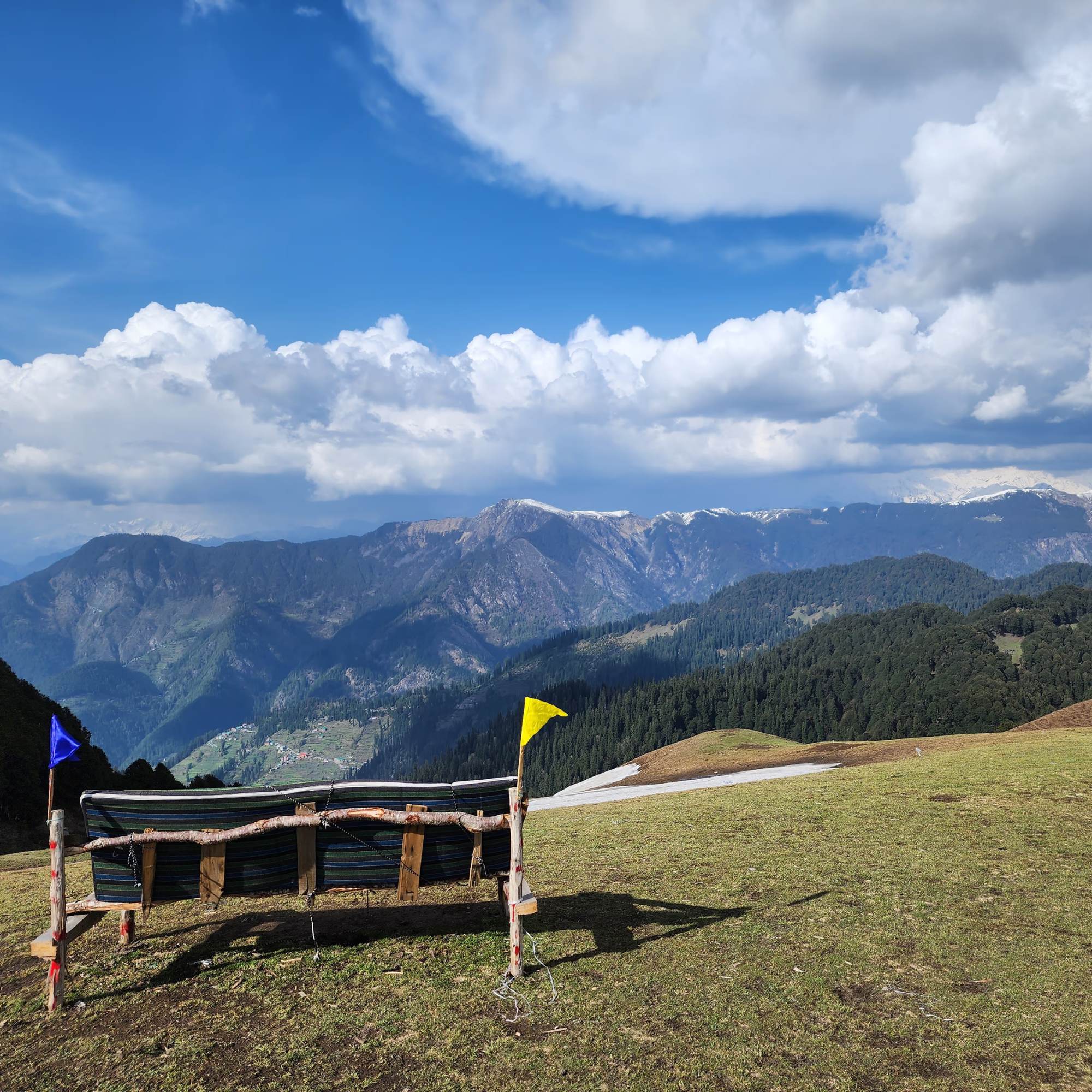
360 Viewpoint
~500 m detour from the Serolsar trail
The highest point on the Serolsar trail itself, a short steep spur off the main path with views of the Pir Panjal and the Great Himalayan Range.
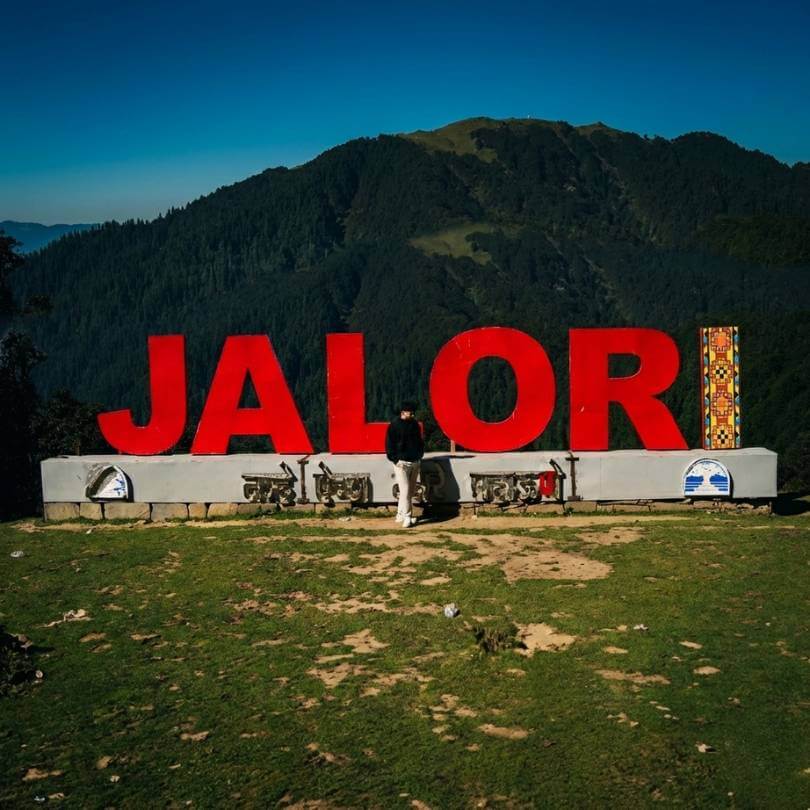
Jalori Pass
Trek starts here
The trailhead itself. The Serolsar trek begins at the cluster of tea stalls and the Mata Jalori temple at the top of the pass, around 3,120 metres.
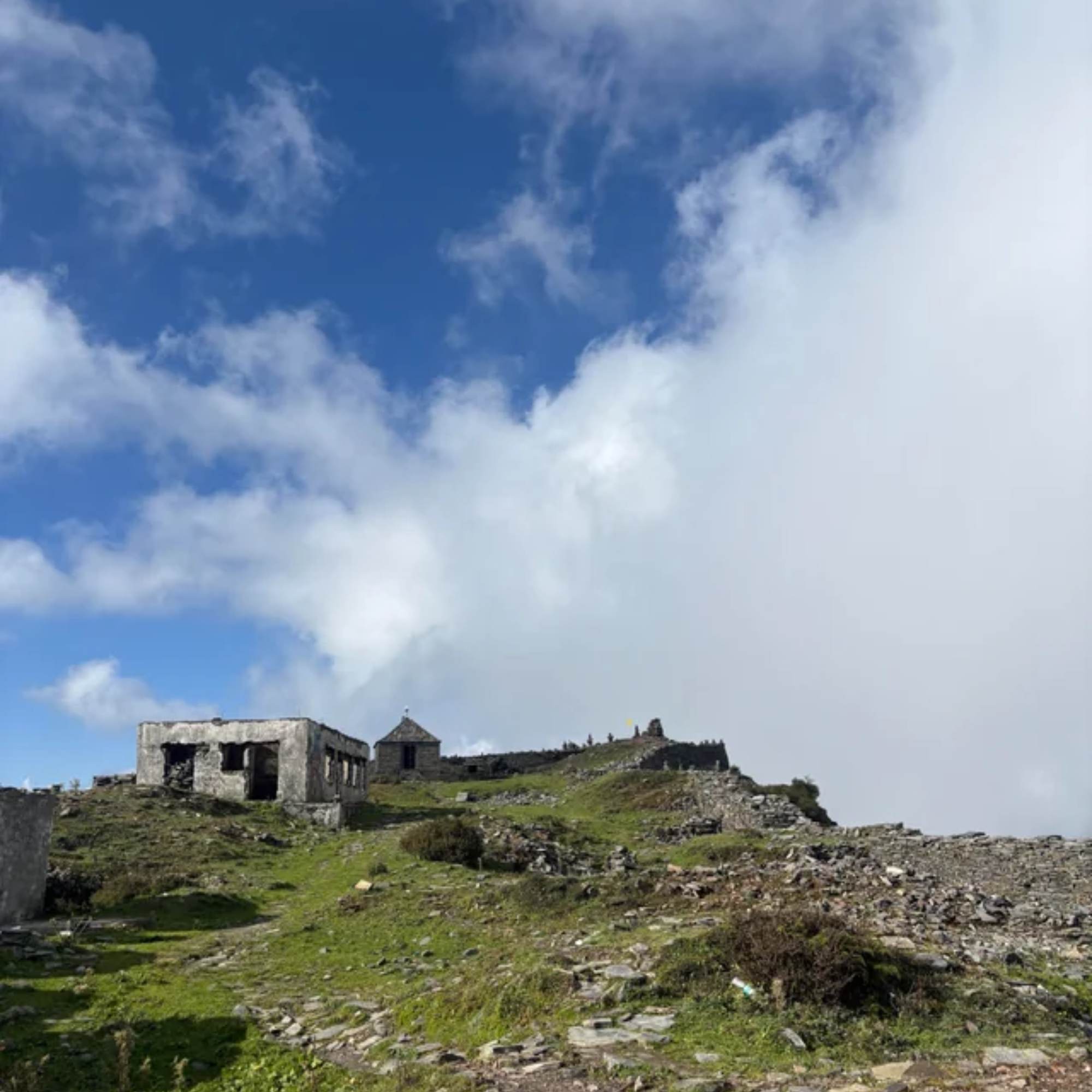
Raghupur Fort
~3 km trek from Jalori Pass (other direction)
Ruined hilltop fort in a grassy plateau, the other popular day walk from Jalori Pass. Shorter and steeper than Serolsar, with a wider panorama.
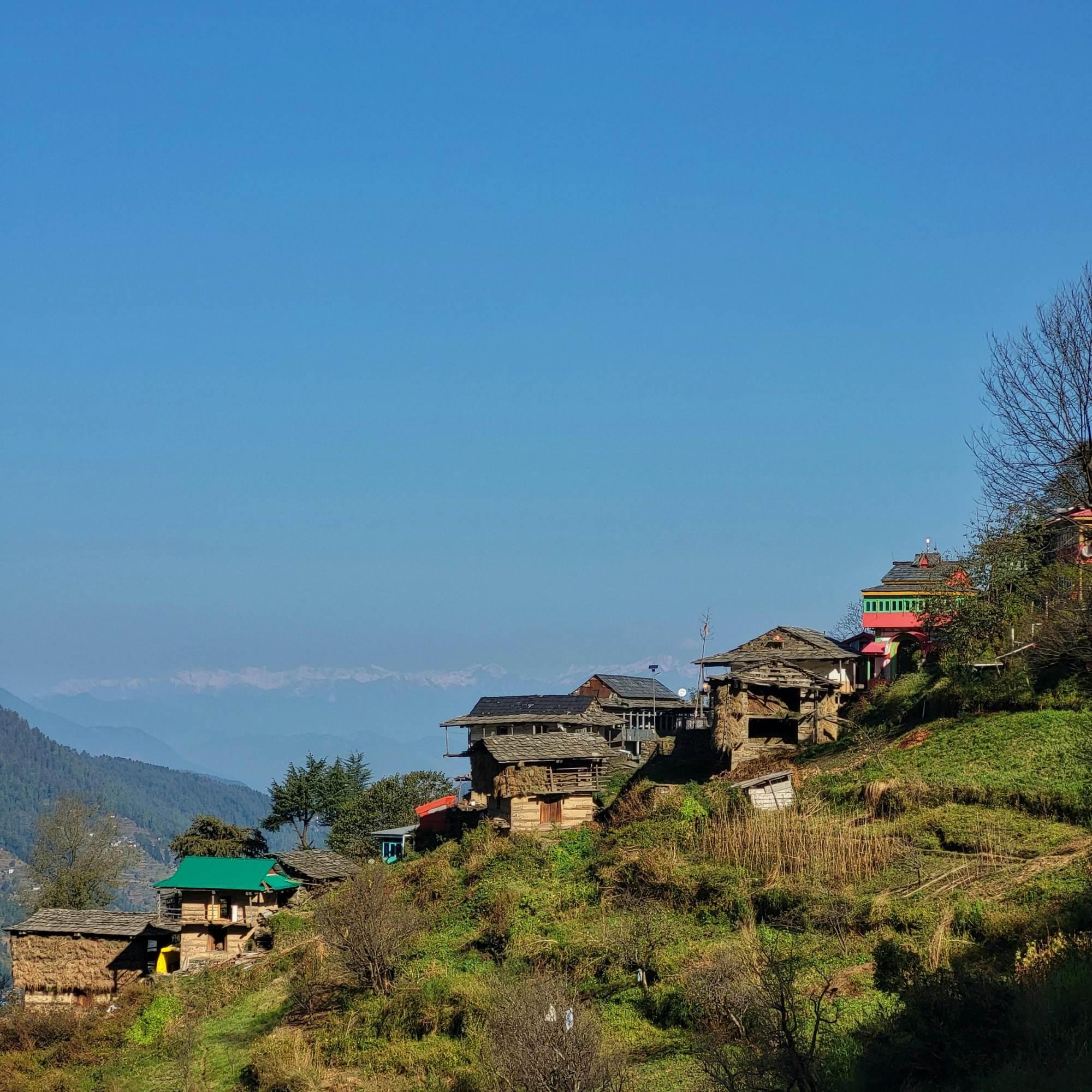
Shoja Village
~5 km · 20 min drive to the trailhead
Quieter, higher base about 5 km below Jalori Pass. Fewer stays but much closer to the trailhead.
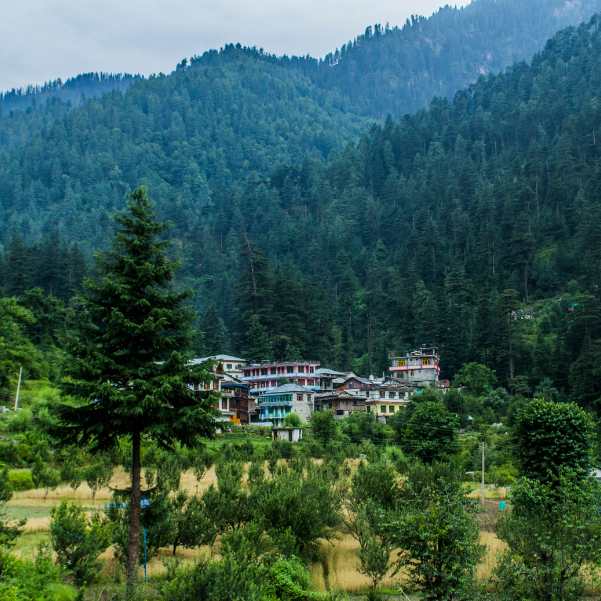
Jibhi Village
~12 km · 45 min drive to the trailhead
The most common base for this trek. Homestays, cafes, Jibhi Waterfall, and a relaxed mountain village feel.
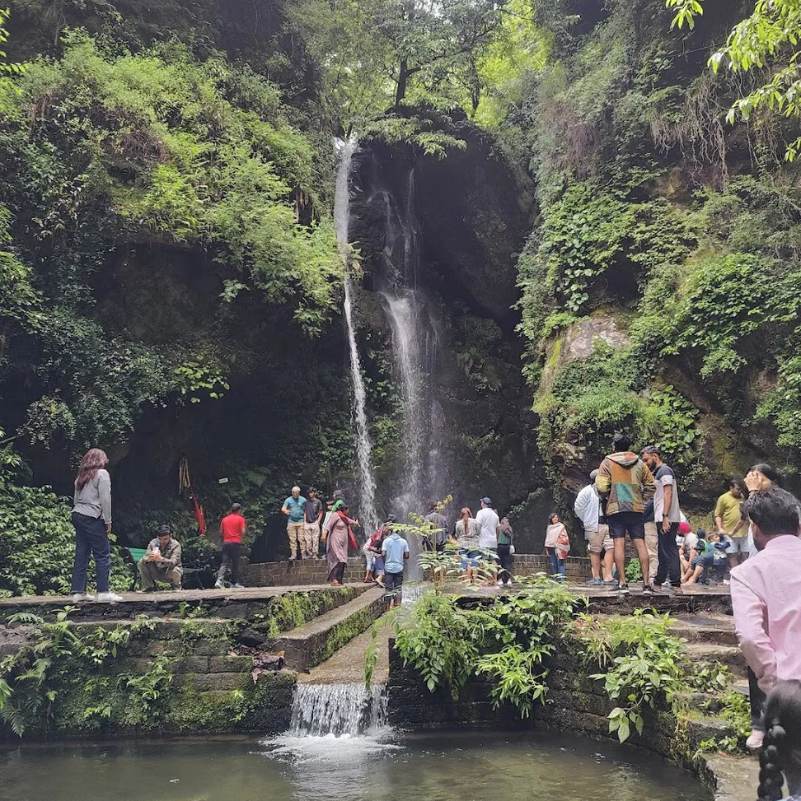
Jibhi Waterfall
~12 km from Jalori Pass
A short waterfall a few minutes walk from the Jibhi bazaar. Easy family stop on the drive back from Jalori Pass.
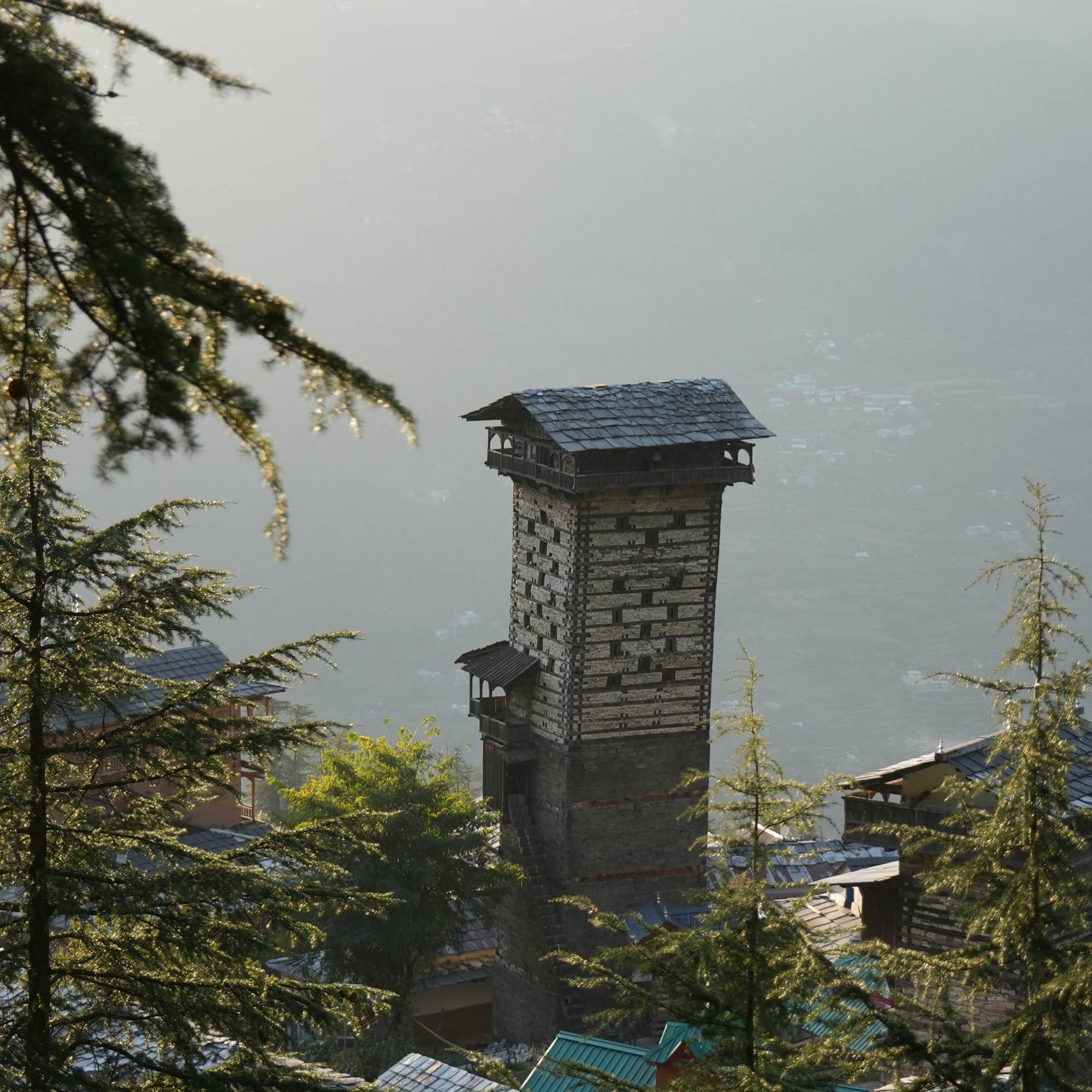
Chehni Kothi
~17 km from Jibhi
An unusual multi storey traditional tower, roughly 400 years old, in a village off the Banjar road.
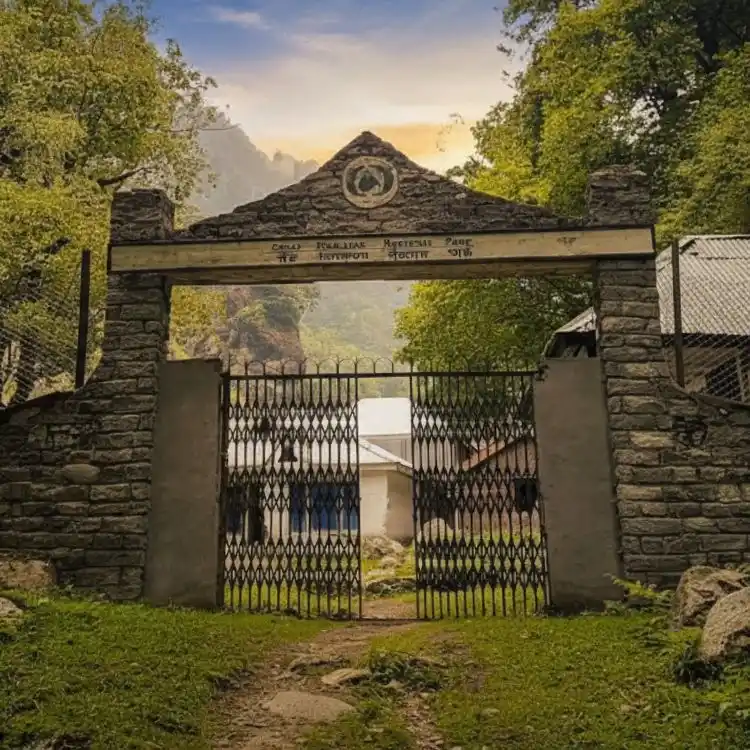
Great Himalayan National Park
Tirthan entry ~25 km from Jibhi
UNESCO World Heritage site covering the Tirthan, Sainj, and Jiwa river catchments. Separate entry permits needed.
Our packages with Serolsar Lake
Curated trips that include a visit to Serolsar Lake.
 Group Tour5D/4N
Best Jibhi Tirthan Valley & Jalori Pass Weekend Tour From Delhi
1D Delhi •2D Tirthan Valley+1
₹5,999₹6,599SAVE INR 600/ person 5D/4N
5D/4NJibhi Tirthan Valley & Jalori Pass Scenic Weekend Tour
1D Delhi•2D Jibhi+1
₹11,999₹15,999SAVE INR 4,000/ person 6D/5N
6D/5NBest Jibhi Tirthan Valley & Shangarh Meadows Trip
1D Delhi •2D Tirthan Valley+2
₹15,999₹19,999SAVE INR 4,000/ person
Frequently Asked Questions
How long is the Serolsar Lake trek?
About 5 km each way from Jalori Pass, roughly 10 km round trip. Plan 5 to 6 hours end to end from the pass, including an hour at the lake.
Is the Serolsar Lake trek difficult?
No. The trail is clearly marked and mostly gentle, with small ups and downs rather than a real climb. Classed as easy to moderate. Most reasonably active walkers manage it without training.
Where does the Serolsar trek start?
At Jalori Pass, near the Mata Jalori temple and the cluster of tea stalls. The trail begins opposite the temple, between a small tea shop and the road, with a signboard pointing to the lake.
What is the altitude of Serolsar Lake?
Roughly 3,100 metres, about 10,170 feet. Jalori Pass, where the trek starts, is at a similar altitude, which is why the walk feels mostly flat rather than a climb.
When is the best time to do the Serolsar Lake trek?
April to June and September to early November are the clean windows. Monsoon months are slippery and leech prone. Winter closes the Jalori Pass road and turns the trek into a serious snow walk.
Is Jalori Pass road open in winter?
Generally no. The road usually closes some time in mid to late November after the first heavy snow and reopens some time in April. March is unpredictable, some years work and others do not. Always confirm with your homestay the day before.
Can I do the Serolsar Lake trek with kids?
Yes, from roughly 7 years and up. The trail is shaded and easy, and the lake gives kids a goal to walk towards. Start early, carry snacks and water, and be ready to carry very young children on parts of the return.
Do I need a permit or guide for the Serolsar trek?
No permit is required. A guide is not necessary either, the trail is clear and well used. Local operators in Jibhi and Shoja offer guided day hikes if you prefer the company or want to spot birds.
Can I camp at Serolsar Lake?
Not at the lake itself for religious reasons. Camping is permitted in a clearing about 30 minutes further up the trail. Most travellers do the trek as a day trip and sleep at Jibhi or Shoja.
What should I carry on the Serolsar Lake trek?
Trekking or running shoes with grip, a rain shell, one warm layer, a cap, 1 to 1.5 litres of water per person, snacks, sunscreen, and a small first aid kit. A trekking pole is useful on the descent. Binoculars if you care about birds.
Is there food and water at the lake?
In season, usually May to October, a couple of dhabas at the lake serve rajma chawal, Maggi, and chai. Off season they shut down. Carry enough water from Jibhi or Shoja, the streams on the trail are not safe to drink untreated.
Is there mobile network on the Serolsar trek?
Patchy. BSNL and Jio sometimes catch a signal at Jalori Pass and near the lake, nothing reliable between. Tell someone at home or at your homestay your rough plan before you head up, and stick to it.
Related guides
Posts about Jibhi
- Jibhi in December 2026: Snowfall, Weather, Road Status and Winter Guide
- Jibhi in October 2026: Weather, Road Conditions, Places and Trip Plan
- Jibhi in August 2026: Weather, Road Safety, Itinerary and Honest Advice
- Jibhi for Honeymoon in 2026: Why Couples Choose It Over Manali
- Best Things to Do in Jibhi for Couples in 2026: Romantic Places, Walks and Hidden Gems
- Jibhi or Kasol — Which Is Better? An Honest, No-Fluff Comparison