
Nubra Valley
A broad river valley north of Leh at around 3,000 to 3,150 m — lower and milder than Leh itself. Reached across Khardung La (one of the highest motorable passes, ~5,359 m / 17,582 ft). Two cultural anchors: the Bactrian camels at Hunder and the 32 m Maitreya Buddha at Diskit. Two to three nights minimum.
- Altitude ~3,000 to 3,150 m / ~9,850 to 10,330 ft
- ~120 km from Leh via Khardung La
- Environment Fee or PAP required
- Best window May to September
- Plan 2 to 3 nights, 4 if including Turtuk
What makes it special
Nubra is where Ladakh finally exhales. After the thin air of Leh at 3,500 m, after the white-knuckle switchbacks over Khardung La, the road drops into a wide river valley and the pressure in your chest loosens. You notice it in the first breath. The valley floor sits between 3,000 and 3,150 m — lower than Leh — and your body responds to that difference faster than you would expect.
This is not a detail buried in the fine print. It is the single most useful thing about Nubra on a Ladakh itinerary. If you have just spent two nights adjusting to Leh altitude and still feel slightly off, a night down here at Hunder or Diskit is the strategic move. You sleep lower, you breathe easier, you wake up with more energy for whatever comes next — usually Pangong at 4,350 m. We build most of our itineraries with Nubra before Pangong for exactly this reason.
Now, the drive in. Khardung La sits at around 5,359 m (17,582 ft) by modern GPS surveys — one of the highest motorable passes in the world, though not the highest. The signboard at the top still reads 5,602 m and claims the world record, but Umling La in eastern Ladakh at roughly 5,882 m holds that title, and several other passes sit higher too. None of that changes the fact that crossing at 5,359 m is hard on your body. Keep the stop at the signboard under fifteen minutes. Drink tea, take one photograph, get back in the vehicle and descend. The valley waiting below is the reason you came, not the pass itself.
Two things anchor Nubra culturally, and they are different enough to feel like they belong in separate countries.
The first is the Hunder dunes. A compact belt of cold desert sand at around 3,050 m, stretching about 7 km between Hunder and Diskit villages — white sand against dark grey mountains, with the Karakoram snowline behind. If you have seen Jaisalmer, the scale will surprise you. Hunder is not vast. What makes it singular is the combination: sand dunes at altitude, seabuckthorn scrub in the gaps, and the double humped Bactrian camels grazing through it. These are Central Asian animals, not the dromedaries of Rajasthan. They arrived here centuries ago with the Silk Route caravans that moved goods between Yarkand and Leh across the Karakoram Pass. When the trade route closed after 1950, the caravans stopped. The camels stayed. Most of India's small surviving Bactrian population lives in this valley today. Watching one chew thorn bushes at eye level, with snow peaks on the horizon, is the kind of quiet, strange moment that justifies the Khardung La drive.
The second is the 32 metre Maitreya Buddha at Diskit. Seated on a ridge above the oldest monastery in the valley, facing the Shyok river and, beyond it, the Pakistan border roughly 80 km to the west. Construction started in 2006, the face was decorated with 8 kg of donated gold, and the Dalai Lama consecrated it on 25 July 2010. The commissioning committee built it around three stated purposes — protection of Diskit village, prevention of further war with Pakistan, and promotion of world peace. Most large religious statues speak in generalities. This one is specific, and that specificity is part of why it lands. Visit early morning for the monks' prayer chants echoing through the old gompa, or late afternoon when the gold catches the last light. Either way, give it at least an hour.
If you have a third day, spend it at Turtuk. About 80 km north of Hunder along the Shyok, sitting lower still at around 2,900 m. The community is Balti Muslim — the architecture, language, and food have almost nothing in common with Buddhist Ladakh. Turtuk was part of Pakistan-administered Baltistan until 1971, when the front line shifted and the village became Indian overnight. It opened to tourists only in 2010. The apricot orchards, the stone lanes, the taste of balay soup at a family homestay — this is the part of the trip most travellers remember longest and talk about least.
A word on permits in 2026. Indian citizens no longer need a separate printed Inner Line Permit. You pay the Ladakh Environment and Development Fee online at lahdclehpermit.in — roughly Rs 400 one-time environment fee plus about Rs 20 per day wildlife fee — and carry the receipt with a photo ID. One payment typically covers Nubra, Pangong, Tso Moriri, and Hanle. Foreign nationals still need a Protected Area Permit through a registered Leh agent, minimum two travellers on paper. Carry four or five printed copies for the check posts at South Pullu and near Turtuk. Fees and process can shift yearly, so confirm before you travel.
Who this suits. Most people doing Ladakh, honestly. The lower altitude makes it kinder on your body than Pangong. Families with children aged seven and above do well here. Seniors in reasonable health handle it comfortably if Leh acclimatisation has gone well. If you are visiting Ladakh for the first time and can only pick one side trip from Leh, Nubra usually wins — the Bactrian camels, the Maitreya Buddha, and the altitude relief give you more variety per day than any other option on the circuit.
Quick answers
- Is Nubra Valley worth visiting in 2026?
- Yes. Nubra sits lower than Leh at around 3,000 to 3,150 m, so most travellers actually feel better here — it is a strategic place to rest and breathe easier before taking on Pangong. The two cultural anchors are the double humped Bactrian camels at Hunder — a living Silk Route remnant — and the 32 m Maitreya Buddha at Diskit, consecrated by the Dalai Lama in 2010. Add the Balti village of Turtuk and you have three entirely different days across one valley.
- Do I need a permit to visit Nubra Valley?
- Yes. Indian citizens pay the Ladakh Environment and Development Fee online at lahdclehpermit.in — roughly Rs 400 one-time plus about Rs 20 per day wildlife fee — and carry the receipt with ID. One payment covers Nubra, Pangong, Tso Moriri, and Hanle. Foreign nationals need a Protected Area Permit through a registered Leh agent, minimum two travellers on paper. Fees can change yearly.
- How many days do I need for Nubra Valley?
- Two nights is the honest minimum. Day one: drive from Leh over Khardung La (one of the highest motorable passes at ~5,359 m / 17,582 ft), reach Hunder or Diskit by afternoon, late light at the dunes with the Bactrian camels. Day two: the 32 m Maitreya Buddha and Diskit monastery, then Panamik or Sumur on the way back. Three nights adds Turtuk — and Turtuk is usually the part people remember most.
Quick facts
Everything you need to know at a glance.
At a glance
- Altitude
- 3,000–3,150 m (9,850–10,330 ft). Lower than Leh. Khardung La en route: ~5,359 m.
- Location
- Northern Ladakh, at the Shyok–Nubra confluence. Tourist loop: Diskit, Hunder, Sumur, Panamik, Turtuk.
- Nearest base
- Leh — ~120 km via Khardung La, 5–6 hours. Diskit is the valley's administrative HQ.
- Open season
- May to late September (sweet spot: June–early September). Khardung La stays open in winter for military use, but most tourist infrastructure shuts mid-October to April.
- Sightseeing timings
- Diskit monastery ~7 AM–7 PM. Camel rides ~8 AM–6 PM in season. Panamik hot springs: daylight hours. Confirm locally.
- Permit
- Indians: Environment Fee online at lahdclehpermit.in — ~₹400 + ~₹20/day. Covers Nubra, Pangong, Tso Moriri, Hanle. Foreigners: Protected Area Permit via Leh agent, group of 2 minimum. Camel ride separate: ~₹300–500.
- Time needed
- 2 nights minimum (Diskit + Hunder). 3 nights adds Turtuk. 4 nights to slow down properly.
- Known for
- Hunder dunes and Bactrian camels, 32 m Maitreya Buddha at Diskit, Turtuk's Balti culture and apricot orchards, Panamik hot springs, and the most comfortable altitude on a Ladakh itinerary.
- Difficulty
- Easy to moderate. Flat valley floor, no treks needed for core sights. Only challenge: Khardung La crossing.
On the ground
- Mobile network
- Patchy. BSNL postpaid is the only network that works with any reliability, and even that drops in Turtuk and Panamik. Jio and Airtel are effectively dead after Khardung La. Expect to be largely off grid for the Nubra leg of your trip.
- ATMs
- None that you should rely on. There is a bank and occasionally a working ATM in Diskit, but it goes out of service often. Last reliable ATMs are in Leh. Carry at least Rs 7,000 to 10,000 per person in cash for camps, food, and the camel ride.
- Fuel
- Diskit has a fuel pump, usually working. A second pump at the T-Mor junction near Khalsar (where the Sumur and Diskit roads split) operates intermittently. Fill up fully in Leh before crossing Khardung La, carry an extra jerry can if you are self driving or riding a motorcycle all the way to Turtuk.
- Food
- Good by Ladakh side trip standards. Diskit and Hunder have plenty of dhabas, cafes, and camp restaurants with Ladakhi, north Indian, and Tibetan options. Turtuk has distinct Balti dishes, try balay soup and apricot based preparations. Khalsar and Khardung village on the drive up are the usual lunch stops. Options thin out sharply past Hunder toward Turtuk, so carry snacks for the road.
- Parking
- Informal. Camps and hotels have parking on site. At sites like Diskit monastery there is open parking just below the statue. Usually free. The dunes area at Hunder has a large open parking strip near the camel ride counter.
- Washrooms
- Better than Pangong. Camps and guesthouses in Diskit, Hunder, Sumur, and Turtuk generally have attached bathrooms with running water. Hot water is usually on request or on a fixed evening schedule. Dhabas along the route have basic washrooms.
- Photography
- Allowed at most sites. Diskit monastery and the Maitreya Buddha are fine for photographs outdoors, ask inside prayer halls. Do not photograph the Thoise military airbase, the Siachen base area, army convoys, or check posts. Turtuk is sensitive near the border, stick to the village and do not point cameras at army installations.
- Drones
- Strongly discouraged, and in practice prohibited near Turtuk, Panamik, and any military area. The whole valley is a sensitive border region. Keep drones grounded. Losing one to confiscation is a real risk, and the photographs are not worth the trouble.
- Walking
- Easy. Village walks in Turtuk, a short climb up to Diskit monastery and the Maitreya Buddha, and a pleasant half hour stroll through Hunder village are all simple. No formal trekking required for the standard sights. A steeper half day hike to Ensa gompa from Panamik is there for those who want it.
- Guided tours
- Most travellers come on a guided Leh package that covers Nubra as part of the wider Ladakh loop. Self drive and motorcycle trips are common in season. Local drivers and small homestay owners at Turtuk often double as excellent informal guides, ask at your stay.
Seasonal weather
- May to June start20°5°May to early June
- Mid June to August28°10°Mid June to August
- September to early October18°2°September to early October
- November to March2°-18°Winter
Suitable for
- Couples — suitable
- Families — suitable
- Seniors — suitable
- Solo — suitable
- First-timers — suitable
- Pet-friendly — not suitable
How to reach Nubra Valley
5 approach routes, with seasonal access.
From Leh via Khardung La (standard route)
Generally open year round thanks to BRO, though Khardung La can close for a day or two after heavy snow in winter. Practical tourist window is May to late September.- Distance
- About 120 km to Diskit, 130 km to Hunder
- Time
- 5 to 6 hours one way with stops
- Road
- Mostly tarred with rough and narrow stretches at the top of Khardung La, especially around the pass and the first few kilometres of descent. Standard SUVs handle it well, motorcyclists manage with experience.
- Last fuel
- North Pullu has no reliable pump. Diskit has a generally working pump inside the valley. Fill up fully in Leh before leaving.
The default route and the one ninety percent of travellers take. Leh to North Pullu to Khardung La at ~5,359 m to South Pullu to Khardung village to Khalsar, then either left for Diskit and Hunder or right for Sumur and Panamik. Leave Leh by 8 AM at the latest so you clear Khardung La before midday traffic builds. Keep the pass stop to 15 minutes, the altitude there is higher than anywhere you will sleep, and most travellers feel it more up there than at Pangong. Lunch at Khalsar, where the dhabas are the honest pick that locals use too.
From Nubra to Pangong via Shyok
Typically July to September, strictly dependent on the Shyok water level and BRO road clearance. Can close at short notice after flash floods.- Distance
- About 160 km from Hunder to Spangmik via Agham and Durbuk
- Time
- 7 to 9 hours
- Road
- Rough and partially broken in long stretches along the Shyok river, multiple water crossings in peak melt season, one pass crossing at Wari La or via Agham depending on route.
- Last fuel
- Last reliable pump is in Diskit on the Nubra side. Nothing again until you return to Leh via Karu after Pangong.
The circuit route that saves you a return to Leh between Nubra and Pangong. Hunder to Agham, then follow the Shyok downstream through Durbuk to Tangtse, meeting the standard Pangong route. Saves a full day and gives you one of the most remote driving experiences in India. The trade off is rough road, water crossings in midsummer, and limited help if something goes wrong. Do this only with a sturdy SUV and an experienced driver, and confirm current road status in Nubra the morning of travel, not the day before. Motorcyclists do this stretch, but should have high altitude riding experience.
From Nubra via Wari La (alternative pass)
Generally June to September, later opening than Khardung La and earlier closure.- Distance
- About 150 km from Leh
- Time
- 6 to 8 hours
- Road
- Less trafficked tarred and broken sections, a higher pass crossing at Wari La, remote feel throughout.
- Last fuel
- Nothing reliable until Diskit. Top up in Leh.
A quieter alternative to Khardung La that loops via Sakti, Wari La pass at around 5,300 m, and Agham into the Shyok side of the valley. Useful if Khardung La is blocked, or if you want a less touristy drive. Slower and less forgiving than the main route, so not the right choice for a fly in traveller still acclimatising. Most often used as a return leg by adventure motorcyclists rather than as the first approach.
From Srinagar to Leh, then Nubra
Srinagar Leh highway typically open late April or early May to early November, depending on Zoji La clearance.- Distance
- About 420 km Srinagar to Leh, then 120 km Leh to Diskit
- Time
- 2 days Srinagar to Leh with an overnight at Kargil, then 1 day to Nubra
- Road
- Tarred national highway Srinagar to Leh with passes at Zoji La and Fotu La. Nubra leg as in the standard route.
- Last fuel
- Sonamarg, Kargil, Lamayuru, and Leh on the Srinagar leg. Diskit on the Nubra leg.
The smart way to reach Ladakh by road for acclimatisation. Two days Srinagar to Leh with an overnight at Kargil lets your body adjust gradually. Rest one or two nights in Leh, then head up to Nubra on day three or four. Because the valley is lower than Leh, most travellers do it as the first proper side trip, sleep at around 3,000 metres, return to Leh, and only then take on Pangong and higher altitude destinations. One of the most comfortable approaches on any Ladakh itinerary.
From Delhi by flight to Leh, then Nubra
Flights run year round, weather permitting. Nubra practical access is May to late September for most travellers, with narrow winter options.- Distance
- Flight Delhi to Leh is about 1.5 hours. Leh to Diskit is 120 km.
- Time
- Flight half a day, then a minimum of two full acclimatisation days in Leh, then Nubra on day three or later.
- Road
- Flight, then the standard Leh Nubra road.
- Last fuel
- Not applicable for the flight. Diskit for the Nubra leg.
The fastest option and the one most Indian travellers use. Land in Leh by late morning, rest the rest of that day, keep day two light around Leh town. On day three or later, head up to Nubra. Because the valley sits lower than Leh, a first overnight here after two days in Leh usually feels better than staying another night in Leh at 3,500 m. Skip the temptation to come up on day two of a fly in trip, Khardung La is still no joke even if you are sleeping lower the same night.
Best time to visit
Season by season, so you can plan around the weather rather than hope.
- Recommended
Spring opening
May to early June
Khardung La clearing, pink apricot and almond blossom across the valley floor, thin crowds, one of the best windows of the year for photography
- Day temperature
- ~12 to 20 C
- Night temperature
- ~0 to 7 C
- Crowds
- Low to moderate
- Accommodation
- Progressive opening, limited choice in early May, mostly open by late May
- Special draw
- Apricot blossom, especially at Turtuk and Sumur
The window most Ladakh regulars quietly prefer. Apricot and almond trees across the lower valley bloom pink and white, the contrast against barren brown mountains is unusual, and Turtuk in particular looks completely different from the green summer version. Daytime temperatures are pleasant, nights are still cold. Khardung La clears progressively and brief closures are still possible. A strong pick if you do not mind layering up and chasing blossom rather than dunes.
- Recommended
Main travel window
Mid June to August
Warmest days of the year, full tourist infrastructure running, peak crowds in July, still the most reliable all round window
- Day temperature
- ~22 to 28 C
- Night temperature
- ~8 to 12 C
- Crowds
- High, peak in July
- Accommodation
- All open, Hunder and Turtuk book out on weekends
- Road
- Most reliable, occasional brief closures on Shyok route after heavy rain
The main season. Daytime highs climb into the mid twenties Celsius at the valley floor, nights are comfortable, and every camp, hotel, and camel operator is running. July sees the biggest crowds, especially at the Hunder dunes in the late afternoon slot. Our honest pick inside this window is late June and the second half of August, when crowds are noticeably lighter than the July school holiday peak and the weather is still warm and reliable. Book Turtuk and Hunder stays at least two to three weeks ahead for July weekends.
- Recommended
Autumn
September to early October
Clean air, sharp light, golden apricot and poplar leaves at Turtuk, the photographer's pick of the year
- Day temperature
- ~14 to 18 C
- Night temperature
- ~0 to 5 C, dropping fast late September
- Crowds
- Low to moderate
- Accommodation
- Most open through mid October, then progressive winter closure
- Light
- Cleanest of the year, especially for landscapes
The best light of the year. Skies go crisp, the apricot and poplar trees across Turtuk and Sumur turn bright yellow and orange in the last week of September and first week of October, and road traffic thins out quickly after mid September. Nights get cold fast, dropping toward freezing in the first week of October, and Khardung La starts seeing its first proper snow. If you want quiet, clean photographs, and the golden valley look, this is when to come. Carry a real down layer for the evenings.
Winter
November to April
Khardung La passable most days but closure risk is real, most tourist infrastructure shut, only specialist winter trips make sense
- Day temperature
- ~-3 to 5 C
- Night temperature
- ~-10 to -18 C
- Crowds
- Almost none
- Accommodation
- Mostly shut, a few guesthouses in Diskit and Hunder stay open for winter operators
- Who it suits
- Experienced winter travellers with specialist logistics only
Off season for all practical purposes. BRO keeps Khardung La open through most of winter for military logistics, so the valley is technically reachable, but a significant chunk of tourist stays and camel operations close by late October. Temperatures drop to minus 15 or lower at night, snowfall can close the pass for a day or two, and apricot groves go bare. Winter Nubra trips run, but they are specialist operations arranged through experienced Leh operators, usually as part of a wider winter Ladakh itinerary. This is adventure travel, not a family holiday window.
Things to see & do
8 things worth your time at Nubra Valley.
Bactrian camel ride at the Hunder dunes
15 to 30 minutes for the ride, 1 to 2 hours total with time at the dunesThe single most photographed thing in the valley, and honestly worth doing at least once. These are the two humped Central Asian Bactrian camels, not the single humped ones of Rajasthan, and the species has been in Nubra since the Silk Route caravans. Rides are short and organised, usually 15 to 20 minutes on a fixed track across the dunes, priced around Rs 300 to 500 per person depending on the season. Go in the first hour after sunrise or the last hour before sunset for soft light and far fewer people. Midday crowds and harsh light are the main complaint about Hunder.
Diskit monastery and the 32 metre Maitreya Buddha
1.5 to 2 hoursThe oldest and largest gompa in the valley, 14th century, Gelugpa school, perched on the hill above the village. The walk up to the main prayer hall is short and gives you sweeping views of the Shyok side. The real draw is the separate 32 metre Maitreya Buddha statue on the adjacent ridge, consecrated by the Dalai Lama in 2010, facing the Shyok river and Pakistan. It is built around the three ideas of protection, prevention of war, and promotion of peace, and it genuinely earns the hype in a way not every big religious statue does. Go early morning for prayer chants or late afternoon for golden light on the statue.
Spend a night or two at Turtuk
Overnight, ideally 2 nightsThe long drive up that almost everyone who does it calls the best decision of their Ladakh trip. Turtuk sits about 80 km beyond Hunder along the Shyok at a lower altitude, and the Balti Muslim village of apricot orchards, stone houses, and narrow lanes feels nothing like the rest of Ladakh. Stay at a family run guesthouse, eat balay soup and apricot based Balti dishes, walk up to the small viewpoint above the village at sunset, and spend an evening talking to locals about the 1971 war that moved the border and made this village Indian. Two nights is the ideal, one works if you are short on time.
Panamik hot springs and Yarab Tso
Half a dayPanamik is the northernmost civilian accessible village in the valley, about 55 km from Diskit, known for its sulphur hot springs that were once used by Silk Route caravans. The bathing area is basic and unglamorous, and honestly the springs are more interesting as a historical stop than a bathing experience. More worth the drive is the detour to Yarab Tso, a small sacred lake hidden behind a short climb near the village, which locals consider sacred and ask visitors not to touch or enter. A quiet morning half day rather than a must do, but pairs well with the drive back to Leh via the Sumur side.
Sumur, Samstanling monastery, and the Nubra river side
2 to 3 hoursThe other fork at Khalsar, less touristy than the Diskit side. Sumur is a pretty orchard village with the Samstanling monastery above it, quieter than Diskit and often the place travellers notice the monks actually living rather than performing. Worth combining with Panamik for a half day loop on your last morning in Nubra, especially if you found the Hunder dunes too busy and want a gentler pace before the Khardung La drive back.
Walk the old village of Turtuk
2 to 3 hoursNot a sightseeing tick, just a walk. Turtuk's Farol and Youl sides are divided by a channel of the Shyok and connected by small bridges. Walk through the apricot orchards, stop at the old royal kitchen museum of the Yabgo dynasty if it is open, sit at the village pool, and simply move slowly. Most homestays will let you join in for an evening meal. This is the Nubra activity that stays with travellers longest, and it is free.
Stargazing from Hunder or Sumur
30 to 60 minutes after 9 PMThe lower altitude does not hurt night sky quality at all. On a moonless night in July, August, or September, the Milky Way is visible with the naked eye from the edge of the Hunder dunes or from any quiet corner of Sumur's orchards. Walk 100 metres away from camp lights, give your eyes ten minutes to adjust, and look up. Most camps will happily keep a warm drink waiting if you tell them in advance.
Skip the combined Khardung La and Nubra day trip
Avoid entirelyEvery season a few travellers try to do Khardung La and the valley as a single long day trip from Leh. Do not. It means 10 to 12 hours in a vehicle, 20 minutes at the dunes, no monastery visit, and a rough return over the pass at dusk. Not only is it pointless, it is the most common way for altitude problems to show up on a Ladakh trip because you are up and down over 5,000 m twice in one day. Give the valley at least two nights or skip it.
Know before you visit Nubra Valley
The practical bits, from people who have been.
What Nubra Valley actually isBroad desert valley at the confluence of the Shyok and Nubra rivers, around 3,000 to 3,150 m, reached across Khardung La from Leh. Lower and milder than Leh. Key pins are Diskit, Hunder, Sumur, Panamik, and Turtuk.
Setting expectations helps. Nubra is the historical region north of the Ladakh Range where the Shyok river meets the Nubra river (also called the Siachen river locally), forming a wide valley floor that is genuinely low by Ladakh standards. The accessible tourist zone runs roughly from Khalsar (where the road splits) through Diskit, Hunder, Sumur, Panamik, and all the way up to Turtuk near the Pakistan border. The valley was once called Ldumra, the valley of flowers, which still fits the lower orchard villages in spring and summer better than the word desert suggests.
The Siachen glacier lies to the north, not accessible to tourists. The Karakoram Pass, which once connected this valley to Xinjiang along the old Silk Route, is also closed to civilians. What you can reach is the full valley up to Turtuk, the hot springs at Panamik, and small detours like Yarab Tso near Sumur. That is plenty for three or four good days.
The climate surprises people. Because the valley sits 400 to 600 metres lower than Leh, summer afternoons can feel genuinely warm, and seabuckthorn, apricots, and poplars grow in quantities you do not see elsewhere in Ladakh. Winter is harsh but not Pangong harsh.
The altitude advantage, and why it mattersNubra sits lower than Leh. For most travellers it is the easiest altitude sleep on a Ladakh trip, and the right pattern is Leh first, Nubra second, Pangong last.
This is the thing most travellers do not realise until they arrive. You cross Khardung La at around 5,359 m, one of the higher passes most tourists will ever cross, and then drop all the way down to the valley floor at roughly 3,000 to 3,150 m, which is lower than Leh itself at 3,500 m.
What this means in practice. If you have spent one or two nights in Leh and are feeling a bit off at 3,500 m, a night in Hunder or Diskit usually helps you sleep better, not worse. This is the opposite of what happens after a long drive to Pangong. For this reason, our default recommendation on almost every Ladakh itinerary is Leh first, Nubra second, Pangong third, not the other way round.
That said, Khardung La itself is no joke. Some travellers feel the altitude at the pass more than anywhere else on their Ladakh trip, because the top of the pass sits higher than either Leh or Pangong. Keep your stop at the signboard short, do not eat a heavy meal at the tea stall there, and descend into the valley before lingering. If you feel unwell at Khardung La, tell your driver immediately and push downhill, not uphill.
Warning signs that need action. Severe headache that does not respond to paracetamol, vomiting, confusion, persistent breathlessness at rest, or coughing pink or frothy sputum. These are signs of serious altitude illness, and the only treatment is descent. Diskit has a basic hospital for first line care. For anything serious you will be evacuated back to Leh.
Permit reality for 2026Indian citizens pay the Environment and Development Fee online at lahdclehpermit.in, typically Rs 400 plus Rs 20 per day, and carry the receipt. Foreigners need a Protected Area Permit through a registered Leh agent, group of two minimum.
The system has shifted in recent years, which is why travellers still arrive confused. Here is the honest state of play.
For Indian citizens. The old separate Inner Line Permit document is no longer mandatory for most tourist circuits. You pay the Ladakh Environment and Development Fee (EDF) online through the official LAHDC Leh portal at lahdclehpermit.in, and you carry the payment receipt with a valid photo ID. The structure is typically Rs 400 one time environment fee plus around Rs 20 per day wildlife fee, with optional Red Cross contribution. A single payment covers Nubra, Pangong, Tso Moriri, and Hanle zones on the same trip. Residents of Ladakh UT and children under 12 are generally exempt from the fee but still need ID at check posts.
For foreign nationals. You need a Protected Area Permit, not the Indian EDF. Apply through a registered Leh travel agent or the overseas section of the same LAHDC portal. The stated rule requires a minimum of two foreign travellers per application on paper, and processing takes longer than the Indian version. Chinese, Pakistani, Afghan, Bangladeshi, and a few other passport holders face additional Ministry of Home Affairs clearance and should not assume last minute processing will work. Give it three to four weeks if your nationality is on the list.
At the check posts. The main valley check post is at South Pullu on the descent from Khardung La. A second is near Turtuk if you are going that far. Carry four or five paper copies of your permit or fee receipt, because check posts keep copies, and phones sometimes freeze in cold. Digital copies on your phone are accepted at most posts, but paper is safer.
Permit fees and exact process can update at the start of each season. Confirm the current structure with your Leh operator or on the LAHDC portal before you travel.
Where to stay, and where to base yourselfHunder and Diskit are the main bases. Turtuk needs its own overnight. Sumur is the quiet pick. Book Hunder and Turtuk stays ahead for July and August.
Hunder. The default base for most travellers. Walking distance to the sand dunes, wide spread of camps and hotels from basic tent camps at Rs 1,500 per night to well run luxury cottages at Rs 8,000 to 15,000 per night. Most tour packages put you here. Expect clean rooms, attached bathrooms, dinner and breakfast included at most places.
Diskit. Closer to the monastery and the commercial centre of the valley. More hotel style properties than Hunder, fewer camps. Useful if you are on a tight schedule, want to be at the monastery at dawn, or prefer a town feel over a camp feel. Quality and price range similar to Hunder.
Sumur. On the opposite fork from Khalsar. Quieter, more orchard village feel, fewer big camps, more small guesthouses and homestays. A strong pick if you want the apricot orchard version of the valley rather than the dunes version, and do not mind the dunes being a 40 minute drive away.
Turtuk. Family run guesthouses and a handful of small eco lodges. Facilities are simpler, hot water is usually on request and fixed timings. This is the authentic end of the Nubra accommodation spectrum, not the luxury end, and the quality of the experience is in the Balti hospitality rather than the facility count. Book at least two weeks ahead for July and August.
Panamik. Limited stays, mostly basic guesthouses. Most travellers visit Panamik on a day loop rather than staying overnight, unless they are heading up toward the Siachen base area as part of a specialist trip.
Booking reality. Peak season July and August weekends at Hunder book out two to three weeks ahead at the better camps. September is generally easier. Most bookings still go through Leh operators who hold camp allocations, so a package or a trusted Leh agent often lands you a better room than an unknown direct booking.
Hunder and the Bactrian camels, framed honestlyThe dunes are small. The two humped camels are the point. Go at sunrise or sunset, not midday. Budget 15 to 20 minutes for the ride and a short walk into the dunes.
Hunder gets written up as if it is the Sahara. It is not. The cold desert dunes are real but compact, stretching for a few kilometres between Hunder and Diskit villages, and if you have seen Jaisalmer or any proper desert you may find them modest on first sight. That is not the point.
The point is the combination. Sand dunes at 3,050 metres, with snow peaks on the horizon, and double humped Bactrian camels grazing on seabuckthorn scrub. Bactrian camels are native to the Central Asian steppe and came here centuries ago with Silk Route caravans. When trade collapsed, the camels stayed. Most of India's tiny remaining Bactrian population lives in this valley. Seeing one calmly eat thorn bushes at eye level is a genuinely strange and pleasant moment.
Camel rides are short, roughly 15 to 20 minutes, on a fixed track across the dunes, and priced around Rs 300 to 500 per person depending on the season and number of hops. Midday from around 12 to 3 PM gets crowded, hot, and harshly lit. Early morning before 9 AM or late afternoon after 4 PM is the right window. The late afternoon window is lovely in August and September when the light goes gold behind the Karakoram.
If you are travelling with children or nervous riders, tell the operator in advance and ask for a shorter walk on a calm animal. Do not feed the camels, do not pull the fur, and do not push for a gallop. These are working animals, and they are well treated precisely because travellers respect that.
Turtuk, the village you should not skip if you have the timeAbout 205 km from Leh, 80 km past Hunder, needs its own overnight. Balti Muslim community, became Indian in 1971, opened to tourists in 2010. Modest homestays, apricot orchards, slow walks, different food and architecture.
Turtuk is the long drive day that transforms a Nubra trip from good to memorable. About 205 km from Leh, 80 km past Hunder, running north along the Shyok through Thoise (Transit Halt of Indian Soldiers Enroute), Bogdang, and Chalunka before arriving at the village. Drive time from Hunder is 2.5 to 3 hours in season.
Some context. Turtuk was part of Pakistan administered Baltistan until the 1971 war, when the front line moved west and the village became part of India almost overnight. Many villagers still have relatives across the border in Pakistan. The community is Balti Muslim, the language is Balti (related to Tibetan but unwritten for centuries), the architecture is stone and wood, and the food uses apricot, buckwheat, and barley in ways you will not see elsewhere in India. The village opened to tourists only in 2010.
What it feels like. A slow morning in an apricot orchard. A walk through stone lanes. A conversation with a man who remembers when his cousin across the river became foreign. Small mosques. A cold stream running through the middle of the village. Children who are friendly without asking for anything. One simple meal with a family who cooked it themselves. This is the single best slow travel experience on a Ladakh trip.
Practical notes. Respect local customs. Dress modestly, long sleeves and long trousers for men and women, cover shoulders especially for mosque visits. During Ramadan the village effectively shuts during daylight, food options at homestays still exist but keep it low key. Photography is generally welcomed in public areas but ask before photographing people, especially women. Do not photograph army installations, Thoise airbase, or bridge check posts. Most homestays offer dinner and breakfast. Mobile network is patchy at best.
How long. Two nights is ideal, one is common, same day return from Hunder is possible but defeats the point of coming this far.
Small things that will save your Nubra tripCash, offline maps, real down layer for Khardung La, sunscreen, paper permit copies, enough fuel, respect for Turtuk customs, and a willingness to sleep one night lower after the pass.
The small practical list travellers regularly forget.
Cash. At least Rs 7,000 to 10,000 per person for the Nubra leg. No reliable ATM in the valley. Diskit bank ATM is out of service often. Camp payments, camel rides, and any local purchase all run on cash.
Offline maps. Download the Leh to Turtuk stretch in Google Maps or Maps.me before leaving Leh. Network dies after Khardung La and is unreliable all the way through.
A real down layer. For Khardung La crossing mornings and for any September or October evening in the valley. A windbreaker is not enough.
SPF 50 sunscreen and polarised sunglasses. UV at this altitude is brutal. The dunes amplify it. Sunburn is the most common mild medical complaint in the valley.
Paper permit copies. Four or five photocopies of your EDF receipt or PAP. Phones freeze, check posts prefer paper.
Fuel. Fill up in Leh. Diskit pump is usually running but do not bet a tight itinerary on it. Motorcyclists, carry a jerry can for the Turtuk stretch.
Respect Turtuk customs. Dress modestly, ask before photographing people, and remember this is a working village, not a theme park. The village has opened its doors generously. Treat it accordingly.
Sleep pattern. If you have just flown to Leh, do not come to Nubra on day two. Two nights Leh first, then Nubra, is the pattern that works for most travellers. The lower altitude of the valley helps, but Khardung La does not.
Medication kit. Paracetamol, Diamox (only if your doctor has prescribed it), basic antacid, electrolyte sachets, crepe bandage. Diskit has a basic hospital for anything more serious. Leh is your fallback for anything urgent.
Power bank. Camps and guesthouses run on generators with limited evening hours. A 20,000 mAh bank covers two nights comfortably.
Nearby attractions
Other places worth the detour.
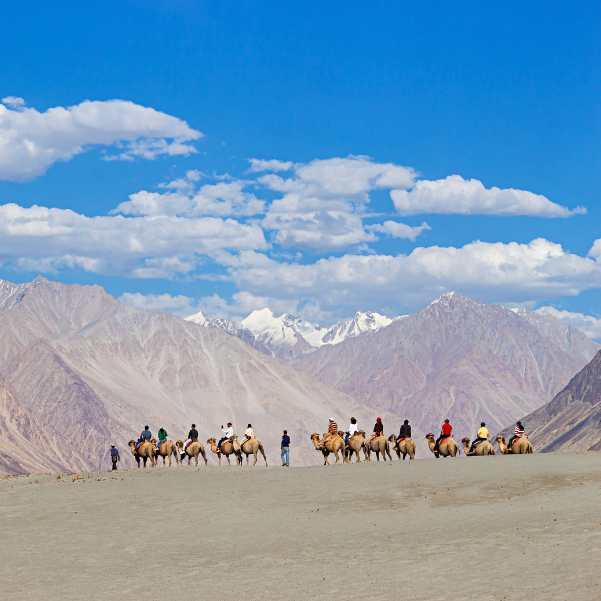
Hunder Sand Dunes
~10 km from Diskit, 7 km of dunes between villages
The signature cold desert dunes, running between Hunder and Diskit villages at roughly 3,050 m. Site of the famous Bactrian camel rides. Short, busy at midday, quiet and lovely around sunrise and sunset.
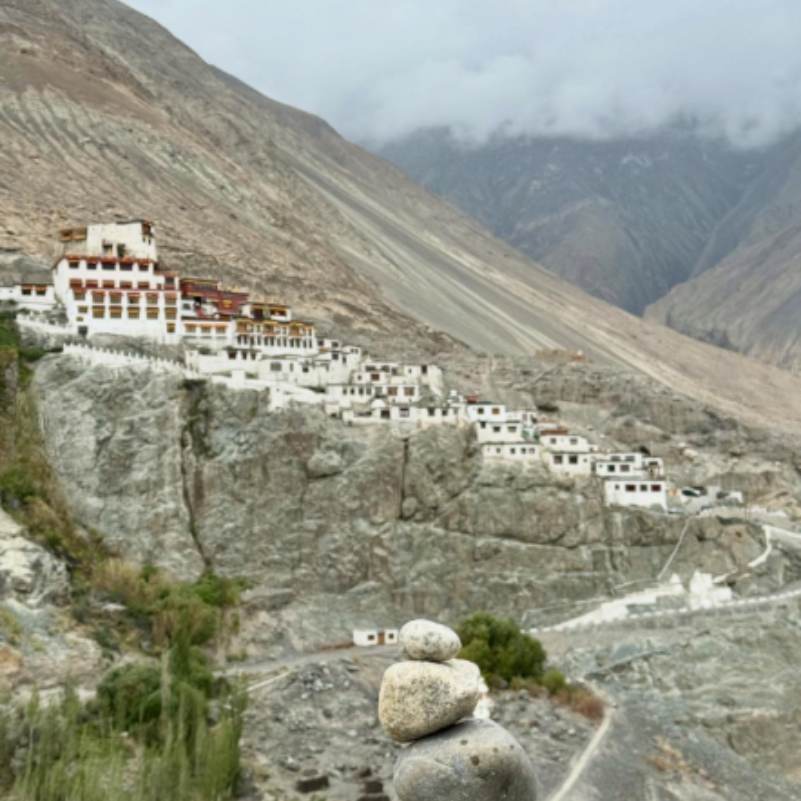
Diskit Monastery and Maitreya Buddha
At Diskit village, ~120 km from Leh
The oldest and largest gompa in the valley, founded in the 14th century, Gelugpa school, perched on the hillside above Diskit. The separate 32 metre Maitreya Buddha statue on the adjacent ridge, consecrated by the Dalai Lama in 2010, is the landmark photograph of the valley.
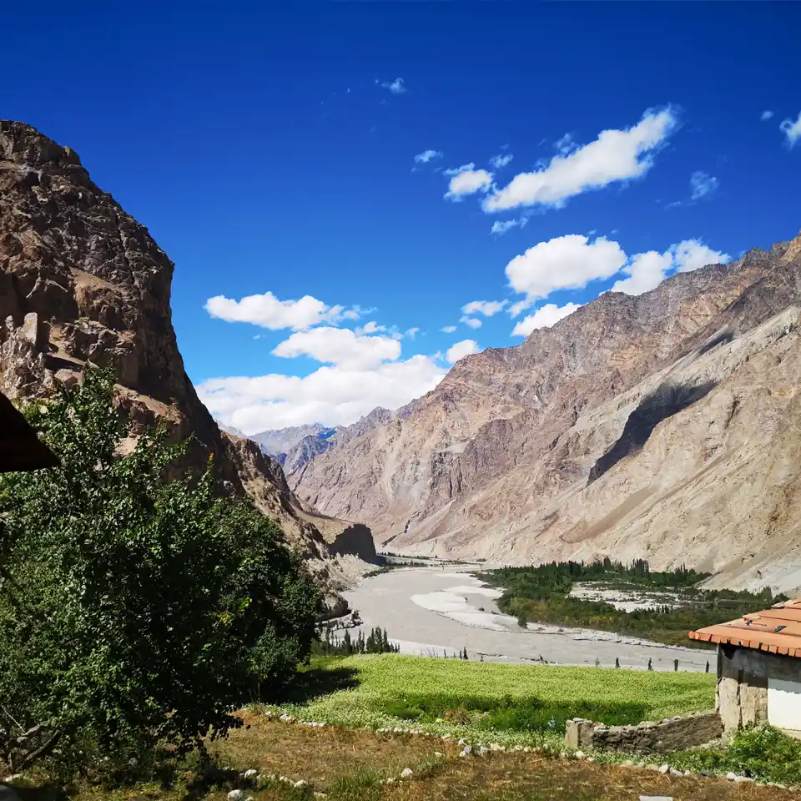
Turtuk Village
~205 km from Leh, ~80 km past Hunder
The Balti Muslim village that became part of India in 1971 and opened to tourists only in 2010. Apricot orchards, stone houses, narrow lanes, and a completely different food and language tradition from the rest of Ladakh. Worth at least one overnight stop.
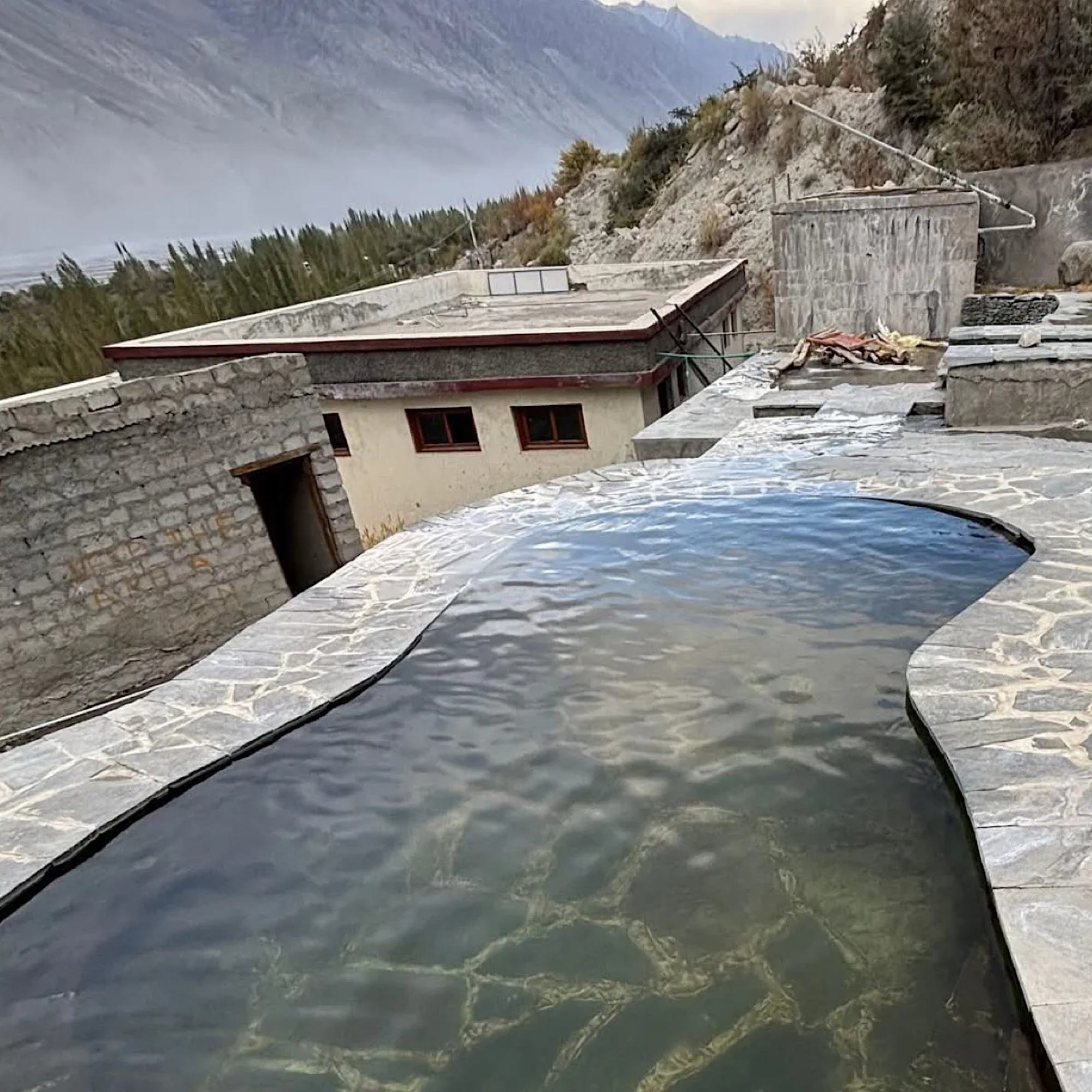
Panamik Hot Springs
~55 km from Diskit on the Sumur fork
Sulphur hot springs once used by Silk Route caravans. The bathing facility is basic and modest, the historical context is the real draw. Often combined with a short visit to Yarab Tso, a small lake locals consider sacred.
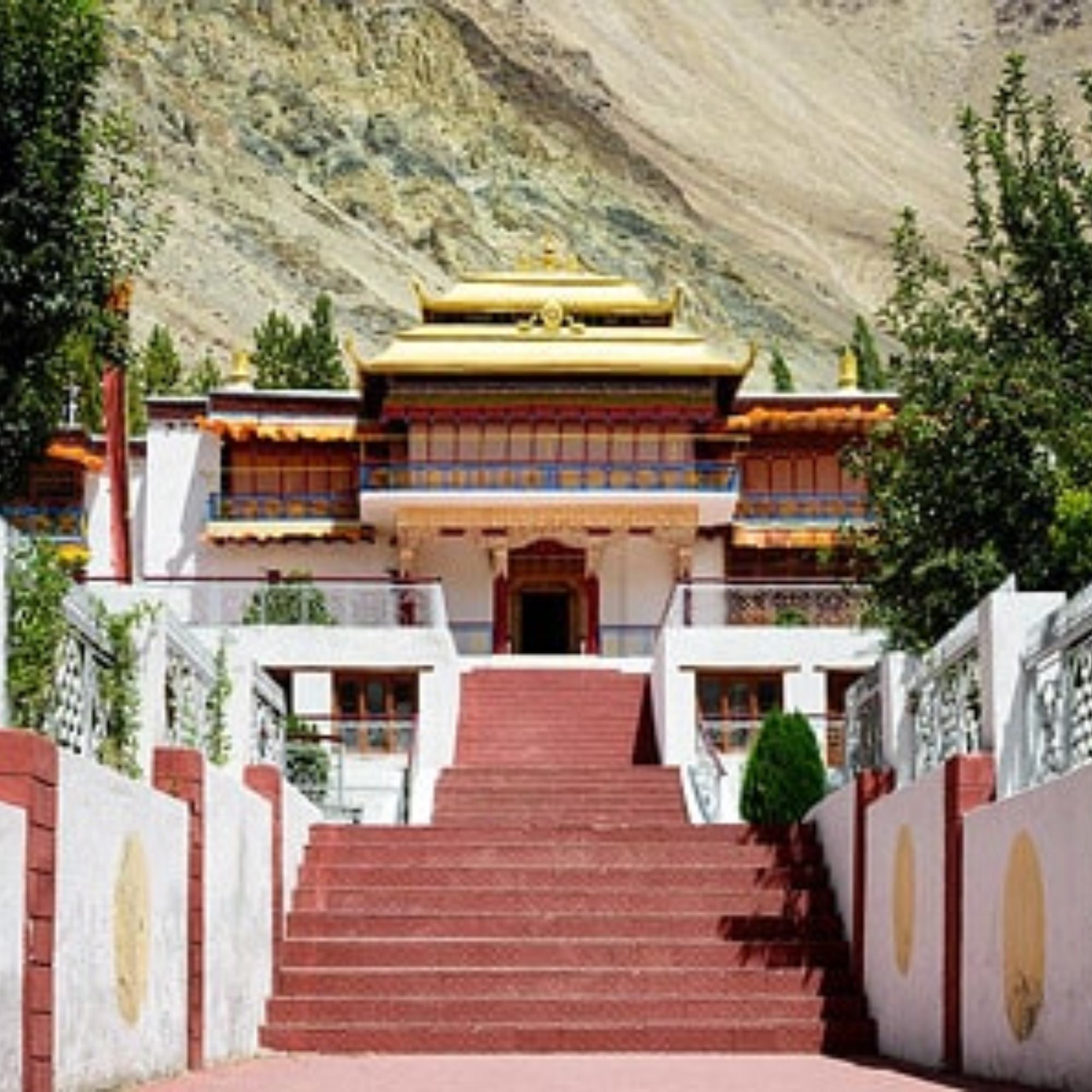
Sumur and Samstanling Monastery
~25 km from Diskit on the alternate fork from Khalsar
A quieter orchard village on the Nubra river side, with a working monastery set among apricot trees. A gentler, less touristy alternative base to Hunder or Diskit for travellers who want slower days.
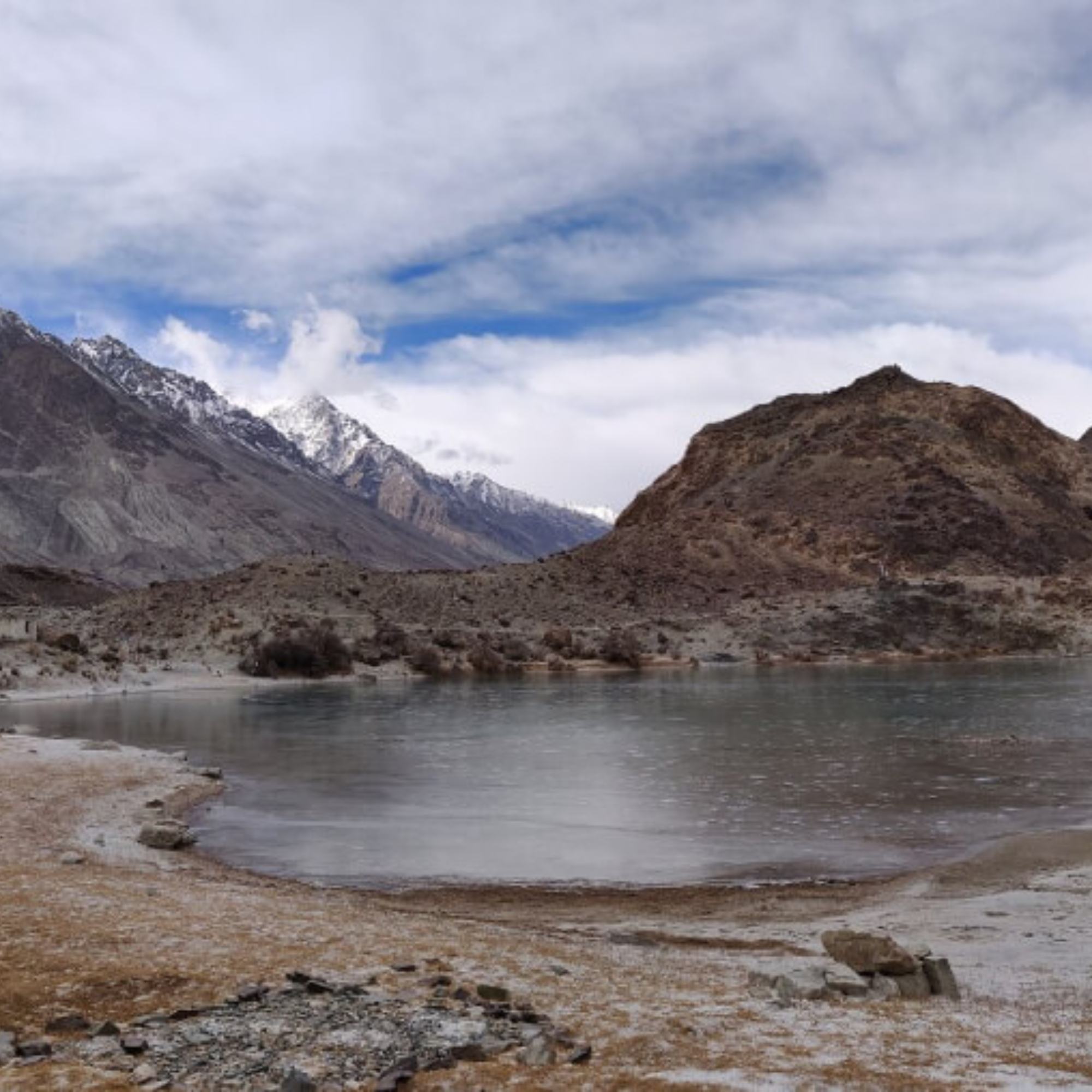
Yarab Tso
Short hike from Sumur / Panamik road
A small high altitude lake hidden behind a short climb near Sumur, considered sacred by locals. Quiet, pretty, and a useful 45 minute add on if you are driving the Panamik side. Do not enter or touch the water, out of respect for local custom.
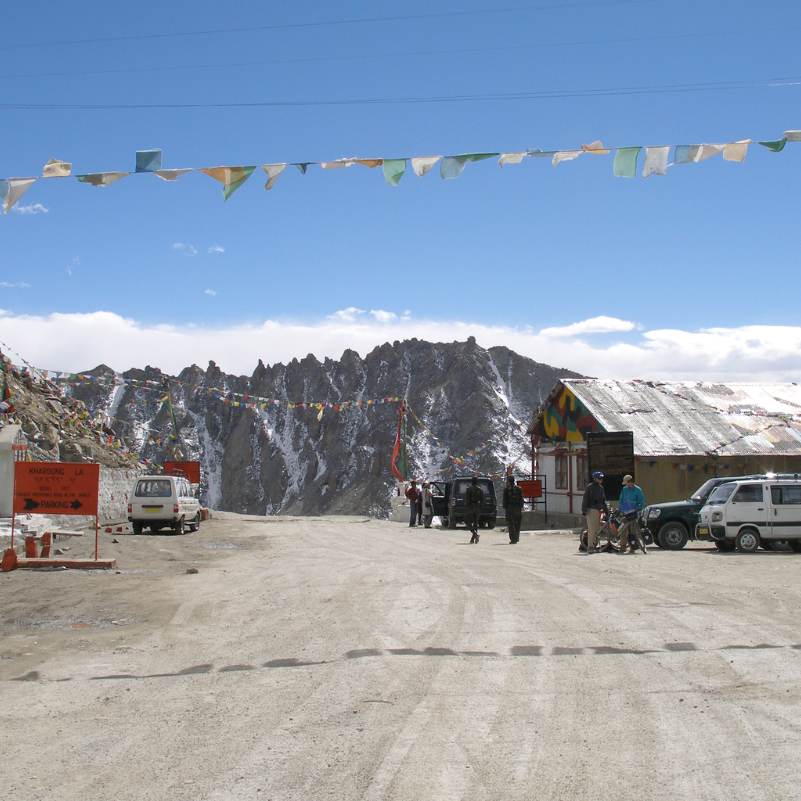
Khardung La Pass
~40 km from Leh on the route to Nubra
The high pass at roughly 5,359 m that connects Leh to Nubra. Signboards still claim 5,602 m and world's highest motorable road, both of which have been contested. Worth a 10 to 15 minute photo stop on the way, not longer. The altitude at the pass is higher than anywhere you will sleep on a standard Ladakh trip, and most travellers feel it here more than at Pangong.
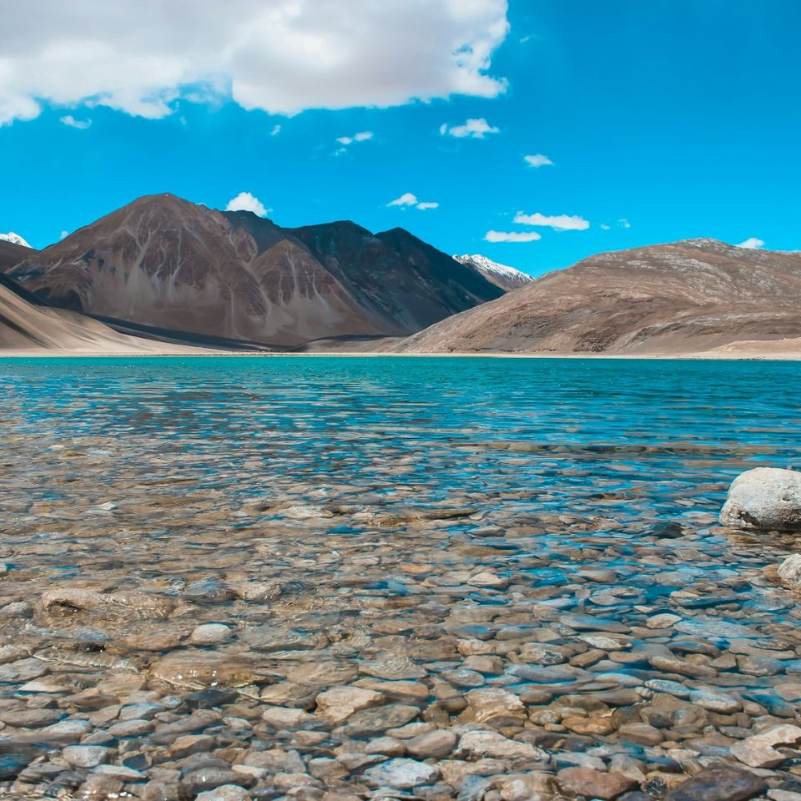
Pangong Lake
~160 km via Shyok direct, or via Leh
The big high altitude lake on the other side of the Ladakh Range, on the India and China border. Most serious Ladakh itineraries combine Nubra and Pangong, either by returning to Leh between the two or taking the rougher Shyok route directly.
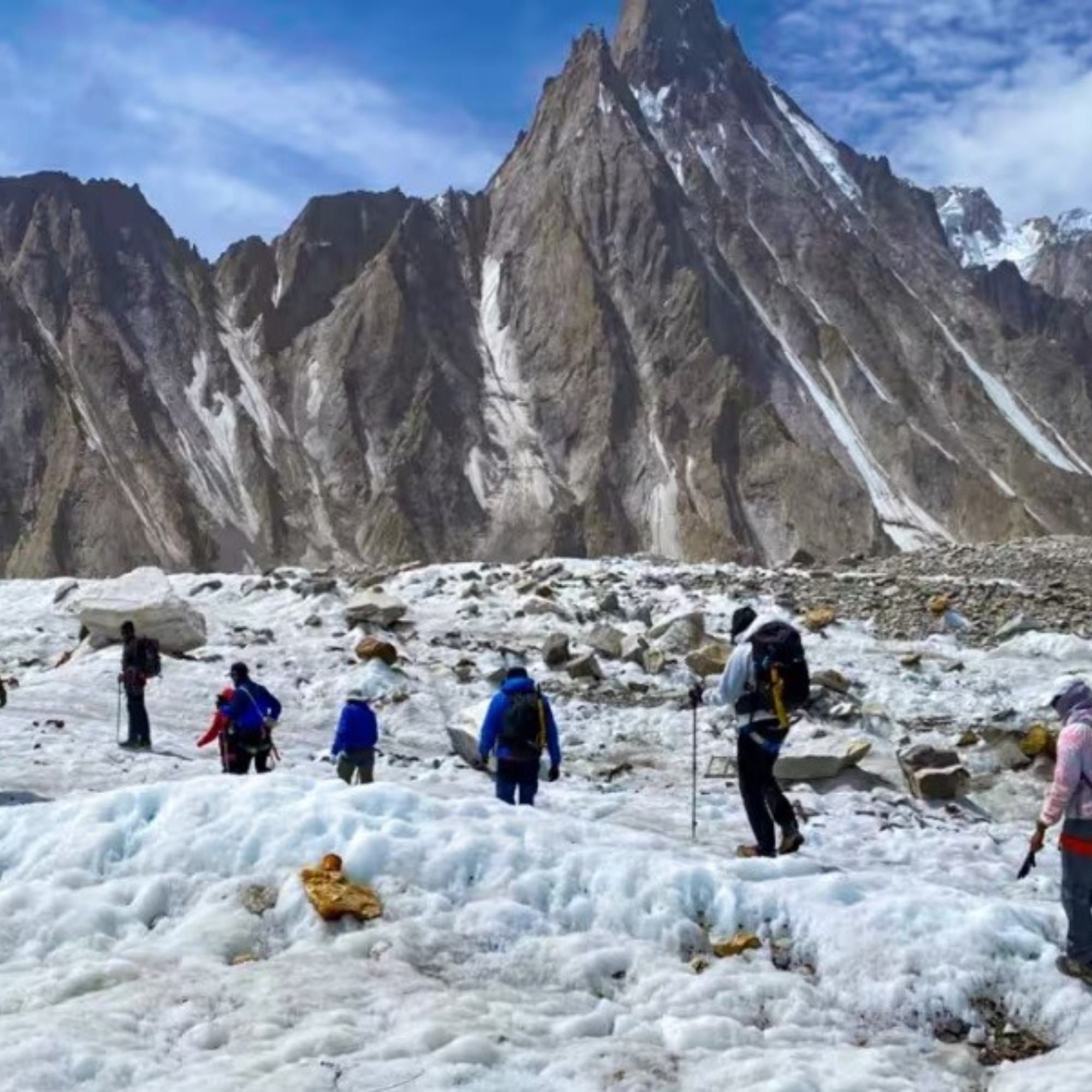
Siachen Base Camp area
North of Panamik, limited civilian access
The northern end of the civilian accessible valley, just short of the military zone for the Siachen glacier. Day visits to certain viewpoints are occasionally open with special permits, depending on border conditions. Treat this as a bonus if your operator confirms access, not as a plan.
Our packages with Nubra Valley
Curated trips that include a visit to Nubra Valley.
 7D/6N
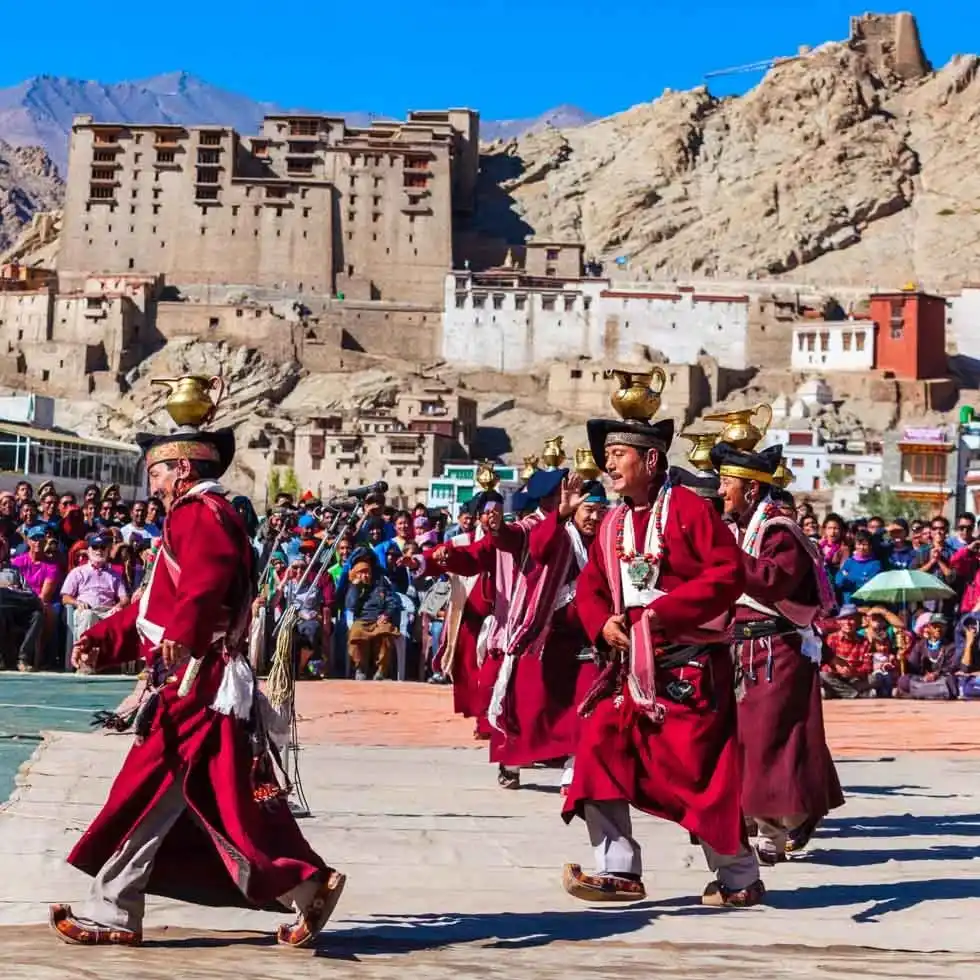
7D/6NLeh Ladakh Tour With Turtuk Village Nubra Valley and Pangong Lake
2D Leh•2D Nubra Valley+1
₹27,999₹33,999SAVE INR 6,000/ person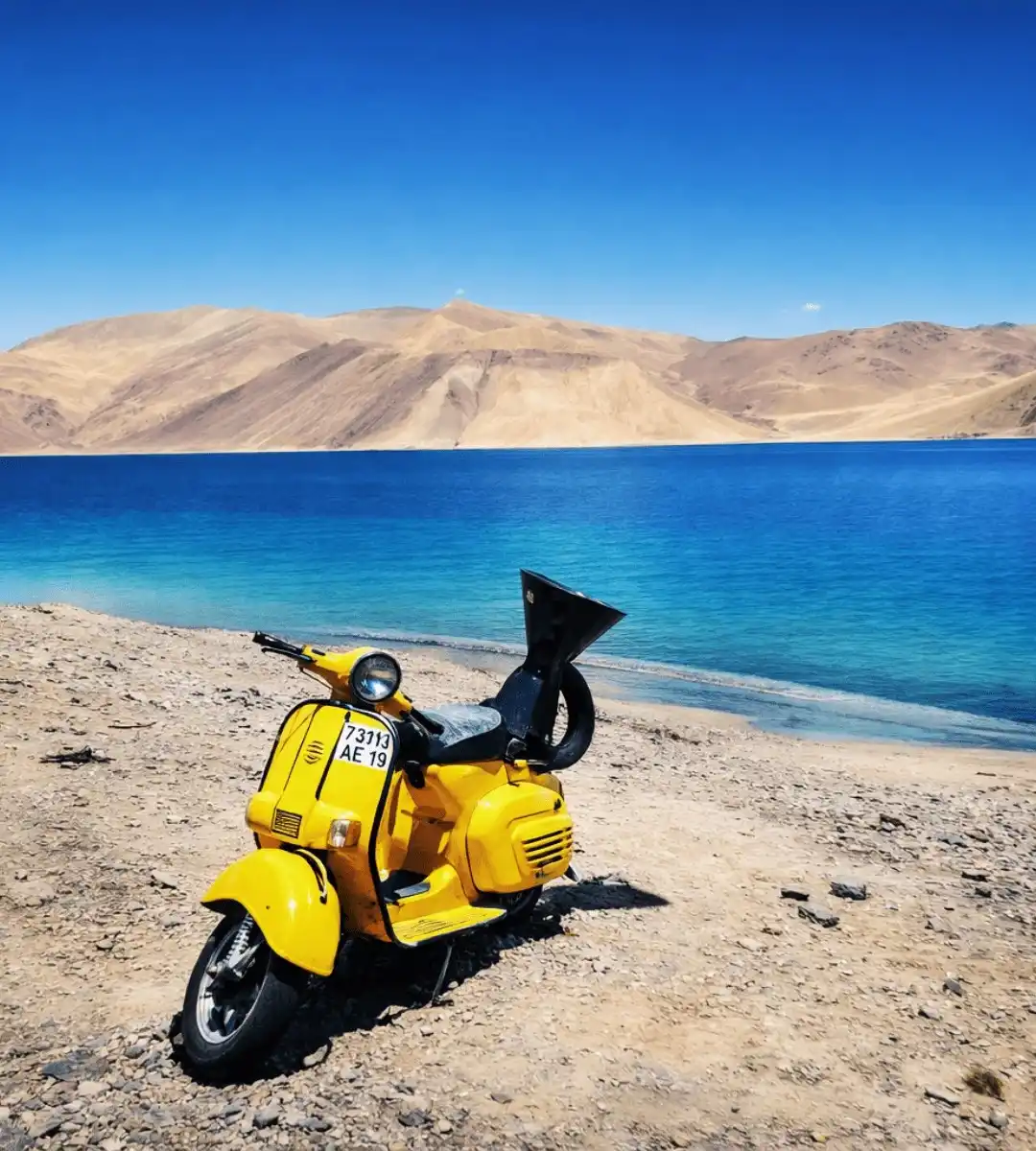 6D/5N
6D/5NBest Selling Leh Ladakh Tour With Nubra Valley and Pangong Lake
2D Leh•1D Nubra Valley+1
₹23,999₹28,599SAVE INR 4,600/ person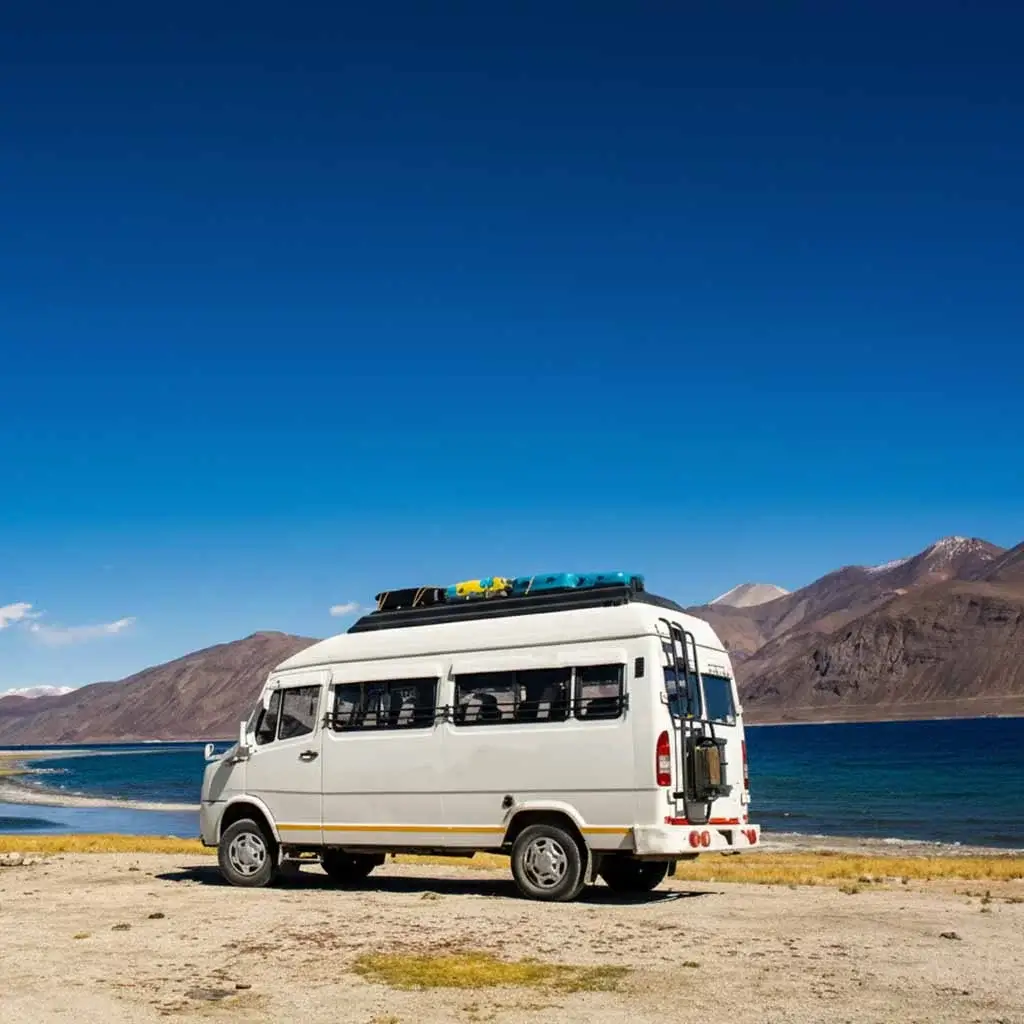 Group Tour6D/5N
Leh Ladakh Group Tour With Nubra Valley and Pangong Lake
2D Leh•1D Nubra Valley+1
₹18,999/ person
Frequently Asked Questions about Nubra Valley
What is the altitude of Nubra Valley?
The accessible parts sit between around 3,000 and 3,150 metres (9,850 to 10,330 feet). Diskit village is at about 3,144 m, Hunder around 3,050 m, Turtuk lower still at roughly 2,900 m. That makes most of Nubra noticeably lower than Leh at 3,500 m — which is why most travellers actually feel better here. It is a strategic altitude drop that helps your body recover. Khardung La on the route is far higher at around 5,359 m (17,582 ft) by modern GPS measurement, despite the signboards claiming 5,602 m.
How far is Nubra Valley from Leh and how long does the drive take?
Diskit is about 120 km from Leh via Khardung La. The drive typically takes 5 to 6 hours with stops. Hunder adds another 10 to 12 km past Diskit, about 30 minutes more. Turtuk is a full 205 km from Leh, around 8 to 9 hours including Khardung La and a lunch stop. Leave Leh by 8 AM to reach Hunder by early afternoon.
Do I need a permit to visit Nubra Valley in 2026?
Yes. Indian citizens pay the Ladakh Environment and Development Fee online through the official LAHDC Leh portal at lahdclehpermit.in. The typical structure is Rs 400 one-time environment fee plus around Rs 20 per day wildlife fee, with an optional Red Cross contribution. One payment usually covers Nubra, Pangong, Tso Moriri, and Hanle. Foreign nationals need a Protected Area Permit arranged through a registered Leh agent, with a minimum of two travellers per application on paper. Carry four or five printed copies for the check posts. Fees can update yearly.
What is the best time to visit Nubra Valley?
May to late September is the main window. Late May and the first half of June are lovely for apricot blossom and quiet roads. Mid June to August is the main travel season with the warmest days, fullest infrastructure, and biggest crowds in July. September to early October is the photographer's pick, with clean skies, sharp light, and autumn colour at Turtuk. Winter visits are possible but Khardung La can close, most tourist infrastructure shuts, and only specialist operators run trips from late October through April.
Is Khardung La really the highest motorable road in the world?
No. The signboard at the pass still claims 5,602 m (18,379 ft) and the title of world's highest motorable road. Multiple GPS surveys, satellite data, and independent measurements put the actual elevation at around 5,359 m (17,582 ft). That makes it one of the highest motorable passes in the world, but not the highest — Umling La in eastern Ladakh at roughly 5,882 m holds that record, and several other passes including Mana Pass and Marsimik La also sit higher. The signboard is a relic of pre-GPS estimates. Go for the crossing and the views, not the claim.
Why is Nubra recommended before Pangong on most itineraries?
Altitude strategy. Nubra's valley floor sits at around 3,000 to 3,150 m — lower than Leh at 3,500 m. After crossing Khardung La, you descend into the valley and your body gets a genuine rest at lower altitude. Most travellers sleep better in Nubra than in Leh. Taking this break before heading to Pangong at 4,350 m gives your body a stronger foundation for the higher altitude days ahead. The pattern of climb high, sleep low is basic acclimatisation logic, and Nubra fits it naturally into your itinerary.
How many days do I need in Nubra Valley?
Two nights is the honest minimum, covering Diskit monastery with the 32 m Maitreya Buddha, Hunder dunes with the Bactrian camels, and a short loop back via Panamik or Sumur. Three nights is the sweet spot and lets you add a proper overnight at Turtuk. Four nights is ideal if you want to slow down and combine Sumur and Panamik without rushing. A one-day trip from Leh is technically possible but a bad idea — you cross over 5,300 m twice for 20 minutes at the dunes.
Where should I stay — Hunder, Diskit, Sumur, or Turtuk?
Hunder is the default base — walking distance to the dunes, wide range from basic tent camps at Rs 1,500 to luxury cottages at Rs 15,000 per night. Diskit works if you want to be near the 32 m Maitreya Buddha and monastery for dawn visits. Sumur is the quiet pick for orchard villages and fewer crowds. Turtuk is its own experience entirely — Balti Muslim culture, family-run guesthouses, apricot orchards — and needs a dedicated overnight. A typical three-night plan is Hunder or Diskit for two nights, Turtuk for one.
Is Nubra Valley safe for first-time Ladakh travellers?
Yes, and it is actually one of the easier Ladakh destinations because the valley floor is lower than Leh. Spend at least two nights in Leh first to let your body adjust, then head over Khardung La. The descent from the pass into the valley typically feels like relief. First-timers often report sleeping better at Hunder than at Leh. The only real altitude risk on this leg is at Khardung La itself — keep your stop short and descend.
Are there ATMs, fuel pumps, and mobile network in Nubra Valley?
Limited on all three. The Diskit ATM is often out of service, so carry cash from Leh — at least Rs 7,000 to 10,000 per person. Diskit has a fuel pump that usually works, a second intermittent pump exists at the T-Mor junction near Khalsar. Fill up fully in Leh before crossing Khardung La. Mobile network is patchy at best — BSNL postpaid works intermittently in Diskit, Hunder, and Sumur; Jio and Airtel generally do not work past Khardung La. Plan to be mostly off grid.
Are the Hunder camel rides worth it?
Yes, at least once. These are double humped Bactrian camels — Central Asian animals that arrived with the Silk Route caravans centuries ago. Most of India's remaining Bactrian population lives in this valley. The ride is short, 15 to 20 minutes on a fixed track, priced around Rs 300 to 500 per person. Go at sunrise or sunset for better light and fewer people. The dunes themselves are compact compared to Rajasthan, but the combination of white sand against dark mountains with two-humped camels at 3,050 m exists nowhere else.
Is Turtuk worth the extra drive from Hunder?
For most travellers, yes — and often the most memorable part of the whole Ladakh trip. Turtuk sits about 80 km past Hunder along the Shyok and adds 5 to 6 hours of return driving, so it needs its own overnight. What you get is a Balti Muslim village that became part of India only in 1971, opened to tourists in 2010, with stone houses, apricot orchards, and food that feels nothing like the rest of Ladakh. One night works if you are tight on time, two nights is ideal.
Is Nubra Valley family friendly?
Yes, more so than Pangong. The lower altitude means children and seniors generally handle it better than the Pangong drive. Families with children aged seven and above usually do fine with proper Leh acclimatisation first. The Bactrian camel ride at Hunder is typically a hit with kids, and the 32 m Maitreya Buddha at Diskit gives them something visually striking to connect with. Khardung La crossing is the one thing to handle carefully — keep the stop short.
Can I combine Nubra Valley with Pangong Lake on the same trip?
Yes, and most serious Ladakh itineraries do exactly that. Option one: return from Nubra to Leh, rest a night, then drive to Pangong via Chang La. Option two: take the direct Nubra-to-Pangong route via the Shyok river through Agham, Durbuk, and Tangtse — this saves a full day but the road is rough, includes water crossings, and is only reliable from July to September. Always confirm Shyok road status the morning of travel.
Related guides
Posts about Ladakh
- Manali to Leh Highway 2026: Every Pass, Stop and Distance
- Umling La Ladakh Guide 2026: Route, Altitude, Permit, Safety & Reality Check
- Turtuk Ladakh Travel Guide 2026: Balti Culture, Apricot Orchards and Why It Is Perfect for Families
- Offbeat Ladakh for Couples in 2026: Quiet Routes Beyond Pangong and Nubra
- Aryan Valley Ladakh Guide 2026: Dah, Hanu, Brokpa Culture, Route and Who Should Visit
- Hanle vs Tso Moriri vs Turtuk: Which Offbeat Ladakh Place Should You Choose in 2026?