
Reckong Peo
Kinnaur's district headquarters at 2,290 metres, the last reliable stop for ATMs, fuel, mechanics, and Inner Line Permits before heading to Kalpa, Sangla, or the Spiti Valley
- District HQ & Transit Town
- ~2,290 m
- Shimla · ~235 km
- Year round
- Kinnaur, Himachal Pradesh
What makes it special
Reckong Peo sits at approximately 2,290 metres (7,500 feet) on NH 5, and everything about it serves a purpose. This is Kinnaur's district headquarters, a busy administrative town where government offices, courts, bus depots, and market lanes crowd a hillside. You come here to withdraw cash from ATMs that actually work, fill your fuel tank at the only dependable pump in the district, find a mechanic if your car has taken a beating on the Sutlej gorge road, buy medicines from a proper pharmacy, and collect an Inner Line Permit from the DC Office if you are a foreign national heading toward Spiti. You do not come here for quiet.
Kalpa, the residential village with sharp views of the 79 foot Kinner Kailash rock pillar and the full 6,050 metre massif, sits approximately 7 km up a steep, switchback road above town. Kothi, a small settlement with the Chandika Devi temple and deodar forest, sits along the same road. If you want peace, mountain air, and a balcony facing the snow, stay in Kalpa or Kothi. If you need things done, come down to Peo. That division is the simplest way to understand this place.
The town market runs along the main road. You can buy Kinnauri caps, dried apricots, chilgoza, and Kinnaur Golden apples in season from vendors who stack fruit boxes right on the pavement. A few dhabas near the bus stand serve standard dal chawal, rajma, and momos. The HRTC bus stand connects to Shimla, Rampur, and onward to Kaza in Spiti when the road is open.
Two sites in Peo itself are worth a short stop. The Brelengi Gompa, a Buddhist monastery just off the main road, has a 24 foot seated Buddha statue inside a quiet prayer hall with painted walls and prayer flags draped across the courtyard. Hindu and Buddhist life share the same lanes here without friction, which is true of all of Kinnaur but particularly visible in Peo. The Chandika Devi temple in Kothi, a short uphill walk through deodar forest, is a small Kinnauri temple in traditional Kathkuni timber and stone architecture dedicated to the local protector goddess.
One more thing worth knowing: Reckong Peo is the last town with reliable ATMs, a functioning fuel pump, and vehicle mechanics before the road enters the Spiti Valley. If your car needs attention, if your cash is running low, or if you have forgotten anything essential, sort it here. Once you pass Jangi and head toward Nako and Kaza, the next real services are a long way off.
In September, if your timing lines up, the Phulaich Festival turns the town into something different. This is Kinnaur's flower festival, where locals climb to high meadows to gather wildflowers for their ancestors and bring them back to the temples. It is deeply local, tied to the harvest season and Kinnauri tradition, and not something you will find on a standard tourist itinerary. Ask locally for the exact dates, as they shift with the agricultural calendar.
Quick answers
- Is Reckong Peo a tourist destination?
- Think of it as Kinnaur's working nerve centre, the district headquarters where you sort cash, fuel, supplies, and bus connections. Kalpa (approximately 7 to 10 km uphill) is the scenic residential retreat where you stay, watch the Kinner Kailash sunrise, and explore old temples. Peo is where you get your logistics right before heading deeper into Kinnaur.
- What does Reckong Peo have that the rest of Kinnaur does not?
- The most reliable concentration of ATMs in Kinnaur (SBI and PNB), the most dependable fuel pump in the district, a pharmacy, the HRTC bus stand, the DM office for Inner Line Permits (foreign nationals only), and a market with general stores and fruit vendors. Sangla and Kalpa have some facilities, but Peo is the safest bet for anything you cannot afford to gamble on.
- Should I stay overnight in Reckong Peo?
- Only if you arrive too late to reach Kalpa or need an early morning bus. Otherwise, make the 7 to 10 km climb to Kalpa, where the towering views of the 6,050 metre Kinner Kailash massif, the village atmosphere, and the hotels are in a completely different league.
Quick facts
Everything you need to know at a glance.
At a glance
- Altitude
- Approx 2,290 m (7,500 ft). Kalpa sits 7 km uphill via a steep switchback road.
- Location
- NH 5, Kinnaur district HQ, Himachal Pradesh
- Key relationship
- Kalpa is 7 km uphill (scenic retreat). Kothi is partway up (quiet, temple). Karcham junction is 20 km south (Sangla Valley turnoff).
- Accessible
- Year round, though monsoon can disrupt the highway
- Time needed
- 1 to 2 hours for errands; overnight only if logistics require it
- Entry fee
- No fees
- Effort level
- Flat town, easy walking. The climb to Kalpa is steep (7 km by road, 20 to 30 min by vehicle).
On the ground
- Mobile network
- Airtel, Jio, and BSNL all work with 4G. Best connectivity in Kinnaur.
- ATM
- SBI and PNB ATMs. The most reliable in the district and the last reliable ATMs before Spiti. Withdraw here.
- Fuel
- The most dependable fuel pump in Kinnaur and the last reliable one before Spiti. Fill up here.
- Vehicle mechanic
- Garages near the market handle basic repairs. The last reliable mechanic stop before Kaza in Spiti.
- Food
- Dhabas near the bus stand. Dal chawal, rajma, momos, thukpa. Busy local markets selling Kinnauri caps, chilgoza, dried apricots.
- Stay
- Budget hotels (Rs 500 to 1,500). Stay in Kalpa or Kothi for peace and views.
- Permits
- Indian nationals: no permit needed for Kinnaur. Foreign nationals: must collect Inner Line Permit from the DC Office in Reckong Peo before heading beyond Jangi toward Spiti. Carry passport and visa copies.
Seasonal weather
- Apr to Jun25°8°Summer (Apr to Jun)
- Jul to Sep22°12°Monsoon (Jul to Sep)
- Oct to Nov20°2°Autumn (Oct to Nov)
- Dec to Mar12°-4°Winter (Dec to Mar)
Suitable for
- Couples — with some care
- Families — with some care
- Seniors — with some care
- Solo — with some care
- First-timers — with some care
- Pet-friendly — with some care
How to reach Reckong Peo
2 approach routes, with seasonal access.
From Shimla
Generally year round; monsoon brings landslide risk- Distance
- Approx 235 to 260 km (sources vary)
- Time
- 8 to 10 hours; best split over 2 days
- Road
- NH 5 mountain highway; cliff sections after Rampur
- Last fuel
- Rampur, Reckong Peo
The standard approach. NH 5 from Shimla through Rampur, Tapri, Karcham, and Powari. The road after Rampur enters the Sutlej gorge with the Tranda Dhank cliff section. Most people break the journey at Narkanda, Sarahan, or Rampur. Reckong Peo is the point where you leave the highway to climb to Kalpa or continue onward toward Nako and Spiti.
From Delhi
Year round for the bus; road conditions vary in monsoon- Distance
- Approx 560 to 600 km
- Time
- 18 hours by direct bus; 2 to 3 days by car
- Road
- Highway then mountain roads
- Last fuel
- Chandigarh area, Rampur, Reckong Peo
HRTC runs an overnight bus from Delhi's Kashmiri Gate to Reckong Peo, roughly 18 hours. Alternatively, drive or Volvo to Shimla, then continue to Reckong Peo the next day. Three days is comfortable.
Best time to visit
Season by season, so you can plan around the weather rather than hope.
- Recommended
Summer
April to June
Roads are generally open, all services running, the main window for Kinnaur travel.
- Temperature
- Roughly 15 to 25°C day, 8 to 12°C night
- Roads
- Generally open; occasional delays from road work
- Services
- All running: ATMs, fuel, buses, shared taxis
- Onward to Spiti
- Kaza bus generally resumes by late May or June, depending on pass clearance
This is when most travellers pass through Reckong Peo, and everything works the way it should. ATMs are stocked, the fuel pump is running, buses to Shimla and Kaza operate on schedule (the Kaza bus runs once daily, morning departure, when the Spiti road is open), and shared taxis to Kalpa and Karcham are easy to find. The road from Shimla via Rampur is generally clear, though the Tranda Dhank cliff section after Rampur always demands respect. Days are warm at 15 to 25 degrees in town. If you are heading to Sangla, Kalpa, or deeper into Kinnaur, this is the most reliable window for logistics and road access.
Monsoon
July to September
Services still run, but the highway is landslide country. Build in buffer days.
- Temperature
- Roughly 15 to 22°C day, 12 to 15°C night
- Roads
- Landslide risk on the highway, especially Rampur to Reckong Peo stretch
- Services
- All running, but bus schedules can be disrupted by road closures
- Key risk
- Getting stranded between Rampur and Reckong Peo for hours or days
Reckong Peo itself stays functional through monsoon. ATMs, fuel, pharmacy, buses, all still operating. The problem is the road getting here. The Kinnaur highway between Rampur and Reckong Peo runs through the Sutlej gorge, and the stretch between Tapri and Powari is serious landslide territory in late July and August. Closures of a few hours to a few days are common. Once you are in Reckong Peo, onward travel to Kalpa (approximately 7 to 10 km uphill) is usually fine. The Sangla Valley road from Karcham is also generally passable, though the highway feeding into it is where trips get disrupted. If you are travelling in this window, keep one or two buffer days and check road conditions at the bus stand before leaving.
- Recommended
Autumn
October to early November
Clear roads, apple season in full swing, lighter traffic. Quietly the best window.
- Temperature
- Roughly 10 to 20°C day, 2 to 8°C night
- Roads
- Generally good; post monsoon repairs mostly done
- Services
- All running; apple season makes the market lively
- Onward to Spiti
- Kaza road closes sometime mid October to mid November; confirm locally
Post monsoon, the highway is usually past the worst of the landslide damage and BRO repairs are mostly done. Reckong Peo functions normally. This is apple harvest season across Kinnaur, and the market in town fills with boxes of Kinnaur Golden and Royal Delicious being packed for transport. Chilgoza and dried fruits are at their freshest. The Kaza bus may still run into early October depending on pass conditions, but the Spiti road closes sometime between mid October and mid November. Evenings get cold fast, dropping to near freezing by late October. If you are doing the Kinnaur circuit without continuing to Spiti, this is an excellent window for logistics and travel.
Winter
Late November to March
Town stays open and accessible, but cold, quieter, and the Spiti road is shut.
- Temperature
- Roughly 5 to 12°C day, minus 4 to 2°C night
- Roads
- Highway generally open; icy stretches possible; Spiti road closed
- Services
- ATMs, fuel, pharmacy running. Bus frequency reduced.
- Who visits
- Few tourists. Mostly locals and travellers heading to Kalpa in winter.
Reckong Peo does not shut down in winter the way Spiti does. The town is the district headquarters, so government offices, the hospital, ATMs, and the fuel pump keep running. The Kinnaur highway from Shimla is generally open through winter, though icy stretches and occasional snow closures happen, especially near Narkanda and on the higher sections. Buses to Shimla continue, though frequency drops. The Kaza road via Spiti is closed from roughly mid November to late April or May. Kalpa is accessible year round from Reckong Peo, though the approximately 7 to 10 km road can be icy. Temperatures in town drop to minus 4 or lower at night. Most tourists skip this window, but Reckong Peo itself remains a functional logistics point for winter travellers heading to Kalpa or lower Kinnaur.
Things to see & do
5 things worth your time at Reckong Peo.
Sort your onward transport at the HRTC bus stand
30 min to 1 hourThe HRTC bus stand connects Reckong Peo to Shimla (roughly 10 hours), Rampur, and Kaza in Spiti (one daily morning bus when the road is open, generally late May to mid October). Local buses and shared taxis run to Kalpa (7 km uphill, 20 to 30 minutes) and down to Karcham for the Sangla Valley turnoff. If you are doing the Kinnaur circuit by public transport, this is where you plan your next move. Check schedules at the stand, as timings shift seasonally.
Stock up at the main market
30 min to 1 hourYou can withdraw cash from SBI and PNB ATMs that reliably stock notes, fill your tank at the only dependable fuel pump in the district, pick up medicines from a proper pharmacy, and buy supplies from general stores. The market also sells Kinnauri caps (the colourful flat topped caps worn across the valley), dried apricots, chilgoza pine nuts, and Kinnaur Golden apples in season. If you need a vehicle mechanic, Peo has a few garages near the market that handle basic repairs. This is the last reliable stop for all of these services before Spiti. Do not skip it.
Visit the Brelengi Gompa and its 24 foot Buddha
20 to 30 minutesA Buddhist monastery just off the main road in Peo with a 24 foot seated Buddha statue inside the prayer hall. The walls carry traditional Buddhist paintings, and prayer flags hang across the small courtyard. It is not large or famous, but it is genuine. You can walk in, sit for a few minutes, and watch the light come through the painted windows. The monastery is a visible reminder that Kinnaur's Buddhist and Hindu traditions share the same streets and sometimes the same families.
Walk up to the Chandika Devi temple in Kothi
1 to 1.5 hours round tripA short uphill walk through deodar forest from the main road toward Kothi takes you to a small Kinnauri temple dedicated to the local protector goddess. The architecture is traditional Kathkuni, stone and timber interlocked, with carved wooden panels. If you have an hour before the bus or before the steep climb to Kalpa, this is the best way to stretch your legs. You can see the lower ridges of the Kinner Kailash massif through the tree line on a clear day.
Get your Inner Line Permit at the DC Office (foreign nationals only)
1 to 3 hoursForeign nationals heading beyond Jangi (roughly 35 km past Reckong Peo) toward Spiti must collect an Inner Line Permit from the DC Office (also referred to as the DM/SDM office) in Reckong Peo. This is the designated issuing authority for the district. Carry your passport, visa copies, and passport photos. Processing can take a few hours or a full day depending on office workload. Indian travellers do not need any permit for Kinnaur or the standard Spiti route. Rules can change between seasons, so confirm current requirements locally before relying on this information.
Know before you visit Reckong Peo
The practical bits, from people who have been.
The checklist before you leave Reckong PeoCash, fuel, mechanic, pharmacy, permits (foreigners), and road intel. This is your last reliable stop.
Sort these before you leave Reckong Peo. Once you head deeper into Kinnaur or toward Spiti, reliable services disappear.
- Cash. Withdraw from SBI and PNB ATMs here. Sangla's ATMs run dry on busy weekends. Kalpa has no ATM. Chitkul has none. Get enough for your entire Kinnaur stay.
- Fuel. Fill your tank at Peo's pump. Sangla Valley has no reliable fuel. Kalpa has no pump. This is the last dependable fill before Spiti.
- Mechanic. If your vehicle took a beating on the Sutlej gorge road, Peo has garages near the market. There is nothing comparable until Kaza.
- Pharmacy. Stock up on prescription medicines, painkillers, ORS, and first aid supplies. Options thin out fast beyond here.
- Road conditions. Ask at the bus stand before leaving. Drivers and staff have the most current information on landslides, especially during monsoon.
- Inner Line Permit. Foreign nationals heading beyond Jangi toward Spiti must collect their ILP from the DC Office in Peo. Carry passport, visa copies, and photos. Indian nationals need no permit for Kinnaur. Sort this before you leave town.
Where to stay (and why not here)Stay in Kalpa or Kothi for peace. Stay in Peo only if logistics require it.
Do not plan nights in Reckong Peo unless logistics force it. This is a busy administrative town with market noise, traffic, and government office energy. Travellers looking for mountain quiet, views, and that slowed down Kinnaur feeling should stay in Kalpa, approximately 7 km up a steep switchback road, where the 79 foot Kinner Kailash rock pillar fills the sky at sunrise. Kothi, a small settlement partway up the Kalpa road with deodar forest and the Chandika Devi temple, is another quiet option.
If you do stay in Peo, budget hotels near the bus stand run Rs 500 to 1,500 per night. They are adequate for one night. Food is standard dhaba fare: dal chawal, rajma, paranthas, momos, and decent thukpa at a couple of places near the bus stand. Apple juice and fresh fruit are available from vendors in season.
The Phulaich Festival (September, if your timing lines up)Kinnaur's flower festival in September. Locals gather wildflowers from high meadows for ancestral shrines.
If you are in the Reckong Peo area in September, ask locally about the Phulaich Festival. This is Kinnaur's flower festival, a harvest season tradition where locals climb to alpine meadows above the villages to gather wildflowers and bring them back to the temples and ancestral shrines. The celebration involves music, dance, and community gatherings that are deeply tied to Kinnauri agricultural and spiritual life. It is not a tourist event, and exact dates shift with the local calendar, but if your timing overlaps, it is one of the most genuine cultural experiences in the region. Ask your hotel or a local guide in Kalpa or Peo for the current year's dates.
Nearby attractions
Other places worth the detour.
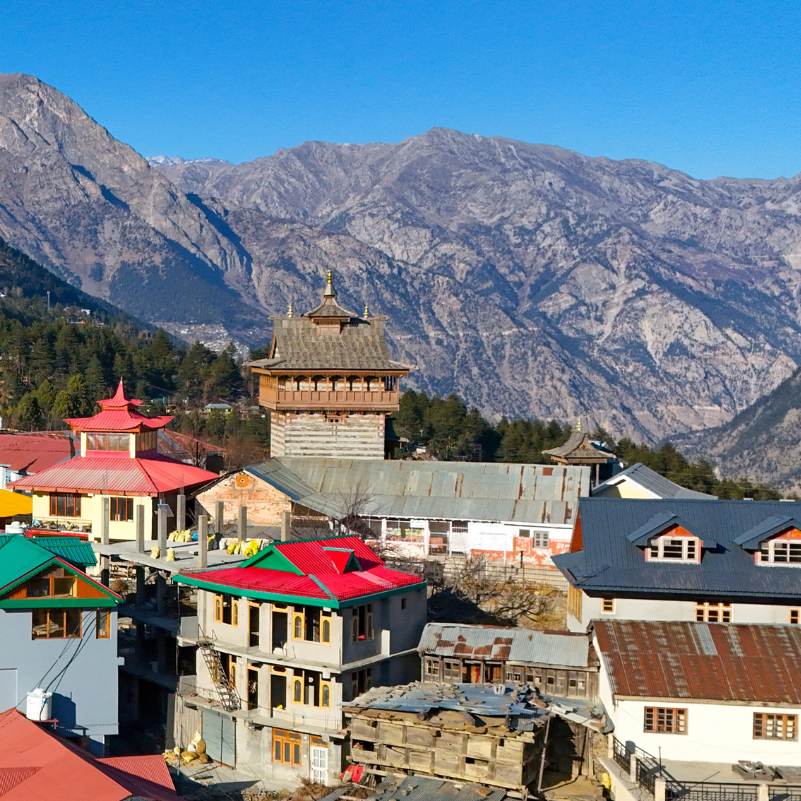
Kalpa
Approximately 7 to 10 km uphill
The scenic residential retreat approximately 7 to 10 km above Reckong Peo. Towering views of the 6,050 metre Kinner Kailash massif, the Narayan Nagini temple, the Hu Bu Lan Kar monastery, and apple orchards on every slope. This is where you stay. Peo is where you stock up. Kalpa is where you live.
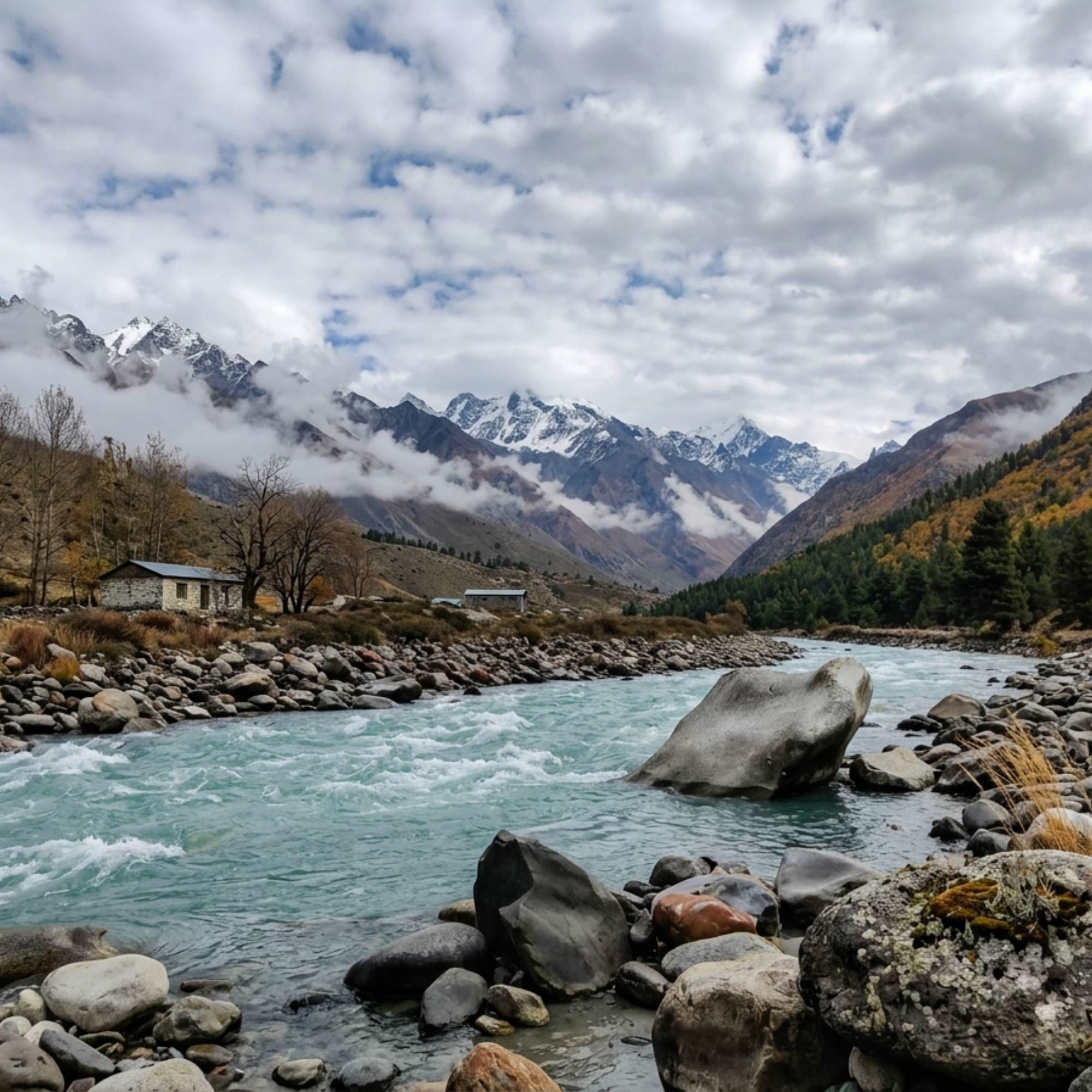
Sangla Valley
About 35 to 40 km via Karcham
The green Baspa Valley with apple orchards, traditional villages, and the drive to Chitkul. Turn off at Karcham (about 20 km south of Reckong Peo on NH 5) to enter the valley.
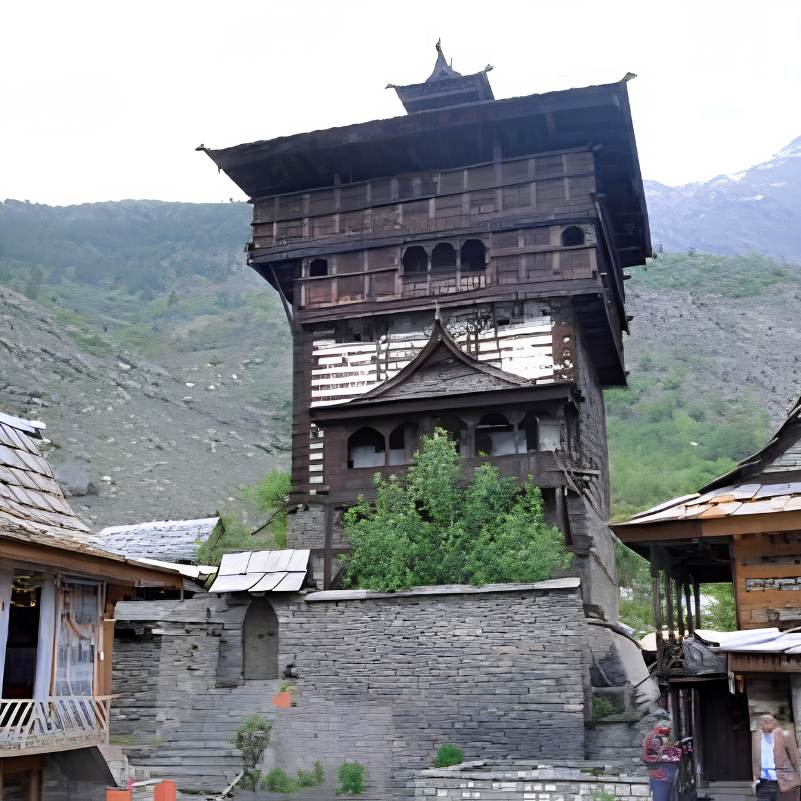
Kamru Fort
About 40 km via Karcham
A five storey Kathkuni wooden tower and living temple complex in Sangla. Worth the climb for the architecture and the valley view.
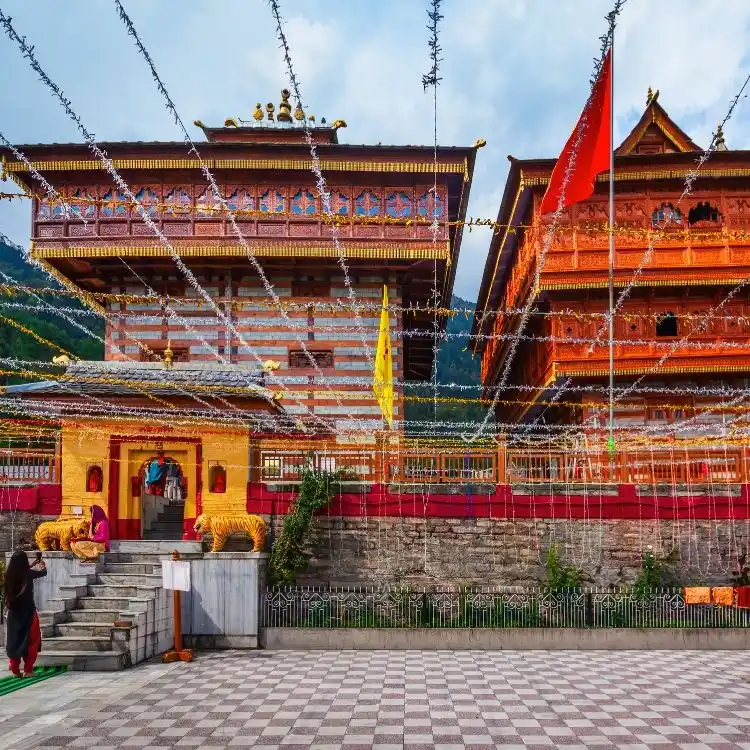
Sarahan and Bhimakali Temple
About 100 km toward Shimla
A natural night halt between Shimla and Reckong Peo. The Bhimakali temple complex is one of the most important in Himachal Pradesh.
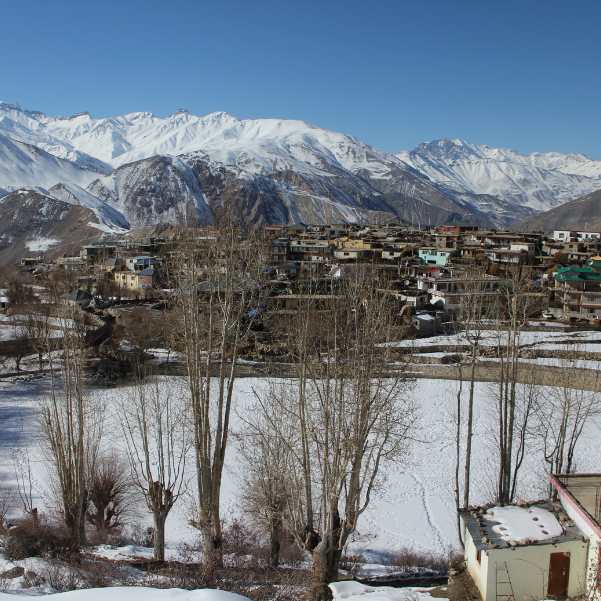
Nako Lake and Village
About 115 km toward Spiti
A Buddhist village around a sacred high altitude lake, on the road toward Spiti. The next major stop if you are continuing the Kinnaur to Spiti circuit.
Our packages with Reckong Peo
Curated trips that include a visit to Reckong Peo.
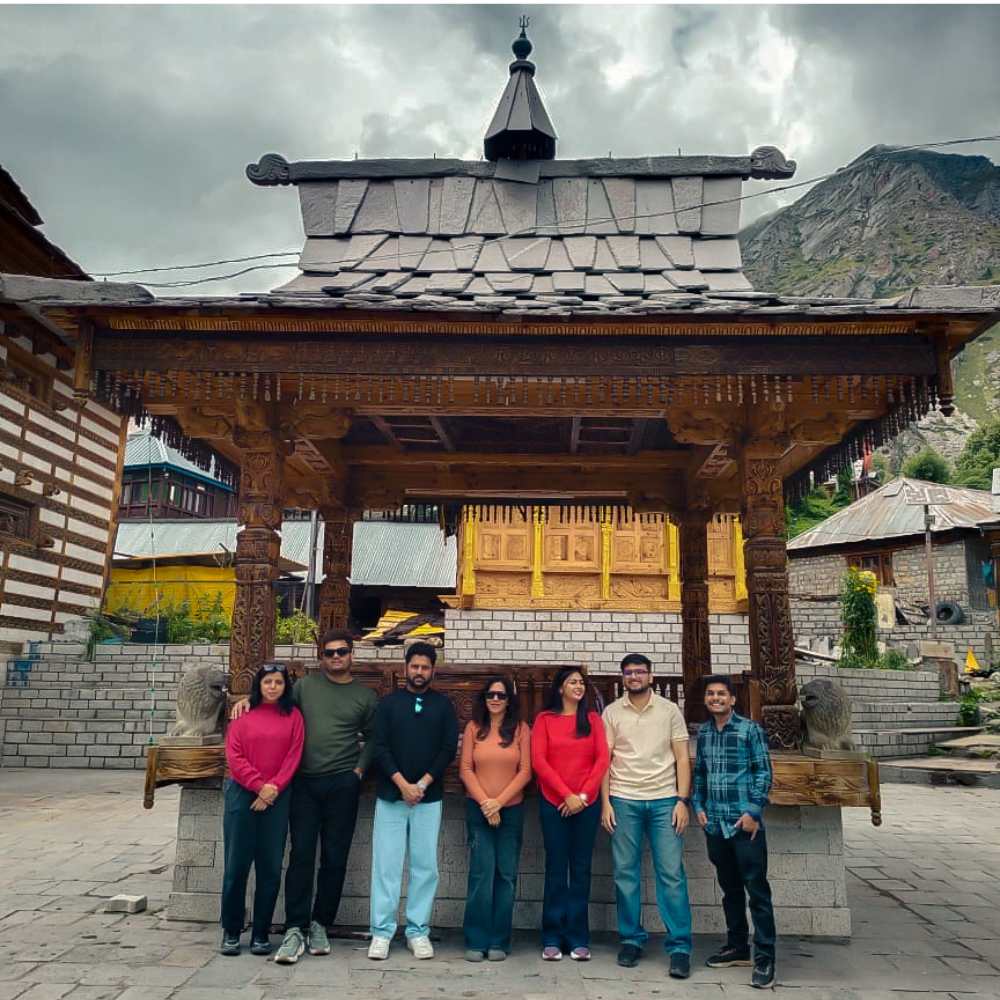 Group Tour5D/4N
Kinnaur Valley Weekend Group Trip With Sangla Chitkul and Kalpa
1D Sangla•1D Kalpa
₹7,999₹9,999SAVE INR 2,000/ person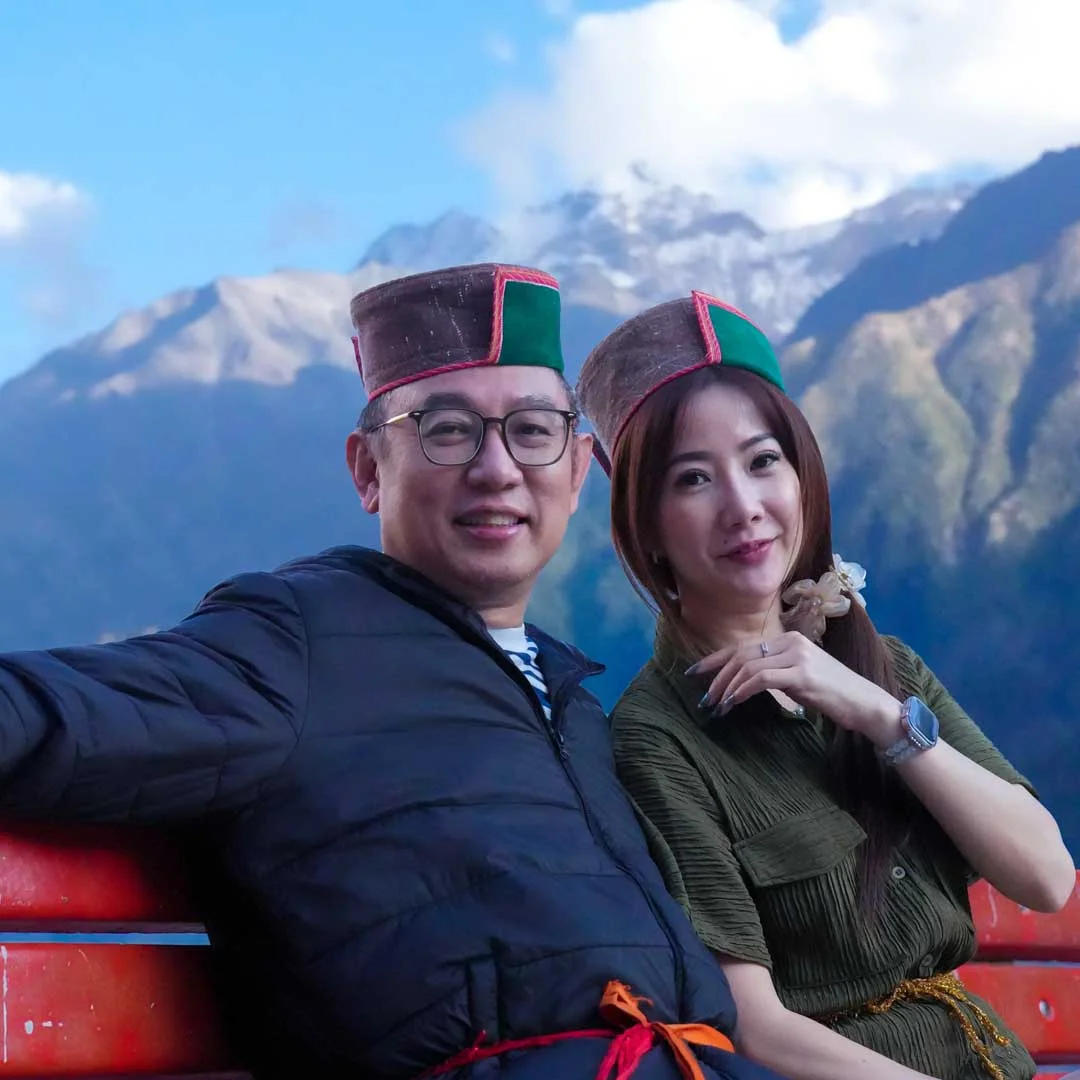 4D/3N
4D/3NKinnaur Valley Scenic Circuit With Sangla Chitkul and Kalpa
1D Shimla•1D Sangla+1
₹16,999₹17,999SAVE INR 1,000/ person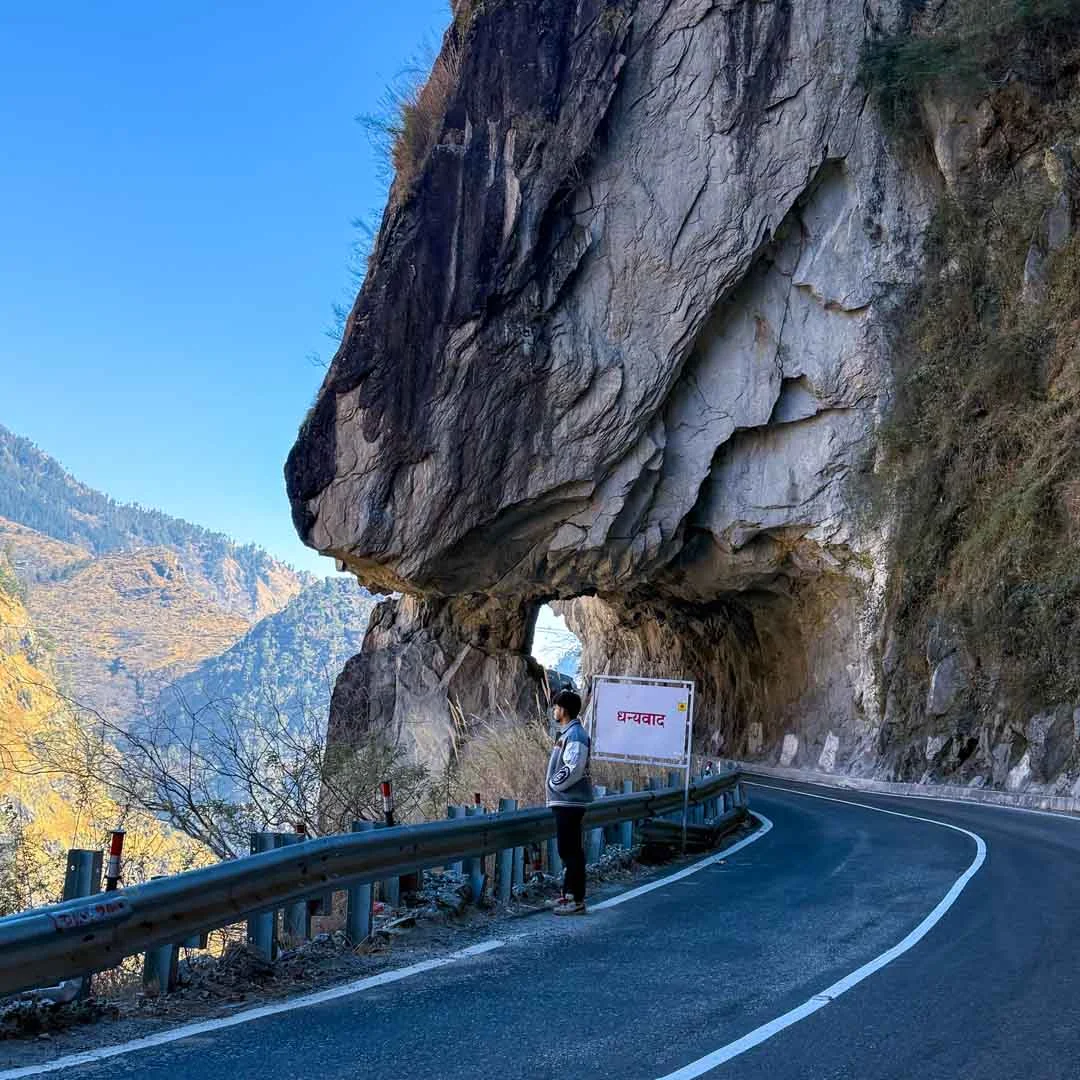 5D/4N
5D/4NKinnaur Tour Package From Delhi With Sangla Chitkul and Kalpa
1D Sangla•1D Kalpa
₹14,999₹16,999SAVE INR 2,000/ person
Common questions about Reckong Peo
Where is Reckong Peo?
Reckong Peo is the district headquarters of Kinnaur, sitting at approximately 2,290 metres (7,500 feet) on NH 5. It is a busy administrative and market town, roughly 235 km from Shimla. Locals call it Peo.
Should I stay in Reckong Peo or Kalpa?
Kalpa, almost always. Peo is a working town with market noise, traffic, and government offices. Kalpa sits 7 km up a steep switchback road and has sharp views of the 79 foot Kinner Kailash rock pillar, old temples, apple orchards, and proper hotels. Kothi, partway up the same road, is a quieter alternative. Stay in Peo only if you arrive late or need an early morning bus.
Is there an ATM in Reckong Peo?
Yes. SBI and PNB ATMs in Peo are the most reliable in Kinnaur and the last reliable ATMs before Spiti Valley. Sangla's ATMs can run dry on busy weekends. Kalpa and Chitkul have none. Withdraw enough here for your entire onward trip.
Can I get fuel and a mechanic in Reckong Peo?
Yes. The fuel pump in Peo is the most dependable in the district and the last reliable one before Spiti. There are also vehicle mechanics near the market for basic repairs. Fill up and get any car issues sorted before heading deeper.
Do I need a permit?
Indian nationals do not need any permit for Kinnaur or the standard route. Foreign nationals heading beyond Jangi (roughly 35 km past Peo) toward Spiti must collect an Inner Line Permit from the DC Office (DM/SDM office) in Reckong Peo. Carry passport copies, visa copies, and passport photos. Processing can take a few hours to a full day. Confirm current requirements locally.
What bus connections are available?
HRTC buses connect to Shimla (roughly 10 hours), Rampur, and Kaza in Spiti (one daily morning bus when the road is open). Local buses and shared taxis run to Kalpa (20 to 30 minutes) and Karcham for the Sangla turnoff.
What is there to see in Reckong Peo itself?
The Brelengi Gompa has a 24 foot seated Buddha statue and a quiet prayer hall with traditional paintings. The Chandika Devi temple in Kothi (a short uphill walk) is a small Kinnauri temple in Kathkuni architecture. The main market sells Kinnauri caps, chilgoza, and dried apricots. In September, the Phulaich flower festival brings locals down from alpine meadows with wildflowers for ancestral shrines.
Does mobile network work?
Airtel, Jio, and BSNL all work in Peo with 4G. This is the best connected spot in Kinnaur. Coverage weakens as you climb to Kalpa and drops further toward Sangla and Chitkul.
Related guides
Posts about Kinnaur
- Yulla Kanda Trek Guide 2026: Route, Best Time, Cost and Planning
- Kinnaur Snowfall Guide 2026: When & Where to Look for Snow
- Christmas & New Year in Kinnaur: A 2026-27 Winter Trip Guide
- Kinnaur in November 2026: Weather, Snow Chances & 7-Day Trip Plan
- Yulla Kanda Trek Distance and Route 2026: Yulla Khas to the Lake
- Yulla Kanda Krishna Temple in 2026: Location, Beliefs & Visiting Etiquette