
Shringa Rishi Temple
A working Kath Kuni shrine to the ruling deity of the Banjar valley, a short climb above Baggi village on the Jibhi side
- Village temple
- Kath Kuni architecture
- ~2,000 m (sources vary)
- Jibhi · ~4 km
- Open year round
What makes it special
Shringa Rishi Temple is a working village temple in Baggi, roughly 4 km above the road from Jibhi and 6.5 km from Banjar town in Kullu district. The shrine is dedicated to Shringa Rishi, known locally as Skirni Deo, the ruling deity of the Banjar valley and one of the eighteen chief deities of the Kullu region. The current pagoda style tower was rebuilt around 2008 in the local Kath Kuni idiom, layered wood and dry stone with no cement or nails, and it sits on a much older seat of worship.
A short note on the lore, because other pages get it tangled. Shringa Rishi, or Rishyasringa, is the Ramayana era sage credited with performing the Putrakameshti yajna for Raja Dasharatha that led to the birth of Rama. The original pindi and the older wooden shrine sit higher up at Skeeran Jot, roughly 12 km from Baggi and at a much higher altitude, buried in snow most of the year. The Baggi temple is the accessible, year round base for darshan. Once a year, usually in May, the deity is carried from Baggi up to Skeeran in a four day palanquin procession for the Shringa Rishi fair.
The reason a regular traveller bothers with it is not the lore. It is the five minutes you spend in the courtyard once you have climbed up, the slate and deodar pagoda against the Banjar ridge, and the fact that the village around the temple is still lived in rather than staged for visitors. Most people do it as a 45 minute stop from Jibhi, often on the walk up to Chehni Kothi, which sits on the same ridge.
Quick answers
- Is Shringa Rishi Temple worth visiting?
- Yes if you are already in Jibhi, Tirthan, or anywhere in the Banjar area and you have 30 to 45 minutes to spare. The woodwork, the climb through a working village, and the wider view of the Banjar valley earn the stop. It is not a destination you build a trip around. It is a good short detour, best combined with Chehni Kothi on the same morning.
- How much time do you need?
- About 45 minutes to an hour at the temple itself. Add 20 to 30 minutes of driving each way from Jibhi, or longer if you climb the stairs from the road instead of driving up. Most travellers pair it with Chehni Kothi and make a relaxed half day of it.
- Can you stay nearby?
- There is no accommodation at the temple itself. Stay in Jibhi or in the wider Tirthan valley, both are within 15 to 45 minutes of Baggi. Jibhi homestays are the standard pick, the Tirthan side is quieter and more river facing.
Quick facts
Everything you need to know at a glance.
At a glance
- Altitude
- Around 2,000 m (sources range roughly 1,800 to 2,100 m, values vary)
- Location
- Baggi village, Banjar tehsil, Kullu district, Himachal Pradesh
- Nearest bases
- Jibhi ~4 km, Banjar ~6.5 km, Aut ~35 km
- Open season
- Generally year round. The Baggi temple is reachable all year, the higher Skeeran shrine only in May.
- Best arrival window
- No strict hours. Between 9 AM and 5 PM works, earlier is quieter
- Entry fee
- None. A small donation is welcomed, never required.
- Time needed
- About 45 minutes on site, half day if combined with Chehni Kothi
- Difficulty
- Easy to moderate. Roughly 500 stone steps from the road, or a steep narrow drive up.
On the ground
- Mobile network
- Patchy. BSNL is the most reliable, Jio and Airtel drop on parts of the climb. Signal is weak inside the courtyard.
- ATMs
- None in Baggi. Nearest ATMs are at Banjar and Aut. Withdraw cash before you head up.
- Fuel
- No fuel at Baggi or Jibhi. Last reliable pumps are at Banjar and on the Aut side. Tank up on the way in.
- Food on site
- A couple of small tea shops in Baggi, opening hours are inconsistent. Plan to eat at your Jibhi homestay before or after.
- Parking
- Informal village parking at the top of the motorable track, or park at the base of the stone steps on the main road. No fees, ask a local where to leave the car.
- Permits
- None required. Active village temple, walk in and out respectfully.
- Drones
- Not welcome. Active shrine, small village, noise overhead is intrusive. Avoid.
- Walking surface
- Roughly 500 stone steps from the main road, or a short uphill walk from the top of the motorable track. Grippy shoes, not slip soles.
- Guides
- Not needed. A local from your Jibhi or Tirthan homestay adds context on the lore and Kath Kuni craft if you have genuine interest.
Seasonal weather
- March to early June18°6°Spring
- July to August22°14°Summer monsoon
- September to early November18°4°Autumn
- Mid November to February8°-4°Winter
Suitable for
- Couples — suitable
- Families — with some care
- Seniors — with some care
- Solo — suitable
- First-timers — suitable
- Pet-friendly — with some care
How to reach Shringa Rishi Temple
4 approach routes, with seasonal access.
From Jibhi
Year round, short closures possible for a day or two after heavy snowfall in peak winter- Distance
- ~4 to 5 km
- Time
- 20 to 30 minutes by road, plus a short walk up
- Road
- Narrow tarmac with a steep final kilometre. Fine for hatchbacks and SUVs. Low slung sedans should park lower.
- Last fuel
- Last fuel at Banjar (~10 km) or Aut (~35 km)
The standard approach. Drive out of Jibhi towards Banjar, take the Baggi turn just before Banjar, and climb the short village road. If you are happy with a steady uphill walk, park at the road junction and take the stone steps instead, which is the route locals use. Drive up, walk down is the trick most travellers settle on after day one.
From Banjar town
Year round- Distance
- ~6.5 km
- Time
- 20 to 25 minutes by road
- Road
- Tarred valley road, narrow village turn at the top
- Last fuel
- Petrol pump at Banjar
Quicker if you are already on the Banjar side for lunch or a market stop. Follow the Jibhi road out of town and take the Baggi left a couple of kilometres up. The temple is a short drive or climb from the turn.
From Bhuntar airport / Kullu
Year round- Distance
- ~50 km from Bhuntar, ~60 km from Kullu city
- Time
- 2 to 2.5 hours
- Road
- NH3 to Aut, then NH305 via the Aut tunnel and Banjar, all blacktop except the last kilometre
- Last fuel
- Bhuntar, Aut, Banjar
The standard route from the airport. Take the Aut tunnel off NH3 onto NH305, follow the Sainj and Tirthan confluence through the Larji gorge to Banjar, then up to Baggi. Road quality is generally good. If you are coming off a flight, most travellers do not try the temple the same day, they sleep at Jibhi first and visit the following morning.
From Delhi and Chandigarh
Year round, occasional winter diversions- Distance
- ~500 km from Delhi, ~270 km from Chandigarh
- Time
- 11 to 13 hours from Delhi, 7 to 8 hours from Chandigarh
- Road
- NH44 to Chandigarh, then Swarghat, Mandi, Aut, Banjar, Baggi via NH205 and NH305
- Last fuel
- Chandigarh, Bilaspur, Sundernagar, Mandi, Aut, Banjar
Most travellers break the drive with a night in Jibhi rather than attempt the temple on the arrival day. An overnight Volvo or HRTC Himsuta to Aut followed by a shared or private cab to Jibhi is the easiest public transport option, around 14 to 15 hours door to door from Delhi.
Best time to visit
Season by season, so you can plan around the weather rather than hope.
- Recommended
Spring
March to early June
The best window, clear courtyards and soft light
- Temperature
- 6 to 18°C
- Crowds
- Low most of spring, spikes during the May fair
- Roads
- Open, occasional short closures after late snowfall
- Photography
- Very good, soft morning and late afternoon light
The valley is green by late March, apple blossom is out by April, and the temple courtyard gets the kind of filtered afternoon light that makes the woodwork look like itself. Crowds stay light until mid May, when the Shringa Rishi fair brings in a large local crowd for a few days.
Summer monsoon
July to August
Green and dramatic, but slippery stairs
- Temperature
- 14 to 22°C
- Crowds
- Low
- Roads
- Open but prone to short landslide closures, check current status before heading out
- Photography
- Moody and green, carry a rain cover for the lens
The valley turns lush and the wooden temple looks its best under grey monsoon skies. The trade off is wet stone steps, brief landslides on the Banjar road, and network that drops for longer stretches. Visit between rain bands, not in them.
- Recommended
Autumn
September to early November
Clearest skies of the year, almost empty
- Temperature
- 4 to 18°C
- Crowds
- Very low
- Roads
- Dry and open
- Photography
- Excellent, long shadows and clean ridgelines
Post monsoon skies are crisp, the valley still holds its green, and by late October the apple harvest is in. The approach road is dry and the stairs are clean. This is the most honestly enjoyable time for a 45 minute visit.
Winter
Mid November to February
Open with care, very quiet and cold
- Temperature
- -4 to 8°C
- Crowds
- Minimal
- Roads
- Generally open, occasional short closures after heavy snowfall
- Photography
- Clean light on fresh snow mornings, bring gloves
The Baggi temple is usually reachable all winter apart from the odd short closure after heavy snowfall. The higher Skeeran shrine is not. Expect cold courtyards, icy step edges in the mornings, and a village that is mostly indoors. If you are okay with that, you will often have the place to yourself.
Things to see & do
8 things worth your time at Shringa Rishi Temple.
Climb the stone steps from the road
20 to 30 min upRoughly 500 stone steps lead from the main road up to the temple courtyard. It is the route the village uses, and it earns you the climb through a working settlement with slate roofed houses, apple plots, and the odd cow in the way. Skip it only if knees are a real issue, in which case drive up instead.
Look at the woodwork up close
10 to 15 minStand at the base of the pagoda for a few minutes before anything else. The layered deodar beams, the carved brackets, and the slate roof are the whole point. A few brackets carry older motifs retained from the pre 2008 shrine, ask the priest if he is around and willing to talk.
Darshan in the inner courtyard
10 to 15 minShoes off at the threshold, a clockwise parikrama around the shrine, and a few minutes sat on the stone floor. No guided patter, no crowd. That is the whole appeal. Donations go in the box, not to anyone at the gate.
Pair with Chehni Kothi
Add 3 to 4 hoursThe standard Banjar morning is the temple around 9 AM, a slow walk up to Chehni Kothi above it, and a late lunch back in Jibhi. The two sit on the same ridge and share the same Kath Kuni idiom, so you see the architecture in both its sacred and defensive forms on one outing.
Visit during the Shringa Rishi fair
Around the 2nd of Jyeshtha, typically mid to late MayThe biggest local festival of the Banjar valley. The deity is carried in a palanquin from Baggi up to the higher Skeeran Jot shrine, with barefoot devotees following, over roughly four days. If you happen to be in the valley in May, it is worth rearranging your day for it. Do not turn up in shorts.
Sit in the lower courtyard
20 to 30 minThere is a flat stone courtyard just below the main shrine that catches afternoon sun and looks out across the Banjar side of the ridge. Nobody is in a rush to push you on. Often the quietest 20 minutes of a Jibhi trip.
Ask about Skirni Deo
10 to 15 minThe sage is called Skirni Deo locally and is considered the king of Kaliyuga in the valley folk belief. The older priests still tell the story unprompted if you show genuine interest. A short, human conversation that no guidebook captures.
Walk further into Baggi village
30 to 45 minPast the temple the village lane carries on into older Kath Kuni houses, small orchards, and a handful of tea spots. You are inside a working Himachali hill village, not on a circuit. Walk with care and ask before photographing homes or people.
Know before you visit Shringa Rishi Temple
The practical bits, from people who have been.
History in one paragraphRamayana era sage, local deity of Banjar, rebuilt 2008 on older roots
Shringa Rishi, also called Rishyasringa, appears in the Ramayana as the son of Sage Vibhandak and the sage credited with Raja Dasharatha's Putrakameshti yajna. In Kullu folklore he is one of the eighteen chief deities of the valley and the ruling deity of Banjar, called Skirni Deo locally and sometimes referred to as the king of Kaliyuga. The original seat at Skeeran Jot, higher up the ridge, holds the old pindi of Shringi and Mata Shanta. The Baggi temple you visit today was rebuilt around 2008 in the same Kath Kuni pagoda idiom as earlier structures. The honest line for travellers is that the lore is ancient, the current building is not, and both are worth knowing about for different reasons.
Photography guideSlate roofs in the afternoon, carved wood in the morning
Morning light works best for the carved brackets and the wood grain on the outer pillars. Late afternoon light catches the slate roof and the ridgeline behind it. The courtyard frames the pagoda cleanly if you step back to the boundary wall.
Do not photograph the inner shrine if the priest signals no, and do not photograph women at the temple without asking. A prime lens around 35 to 50 mm equivalent covers most of what matters. Wide angles tend to distort the tower and miss the craft.
Who should visit, and who should reconsiderWorth it for most travellers in the area, skip the stairs if knees are tricky
Worth the detour for anyone interested in Himachali heritage, Kath Kuni architecture, or local deity traditions. Also worth it as a 30 minute breather on a longer Jibhi day.
Reconsider the stair climb if you are travelling with very small children, have knee or heart issues, or have anyone in the group uncomfortable with a steep narrow drive as the alternative. You do not need to be a pilgrim to feel something here, but you should not come expecting a major monument either. It is a small, alive, lived with temple.
Plan your visitHalf day combined with Chehni Kothi from a Jibhi base
The standard plan is a half day from Jibhi. Leave by 8 or 9 AM, drive or walk up to the temple, spend 30 to 45 minutes on site, continue to Chehni Kothi for the main morning, come back for a late lunch in Jibhi. If you are on a tight itinerary, a 60 minute standalone visit fits neatly between breakfast and checkout.
Weekdays are quieter than weekends. Avoid the exact dates of the May fair unless the fair is why you are there, the village fills up and accommodation around Jibhi gets tight.
Where to stay and eatBase in Jibhi or Tirthan, not at Baggi
There is no meaningful accommodation at Baggi itself. The sensible bases are Jibhi for convenience and the cafe scene, or Gushaini and Nagini in the Tirthan side for quieter river facing stays. Both are within 30 to 60 minutes of the temple.
For food, eat at your homestay or pick up a proper meal at a Jibhi cafe before you head up. The tea shops in Baggi are casual and their hours are inconsistent, do not plan lunch around them.
Safety and healthStairs slippery in rain, icy in winter, modest altitude
Altitude is modest, generally around 2,000 m, and does not cause altitude issues for most travellers coming from the plains. The main concerns are the stone steps, which are slippery in the monsoon and icy on winter mornings, and the steep narrow drive, which can be uncomfortable for first time hill drivers.
Wear shoes with real grip. Carry water on the stair climb. If anyone in the group has knee or heart issues, drive up instead of taking the steps, and take the descent slow on the way back.
Do's and don'tsModest dress, no shoes inside, ask before photographing
Dress modestly, shoulders and knees covered is the local norm. Remove shoes before entering the inner courtyard. Walk clockwise around the shrine. Donations go in the temple box and are always optional, ignore anyone at the gate who suggests otherwise.
Do not climb on the wooden structure or touch the carved brackets. Keep conversations low near the shrine. Leave the drone at the homestay. If the priest is performing rituals, step back and wait, do not walk through.
Local tips from the groundDrive up, then walk down, and go early in spring or autumn
A trick locals pass on to first time visitors. If you are not keen on the full climb, drive up to the village, spend your time at the temple, and walk down the stone steps. The descent is easier on the knees than the ascent and you still get the village on foot.
Start by 9 AM in spring and autumn so you are back in Jibhi for a proper lunch. If you are going during the May fair, park well below Baggi and walk in, the village road is impossible to navigate during the procession. And keep a BSNL sim in a spare phone if you rely on being reachable, the other networks drop often in the final stretch.
Nearby attractions
Other places worth the detour.
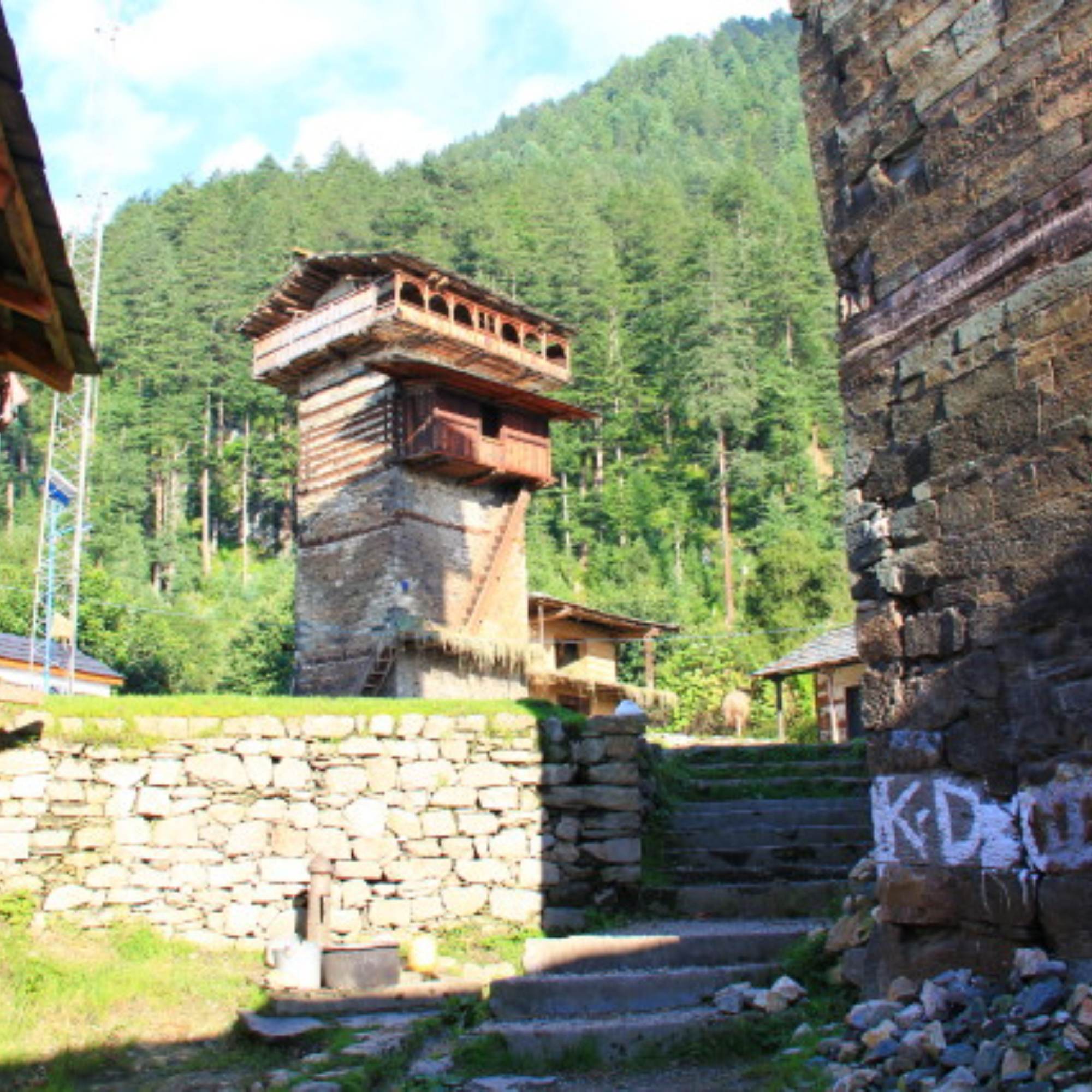
Chehni Kothi
~1 to 2 km further up the ridge, 30 to 45 min walk
The tall Kath Kuni stone and wood tower above Baggi, several centuries old, partly reduced by the 1905 Kangra earthquake. Most people walk past Shringa Rishi Temple on the way up, so pair the two in a single morning.
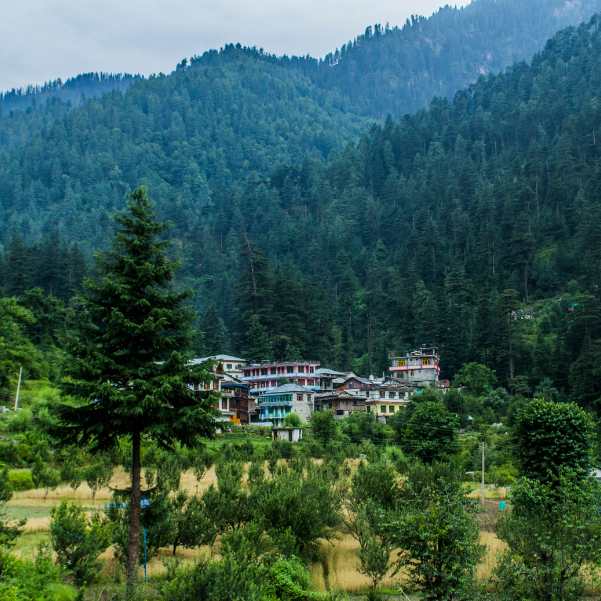
Jibhi village
~4 km, 20 min drive
The closest base, with homestays, cafes, and the small Jibhi Waterfall a short walk from the market. Most temple visits start and end here.
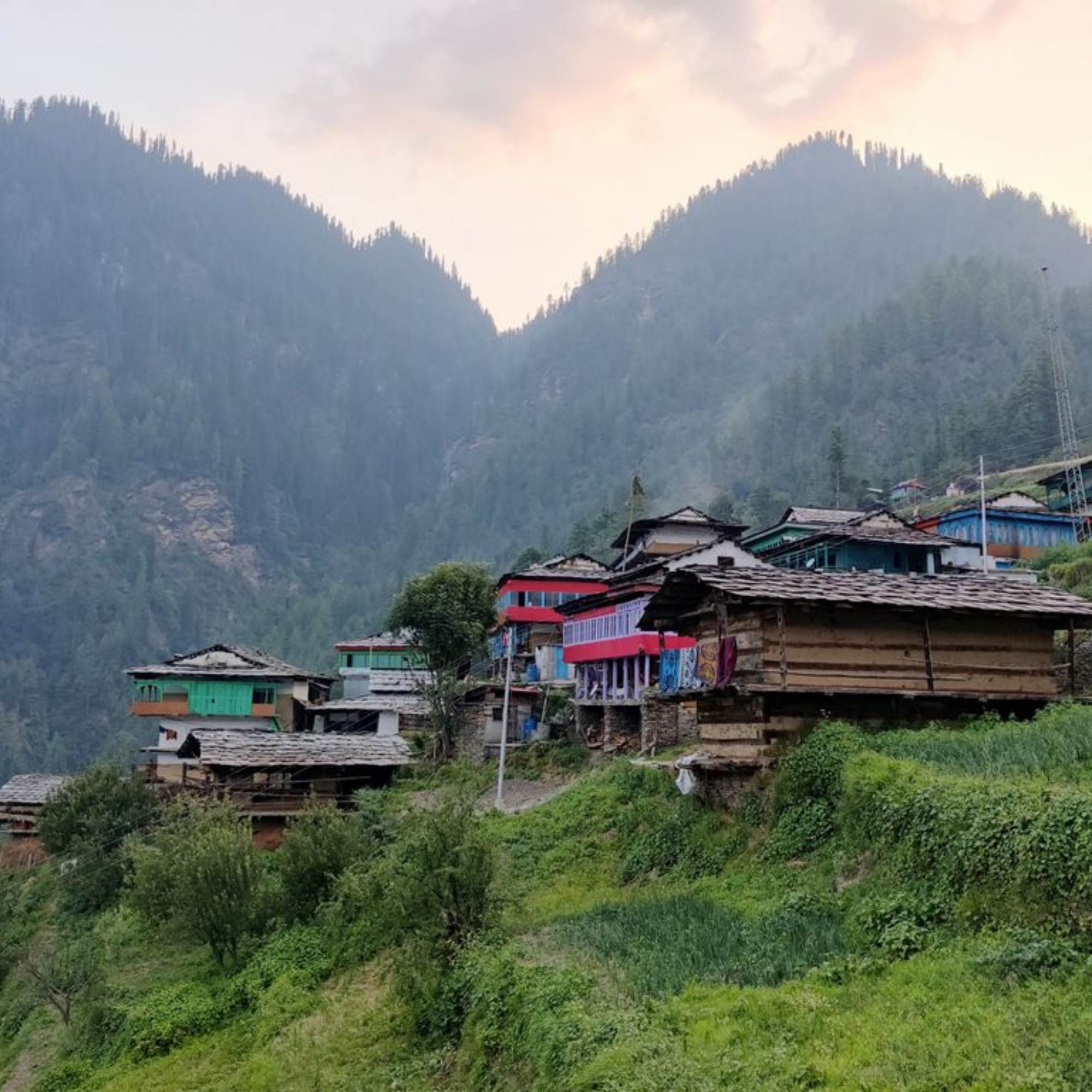
Shoja Village
~15 km, 40 min drive
A quieter high village above Jibhi on the way to Jalori Pass, known for deodar and pine forest and calmer homestays. A good alternative base if Jibhi feels crowded.
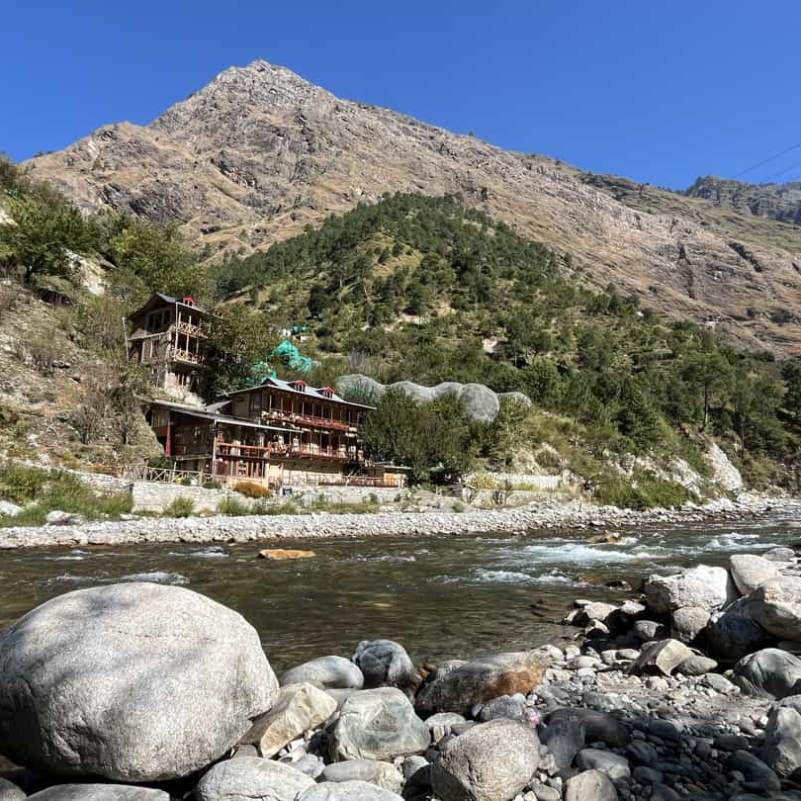
Tirthan Valley
~15 to 25 km
The trout rich river valley on the southern side of Banjar, with riverside homestays and access to the Great Himalayan National Park.
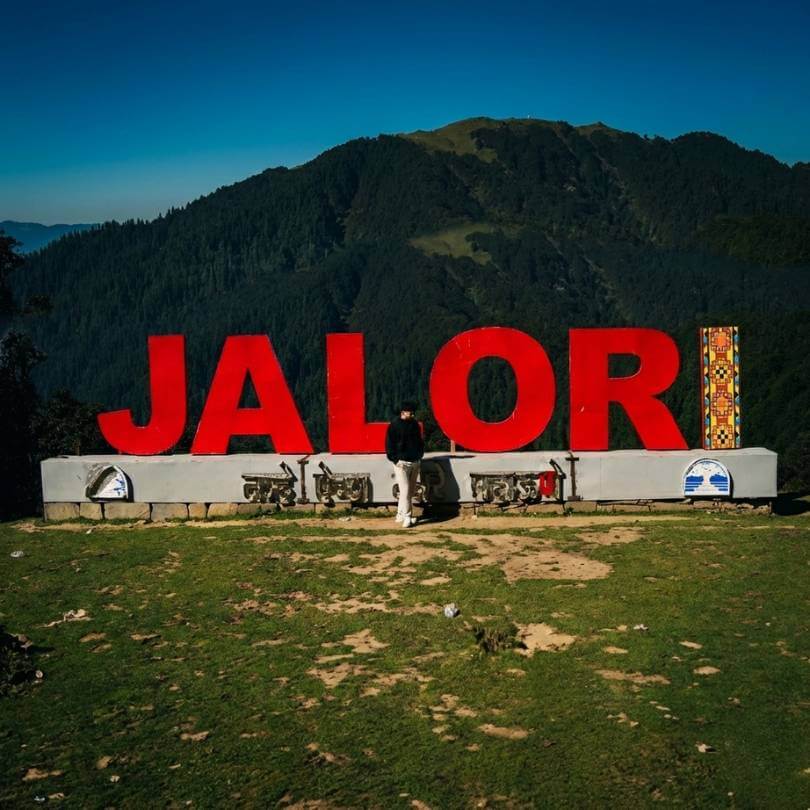
Jalori Pass
~20 km, 1 to 1.5 hour drive
The 3,120 m road pass above Jibhi and Shoja, with Mahakali Temple at the top and trailheads for Serolsar Lake and Raghupur Fort.
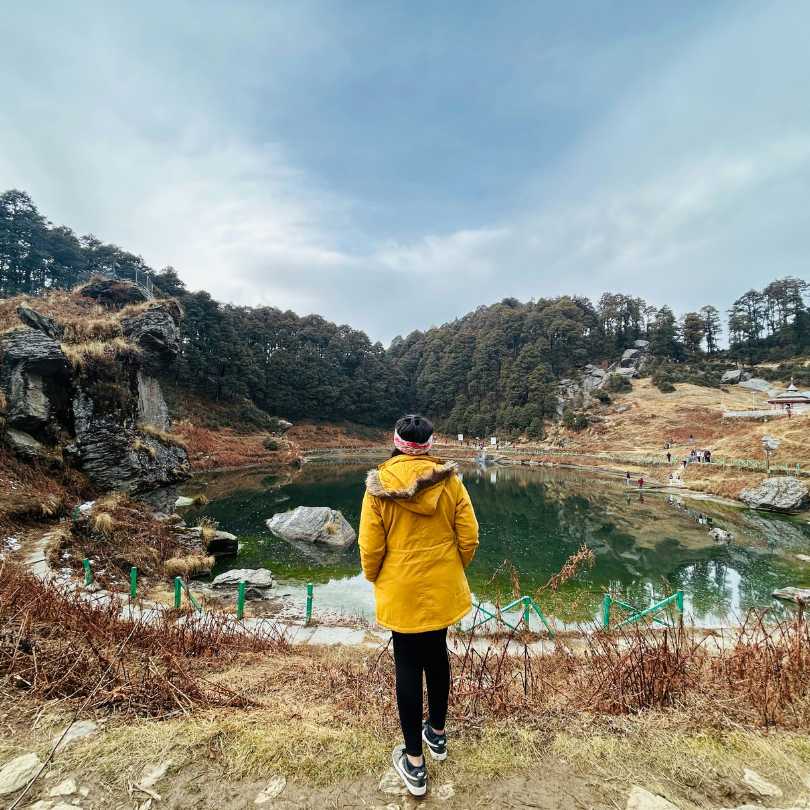
Serolsar Lake
~25 km drive plus a 5 km walk from Jalori Pass
A small sacred alpine lake reached by an easy forest walk from Jalori Pass. The most popular day trek from the Banjar area.
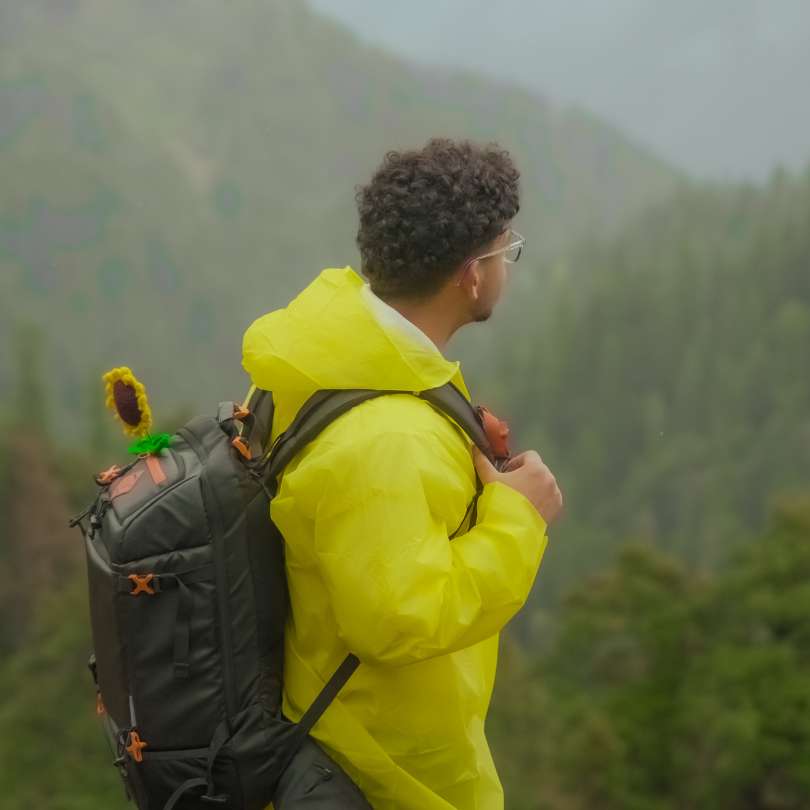
Raghupur Fort Trek
~25 km drive plus a short steep walk from Jalori Pass
A short steep hike from Jalori Pass to a meadow ridge with old fort walls and a wide view across the Pir Panjal and the Great Himalayan Range.
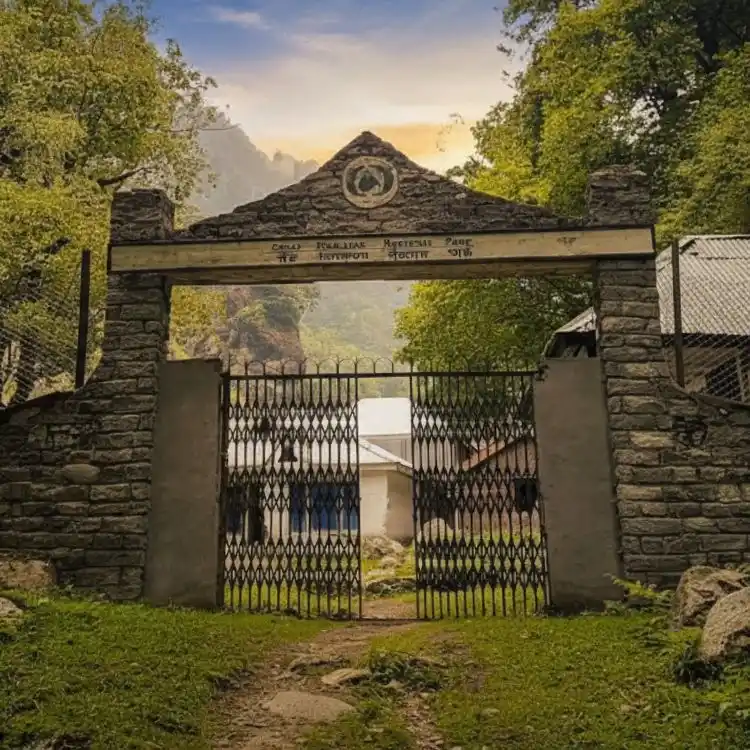
Great Himalayan National Park
Tirthan entry ~25 km
UNESCO World Heritage site covering the Tirthan, Sainj and Jiwa catchments. Needs permits and a real trekking plan.
Our packages with Shringa Rishi Temple
Curated trips that include a visit to Shringa Rishi Temple.
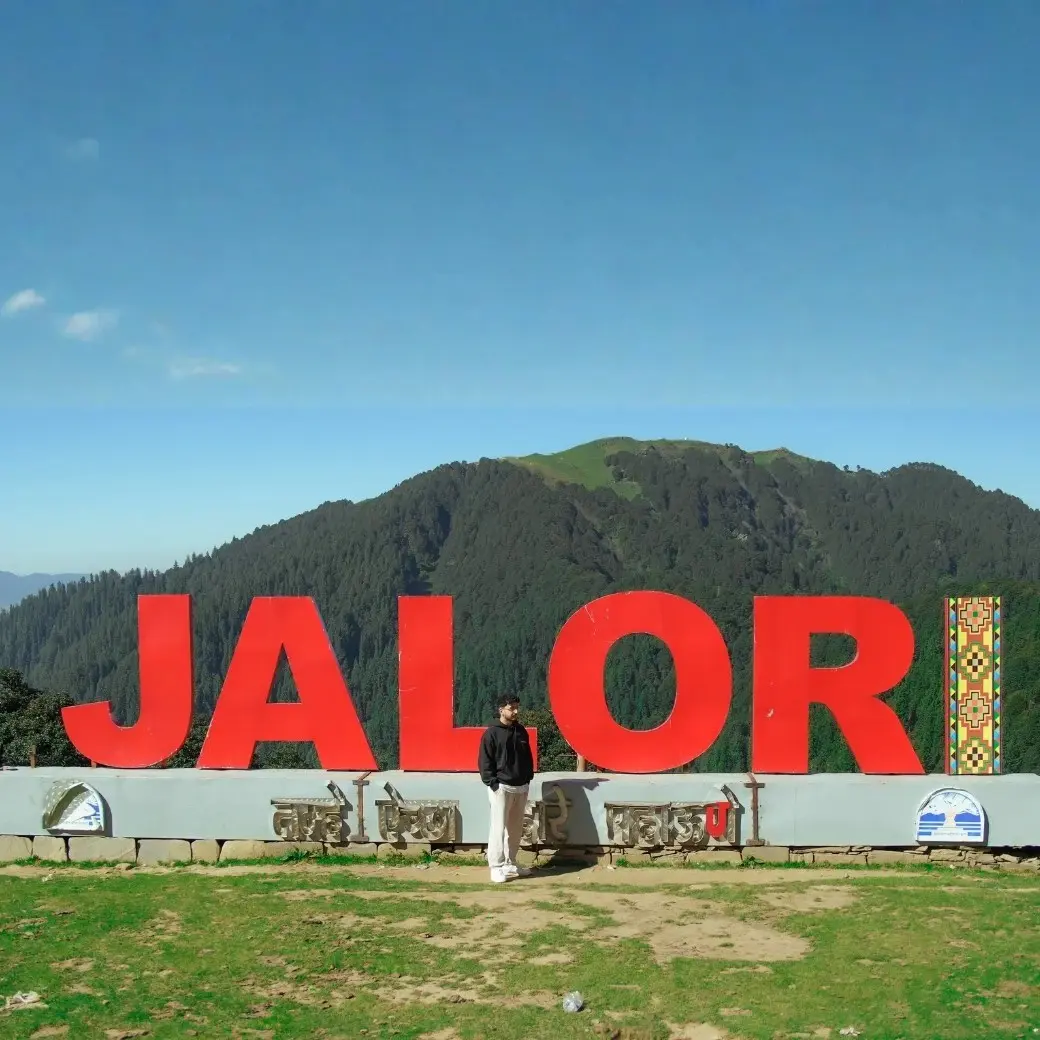 5D/4N
5D/4NWeekend Jibhi & Tirthan Valley Riverside Escape
1D Delhi •2D Jibhi / Tirthan Valley+1
₹12,900₹19,999SAVE ₹7,099/ person Group Tour5D/4N
Best Jibhi Tirthan Valley & Jalori Pass Weekend Tour From Delhi
1D Delhi •2D Tirthan Valley+1
₹5,999₹6,599SAVE ₹600/ person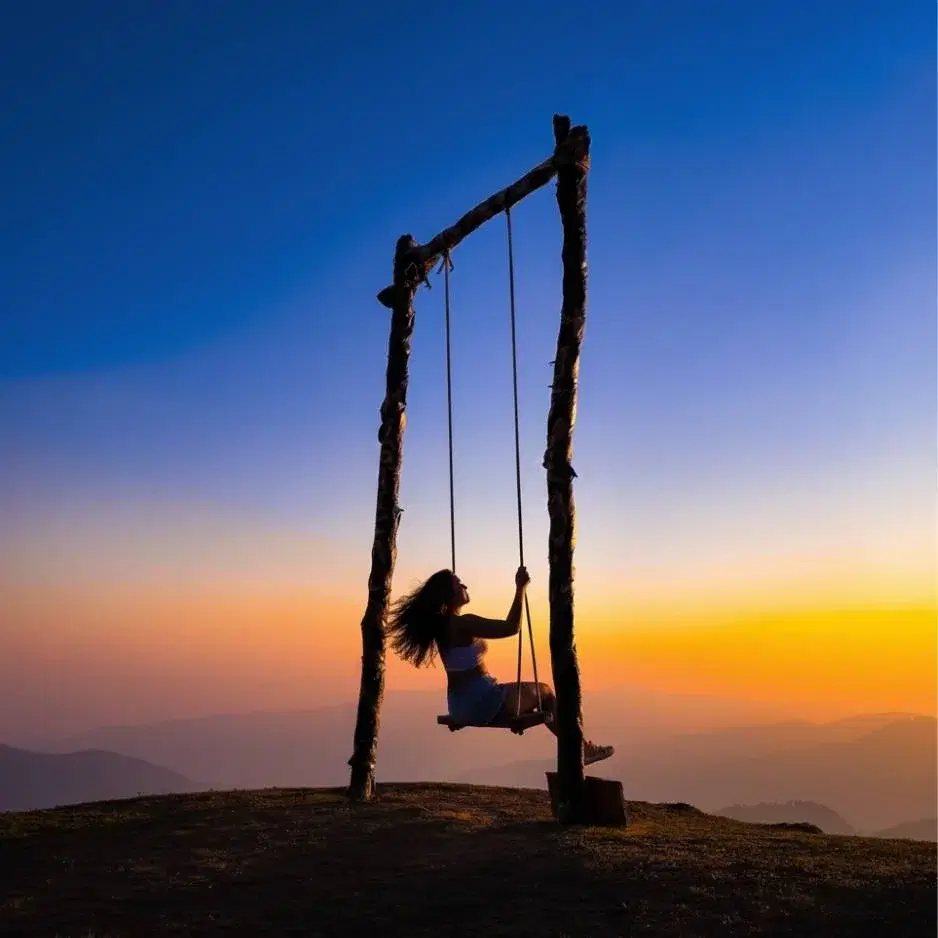 6D/5N
6D/5NBest Jibhi Tirthan Valley & Shangarh Meadows Trip
1D Delhi •2D Tirthan Valley+2
₹15,999₹21,900SAVE ₹5,901/ person
FAQ
Where is Shringa Rishi Temple?
In Baggi village in the Banjar valley, Kullu district, Himachal Pradesh. Roughly 4 km from Jibhi, 6.5 km from Banjar town, and about 60 km from Kullu city.
What is the best time to visit?
Mid March to early June and mid September to early November are the cleanest windows. Spring brings apple blossom and soft light, autumn the clearest skies. Monsoon and winter are possible but come with slippery steps or cold courtyards. Confirm road status close to your travel date in the shoulder months.
Is there an entry fee?
No. It is a working village temple. A small donation in the box is welcomed but never required. Ignore anyone at the temple gate asking for mandatory fees.
How do I reach the temple from Jibhi?
Drive out of Jibhi towards Banjar, take the Baggi turn before Banjar, and either drive up the narrow village road or park at the base and climb the roughly 500 stone steps. The drive is steep but manageable in a hatchback or SUV, sedans should park below.
Is the drive up difficult?
The last kilometre is narrow and steep with blind turns. Fine for anyone comfortable with hill roads and a small to mid size car. Low slung sedans should park at the base of the stairs. First time hill drivers will find it tight and should go slow.
Can I go inside the temple?
The inner sanctum is open for darshan, shoes off, modest dress, clockwise parikrama. The wooden upper levels are not a tourist climb. Respect whatever threshold the priest or locals set for the day, especially during rituals.
How long should I plan for the visit?
About 45 minutes to an hour on site. With driving from Jibhi and a combined Chehni Kothi walk, budget a half day of roughly 4 to 5 hours.
Is it suitable for families and seniors?
Yes if you drive up and skip the stairs. The final courtyard is flat and easy to move around. Stairs from the road are steep and not ideal for very small children or anyone with knee or heart issues. Older travellers in the group can sit in the courtyard while the rest walk around.
Is there mobile network at the temple?
Patchy. BSNL works the most reliably. Jio and Airtel drop on the final climb and in parts of the courtyard. Tell your homestay your plan before you head up.
Is photography allowed?
Yes in the courtyard and of the exterior. Avoid photographing the inner shrine if the priest signals no, and always ask before photographing people or homes in the village.
When is the Shringa Rishi Fair held?
Generally around the 2nd of Jyeshtha in the Hindu calendar, which usually falls in mid to late May. The festival runs about four days, with the deity carried in a palanquin from Baggi up to the higher Skeeran Jot shrine. Check local Kullu district updates close to your dates, the exact start can shift by a day or two.
Can I combine the temple with Chehni Kothi?
Yes, and most travellers do. The two sit on the same ridge above Baggi. The standard morning is temple first, Chehni Kothi next, late lunch back in Jibhi.