
Shangarh Meadows
A wide sacred meadow ringed by pine and deodar at around 2,100 metres in the Sainj Valley, with the Shangchul Mahadev Temple on one edge and the Great Himalayan National Park on the other
- Village meadow
- ~2,100 m
- GHNP ecozone
- Aut · ~25 km
- Best Mar to Jun, Sep to Nov
What makes it special
Shangarh is a small village in the Sainj Valley of Kullu district, sitting at approximately 2,100 metres (around 6,900 feet) on the western edge of the Great Himalayan National Park. The village itself is a scatter of homes, a few homestays, a couple of small cafes near the road head, and a road that narrows to almost nothing on the last stretch in. What people come for is the meadow.
The Shangarh Meadow is a wide, flat expanse of green grass, ringed on all sides by tall pine and deodar forest, with mountain ridges visible above the tree line on clear days. At one corner stands the three tiered Shangchul Mahadev Temple, a wooden Kath Kuni structure dedicated to a local form of Shiva. Local belief says the Pandavas levelled and sieved this ground during their exile, which is why there is not a single stone on the entire meadow. Whether or not you care about the mythology, the fact is striking. The grass is genuinely smooth and clean, and cows graze freely across it every afternoon. In the late morning, the resinous smell of warm deodar settles over the open ground, and the only sounds beyond that are wind in the pine tops and a cowbell.
Here is the honest framing most websites skip. Shangarh is not a destination with a list of things to do. There is no market, no evening scene, no cafe strip, and no guided sightseeing. What there is, is the meadow, the temple, a few forest walks that start from the village, and the kind of quiet that takes a full day to properly sink in. Travellers who come expecting Jibhi level options leave disappointed. Travellers who come for two still nights with a book, a dawn walk to the meadow, and whatever the homestay cooks for dinner leave genuinely rested. Pick Shangarh if that is your trip. Pick Tirthan Valley or Jibhi if you want more structure and options. Beyond this opening contrast, the rest of your stay here is best framed by what is actually around you: the depth of the deodar canopy, the slate roofs above the trees, and the kind of forest you walk into rather than past.
Quick answers
- Is Shangarh Meadows worth visiting?
- Yes, if you want a genuinely quiet Himalayan village with a wide sacred meadow, no crowds, and the GHNP buffer on your doorstep. The meadow at dawn, with the temple, the deodar forest and the mountains behind, is one of the better sights in this part of Himachal. Skip it if you need cafes, a packed itinerary, or reliable mobile signal. Shangarh gives back to travellers who bring nothing but time.
- How much time do you need?
- Two nights is the minimum that makes the drive worthwhile. Three nights is the sweet spot if you want a morning at the meadow, a half day walk to Barshangarh Waterfall, and one full day of doing absolutely nothing. One night is rushed because the drive in from Aut or Sainj eats half the day. More than four nights starts to feel long unless you are working remotely or planning a proper GHNP trek from here.
- How is Shangarh different from Tirthan Valley or Jibhi?
- Shangarh is on the Sainj Valley side, not the Tirthan side. It is quieter, less developed, and has fewer homestay options. The main draw is the meadow and the pine and deodar forest, not a river. Tirthan has the riverside homestay belt and the trout fishing. Jibhi has more cafes, more travellers, and more evening options. Shangarh suits people who specifically want the stiller, emptier version of this corner of Kullu.
Quick facts
Everything you need to know at a glance.
At a glance
- Altitude
- Approximately 2,100 m (around 6,900 feet). The village and meadow sit at this elevation; surrounding forest trails and upper ridges climb higher into the GHNP buffer zone.
- Location
- Sainj Valley, Kullu district, Himachal Pradesh. On the western edge of the Great Himalayan National Park ecozone.
- Nearest towns
- Sainj town ~15 km back down the valley, Aut ~25 km at the highway turn off, Larji at the Beas confluence.
- Open season
- Year round, though the road can be tricky in deep winter. Best March to June and September to early November.
- Time needed
- Two nights minimum, three is the sweet spot.
- Entry fee
- None to enter the village or the meadow. GHNP permits needed if you walk deeper into the Sainj sanctuary.
- Access difficulty
- Easy by road to Sainj, then a narrower and rougher road for the last 10 to 15 km to Shangarh. No high clearance vehicle needed in dry weather, but the road tests patience.
On the ground
- Mobile network
- Very patchy. BSNL catches a signal in parts of the village. Jio and Airtel are unreliable. Assume you are mostly offline for the stay.
- ATMs
- None anywhere near Shangarh. The nearest usable ATM is at Sainj town, and even that is not always stocked. Withdraw enough cash at Aut or Mandi before driving in.
- Fuel
- No fuel in Shangarh or Neuli. The nearest pump is at Sainj town. Tank up at Aut or Bhuntar on the way in.
- Food
- Homestays are the primary, most reliable, and highly recommended option for fresh home cooked meals. A few small cafes and dhabas exist near the road head, useful for a chai or a quick bite, but hours are inconsistent and menus are short. Stick with the homestay for proper meals.
- Parking
- Informal parking at homestays or on the village road. No fees.
- Permits
- None for the village or meadow. GHNP entry beyond the Sainj side gate needs a permit from the Ropa Sainj range office or the GHNP HQ at Shamshi, plus a registered guide.
- Drones
- Not welcome near the GHNP boundary, which is right next to the village. Treat the answer as no.
- Walking surface
- Grass on the meadow, dirt forest trails on the short walks, rougher paths on the Barshangarh and Pundrik Rishi routes. Sturdy shoes recommended for anything beyond the meadow.
Seasonal weather
- March to early June22°6°Spring
- July to August24°14°Summer monsoon
- September to early November20°4°Autumn
- Mid November to February12°-4°Winter
Suitable for
- Couples — suitable
- Families — suitable
- Seniors — with some care
- Solo — suitable
- First-timers — suitable
- Pet-friendly — with some care
How to reach Shangarh Meadows
5 approach routes, with seasonal access.
From Aut (the highway turn off)
Year round. The last stretch can be slow and muddy after monsoon. Winter snow is rare at the village level but the road can ice over on shaded sections.- Distance
- About 25 km
- Time
- 1.5 to 2 hours
- Road
- NH 3 through the Aut tunnel to Larji, then the Sainj valley road. Tarred to Sainj town, narrower and rougher for the last 10 to 15 km to Shangarh.
- Last fuel
- Aut and Sainj town
The standard approach. From Aut on the Manali highway, drive through the 3 km Aut tunnel towards Larji. At Larji, where the Sainj and Beas rivers meet, take the left fork into the Sainj valley road. Sainj town is about 15 km in. Past Sainj, the road narrows and climbs gradually through pine forest to Shangarh, with the turnoff for Neuli and the GHNP gate along the way. The last 10 to 15 km are slow, with rough patches and occasional blind turns. Drive at a calm pace and use the horn. A small car manages fine in dry weather, but a vehicle with some ground clearance makes the last stretch more comfortable.
From Delhi
Year round on the approach.- Distance
- About 490 to 510 km to Shangarh
- Time
- 13 to 15 hours door to door
- Road
- NH 44 to Chandigarh, NH 3 to Aut, then the Sainj valley road. Mostly decent tar until Sainj, rough after.
- Last fuel
- Chandigarh, Swarghat, Bilaspur, Sundernagar, Aut, Sainj
Most travellers take an overnight Volvo to Aut, arriving between 5 and 7 AM, and then a pre booked taxi from Aut to Shangarh, around 1,500 to 2,500 rupees one way. Self drive runs 13 to 15 hours with a lunch stop at Mandi. Plan an overnight at the homestay rather than trying to do anything on arrival day. Reaching by lunch gives you the whole first afternoon at the meadow.
From Chandigarh
Year round.- Distance
- About 280 km
- Time
- 9 to 10 hours
- Road
- NH 3 through Swarghat, Bilaspur, Sundernagar, Mandi, Aut, then Sainj valley road.
- Last fuel
- Swarghat, Bilaspur, Sundernagar, Aut, Sainj
Leave Chandigarh by 6 AM for a mid afternoon arrival. The Chandigarh to Mandi stretch is fast highway. The last 25 km from Aut to Shangarh is the slow section. Self drive is the usual choice from Chandigarh, direct buses are not available.
From Manali
Year round.- Distance
- About 90 to 100 km
- Time
- 3 to 3.5 hours
- Road
- NH 3 south to Aut, through the tunnel, then the Sainj valley road.
- Last fuel
- Kullu, Bhuntar, Aut, Sainj
Drive south on NH 3 from Manali to Aut, through the Aut tunnel, and turn left at Larji into the Sainj valley. About 3 to 3.5 hours of actual driving. A natural addition if you are doing a Manali plus Sainj combination across one trip.
From Bhuntar Airport (Kullu Manali)
Year round on the road. Bhuntar flights are weather sensitive.- Distance
- About 55 to 65 km
- Time
- 2 to 2.5 hours
- Road
- NH 3 to Aut, then Sainj valley road.
- Last fuel
- Bhuntar, Aut, Sainj
Hire a taxi from Bhuntar airport, around 2,500 to 4,000 rupees one way. Allow 2 to 2.5 hours. Most homestays can pre book a driver if you share your flight details.
Best time to visit
Season by season, so you can plan around the weather rather than hope.
- Recommended
Spring
March to early June
The cleanest window for the meadow, the forest walks, and the mountains behind the tree line
- Day temperature
- 14 to 22 C
- Night temperature
- 6 to 10 C
- Trails
- Dry and easy underfoot
- Crowds
- Light to moderate, busier on May and June weekends
Usually the best window. The meadow turns a deep green after the last of the winter brown lifts, wildflowers start appearing at the forest edges, and on clear mornings the snow peaks above the tree line are sharp. Days are warm enough for a long sit on the grass. Nights are crisp but manageable with a proper jacket. Weekends from May get busier as the word spreads, weekdays stay calm. Book ahead for May and June weekends.
Summer monsoon
July to August
Skippable for most, the road gets rough and the meadow stays wet
- Day temperature
- 18 to 24 C
- Night temperature
- 14 to 16 C
- Trails
- Muddy, leeches in lower forest
- Crowds
- Low
The approach road from Sainj sees occasional landslides, the forest trails turn muddy, and leeches appear in the lower sections. The meadow stays wet and loses the clean green look it has in spring. Most homestays drop rates in monsoon for a reason. If you come in August, carry a proper rain shell and fast drying shoes, and accept that the trip is about mist and forest rather than views.
- Recommended
Autumn
September to early November
Sharpest air of the year, the meadow at its cleanest, apple harvest in the orchards below
- Day temperature
- 12 to 20 C
- Night temperature
- 4 to 8 C
- Trails
- Dry and bright, the best underfoot of any season
- Crowds
- Moderate in October, drops sharply by early November
If you can time it, late September to mid October is the best version of Shangarh. Post monsoon air clears the mountain views, the meadow dries out and turns a deep even green, and the whole village feels like a painting you walked into. Nights start to bite by November, pack a proper warm layer. Weekends in October bring more visitors, weekdays are quiet.
Winter
Mid November to February
Cold, quiet, and occasionally dusted with snow
- Day temperature
- 4 to 12 C
- Night temperature
- -4 to 2 C
- Trails
- Cold, occasional ice on shaded forest paths
- Crowds
- Very low, slightly busier around Christmas and New Year
Shangarh gets occasional snowfall at 2,100 m, more often a light dusting than a heavy cover. The meadow in fresh snow, with the temple and the deodar forest, is genuinely beautiful if you can handle the cold. Most homestays stay open through winter but expect bucket hot water and basic heating. The road can be tricky on icy mornings. Carry serious warm layers, a headlamp, and confirm road conditions before driving in.
Things to see & do
8 things worth your time at Shangarh Meadows.
Walk the meadow at dawn
1 hour, no more neededThe one thing you must do. Walk to the meadow at first light, when the grass is wet with dew and the deodar silhouettes are sharp against the early sky. The temple sits quiet at one end. Cows have not yet come out. You will have the whole ground to yourself for 30 to 40 minutes before the village wakes up. Bring a jacket, the morning air bites even in May. No guide needed, the meadow is a two minute walk from most homestays.
Visit the Shangchul Mahadev Temple
30 minutes to an hourThe three tiered wooden temple in Kath Kuni style sits at the edge of the meadow, dedicated to a local form of Shiva. Locals say Shangchul Mahadev specifically blesses those who have been outcast or rejected by society, which is why Shangarh is known as a village that welcomes eloping couples. The temple is active, with local festivals through the year. Remove shoes and caps before entering, this is taken seriously. The wooden carvings on the upper tiers are worth a close look if you are interested in Himachali temple architecture.
Hike to Barshangarh Waterfall
3 to 4 hours round tripA walk from the village through smaller settlements like Goshati and Darari, crossing small streams and wildflower patches, ending at a tall waterfall dropping into a forest pool. The trail is about 2 to 3 km each way, easy to moderate, with the conifer canopy keeping the path cool even at midday. Best done in the morning before the afternoon clouds build. The path is obvious in dry weather, ask your homestay for directions and current trail conditions. Carry water and a snack, there is nothing along the way.
Walk to Pundrik Rishi Lake and Upper Neahi
Half dayA short hike from the village to a small lake associated with the sage Pundrik Rishi, near the village of Upper Neahi. The walk passes through deodar forest and opens out to one of the quieter corners of the Sainj Valley. Upper Neahi and nearby Sarahan are among the most scenic small villages in the area, with their own small meadow. Combine this with the lake for a good half day out. Ask your homestay for the current trail status.
Trek to Lapah village
4 to 5 hours one way, or overnightA proper half day to full day walk from Shangarh deeper into the GHNP buffer, through dense pine and deodar forest with good views of the Sainj Valley. Lapah is a small settlement inside the park boundary, and local guides from Shangarh know the route well. The trail is not marked for tourists, so a guide is strongly recommended. You can camp at Lapah if you arrange it in advance through the GHNP office or your homestay. This is the natural next step if you want more than the meadow walk.
A still afternoon at the meadow with a book
As long as you wantPick a spot on the grass, lie down, and do nothing. The meadow is flat, clean, and wide enough that you can sit 50 metres from anyone else and still feel private. In the afternoon, local families come out, cattle graze across the far end, and the light shifts across the deodar tops. The smell of warm pine and grass settles in around 3 PM, the kind that you only notice when there is nothing else competing for your attention. This is honestly the main activity at Shangarh. Two afternoons of this across a three night stay is the right ratio.
Day trip to the GHNP gate on the Sainj side (Ropa Complex)
Half dayThe GHNP Sainj side gate and Ropa Complex is a short drive or walk from the Neuli turnoff, not far from Shangarh. It has a small interpretation area and is the starting point for deeper GHNP treks on the Sainj side. A brief visit gives you context for the park's geography. If you want to walk into the Sainj Wildlife Sanctuary beyond the gate, you will need a permit and a guide from the Ropa Sainj office.
Eat homestay food and sit with the hosts
Across your stayThe food at Shangarh homestays is simple home cooking. Rajma chawal, dal, roti, seasonal sabzi, and if you are lucky, siddu or local Himachali dishes. Tell your host at check in what you cannot eat and let them decide the menu. The best meals here are the ones you did not plan. If the host is cooking something special for the family, ask to try it. Dinner conversations with the homestay family are often the most memorable part of the trip.
Know before you visit Shangarh Meadows
The practical bits, from people who have been.
What Shangarh actually isA small Sainj Valley village at approximately 2,100 m with a wide sacred meadow, the Shangchul Mahadev Temple, and the GHNP buffer next door.
Shangarh is a small village in the Sainj Valley of Kullu district, sitting at approximately 2,100 metres (around 6,900 feet) on the edge of the Great Himalayan National Park ecozone. The village and the meadow sit at this elevation; the surrounding forest trails and upper ridges climb higher into the GHNP buffer zone. The village has a handful of homestays, a couple of small cafes that have opened near the road head, and a road that gets progressively rougher on the last stretch in from Sainj town.
The centrepiece is the meadow. A wide, flat grassland ringed by pine and deodar forest, with mountain ridges visible on clear days. The Shangchul Mahadev Temple, a three tiered Kath Kuni wooden structure, sits at the edge of the meadow. Locals consider the entire ground sacred. The legend credits the Pandavas with levelling and sieving the soil, which is why the meadow is genuinely free of stones and boulders. Cattle graze here through the day, families gather in the evenings, and the whole area has the feel of a village common that has been protected by faith for centuries.
The Sainj Valley context matters. Shangarh sits in the same broader area as Tirthan Valley, Jibhi, and Shoja, but on a different road and a different river. The Sainj Valley is less developed, has fewer homestays, less English, and fewer travellers than the Tirthan side. That is the point. If you have already done Tirthan and want the quieter version, Shangarh is the natural next step.
Shangarh vs Tirthan vs Jibhi: which to pickShangarh for the meadow and silence, Tirthan for the river and fishing, Jibhi for cafes and options.
These three are all within an hour or two of each other by road, but they suit different trips.
Pick Shangarh if: you want the meadow, the forest walks, genuine quiet, and a village where the tourism infrastructure is still basic. Good for couples, solo travellers, and anyone who specifically came to decompress. The draw here is the landscape and the pace, not a list of activities.
Pick Tirthan Valley if: you want riverside homestays, trout fishing on the Tirthan, and the easiest GHNP gate access at Ropa. More developed, more homestay choice, a more established traveller scene. Our Tirthan Valley and Gushaini guides cover that side in detail.
Pick Jibhi if: you want cafes, more food options, a livelier evening, and easy access to Jalori Pass for day walks.
A pragmatic plan. If you have four or five nights, split between Shangarh (two nights for the meadow) and Tirthan (two nights for the river). You see both sides of the area, and the drive between is about 2 hours via Aut and Larji.
Where to stay in ShangarhSimple homestays and a Zostel, rates roughly 1,500 to 4,000 rupees a night, book ahead in peak season.
Shangarh has a growing number of homestays, most of them simple family run properties within a short walk of the meadow. A Zostel has also opened here, adding a backpacker option. Rates broadly run 1,500 to 4,000 rupees a night for two, with meals usually included at the homestays.
What you typically get is a clean room with a heavy blanket, bucket hot water (a few newer properties have geysers), and home cooked meals at the family table. The better homestays have views of the meadow or the pine and deodar forest from the room. The simpler ones are basic rooms in family homes. Either way, the food is usually good and the hosts are helpful with local advice.
A small recheck reminder. Quality and availability shift fast in a village this small. Read recent guest reviews from the last six months before booking, not from two or three years ago. Confirm at booking whether meals are included, whether UPI works (signal is unreliable), and how far the walk is from the road to the property. Peak weekends in May, June, and October can fill up at the popular places, so book early or plan weekdays.
The Shangchul Mahadev Temple and the local beliefA three tiered Kath Kuni temple on the meadow, dedicated to a local Shiva who blesses outcasts and eloping couples.
The Shangchul Mahadev Temple is the village's main temple, sitting at the edge of the meadow in traditional Kath Kuni stone and wood architecture. The temple is dedicated to a local form of Shiva called Shangchul Mahadev.
The interesting local belief. Shangchul Mahadev is said to specifically bless those who have been rejected or outcast by society. Shangarh has a long tradition of welcoming couples who elope and marry against family or community norms. This is unusual in a conservative mountain village and gives the place a quietly progressive character that many travellers do not expect.
The meadow itself is treated as sacred ground. Locals remove caps, shoes, and belts before entering the temple, and this rule applies to all visitors regardless of rank. A wooden enclosure at one end of the meadow serves as a resting place for the devtas (village deities) during festivals. Local festivals at the temple are worth seeing if your dates align, ask your homestay about upcoming dates.
Who should visit and who should reconsiderGreat for quiet trips and couples. Harder for those who need a schedule, nightlife, or reliable connectivity.
Couples and quiet travellers: Yes, probably the best fit. The meadow, the pine and deodar around it, the homestay food, and the absence of a schedule are exactly what a couple looking for a mountain reset needs.
Solo travellers: Yes. The homestay setup means you are usually eating with the host family or other guests. Bring a book and comfortable walking shoes. The village is safe.
Families with kids: Generally yes for kids around 6 and up who enjoy open space and short walks. The meadow is a natural playground. Under 6, the limited options and deliberate pace can test patience. Pack games and books, there is no screen time here.
Seniors: Possible in the more accessible homestays, but the road in is bumpy and some properties involve a walk from the road. Confirm with the host about road access and steps before booking. The meadow itself is flat and easy to walk.
Pets: Some homestays accept dogs, confirm before booking. The meadow is open and dogs do well on it. The GHNP boundary is close, dogs are not allowed into the park.
Skip Shangarh if: you want reliable WiFi and mobile signal, a packed schedule, cafe hopping, or nightlife. You also skip if one night is all you have. The drive in and out eats too much of a single day. Jibhi or Tirthan are better for shorter, more structured trips.
Safety and ground realityLow risk at the village, real limits on connectivity and medical access.
At approximately 2,100 m, altitude sickness is not a concern at the village itself. The risks are practical.
Connectivity: Mobile signal is genuinely unreliable. BSNL works in patches, Jio and Airtel are weak. Do not count on making calls or using UPI for payment. Carry cash. Tell someone at home your rough plan before going offline.
Medical: There is no doctor or pharmacy in Shangarh. The nearest community health centre is at Sainj town, about 15 km back. The nearest proper hospital is at Kullu, 2 to 3 hours by road. Carry your own regular medicines, basic first aid, sunscreen, and a headlamp.
Road: The last stretch of road to Shangarh is narrow and rough. Drive slowly, especially after rain. The road is not dangerous, but it is tiring in a low clearance car. If you are arriving after dark, take extra care.
Weather: Even in May, evenings get cold at this elevation. Carry a proper jacket and a warm layer for sleeping. Afternoon rain showers build fast in spring and autumn, carry a rain shell on any walk beyond the meadow.
Local tips most travellers missCarry cash, eat homestay food, walk the meadow at dawn, leave the schedule loose.
Carry enough cash for your entire stay. There is no ATM in Shangarh, the one in Sainj town is not always stocked, and UPI signal is unreliable. Withdraw at Aut or Mandi on the way in, in small notes.
For meals, stick with your homestay. The few small cafes and dhabas near the road head are useful for a chai or a quick bite, but homestays are the primary, most reliable, and highly recommended option for fresh home cooked food. Tell your host at check in what you can and cannot eat, and let them plan the meals.
Tell your homestay host your rough plan the evening before. They can arrange a guide for the Barshangarh Waterfall walk, tell you whether the Pundrik Rishi trail is open, and suggest the best morning for the meadow based on weather. Local advice is always better than anything planned from a blog.
Walk the meadow at first light. By 9 AM the village is up, cattle are out, and the atmosphere changes. The dawn version, with mist lifting off the grass and the temple quiet, is a different place from the afternoon version. Set an alarm.
Leave your schedule loose. Shangarh is not a place that rewards planning. The best days here are the ones where you intended to hike somewhere and ended up lying on the meadow all afternoon instead. Plan one thing per day, leave the rest open.
A small recheck reminder. Road conditions between Sainj and Shangarh can change after heavy rain, homestay availability shifts with the season, and GHNP permit rules are reviewed periodically. Confirm anything time sensitive with your homestay or the Ropa Sainj range office close to your travel date.
Nearby attractions
Other places worth the detour.
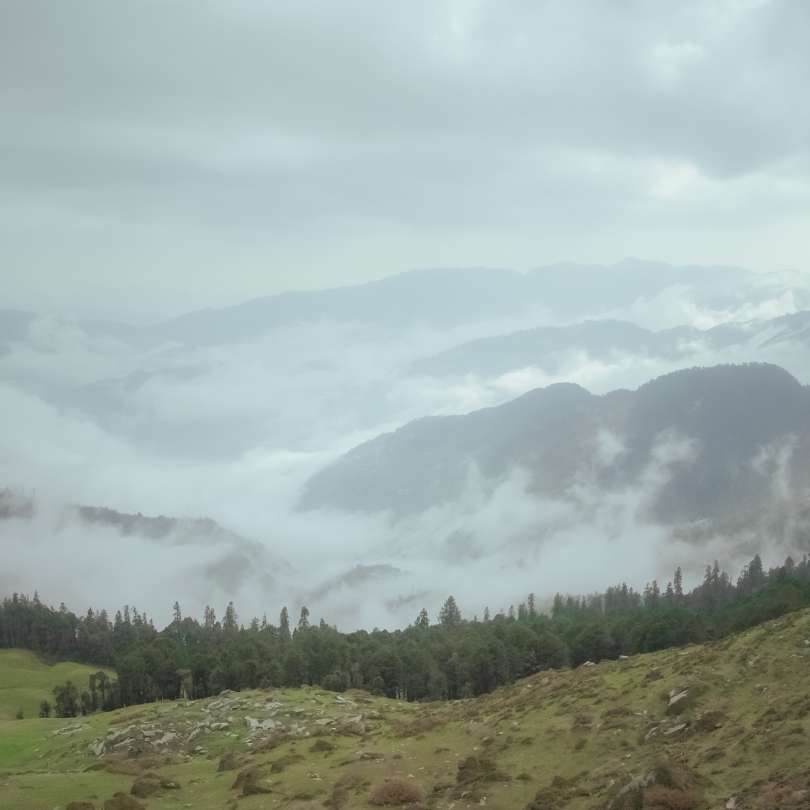
Great Himalayan National Park
GHNP ecozone boundary is at the village edge; Sainj side gate at Ropa ~10 km
UNESCO World Heritage protected area of more than 1,000 sq km. Shangarh sits on the western edge of the ecozone, and the Sainj Wildlife Sanctuary begins a short distance from the village.
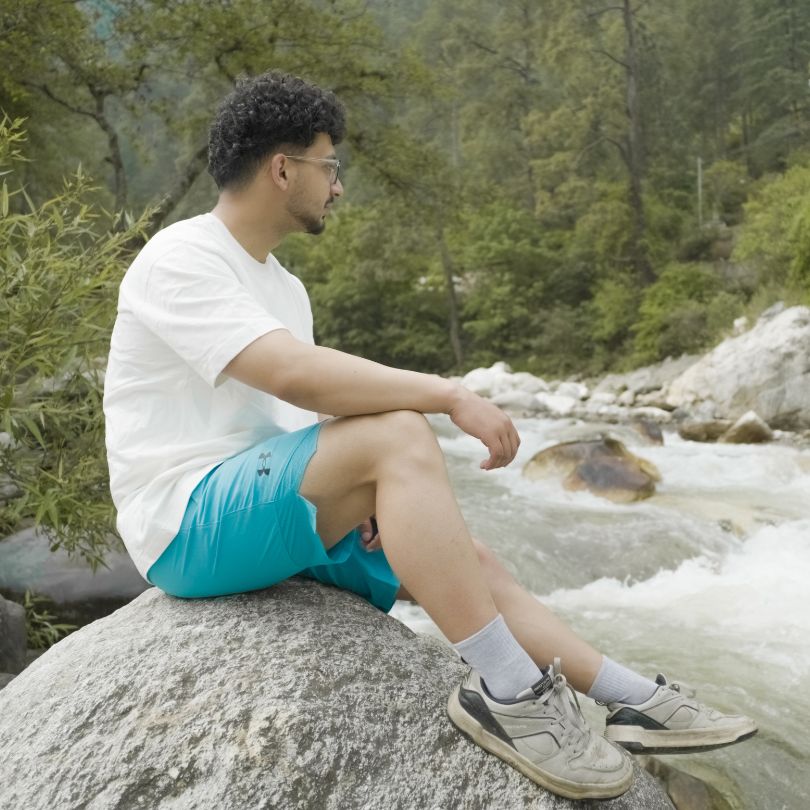
Tirthan Valley
~2 hours drive via Aut and Larji
The other main approach to the GHNP, with riverside homestays at Gushaini and Nagini, trout fishing on the Tirthan, and the Ropa gate walk.
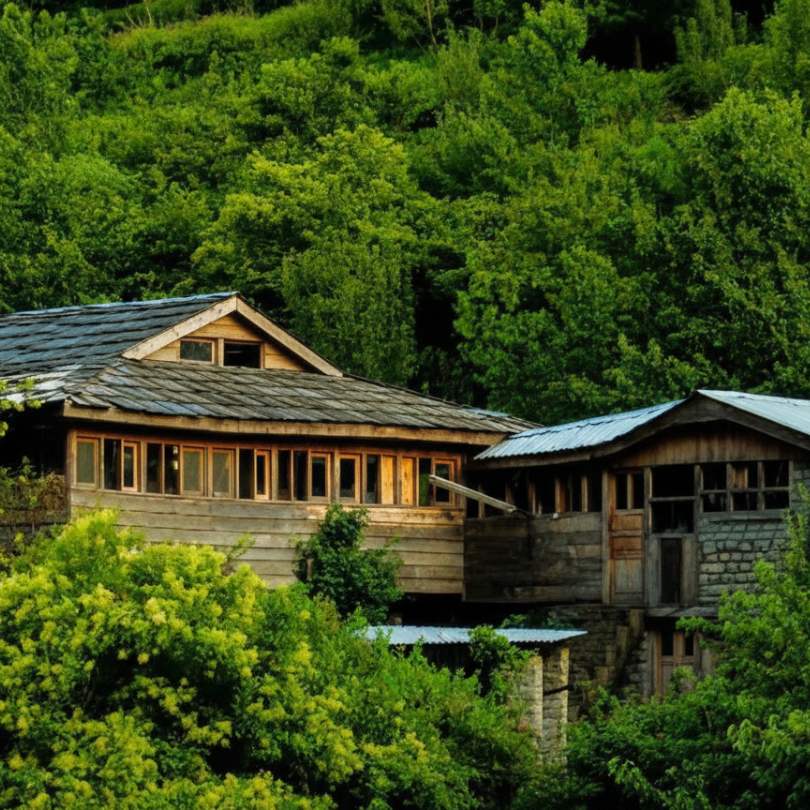
Gushaini
~2 hours drive via Aut and Banjar
The road end village on the Tirthan side of GHNP, with the most popular riverside homestays and the shortest walk to the Ropa park gate.
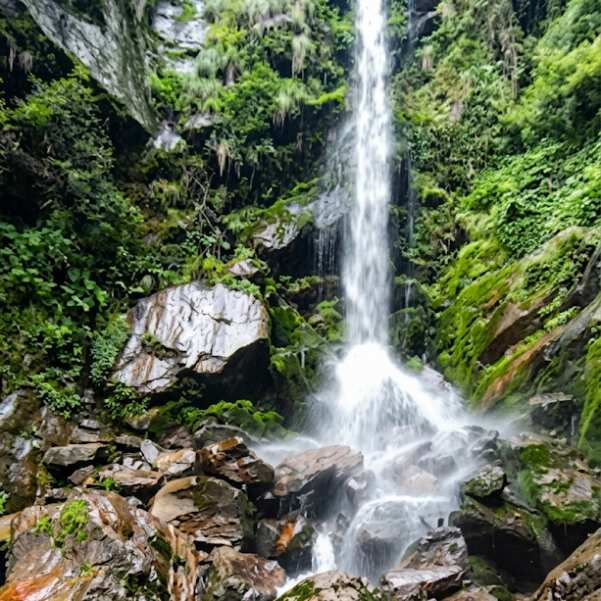
Barshangarh Waterfall
~2 to 3 km walk from Shangarh
A tall waterfall reached by an easy forest walk through the villages of Goshati and Darari. The trail is about 2 hours round trip and is the most popular half day outing from Shangarh.
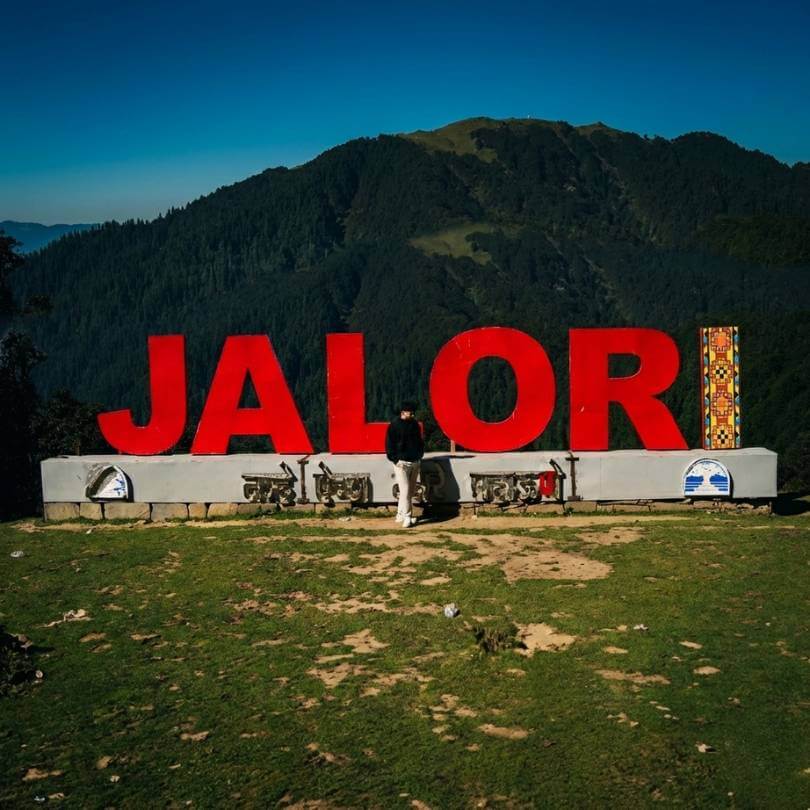
Jalori Pass
~50 km · 2 to 2.5 hours drive via Banjar
The mountain pass at around 3,100 m above Jibhi and Shoja, with day walk options to Serolsar Lake and Raghupur Fort.
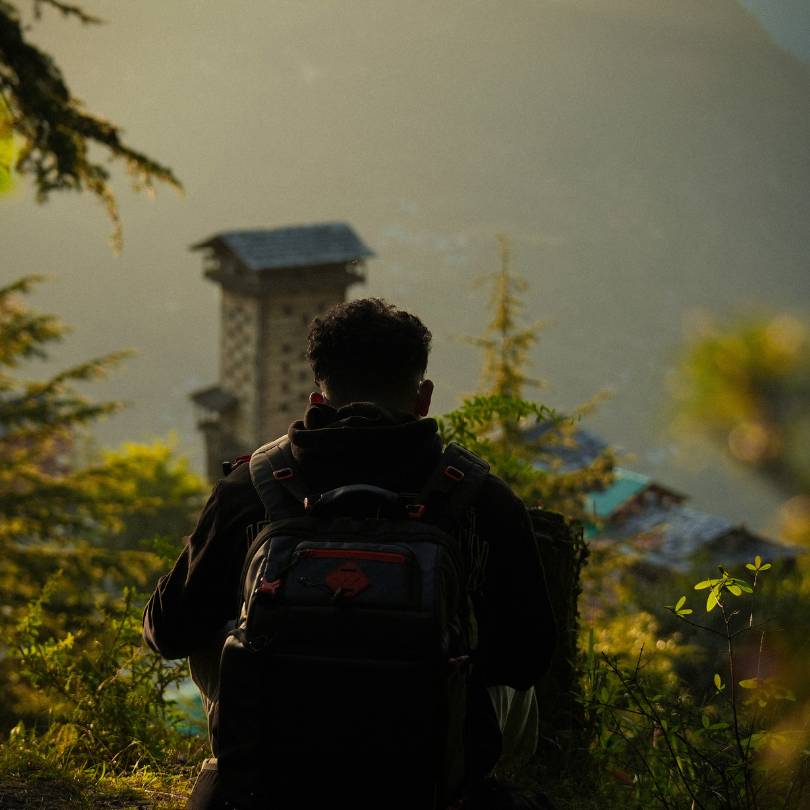
Chehni Kothi
~40 km · 1.5 hours drive via Banjar
A several centuries old Kath Kuni stone and wood tower above Banjar, reached by a short uphill walk through orchards.
Our packages with Shangarh Meadows
Curated trips that include a visit to Shangarh Meadows.
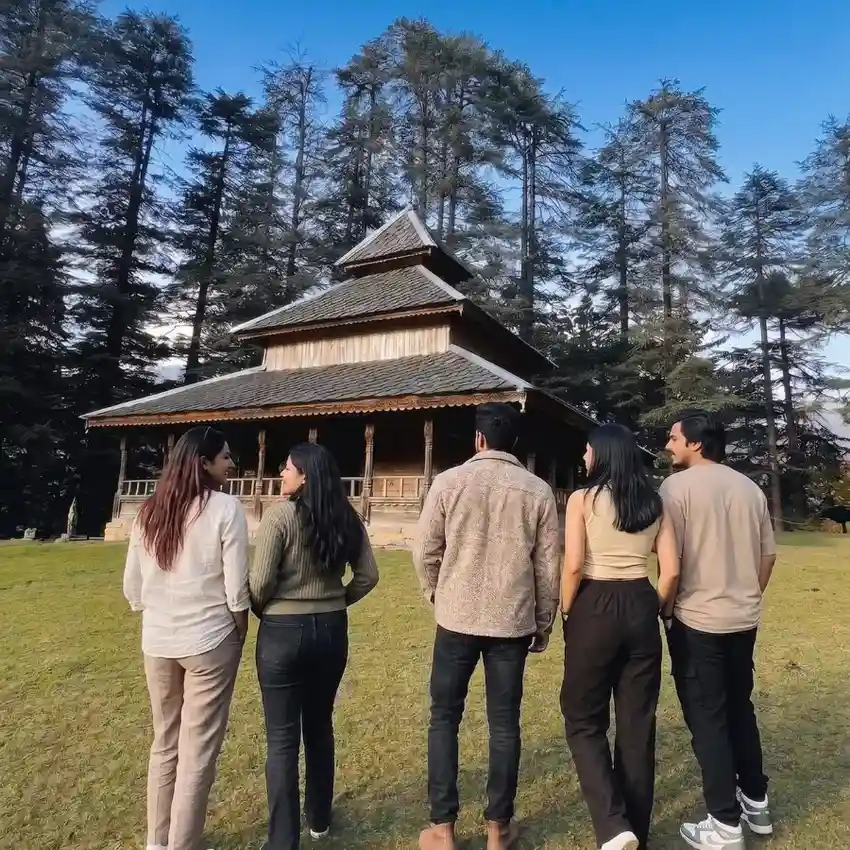 Group Tour5D/4N
Sainj Valley and Shangarh Group Trip
3D Shangarh
₹8,499₹12,499SAVE INR 4,000/ person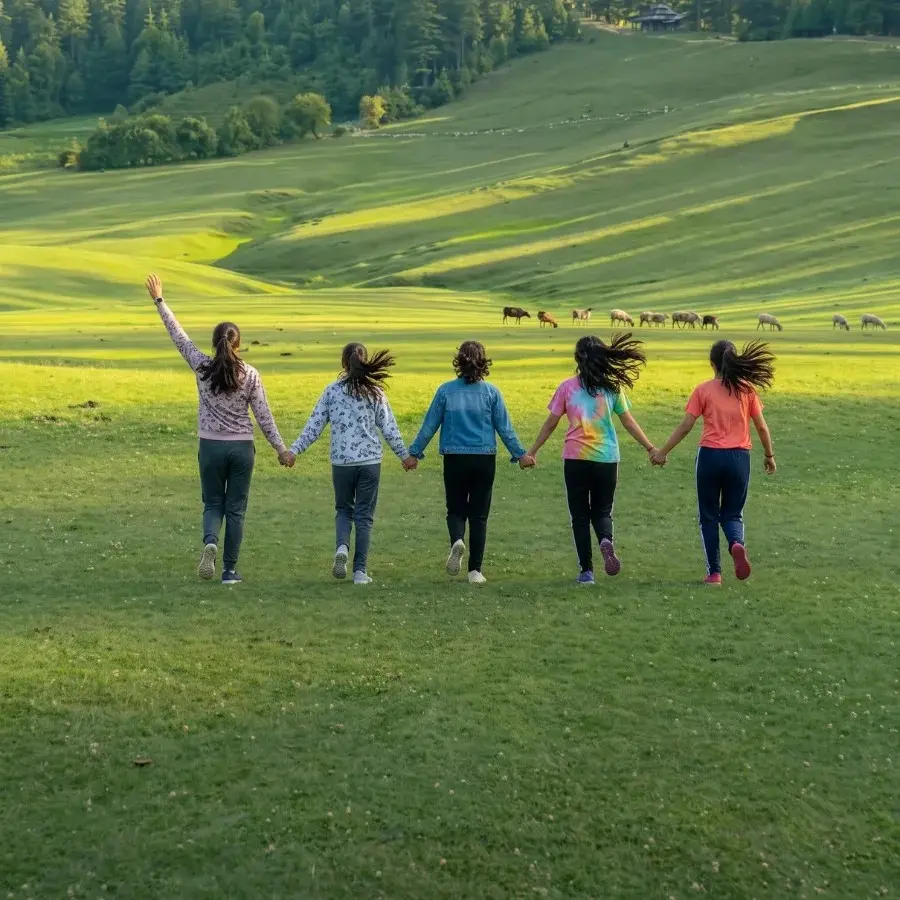 5D/4N
5D/4NMost Loved Shangarh Sainj Valley Tour With Private SUV
2D Shangarh
₹12,999₹16,999SAVE INR 4,000/ person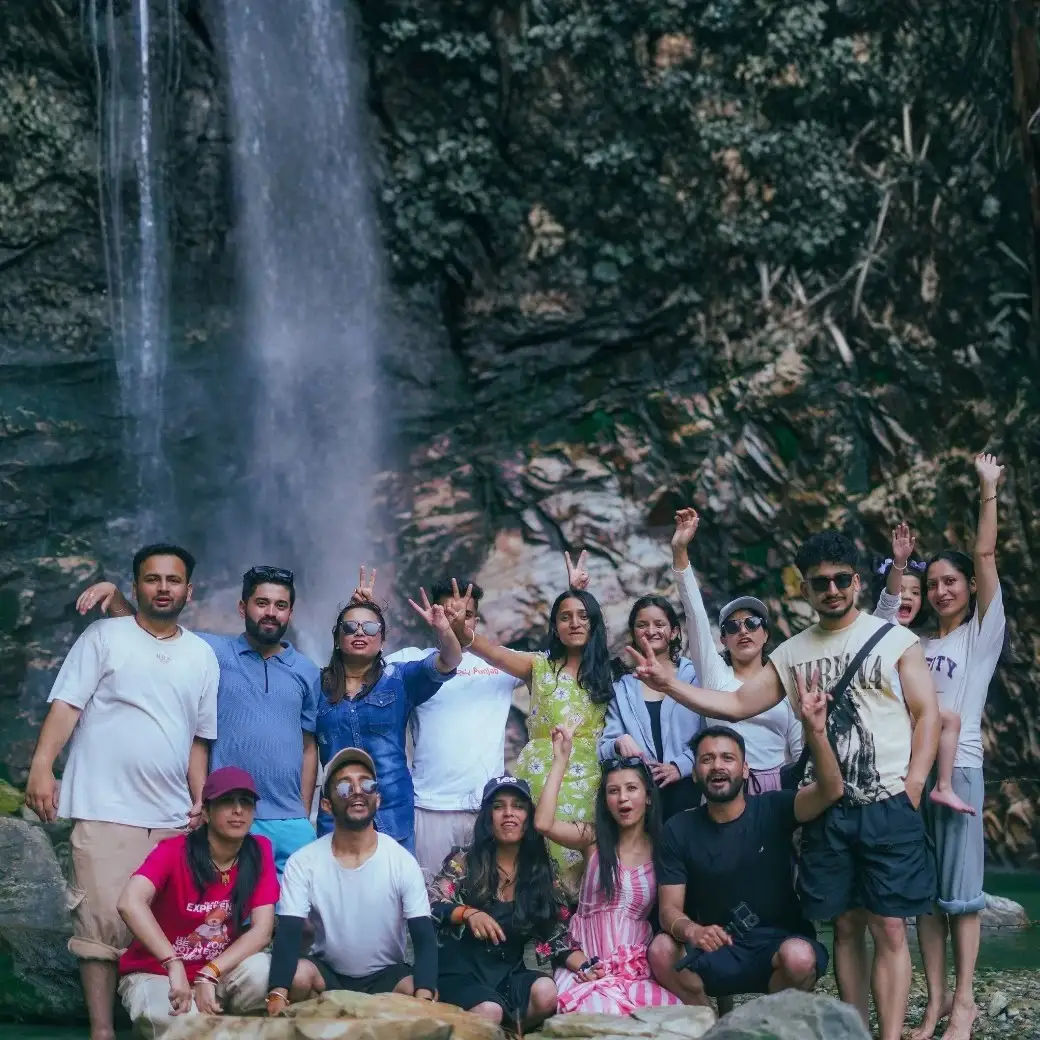 Group Tour6D/5N
Best Jibhi Tirthan Valley Tour With Shangarh Meadows
2D Tirthan Valley•1D Shangarh (Sainj Valley)
₹9,999₹12,999SAVE INR 3,000/ person
Frequently Asked Questions
Where is Shangarh Meadows?
In the Sainj Valley of Kullu district, Himachal Pradesh. The village sits at approximately 2,100 metres (around 6,900 feet) on the edge of the Great Himalayan National Park ecozone, about 25 km from the Aut tunnel on the Manali highway and about 15 km past Sainj town.
What is Shangarh famous for?
The wide, flat, stone free meadow ringed by pine and deodar forest, and the Shangchul Mahadev Temple at its edge. The meadow is considered sacred ground by the locals, and the temple is known for blessing outcasts and eloping couples. The village also sits on the GHNP buffer and is a starting point for Sainj Valley treks.
What is the altitude of Shangarh?
Approximately 2,100 metres (around 6,900 feet). The village and meadow sit at this elevation; surrounding forest trails and upper ridges climb higher into the GHNP buffer zone. Different sources quote figures within a tight range of about 2,000 to 2,130 metres, so treat the number as approximate but consistent. Altitude sickness is not a concern at this elevation.
How do I reach Shangarh from Delhi?
Most travellers take an overnight Volvo bus to Aut on the Manali highway, around 12 to 14 hours, arriving between 5 and 7 AM. Pre book a taxi from Aut to Shangarh, about 25 km and 1.5 to 2 hours, around 1,500 to 2,500 rupees one way. Self drive from Delhi runs 13 to 15 hours. The total distance is roughly 490 to 510 km.
How many days do I need at Shangarh?
Two nights minimum, three is the sweet spot. One night is rushed because the drive in and out eats half a day each way. Three nights lets you spend a morning at the meadow, a half day on the Barshangarh Waterfall walk, and one full day doing nothing. More than four nights starts to feel long unless you are working remotely or planning a GHNP trek.
When is the best time to visit Shangarh?
March to early June and September to early November. Spring brings green meadows, wildflowers at the forest edge, and clean mountain views. Autumn brings the sharpest air of the year. Skip July and August unless you are prepared for muddy trails, leeches, and a rough approach road. Winter is open but cold, with occasional snowfall.
Is Shangarh good for families with kids?
Generally yes for kids around 6 and above. The meadow is a wide open playground, the walks are short, and the homestays are welcoming. Under 6, the limited entertainment and deliberate pace can test patience. Pack books, games, and warm layers. Be cautious with small children near any forest trails.
Where should I stay in Shangarh?
Simple homestays within walking distance of the meadow, with rates roughly 1,500 to 4,000 rupees per night for two with meals. A Zostel has also opened for backpackers. Read recent reviews before booking, quality shifts fast in a village this small. Confirm meal inclusion, UPI availability, and distance from the road at booking.
Is there mobile network and ATM in Shangarh?
Mobile network is very patchy. BSNL works in parts of the village, Jio and Airtel are unreliable. There is no ATM in Shangarh. The nearest machine is at Sainj town, about 15 km back, and even that is not always stocked. Carry enough cash for your full stay, withdrawn at Aut or Mandi.
Where do I eat in Shangarh?
Homestays are the primary, most reliable, and highly recommended option for fresh home cooked meals. Expect simple Himachali home cooking: rajma chawal, dal, roti, seasonal sabzi, and if your host is feeling generous, siddu. A few small cafes and dhabas have opened near the road head and are useful for a chai or a quick bite, but hours are inconsistent and menus are short. For dinner especially, stick with your homestay.
How is Shangarh different from Jibhi or Tirthan Valley?
Shangarh is on the Sainj Valley side, not the Tirthan or Jibhi side. It is quieter, less developed, and has fewer food and accommodation options. The main draw is the meadow and the pine and deodar forest, not a river or a cafe scene. Tirthan has riverside homestays and trout fishing. Jibhi has more cafes and travellers. Shangarh suits people who specifically want the emptier, stiller version.
Can I trek into the Great Himalayan National Park from Shangarh?
Yes. The GHNP ecozone boundary is right at the village. Short walks into the buffer are possible without a permit. Going deeper into the Sainj Wildlife Sanctuary or on multi day treks (Lapah, Raktisar, Sainj Valley Trek) needs a permit from the Ropa Sainj range office or the GHNP HQ at Shamshi, plus a registered guide. Plan through your homestay or an established operator.
What is the Shangchul Mahadev Temple?
A three tiered wooden temple in traditional Kath Kuni architecture at the edge of the Shangarh Meadow, dedicated to a local form of Shiva called Shangchul Mahadev. The temple is known for blessing those rejected by society and is the reason Shangarh has a long tradition of welcoming eloping couples. Remove caps, shoes, and belts before entering.