
Rudranag Waterfall
The primary midpoint of the Kheerganga trek, where a serpent shaped waterfall meets the Rudranag Mahadev Temple and the two trail routes from Nakthan and Kalga merge into one steep climb to the top
- Waterfall
- Parvati Valley
- Kheerganga trek midpoint
- Serpent shaped
- Rudranag Mahadev Temple
- Route confluence point
- Moderate trek
- ~7 to 8 km from Barshaini
- No entry fee
- Trail landmark
What makes it special
Rudranag is where most trekkers on the Kheerganga trail stop, look up at the rock face, and understand the name. The water comes down in a shape that genuinely looks like a serpent. Rudra means Shiva. Nag means serpent. The waterfall looks like Shiva's snake, and once you see it, you cannot unsee it.
Sitting roughly 7 to 8 km from Barshaini on the left bank (Nakthan) route, Rudranag is the primary midpoint of the Kheerganga trek. It is not just a waterfall. It is a trail landmark that marks a clear shift in the hike. Everything before this point is relatively gentle. Everything after climbs steeply through dense forest for another 2 to 3 hours to the meadow at the top.
The Rudranag Mahadev Temple sits right beside the waterfall. It is a small, modest shrine, often decorated with prayer flags and small offerings left by trekkers and local pilgrims. The temple is dedicated to Lord Shiva in his Rudra form, and the serpent shaped waterfall beside it is considered a representation of the divine Nag. Local villagers from Nakthan and surrounding areas visit the temple for rituals, and you will sometimes find fresh marigold garlands and incense even on weekday mornings. The setting is simple, but there is a quiet sincerity to it that most trekkers notice.
This is also where the two main Kheerganga routes merge. The left bank trail from Nakthan and the right bank trail from Kalga meet at a bridge near the waterfall. From this point, there is only one trail to the top.
In the peak trekking months (May, June, and October), the water flow is strong enough to send cold spray across the trail. Some trekkers wade into the shallow pool at the base. The water is cold, mountain stream cold, and refreshing if you are overheated from the walk up. In monsoon, the flow is heavier and the rocks around the base get slippery, so watch your step.
A small dhaba operates near the bridge in season, serving chai and basic snacks. A few basic staying options exist here too, useful if you started late from Barshaini and want to break the journey before the steep final section.
The trek to Rudranag is moderate. The trail from Barshaini is well marked and does not require any technical skill. If you have basic fitness and a pair of proper trekking shoes (not sandals, not sneakers), you will be fine. The path gains elevation gradually, passes through Nakthan Village at roughly the halfway mark, and reaches the waterfall about 30 minutes later. The section after Rudranag to Kheerganga is noticeably harder, with a sustained steep climb through forest, but Rudranag itself is comfortably reachable for most beginners.
Rudranag also works as a timing checkpoint. If you reach here by 8 to 8:30 AM on a day trek, you are on track to reach the top comfortably. If you arrive after 9 AM, you will need to push hard or reconsider your timeline. Since overnight camping was banned at Kheerganga (as of July 2024), timing matters more than it used to. Confirm the current day trek rules at Barshaini before starting.
Quick answers
- What is Rudranag?
- The primary midpoint of the Kheerganga trek. A serpent shaped waterfall with the Rudranag Mahadev Temple beside it, roughly 7 to 8 km from Barshaini. This is also where the two Kheerganga trail routes (via Nakthan and via Kalga) converge into one. The waterfall is named after Lord Shiva (Rudra) and the serpent (Nag) because the water genuinely falls in the shape of a snake.
- How hard is the trek to Rudranag?
- Moderate. The trail from Barshaini is well marked and gains elevation gradually. Beginners with basic fitness and proper footwear can do it comfortably. The harder part of the Kheerganga trek starts after Rudranag.
- Why does Rudranag matter for planning?
- It marks where the trail gets noticeably harder and is your last comfortable stop for water, chai, and a break. If you are doing the Kheerganga day trek, reaching Rudranag by 8 to 8:30 AM means you are on track.
Quick facts
Everything you need to know at a glance.
At a glance
- Location
- On the Kheerganga trek, roughly 7 to 8 km from Barshaini. Parvati Valley, Kullu district, Himachal Pradesh.
- What it is
- The primary midpoint of the Kheerganga trek. Serpent shaped waterfall, Rudranag Mahadev Temple, and the point where the two trail routes converge.
- Trek difficulty
- Moderate. Beginners with basic fitness and proper trekking shoes can reach Rudranag comfortably. The steep section starts after this point.
- From Barshaini
- About 7 to 8 km. 2.5 to 3.5 hours walking via Nakthan.
- To Kheerganga
- About 4 to 6 km. 2 to 3 hours steep climbing.
- Entry fee
- None.
- Time at the spot
- 5 to 15 minutes for most trekkers.
On the ground
- Mobile network
- None. Signal drops out before reaching Rudranag.
- Food
- Small dhaba near the bridge in season. Chai and basic snacks only. Better food at Nakthan, 30 min downhill.
- Water
- Stream water available. Fill bottles here. Last reliable water source before the steep forest climb.
- Safety
- Rocks near waterfall can be slippery, especially in monsoon. No medical help anywhere nearby. Carry a basic first aid kit.
Seasonal weather
- March to June18°3°Spring and Summer
- July to September14°8°Monsoon
- October to November12°-2°Autumn
- December to February4°-8°Winter
Suitable for
- Couples — suitable
- Families — not suitable
- Seniors — not suitable
- Solo — suitable
- First-timers — with some care
- Pet-friendly — not suitable
How to reach Rudranag Waterfall
2 approach routes, with seasonal access.
From Barshaini via Nakthan (left bank trail)
Generally April to November.- Distance
- About 7 to 8 km
- Time
- 2.5 to 3.5 hours
- Road
- Mountain trail. Open terrain to Nakthan, then more forested. No road access.
From Barshaini, take the left bank trail upstream along the Parvati River. Pass through Nakthan Village at roughly the halfway mark (1.5 to 2 hours from Barshaini). Continue past Nakthan for another 30 minutes. The trail follows the river through increasingly forested terrain. The waterfall and the bridge where the routes converge appear after a slight climb past some wooden bridges and stream crossings.
From Kalga Village (right bank trail)
Generally April to November. Monsoon makes forest sections slippery.- Distance
- About 6 to 7 km
- Time
- 2.5 to 3 hours
- Road
- Forest trail through dense deodar and pine. Less marked than the Nakthan route.
From Kalga, the right bank trail goes through dense deodar and pine forest. This route passes the Waterfall Cafe (a small dhaba near a separate waterfall midway) before descending to the bridge area near Rudranag where it meets the Nakthan route. Less marked than the Nakthan trail. Possible to lose the path in sections. Ask at your Kalga homestay for directions before starting.
Best time to visit
Season by season, so you can plan around the weather rather than hope.
- Recommended
Spring and early summer
April to June
Good waterfall flow, dry trail, the main trekking window.
- Weather
- 3 to 18 degrees.
- Waterfall
- Good flow. Serpent shape visible.
- Trail
- Dry, clear.
Good water flow on the waterfall, dry trail conditions, and comfortable temperatures. The serpent shape of the waterfall is clearest when the flow is moderate. This is the busiest trekking window, so expect other trekkers at the waterfall.
Monsoon
July to September
Powerful waterfall but slippery rocks and leeches on the trail.
- Weather
- 8 to 14 degrees. Rain frequent.
- Waterfall
- Heavy flow. Impressive but shape less distinct.
- Trail
- Slippery. Leeches in forest sections.
The waterfall is at its most powerful but the serpent shape blurs into a wider cascade. The rocks around the base are slippery. Leeches are common in the forest between Nakthan and Rudranag. The trail past Rudranag gets muddy and harder.
- Recommended
Autumn
September to November
Post monsoon clarity, good flow, and the serpent shape at its clearest.
- Weather
- Minus 2 to 12 degrees. Cold.
- Waterfall
- Good flow. Clearest serpent shape.
- Trail
- Dry, firm.
The best window for the waterfall. Post monsoon flow is still decent, the air is clear, and the rocks are drier. The forest between Rudranag and Kheerganga is at its most atmospheric with post rain greenery and golden light. October is the best month.
Winter
December to February
Reduced flow, possible ice, for experienced winter trekkers only.
- Weather
- Minus 8 to 4 degrees.
- Waterfall
- Reduced flow. May partly freeze.
- Trail
- Snow or ice possible above.
Reduced waterfall flow. Trail past Rudranag may have snow or ice. Cold enough to make stopping uncomfortable. For winter trekkers only.
Things to see & do
3 things worth your time at Rudranag Waterfall.
See the serpent shaped waterfall
5 to 15 minutesThe waterfall drops down the rock face in a distinctive serpent shape. The best view is from the trail just before the bridge, looking up at the full cascade. In dry months, the shape is clearest. In monsoon, the water volume increases and the serpent form blurs into a wider fall. Five minutes is enough to take it in. Ten if you want to sit by the pool at the base and soak your feet.
Visit the Rudranag Mahadev Temple
5 to 10 minutesThe Rudranag Mahadev Temple is a modest Shiva shrine beside the waterfall, dedicated to Lord Shiva in his Rudra form. Prayer flags, small bells, and offerings left by trekkers and local pilgrims surround it. Remove shoes if you approach. The shrine itself is not large, but its position next to the serpent waterfall with the valley dropping away below gives it a setting that grander temples rarely match. Local villagers from Nakthan visit for rituals, and you may find fresh offerings even on quiet mornings.
Cool off in the waterfall pool
5 to 10 minutesThe small pool at the base of the waterfall is shallow enough to wade into. The water is cold, properly cold, fed by mountain streams above. On a warm day after the uphill walk, it is genuinely refreshing. In monsoon, the area around the pool gets slippery and the current is stronger, so be careful. Do not use soap or shampoo in the water. The spot is considered sacred.
Know before you visit Rudranag Waterfall
The practical bits, from people who have been.
Where it sits on the trail7 to 8 km from Barshaini, 30 min past Nakthan. The primary midpoint of the Kheerganga trek and your last comfortable stop.
Rudranag sits roughly 7 to 8 km from Barshaini on the left bank (Nakthan) route of the Kheerganga trek. From Barshaini, the trail passes through Nakthan Village (about 5 to 6 km, 1.5 to 2 hours), then continues for another 30 minutes to reach the waterfall.
This is also where the right bank trail from Kalga joins the main route. A bridge marks the convergence point near the waterfall. From here, a single trail climbs steeply through dense forest for 2 to 3 hours to the Kheerganga meadow.
The trek to Rudranag is moderate. The path is well marked, gains elevation gradually, and does not require technical skill. Beginners with basic fitness and proper trekking shoes can reach it comfortably. The harder section starts after Rudranag.
If you are doing the Kheerganga day trek, Rudranag is your timing checkpoint. Reaching here by 8 to 8:30 AM means you are on track. After 9 AM, you may need to push hard.
The Rudranag Mahadev TempleA small but significant Shiva shrine beside the serpent waterfall. The religious focal point of the spot.
The Rudranag Mahadev Temple is dedicated to Lord Shiva in his Rudra form. The serpent shaped waterfall beside it is considered a representation of the divine Nag, Shiva's serpent. The temple is modest, often decorated with prayer flags, bells, and small offerings from both trekkers and local pilgrims.
Local villagers from Nakthan and surrounding areas visit the temple for rituals. Hindu mythology connects this spot to Lord Shiva and Goddess Parvati, who are believed to have visited the Parvati Valley. The shrine is small, but the combination of the serpent waterfall, the temple, and the valley setting below gives the spot a quiet significance that many trekkers remember.
Remove shoes before approaching the shrine. Do not use soap or shampoo in the waterfall pool. The area is considered sacred.
Practical detailsSmall dhaba near the bridge in season. Fill water bottles. No signal, no medical help.
A small dhaba operates near the bridge in season (roughly April to November), serving chai and basic snacks. Not a proper food stop like Nakthan. Fill your water bottles here from the stream. Carry at least 1 litre of water beyond this point as the steep climb through forest is the most demanding section of the trek.
No ATM, no medical help, no signal at Rudranag. The nearest reliable food is at the Nakthan dhabas (30 minutes downhill). The nearest road is at Barshaini (2.5 to 3.5 hours downhill).
Trail conditions, dhaba availability, and the Kheerganga day trek rules can change with the season. Confirm the current status at Barshaini before starting.
Nearby attractions
Other places worth the detour.
Kheerganga
About 4 to 6 km uphill (2 to 3 hours)
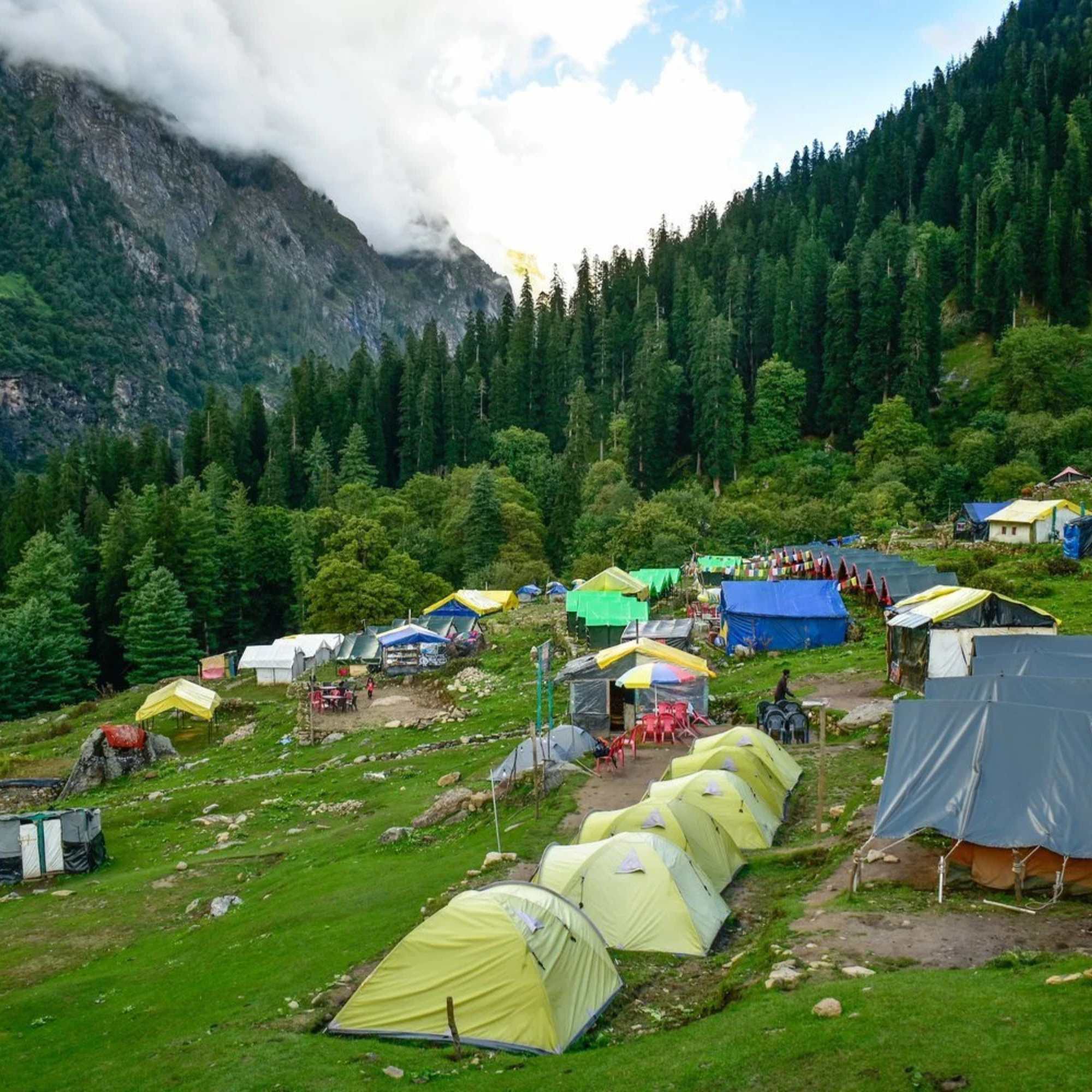
A high altitude meadow with natural hot springs at roughly 2,960 metres. About 4 to 6 km further up the trail from Rudranag, 2 to 3 hours of steep climbing through forest. Day trek only since July 2024.
Nakthan Village
About 30 minutes downhill
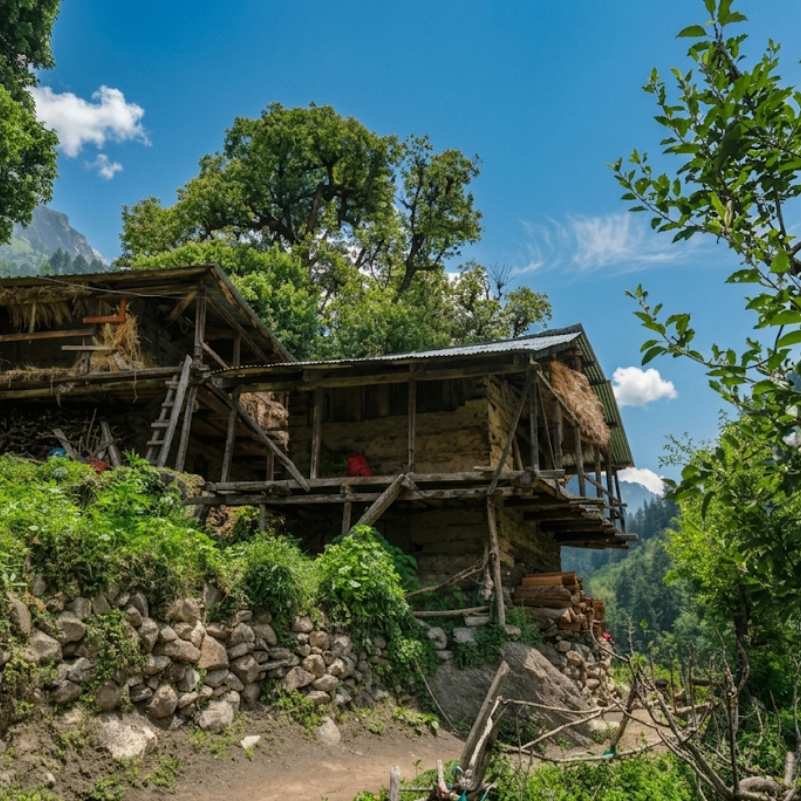
A small village midway on the left bank Kheerganga route with trail dhabas. About 30 minutes downhill from Rudranag. The best food stop on the trek.
Barshaini
About 7 to 8 km downhill (2.5 to 3.5 hours)
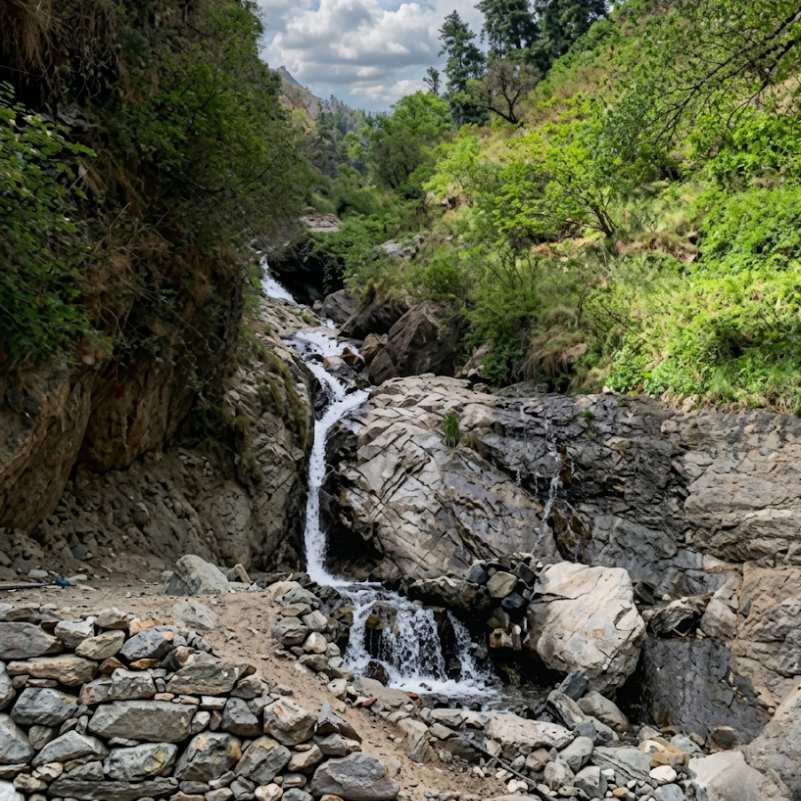
The last road head in the upper Parvati Valley. Trek start point. About 7 to 8 km downhill from Rudranag, 2.5 to 3.5 hours walking.
Kalga Village
Right bank trail joins here
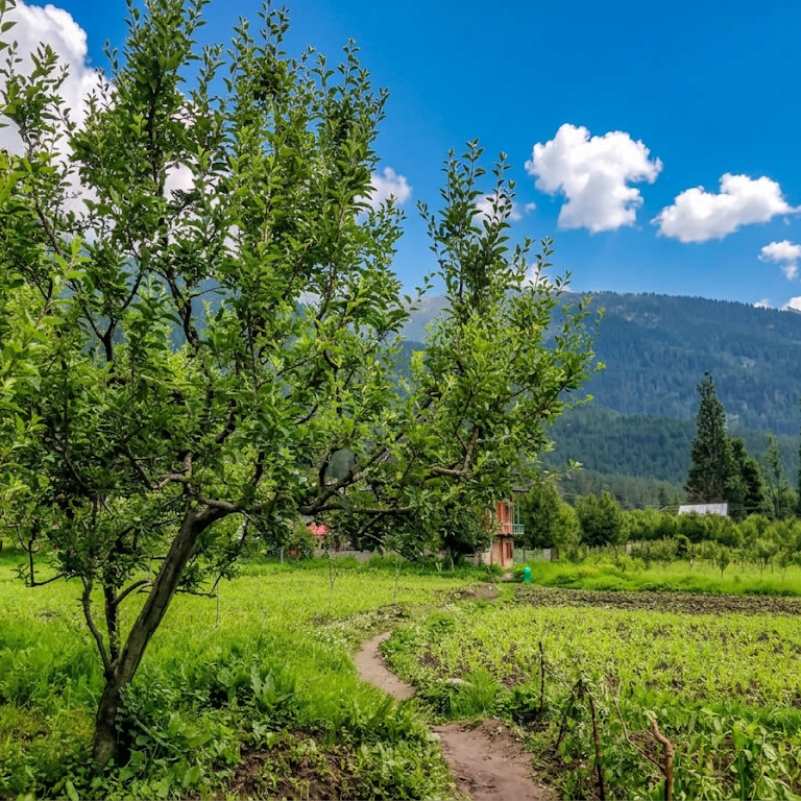
A small village on the right bank above Barshaini. The Kalga (right bank) Kheerganga trail starts here and meets the Nakthan route at Rudranag.
Our packages with Rudranag Waterfall
Curated trips that include a visit to Rudranag Waterfall.
 4D/3N
4D/3NPerfect Manikaran Kasol Tosh Weekend Getaway
1D Delhi•2D Kasol+1
₹15,999₹19,999SAVE INR 4,000/ person 4D/3N
4D/3NWeekend Trip To Manikaran, Kasol & Tosh
1D Delhi •2D Kasol+1
₹9,999₹14,999SAVE INR 5,000/ person
Frequently Asked Questions
What is Rudranag Waterfall?
A serpent shaped waterfall on the Kheerganga trek, roughly 7 to 8 km from Barshaini on the left bank (Nakthan) route. The water drops down the rock face in the shape of a snake. Rudra means Shiva, Nag means serpent. The Rudranag Mahadev Temple, a small but significant Shiva shrine, sits beside the falls. This is also the point where the two Kheerganga trail routes converge.
How difficult is the trek to Rudranag?
Moderate. The trail from Barshaini is well marked and gains elevation gradually. Beginners with basic fitness and proper trekking shoes can do it comfortably in 2.5 to 3.5 hours. The harder part of the Kheerganga trek starts after Rudranag, with a steep 2 to 3 hour climb through forest.
How far is Rudranag from Barshaini and Kheerganga?
About 7 to 8 km from Barshaini (2.5 to 3.5 hours walking via Nakthan) and roughly 4 to 6 km from Kheerganga (2 to 3 hours steep climbing). It sits at roughly the two thirds mark of the full trek.
Is Rudranag where the two Kheerganga routes meet?
Yes. The left bank trail (via Nakthan) and the right bank trail (via Kalga) converge at a bridge near the waterfall. From Rudranag onward, there is only one trail to Kheerganga, climbing steeply through dense forest.
What is the Rudranag Mahadev Temple?
A modest Shiva shrine beside the waterfall, dedicated to Lord Shiva in his Rudra form. The serpent shaped waterfall is considered a representation of Shiva's divine serpent (Nag). Local villagers visit for rituals, and the temple is often decorated with prayer flags and offerings. Remove shoes when approaching.
Can I visit Rudranag without doing the full Kheerganga trek?
Yes, though it is not a standalone destination. Most people visit it as part of the Kheerganga trek. If you want to see just the waterfall and the temple, it is a 2.5 to 3.5 hour walk from Barshaini each way.
When is the best time to see the waterfall?
May, June, and October generally have the best combination of good water flow and clear weather. The serpent shape is most distinct when the flow is moderate. In monsoon, the waterfall is powerful but the shape blurs into a wider cascade.
Is there food or water available at Rudranag?
A small dhaba near the bridge operates in season, serving chai and snacks. For proper food, the dhabas at Nakthan (30 minutes downhill) are better. Stream water is available to refill bottles. This is your last reliable water source before the steep climb to Kheerganga.
Related guides
Posts about Kasol
- Shimla Manali Kasol Itinerary 2026: 7, 8 and 9 Day Routes Without Rushing
- Best Offbeat Places Near Kasol Most Tourists Miss in 2026
- Rasol Village Trek From Kasol 2026: Route, Distance & What to Expect
- Kalga, Pulga & Tulga Villages in 2026: The Offbeat Side of Parvati Valley
- Kheerganga Trek from Kasol 2026: Route, Difficulty, Cost & Best Time
- Snowfall in Kasol 2026: Does It Snow, Best Time & Nearby Snow Places