
Rakcham
A quiet Kinnauri village between Sangla and Chitkul where the meadows, the river, and the absence of everything else are the whole point
- Quiet Village
- ~3,100 m
- Between Sangla & Chitkul
- Apr to Oct
- Baspa Valley, Kinnaur
What makes it special
Rakcham sits roughly halfway between Sangla and Chitkul on the Baspa Valley road, at around 3,100 metres. It is the village that most people drive through without stopping, which is exactly what makes it worth stopping at. While Sangla has the market and the hotels and Chitkul has the "last village" tag, Rakcham has neither, and that is the point. It is a small cluster of traditional Kinnauri wooden houses with slate roofs and carved balconies, a stream running between the houses, buckwheat fields on the slopes turning pink and white in summer, and the Baspa River below. No market. No tourist infrastructure to speak of. Just the village, the meadows, and the constant sound of moving water.
The Rakcham meadows on the left bank of the Baspa are what photography teams and film crews discovered a few years ago: wide, flat, green expanses with the river in the foreground and snow peaks behind. They look improbable, like someone cleared a runway in the middle of the Himalaya. If you walk out onto the meadows early in the morning, the grass is cold and wet underfoot, the air smells of deodar and damp earth, and the only sound is the Baspa rushing over its stones. By afternoon the wind picks up and carries the scent of pine down from the slopes. That is roughly the entire Rakcham experience, and for a certain kind of traveller, it is everything.
The village has a quiet distinction that most visitors never learn about. Rakcham received the Nirmal Gram Puraskar, a national cleanliness award, and you notice it the moment you walk through: the lanes are swept, the stream runs clear, waste is managed in a way that is rare at this altitude. The older residents here speak Chitkuli, a local dialect of the Kinnauri language family that is specific to the upper Baspa Valley and increasingly rare among younger generations. You will hear it in the conversations between neighbours, in the calls across the buckwheat fields, in the cadence of the village morning. It is one of those small details that makes Rakcham feel like a real place rather than a tourist stop.
A few homestays and adventure camps have opened in recent years, making it possible to stay overnight rather than just pass through. If you are the type who finds Sangla too busy and Chitkul too far, Rakcham is the answer. One night here, with a walk through the village and an evening by the river listening to the Baspa grow louder as the valley goes dark, is a quiet counterweight to the rest of a Kinnaur trip. Two nights is comfortable if you want to walk the meadows at different times of day and watch the light shift across the buckwheat and apple orchards. More than that and you need to genuinely enjoy doing nothing, because there is nothing structured to do.
Quick answers
- Is Rakcham worth stopping at?
- Yes, if you want quiet. Rakcham is a small Kinnauri village between Sangla and Chitkul with traditional wooden houses, wide meadows along the Baspa River, and almost no tourist infrastructure. There is nothing to "do" in the checklist sense. The point is the absence of everything except the village, the river, and the mountains. One to two nights is right.
- How much time do I need?
- One night gives you the meadows, the village walk, and an evening by the river. Two nights if you want to use Rakcham as a quiet base for day trips to Chitkul and Sangla. Beyond that, you need to genuinely enjoy doing nothing.
- Should I stay in Rakcham, Sangla, or Chitkul?
- They serve different purposes. Sangla has facilities, a market, and things to do. Chitkul has the "last village" draw. Rakcham has quiet, meadows, and almost nobody around. If you want isolation in the Baspa Valley, stay here. If you need a proper base with options, stay in Sangla.
Quick facts
Everything you need to know at a glance.
At a glance
- Altitude
- Approx 3,100 m
- Location
- Between Sangla and Chitkul, Baspa Valley, Kinnaur
- Nearest town
- Sangla, about 12 to 15 km south
- Open season
- Generally April to October. Winter access is possible but unreliable. Heavy snow can cut the road from Sangla.
- Time needed
- 1 to 2 nights
- Entry fee
- No fee
- Effort level
- Flat meadow walks, easy village stroll
On the ground
- Mobile network
- BSNL intermittent. Other networks mostly dead. Treat as offline.
- ATM and cash
- No ATM in Rakcham. Withdraw cash in Sangla or Reckong Peo before coming. UPI and cards do not work here. Cash only for homestay payments and everything else.
- Fuel
- None. Fill at Reckong Peo.
- Food
- Homestay meals only. No restaurants or dhabas.
- Stay
- A few homestays and camps. Very basic. Book ahead.
- Permits
- No permit for Indian travellers.
- Drone
- Border area. Do not fly drones without permission.
Seasonal weather
- Apr to Jun22°6°Summer (Apr to Jun)
- Jul to Sep20°10°Monsoon (Jul to Sep)
- Oct to Nov16°0°Autumn (Oct to Nov)
- Dec to Mar8°-8°Winter (Dec to Mar)
Suitable for
- Couples — suitable
- Families — with some care
- Seniors — with some care
- Solo — suitable
- First-timers — with some care
- Pet-friendly — with some care
How to reach Rakcham
2 approach routes, with seasonal access.
From Sangla
Generally April to October- Distance
- 12 to 15 km
- Time
- About 30 minutes by car
- Road
- Narrow surfaced valley road
The road follows the Baspa River upstream from Sangla. It is narrow, surfaced, and passes through apple orchards and small settlements. The drive is easy and short. Some travellers walk this stretch, which takes about 3 to 4 hours on foot through the valley.
From Chitkul
Generally April to October- Distance
- 10 to 12 km
- Time
- About 20 to 30 minutes by car
- Road
- Narrow valley road
Continue upstream on the same road. The terrain gets barer and colder as you approach Chitkul. The drive is short but the altitude increases noticeably.
Best time to visit
Season by season, so you can plan around the weather rather than hope.
- Recommended
Summer
April to June
Green meadows, clean light, comfortable days, cold mornings. The best time.
- Temperature
- 6 to 22°C
- Meadows
- Green from mid April, lush by May
- Roads
- Open from Shimla via Karcham. Generally clear.
- Crowds
- Low in April, moderate May to June
- Families
- Good window. Comfortable weather, manageable altitude.
- Photography
- Excellent. Clean light, green meadows, snow peaks.
The best window for Rakcham. The meadows turn properly green by mid April and stay that way through June. Daytime temperatures are comfortable, around 15 to 22 degrees, though mornings and evenings are still cold enough for a jacket. The Baspa River runs clean and fast with early snowmelt, loud enough to hear from the village. Apple blossoms come out in April and early May, and the buckwheat fields on the slopes start to fill in with pink and white flowers. The air smells of deodar and damp grass. This is when the meadows look their sharpest, with snow peaks still heavy in the background. Tourist numbers are light in April, picking up from mid May onward. June long weekends can fill the handful of homestays quickly, so book ahead.
Monsoon
July to September
The valley is green but the roads are unreliable. A gamble.
- Temperature
- 10 to 20°C
- Rain
- Intermittent, sometimes heavy. Landslide risk on access roads.
- Roads
- Frequent disruptions on NH5 and the Karcham stretch. Check status before entering.
- Crowds
- Low
- Families
- Risky due to road conditions. Not recommended for first timers.
- Photography
- Moody cloud shots possible. Light is inconsistent.
Rakcham itself stays pleasant enough in July and August, with warm days and occasional rain. The problem is not Rakcham. The problem is getting to Rakcham. The highway through Kinnaur is heavily landslide prone during monsoon, and road closures can trap you for a day or more. The stretch between Karcham and the Baspa Valley turnoff is particularly vulnerable. If you are already in the valley, Rakcham in the rain has its own atmosphere: low clouds sitting on the meadows, the Baspa running high and loud enough to rattle windows, the village wrapped in mist, and the smell of wet pine everywhere. But planning a trip specifically during monsoon is a gamble. September is drier and the tail end of the green season, with fewer road risks.
- Recommended
Autumn
October to November
Golden light, harvest season, almost nobody around. Cold nights.
- Temperature
- 0 to 16°C
- Landscape
- Golden harvest tones. Buckwheat drying on rooftops. Apple season.
- Roads
- Generally stable after monsoon. Clear through October.
- Crowds
- Very low
- Families
- October works for prepared families. November is cold.
- Photography
- Best golden light of the year. Long afternoon shadows.
October is the quiet gem. The monsoon clears, the roads stabilise, and the valley takes on a golden quality as the buckwheat fields dry and the apple harvest begins. You will see buckwheat sheaves drying on rooftops and smell wood smoke from the kitchens. The meadows lose their summer green but gain a warm brown and gold tone that photographs beautifully in the long afternoon light. Temperatures drop noticeably, touching zero at night by late October, so pack warm. Tourist numbers are thin, and you may have the meadows to yourself. November is colder and some homestays start to close for winter. If you can handle cold nights and basic accommodation, early November still works. Late November is a risk.
Winter
December to March
Snow, isolation, road access uncertain. For experienced cold weather travellers only.
- Temperature
- -8 to 8°C
- Snow
- Common from December. Heavy in January and February.
- Roads
- Road from Sangla can be blocked by heavy snowfall. Access is not guaranteed.
- Accommodation
- Most stays closed. Confirm availability before travelling.
- Families
- Not recommended. Too cold, too remote, too few facilities.
- Photography
- Snow covered village and meadows. Dramatic if you can handle the cold.
Snow covers the meadows and the village by December. Most homestays and camps close for winter. The road from Sangla to Rakcham, while sometimes passable, can be blocked by heavy snowfall for days at a time. Do not assume access is guaranteed just because Sangla is reachable. The Baspa Valley beyond Sangla becomes genuinely isolated during heavy snow spells, and there is no guarantee of road clearance within a predictable timeframe. Temperatures crash to minus 5 to minus 8 at night. There is no heating in most stays. If you visit in winter, you need proper cold weather gear, a confirmed open homestay, a willingness to be cut off from everything, and a plan for what happens if the road closes behind you. The snow covered village and frozen meadows have their own beauty, but this is a window for experienced mountain travellers, not casual visitors.
Things to see & do
4 things worth your time at Rakcham.
Walk the Rakcham meadows
1 to 2 hoursThe meadows along the left bank of the Baspa River are wide, flat, and green in summer, with the river running through and snow peaks behind. Walk out early in the morning when the grass is damp and the air smells of pine and wet earth. The only sound is the Baspa. There are no paths or markers. You just walk. Bring a jacket because the air at this altitude has a bite even in June. The meadows look different at every hour of the day: soft and blue in the early morning, sharp and green at midday, warm and gold by late afternoon.
Walk through the village
30 min to 1 hourThe village is small enough to walk through in half an hour, but take longer. The houses are traditional Kinnauri style, stone and deodar timber with carved balconies and heavy slate roofs. A stream runs between the houses, clear enough to see the stones at the bottom. You will see buckwheat drying on rooftops in season, apple orchards on the slopes, and the occasional yak or cow blocking the lane. Listen for Chitkuli, the local dialect of Kinnauri that the older residents speak among themselves. Ask before photographing anyone. The village does not perform for tourists. That is its value. Rakcham won the Nirmal Gram Puraskar for cleanliness, and the swept lanes and clean stream are evidence of a community that takes genuine pride in the place.
Sit by the Baspa River
Open endedThe Baspa runs fast and cold through the valley floor below the village. Walk down to the banks and sit for a while. The water is grey green with snowmelt, too cold to swim, but the sound fills the valley: a steady, low roar that you stop noticing until it suddenly goes quiet when you step behind a rock. Some of the camps near Rakcham are positioned close to the river and offer this as part of the stay.
Day trips to Chitkul or Sangla from the quiet middle
Half day each wayRakcham sits between Sangla (about 12 to 15 km south) and Chitkul (about 10 to 12 km north). If you are staying here, the drive to Chitkul is a short morning trip, and Sangla with Kamru Fort is an afternoon one. Being in the middle of the valley gives you easy access to both without the crowds of either.
Know before you visit Rakcham
The practical bits, from people who have been.
Where to stay and eatA few homestays and camps. Simple food. Book ahead.
Rakcham has a handful of homestays and a couple of adventure camps. Rooms are basic: simple beds, shared or private bathrooms, limited hot water. Some camps offer proper tents with meals included. There is no hotel in the conventional sense.
Food is simple mountain fare served by your host: dal chawal, rajma, paranthas, maybe momos or thukpa. There are no restaurants or dhabas in the village. Carry snacks for between meals. If you have dietary restrictions, communicate them in advance because options are limited.
Book ahead in peak season (May, June, long weekends). Walk ins are risky because there are genuinely only a few beds in the entire village.
Who Rakcham suitsFor people who like genuine quiet. Not for those who need facilities or stimulation.
Will love it. Travellers who want genuine quiet. Photographers chasing meadow light and river shots. Couples looking for isolation. Solo travellers who are comfortable being offline. People who want a Baspa Valley base without Sangla's crowds or Chitkul's altitude.
Will be bored. Travellers who need activities, a market, restaurants, or reliable connectivity. Families with small children who need facilities. Anyone expecting a curated "village experience." Rakcham is not curated. It is just a village.
Senior travellers. Possible for fit seniors in a private vehicle, but the accommodation is basic and medical facilities are nonexistent. The nearest help is Sangla (15 km) or Reckong Peo (about 35 km).
Ground realityNo ATM, no fuel, no network. Withdraw cash in Sangla or Reckong Peo. Winter snow can cut road access.
There is no ATM in Rakcham. Withdraw cash in Sangla or Reckong Peo before coming here. UPI payments, card machines, and online transfers do not work. Every transaction in the village, from homestay payments to buying apples from a local, is cash only.
No fuel pump, no pharmacy, no reliable mobile network. BSNL works intermittently. Jio and Airtel are mostly dead. Treat Rakcham as offline.
The altitude at roughly 3,100 metres is slightly higher than Sangla. If you are coming up from the plains, acclimatise at Sangla first rather than heading straight here.
The road from Sangla to Rakcham is narrow and surfaced but can be disrupted by landslides in monsoon. In winter, heavy snowfall can block this road entirely, cutting Rakcham off from Sangla for days at a time. Do not assume year round access. Check road status before entering the Baspa Valley in any season, but especially between late July and early September, and between December and March. Carry valid ID at all times. This is a border area.
Nearby attractions
Other places worth the detour.
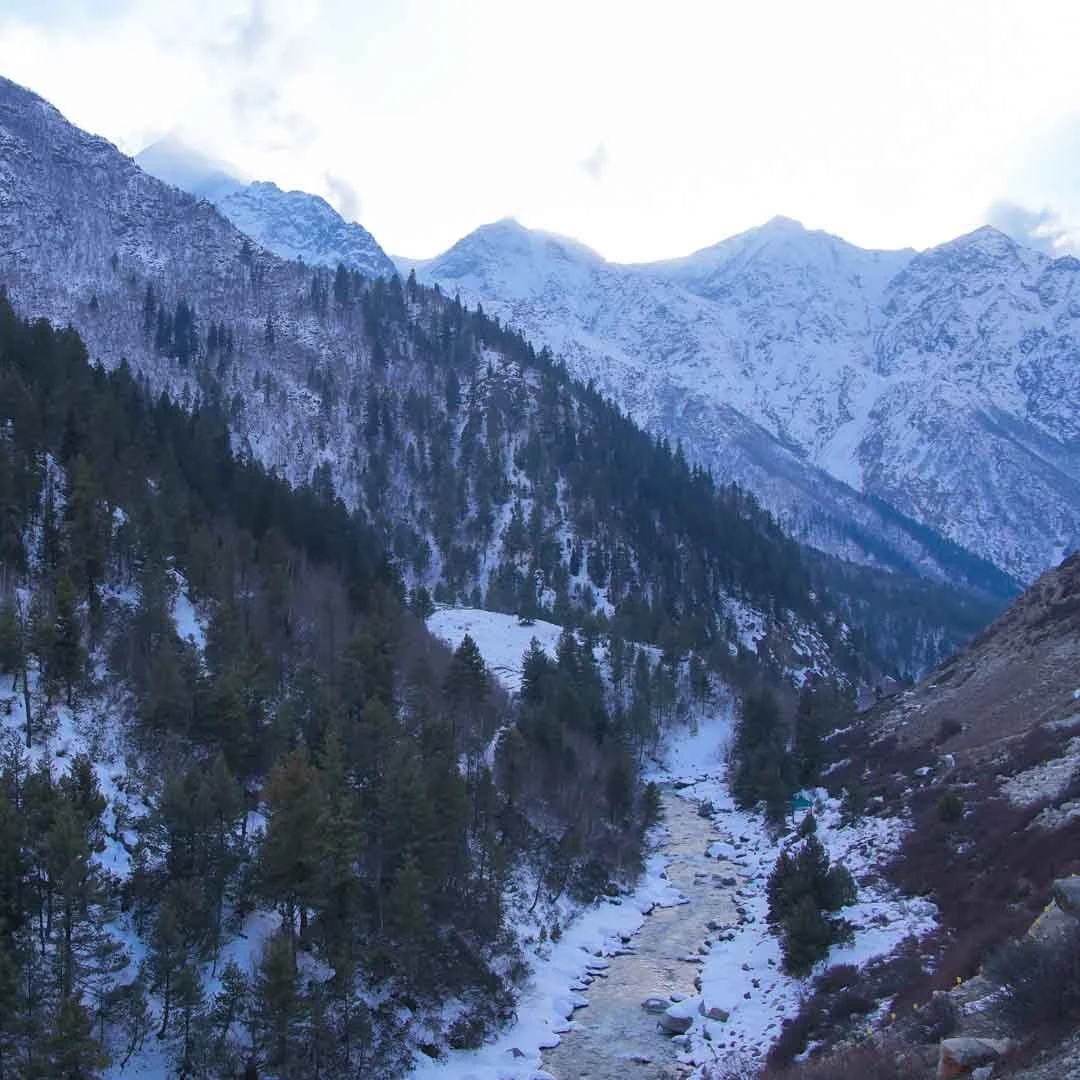
Chitkul
10 to 12 km north
The last village on the old Indo Tibet road, at around 3,450 metres. A short drive north from Rakcham. Most people do this as a morning trip and return.
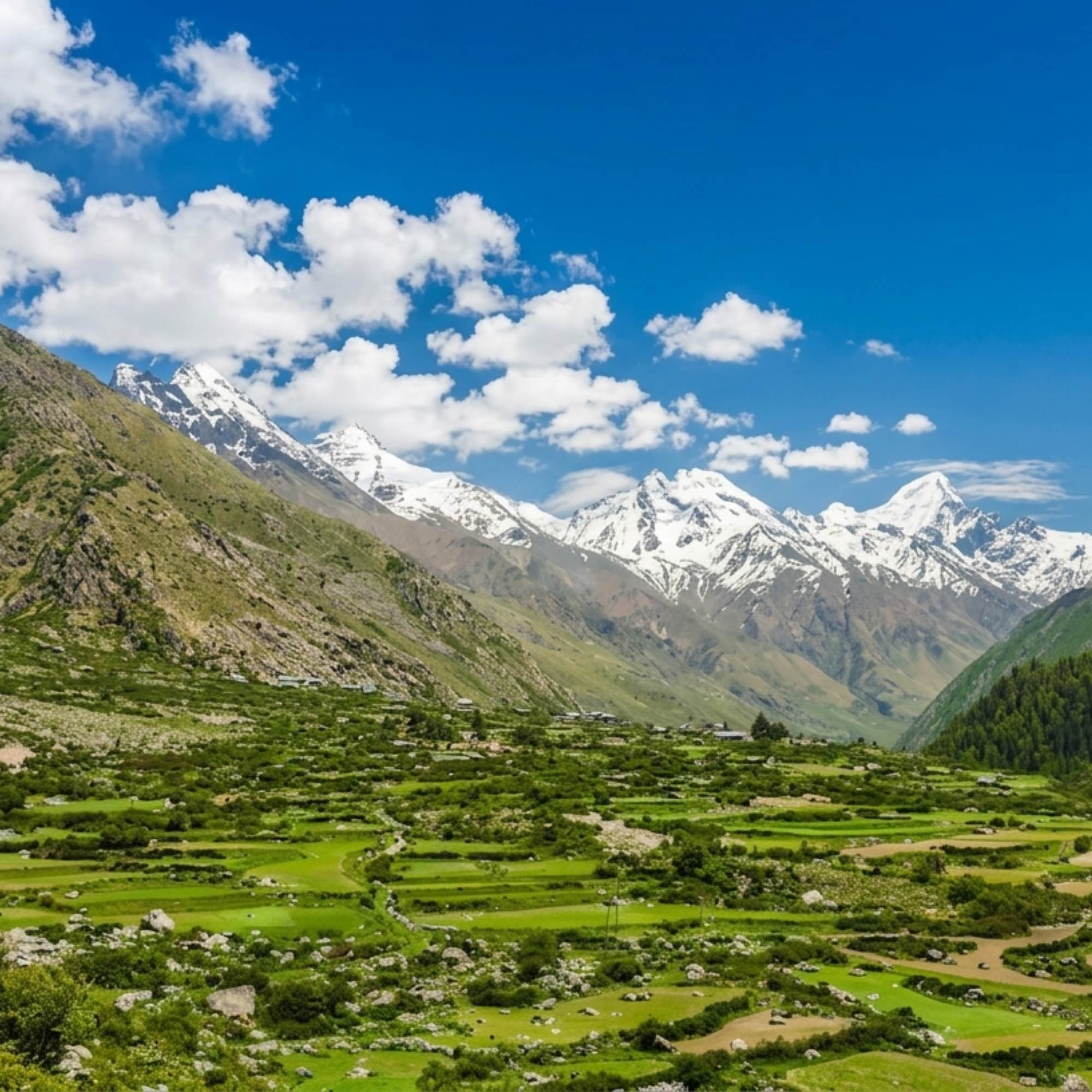
Sangla Valley
12 to 15 km south
The main town of the Baspa Valley, with hotels, a market, Kamru Fort, and the river walk. Your logistics base if you are staying in the valley.
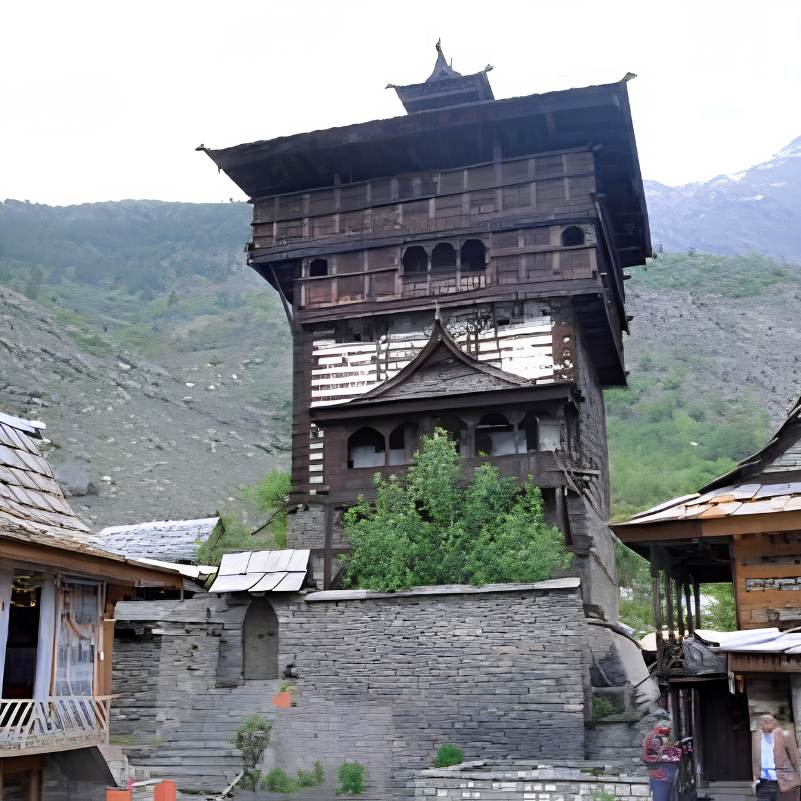
Kamru Fort
About 15 km (2 km above Sangla)
A five storey Kathkuni tower and living temple complex above Sangla town. Worth the steep climb for the architecture and the valley view.
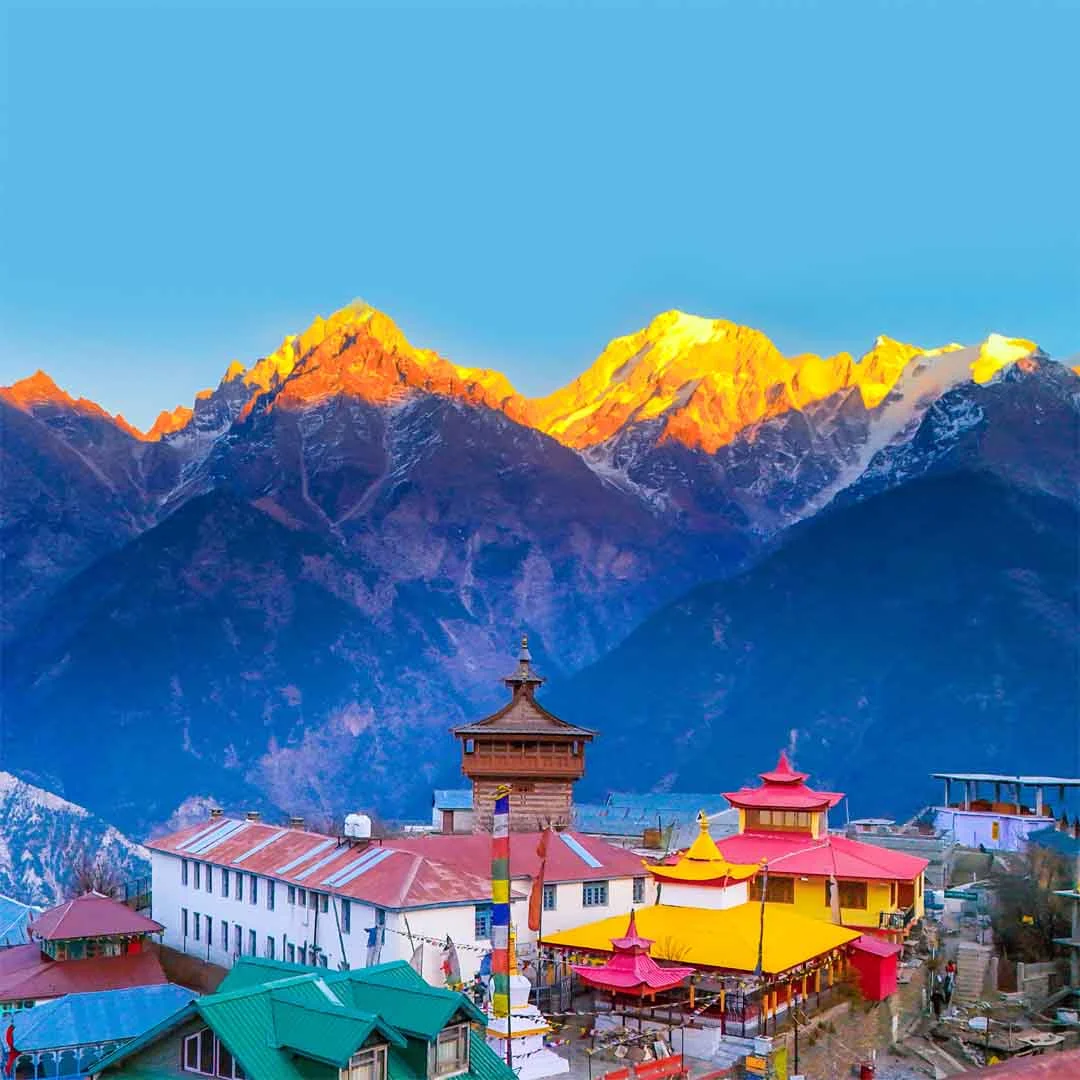
Kalpa
About 45 km via Karcham
The other main stop in lower Kinnaur, with the Kinner Kailash sunrise and old village temples. Most travellers combine Sangla Valley and Kalpa.
Our packages with Rakcham
Curated trips that include a visit to Rakcham.
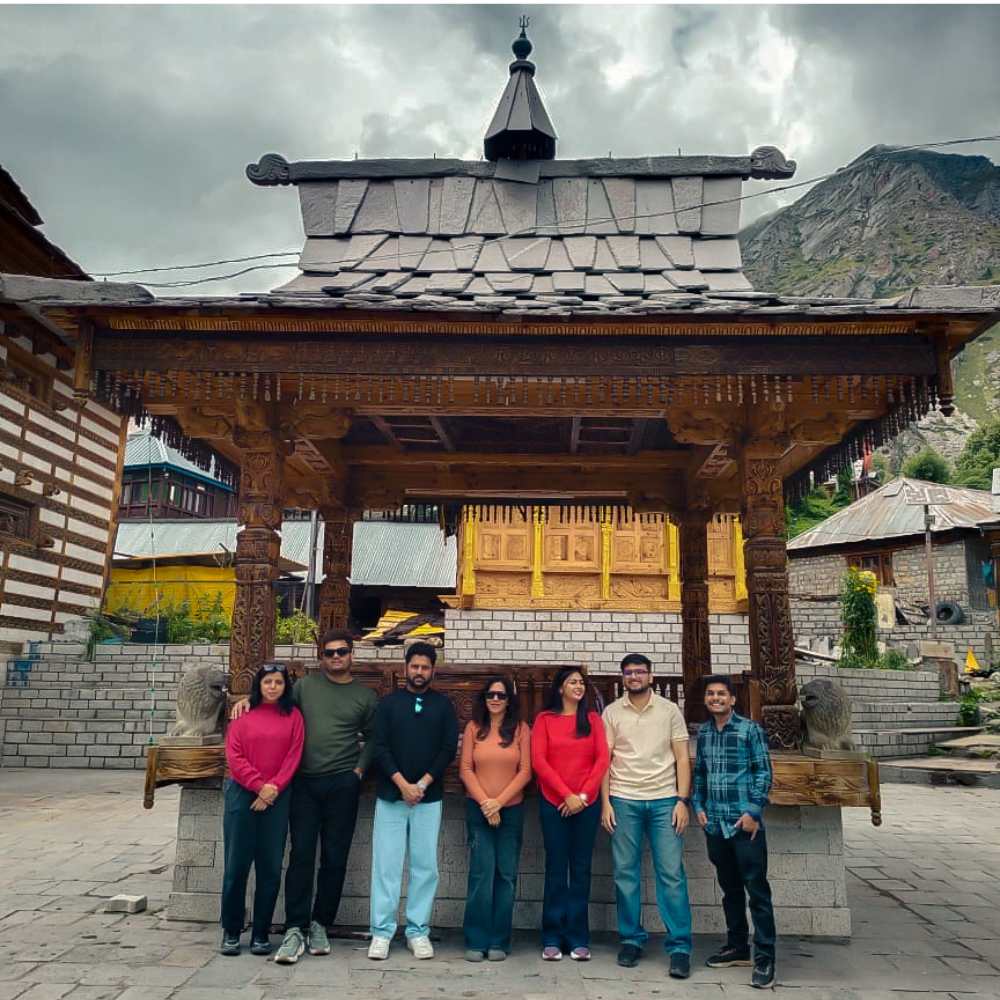 Group Tour5D/4N
Kinnaur Valley Weekend Group Trip With Sangla Chitkul and Kalpa
1D Sangla•1D Kalpa
₹7,999₹9,999SAVE INR 2,000/ person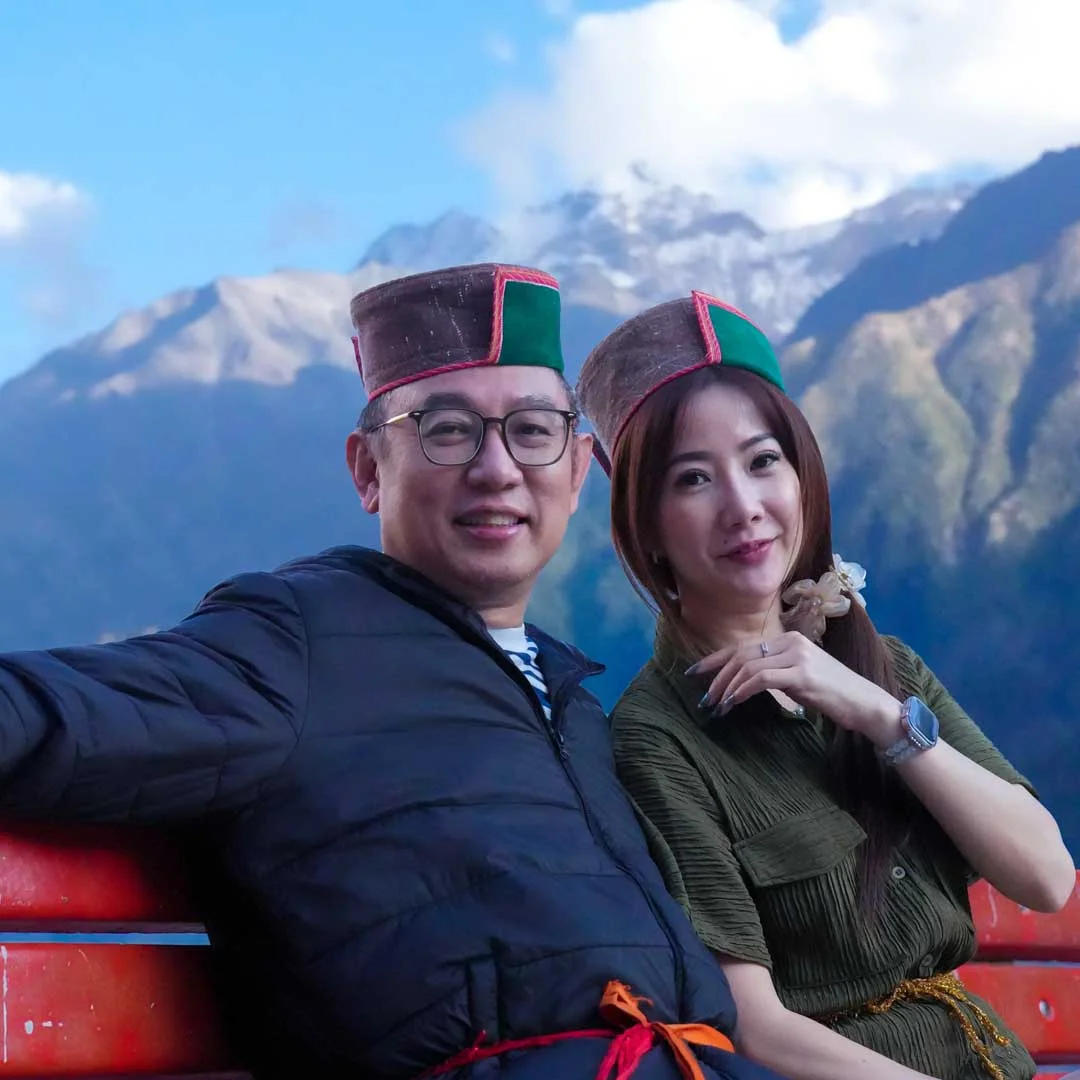 4D/3N
4D/3NKinnaur Valley Scenic Circuit With Sangla Chitkul and Kalpa
1D Shimla•1D Sangla+1
₹16,999₹17,999SAVE INR 1,000/ person
Common questions about Rakcham
Where is Rakcham?
Rakcham is a small Kinnauri village on the road between Sangla and Chitkul in the Baspa Valley, Kinnaur district, Himachal Pradesh. It sits at roughly 3,100 metres, about 12 to 15 km from Sangla and 10 to 12 km from Chitkul. The village received the Nirmal Gram Puraskar for cleanliness, and the older residents speak Chitkuli, a local dialect of Kinnauri specific to the upper Baspa Valley.
Why would I stay in Rakcham instead of Sangla or Chitkul?
If you want quiet. Rakcham has no market, no tourist infrastructure, and almost no crowds. The meadows, the traditional Kinnauri houses, the sound of the Baspa, and the smell of deodar and buckwheat are the experience. If you find Sangla too busy and Chitkul too far for a base, Rakcham is the middle ground.
Are there places to stay in Rakcham?
A handful of homestays and adventure camps. Rooms are basic. Expect simple food, limited menus, and no luxuries. Some camps offer decent tented accommodation with meals. Book ahead in peak season because options are genuinely limited.
How many nights should I spend in Rakcham?
One night gives you the meadows, the village walk, and an evening by the river. Two nights if you want to walk the meadows at different times of day and do day trips to Chitkul and Sangla from a quiet base. Beyond that, there is not much structured to do.
Is there an ATM or fuel in Rakcham?
No. There is no ATM anywhere in Rakcham. Withdraw all the cash you will need in Sangla or Reckong Peo before coming here. UPI, card payments, and online transfers do not work in the village. Everything is cash only. There is also no fuel pump. Fill up at Reckong Peo.
Does mobile network work in Rakcham?
BSNL sometimes works. Other networks are unreliable. Do not count on data, UPI, or maps. Treat Rakcham as mostly offline. Download any maps or content you need before entering the valley.
What is the best time to visit Rakcham?
April to June for green meadows, buckwheat blossoms, and comfortable weather. October for harvest light and thin crowds. Monsoon is possible but the highway to the valley is landslide prone. Winter brings snow and most stays close. Heavy snowfall can block the road from Sangla to Rakcham, so do not assume year round access.
Related guides
Posts about Kinnaur
- Yulla Kanda Trek Guide 2026: Route, Best Time, Cost and Planning
- Kinnaur Snowfall Guide 2026: When & Where to Look for Snow
- Christmas & New Year in Kinnaur: A 2026-27 Winter Trip Guide
- Kinnaur in November 2026: Weather, Snow Chances & 7-Day Trip Plan
- Yulla Kanda Trek Distance and Route 2026: Yulla Khas to the Lake
- Yulla Kanda Krishna Temple in 2026: Location, Beliefs & Visiting Etiquette