
Neuli Village
The last bus stop in the Sainj Valley, where the road ends and the Great Himalayan National Park begins, serving as the transit hub for Shangarh, Shanshar, and the GHNP treks on the Sainj side
- Transit village
- Sainj Valley
- ~1,500 m
- GHNP trailhead
- Birding
- Road end
- Bus from Aut
- No entry fee
What makes it special
Neuli is where the road runs out in the Sainj Valley. About 27 km from Aut on the Manali highway and roughly 10 km past Sainj town, this small village sits at around 1,500 metres on the Sainj River, right where the motorable road thins to a footpath and the Great Himalayan National Park begins in earnest. If you are heading deeper into the valley, whether to Shangarh, Upper Neahi, Shanshar, or the GHNP treks, Neuli is the point where your transport decisions get made.
Here is the honest framing. Neuli is not a destination village in the way Shangarh or Dehuri are. There is no meadow to sit on, no temple that draws visitors, no homestay scene worth staying for on its own. What Neuli is, and what makes it worth understanding, is the practical gateway to everything deeper in the valley. The bus from Aut usually ends here. The road to Shangarh branches off about 2 to 3 km before you arrive, at the Ropa Complex where the GHNP Sainj side gate sits. The trails into the park core, including the Raktisar trek (to the source of the Sainj River), the Homkhani trek, and the cross valley route to Tirthan, all start from Neuli or the villages just above it.
Most travellers pass through Neuli without noticing it. They get off the bus, grab a shared cab to Shangarh or start walking, and that is that. But if you are a birder, this is where you should slow down. The walk from Neuli along the Sainj River is one of the better birding stretches in the valley, with reliable sightings of Blue Whistling Thrush, Blue Magpies, Chestnut Capped Tesia, Kestrel, and Shikra reported by birders who know this area. The forest around Neuli is deodar and oak mixed with broadleaf, and early morning walks along the river before 8 AM are the window.
The road past Neuli continues about a kilometre to Naloun before ending entirely. A left turn before the end takes you towards Bihali and then up a series of hairpin bends to Shanshar, the village with the five storied pagoda style temple dedicated to Manu Rishi, considered hundreds of years old. So Neuli sits at a genuine crossroads: Shangarh in one direction, Shanshar in another, Dehuri and the Pundrik Rishi Lake trail accessible from nearby, and the GHNP treks heading straight up the river.
Quick answers
- Is Neuli worth stopping at?
- Neuli is the end of the road in the Sainj Valley and the gateway to the GHNP treks on the Sainj side. Most travellers pass through on the way to Shangarh or to start a park trek. It is not a destination in itself unless you are a birder (the Sainj River walk is excellent) or staging for a multi day GHNP trek. Think of it as the last bus stop, not a place to base yourself.
- How do I get to Neuli?
- Take an HRTC bus from Aut towards Neuli via Sainj. The ride is about 27 km and takes 1.5 to 2 hours. Not all Sainj buses go to Neuli, so confirm. A cab from Aut costs roughly 1,000 to 1,500 rupees. From Delhi, take an overnight bus to Aut and connect from there.
- Where do I go from Neuli?
- From Neuli, Shangarh is about 10 km by road (turnoff at Ropa, 2 to 3 km before Neuli). Upper Neahi is a short walk. Shanshar is reached by a left turn past Neuli. GHNP treks start from here. Most travellers decide their onward transport at Neuli based on what is available.
Quick facts
Everything you need to know at a glance.
At a glance
- Location
- End of the motorable road in the Sainj Valley, Kullu district, Himachal Pradesh. About 27 km from Aut, 10 km past Sainj town.
- Altitude
- Approximately 1,500 m (roughly 4,900 feet).
- Nearest town
- Sainj town, about 10 km back. Aut at the highway, about 27 km.
- What it is
- Transit village and GHNP trailhead. The last bus stop in the main Sainj Valley.
- Entry fee
- None for the village. GHNP permits needed for core zone treks (available at Ropa, 3 km before Neuli).
- Time needed
- Transit stop: 30 minutes to 1 hour. Birding stay: 1 night at Ropa FRH. GHNP treks: multi day.
On the ground
- Mobile network
- Very patchy. BSNL in spots. Jio and Airtel unreliable. Assume mostly offline.
- Food
- Nothing reliable at Neuli itself. A tea stall or two may be open. Eat at your homestay or carry food from Sainj.
- ATM and cash
- No ATM. Nearest at Sainj town. Carry cash from Aut or Mandi.
- Fuel
- No fuel station. Nearest at Sainj town or Larji (near Aut).
- Accommodation
- None in the village. Forest Rest House at Ropa (3 km back). Homestays at Upper Neahi and Shangarh.
Seasonal weather
- March to June22°6°Spring and Summer
- July to September24°14°Monsoon
- October to November20°4°Autumn
- December to February12°-4°Winter
Suitable for
- Couples — with some care
- Families — with some care
- Seniors — with some care
- Solo — suitable
- First-timers — suitable
- Pet-friendly — with some care
How to reach Neuli Village
3 approach routes, with seasonal access.
From Aut (the Manali highway turn off)
Year round. Road can be rough after heavy monsoon rain.- Distance
- About 27 km
- Time
- 1.5 to 2 hours by bus, slightly less by cab
- Road
- Valley road along the Sainj River. Tarred to Sainj town, narrows and gets rougher past Sainj.
- Last fuel
- Aut and Sainj town
The standard approach. From Aut on the Manali highway, take an HRTC bus towards Neuli via Sainj. The road follows the Sainj River through a V shaped valley, passing Sainj town at about the halfway point. Past Sainj, the scenery changes noticeably as the valley narrows and the deodar forest thickens. Not all Sainj buses continue to Neuli, so confirm before boarding. A cab from Aut costs roughly 1,000 to 1,500 rupees one way.
From Delhi (overnight bus via Aut)
Year round from Delhi.- Distance
- Approximately 490 km to Aut, then 27 km to Neuli
- Time
- Overnight bus to Aut, then 1.5 to 2 hours to Neuli
- Road
- Highway to Aut, then valley road.
Take an overnight Volvo or semi sleeper from Delhi to Aut (10 to 12 hours). From Aut, take a local bus to Neuli or hire a cab. Budget a full day from Delhi to the Sainj Valley. If you are heading to Shangarh, get off the bus at the Ropa turnoff, about 2 to 3 km before Neuli. Riding all the way into Neuli means backtracking to reach the Shangarh road. Tell the bus conductor you want Ropa and he will call the stop. From Ropa, shared cabs to Shangarh are available, or you can walk the 10 km uphill road.
From Manali
Year round.- Distance
- About 90 to 100 km
- Time
- 3 to 3.5 hours
- Road
- NH 3 south to Aut, then Sainj valley road.
Drive south on the Manali highway to Aut, through the Aut tunnel, and turn left at Larji into the Sainj valley road. Continue past Sainj town to Neuli. About 3 to 3.5 hours of driving. The last 10 km past Sainj is the slow section.
Best time to visit
Season by season, so you can plan around the weather rather than hope.
- Recommended
Spring and early summer
March to June
Dry roads, reliable transport, and GHNP treks opening up.
- Weather
- 6 to 22 degrees.
- Transport
- Buses more regular. Roads dry.
- Treks
- High routes open by late May. Ecozone walks comfortable.
- Birding
- Good. Dawn walks along the river are productive.
The best window for both transit and birding. Roads are dry, buses run more reliably, and the forest along the Sainj River is green. If you are staging for a GHNP trek, late May to June is when the higher trails clear of snow. Days are comfortably warm at 1,500 metres, while nights remain crisp and cool.
Monsoon
July to September
Heavy rain, rough roads, and most GHNP treks off limits.
- Weather
- 14 to 24 degrees. Heavy rain.
- Transport
- Buses can be disrupted. Roads rough.
- Treks
- Most GHNP treks inadvisable in peak monsoon.
- Birding
- Difficult in rain. Late September improves.
The Sainj Valley gets serious rain. The approach road from Sainj to Neuli can get rough, with occasional landslides. The GHNP trails beyond Neuli become muddy and stream crossings can be tricky. Most serious treks are not attempted in peak monsoon. The river runs high and the forest is at its greenest, but this is not a casual transit season.
- Recommended
Autumn
October to November
The cleanest air, the best trek window, and reliable transport.
- Weather
- 4 to 20 degrees. Cold nights.
- Transport
- Regular. Roads in good condition.
- Treks
- Best window for multi day GHNP routes.
- Birding
- Excellent. Clean air, active forest.
Post monsoon clarity makes this the best window for GHNP treks and birding. The air is clean, the trails dry out, and the forest is still lush from the rains. The Raktisar and Homkhani treks are most often attempted in this window. Transport is reliable. Nights start getting cold by November.
Winter
December to February
Cold, limited transport, GHNP high routes closed.
- Weather
- Minus 4 to 12 degrees.
- Transport
- Limited beyond Sainj. Buses irregular.
- Treks
- High GHNP routes closed.
- Facilities
- FRH at Ropa stays open. Confirm.
Cold and quiet. Transport beyond Sainj town becomes irregular. The higher GHNP trails are snowed in. Neuli as a transit point becomes less useful in winter because fewer travellers are heading into the deeper valley. If you are visiting Shangarh in winter, you will pass through, but plan for limited onward options.
Things to see & do
5 things worth your time at Neuli Village.
Start a GHNP trek from here
5 to 9 days depending on routeNeuli is the official starting point for GHNP treks on the Sainj side. The Raktisar trek (roughly 92 km round trip) follows the Sainj River upstream to its glacial source at about 4,500 metres. The shorter Homkhani trek (5 days, moderate difficulty) goes through dense forest and alpine meadows. Both require permits from the GHNP office at Ropa (about 3 km before Neuli), a registered guide, and proper camping gear. These are serious wilderness treks, not casual day walks. Plan through the GHNP office or an established operator well in advance.
Bird watching along the Sainj River
1 to 3 hours at dawnThe stretch of the Sainj River near Neuli is one of the better birding walks in the valley. Blue Whistling Thrush, Blue Magpies, Chestnut Capped Tesia, Kestrel, and Shikra are regularly spotted by birders in this area. Walk along the river before 8 AM for the best window. The forest is mixed deodar, oak, and broadleaf. You do not need a guide for the riverside walk, but binoculars and a field guide help. The morning after arrival is the natural time for this if you are staying at a Ropa area homestay.
Connect to Shangarh (get off at Ropa, not Neuli)
3 to 4 hours on foot, or 30 to 40 minutes by vehicle from RopaIf you are heading to Shangarh, the smartest move is to get off the bus at the Ropa turnoff, about 2 to 3 km before Neuli, rather than riding all the way in and having to backtrack. The Shangarh road branches off at Ropa and climbs about 10 km through pine forest with views opening up as you gain altitude. You can take a shared cab from Ropa, hike the road in about 3 to 4 hours, or try to catch the one daily HRTC bus from Sainj to Shangarh, generally around 4 PM, though it fills up and timings shift. If you do end up at Neuli, walk or hitch the 2 to 3 km back to Ropa for the Shangarh turn.
Side trip to Shanshar and the Manu Rishi Temple
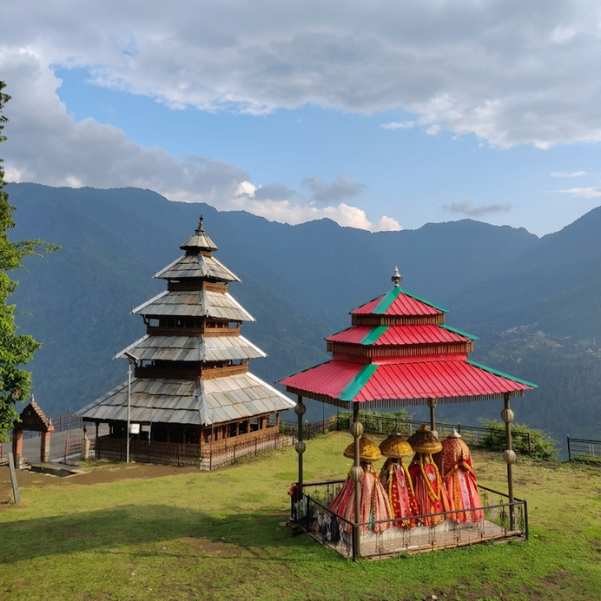
Half day round trip from NeuliFrom the Neuli area, a left turn leads to Bihali village and then up a steep set of hairpin bends to Shanshar, also known as Shensar. The village has a five storied pagoda style temple dedicated to Manu Rishi, considered hundreds of years old. Bus service to Shanshar from Sainj is very limited. Hitchhiking or arranging a vehicle is the more reliable option. If you have a day to spare and an interest in traditional Kullu valley temple architecture, this is one of the more striking examples in the area.
Visit the GHNP Ropa Complex
30 minutes to 1 hourThe Ropa Complex is about 3 km before Neuli on the main road. This is where the GHNP Sainj side entry gate sits, along with a Forest Rest House that is open to tourists. It is the permit and information point for all treks heading into the park from the Sainj side. Even if you are not trekking, a stop here gives you a sense of the park's geography and the conservation work in the valley.
Know before you visit Neuli Village
The practical bits, from people who have been.
Where to stayNo accommodation in Neuli. Forest Rest House at Ropa (3 km back) or homestays at Upper Neahi and Shangarh.
There is no formal accommodation in Neuli village itself. The closest option is the Forest Rest House at Ropa, about 3 km back on the main road. It has private rooms (roughly 1,000 rupees per night) and a dormitory (roughly 200 rupees per bed). Book through the GHNP office. The FRH sits on the bank of the Sainj River and is a good staging point for GHNP treks.
For a longer stay, Upper Neahi (a short walk from Neuli) has a few homestays, and Shangarh (about 10 km by road) has the widest range of options in the valley. Most travellers heading through Neuli sleep in one of these places rather than in the village itself.
Transport realityHRTC bus from Aut. Onward transport to Shangarh or Shanshar is limited. Confirm timings locally.
Most travellers arrive at Neuli by HRTC bus from Aut. Buses run throughout the day but are limited in number. Some buses from Aut terminate at Sainj town, not Neuli. Look specifically for a bus going to Neuli, not just Sainj. The ride from Aut takes about 1.5 to 2 hours.
From Neuli, onward transport depends on your destination. Shared cabs to Shangarh run when there are enough passengers, usually charging 500 to 1,000 rupees per vehicle. The daily HRTC bus from Sainj to Shangarh passes through the Ropa area around 4 PM, but timings shift and the bus fills up. Buses to Shanshar from Sainj are very limited. Hitchhiking is common and generally works in this valley.
A small recheck reminder: bus timings, cab availability, and road conditions shift with the season and sometimes week to week. Confirm with the GHNP office at Ropa or your homestay host before depending on a specific departure.
Network, cash, and medicalPatchy signal, no ATM, no medical facility. Come prepared from Sainj or Aut.
Mobile signal at Neuli is very patchy. BSNL may work in parts of the village. Jio and Airtel are unreliable here. Download offline maps before leaving Aut or Sainj town. There is no ATM at Neuli. The nearest is at Sainj town, about 10 km back, and even that is not always stocked. Carry enough cash for your entire onward journey from Aut or Mandi.
There is no medical facility at Neuli. The nearest community health centre is at Sainj town. For anything serious, the nearest hospital is at Kullu, 2 to 3 hours away. Carry your own medicines and a basic first aid kit, especially if you are heading into the GHNP.
GHNP permits and trek logisticsGHNP Ropa office handles permits. No permit needed for the village. Confirm trek fees locally.
Neuli is the official trailhead for GHNP treks on the Sainj side. The Ropa Complex, about 3 km before the village, is where permits are issued. You do not need a permit for the village or for walks in the ecozone. You need a permit for any multi day trek entering the GHNP core zone.
The GHNP office at Ropa handles permits, guide registration, and trek logistics for the Sainj side. Entry fees are modest for Indian nationals (roughly 50 to 100 rupees per day for the ecozone) and higher for foreign nationals. Multi day treks with certified guides cost roughly 2,500 rupees per person per day for a group of six. These rates are reviewed periodically. Confirm current rates at the office before your trek.
Nearby attractions
Other places worth the detour.
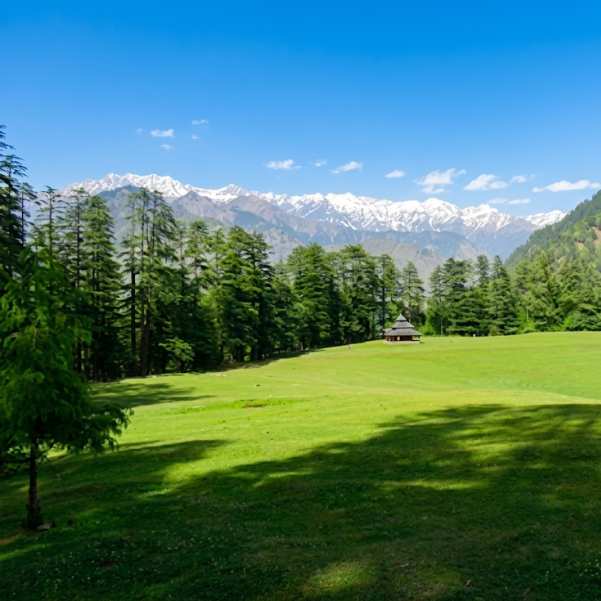
Shangarh Meadows
About 10 km by road from Ropa turnoff
The most visited spot in Sainj Valley. A wide sacred meadow with the Shangchul Mahadev Temple. About 10 km by road from the Ropa turnoff, 2 to 3 km before Neuli. The natural place to base if you are spending multiple days in the valley.
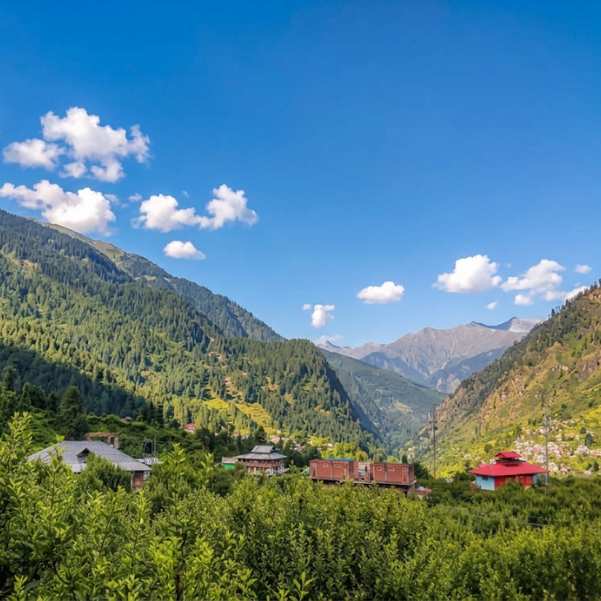
Upper Neahi Village
Short walk from Neuli
A small village near Neuli with homestays, deodar forest, and the sacred Pundrik Rishi Lake steps away. A quieter alternative to Shangarh for overnight stays.
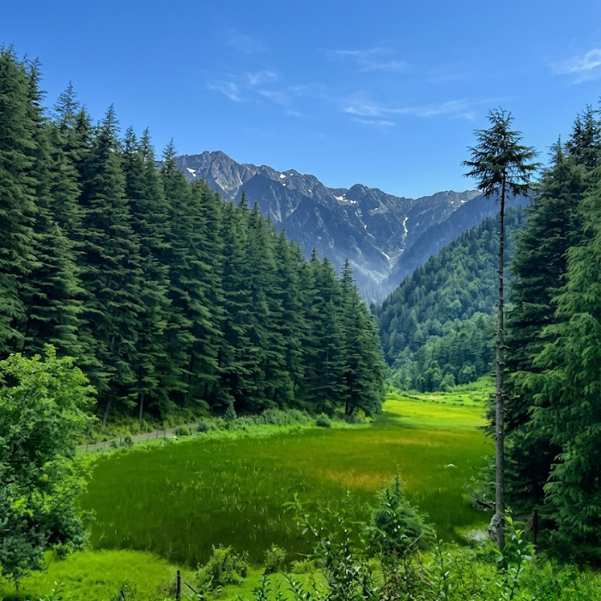
Pundrik Rishi Lake
About 2 to 3 km walk from the Neuli area
A sacred grassy wetland in the upper valley, about a 30 to 45 minute walk from Dehuri and reachable from the Neuli side via Jhili Neahi. The forest trek is the draw.
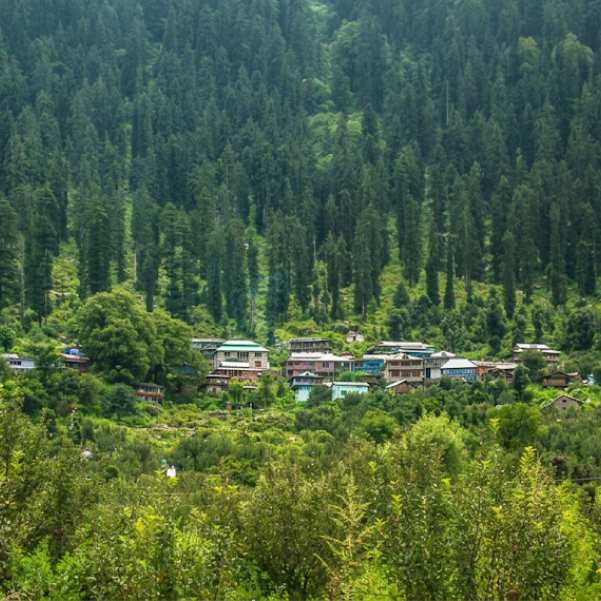
Dehuri Village (Deohari)
About 7 to 10 km from Neuli via Sainj
The quiet agricultural village that serves as the trailhead for the Pundrik Rishi Lake walk and the Manyashi tower temples. Reachable by bus from Sainj town.
Great Himalayan National Park
Ropa gate about 3 km from Neuli
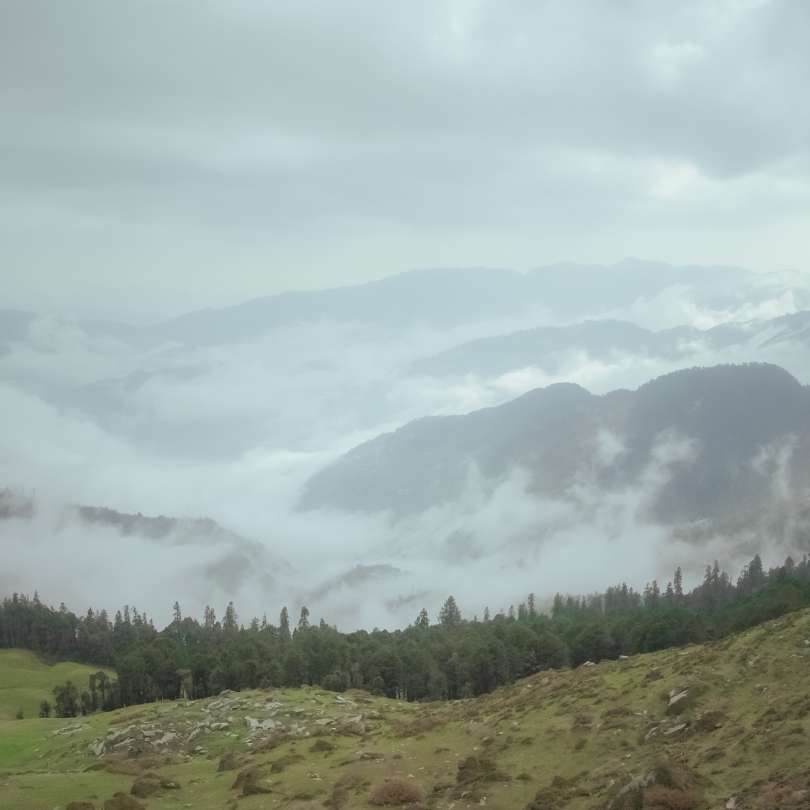
UNESCO World Heritage protected wilderness. The GHNP Sainj side gate at Ropa is about 3 km before Neuli. Multi day treks into the core zone start from here.
Shanshar village and Manu Rishi Temple
About 10 to 15 km uphill
A high altitude village above Neuli with a five storied pagoda style temple dedicated to Manu Rishi, considered hundreds of years old. Reached by a steep road with hairpin bends from the Neuli area. Very few tourists make it here.
Our packages with Neuli Village
Curated trips that include a visit to Neuli Village.
 Group Tour5D/4N
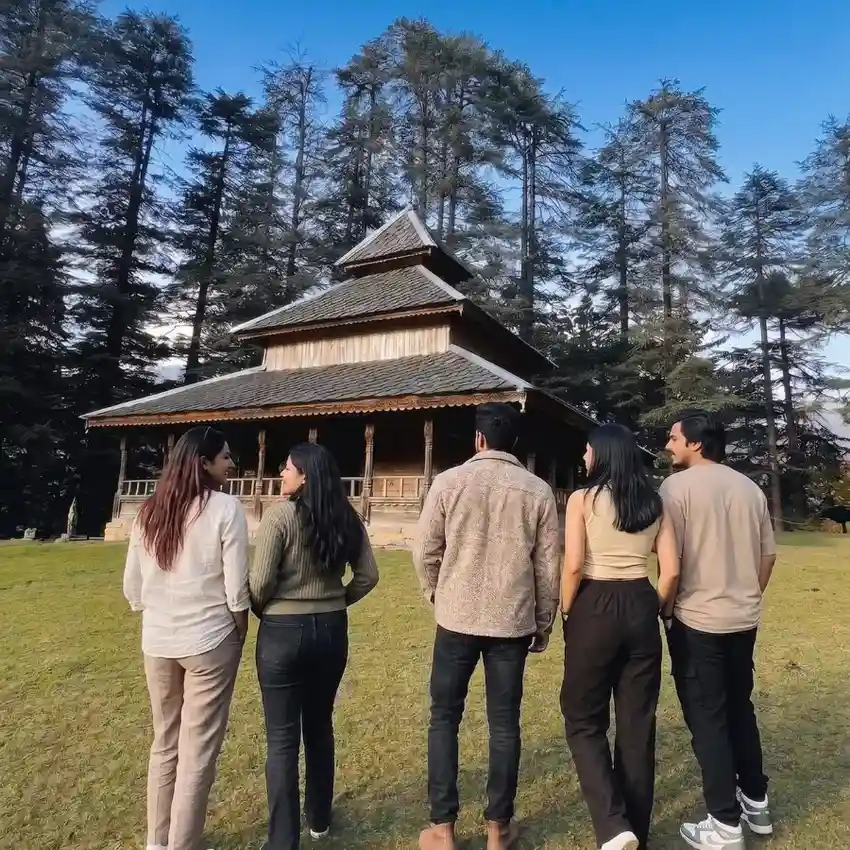
Shangarh Sainj Valley Weekend Group Trip
2D Shangarh
₹8,499₹8,999SAVE ₹500/ person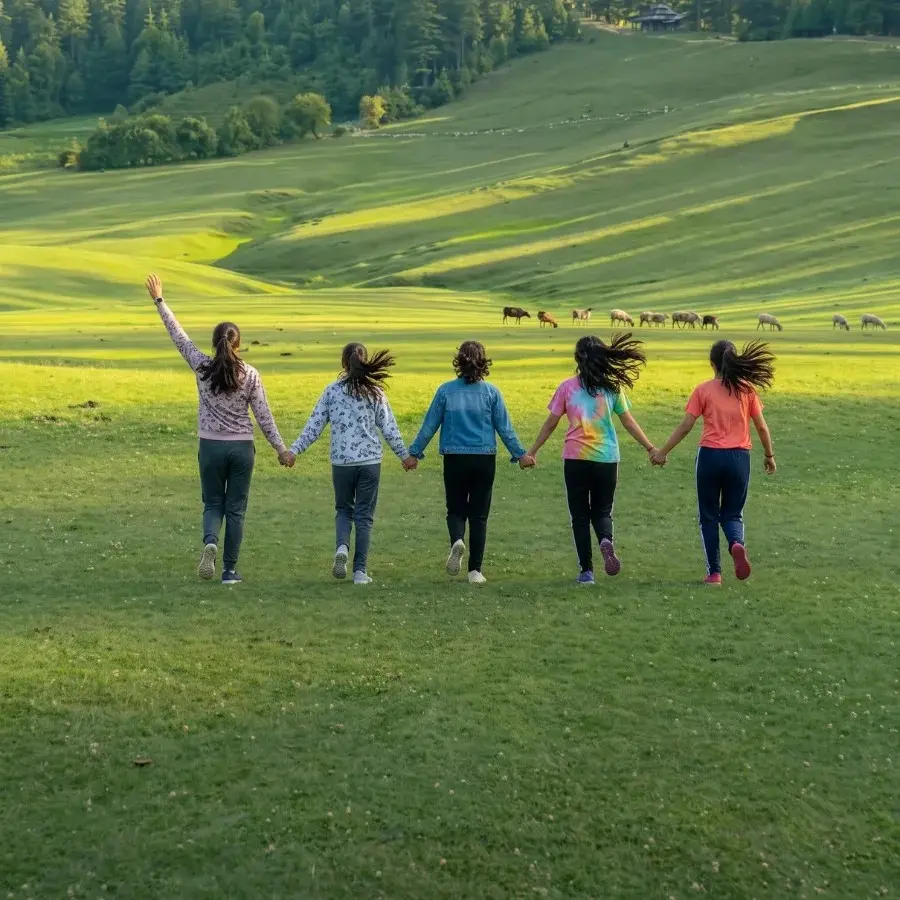 5D/4N
5D/4NMost Loved Shangarh Sainj Valley Tour With Private SUV
2D Shangarh
₹12,999₹16,999SAVE ₹4,000/ person
Frequently Asked Questions
What is Neuli Village?
A small village at the end of the motorable road in the Sainj Valley, Kullu district, Himachal Pradesh. It sits at roughly 1,500 metres on the Sainj River, about 27 km from Aut on the Manali highway and about 10 km past Sainj town. Neuli is the official starting point for GHNP treks on the Sainj side and the transit hub for reaching Shangarh, Shanshar, and Upper Neahi.
How do I reach Neuli?
From Aut on the Manali highway, take a local HRTC bus headed towards Neuli via Sainj. The ride is about 27 km and takes 1.5 to 2 hours. Buses run throughout the day but are limited in number. A cab from Aut costs roughly 1,000 to 1,500 rupees. From Delhi, take an overnight Volvo to Aut and connect from there.
Should I stay in Neuli?
Neuli is primarily a transit village and a GHNP trailhead, not a destination where travellers typically stay multiple days. Most people pass through on the way to Shangarh, Shanshar, or the park treks. If you are a birder or a trekker staging for a GHNP expedition, one night at the nearby Ropa Forest Rest House makes sense. Otherwise, you pass through and move on.
Can I start GHNP treks from Neuli?
Yes. The Raktisar trek to the source of the Sainj River starts here. The Homkhani trek (5 days, moderate) also begins from Neuli. Both require a GHNP permit from the Ropa office (about 3 km back), a registered guide, and proper camping gear. Multi day trek fees are roughly 2,500 rupees per person per day for a group of six. Confirm current rates with the GHNP office.
Is Neuli good for bird watching?
Yes. The stretch of the Sainj River near Neuli is one of the better birding walks in the valley. Blue Whistling Thrush, Blue Magpies, Chestnut Capped Tesia, Kestrel, and Shikra are regularly reported. Early morning before 8 AM is the window.
Where can I stay near Neuli?
The Forest Rest House at Ropa, about 3 km before Neuli, is the closest formal accommodation. It has private rooms and a dormitory. Book through the GHNP office. Upper Neahi, a short walk from Neuli, has a few homestays. Shangarh, about 10 km by road, has a growing number of homestays and a Zostel.
Is there mobile network at Neuli?
Very patchy. BSNL may work in spots. Jio and Airtel are unreliable. Assume you will be mostly offline. There is no ATM at Neuli. The nearest is at Sainj town. Carry cash.
How do I get from Neuli to Shangarh?
The road to Shangarh branches off at Ropa, about 2 to 3 km before Neuli. From there, it is roughly 10 km uphill. You can take a shared cab, hike the road in about 3 to 4 hours, or catch the daily HRTC bus from Sainj to Shangarh (generally around 4 PM, timings shift).
Do I need a permit to visit Neuli?
No. No permits are needed for visiting the village, the nearby villages, or the GHNP ecozone walks. Permits are required only for multi day treks entering the GHNP core zone, available at the Ropa range office about 3 km before Neuli.
What is the best time to visit?
March to June and September to November. Monsoon (July to August) brings heavy rain, muddy trails, and possible landslides on the approach road. Winter is cold with limited transport beyond Sainj town.