
Raila Twin Towers (Dhaliara Kothi)
Two ancient Kath Kuni stone and wood tower temples in Raila village, Sainj Valley, standing on a hillock with valley views. A short climb from the road, best paired with the Rupi Raila Waterfall and the Bhatkanda Meadows hike. Visitors cannot enter, the towers are sacred to the village.
- Kath Kuni towers
- Sainj Valley
- Heritage
- No entry fee
- 30 to 45 min visit
- Combine with Raila village
- Valley views
What makes it special
The Raila Twin Towers are two tall stone and wood structures standing on a small hillock in the Dhaliara area of Raila village, in the Sainj Valley of Kullu district. Locals call them Dhaliara Kothi. If you have seen pictures of Chehni Kothi near Banjar, these are in the same family of Kath Kuni tower temples, the traditional building technique of the western Himalaya that uses alternating layers of stone and deodar wood with no cement, no nails, and no mortar. The difference here is that you get two towers side by side, and the setting is much quieter.
The geography is worth saying clearly, because the area gets muddled in online write ups. Raila sits in Kullu district's Sainj Valley, reached via the Aut turnoff just before the Aut tunnel on the Delhi-Manali highway, then up from Sainj town. It is not Parvati Valley, not Tirthan, and the Siund bridge crossing on this route is unrelated to the Parvati hydro projects, despite what some maps suggest. Keep that straight and the rest of the trip plans itself.
The honest framing on the towers themselves. They are not a full day destination on their own. You walk up a short climb from the road, spend 30 to 45 minutes looking at the towers and the valley views from the hillock, and walk back down. What makes the stop worthwhile is the architecture. Standing at the base of these structures, looking at the bands of grey stone and weathered deodar locking into each other at every corner, you start to understand why Kath Kuni buildings survive earthquakes that bring down concrete. The weight holds them together. The wood lets them flex. No glue, no metal, just physics and local knowledge passed down through generations.
The towers hold deep religious significance for the village. Luxmi Narayan ji is the local deity. Only priests are allowed inside the towers, and climbing is not permitted for visitors. This is not a rule that gets bent. Photograph from outside, walk around the base, sit on the slope for a few minutes, and respect the space. The village is small and the locals are welcoming, but they are protective of these structures for good reason.
Most travellers visit the towers as part of a broader trip to Raila, paired with the Rupi Raila Waterfall on the same half day. If you are staying overnight, save the Bhatkanda Meadows hike for the next morning. That is the part most day trippers miss, and honestly it is the best part of a Raila visit. A cab from Sainj town or Shangarh covers the towers and the waterfall comfortably, with a quick stop at the small dhaba near the road if it is open.
Quick answers
- Are the Raila Twin Towers worth visiting?
- Yes, if you are already visiting Raila village or the Sainj Valley and have any interest in traditional Himalayan architecture. The towers are the most striking example of Kath Kuni construction in this part of the valley. The visit itself is short, about 30 to 45 minutes. Combine with the Rupi Raila Waterfall on the same trip. Do not drive out purely for the towers if time is tight. They work best as part of a broader Raila or Sainj Valley visit.
- Can I go inside the towers?
- No. Only priests are allowed inside. The towers are sacred and the wooden interiors are fragile. You visit and photograph from outside, walk around the base, and enjoy the valley views from the hillock. This is the standard visit and it is plenty.
- How do I reach the twin towers?
- From Raila village (Kamtan area), a short uphill walk of about 10 to 15 minutes from the main road brings you to the towers on a hillock. The towers are visible from the road. Reaching Raila itself requires a cab from Sainj town (about 12 km, roughly 1,000 to 1,500 rupees one way) or Shangarh (about 15 km, roughly 2,500 to 3,000 rupees return).
Quick facts
Everything you need to know at a glance.
At a glance
- Location
- Dhaliara area, Raila village, Sainj Valley, Kullu district, Himachal Pradesh
- Approximate altitude
- Roughly 2,000 to 2,200 m (traveller estimates, not officially confirmed)
- Nearest town
- Sainj town, roughly 12 km. Aut (on the Manali highway) is the nearest highway point.
- Time at the towers
- 30 to 45 minutes. Half day if combining with the Rupi Raila Waterfall.
- Entry fee
- None. No permits needed.
- Effort level
- Easy. Short uphill walk of about 10 to 15 minutes from the road.
On the ground
- Mobile network
- Very patchy across all carriers in Raila. Assume offline.
- Food
- A couple of Maggi stalls near the Raila road, hours inconsistent. Carry snacks from Sainj.
- ATM and cash
- No ATM in Raila. Nearest in Sainj town. Carry enough cash.
- Parking
- Roadside near the towers. No formal parking.
- Walking
- Short uphill climb on a village path to reach the towers. Shoes with grip recommended.
Seasonal weather
- March to June22°6°Spring and Summer
- July to September24°14°Monsoon
- October to November20°4°Autumn
- December to February12°-4°Winter
Suitable for
- Couples — suitable
- Families — suitable
- Seniors — with some care
- Solo — suitable
- First-timers — suitable
- Pet-friendly — with some care
How to reach Raila Twin Towers (Dhaliara Kothi)
3 approach routes, with seasonal access.
From Sainj town (by cab or HRTC bus to Raila)
Year round, though the road can get rough in heavy monsoon and icy in peak winter.- Distance
- About 12 km from Sainj town to the twin towers area
- Time
- 30 to 45 minutes by cab. Bus takes longer.
- Road
- Narrow, steep valley road with sharp hairpin bends from the Siund bridge turnoff. Road widening has started in places but expect rough stretches.
The standard approach. From Sainj town, cross the bridge at Siund where the road diverts off the main Sainj to Ropa route and climbs towards Raila. (Some maps tag this bridge with a Parvati hydro project label that confuses travellers, you are not headed into Parvati Valley, you are still in Sainj.) The road climbs steeply from here through several small villages. Two HRTC buses usually run daily to Kamtan (the last stop), but timings shift. The morning bus generally reaches the Siund bridge around 9:30 to 10 AM. A hired cab from Sainj costs roughly 1,000 to 1,500 rupees one way. Confirm bus timings locally on the morning of travel.
From Shangarh (by hired cab)
Year round. Road can be rough after heavy rain.- Distance
- About 15 km via valley roads
- Time
- 1 to 1.5 hours by cab
- Road
- Valley roads, narrow in sections.
If you are based in Shangarh, hire a cab for a half day trip covering the twin towers and the Rupi Raila Waterfall. The return trip costs roughly 2,500 to 3,000 rupees. Start after breakfast and you can cover both comfortably by early afternoon.
From Delhi (overnight bus via the Aut tunnel)
Year round from Delhi. Valley road conditions vary by season.- Distance
- Approximately 490 km to Sainj, then 12 km to Raila
- Time
- Overnight bus to Aut (10 to 12 hours), then local transport
- Road
- Delhi-Manali highway till the Aut tunnel, then valley roads.
Take an overnight Volvo or semi sleeper from Delhi to Aut on the Delhi-Manali highway (10 to 12 hours). Aut is the gateway to Sainj Valley, just before the Aut tunnel on the Manali road. Get off there, then take a local bus or shared cab to Sainj town (about 18 km), and another cab or the HRTC bus from Sainj up to Raila. Budget a full morning for the door to door journey. If you are booking a Sainj Valley trip package, transport is usually sorted for you.
Best time to visit
Season by season, so you can plan around the weather rather than hope.
- Recommended
Spring and early summer
March to June
Warm days, dry road, and the most comfortable window for the visit.
- Weather
- 6 to 22 degrees. Warm days, cold nights.
- Crowds
- Light. Weekends in May see a few more visitors.
- Road
- Generally good. Dry stretches.
- Photography
- Good light. Clear air most days.
The best overall window. The road to Raila is dry, the weather is pleasant during the day, and the walk up to the towers is comfortable. Apple orchards bloom in April. The light on the stone and wood layers of the towers is best in early morning and late afternoon. May and June can get warm on the road but the altitude keeps the tower site comfortable.
Monsoon
July to September
Lush and green, but the road can be rough and the climb slippery.
- Weather
- 14 to 24 degrees. Rain is frequent.
- Crowds
- Very low.
- Road
- Can be rough. Possible landslides.
- Photography
- Moody and atmospheric if the mist cooperates.
The valley turns deep green and the surrounding forest looks its best. But the road to Raila, already steep and narrow, gets rougher during monsoon. The short climb to the towers can be slippery after rain. If you go, pick a clear morning. Late September, after the rains taper, is a sweet spot.
- Recommended
Autumn
October to November
The best single month is October. Clean air, dry path, golden light.
- Weather
- 4 to 20 degrees. Getting cold at night.
- Crowds
- Low to moderate. October weekends see some visitors.
- Road
- Dry. Good condition.
- Views
- Best clarity of the year. GHNP range visible on clear days.
Post monsoon clarity makes this the best window for photographs of the towers and the valley views from the hillock. The trail is dry. The air is sharp. October is arguably the single best month to visit. Nights get cold by November. Book your homestay ahead if staying in Raila.
Winter
December to February
Cold and quiet. Worth it for the prepared, skip if you want comfort.
- Weather
- Minus 4 to 12 degrees. Snow possible.
- Crowds
- Almost none.
- Road
- Can be icy. Confirm access.
- Facilities
- Some homestays close. Confirm before booking.
Raila gets cold in winter. Snow is possible at the higher points. The road can be icy. Some homestays close. If you come prepared with warm layers and confirm your homestay is open, winter here is genuinely quiet and rewarding. Not a casual weekend visit though, come only if you are comfortable with mountain cold.
Things to see & do
4 things worth your time at Raila Twin Towers (Dhaliara Kothi).
Walk up and see the twin towers
30 to 45 minutesThe towers sit on a small hillock in the Dhaliara area of Raila, clearly visible from the road. A short climb of about 10 to 15 minutes brings you up. Walk around both towers slowly. Look at the construction up close: alternating bands of grey stone and deodar wood, interlocking at the corners with no mortar. The joinery is the thing. One tower is locked, the other has seen some restoration work. The hillock offers good views of the valley and the terraced fields below. Spend your time looking at the architecture and the setting rather than rushing for photos. Ask a local villager for the stories behind the towers if someone is around, you will learn more in five minutes of conversation than from any guide book.
Combine with the Rupi Raila Waterfall
Add 30 to 45 minutesThe Rupi Raila Waterfall is a short drive from the towers, along the same road. A 10 minute uphill walk through deodar forest brings you to a waterfall dropping over moss covered rocks. Both fit into one half day from Shangarh or Sainj. The waterfall is at its best during and just after monsoon, but the walk through the forest is pleasant year round.
Hike to Bhatkanda Meadows and the sunset ridge
1.5 to 2.5 hours round trip from the twin towersThe best part of a Raila visit, and the one most day trippers miss because it needs an overnight stay. From the twin towers, continue along the road past a few homestays and into the forest. The climb to Bhatkanda Meadows is about 30 to 45 minutes through deodar shade. The meadow is an open grassland with wide views of the GHNP range. Beyond the meadow, a sunset viewpoint on the Odidhar ridge is worth staying for if the sky cooperates. Plan to be there by late afternoon.
Photograph the Kath Kuni architecture in side light
Through the visit, best at sunrise or sunsetThe first and last hour of daylight are when the towers photograph best. Side light catches the alternating stone and timber courses and the stepped slate roofs in a way flat midday light cannot. Walk fully around both towers before deciding on your angle. The shorter tower with the newer restoration work has different textures from the older one. A 35 to 50 mm lens covers a single tower from the base. Step back for the wide pair shot. Drones are not welcome here, both for heritage and religious reasons.
Know before you visit Raila Twin Towers (Dhaliara Kothi)
The practical bits, from people who have been.
What Dhaliara Kothi actually isTwo ancient Kath Kuni towers with deep religious significance. View from outside only.
Dhaliara Kothi is the local name for these twin towers. They are built in the Kath Kuni technique: alternating horizontal courses of stone and deodar wood, interlocking at the corners, with no cement, no nails, and no mortar. Kath means wood, Kuni means corner. The technique is native to the western Himalaya and produces structures that flex during earthquakes instead of cracking.
The towers are in the same architectural family as the more famous Chehni Kothi in the Banjar area, though Chehni is a single tall tower while Raila has a twin pair. The exact age of the Dhaliara Kothi towers is not well documented. Locals describe them as very old, and the construction style is consistent with other Kath Kuni structures in the region that date back several centuries. They were originally watchtowers and places of worship, placed on a hillock that lets you see most of the village and the valley below.
Luxmi Narayan ji is the deity of the village, and the towers hold genuine religious significance. Only priests and specific community members are allowed inside. This is not a flexible rule. Visit, photograph from outside, walk around the base, and respect the space.
Getting to the towers from the roadShort 10 to 15 minute uphill walk from the road. Towers are visible from below.
Once you reach the Raila area by cab or bus, the twin towers are visible from the road on a hillock above the village. A short uphill walk of about 10 to 15 minutes on a village path brings you up. The path is uneven in places, so shoes with grip help, especially after rain. No special fitness needed. Most people of average mobility manage it fine.
If you are coming by bus, the stop is at Kamtan village (the last bus stop). From there, walk to the turnoff for the towers. If by cab, ask the driver to drop you at the closest point on the road, they know the spot.
Network and cashNo mobile signal, no ATM. Come prepared.
Mobile signal across all carriers is very patchy in Raila. Assume you will be offline for most of your visit. Download offline maps before leaving Sainj. There is no ATM anywhere in the Raila area, the nearest is in Sainj town. Carry enough cash for your cab, any food stops, and your homestay if staying overnight. Some homestays may accept UPI when they happen to have a signal, but do not count on it.
Families, seniors, and petsEasy for most. Short climb, no technical difficulty. Seniors with mobility issues should assess the uphill.
The walk to the towers is short and does not require any special fitness. Families with children of any age can manage it, though you will want to watch younger kids on the uneven path. For seniors, the 10 to 15 minute uphill is the deciding factor. If you can handle a steady incline on an unpaved path, you will be fine. If stairs at home are a challenge, this one is harder.
Pets can come along, but keep them on a leash near the towers. The site is sacred and the village has its own free roaming dogs. There is no medical facility in Raila, the nearest basic healthcare is in Sainj town.
Respect the spaceActive religious site. Do not attempt to enter the towers. Ask before photographing locals.
Worth saying plainly. The twin towers are not ruins or abandoned forts, they are an active sacred site for the village. Do not attempt to climb or enter the towers. Do not touch the wooden beams or try to pull at the joinery for a closer look. Walk around, photograph, sit on the slope, and take it in from outside.
If village members are present, a friendly greeting goes a long way. Ask before photographing people. If a local offers to share the history or stories of the towers, listen. Carry your waste out. Do not leave plastic at the site.
Nearby attractions
Other places worth the detour.
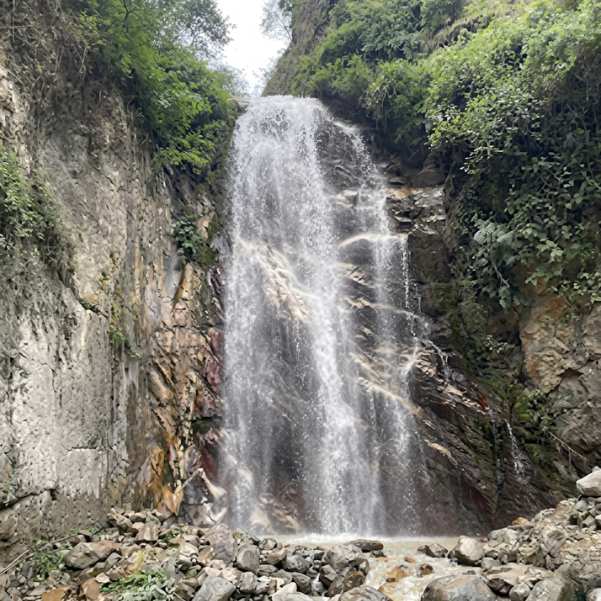
Rupi Raila Waterfall
Short drive from the towers, same village area
A forest waterfall reached by a 10 minute walk from the road. Best combined with the twin towers on the same half day trip. Strongest flow during and after monsoon.
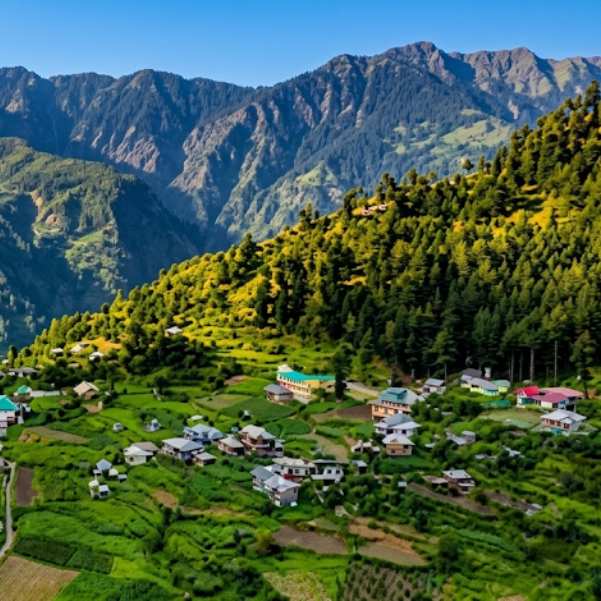
Raila Village and Bhatkanda Meadows
You are already here
The broader village with terraced orchards, homestays, and the Bhatkanda Meadows hike for wide GHNP views and a well known sunset point. Two days is the sweet spot for the full Raila experience.
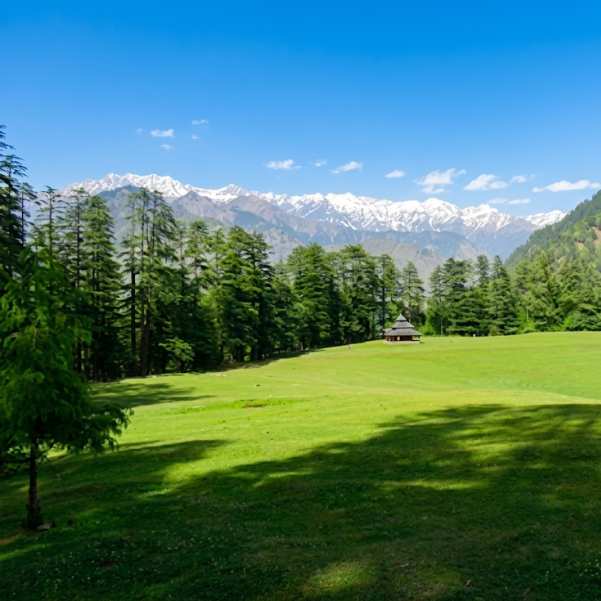
Shangarh Meadows
About 15 km by road, 1 to 1.5 hours by cab
The most visited spot in Sainj Valley. A sacred meadow with the Shangchul Mahadev Temple. Most travellers use Shangarh as their base and visit Raila as a day trip.
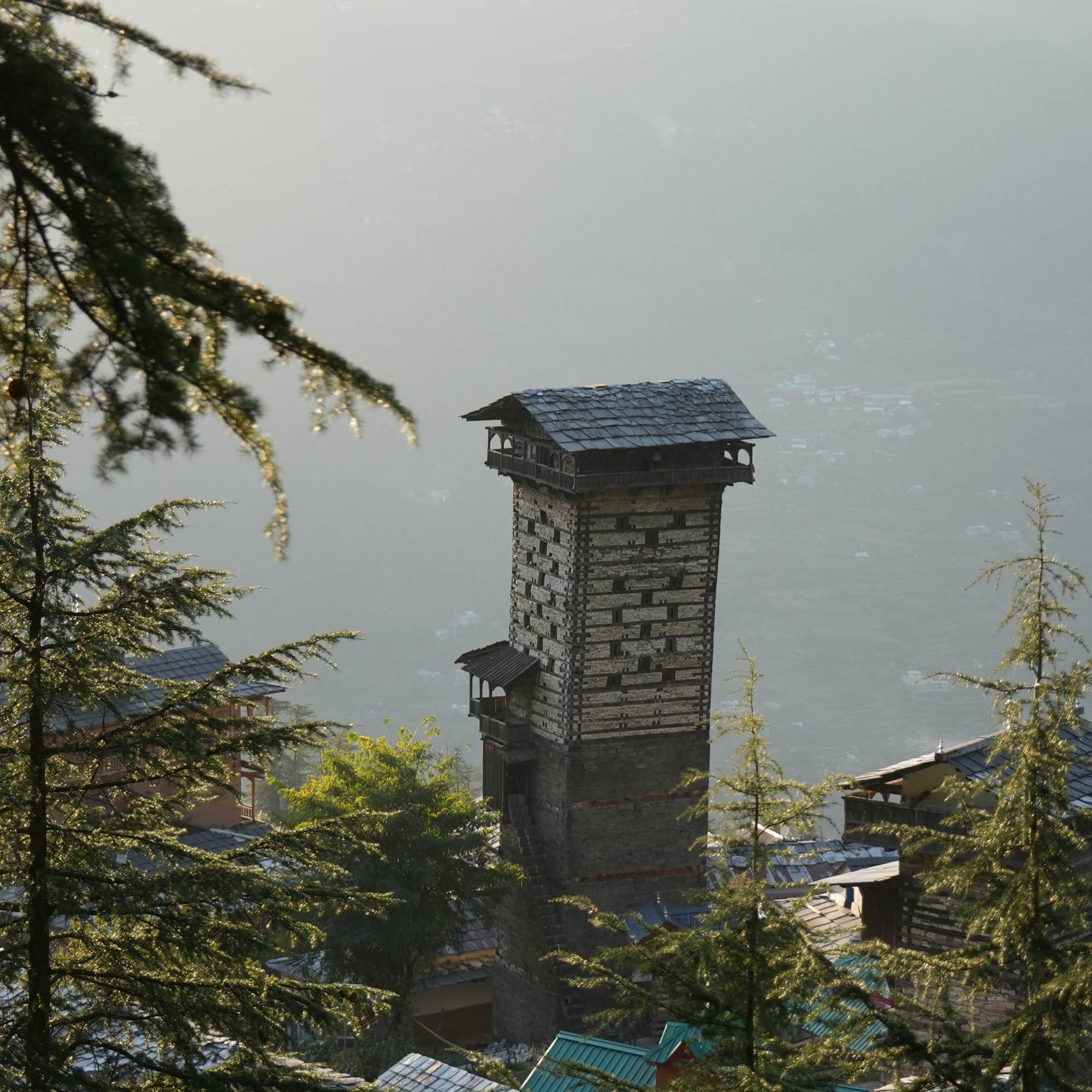
Chehni Kothi
Different valley (Banjar side), roughly 2 to 3 hours by road
The most famous Kath Kuni tower in the region. Taller, older, and more documented than the Raila towers. If the architecture interests you, Chehni is the other one to see on a longer Kullu trip.
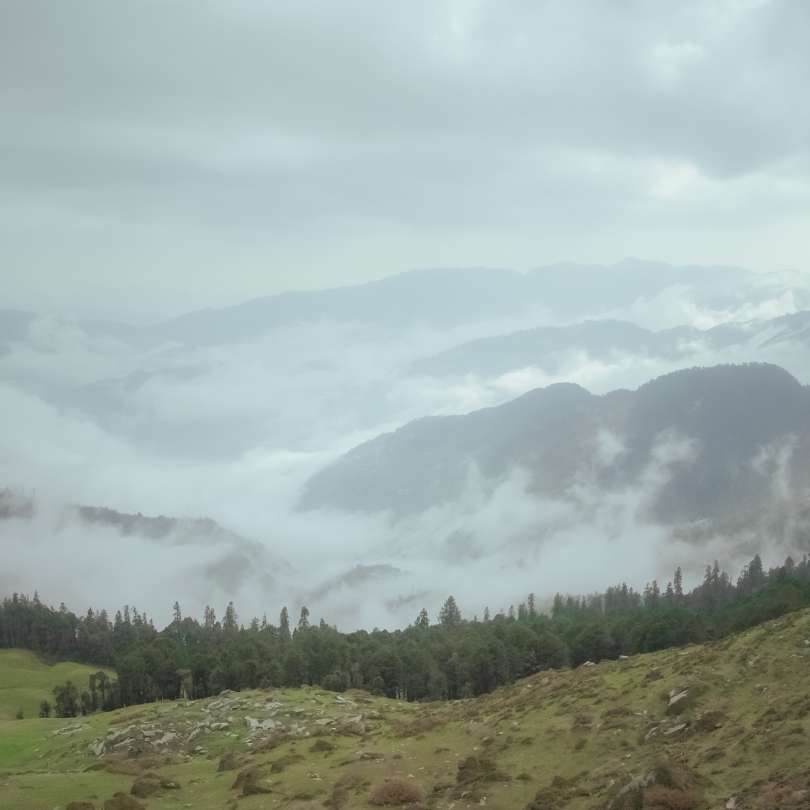
Great Himalayan National Park
Raila sits within the GHNP buffer zone
UNESCO World Heritage protected wilderness. The forests around Raila are part of the GHNP ecozone, which is why the vegetation is so well preserved.
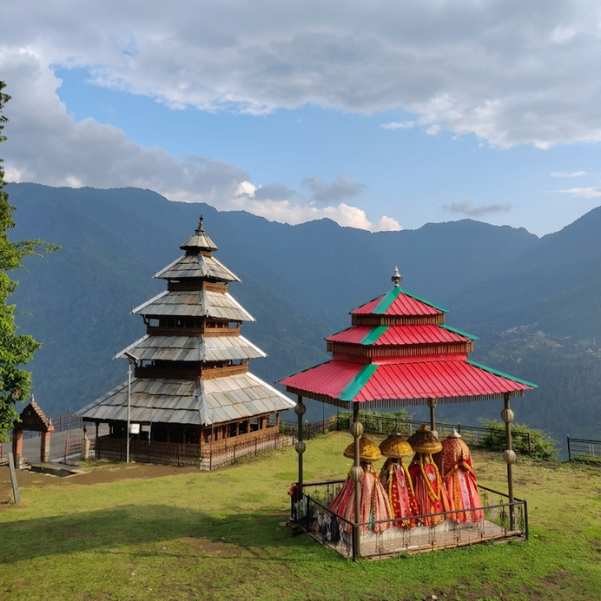
Shanshar village and Manu Rishi Temple
About 8 km from Raila
A quiet village with an old wooden temple dedicated to Manu Rishi. Wide views of the Sainj Valley. Worth combining if you have extra time in the area.
Our packages with Raila Twin Towers (Dhaliara Kothi)
Curated trips that include a visit to Raila Twin Towers (Dhaliara Kothi).
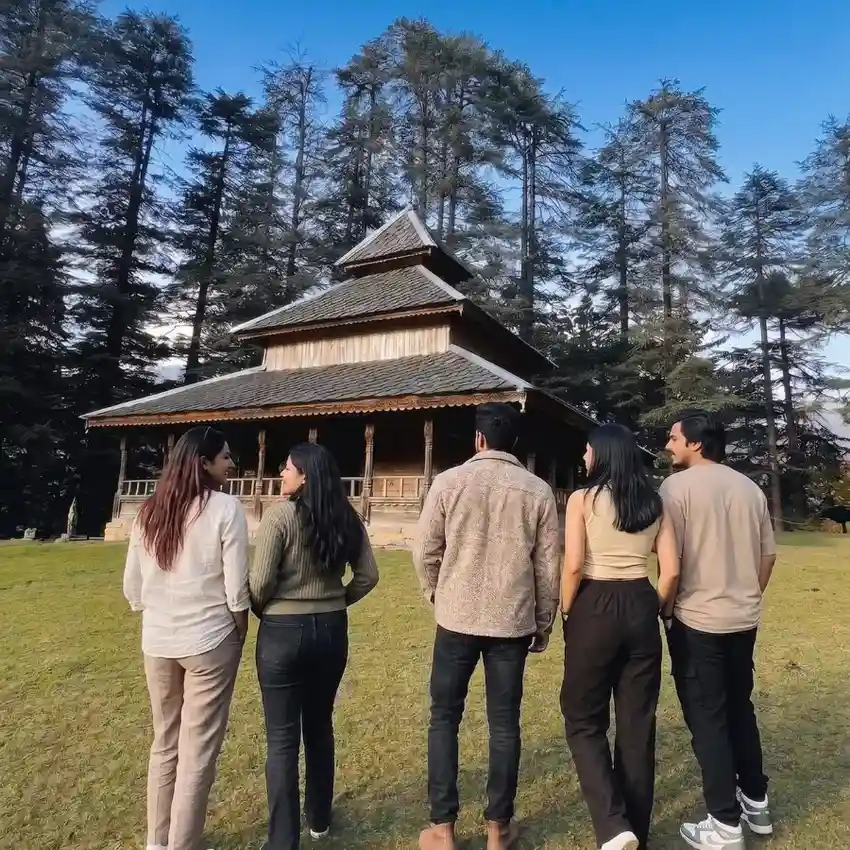 Group Tour5D/4N
Shangarh Sainj Valley Weekend Group Trip
2D Shangarh
₹8,499₹8,999SAVE ₹500/ person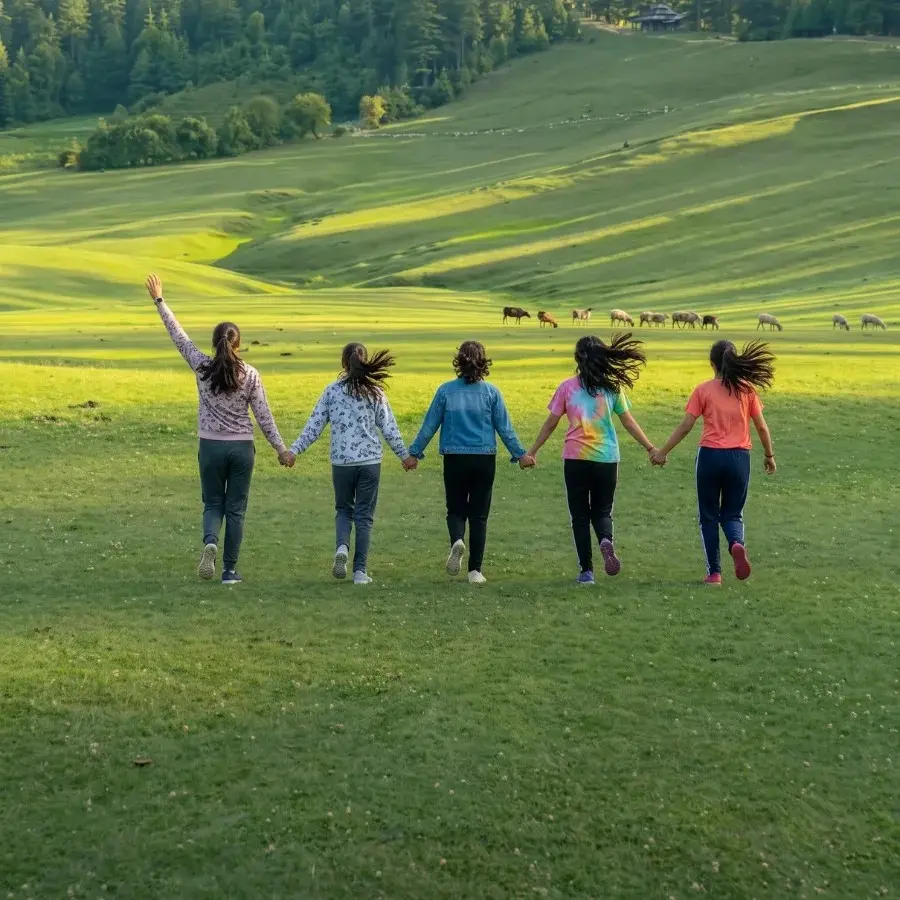 5D/4N
5D/4NMost Loved Shangarh Sainj Valley Tour With Private SUV
2D Shangarh
₹12,999₹16,999SAVE ₹4,000/ person
Frequently Asked Questions
What are the Raila Twin Towers?
Two ancient stone and wood tower temples in Raila village, Sainj Valley, Kullu district. Locally called Dhaliara Kothi. Built in the Kath Kuni technique using alternating layers of stone and deodar wood with no cement or nails. They are similar in style to the more famous Chehni Kothi near Banjar, but here you get a twin pair standing side by side on a hillock above the village.
Are the Raila Twin Towers worth visiting?
Yes, if you are visiting Raila village or the Sainj Valley and have any interest in traditional Himalayan architecture. The visit is short, about 30 to 45 minutes. Combine with the Rupi Raila Waterfall for a solid half day trip from Shangarh or Sainj. Do not make a dedicated trip purely for the towers unless heritage architecture is a strong interest.
Can I go inside the twin towers?
No. The towers are sacred and only priests from the village community are allowed inside. This is a firm local rule. You visit from outside, walk around the base, photograph the exterior, and enjoy the valley views from the hillock.
How do I reach the Raila Twin Towers?
First reach Raila village by cab from Sainj town (about 12 km, roughly 1,000 to 1,500 rupees one way) or Shangarh (about 15 km, roughly 2,500 to 3,000 rupees return). From the road in the Raila area, a short uphill walk of about 10 to 15 minutes brings you to the towers on a hillock. They are visible from the road.
Is there an entry fee or permit?
No entry fee and no permits needed. The site is on village land and freely accessible.
How much time do I need at the towers?
About 30 to 45 minutes at the towers themselves. If combining with the Rupi Raila Waterfall on the same trip, plan a half day. If also doing the Bhatkanda Meadows hike (requires an overnight stay in Raila), add another 2 to 3 hours.
What is the best time to visit?
March to June and October to November. October is the single best month for clear air and the best photography light. Monsoon months bring lush green but slippery paths and rough roads. Winter is cold and some homestays close.
What is Kath Kuni architecture?
A traditional building technique of the western Himalaya that uses alternating horizontal courses of stone and wood with interlocking timber corners. No cement, no nails, no mortar. The name comes from Kath (wood) and Kuni (corner). The technique makes structures earthquake resistant because the wood layers allow the wall to flex during a tremor instead of cracking.
How are the Raila towers different from Chehni Kothi?
Chehni Kothi near Banjar is a single tall tower (roughly 30 to 45 metres) and is the most famous Kath Kuni structure in the region. The Raila towers are a pair standing side by side, shorter than Chehni but striking for the twin formation. Chehni is better documented and easier to access from Jibhi or Tirthan. Raila is quieter and less visited.
Is there mobile network near the towers?
Very patchy across all carriers. Assume you will be offline. Download offline maps and confirm bookings before leaving Sainj town.
Can I visit the towers as a day trip from Shangarh?
Yes. Hire a cab from Shangarh (roughly 2,500 to 3,000 rupees return, 1 to 1.5 hours each way). You can cover the twin towers and the Rupi Raila Waterfall in a half day. Start after breakfast and you are back by early afternoon.