
Spiti Bike Trip for Beginners: Can You Really Do It? Difficulty, Fitness & Safety Guide
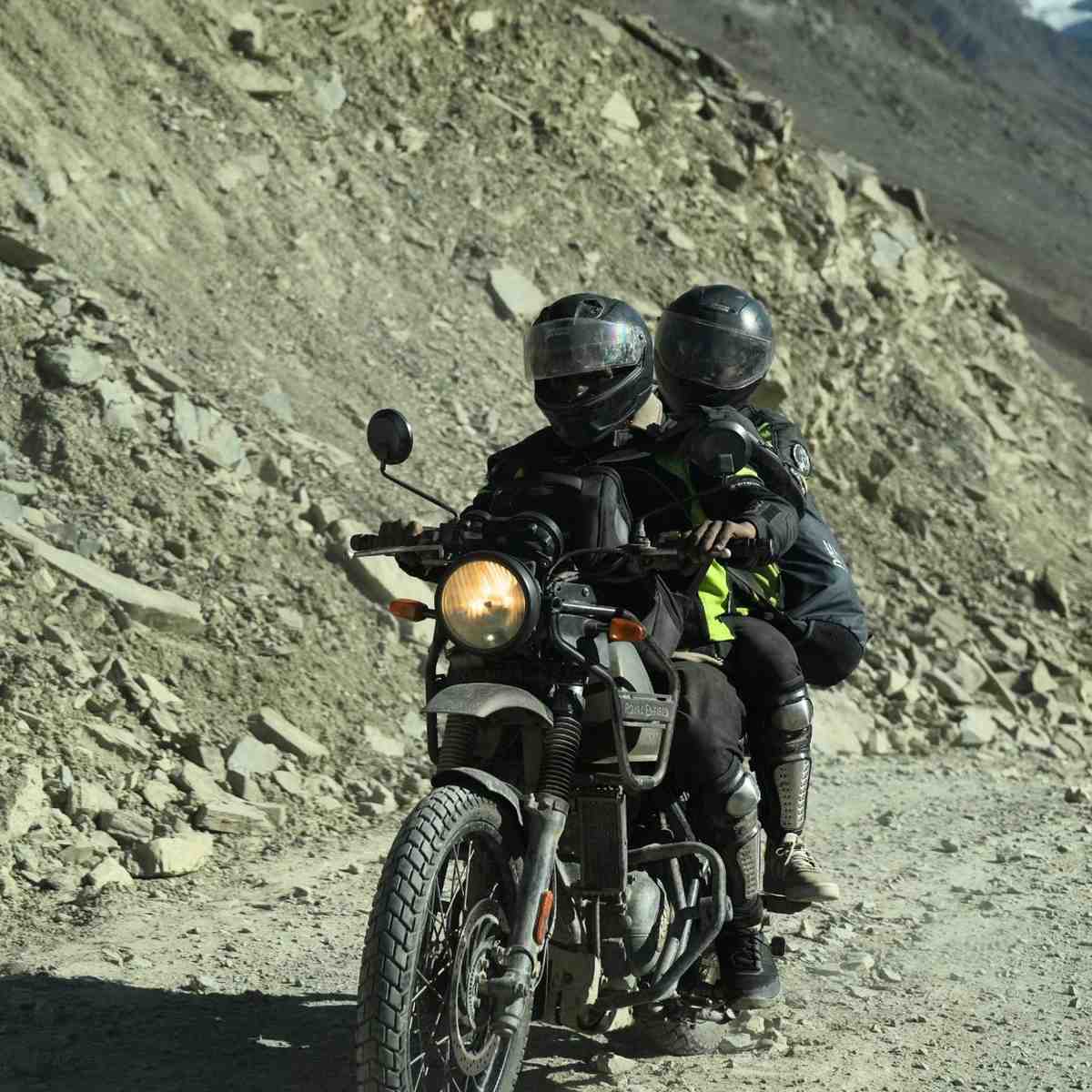
If you have been watching Spiti reels and wondering whether a beginner can actually pull off this ride, the short answer is yes. We have put first-time riders on this route every season for years, and most of them finish it grinning, sunburnt, and already planning the next one.
But Spiti is not a weekend Manali run. It is a high-altitude Himalayan circuit with thin air, broken roads, and weather that changes faster than your decisions. Doing it as a beginner works only when you plan it like a beginner, not like a hero.
Travel Coffee's guide is the honest version. What the ride actually feels like, how hard it really is, where beginners slip up, and how to set yourself up so the trip ends well.
Quick Answer: Can Beginners Do a Spiti Bike Trip?
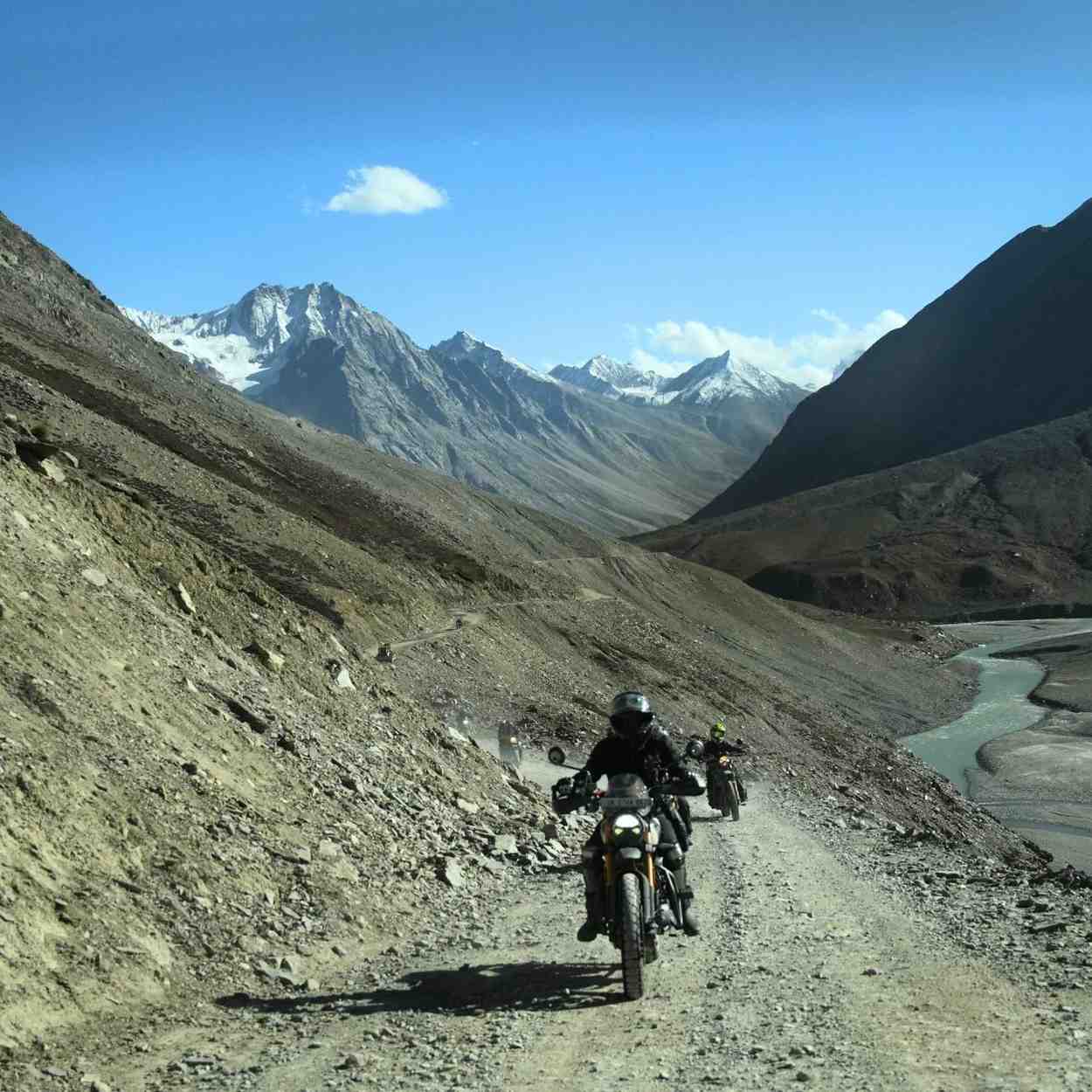
Yes, beginners can do a Spiti bike trip. The difficulty is moderate, not extreme, as long as you plan the route and pace correctly.
You ride for 5 to 7 hours a day across mixed terrain. Some stretches are smooth tarmac, others are gravel, river crossings, and broken patches that need careful handling at low speed.
The bigger challenge is altitude. Spiti takes you up to 4,500+ metres, where the air holds about 30% less oxygen than the plains. Your body and your bike both feel it.
If you can ride a geared motorcycle confidently in city traffic, can handle a full day on the bike without back pain, and are willing to enter from the Shimla side for slow acclimatisation, you can do this trip. Plan for 7 to 10 days, do not rush, and keep a buffer day in your hand.
That is the real answer. The rest of this article is the detail behind it.
How Difficult is a Spiti Bike Trip Really?
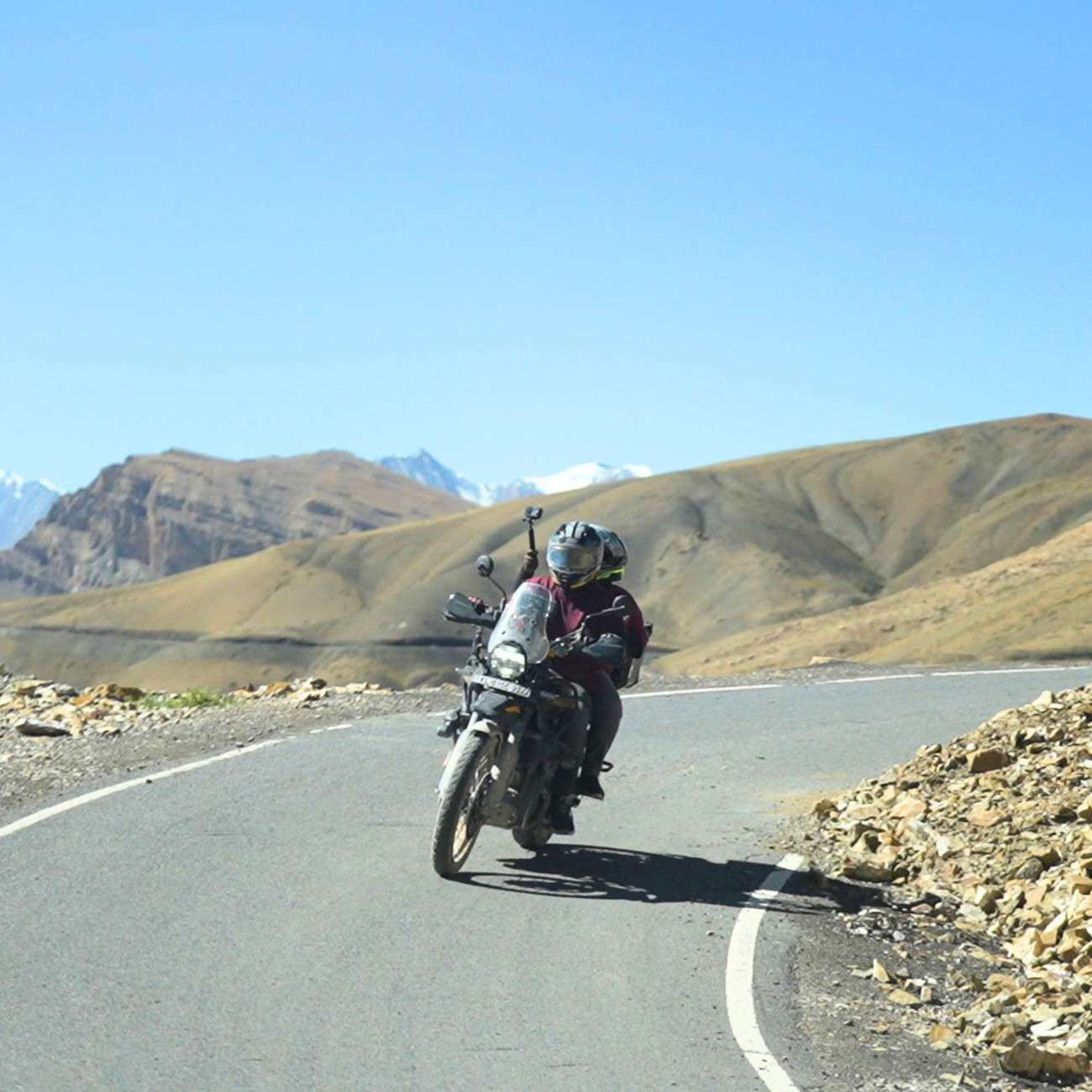
People love calling Spiti "extreme." It is not. It is moderate, and that word matters.
Extreme means Khardung La in winter or solo Zanskar in October. Spiti is hard, but it is hard in a way a careful beginner can handle.
The Terrain Mix You Will Actually Ride
You get four kinds of road on this circuit. Smooth tarmac through Kinnaur up to Reckong Peo, broken patches near Pooh and Nako, gravel and dust near Tabo and inside Pin Valley, and proper bad road on the Gramphu to Batal stretch.
The Gramphu to Batal section is the one that humbles everyone. It is full of water crossings, loose gravel, and rocks the size of footballs. Even experienced riders go slow here. Beginners just go slower.
Daily Riding Hours
Plan for 5 to 7 hours of riding every day. That sounds normal until you do it at altitude with cold wind on your face and a heavy tank bag pulling your shoulders.
In our experience, the third day is when fatigue actually hits. Day 1 and 2 you are running on excitement. Day 3 your body realises what you have signed up for.
What Altitude Does to You and the Bike
At 4,500+ metres, oxygen drops by around 30%. Your bike loses 3 to 4% engine power for every 1,000 feet you climb. By the time you cross Kunzum, your Royal Enfield feels noticeably weaker than it did in Shimla.
You feel it too. Climbing a flight of stairs at Kaza leaves you breathing heavily. Headaches at night are common. Sleep gets light. None of this is dangerous if you respect it. All of it gets dangerous if you ignore it.
Is Spiti Bike Trip Safe for Beginners?
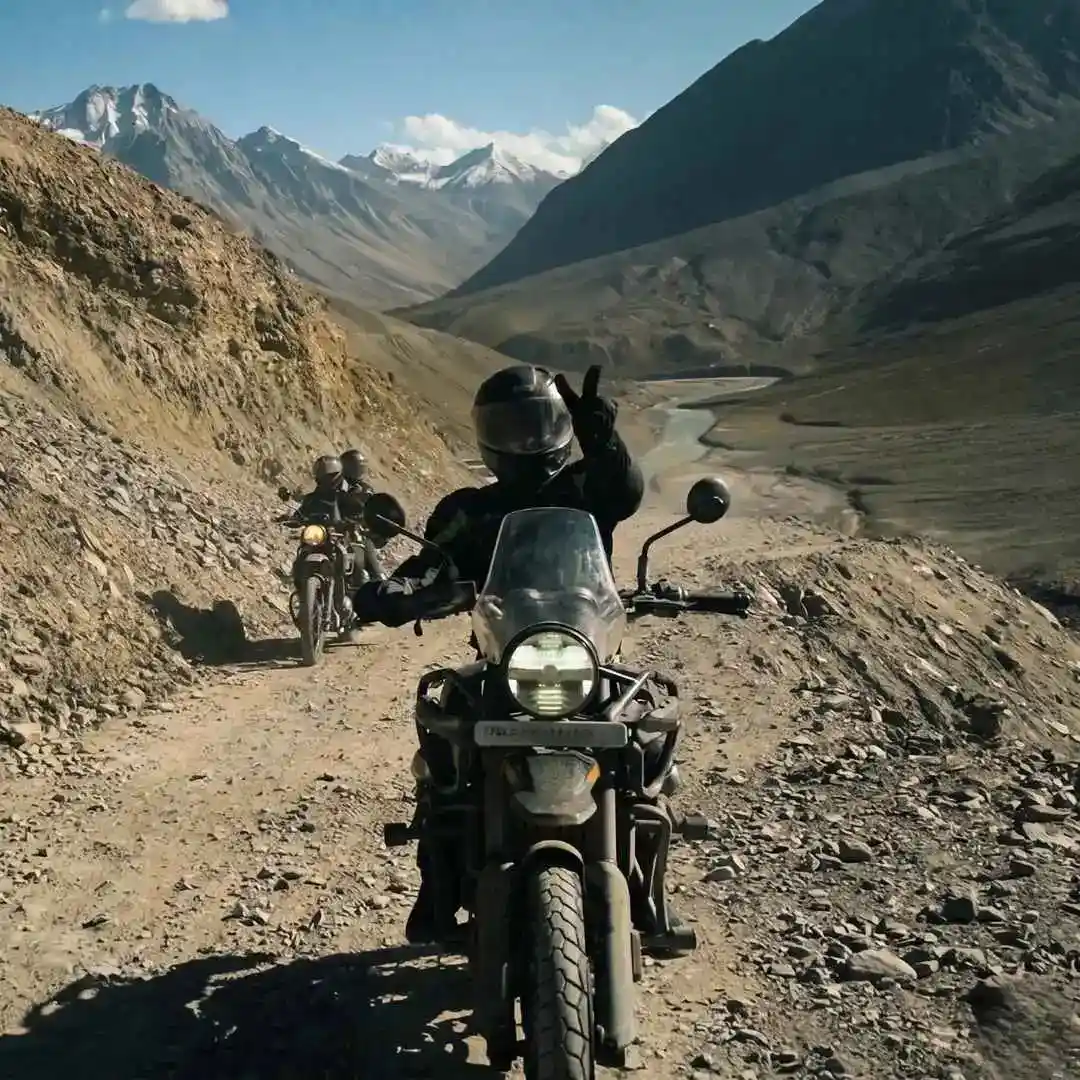
Spiti is one of the safest regions in India for travellers. Crime here is almost nonexistent, and locals genuinely look out for riders on the road.
We have had solo women riders, college groups, and first-time bikers do this route without a single safety incident. The risks here are not human. They are natural.
What Actually Goes Wrong on This Route
Riders fall on gravel because they grip the front brake too hard. They get altitude sickness because they pushed from Manali to Kaza in two days. They run out of fuel because they did not top up at Kaza.
These are planning mistakes, not bad luck. Every single one of them is avoidable.
Medical Help Is Limited
Here is something most blogs gloss over. Medical facilities are limited to Kaza, and even Kaza is a small district hospital, not a multi-speciality setup.
If something serious happens between Pooh and Tabo, or anywhere past Kunzum towards Manali, you are looking at hours of evacuation. This is why slow, careful riding matters more than fast, confident riding.
What Makes Spiti EASY vs HARD
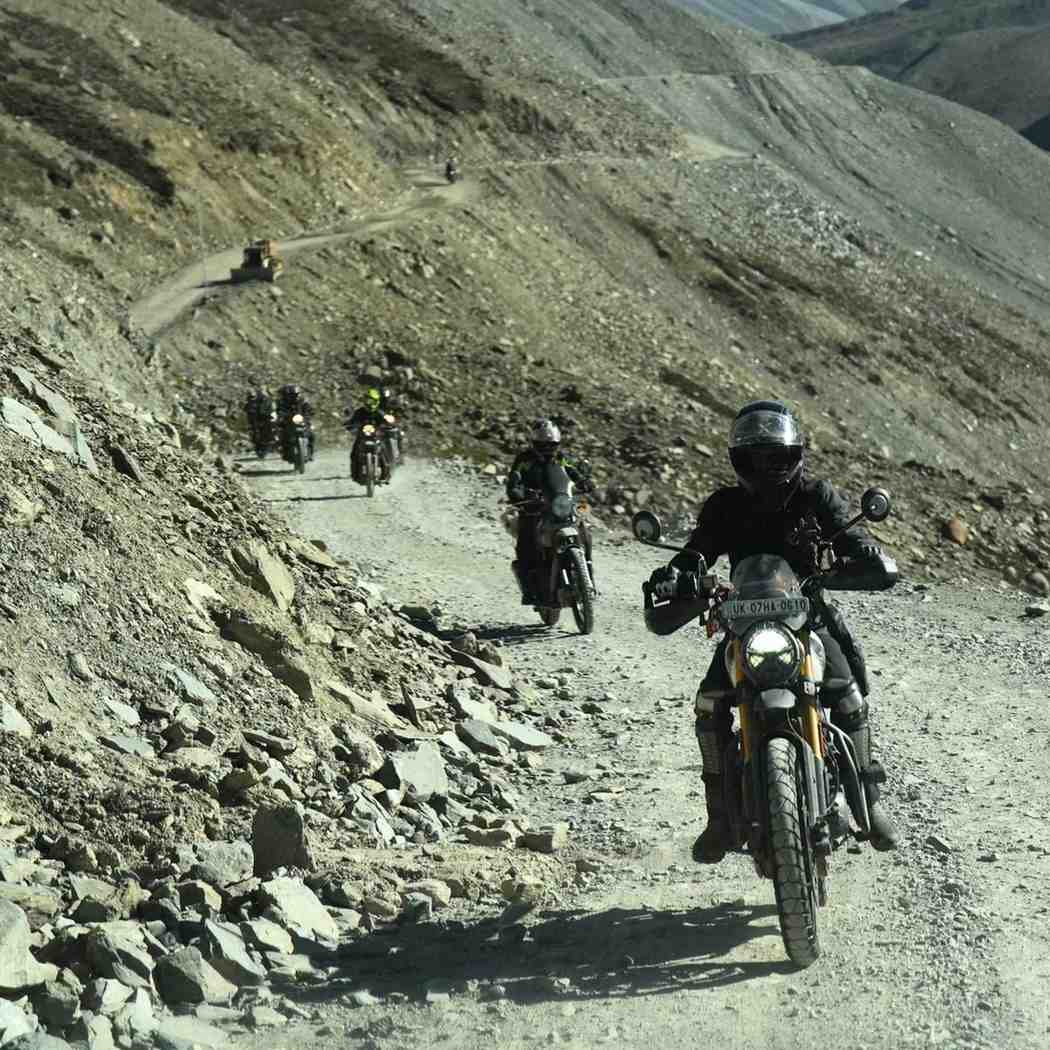
The same Spiti trip can be easy or brutal depending on three decisions you make before you leave home.
Solo vs Guided Changes Everything
Riding solo means you carry the burden of every flat tyre, every wrong turn, every "where do I sleep tonight" call. For an experienced rider, this is the joy of it. For a beginner, it is the thing that turns a fun trip into a scary one.
A guided ride with a road captain, sweep rider, and backup vehicle removes 80% of what makes Spiti hard. You ride. Someone else handles logistics, fuel, breakdowns, and stays.
Support Systems Reduce Real Risk
The difference is not luxury. It is safety. A backup vehicle means a flat tyre at 4,200 metres in fading light is not a crisis, it is a 15-minute pause.
A mechanic in the convoy means a clutch cable snapping in Tabo gets fixed by dinner, not the next morning when you have already lost a day. These are the things you do not realise you need until the moment you need them badly.
For first-time riders who want a safer full-circuit plan, our Beginner Friendly Spiti Bike Trip From Delhi gives you road captain, mechanic, backup vehicle, stays, meals and route support.
👉 WhatsApp us and let us handle your complete Spiti ride
Best Route for Beginners
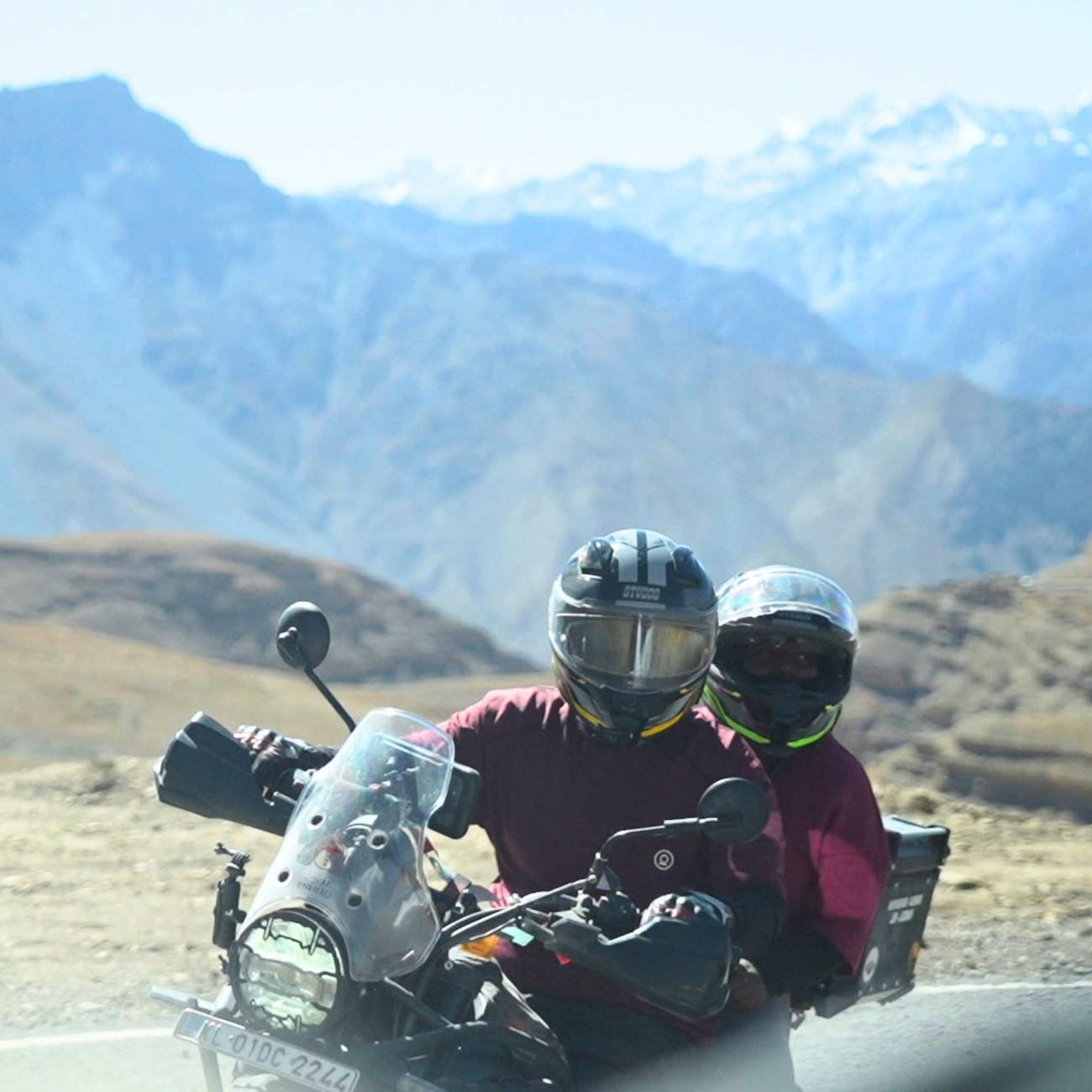
There are two ways to do Spiti by bike. Only one of them makes sense if this is your first time.
Why Shimla Entry Beats Manali Entry
The Shimla to Kaza to Manali loop is the gold standard for beginners. You enter from Shimla, climb gradually through Kinnaur, hit Spiti from the southern side, and exit over Kunzum towards Manali.
The Manali side dumps you at high altitude in one shot. You go from 2,000 metres in Manali to 4,500 metres at Kunzum in a single day. Your body does not have time to adapt, and altitude sickness becomes a real risk.
How Gradual Acclimatisation Saves the Trip
The Shimla route stretches the climb across 4 to 5 days. Narkanda at 2,700 metres on day one. Sangla or Chitkul around 3,400 metres. Nako at 3,600 metres. Tabo at 3,300 metres.
Kaza at 3,800 metres. By the time you reach Kibber or Komik above 4,200 metres, your blood has already done the work.
Beginners who try to reverse this and enter via Manali end up sick in Kaza. We have seen it dozens of times. They lose two days to headaches and nausea, and the trip becomes about recovery rather than riding.
If you want a structured plan, our Lahaul and Spiti Valley packages follow this exact route with built-in rest days.
Ideal Duration
Plan for 7 to 10 days end to end. Anything less is a rush. Anything more is a luxury most working travellers cannot afford. Eight days is the sweet spot for most first-timers.
Fitness Required for a Spiti Bike Trip
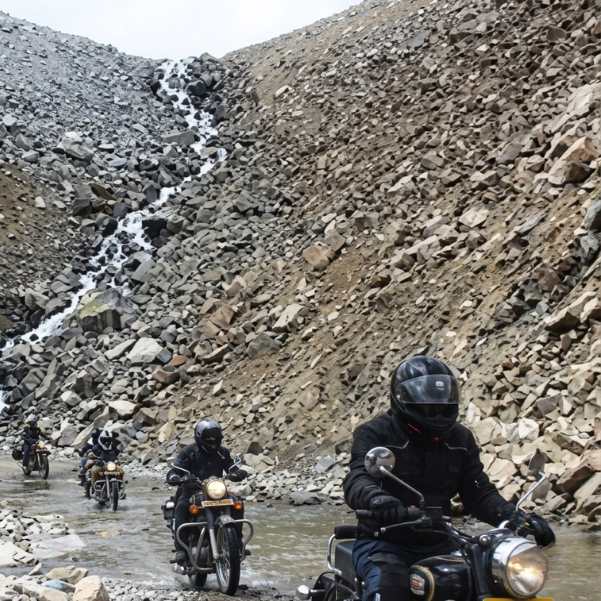
You do not need to be a gym person to ride Spiti. You do need basic stamina and a back that does not give up after four hours on a bike.
What Basic Stamina Actually Means
If you can walk briskly for 30 to 40 minutes without stopping, you have enough cardio. If you can sit upright on a bike for two hours straight without your lower back screaming, you have enough core.
Build this in the four weeks before your trip. Walk daily. Stretch your hips and lower back. Drink more water than you usually do. Cut alcohol in the last week before departure.
Mental Strength Matters More Than Muscles
Spiti tests your patience more than your fitness. The road from Gramphu to Batal will take you 4 hours to cover 40 kilometres. The wind on Kunzum will push your bike sideways.
You need the head to keep going when your hands are cold and your visor has dust on it. That mental piece is something you build by reminding yourself, every morning, that the only way out is through.
Can You Do It Without Experience?
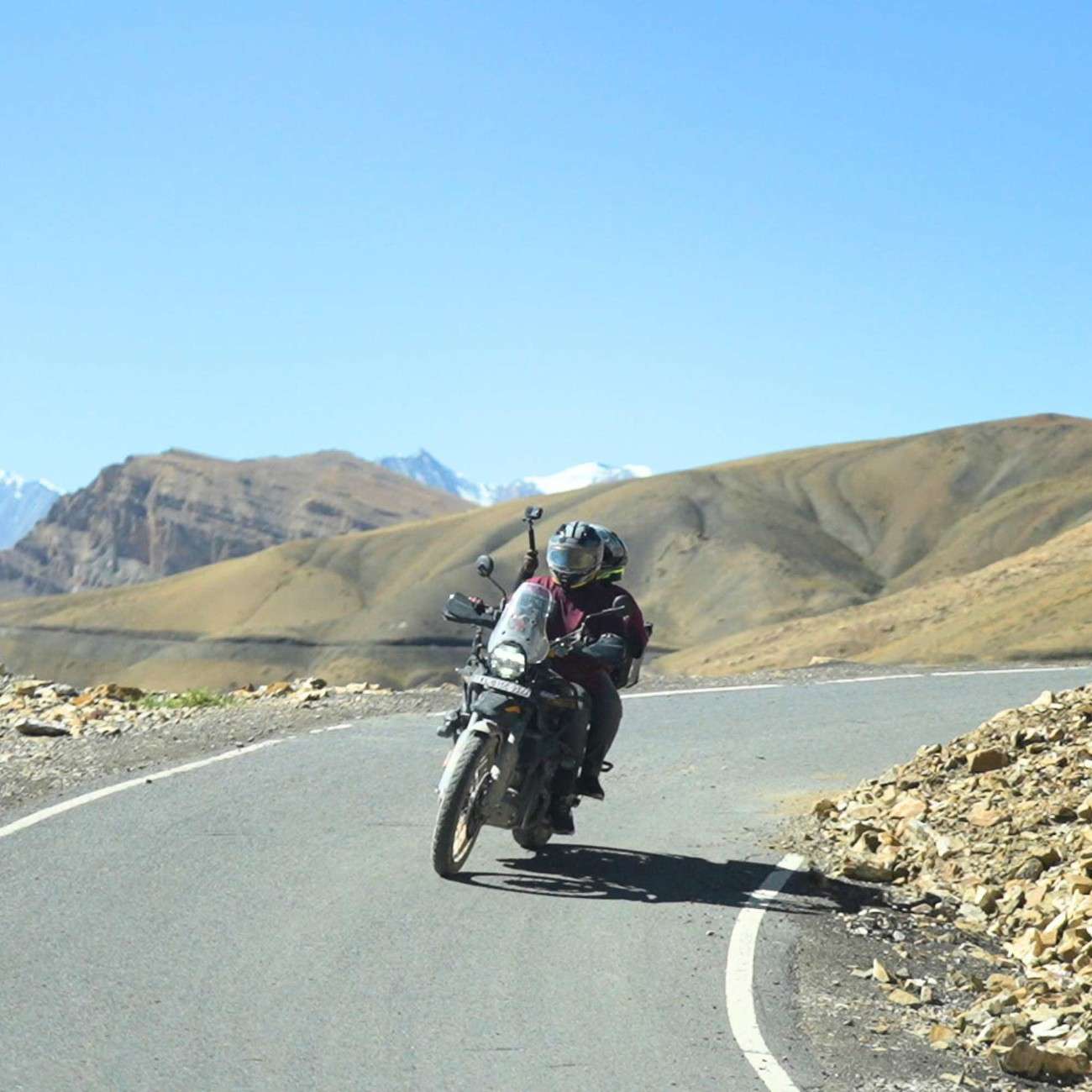
Yes, if you have the basics. No, if you are still figuring out the clutch.
What "Riding Basics" Actually Means
You should be able to comfortably ride a geared motorcycle in city traffic for at least 6 months. You should know how to use front and rear brakes together. You should be able to hold the bike upright at slow speeds, especially in first gear.
If you are still nervous about U-turns or get scared in heavy traffic, Spiti is not the next step. Go to Manali on a bike first. Do Bir Billing. Then think about Spiti.
Confidence Beats Expertise
What we have seen on this route is that confident beginners outperform anxious experienced riders. A first-timer who rides slow, listens to the guide, and respects the terrain finishes the trip clean.
An experienced rider who rushes the gravel because he wants to overtake the convoy ends up with a sprained wrist by day three. The mountain rewards humility.
The One Skill Beginners Underestimate
Slow riding. Riding at 15 to 20 kmph through gravel without putting your feet down is harder than cruising at 60 on highway. Practice this on a loose dirt patch near your home before you leave.
If you have the basic riding skills but want to do Spiti with proper guidance, road captain support, backup vehicle, and beginner friendly pacing, you can check our complete Lahaul and Spiti bike expedition.
Beginner Mistakes That Wreck Spiti Trips
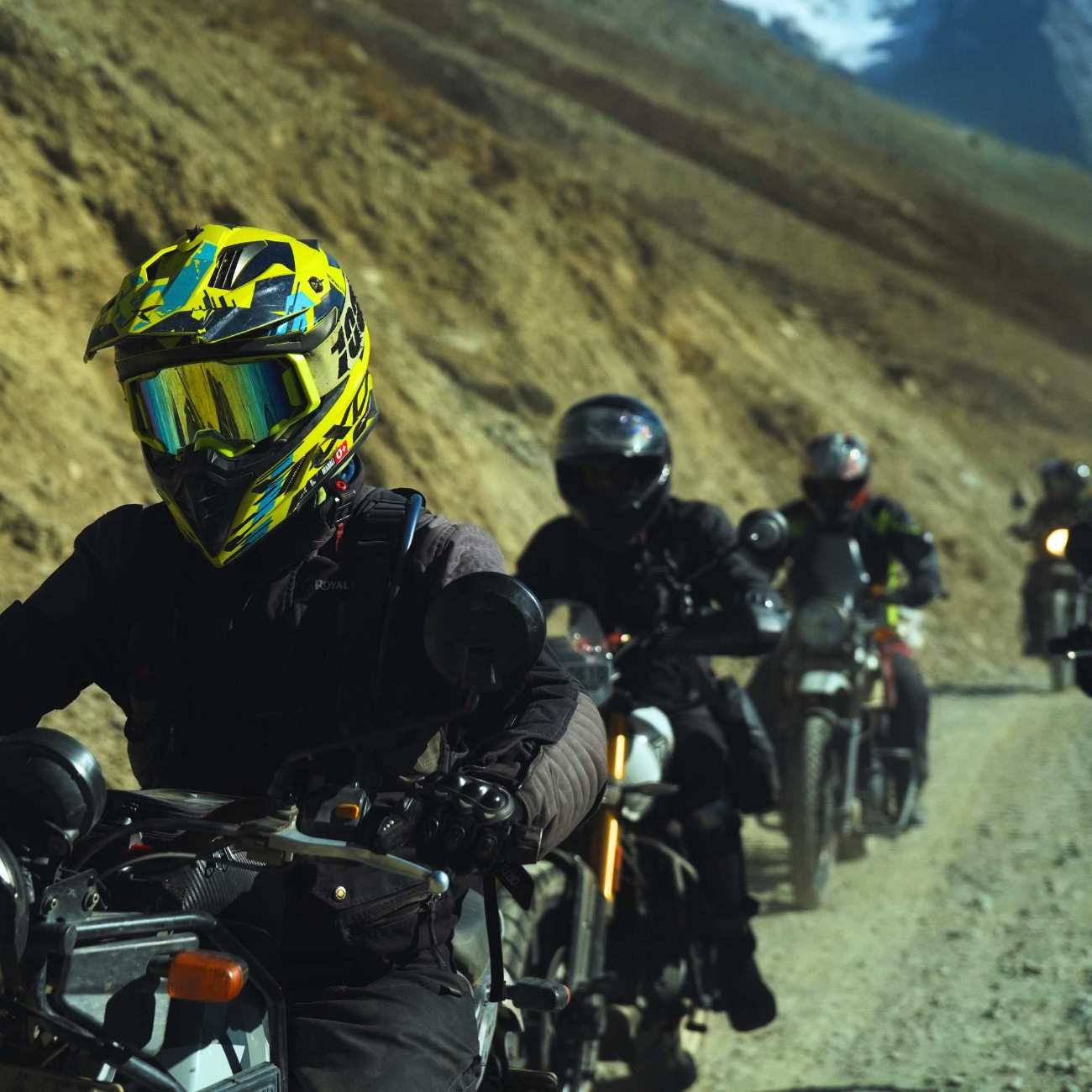
These are the patterns we see year after year. Avoid these and you have already done 70% of the work.
Rushing the Itinerary
Most tourists get this wrong. They try to do Spiti in 5 days because their leave is short. They skip Tabo, skip the Pin Valley bike trip, push from Kalpa to Kaza in one day, and end up exhausted and sick.
Spiti is not a destination, it is a circuit. Cutting days does not save time. It just means you spent money to be miserable.
Overconfidence on Day 1
Day 1 from Shimla to Narkanda is gentle. The road is smooth, the altitude is mild, and beginners often feel like Spiti is overhyped. Then day 4 hits and they realise they used up their reserves on the easy part.
Pace yourself from day one. Ride conservatively even when conditions are easy.
Ignoring Altitude Symptoms
A headache at 4,000 metres is not just a headache. It is your body telling you to slow down, drink water, and rest. Riders who pop a paracetamol and keep going often end up with full-blown AMS by night.
What we always tell our riders is that if you feel off, stop. Lose two hours, not two days.
Underestimating the Cold
Even in July, Kaza nights drop into single digits. At Kunzum the wind chill takes you near freezing. We have seen riders pack one fleece because "it is summer."
By night two they are buying sweaters from Kaza market at tourist prices. Pack thermals. Pack a windproof jacket. Pack gloves.
Solo vs Guided Trip: An Honest Comparison
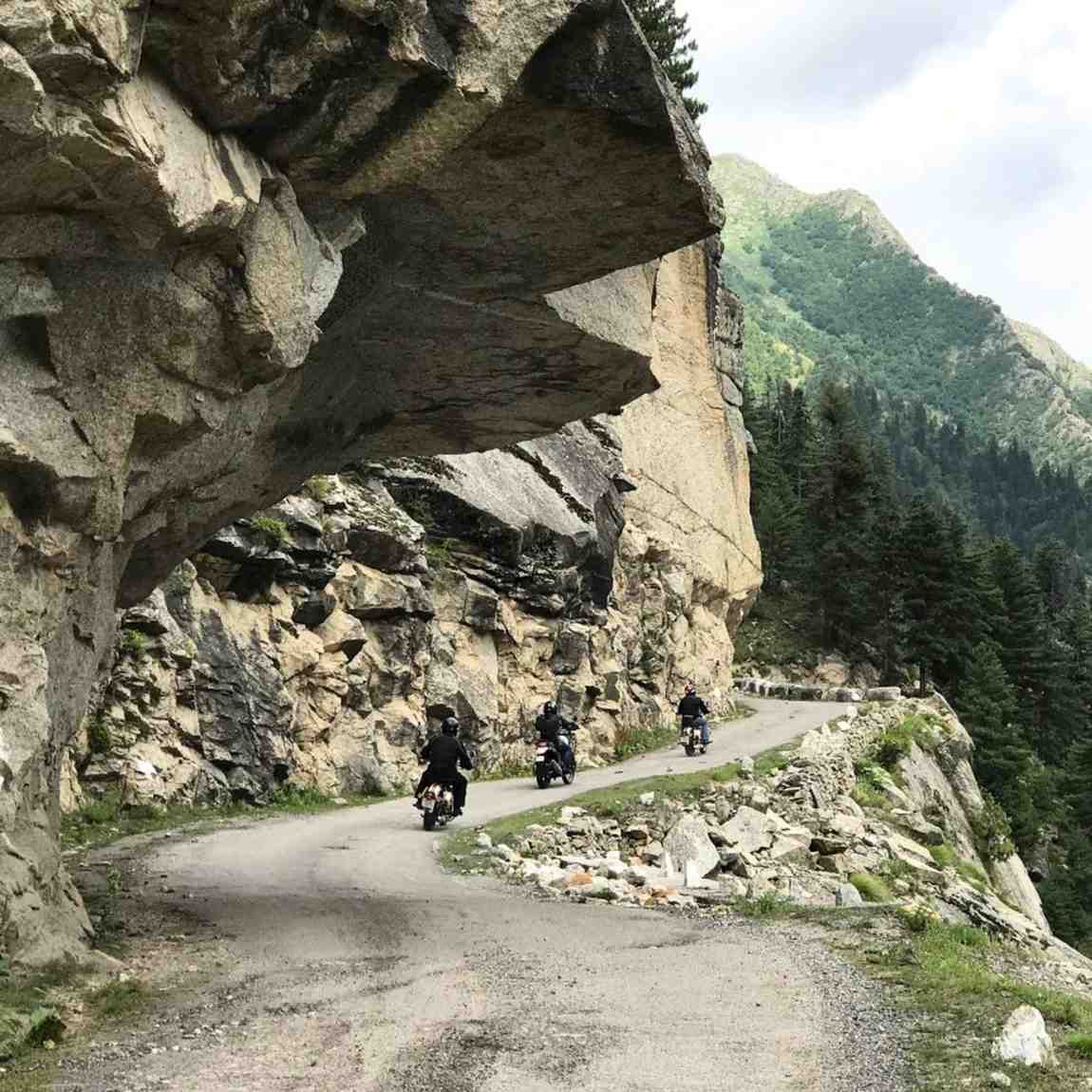
Both work. They work for very different riders.
When Solo Makes Sense
Solo Spiti suits riders who have done at least two long-distance bike trips before, can fix basic bike issues themselves, are comfortable navigating without signal, and genuinely enjoy the planning side of travel.
If this is you, solo is unbeatable. The freedom to stop at any village, sleep in a homestay you discovered yesterday, ride at your own pace, this is something a guided trip cannot match.
We covered this in detail in our Spiti solo female traveller safety guide which applies to solo male riders just as much.
When Guided Makes Sense
Guided Spiti suits first-time mountain riders, anyone with limited leave who cannot afford a wasted day, riders without their own bike who need a rental managed for them, and groups of friends who want the experience without the headache.
Guided does not mean babysat. It means logistics handled, safety covered, and you focused on the ride. For 8 out of 10 first-time riders, this is the right call.
The Real Cost Difference
Solo looks cheaper on paper. Once you add bike rental, accommodation booking on the fly, fuel, food, breakdown costs, and the time value of your own planning, the gap shrinks.
A guided ride with proper backup often ends up costing only marginally more than a well-planned solo trip, and removes most of the stress. Worth thinking about.
First-Time Tips That Actually Help
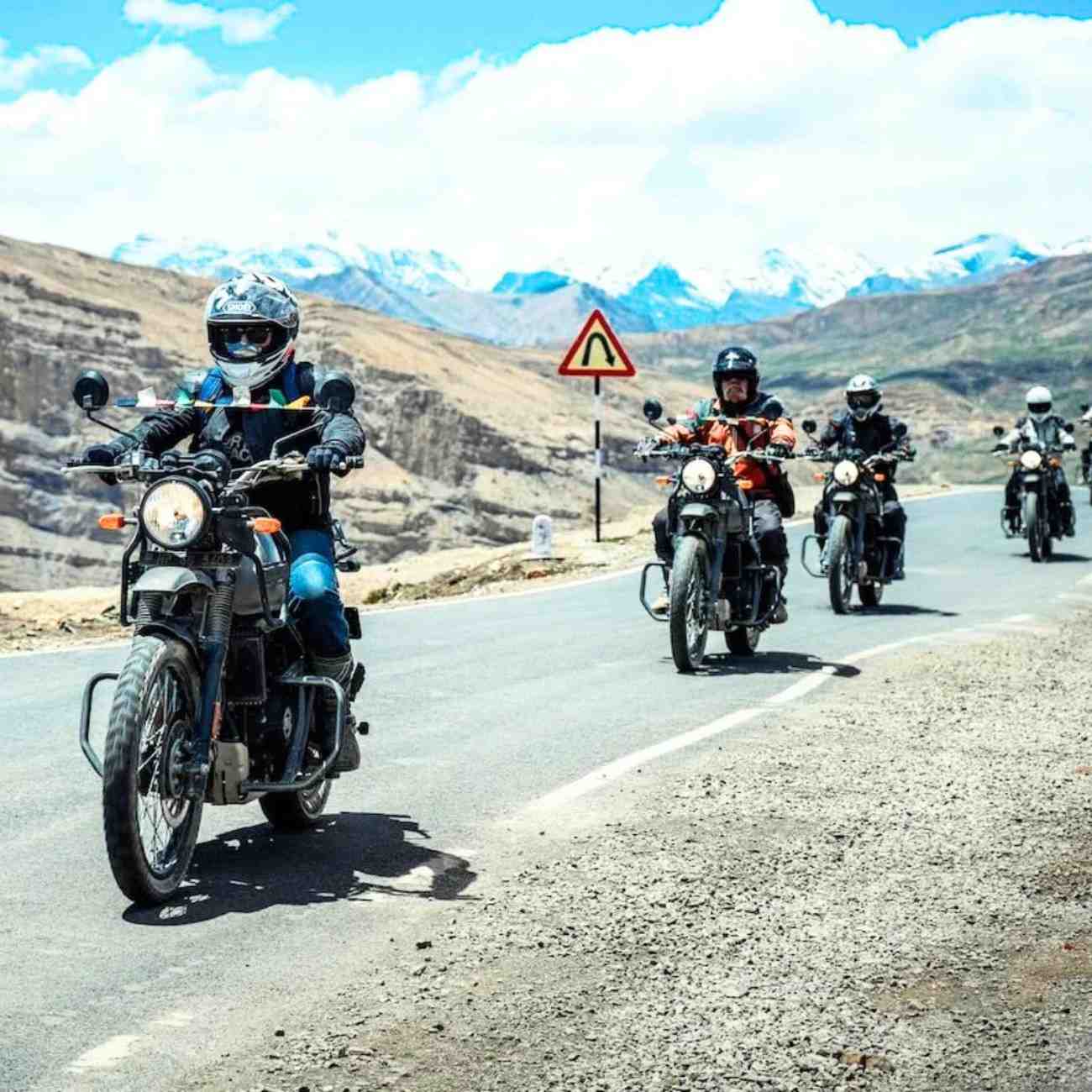
These are the things we tell every first-timer in our pre-ride briefing. Ignore them at your own cost.
Hydrate More Than You Think
At altitude, you lose water through breathing alone. By the time you feel thirsty, you are already dehydrated. Drink 3 to 4 litres of water a day, even if you are not sweating.
Carry a 1-litre water bottle on your tank bag and refill at every stop. Avoid alcohol completely on riding days. It dehydrates you and worsens altitude symptoms.
Slow Riding Is Skilled Riding
The single fastest way to fall on Spiti gravel is to ride too fast. Use first or second gear on bad patches. Keep your feet ready, but do not put them down at speed.
Use both brakes together, gently. Front brake alone on gravel will drop you. We have seen this exact mistake send riders home with a sling on their arm.
Respect the Terrain
The road conditions in Spiti change every kilometre. A smooth corner can hide gravel after the bend. A dry stream can have ice underneath in the morning.
Read the road, not your speedometer. The riders who finish clean are the ones who treat every metre as new information.
One Insider Tip Most Guides Skip
The chai stop at the small dhaba just before Nako, run by an old uncle who has been there for over 20 years, makes the best aloo paratha on the circuit. Most convoys blow past it because Nako is just 10 minutes ahead. We always stop here. Hot food before the climb to Nako is worth the 20-minute halt.
Timing Tip That Changes Everything
Start every riding day by 7 AM. The wind picks up after 11. The dust gets worse by afternoon. Streams that were ankle-deep at 8 AM are knee-deep by 2 PM thanks to glacial melt.
Early starts are not a preference, they are a safety choice on this route.
Money Tip From Our Drivers
Fill fuel at every available pump from Reckong Peo onwards. The pump at Kaza is the last reliable one before Manali. Carry an extra 5 litres in a jerry can if you can.
Roadside dhabas overcharge for petrol they have stockpiled in bottles. The going rate at remote points runs nearly double the pump price. Plan ahead and you save real money.
👉 Plan your Spiti bike trip without the usual chaos on WhatsApp
Why Beginners Fail on Spiti Bike Trips
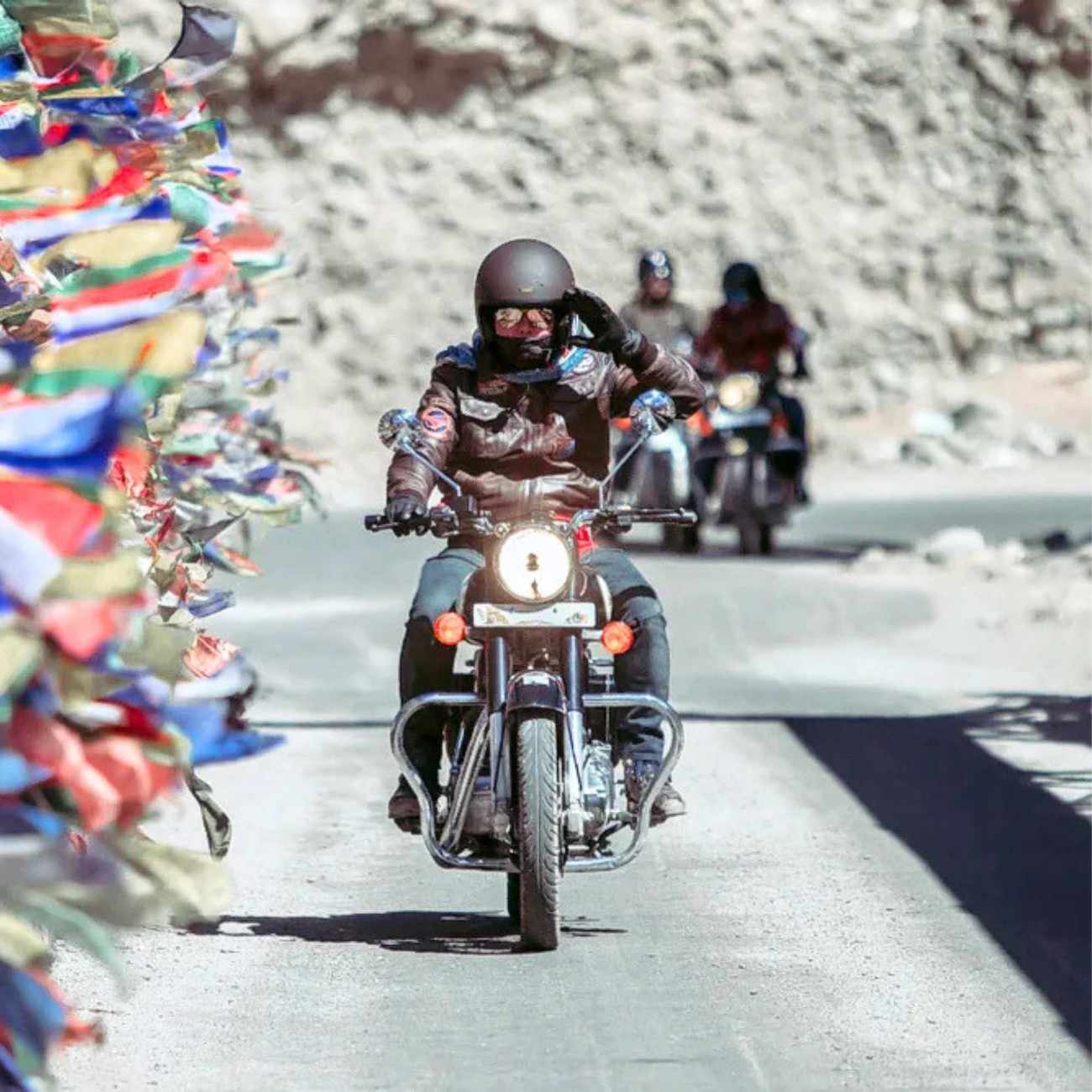
The riders who do not finish the trip well almost always share the same patterns. None of them are about skill. All of them are about planning.
Poor Planning Beats Bad Riding
We have seen good riders fail because they tried to fit Spiti into 4 days. We have seen average riders crush the circuit because they planned 9 days and built in two buffer days.
The mountains do not care how good you are on a bike. They care how realistic your itinerary is.
No Support Network
Riders who go without a backup plan struggle the most. No mechanic on call, no extra fuel, no idea where to sleep if Kaza homestays are full, no contact for the nearest hospital.
You can plan all of this yourself if you put in the hours. Most beginners do not, and discover the gap when something goes wrong at 4,000 metres.
Wrong Bike Choice
Renting a 350cc Royal Enfield is the safe choice. Riders who pick up bigger bikes for "looks" struggle with the weight on bad sections.
A heavy bike at slow speed on gravel needs technique most beginners do not have yet. Go with what is forgiving, not what is impressive.
Why Travel Coffee Works for Beginners
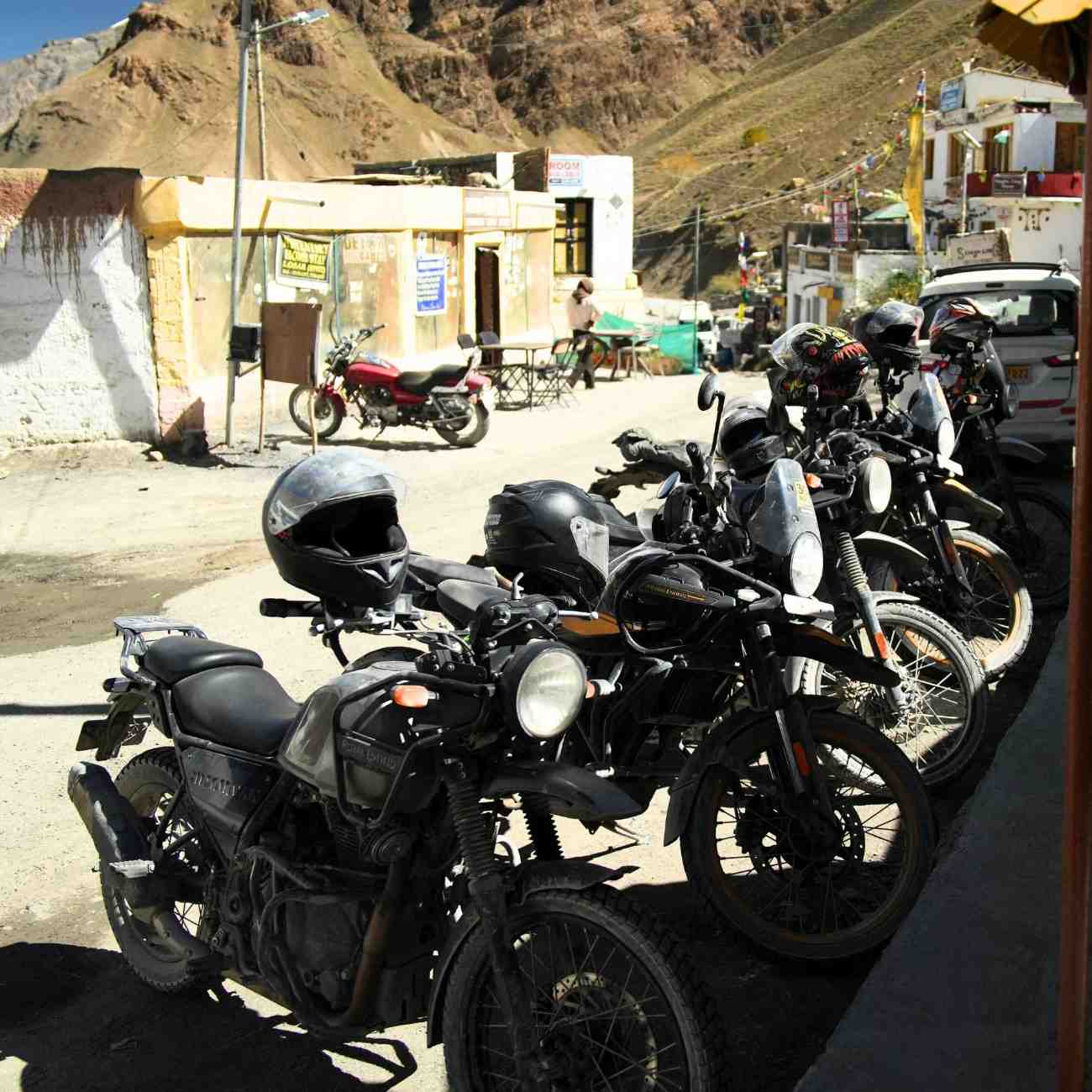
We are not going to pretend every guided trip is the same. Most are not. Here is what we have built into our Spiti rides specifically because we kept seeing beginners struggle on the same things.
Day 2 Test Ride Before Real Climb
We do not push riders to high altitude on day one. The second morning is a short, easy test ride to check bike confidence, group dynamics, and any mechanical issues that need fixing before the route gets serious.
This one day catches 90% of problems before they become trip-ending issues.
Backup Vehicle Throughout
Every Travel Coffee Spiti ride has a support vehicle following the convoy. If you are too tired to ride a stretch, you sit in the vehicle. If your bike has trouble, the vehicle carries it.
This is not a luxury. It is the difference between completing the circuit and quitting halfway.
Mechanic in the Convoy
Our mechanic rides with the group. He knows Royal Enfields, Himalayans, and most rental bikes inside out.
Flat tyres, clutch cables, chain issues, electrical problems, all of these get fixed on the spot rather than at the next town.
Road Captain and Sweep Rider
The lead rider knows the route. The sweep rider stays at the back so no one gets left behind. You ride in between, and you never feel lost or alone on the road.
You can explore our Lahaul and Spiti bike expedition to see how we structure the route, support team, backup vehicle, mechanic assistance, and beginner friendly riding days.
One Honest Negative About This Trip
Here is the part we will not sugarcoat. The Gramphu to Batal stretch on the Manali exit is genuinely brutal, even with all the support in the world.
There are no shortcuts. There is no faster road. You are going to ride 4 hours of broken track to cover 40 kilometres, and your wrists, back, and shoulders will hurt by the end.
The Chandratal payoff is worth it, and we explain the timing in our Chandratal opening dates guide for 2026. But going in expecting easy on this section sets you up for disappointment. We always brief our riders honestly so they finish the day proud, not blindsided.
What We Tell Our First-Timers
The line we repeat in every pre-ride dinner is this. The mountain is not your enemy. Your impatience is. Ride slow, eat well, sleep enough, and Spiti will give you a trip you remember for life.
If you want a customised plan or are still deciding between dates and durations, our summer Spiti circuit covers most of what beginners are looking for.
Final Verdict: Should You Do This Trip as a Beginner?
Yes. Genuinely yes.
A Spiti bike trip is one of the few experiences in India that lives up to every reel you have seen.
The Kinnaur valleys, the Tabo monastery at sunset, the climb to Komik, the wind at Kunzum, the first sight of Chandratal blue against brown mountains. None of it is exaggerated. All of it is reachable for a beginner who plans well.
You do not need to be the world's best rider. You need to be honest about what you can handle, conservative with your timeline, and willing to learn from people who have ridden this route before.
If this trip is on your mind for 2026, do not put it off another season. The riders who eventually do it always say one thing afterwards. They wish they had done it sooner.
👉 Chat with us on WhatsApp for a smooth Spiti biking experience
Explore Our Handpicked Spiti Valley Bike Trips
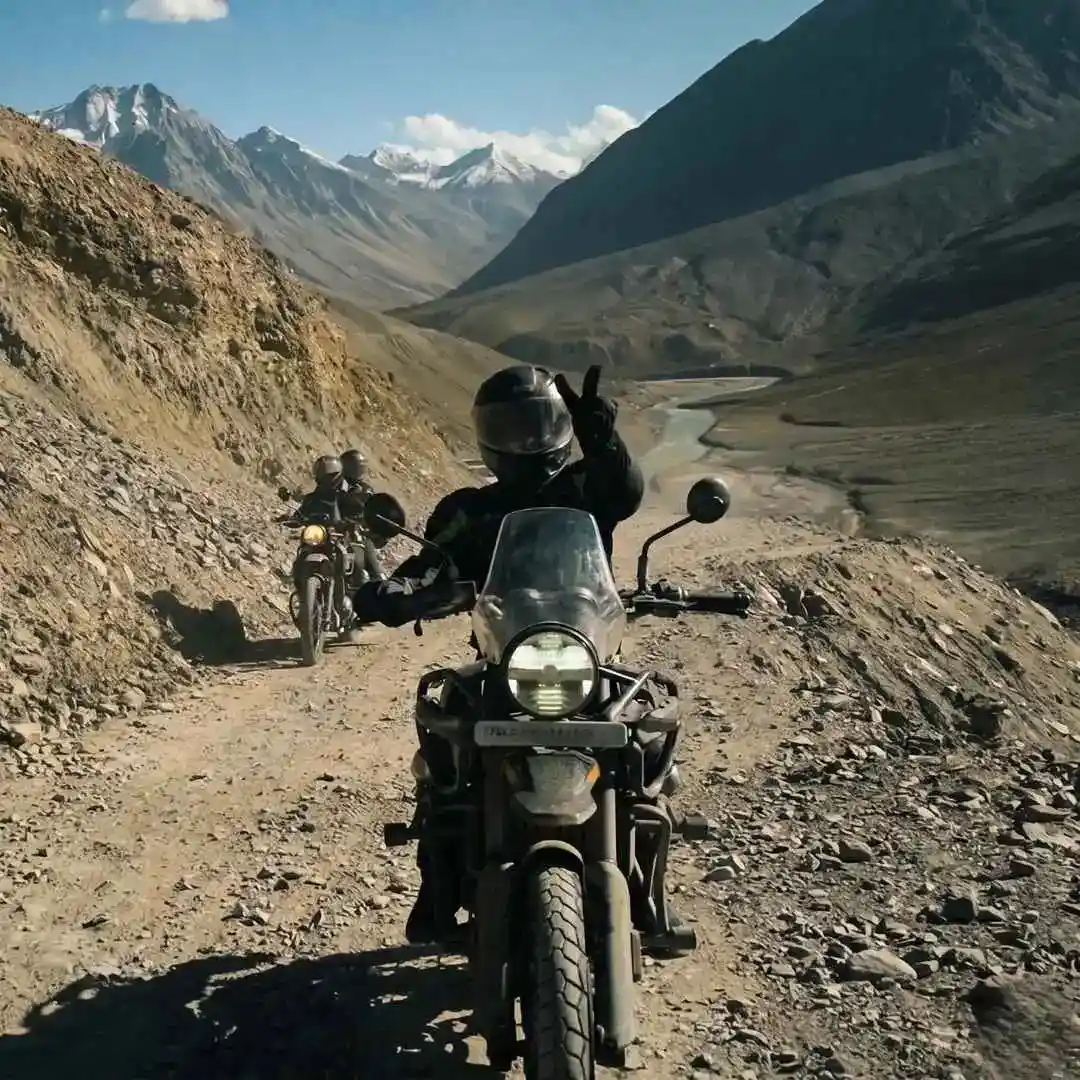 Group Tour7D/6N
Spiti Bike Trip From Manali With Chandratal
1D Sissu•1D Chandratal Camp+1
₹25,999₹29,999SAVE ₹4,000/ person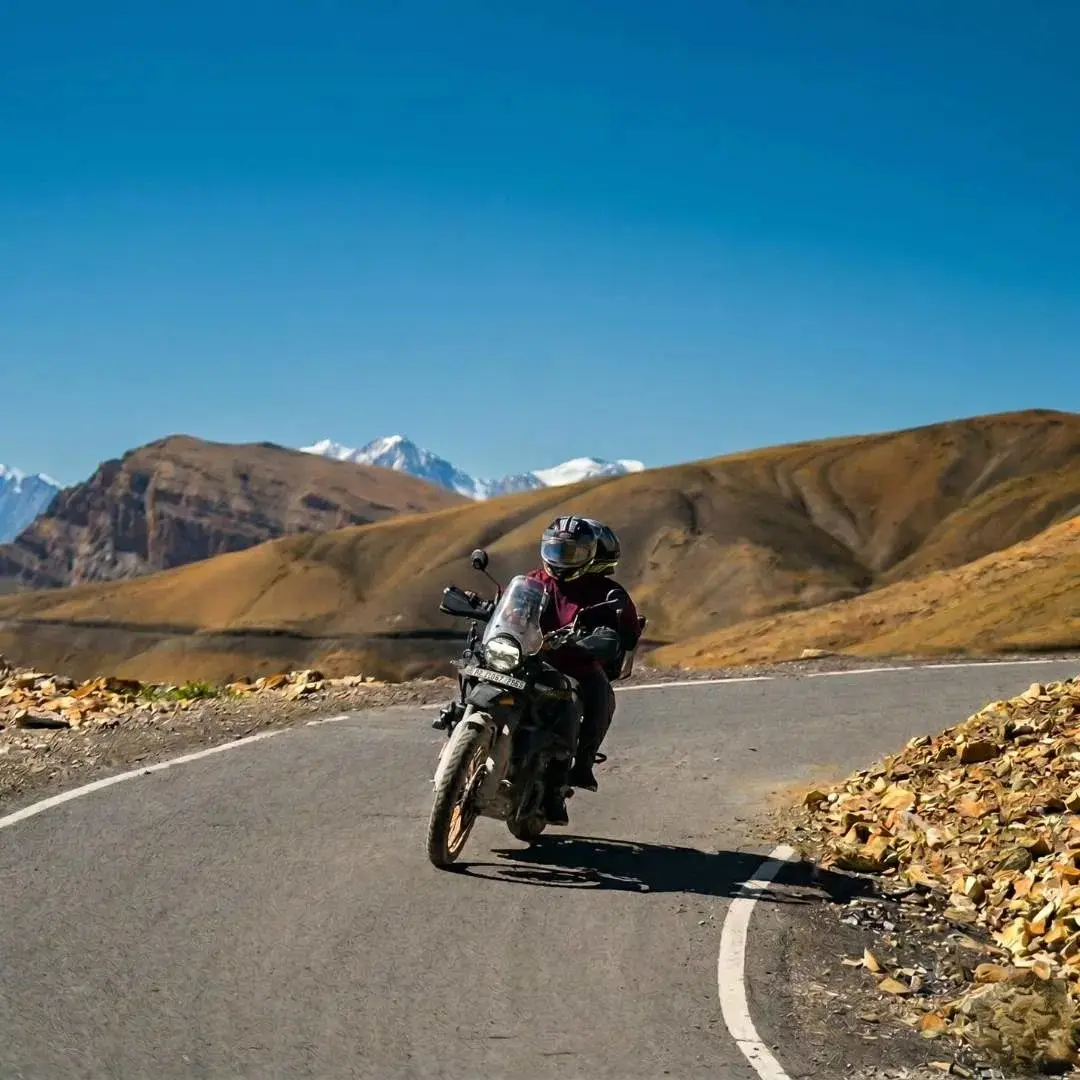 Group Tour11D/10N
Ultimate Spiti Valley Bike Expedition With Chandratal and Pin Valley
1D Narkanda•1D Sangla / Baspa Valley+5
₹32,999₹39,999SAVE ₹7,000/ person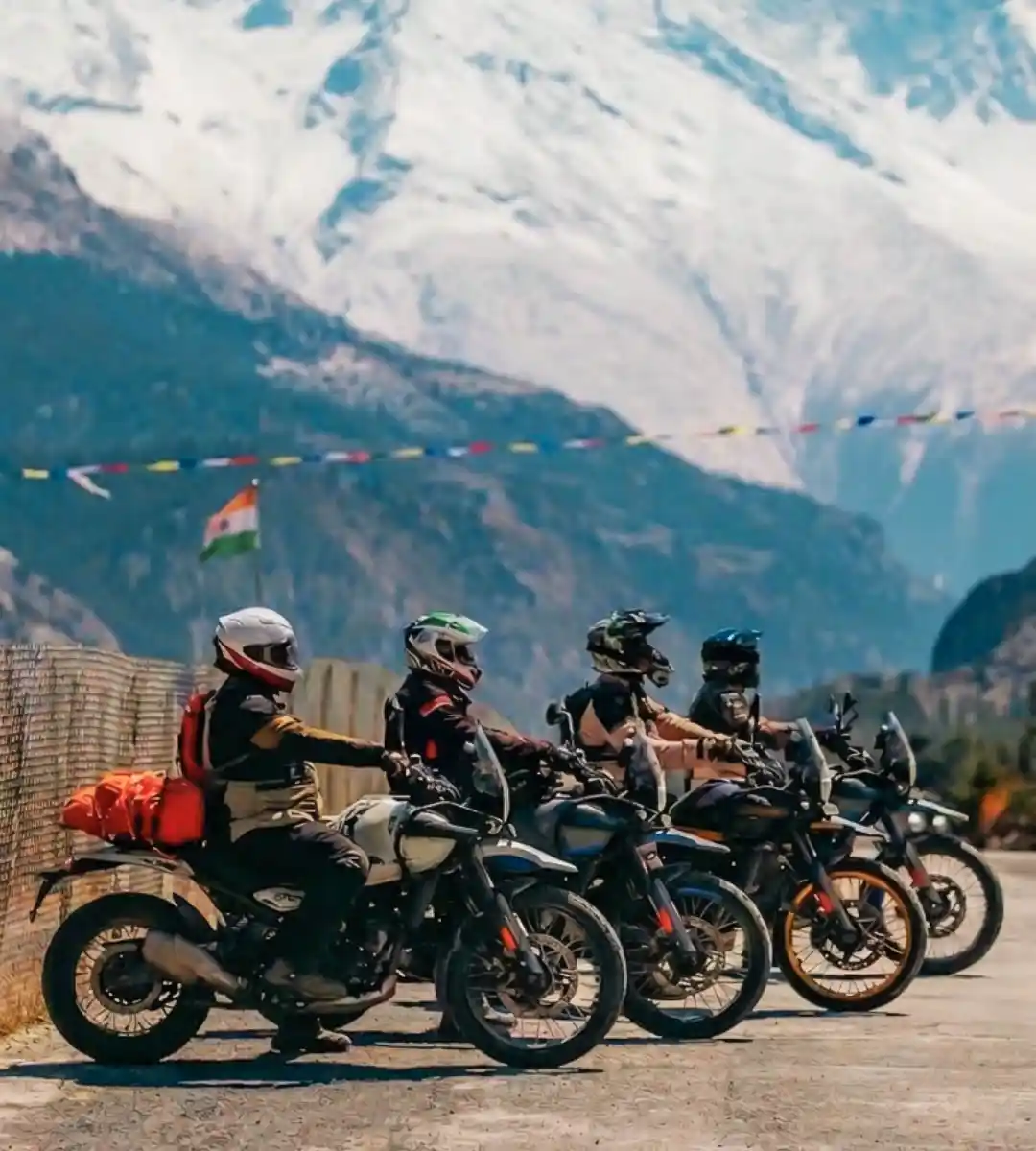 Group Tour10D/9N
Most Loved Spiti Valley Bike Expedition With Chandratal
1D Jibhi•1D Sangla+4
₹34,999₹41,999SAVE ₹7,000/ person
Related topics
Frequently Asked Questions
Is Spiti bike trip safe for beginners?
Yes, with proper planning. The region itself is one of the safest in India with very low crime. The risks come from altitude, weather, and roads, all of which are manageable with a guided ride or careful solo planning.
What is the difficulty level of a Spiti bike trip?
Moderate. Not extreme, not easy. It demands stamina, basic riding skills, and altitude tolerance, but does not require advanced off-road experience.
Can I do Spiti without bike experience?
No. You need at least 6 months of regular geared motorcycle experience before attempting Spiti. Comfort with city traffic, slow-speed control, and using both brakes is the minimum baseline.
Which is the best route for first-time Spiti riders?
The Shimla to Kaza to Manali loop. It allows gradual acclimatisation over 4 to 5 days, which significantly reduces altitude sickness risk compared to entering directly from Manali.
How many days do beginners need for a Spiti bike trip?
Plan for 7 to 10 days. Eight days is the sweet spot for most first-timers. Less than 7 is rushed. More than 10 is luxury.
How many hours will I ride per day?
Expect 5 to 7 hours of riding daily across mixed terrain. Some days are longer, some shorter, but the average works out to this range.
Will my bike have trouble at altitude?
Yes. Engines lose 3 to 4% power per 1,000 feet of altitude gain. By the time you cross Kunzum, your bike will feel noticeably weaker. Carburetted bikes need tuning for higher altitudes if you push beyond 4,500 metres.
What is the biggest risk for beginner Spiti riders?
Altitude sickness from rushing the climb. The second biggest is falling on gravel by braking too hard with the front brake. Both are avoidable with discipline.
Do I need physical training before the trip?
Basic cardio and back strength help. Walk briskly for 30 to 40 minutes daily for 4 weeks before departure. Stretch your hips and lower back. You do not need to be a gym person.
Are medical facilities available in Spiti?
Limited. The main hospital in the region is in Kaza, and even that is a small district setup. For serious issues you would need to evacuate to Manali or Shimla, which takes hours. This is why slow, safe riding matters here.
Can solo female riders do Spiti?
Yes, very safely. The region has a strong reputation for traveller safety, and locals are welcoming and helpful. We covered this in detail in our solo female traveller guide, and the same principles apply to solo male riders.
When is the best time for a Spiti bike trip?
Mid-June to mid-September is the sweet spot. The full circuit is open, weather is stable, and Chandratal is accessible. May is too early for the Manali side. October starts getting risky with snow.
Is a guided Spiti bike trip worth the cost?
For first-time riders, almost always yes. Backup vehicle, mechanic, road captain, and sweep rider remove the parts of Spiti that turn into emergencies for unsupported beginners. The marginal cost over solo is often worth the safety net.
More about Lahaul and Spiti
 Lahaul and Spiti
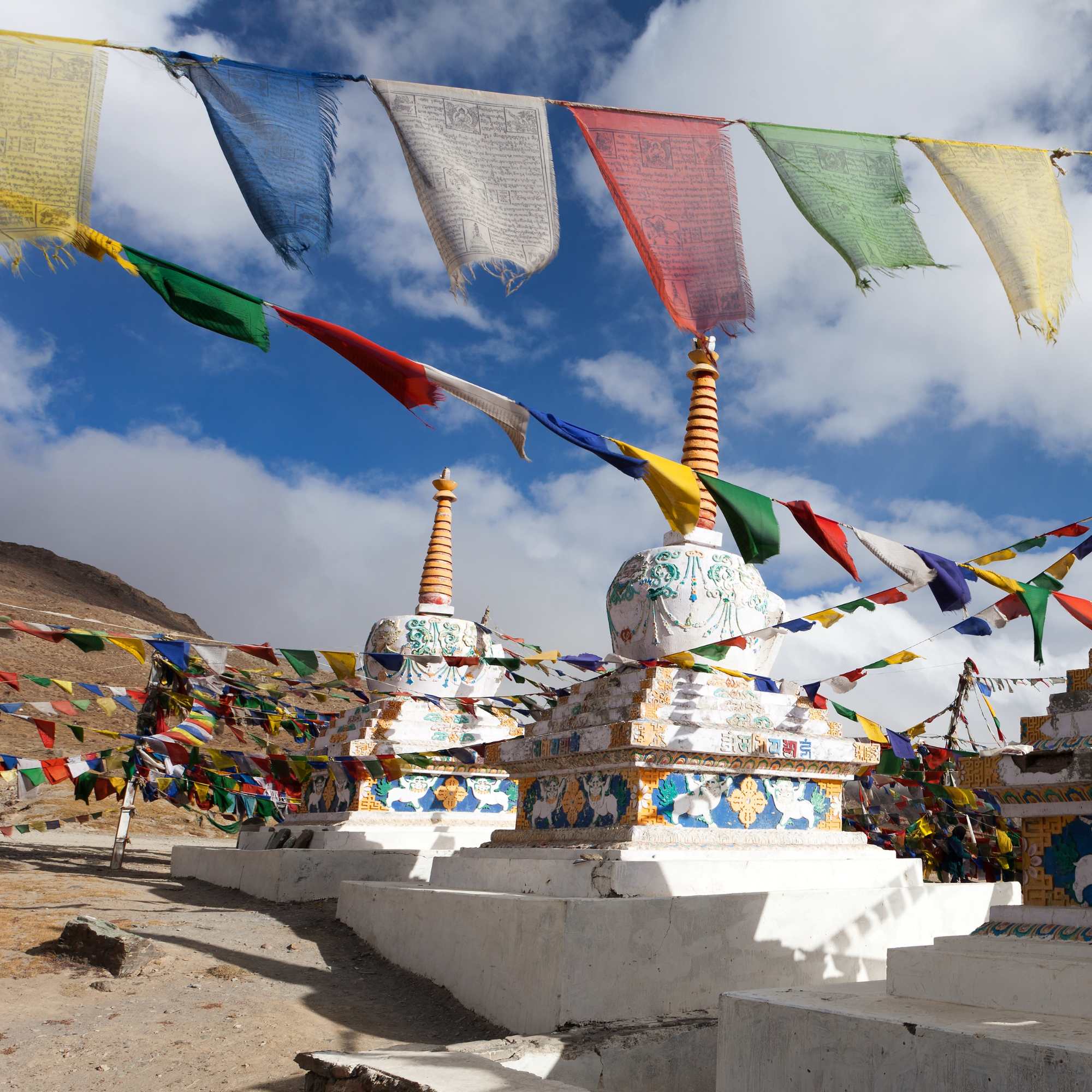
Manali To Kaza Road Status 2026: Kunzum Pass, Batal & Gramphu Update
Is Manali to Kaza open today? August 2026 road status: the route is open and Chandratal camps are running, but the monsoon is active with orange alerts on the Chamba-Kangra-Mandi belt for Aug 10 to 11. Kunzum Pass, Gramphu-Batal, the 4x4 advisory question, vehicle advice, HRTC bus info, and safer route options.
- Road Status
 Lahaul and Spiti
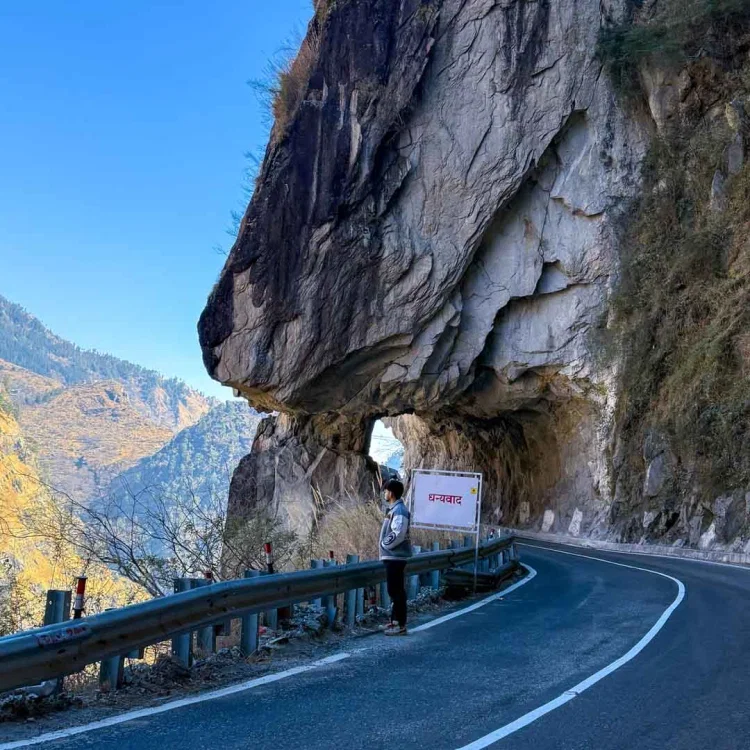
Spiti Valley Road Status 2026: Open Routes, Closed Roads & Best Route Today
Is Spiti Valley open today? August 2026 road status: both routes are open and the full circuit is running, but the monsoon is active with orange alerts on the Chamba-Kangra-Mandi belt for Aug 10 to 11. Shimla-Kaza, Manali-Kaza via Kunzum, Chandratal, HRTC buses, permits, vehicle advice, and backup plans.
- Road Status
 Lahaul and Spiti
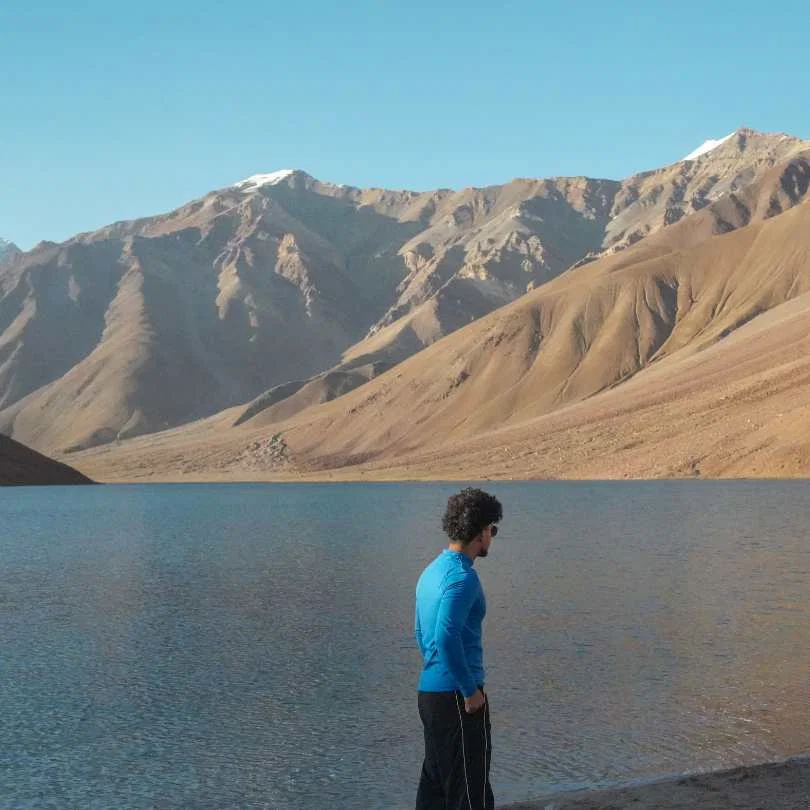
Chandratal Road Status 2026: Is Chandratal Lake Open Today?
Is Chandratal Lake open today? August 2026 road status: the lake is open and camps are running, but the monsoon is active with an orange alert on the western belt for Aug 10 to 11. Kunzum Pass, Batal diversion, camp updates, permits, entry fees, vehicle advice, and what to do if the road closes.
- Road Status