
Beas Kund Trek
The glacial source of the Beas River at roughly 3,700 metres, reached in 3 to 4 days from Manali through forest, meadows, and moraine. Views of Friendship Peak and Hanuman Tibba. Named after Sage Vyas. One of the best introductory Himalayan treks from Manali.
- Manali · glacial lake trek
- ~3,700 m / ~12,140 ft
- ~16 to 18 km round trip
- 3 to 4 days
- Easy to moderate
What makes it special
Beas Kund is the glacial lake where the Beas River is born. It sits at roughly 3,700 metres in the Kullu district, surrounded by a wall of peaks that includes Friendship Peak, Hanuman Tibba, Shitidhar, and the Seven Sisters. According to Hindu mythology, Sage Vyas (the author of the Mahabharata) meditated at this lake. The locals still consider the water sacred. Whether or not you care about the mythology, walking to the source of a river that flows through all of Kullu and Manali and eventually into Punjab is a quietly powerful experience.
The trek is short, 3 to 4 days from Manali and back, covering roughly 16 to 18 km of actual walking. It starts from the Dhundi area above Solang Valley, and you are in alpine meadows by the end of Day 1. The trail passes through boulder fields, glacier streams, and rolling grasslands before a steep final push to the lake on summit day. It is one of the most popular beginner treks in the Manali region, alongside the Bhrigu Lake Trek, and for good reason. You get a complete Himalayan experience, including forest, meadows, glacial terrain, and a high altitude lake, in just 3 days of walking.
Honest framing. This trek is easier than Bhrigu Lake. The altitude is lower (roughly 3,700 m versus 4,250 m), the altitude gain is more gradual, and the total distance per day is shorter. That said, the summit day push to Beas Kund has a steep, relentless section known locally as Lady Leg that catches people off guard. The moraine terrain near the lake requires careful footing. It is not a flat walk in the park. But if you have basic fitness, meaning you can walk 6 to 8 km uphill in a day with a light pack, you can handle this trek comfortably.
Most people do this trek with a guided operator. Packages from Manali generally cost Rs 3,500 to Rs 7,000 per person for 3 to 4 days, covering tents, meals, guides, forest permits, and the Manali to Dhundi transfer. Independent trekking is possible. The trail is well marked with yellow arrows in most sections, and there are other trekking groups on the route during the season. But at altitude, in rain, and on boulder fields, having an experienced guide is a meaningful safety advantage.
Quick answers
- Is the Beas Kund trek worth it for a first timer?
- Yes. It is one of the best introductory Himalayan treks. Short (3 to 4 days), manageable altitude (3,700 m), well marked trail, and a proper glacial lake at the source of the Beas River. The meadow camps and peak views are a genuine reward. Best done June to September.
- How difficult is the Beas Kund trek?
- Easy to moderate. Easier than Bhrigu Lake or Hampta Pass. The first two days are gentle walks through forest and meadow. Summit day has a steep section (Lady Leg) and boulder terrain near the lake. Basic walking fitness is enough. Train for 3 to 4 weeks before if you are coming from a sedentary lifestyle.
- How many days does the Beas Kund trek take?
- 3 to 4 days from Manali and back. Day 1 is a drive to Dhundi and trek to the first meadow camp. Day 2 is the summit push to Beas Kund and back to camp. Day 3 is the descent and drive back to Manali. Some itineraries add a rest day or split Day 1 into two shorter stages.
Quick facts
Everything you need to know at a glance.
At a glance
- Altitude
- Approximately 3,700 m / 12,140 ft at Beas Kund. Trek starts from Dhundi at roughly 2,850 m / 9,350 ft.
- Location
- Kullu district, Himachal Pradesh. Above Solang Valley, near the base of Friendship Peak and Hanuman Tibba.
- Nearest town
- Manali, about 22 km by road to Dhundi (the trek starting point via Solang Valley).
- Trek distance
- Approximately 16 to 18 km round trip from Dhundi, depending on the route.
- Time needed
- 3 to 4 days including the drive from Manali. 2 to 3 days of actual trekking.
- Difficulty
- Easy to moderate. No technical climbing. One steep section (Lady Leg) on summit day. Moraine terrain near the lake needs careful footing.
- Known for
- The glacial source of the Beas River, views of Friendship Peak and Hanuman Tibba, alpine meadows, and one of the best beginner Himalayan treks.
- Approximate cost
- Rs 3,500 to 7,000 per person with operators (meals, tents, guides, permits included). Varies by operator and season.
On the ground
- Mobile network
- Airtel and Jio work at Dhundi and on parts of the lower trail. Signal becomes patchy at higher camps and near the lake. Better than most Himalayan treks but not reliable.
- ATMs
- None beyond Manali. Carry all cash before leaving.
- Food
- Operators provide all meals. Independent trekkers must carry everything. No shops or dhabas beyond Dhundi.
- Water
- Multiple streams along the route. Carry purification tablets. 1 to 2 litres capacity recommended.
- Permits
- Forest entry and camping permits required. Usually included in operator packages. Independent trekkers should check with the Manali forest office.
- Accommodation
- Camping only. Twin sharing dome tents are standard with operators. No lodges on the trail.
- Photography
- Excellent. The meadows, glacier terrain, waterfalls feeding the kund, and peak views are all highly photogenic. Morning light at Bakarthach is particularly good.
Seasonal weather
- May to Jun18°5°Pre Monsoon (May to Jun)
- Jul to Sep15°7°Monsoon (Jul to Sep)
- Oct12°-2°Post Monsoon (Oct)
- Nov to Apr2°-15°Winter (Nov to Apr)
Suitable for
- Couples — suitable
- Families — with some care
- Seniors — with some care
- Solo — suitable
- First-timers — suitable
- Pet-friendly — not suitable
How to reach Beas Kund Trek
4 approach routes, with seasonal access.
From Manali to Dhundi (drive)
Generally May to October- Distance
- About 22 km by road
- Time
- 1 to 1.5 hours by vehicle
- Road
- Paved road through Solang, then unpaved road to Dhundi. Bumpy last section.
The drive follows the road from Manali through Solang Valley and then continues up a rougher road to the Dhundi area. The last section of road is unpaved and can be bumpy. Most operators include this transfer. A private taxi costs roughly Rs 1,000 to 1,500 one way. There is a SASE (Snow and Avalanche Study Establishment) research station at Dhundi. Beyond this point, everything is on foot.
From Dhundi to Bakarthach (Day 1 trek)
June to October- Distance
- About 4 to 5 km
- Time
- 3 to 4 hours
- Road
- Forest trail along the Beas River, gentle gradient. Some river crossings on boulders or wooden bridges.
The trail starts with a gentle climb through pine and deodar forest along the Beas River. You cross the river at a couple of points (wooden bridges or boulder hops). After about 2 hours, the forest opens into the wide meadow at Bakarthach (also called Lohali by some operators). This is where most groups camp. Wild horses and sheep graze here. The campsite has stream water access. On a clear evening, the sunset behind the peaks is worth sitting out for.
From Bakarthach to Beas Kund and back (Day 2 summit)
June to October- Distance
- About 10 to 12 km round trip
- Time
- 7 to 8 hours
- Road
- Steep meadow climb (Lady Leg), then boulder and moraine terrain near the lake. No tree cover above Lady Leg.
The hardest day. The trail climbs from the meadow through the Lady Leg section, a steep, sustained ascent of about 45 to 60 minutes. At the top, you enter the moraine zone: glacier deposited boulders where you need to pick your path carefully. Two waterfalls mark the approach to the kund. One falls directly into the lake, the other joins the river downstream. The lake itself is small, partially frozen in early and late season, and ringed by glacial debris with Friendship Peak rising directly behind. Spend time here, then retrace to camp. Start by 6 to 7 AM.
From Bakarthach to Dhundi (Day 3 descent)
June to October- Distance
- About 4 to 5 km
- Time
- 2 to 3 hours downhill
- Road
- Same trail as Day 1 in reverse. Gentle downhill through forest.
Retrace the trail through meadow and forest back to Dhundi. The descent is faster than the climb. Most groups are back at Dhundi by midday and drive to Manali in the afternoon. If you have time, stop at Vashisht Hot Springs on the way back for a soak in natural hot water. Your legs will need it.
Best time to visit
Season by season, so you can plan around the weather rather than hope.
- Recommended
Pre Monsoon
May to mid June
Dry trails, some snow near the lake, the clearest mountain views
- Day temperature at camp
- 10 to 18 C
- Night temperature
- -2 to 5 C
- Trail condition
- Mostly clear, snow patches above Lady Leg
- Lake condition
- Partially frozen
- Crowds
- Low
Dry conditions and some snow patches along the upper trail and near the lake. The meadows are just beginning to green. The air is crisp and clear, and peak views are sharp. Nights are cold, dropping below zero at the higher camps. This is a good window if you want to see the kund partially frozen and avoid monsoon rain. Fewer trekkers on the trail. Some operators begin batches in mid May depending on snow clearance.
- Recommended
Monsoon
Mid June to September
The greenest meadows, strongest waterfalls, and yes, rain
- Day temperature at camp
- 10 to 15 C
- Night temperature
- 5 to 7 C
- Trail condition
- Muddy in spots, slushy after rain
- Waterfall flow
- Strongest of the year
- Meadow condition
- Green, wildflowers, wild strawberries
- Crowds
- Moderate to high
This is when Indiahikes and most reputable operators recommend the trek. The meadows are at their greenest. Wildflowers bloom in July and August. The waterfall flow is at its strongest, and the lake is unfrozen. The trade off is rain. Expect muddy trails, slushy sections in the forest, and occasional full day downpours. Carry a good rain jacket and waterproof your bag. Leeches are possible in the lower forest. Despite the rain, this is the most scenic version of the trek, and many trekkers consider the monsoon atmosphere part of the experience.
Post Monsoon
October
Clear skies, golden meadows, dropping temperatures
- Day temperature at camp
- 5 to 12 C
- Night temperature
- -5 to 0 C
- Trail condition
- Dry, clear
- Lake condition
- Unfrozen early, may freeze by late October
- Crowds
- Low
The rain stops, the skies clear, and the peaks are at their sharpest. The meadows turn golden brown. Temperatures drop noticeably, especially at night. The lake may begin to freeze around the edges in late October. Fewer trekkers and quieter trails. A good window for photography and for people who dislike rain. Late October can bring early snow at higher elevations. Check conditions before booking.
- Closed
Winter
November to April
Closed. Deep snow, frozen lake, road access uncertain
- Temperature
- -5 to -15 C at night
- Trail condition
- Deep snow, route invisible
- Road access
- Dhundi road may be closed
- Operators
- Most do not run batches
Deep snow buries the trail. The road to Dhundi may be closed. The lake is frozen. Most operators do not run batches. Do not attempt this in winter without a qualified snow trekking team. The trek effectively closes from November to April.
Things to see & do
4 things worth your time at Beas Kund Trek.
The trek to Beas Kund
3 to 4 days from ManaliThe core experience. A 3 to 4 day trek from Dhundi above Solang Valley to the glacial Beas Kund at roughly 3,700 metres. You pass through pine forest, alpine meadows at Bakarthach, and then up through boulders and moraine to the lake. Summit day is the hardest, with a steep ascent through the Lady Leg section. The reward is the lake itself, sitting in a bowl of ice and rock with Friendship Peak towering directly above. Most people spend 30 to 60 minutes at the lake before heading back to camp.
Meadow camping and wildflower walks
Throughout the trekThe meadows at Bakarthach and Lohali are wide, sloping grasslands where shepherds graze their flocks. In July and August, wildflowers and wild strawberries appear along the trail. Wild mushrooms grow in the damp forest sections lower down. The meadow camps are genuinely beautiful places to spend a night, with clear views of the surrounding peaks and, on clear nights, one of the best star fields you will see anywhere near Manali.
Glacier and moraine exploration
3 to 4 hours on summit dayAs you approach Beas Kund on summit day, the trail enters a zone of glacier deposited boulders called moraine. This is where the Beas River begins as meltwater trickling between rocks. Two waterfalls feed the kund, one dropping directly into the lake and another joining the river downstream. Walking through this glacial landscape, with ice underfoot and peaks all around you, is the most dramatic section of the trek.
Post trek recovery at Vashisht Hot Springs
1 to 2 hours after the trekAfter 3 days on the trail, a soak in the Vashisht Hot Springs in Manali is one of the best ways to recover. The natural sulphur rich water at 40 to 50 degrees works on tired muscles in a way that a normal bath does not. The springs are about 3 km from Mall Road and free to use. Plan this for the afternoon you return from the trek.
Know before you visit Beas Kund Trek
The practical bits, from people who have been.
Fitness and difficulty: what to expect day by dayEasier than Bhrigu or Hampta. But summit day's Lady Leg section is steep. Basic fitness needed.
Beas Kund is one of the easier Himalayan treks, but "easy" at altitude still means real physical effort. The first two days are gentle, with gradual climbs through forest and meadow. Summit day changes the pace. The Lady Leg section is a steep, sustained climb that takes 45 to 60 minutes of continuous uphill walking. The moraine zone near the lake adds another 30 to 45 minutes of boulder hopping where you need to watch every step.
If you can walk 6 to 8 km in a day with a light daypack and handle a few hours of uphill, you will be fine. Basic jogging fitness helps. Aim to run 3 km in under 30 minutes comfortably before the trek. Start training 3 to 4 weeks before. Squats and stair climbing build the leg strength you will need for the Lady Leg push and the moraine descent.
What to carry and what your operator providesOperators provide tents and meals. You need shoes, layers, rain gear, and a daypack.
Your operator typically provides: tents, sleeping bags, sleeping mats, all meals on the trek, a guide, forest permits, and basic medical kit. Confirm the exact list before booking.
You need to bring: trekking shoes with good grip (the single most important item), layered clothing (thermals, fleece, waterproof jacket), at least 1 to 2 litres water capacity, sunscreen and sunglasses (UV is strong above 3,000 m), a rain poncho or waterproof cover (essential in monsoon), a headlamp, and personal medicines. A daypack for summit day is recommended so you leave your main bag at camp.
Do not overpack. This is a short trek. Most operators offer porter or mule service for extra luggage at around Rs 350 to 500 per bag per day.
Who should do this trek and who should skip itIdeal for beginners. Kids 9 and above can handle it. Not for very young children or pets.
First time trekkers. Yes. This is one of the best first Himalayan treks available. Short duration, manageable altitude, well marked trail, and a proper glacial lake finish.
Couples and solo travellers. Yes. Group batches run regularly from June to September. The campsites are safe and social.
Families with children aged 9 and above. Yes, if the children are active and used to walking. The first two days are gentle. Summit day is long, so assess honestly. Some operators have a minimum age of 9.
Families with younger children. No. The trail is not pram friendly, and carrying a child through the moraine zone near the lake is risky and exhausting.
Seniors with active trekking background. Maybe. The altitude is moderate and the pace is manageable. But summit day is steep and the descent over boulders requires good knee strength. Discuss with your doctor first.
Pets. No. The altitude, terrain, and duration make this unsuitable for animals.
Common mistakes trekkers make on Beas KundWrong shoes, underestimating summit day, no rain gear, and skipping acclimatisation.
Wearing the wrong shoes. The moraine zone near Beas Kund is all loose rock and boulders. Smooth soled shoes, sneakers, and sandals are dangerous here. Ankle high trekking shoes with grip are essential.
Underestimating summit day. The first two days lull you into a sense of ease. Then the Lady Leg section hits and people who did not prepare find themselves struggling. Start early, carry enough water, and go at your own pace.
Not carrying rain gear in monsoon. The trek is best done during monsoon, which means rain is part of the deal. A waterproof jacket, a rain cover for your bag, and quick dry layers save you from a miserable day.
Skipping acclimatisation. If you are arriving from the plains the day before, your body has not adjusted. Ideally, arrive in Manali a day early and take a light walk. If you can spend a night at a higher elevation like Solang Valley before starting, even better.
Nearby attractions
Other places worth the detour.
Solang Valley
~14 km from Manali, on the way to Dhundi
Manali's adventure valley with paragliding in summer and snow activities in winter. You drive through Solang on the way to Dhundi (the trek starting point). A good place to warm up the day before your trek or decompress afterwards.
Bhrigu Lake Trek
Same base area via Gulaba, separate trail
A higher altitude glacial lake trek (4,250 m) that shares the same base area near Manali. If you have done Beas Kund and want something harder, Bhrigu Lake is the natural next step. More dramatic meadows, faster altitude gain, and a tougher summit day.
Vashisht Hot Springs
~3 km from Manali
Natural sulphur rich hot springs at 40 to 50 degrees Celsius. Free public baths and an ancient temple. The best post trek stop in the Manali area. Your legs will thank you.
Hadimba Temple
~4 km from Manali centre
The 16th century wooden cave temple in a cedar forest. Visit on your rest day before or after the trek.
Old Manali
~3 km from Mall Road
Cafes, cobbled lanes, and a relaxed backpacker atmosphere. A good place for a meal and unwinding before or after your trek.
Hampta Pass Trek
Same base area, different route
A 4 to 5 day trek that crosses from the Kullu valley into Lahaul. More challenging than Beas Kund, with dramatic landscape transitions. Worth considering if you have a week and want a through trek experience.
Our packages with Beas Kund Trek
Curated trips that include a visit to Beas Kund Trek.
 5D/4N
5D/4NWeekend Manali Getaway From Delhi
1D Delhi•2D Manali+2
₹10,999₹15,999SAVE INR 5,000/ person 6D/5N
6D/5NManali Solang Sissu & Snow Village Sethan Budget Trip
1D Delhi•3D Manali+2
₹12,999₹19,999SAVE INR 7,000/ person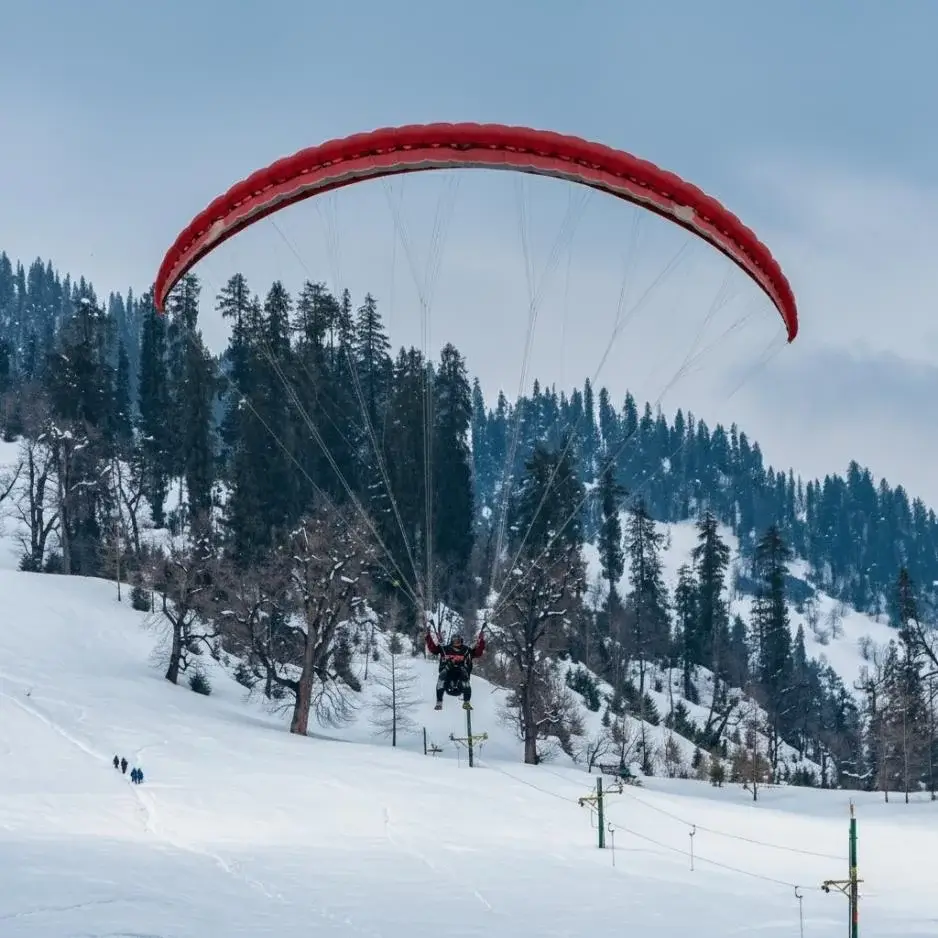 5D/4N
5D/4NManali Solang Sissu Budget Trip
1D Delhi•2D Manali+2
₹13,999₹17,999SAVE INR 4,000/ person
Common questions about the Beas Kund Trek
How far is Beas Kund from Manali?
Beas Kund is about 22 km by road from Manali to the Dhundi area (above Solang Valley), then 7 to 9 km of trekking to the lake. The total round trip trekking distance is roughly 16 to 18 km over 3 to 4 days.
How difficult is the Beas Kund trek?
Easy to moderate. Easier than Bhrigu Lake or Hampta Pass. The first two days are gentle. Summit day has a steep section (Lady Leg) and boulder terrain near the lake that requires careful footing. Anyone with basic walking fitness can do it.
Is Beas Kund a good trek for beginners?
Yes. This is one of the best first Himalayan treks. The altitude is moderate (3,700 m), the trail is well marked, the duration is short (3 to 4 days), and the reward is a proper glacial lake with serious peak views. Go with an operator for your first time.
What is the best time for the Beas Kund trek?
May to October. June to September is the monsoon window when the meadows are greenest and the waterfall flow is strongest, but trails can be muddy and rain is likely. May and October offer drier conditions with some snow patches. November to April is effectively closed.
What does the Beas Kund trek cost?
Most operators charge Rs 3,500 to Rs 7,000 per person for a 3 to 4 day package including tents, meals, guides, forest permits, and transport from Manali to Dhundi. Prices vary by operator and season.
Do I need a guide?
Recommended but not strictly required for experienced walkers. The trail is well marked with yellow arrows. However, at altitude, in monsoon, and on the moraine near the lake, a guide adds meaningful safety. First timers should go with an operator.
Is there mobile network on the trek?
Airtel and Jio work at Dhundi and along parts of the lower trail. Signal becomes patchy at higher camps and drops near Beas Kund. Better connectivity than most Himalayan treks, but do not rely on it.
Can children do the Beas Kund trek?
Children aged 9 and above with reasonable fitness can handle this trek. The first two days are gentle enough for active kids. Summit day is long and steep, so assess your child's stamina honestly. Not suitable for toddlers or children who are not used to extended walking.
Beas Kund or Bhrigu Lake: which should I choose?
Different strengths. Beas Kund is easier, lower altitude (3,700 m versus 4,250 m), shorter, and better for beginners. Bhrigu Lake has more dramatic meadows and a faster altitude gain that gives a greater sense of achievement. If this is your first trek, start with Beas Kund. If you have done a trek or two and want more, go for Bhrigu.
Is there snow at Beas Kund?
Yes, the lake can be partially frozen into June and again from October. Even in peak summer, snow patches and glacier remnants surround the lake. In monsoon (July to September), the lake is unfrozen but surrounded by moraine and meltwater.
What is the mythology behind Beas Kund?
According to Hindu mythology, Sage Vyas (also known as Beas Rishi), the author of the Mahabharata, meditated at this lake. The Beas River is named after him. Locals consider the water sacred, and the site holds deep cultural significance for villages downstream.
Related guides
Posts about Manali
- Medical Help in Manali for Tourists 2026: Hospitals, Pharmacies and Emergency Steps
- Vegetarian and Jain Food in Manali 2026: Where to Eat Without Guesswork
- Mobile Network, Internet, UPI and ATMs in Manali 2026: What Works Where
- Shimla to Manali in 2026: Distance, Travel Time, Bus vs Cab and the Best Transfer Plan
- Manali with Pets in 2026: Road Travel, Pet-Friendly Stays, Snow Safety and Practical Rules
- Is Manali Safe for Solo Female Travellers in 2026? Areas, Transport and Winter Safety