
Narkanda
A quiet hill town at roughly 2,700 metres on the old Hindustan Tibet Road, 65 km past Shimla, where apple orchards cover every slope, deodar forests line the ridges, and Hatu Peak gives you the highest point in the district without a serious trek
- Hill Station & Apple Country
- ~2,700 m
- Shimla · ~65 km
- Year round
- Shimla District, Himachal Pradesh
What makes it special
Narkanda is one of those places most travellers see from their car window and forget. They are chasing Kinnaur or Spiti, and this small town on NH 5 is just a tea stop. The ones who actually stay a night usually end up messaging friends to say they should have planned two.
The town itself is tiny. One main road, a handful of hotels, a small market where you can buy apples, Himachali shawls, and pullans (those thick wool shoes). But step outside the market in any direction and the landscape opens up: deodar and fir forests thick enough to block the sky, apple orchards climbing every slope, and if you look up, the ridge leading to Hatu Peak, which at roughly 3,400 metres is the highest point in Shimla district.
What makes Narkanda different from Shimla and Kufri is the quiet. At about 2,700 metres, the air is noticeably thinner and colder than Shimla, and the tourist buses mostly keep driving. You can walk through forest for an hour without seeing anyone. In apple season, roughly July to October, the orchards are loaded and you can smell ripe fruit and pine resin before you even see the trees. In winter, the same slopes fill with snow, and the ski school at Dhumri, which has been running courses since 1980, gets its short but genuine season.
The real surprise is how much there is to do for a town this small. Hatu Peak is a half day trip with views that genuinely compete with anything in the Shimla belt. Thanedar and Kotgarh, about 15 to 17 km away, are the heart of Himachal's apple country, where Satyanand Stokes, an American who settled here in the early 1900s, planted the orchards that turned apple farming into the state's biggest cash crop. Tannu Jubbar Lake is a quiet forest lake about 12 km out, with a small Nag Devta temple on the bank and not much else, which is the whole point.
Narkanda also works as a natural stopover on longer routes. If you are driving from Shimla to Sangla, Kalpa, or Spiti, one night here breaks the journey at the right point, before the road gets serious past Rampur. And if you are just looking for a hill station that does not feel like a hill station, somewhere the forests are thick, the air is cold, and the crowds have not arrived yet, Narkanda is hard to beat at this distance from Delhi or Chandigarh.
Quick answers
- Is Narkanda worth visiting or just a stop on the way to Kinnaur?
- Worth a dedicated visit, not just a pit stop. Hatu Peak gives you a 360 degree Himalayan panorama that most people do not expect this close to Shimla. The apple orchards around Thanedar are some of the oldest in Himachal. And if you come in winter, the skiing slopes at Dhumri have been running since 1980, making Narkanda one of the country's oldest ski destinations. Two days covers the main sights comfortably. If you are driving to Kinnaur, one night here breaks the journey and adds real value.
- How many days do you need in Narkanda?
- Two full days is the sweet spot. Day one for Hatu Peak and the forests around town. Day two for Thanedar, Stokes Farm, and Tannu Jubbar Lake. One night works if you are just breaking a longer drive. Three nights starts to feel like you are stretching it unless you are here specifically for skiing or want to walk through every orchard in the apple belt.
- Is Narkanda good for families with kids?
- Yes, and better than most Shimla area options for families that want something quieter. The drive from Shimla is about 2 to 2.5 hours on a decent highway, so kids handle it well. In winter, children love the snow and the beginner ski slopes. In summer, the forest walks and apple orchards keep them interested. The town is small and safe. Just carry warm layers, even in summer the evenings get cold at this altitude.
Quick facts
Everything you need to know at a glance.
At a glance
- Altitude
- Approx 2,708 m / 8,900 ft
- Location
- On NH 5 (old Hindustan Tibet Road), Shimla district, Himachal Pradesh
- Nearest town
- Kumarsain (20 km), Shimla (65 km)
- Open season
- Year round. Roads stay open even in winter, though snow can cause short delays.
- Time needed
- 2 days / 1 to 2 nights recommended
- Entry fee
- No entry fee for Narkanda or Hatu Peak
- Effort level
- Easy. Hatu Peak is reachable by car. Forest walks are gentle. Skiing is beginner friendly.
On the ground
- Mobile network
- Jio and Airtel work in the main town. Signal weakens on the Hatu Peak road. BSNL is patchy.
- ATM
- There is an ATM in Narkanda but it can run out of cash. Carry enough from Shimla or Chandigarh.
- Fuel
- Small fuel station in Narkanda. The reliable option is to fill up in Shimla or Theog before arriving.
- Food
- Hotel restaurants and a few dhabas in the main market. North Indian and basic Himachali fare. Nothing fancy.
- Stay
- HPTDC Hotel Hatu, private hotels, and a growing number of homestays and orchard stays around Thanedar.
- Permits
- No permits required. Permits are only needed if you continue beyond Narkanda into restricted areas of Kinnaur or Spiti.
Seasonal weather
- Apr to Jun20°10°Summer (Apr to Jun)
- Jul to Sep18°12°Monsoon (Jul to Sep)
- Oct to Nov15°2°Autumn (Oct to Nov)
- Dec to Mar8°-5°Winter (Dec to Mar)
Suitable for
- Couples — suitable
- Families — suitable
- Seniors — suitable
- Solo — suitable
- First-timers — suitable
- Pet-friendly — with some care
How to reach Narkanda
4 approach routes, with seasonal access.
From Shimla
Year round. Snow can slow traffic in January and February but the road stays open.- Distance
- Approx 65 km
- Time
- 2 to 2.5 hours
- Road
- NH 5, well maintained mountain highway
- Last fuel
- Theog (30 km from Shimla)
The most common route. Shimla to Kufri to Fagu to Theog to Narkanda, all on NH 5. The road is in good shape for most of the year. After Theog the traffic thins out and the drive gets pleasant, with deodar forests lining both sides. In winter, carry chains or drive carefully past Kufri where the road can get icy. HRTC buses run from Shimla ISBT every 2 to 3 hours.
From Delhi
Year round- Distance
- Approx 400 to 420 km
- Time
- 9 to 11 hours by road, better split over two days
- Road
- NH 44 to Chandigarh, then hill roads via Shimla
- Last fuel
- Chandigarh area, Solan, Shimla, Theog
Delhi to Chandigarh is roughly 250 km on NH 44. From Chandigarh, you climb through Parwanoo and Solan to Shimla, then continue 65 km on NH 5 to Narkanda. Doing it in one day is doable but tiring. Breaking at Shimla or Kufri makes it comfortable. Alternatively, take a Volvo to Shimla overnight and hire a taxi from there. HRTC also runs direct buses from Delhi to Rampur that pass through Narkanda.
From Chandigarh
Year round- Distance
- Approx 170 km
- Time
- 5 to 6 hours
- Road
- Hill highway via Shimla
- Last fuel
- Solan, Shimla or Theog
Chandigarh to Shimla is about 115 km and takes 3 to 4 hours depending on traffic at Parwanoo and Solan. From Shimla, continue 65 km on NH 5 to Narkanda. The whole drive is doable in a day without strain. Fill fuel before Theog.
From Rampur Bushahr (toward Kinnaur)
Year round, though monsoon can cause delays- Distance
- Approx 100 km
- Time
- 3 to 3.5 hours
- Road
- NH 5, mountain highway with some rough patches
- Last fuel
- Rampur
If you are returning from Kinnaur or Spiti, Narkanda is about 100 km before Shimla. The road from Rampur climbs steadily through apple country. A night here saves you arriving in Shimla exhausted after the long mountain drive.
Best time to visit
Season by season, so you can plan around the weather rather than hope.
- Recommended
Summer
April to June
Clear skies, apple blossoms in April, warm days and cold nights. The easiest window.
- Temperature
- Roughly 15 to 20°C day, 8 to 10°C night
- Crowds
- Moderate, peaks on long weekends
- Roads
- Clear and well maintained
- Orchards
- Apple blossoms in April, green orchards from May onward
This is the most comfortable time to visit. Daytime temperatures hover around 15 to 20°C, dropping to 8 to 10°C at night. The forests are green, the orchards are in blossom (especially April, when the apple trees bloom white and pink), and Hatu Peak is usually clear enough for long views. Roads are in good shape. Long weekends in May and June bring Delhi and Chandigarh crowds, but nothing like Shimla levels. Midweek is noticeably quieter.
Monsoon
July to September
Rain, fog, and occasional landslide risk, but this is peak apple season.
- Temperature
- Roughly 14 to 18°C day, 10 to 12°C night
- Rain
- Regular, sometimes heavy in August
- Roads
- Generally passable, landslide risk between Shimla and Theog
- Orchards
- Apple harvest from late July, peak in August and September
Narkanda gets rain, but less intensely than the lower hills. The real issue is the road: the stretch between Shimla and Narkanda can see landslides, especially in August. If you go, keep buffer days and check conditions. The reward is apple season. From late July onward, the orchards around Thanedar are in full harvest, and you can buy fresh apples directly from farmers at prices that feel unfair. Hatu Peak tends to be clouded over by late morning most days.
- Recommended
Autumn
October to November
Clear skies, crisp air, apple harvest winding down. One of the best windows.
- Temperature
- Roughly 10 to 15°C day, 2 to 5°C night
- Crowds
- Low
- Roads
- Good condition
- Orchards
- Late harvest through mid October, then bare branches
October is genuinely one of the best months for Narkanda. The monsoon is over, the skies clear, and the air has that sharp autumn bite. Late apples are still on the trees and the forest colours shift. Hatu Peak views are their clearest. Crowds are thin. November gets cold fast, and by late November early snow is possible on the higher slopes. Pack warm.
Winter
December to March
Snow, skiing, and cold that means it. Come prepared or do not come.
- Temperature
- Roughly 0 to 8°C day, minus 5 to minus 10°C night
- Snow
- Regular snowfall December to February, sometimes into March
- Skiing
- Courses run roughly January to March at Dhumri slopes
- Roads
- Open but can be icy. Carry chains. Drive slow past Kufri.
This is when Narkanda becomes a different place. Snow covers the town and the surrounding forests from December onward, and the ski school at Dhumri runs courses from roughly January to March (run by HPTDC and ABVIMAS). Temperatures drop to minus 5°C or lower at night. The road from Shimla stays open but can be slow when icy, especially around Kufri and Fagu. Several hotels stay open through winter, but the smaller guesthouses close. If you want snow without the Manali crowds, this is the play. Carry proper warm gear, not city jackets. Snow boots are essential, not optional.
Things to see & do
6 things worth your time at Narkanda.
Drive or trek to Hatu Peak
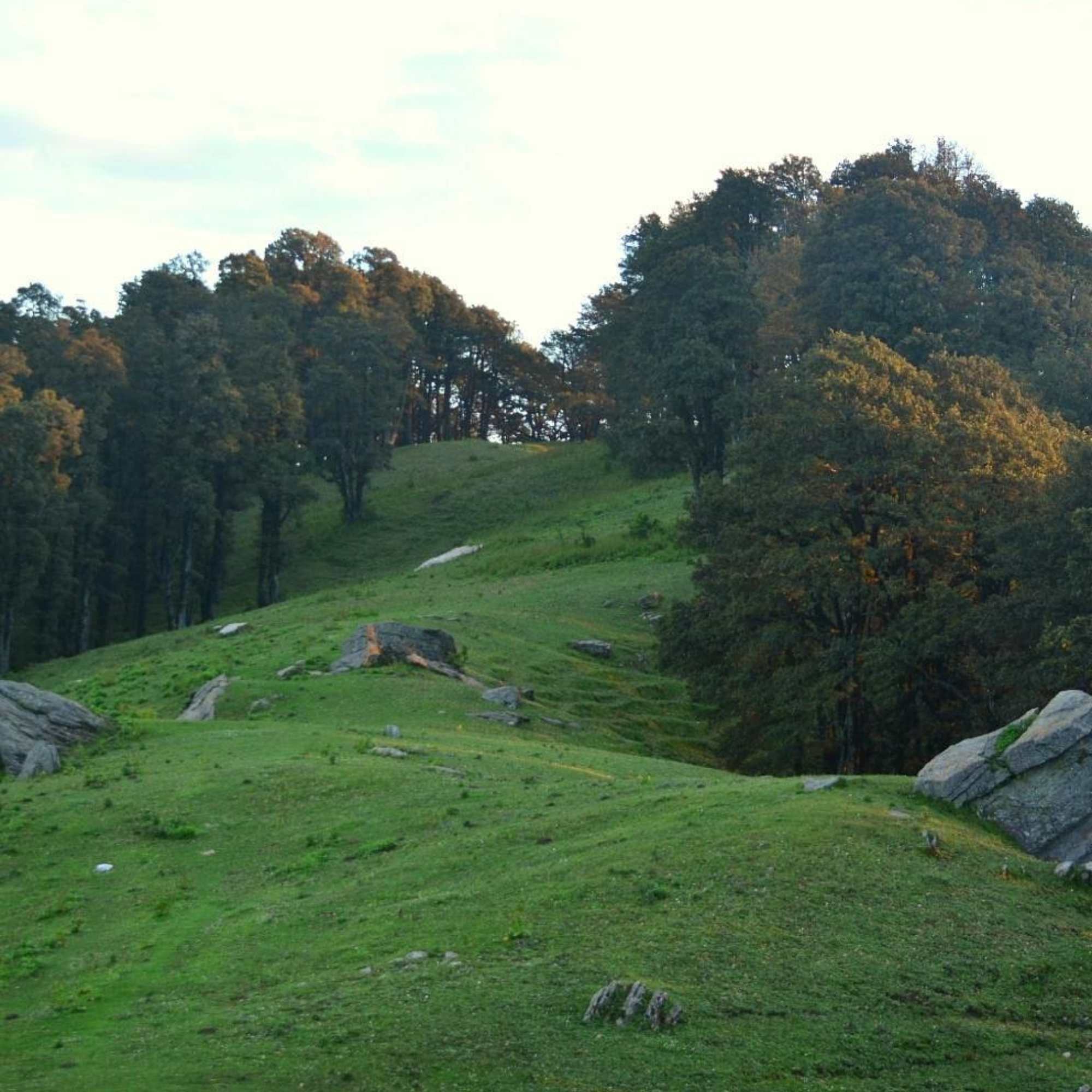
Half dayThe highest point in Shimla district, at roughly 3,400 metres. You can drive up a narrow, winding road about 8 km from Narkanda, or walk it through thick deodar forest, which takes about 2 to 3 hours uphill. At the top, the Hatu Mata temple sits in a small clearing, built in traditional Himachali wooden style with carved panels and a low stone wall. On a clear day, you see snow peaks in every direction, apple orchards below, and valley floors so far down that the rivers look like lines on a map. The road is narrow and steep, with gradients that will test your vehicle and your driver. If you are not confident on mountain roads, hire a local taxi from Narkanda market. Go early morning for the clearest views. By afternoon, clouds often roll in from the west.
Visit Stokes Farm and the apple orchards at Thanedar
Half dayThanedar is about 16 km from Narkanda, a detour off NH 5 into the heart of Himachal's apple belt. Stokes Farm is the oldest apple orchard in the region, started in 1916 by Satyanand Stokes, an American who came to India for a leprosy mission, fell in love with the hills, settled in Kotgarh, and planted the trees that eventually turned apple farming into Himachal's biggest industry. The farm produces apples, apple wine, vinegar, and jams. In April, the orchards are covered in white and pink blossoms. In August and September, the branches are heavy with fruit and the whole area smells like ripe apples. Even outside harvest season, the orchards and the story behind them are worth the drive. Entry is generally free.
Walk to Tannu Jubbar Lake
2 to 3 hoursA small forest lake about 12 km from Narkanda, surrounded by deodar trees and genuinely quiet. There is a small temple dedicated to Nag Devta on the bank. The lake is not large, maybe a ten minute walk around the edge, but the setting is the point. It is the kind of place where you sit on the bank for twenty minutes without planning to. Best visited between April and October. In winter, the road can be tricky with snow.
Try skiing at the Dhumri slopes
Full day (in season, Jan to Mar)Narkanda is one of India's oldest ski destinations. The slopes near HPTDC Hotel Hatu, in the area called Dhumri, have been used for skiing since 1980. HPTDC and ABVIMAS run courses for beginners and intermediate skiers, usually from January through March when snow cover is reliable. The slopes are gentler than Auli or Gulmarg, which makes them genuinely good for first timers. Equipment is available on rent. If you are visiting in winter and have never skied, this is one of the most accessible places to try. Check course availability with HPTDC before planning, as schedules depend on snowfall.
Walk through the deodar forests around town
1 to 2 hoursYou do not need a specific destination for this. Step off the main road in almost any direction and you are in forest. The deodar and silver fir here are old and tall, with trunks wide enough that two people cannot wrap their arms around them. The air smells like pine resin and damp earth. In spring, wildflowers line the forest floor. In winter, snow sits on every branch. A thirty minute walk uphill from the market and you are far enough in to hear woodpeckers and not much else. No entry fee. No guide needed. Just walk.
Visit Mahamaya Temple at Kacheri
2 to 3 hours (including drive)About 7 km from Narkanda, the Mahamaya Temple sits on a hilltop in the village of Kacheri, dedicated to Goddess Kali. The temple is built in a traditional Himachali style and the hilltop position gives it open views of the surrounding mountains and orchards. It is a local pilgrimage spot, not a tourist attraction, which means it has the kind of quiet that more popular temples lost a long time ago. Worth combining with a drive through the orchards in the Kacheri area.
Know before you visit Narkanda
The practical bits, from people who have been.
Where to stay and what to eatHPTDC Hotel Hatu, private hotels, and orchard homestays near Thanedar. Food is basic but honest.
Hotels in Narkanda town. HPTDC Hotel Hatu is the most established option, with a good location near the ski slopes and views of the surrounding mountains. Rooms are government run, so manage expectations on service, but the setting is solid. Several private hotels have opened in recent years along the main road and on side lanes. Budget rooms start around Rs 1,000 to 1,500. Mid range rooms run Rs 2,000 to 4,000. Book ahead during winter weekends and long weekends in summer.
Orchard stays near Thanedar. This is the more interesting option. A growing number of homestays and small resorts around Thanedar and Kotgarh put you in the middle of apple orchards, away from the road and the town. If you have your own vehicle, staying here and using Narkanda as a base for day trips works well. Some of these places serve home cooked Himachali food that you will not find in Narkanda's hotels.
Food. Hotel restaurants and a few dhabas in the market. Dal chawal, rajma, paranthas, maggi, and occasional Himachali dishes if you ask. In apple season, fresh juice and local jams are easy to find. Thanedar area stays sometimes serve siddu and aktori. Do not expect a food scene. Eat where you sleep, or carry snacks if you are heading to Hatu Peak or Tannu Jubbar for the day.
Who Narkanda suits and who should think twiceGood for families, couples, solo travellers, and snow seekers. Less so for nightlife or luxury seekers.
Will enjoy it. Families looking for a hill station quieter than Shimla, especially with children who want snow in winter. Couples who prefer forests and orchards over crowded mall roads. Solo travellers and photographers who want Hatu Peak and the forest walks. People driving to Kinnaur who want a smart overnight break. Winter sport beginners who want to try skiing without the big trip to Auli or Gulmarg.
Might not enjoy it. If you need nightlife, fine dining, or shopping, Narkanda has none of these. If you expect Manali or Shimla level infrastructure, the town is much simpler. If you are looking for a luxury resort experience, the options are limited, though the orchard stays near Thanedar are changing this slowly.
Families. Genuinely good for families. The drive from Shimla is short enough that children do not get restless. The altitude is moderate and well tolerated. Snow in winter is a big hit with kids. The ski school takes beginners from young ages.
Seniors. Manageable for healthy seniors with a private vehicle. Hatu Peak can be reached entirely by car. Village walks are gentle. Altitude is moderate. Anyone with heart or lung conditions should check with a doctor first.
Pets. Some orchard stays accept pets. Hotels in town generally do not. Check in advance. Keep pets leashed in forest areas.
How to plan your Narkanda tripTwo days covers the highlights. Combine with Shimla or add it to a Kinnaur road trip.
Weekend trip from Delhi or Chandigarh. Drive or bus to Narkanda (one night halt at Shimla or drive through). Two nights in Narkanda. Day one for Hatu Peak and forests. Day two for Thanedar, Stokes Farm, Tannu Jubbar Lake. Return via Shimla.
Extended Shimla belt trip. Combine Narkanda with Kufri, Fagu, and Naldehra for a 4 to 5 day Shimla region circuit without the Shimla crowds.
Kinnaur road trip halt. If you are heading to Sangla Valley, Kalpa, or Spiti, one night in Narkanda breaks the long drive at the right point. The road from Narkanda onward to Rampur and the Sutlej gorge is where the drive gets tiring, so arriving rested matters.
Winter skiing trip. January to March. Two to three nights focused on the Dhumri ski slopes and snow walks. Check HPTDC's ski course schedule before booking.
Road conditions and course availability can shift with the season. Reconfirm details close to your travel date, especially in monsoon and winter.
What I would tell a friend before they goGo early for Hatu Peak, carry warm layers even in summer, and do not skip Thanedar.
Start for Hatu Peak before 8 AM. The views are sharpest in morning light, and by afternoon, clouds often cover the top. The road up is narrow and steep. If your driver or your nerves are not up for it, hire a local taxi from Narkanda market. They know every bend.
Do not skip Thanedar. The Stokes Farm story, an American who came for a leprosy mission and ended up creating Himachal's apple economy, is one of the most interesting things about this part of the hills. And the orchards, especially in blossom season or harvest, are better than any viewpoint.
Carry warm layers even in June. At 2,700 metres, evenings drop fast. A proper jacket, not a thin windcheater.
If you are here in winter, bring snow boots. The town and the Hatu Peak road get icy. Regular shoes are useless and dangerous.
Carry cash. The ATM in Narkanda is not always reliable. UPI works at some hotels but not at dhabas or smaller shops.
Fill fuel before you arrive. The fuel options in Narkanda are limited. Top up at Shimla or Theog.
If you are combining Narkanda with Kinnaur, plan to drive onward toward Rampur the next morning. The stretch from Narkanda to Rampur is beautiful and takes about 3 to 3.5 hours. Do not try to push all the way to Sangla or Kalpa in a single day from Shimla. Narkanda is the natural break point.
Nearby attractions
Other places worth the detour.
Hatu Peak
About 8 km from Narkanda, 30 to 40 minutes by car
The highest point in Shimla district at roughly 3,400 metres, with the Hatu Mata temple at the summit and 360 degree mountain views. Driveable or a 2 to 3 hour trek through deodar forest. The single most important thing to do from Narkanda.
Thanedar and Stokes Farm
About 16 km, 30 to 40 minutes by car
The heart of Himachal's apple belt. Stokes Farm, started in 1916 by Satyanand Stokes, is the oldest apple orchard in the region. Visit in April for blossoms, or August to September for the harvest. Apple wine, vinegar, and jams available at the farm.
Tannu Jubbar Lake
About 12 km from Narkanda
A quiet forest lake surrounded by deodar trees, with a small Nag Devta temple on the bank. Best between April and October. A peaceful half day outing with no crowds.
Kotgarh
About 15 km from Narkanda
An apple growing village on the left bank of the Sutlej, once mentioned by Rudyard Kipling. Older and quieter than Thanedar, with orchards, mountain views, and a missionary history that shaped the region.
Kufri
About 47 km toward Shimla
A popular stop between Shimla and Narkanda, known for snow in winter, pony rides, and the Himalayan Nature Park. Busier and more touristy than Narkanda, but a natural stop on the drive if you have not been.
Fagu
About 35 km toward Shimla
A small village on NH 5 between Kufri and Narkanda. Good views of the surrounding ranges and the valley below. Worth a brief stop on the drive rather than a dedicated visit.
Our packages with Narkanda
Curated trips that include a visit to Narkanda.
 7D/6N
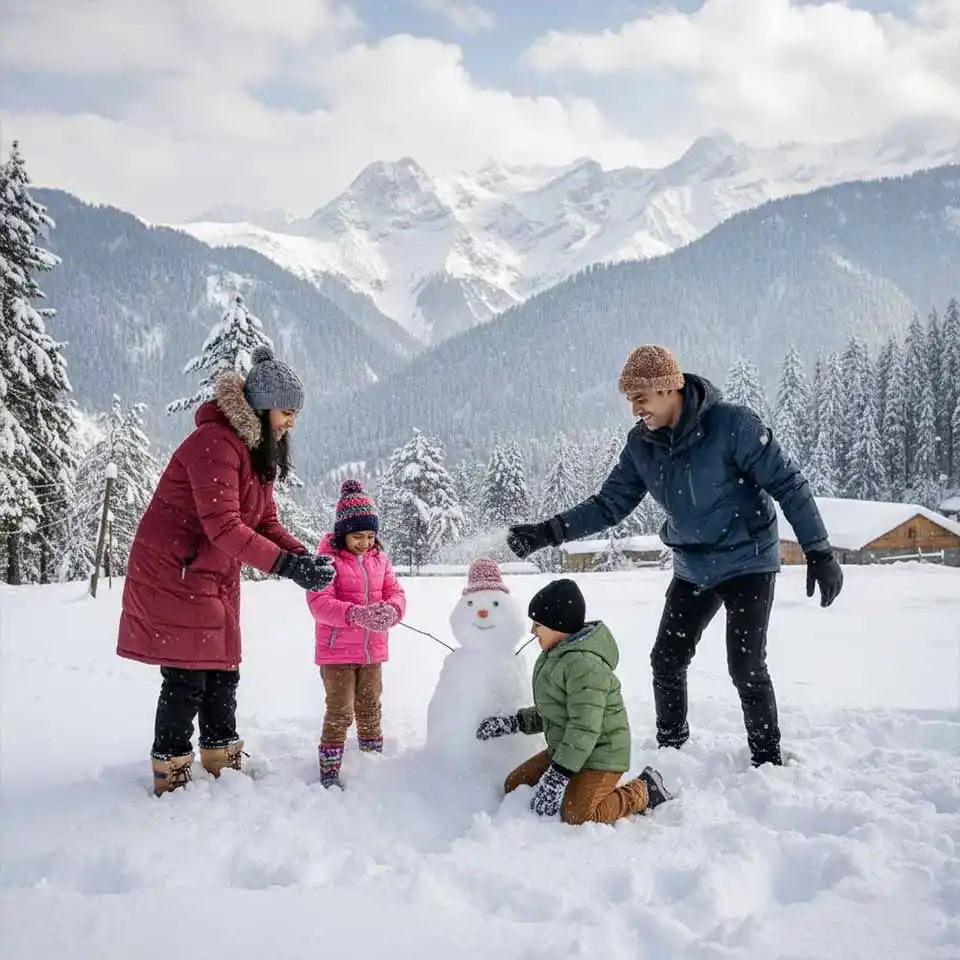
7D/6NBest Shimla Kufri Chail Narkanda Snow Trip From Delhi
1D Delhi•3D Shimla+3
₹14,700₹19,999SAVE ₹5,299/ person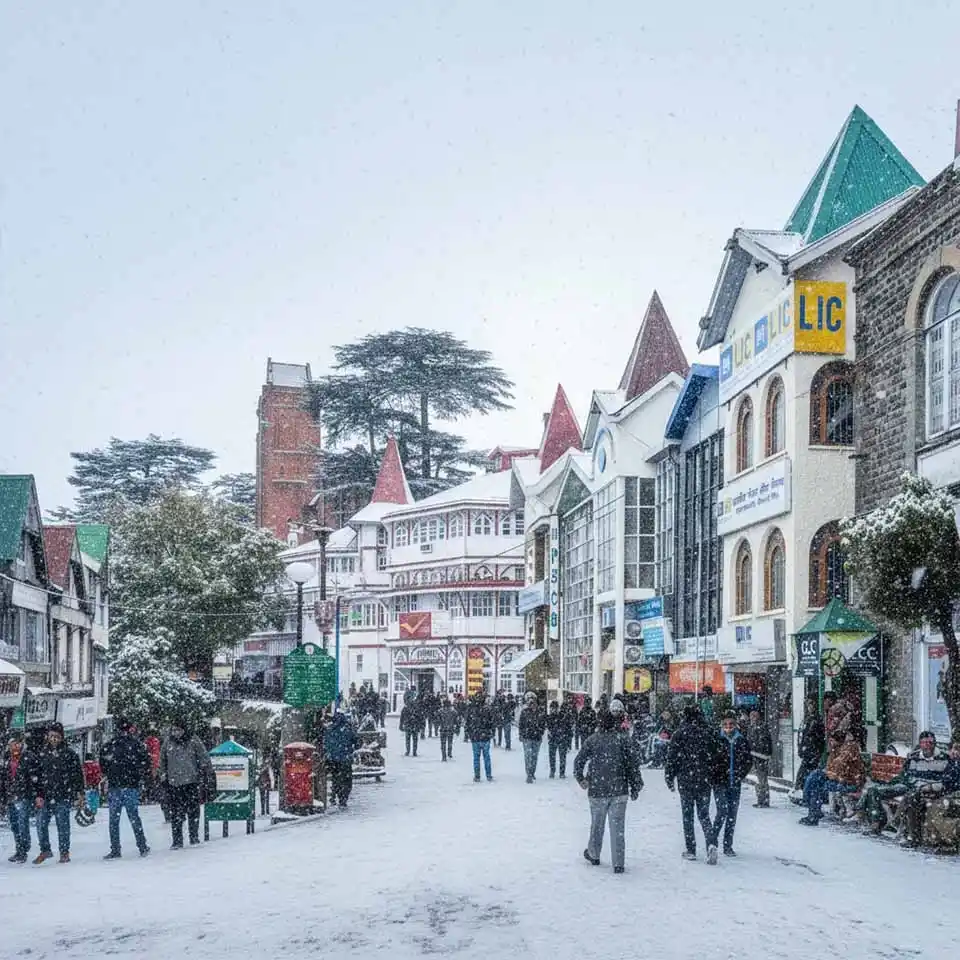 7D/6N
7D/6NShimla Mashobra Kufri Chail Narkanda Tour With Hatu Peak Sunrise
1D Delhi•3D Shimla+3
₹29,999₹38,999SAVE ₹9,000/ person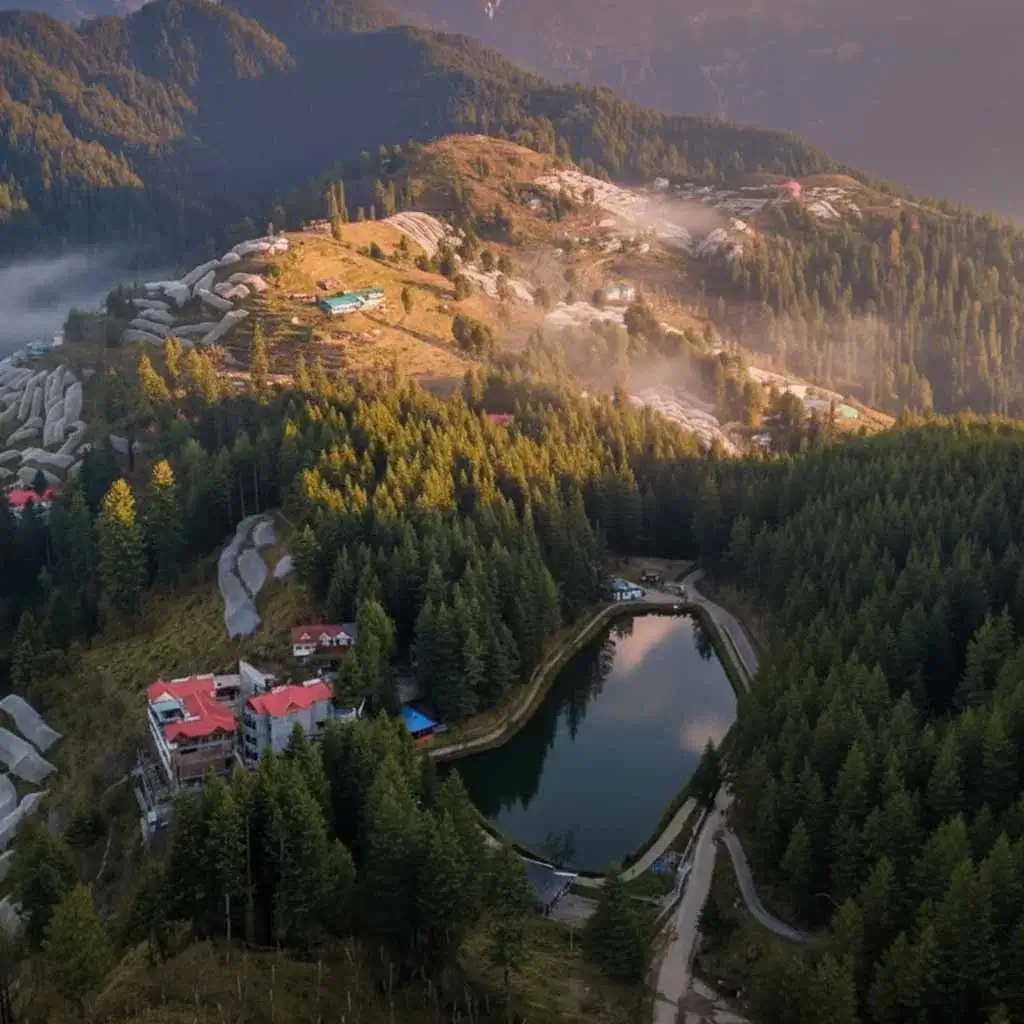 7D/6N
7D/6NClassic Shimla Kufri Chail Narkanda Pine Valley Experience
1D Delhi•2D Shimla+3
₹17,600₹23,999SAVE ₹6,399/ person 6D/5N
6D/5NShimla Mashobra Kufri Narkanda With Hatu Peak Sunrise
1D Delhi•2D Shimla+3
₹25,999₹31,999SAVE ₹6,000/ person
Common questions about Narkanda
Where exactly is Narkanda?
Narkanda is a small hill town in Shimla district, Himachal Pradesh, on NH 5 (the old Hindustan Tibet Road). It sits at roughly 2,708 metres (about 8,900 ft) above sea level, about 65 km from Shimla and approximately 400 to 420 km from Delhi.
What is the best time to visit Narkanda?
April to June for clear weather, apple blossoms, and comfortable temperatures. October for the best light and thin crowds. January to March if you want snow and skiing. July to September is apple harvest but road conditions can be tricky. Narkanda is a year round destination, each season offers something different.
How do I reach Narkanda from Shimla?
Drive or take a bus on NH 5. The distance is about 65 km and takes 2 to 2.5 hours. HRTC buses run from Shimla ISBT every 2 to 3 hours. Taxis are available. The road is well maintained for most of the year. In winter, carry chains past Kufri.
Is there skiing in Narkanda?
Yes. Narkanda is one of India's oldest ski destinations. The Dhumri slopes near HPTDC Hotel Hatu have hosted skiing since 1980. HPTDC and ABVIMAS run beginner and intermediate courses, usually from January to March depending on snowfall. Equipment is available on rent. The slopes are gentler than Auli or Gulmarg, making them a good option for first timers.
What is Hatu Peak?
Hatu Peak is the highest point in Shimla district, at roughly 3,400 metres (about 11,150 ft). It is about 8 km from Narkanda, reachable by a narrow mountain road or a forest trek. The Hatu Mata temple sits at the summit. On clear days, the 360 degree view covers snow ranges, valleys, and orchards. It is the single most important thing to do from Narkanda.
Is Narkanda safe for solo women travellers?
Yes. Narkanda is a small, peaceful town with friendly locals and low crime. Solo women travellers generally report feeling comfortable. Standard precautions apply: avoid isolated forest trails after dark and inform your hotel if you are heading for a trek. Mobile network works in the main town.
Do I need a permit for Narkanda?
No. No permits are required for Narkanda or any of its nearby attractions including Hatu Peak and Thanedar. Permits are only needed if you continue beyond Narkanda into restricted areas of Kinnaur (beyond Reckong Peo) or Spiti Valley.
What is the difference between Narkanda and Kufri?
Both are on NH 5 between Shimla and Kinnaur. Kufri is closer to Shimla (about 16 km), more touristy, and busier with day trippers. Narkanda is further (65 km from Shimla), much quieter, higher in altitude, and has more to explore, including Hatu Peak, Thanedar's orchards, and real skiing. If you have two days, Narkanda is the stronger choice. Kufri works as a quick stop on the way.
Can I visit Narkanda with elderly parents?
Yes, with a private vehicle. The drive from Shimla is 2 to 2.5 hours on a good road. Hatu Peak can be reached entirely by car. The town is walkable for anyone in reasonable health. Altitude is moderate at about 2,700 metres. Anyone with heart or lung conditions should consult a doctor before visiting.
Is there an ATM in Narkanda?
There is one ATM in the main market, but it is not always reliable. It can run out of cash, especially around weekends and holidays. Carry enough cash from Shimla or Chandigarh to cover your stay. UPI works at some hotels but not at smaller shops and dhabas.
What is Stokes Farm in Thanedar?
Stokes Farm, about 16 km from Narkanda in Thanedar village, is the oldest apple orchard in the Shimla region. It was started in 1916 by Satyanand Stokes, an American who came to India for a leprosy mission, settled in the hills, and planted the apple trees that eventually made apple farming Himachal Pradesh's biggest agricultural industry. The farm produces apples, apple wine, vinegar, and jams. Entry is generally free.
How many days should I spend in Narkanda?
Two days covers the highlights comfortably: Hatu Peak, forests, Thanedar, and Tannu Jubbar Lake. One night works if you are using Narkanda as a stopover on the way to Kinnaur. Three nights is justified in skiing season or if you want to explore the apple belt thoroughly. Beyond three, you will start running out of things to do.